
Reviewed · NUREMBERG TOURS
Tour del tercer Reich por Núremberg en español
Nuremberg’s old center carries a dark secret. This three-hour Spanish tour explains why Hitler chose the city as the propaganda center of the Third Reich, then connects that past to the Nuremberg Trials, anti-Semitism, Nazi rallies, and the city’s present-day Street of Human Rights. I like the Spanish-language guidance and the way the tour links grand political ideas to real places in Nuremberg. I also like the private-group format, which should make it easier to ask questions and set the pace.
The main consideration is the subject matter. This is not a light sightseeing walk. You will deal with racism, persecution, dictatorship, war crimes, and mass murder. You should also expect a fair amount of walking, so wear comfortable shoes. At $19 per person for three hours, the price is especially attractive if you want historical context rather than a quick photo stop.
In This Review
- Key points to know before booking
- Why Nuremberg became Hitler’s chosen stage
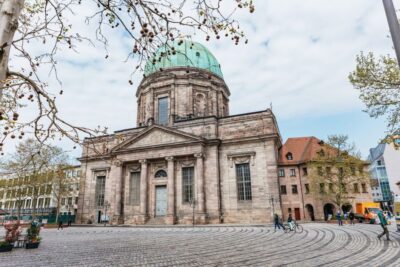
- Starting at the Frauenkirche and Hauptmarkt
- Nazi Party congresses and public spectacle
- The Nuremberg Laws and the machinery of exclusion
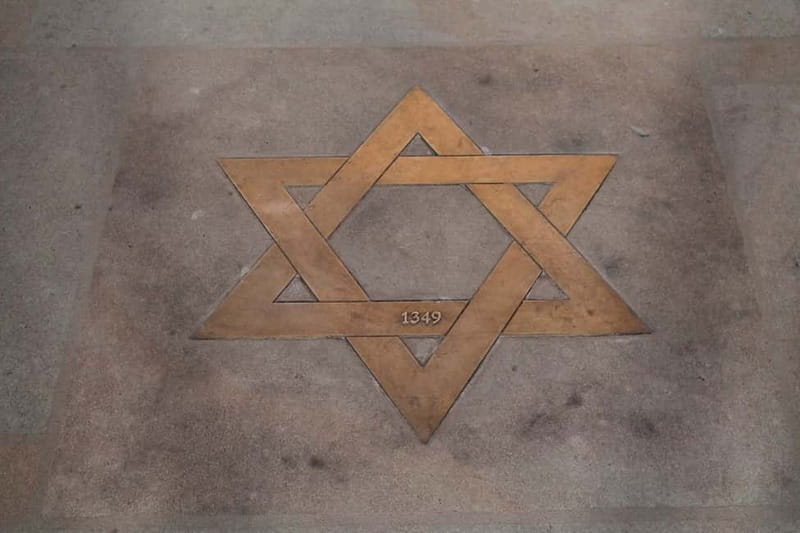
- The Jewish quarter and anti-Semitism in Nuremberg
- From wartime crimes to the Nuremberg Trials
- Zeppelin Field and the former concentration camp connection
- Guide quality and the Spanish-language advantage
- Is $19 good value for three hours?
- Practical details for the three-hour walk
- Who should book this Spanish tour?
- Should you book it?
- FAQ
- What language is the tour offered in?
- How long does the tour last?
- Where does the tour begin?
- Where does the tour finish?
- What is included in the price?
- Are hotel transfers included?
- Are food and drinks included?
- Is the tour wheelchair accessible?
- Is this a private group tour?
- Can I cancel for a full refund?
- Can I reserve now and pay later?
Key points to know before booking
- The tour starts at Hauptmarkt: Meet in front of the main entrance to the Frauenkirche and look for the white and red umbrellas.
- It explains Nuremberg’s special Nazi role: The city was used for party congresses, demonstrations, propaganda, and the announcement of the Nuremberg Laws.
- The Nuremberg Trials are a major theme: You learn how Nazi leaders were prosecuted after the war and visit the Street of Human Rights.
- Spanish is the tour language: A guide such as Federico can make difficult material easier to follow through clear explanations and supporting documentation.
- It is a three-hour private experience: This suits people who prefer a focused historical walk instead of a large general city tour.
- The tour ends where it begins: There is no hotel pick-up or drop-off, and food and drinks are not included.
Why Nuremberg became Hitler’s chosen stage
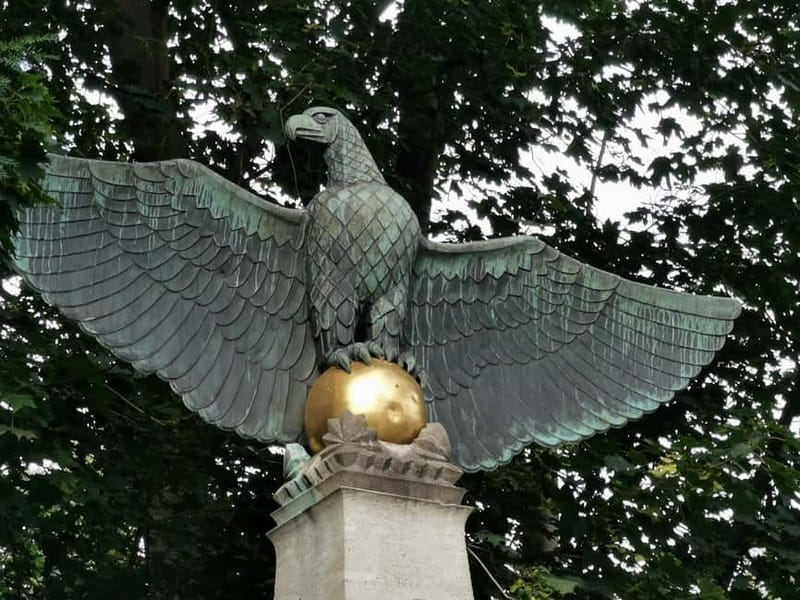
Nuremberg had a symbolic value long before the Nazi period. For centuries, it was seen as a secret capital of the Holy Roman Empire and was linked with Germanic tradition, imperial ceremonies, and medieval power. Hitler wanted to borrow that old prestige for the Nazi state.
That choice was not accidental. The regime presented Nuremberg as the German city par excellence, a place that could connect the modern dictatorship with a carefully polished image of the medieval Germanic Empire. The city’s old buildings and historic identity gave Nazi propaganda a dramatic setting.
This tour helps you understand that propaganda was not only about speeches and posters. It also depended on places, ceremonies, architecture, and repeated public performances. When you walk through Nuremberg with that idea in mind, the city becomes easier to read. The grand claims of the regime were built into the way the city was used.
I find this historical framing useful because it avoids treating Nazi sites as isolated attractions. The tour asks why Nuremberg mattered, not just what happened there. That question gives the rest of the walk a clear direction.
Other Nuremberg trips people book alongside this one:
- Bamberg: Guided Walking Tour
★ 4.6 · 3,202 reviews - Nuremberg: City Tour with the Bimmelbahn Train
★ 4.4 · 2,475 reviews - Nuremberg: Old Town Guided Walking Tour
★ 4.6 · 2,416 reviews
Starting at the Frauenkirche and Hauptmarkt
The meeting point is in front of the main entrance to the Frauenkirche, in Hauptmarkt, Nuremberg’s central market square. Look for the white and red umbrellas. This is a practical meeting place because it is easy to identify in the center of town, but you should arrive with enough time to find the correct guide.
Beginning in the old center creates a sharp contrast. You start among familiar historic-city sights, then learn how this older identity was taken and reshaped for political use. The tour does not present Nuremberg as only a medieval postcard. It shows how the city’s earlier reputation was used by the Nazi regime.
The meeting point also makes this a convenient addition to a day in central Nuremberg. You do not need hotel transport, and the walk returns to the same location. Since the activity lasts three hours, plan other sightseeing around it rather than trying to squeeze in a tight appointment immediately afterward.
Nazi Party congresses and public spectacle
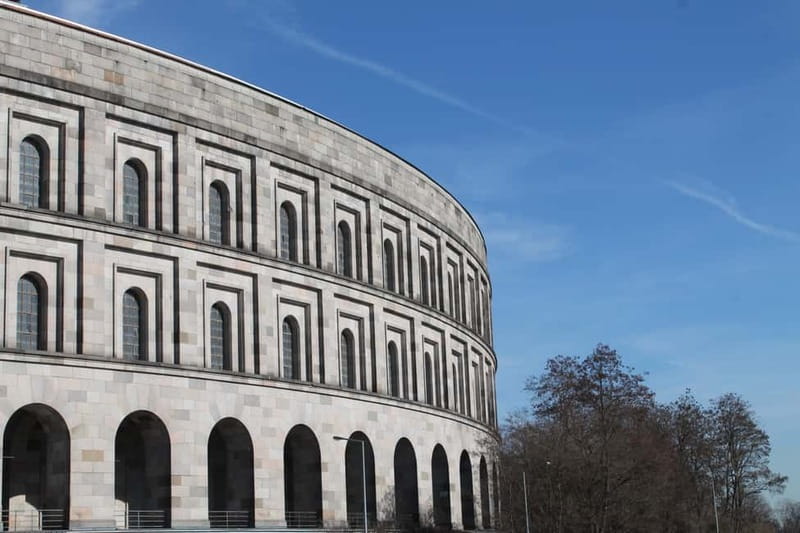
One of the central subjects is Nuremberg’s role as the city of Nazi Party congresses. These events were designed to display order, power, obedience, and unity. They were political gatherings, but they were also carefully staged performances for the public and for the cameras.
The tour explains how National Socialist demonstrations helped create the image of a disciplined, loyal nation. This matters because propaganda can seem abstract when you read about it in a book. In Nuremberg, the connection between political theater and physical space becomes much clearer.
You will also hear about the city’s link to the Zeppelin Field. The name points to one of the best-known locations connected with Nazi mass rallies. The important point is not simply that a famous event took place there. It is that the setting was chosen and used to make the regime appear historic, permanent, and larger than ordinary political life.
The supplied information does not promise a full visit to every Nazi-era site, so you should treat the route as a guided explanation of these places and themes rather than assume that each subject means an extended stop. Ask your guide how much time will be spent at the Zeppelin Field and other locations on your date.
The Nuremberg Laws and the machinery of exclusion
The tour covers the Nuremberg Laws, which were written in the city by Wilhelm Frick. These laws were a major part of the Nazi system of racial persecution. They turned anti-Semitic ideology into official policy and helped remove Jewish people from legal and civic life.
That connection gives Nuremberg a particularly painful role in the story. The city was not only a backdrop for rallies. It was also associated with the legal language that supported discrimination and persecution.
The tour also discusses Julius Streicher, one of the regime’s leading anti-Semitic figures. Streicher owned and promoted the weekly newspaper Der Stürmer. His work shows how prejudice was spread through repeated public messaging, not only through government offices.
I appreciate that these names are included because they make the history more precise. It is easy to talk about the Nazis as a single block. Learning about Frick and Streicher helps you see how different people helped build the system through law, propaganda, and public influence.
Something different for another day:
- Nuremberg: Tunnels and Secret Passages in the City Wall Tour
★ 4.8 · 2,334 reviews - Nuremberg: Medieval Dungeons Guided Tour
★ 4.8 · 1,726 reviews - Nuremberg: Walking Tour of Former Nazi Party Rally Grounds
★ 4.7 · 1,665 reviews - Medieval Tour in Nuremberg in Spanish
★ 5.0 · 1,374 reviews
The Jewish quarter and anti-Semitism in Nuremberg
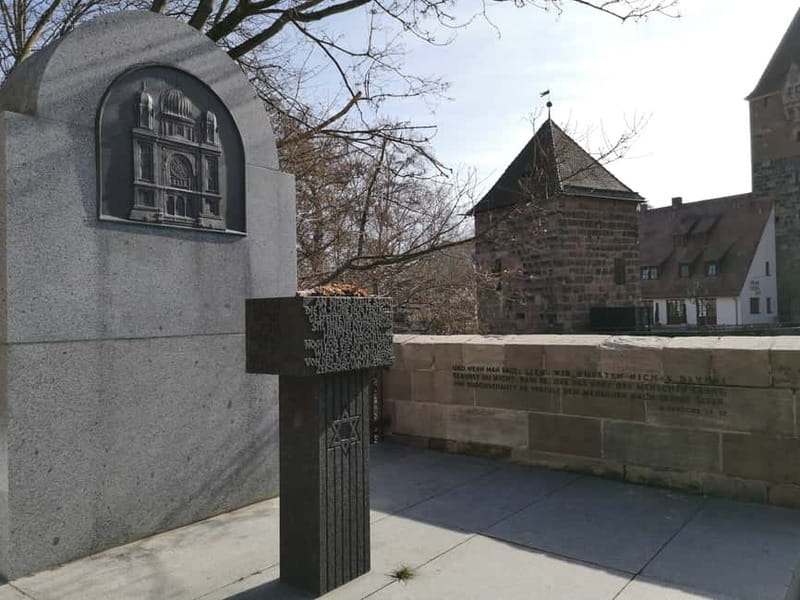
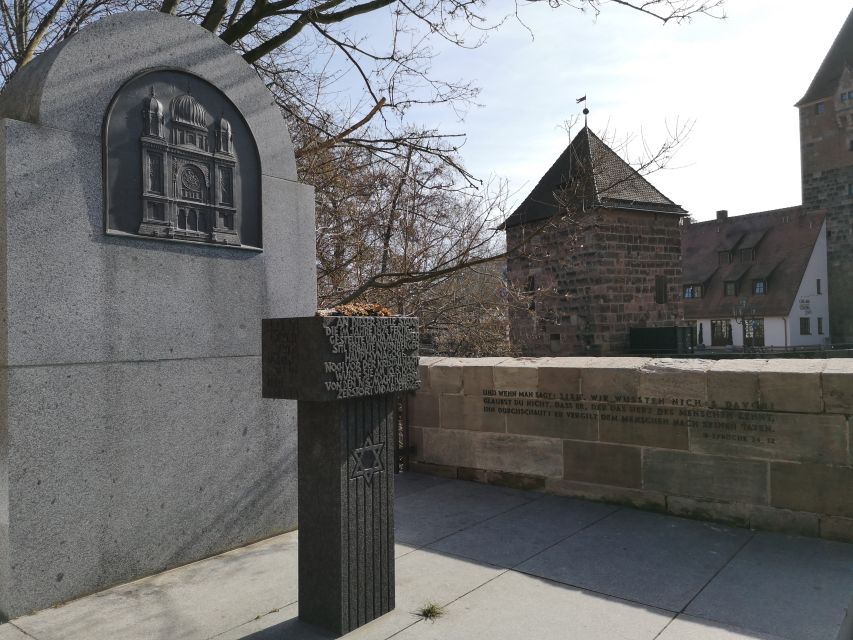
The Jewish quarter is another important subject. Here, the tour turns attention from official Nazi events to the people and communities targeted by the regime. That shift matters. It keeps the story focused on human consequences rather than only on buildings, leaders, and military power.
The discussion of anti-Semitism is likely to be one of the most serious parts of the tour. You will not get a softened version of the period. The subject calls for attention and respect, especially because the Nazi regime used local institutions, laws, media, and public pressure to persecute Jewish people.
Because the experience is private, you may have more room to ask questions about terminology, local history, and the sequence of events. The exact route and the amount of time at each subject can vary, but the Jewish quarter and anti-Semitism are listed among the key themes.
For me, this is one of the tour’s strongest features. It balances the spectacle of Nazi congresses with the reality of exclusion and persecution. That balance helps prevent the experience from becoming a parade of famous Nazi locations without enough attention to victims.
From wartime crimes to the Nuremberg Trials
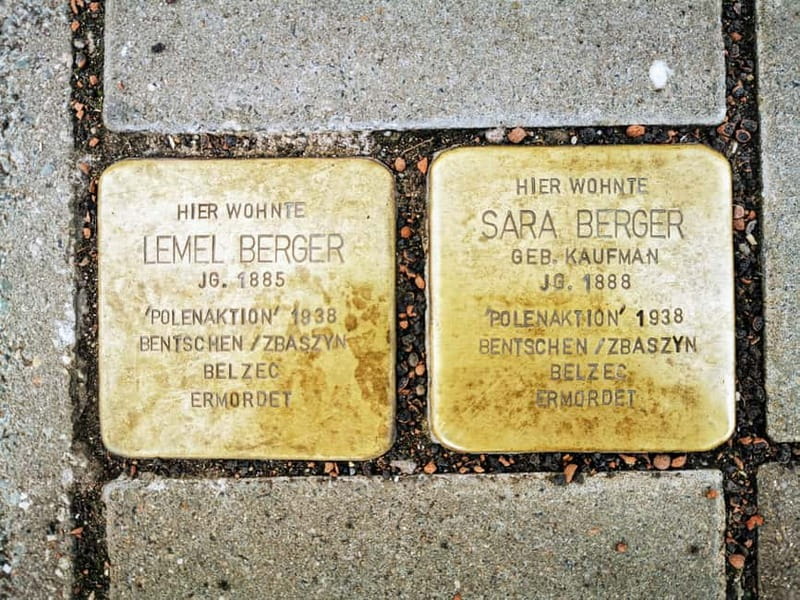
The Nuremberg Trials form the bridge between the city’s Nazi past and the legal response after the Second World War. The tour explains their importance and places them within the larger story of the regime’s crimes.
You should expect the guide to explain why Nuremberg was chosen for these trials and what they represented. The supplied information does not specify a visit inside the courtroom or a museum admission, so do not assume that entrance tickets or an extended indoor visit are included. The listed service is a guided tour with a professional guide.
Even with that limitation, the trials add an essential second chapter. The tour is not only about how the dictatorship presented itself. It also considers how its leaders were held accountable after the war. That makes the historical arc more complete: political spectacle, persecution, war, and legal judgment.
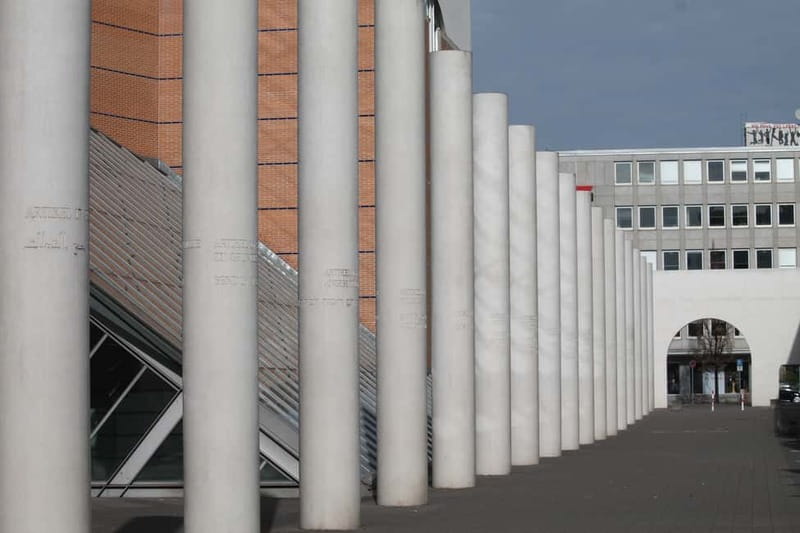
The Street of Human Rights adds a clear present-day contrast. Its name points toward universal rights rather than nationalist myth. Placing the street alongside the Nuremberg Trials gives you a chance to consider how the city remembers the past and expresses a different set of values today.
Zeppelin Field and the former concentration camp connection
Zeppelin Field is included among the subjects covered. This location is strongly associated with Nazi Party demonstrations and the visual power of the regime. Your guide can help explain how the site worked as a setting for mass political theater.
The tour also mentions the Flossenbürg concentration camp. Based on the stated program, you should understand this as part of the historical coverage, not automatically as a trip to the camp itself. Flossenbürg is not listed as a separate transport excursion, and the meeting and ending point remain in Nuremberg.
That distinction matters when you plan your day. If you specifically want to visit Flossenbürg, confirm what the guide will cover and arrange a separate visit if needed. The three-hour format is designed for a Nuremberg experience, not a full concentration camp excursion outside the city.
Still, including the camp in the discussion broadens the tour’s scope. It places local Nazi history within the wider network of imprisonment and forced labor created by the regime. That context can help you understand that Nuremberg’s story was connected to events far beyond the city itself.
Guide quality and the Spanish-language advantage
The guide can make or break a history tour, especially one dealing with complex names and political terms. Federico is specifically described as highly cultured, well informed about Nuremberg’s history, and especially strong on the Third Reich period. His approach is also described as didactic and pleasant, with information and documentation used to make the subject easier to follow.
That combination is valuable in Spanish. You are not merely translating dates in your head while walking. You can follow the relationship between the Holy Roman Empire, Nazi propaganda, anti-Semitic legislation, the party congresses, and the trials in your own language.
A private group also changes the feel of the experience. You are not locked into the needs of a very large crowd, and questions should be easier to ask. The information does not state the maximum group size, so confirm the exact arrangement when booking if group size is important to you.
The tour has earned a perfect 5 rating from 23 reviews, with Federico’s clear explanations and pleasant teaching style receiving especially strong attention. That is a useful sign for anyone who wants serious content presented in an approachable way.
Is $19 good value for three hours?
At $19 per person, this is good value for a focused historical tour. The price includes a professional guide and the guided experience itself. You are paying for interpretation, route planning, and context, not for food, drinks, or hotel transport.
The value is strongest if you already plan to spend time in Nuremberg and want to understand the city beyond its attractive old center. A self-guided walk can show you buildings and squares, but it may not explain how the city was selected for Nazi propaganda or how its medieval image was repurposed.
The price is less compelling if you want a museum-heavy experience with entrance tickets included. No admissions are listed, and the tour may focus on outdoor locations and explanation. If you prefer a slow museum visit, you may need to add that separately.
You also receive booking flexibility. You can reserve now and pay later, and cancellation is free up to 24 hours in advance for a full refund. Those terms are useful if your Nuremberg schedule is still changing.
Practical details for the three-hour walk
Wear comfortable shoes. The tour lasts three hours and covers several historical subjects around the city, so practical footwear matters more than stylish footwear here.
The tour is offered in Spanish and is wheelchair accessible. Hotel pick-up and drop-off are not included, so you need to reach the Frauenkirche in Hauptmarkt on your own. Food and drinks are also not included, so plan a snack or meal before or after the walk.
The activity ends back at the meeting point. That makes it easy to continue exploring central Nuremberg afterward, or to return to your hotel using your own arrangements.
The subject matter deserves mental preparation. You will hear about Nazi rallies, anti-Semitism, the Nuremberg Laws, Jewish persecution, concentration camps, and war-crimes trials. I would not schedule this immediately before a carefree family activity unless everyone in your group is comfortable with difficult history.
Who should book this Spanish tour?
I would recommend it most strongly to Spanish-speaking visitors who want a serious introduction to Nuremberg’s twentieth-century history. It is also a good fit if you prefer a private group, value the chance to ask questions, and want a guide to connect local places with the wider Nazi system.
It suits first-time visitors who have seen the old town but feel they are missing the story behind Nuremberg’s political importance. It also works well for people with only a few hours available, since the route begins and ends in the central Hauptmarkt.
You may want a different option if your main goal is a long visit to the Nuremberg Trials courtroom, a separate trip to Flossenbürg concentration camp, or an indoor museum program. Those details are not included in the stated tour services.
Should you book it?
Book this tour if you want clear Spanish explanations, a private format, and a direct look at Nuremberg’s role in the Third Reich. The strongest reasons are its focused three-hour structure, the broad range of subjects, and the guide quality associated with Federico.
Before booking, make sure you are comfortable with the difficult content and confirm how much of the route is devoted to Zeppelin Field, the Nuremberg Trials, and the Flossenbürg connection. At $19 per person, it offers a strong amount of historical context for the cost, especially when you want to understand the city rather than simply photograph it.
FAQ
What language is the tour offered in?
The tour is offered in Spanish with a live Spanish-speaking guide.
How long does the tour last?
The tour lasts three hours.
Where does the tour begin?
It begins in front of the main entrance of the Frauenkirche in Hauptmarkt. Look for the white and red umbrellas.
Where does the tour finish?
The activity ends back at the meeting point in Hauptmarkt.
What is included in the price?
The price includes a professional guide and the guided tour.
Are hotel transfers included?
No. Hotel pick-up and drop-off are not included.
Are food and drinks included?
No. Food and drinks are not included.
Is the tour wheelchair accessible?
Yes, the activity is listed as wheelchair accessible.
Is this a private group tour?
Yes, the group type is listed as a private group.
Can I cancel for a full refund?
Yes. You can cancel up to 24 hours in advance for a full refund.
Can I reserve now and pay later?
Yes. The activity allows you to reserve your place and pay later.
Just added around Nuremberg
- Nuremberg: St. Johannis Friedhof &Hesperidengärten IN GERMAN★ 4.4 · 15 reviews
- Bayreuth: Private Guided Walking Tour★ 5.0 · 15 reviews
- Nuremberg: Medieval Time Travel for Kids★ 4.9 · 15 reviews
- PRIVATE Nuremberg WW2 and Old Town Day Tour (Product code: 87669P16)★ 4.5 · 15 reviews
- Bayreuth City Walking Tour★ 4.6 · 16 reviews
- Nuremberg: Medieval Ages Tour in Spanish★ 4.5 · 16 reviews
- PLAYMOBIL®-FunPark Entrance Ticket★ 4.5 · 17 reviews
- Nuremberg: Private guided tour of the Old Town in German★ 4.9 · 17 reviews
Nuremberg Tours, compared.
Tunnels and Secret Passages in the City Wall Tour
Read our review →
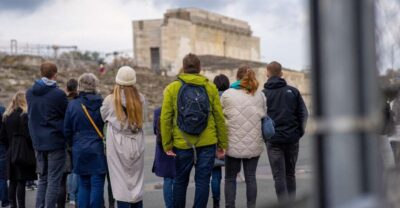
Walking Tour of Former Nazi Party Rally Grounds
Read our review →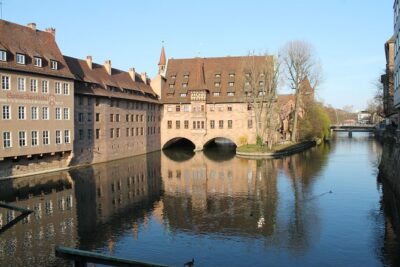
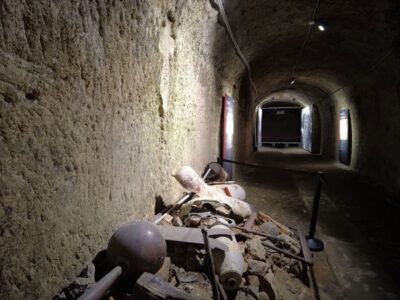
Browse the lists this tour appears in