
Reviewed · NUREMBERG TOURS
Medieval Tour in Nuremberg in Spanish
Nuremberg has a second story to tell. This 2.5-hour Spanish-language walk moves beyond Albrecht Dürer, the Christmas market, and the famous castle to explore witches, executions, strange legends, fountains, and forgotten characters. I like the strong storytelling focus and the way the route connects ordinary streets with unusual episodes from Nuremberg’s past. I also like the value: at $19.60 per person, you get a long guided walk through the old city without paying admission fees at each stop.
The main consideration is the format. This is a walking tour with ten outdoor stops, so you will spend the afternoon on your feet and should be ready for changing weather. The pace includes several short explanations of about 5 to 15 minutes, and the experience works best if you enjoy stories as much as grand monuments. Guide Fede receives especially warm praise for helping people find the meeting point, explaining the city clearly, and keeping the mood light even in the rain.
In This Review
- Key points at a glance
- Why this Nuremberg walk feels different
- Starting at Hauptmarkt at 3:30 pm
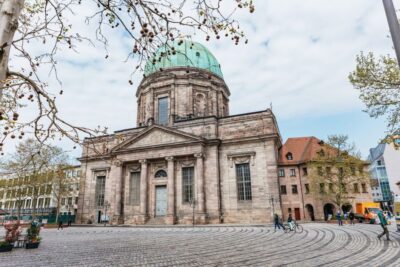
- St. Lorenz and the stories inside a landmark
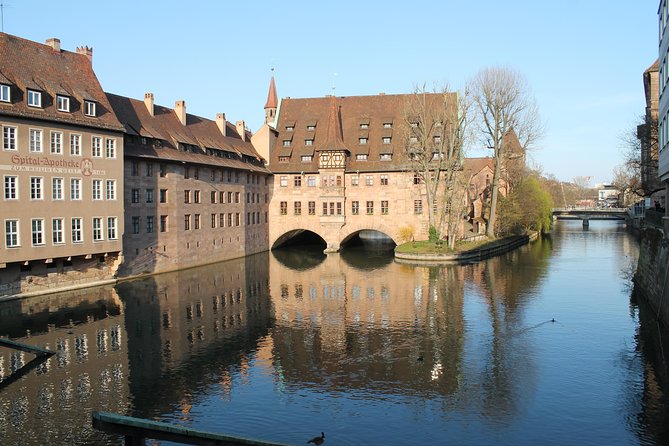
- Heilig-Geist-Spital and Till Eulenspiegel
- Weisser Turm and the first city wall
- Ehekarussell, a fountain about married life
- Unschlitthaus and the mystery of Kaspar Hauser
- Hangman’s Bridge and Nuremberg’s least desired trade
- Weissgerbergasse, the most medieval street
- Beim Tiergärtnertor and the city walls
- Kaiserburg and the final medieval tales
- What $19.60 gets you
- Who should book this Spanish walking tour
- Final verdict: a smart way to meet Nuremberg’s stranger side
- FAQ
- Where does the Medieval Tour in Nuremberg in Spanish begin?
- What time does the tour start?
- Where does the tour end?
- How long does the tour last?
- Is admission to the attractions included?
- Can I cancel for a full refund?
Key points at a glance
- Spanish-language storytelling: The guide explains Nuremberg’s medieval customs, legends, crimes, and characters in Spanish.
- Ten old-city stops: The route runs from Hauptmarkt to the Imperial Castle, covering churches, bridges, fountains, towers, alleys, and walls.
- A darker side of Nuremberg: Witchcraft, executioners, Kaspar Hauser, and medieval punishments receive as much attention as the city’s better-known sights.
- The route ends at Kaiserburg: You finish at Nuremberg Castle, one of the city’s major attractions, with the rest of the afternoon free.
- Good small-group limit: The maximum group size is 30 people, large enough to keep the price low but limited enough for a guided street walk.
- Flexible booking value: The $19.60 price includes the Spanish guide, and cancellation is free up to 24 hours before the start time.
Why this Nuremberg walk feels different
Many first visits to Nuremberg follow a familiar route: Hauptmarkt, St. Lorenz, the castle, and perhaps the Christmas market. This tour uses those places as a framework, then adds the less polished stories that give a medieval town its character.
You hear about witches and witch-hunting, but not as a vague tale of superstition. The tour presents witchcraft as a feared trade and explains how accusations could become a solution when people wanted someone to blame. That subject gives the walk a darker edge, so it may not suit you if you want a purely architectural sightseeing tour.
The legends are lighter in places. Expect stories involving the devil, a clever boy, knights who supposedly flew with their horses, and Till Eulenspiegel, the famous trickster figure. This mix keeps the afternoon from becoming a long lecture. One stop may deal with death or punishment, while the next turns toward marriage, foolishness, or an odd local tale.
I especially like this balance. Nuremberg’s medieval past becomes easier to remember when you can connect a building with a character, a fountain with a joke, or a bridge with a grim profession.
Other Nuremberg trips people book alongside this one:
- Bamberg: Guided Walking Tour
★ 4.6 · 3,202 reviews - Nuremberg: City Tour with the Bimmelbahn Train
★ 4.4 · 2,475 reviews - Nuremberg: Old Town Guided Walking Tour
★ 4.6 · 2,416 reviews
Starting at Hauptmarkt at 3:30 pm
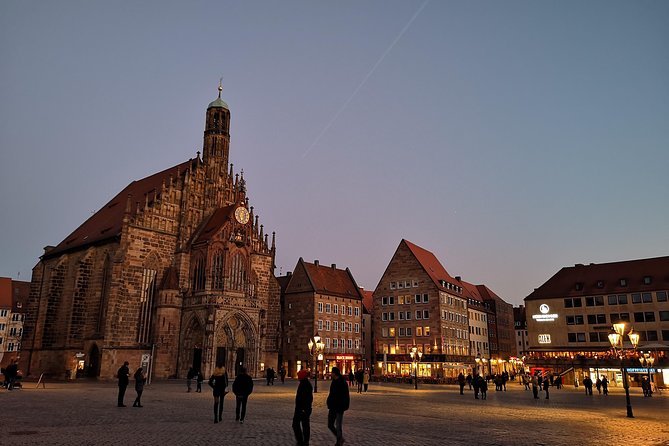
The tour begins at Hauptmarkt 14, in the central market square. This is a practical meeting point because it is one of the easiest places to reach in the old town, and the tour starts with a ten-minute introduction to Nuremberg’s history.
Do not treat this first stop as a long museum-style lesson. It functions more like a map for the rest of the walk. The guide sets up the city’s development and prepares you to notice how the old center fits together.
The 3:30 pm start is useful if you have already spent the morning seeing major sights. You can visit a museum, explore the market square, or take lunch before joining the walk. It also means the tour moves into the later part of the day, so bring a layer and comfortable shoes. The tour is outdoors, and weather clearly matters. One account specifically praised Fede for making a rainy afternoon enjoyable, but rain can still affect your comfort.
St. Lorenz and the stories inside a landmark
The second stop is St. Lorenz, where the guide spends about ten minutes discussing the church’s construction and its particular stories. This is a good example of the tour’s method: you do not simply stop to admire a major building, then move on. You get a short explanation of how it came to be and why its local stories matter.
The stop is brief, which helps keep the overall route moving. If you want a detailed architectural study of St. Lorenz, ten minutes will not be enough. For a first orientation, though, the timing is sensible. You get context without using half the tour on one church.
Because the tour is in Spanish, this stop may be especially helpful if you prefer hearing historical explanations in your strongest language. The guide’s job is not just to point at stonework. It is to make the building part of a larger story about the city.
Heilig-Geist-Spital and Till Eulenspiegel
At Heilig-Geist-Spital, the focus shifts to Till Eulenspiegel. The stop lasts around ten minutes and adds a playful character to the route.
That change of tone matters. Medieval stories are not only about rulers, battles, and religious buildings. Tricksters such as Eulenspiegel bring in humor, mischief, and the sharp social observations that often survive in popular tales.
The stop also helps you see the old city as a place where people lived ordinary lives, not just a backdrop for official history. The tour’s appeal comes from these smaller human details. You are not only collecting names and dates. You are hearing the kinds of stories that make a street or building easier to recall later.
Something different for another day:
- Nuremberg: Tunnels and Secret Passages in the City Wall Tour
★ 4.8 · 2,334 reviews - Nuremberg: Medieval Dungeons Guided Tour
★ 4.8 · 1,726 reviews - Nuremberg: Walking Tour of Former Nazi Party Rally Grounds
★ 4.7 · 1,665 reviews - Nuremberg: Historischer Kunstbunker WWII Art Bunker Tour
★ 4.8 · 921 reviews
Weisser Turm and the first city wall
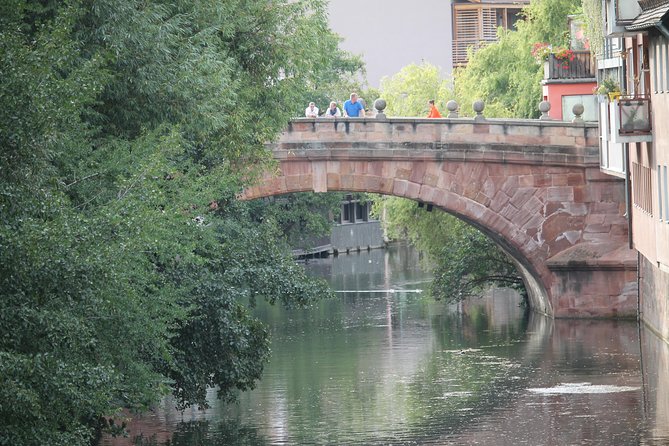
The Weisser Turm receives a shorter five-minute stop. The subject is the tower of the first city wall, so the guide gives you a compact look at Nuremberg’s defensive structure.
A five-minute explanation may sound minor, but it helps break up the route. City walls can be difficult to understand when you see only one surviving section or tower. A guide can point out how the piece fits into the old city’s protective system.
This is also where the walking format pays off. You move through the city rather than viewing every monument as an isolated object. The wall, streets, bridges, and castle begin to read as parts of one medieval town.
Ehekarussell, a fountain about married life
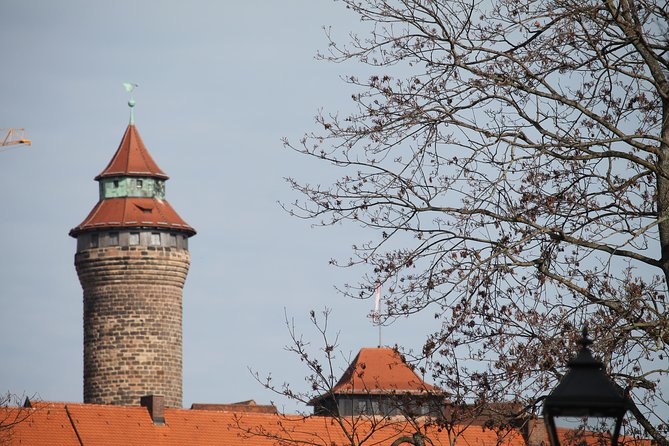
The Ehekarussell is one of the tour’s more memorable stops. The guide spends about ten minutes discussing this fountain, described as a source of the delights of married life.
The title alone suggests that the fountain is not a quiet, sentimental monument. It reflects the pleasures and troubles of marriage, with a lively and possibly biting view of domestic life. The tour uses the fountain to introduce a different kind of historical evidence: public art that comments on human behavior.
This fits the wider theme of the afternoon. You are not just looking for famous buildings. You are learning how Nuremberg represented love, madness, death, foolishness, and daily work in its streets and monuments.
If you prefer a strictly factual tour, some of the fountain’s legends may feel less solid than the architectural material. If you enjoy symbolism and local tales, it should be one of the stronger stops.
Unschlitthaus and the mystery of Kaspar Hauser
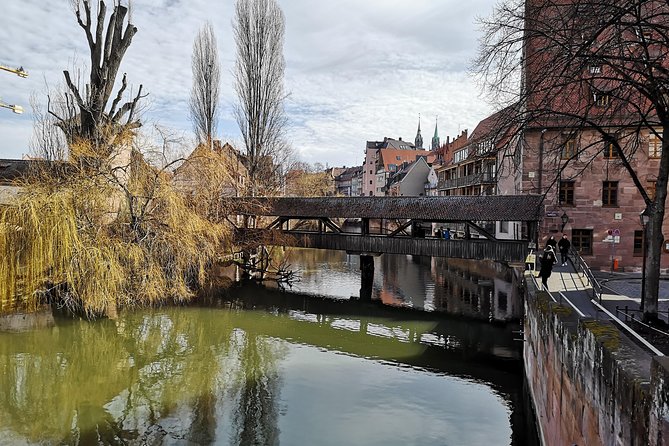
At Unschlitthaus, the subject turns to Kaspar Hauser, described as one of Europe’s most mysterious figures. The guide spends about ten minutes on his story and the palace intrigues connected with it.
Kaspar Hauser’s tale brings a later mystery into a route otherwise focused heavily on medieval Nuremberg. That contrast is useful. The city’s strange stories did not end when the Middle Ages passed, and this stop shows how political secrets and uncertain identity could continue to shape its reputation.
You should expect an introductory account rather than an exhaustive investigation. Ten minutes is enough to explain why Hauser became known as the orphan of Europe, but not enough to examine every theory surrounding him. The benefit is variety. The tour avoids becoming locked into one period or one type of story.
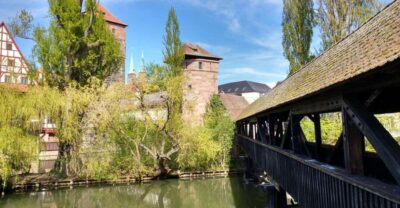
Hangman’s Bridge and Nuremberg’s least desired trade
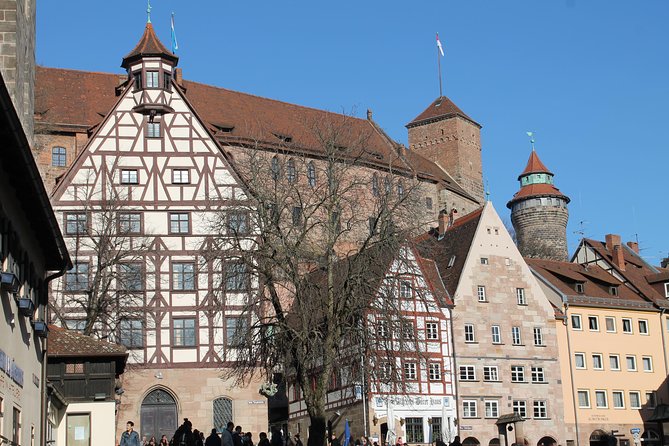
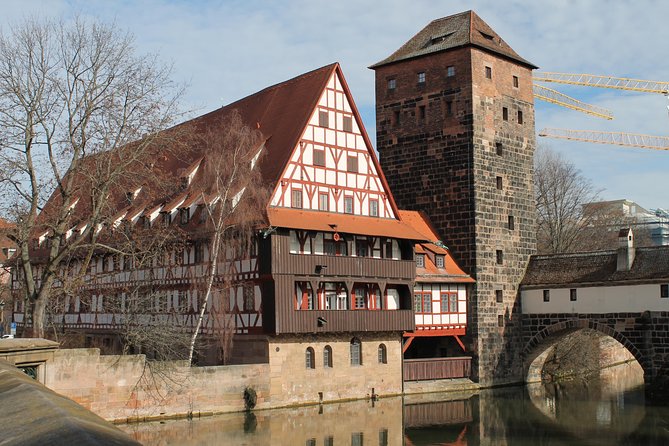
The Hangman’s Bridge introduces the executioner and his trade. The guide gives this stop about ten minutes, using the location to discuss both the profession and the achievements of Nuremberg’s executioner.
This is one of the tour’s most distinctive subjects. Medieval city life depended on many trades, but some workers were pushed to the edge of society. The executioner had a necessary job and a feared reputation, creating a sharp conflict between public need and social exclusion.
I like this stop because it shifts attention away from kings and churches. You get a look at the people who maintained order through punishment, and at the uncomfortable work that respectable society preferred not to discuss.
The subject may be unsettling for children or anyone who wants a gentle family outing. The supplied details do not describe graphic demonstrations, but the theme itself is grim.
Weissgerbergasse, the most medieval street
Weissgerbergasse receives about ten minutes and is presented as the most medieval street in Nuremberg. This is one of the places where you can pause and simply read the shape of the old town around you.
A street like this is valuable because it provides visual context for the stories heard earlier. Towers, walls, bridges, and fountains can feel abstract when explained one by one. A preserved old street gives you a clearer sense of scale and atmosphere.
The stop is also a reminder that the tour is not only a chain of lectures. You are walking through the setting itself. The guide can connect the street to medieval trades and daily life, including the crafts that helped give Nuremberg its identity.
Because this is a public street rather than an enclosed attraction, the experience depends on the group’s ability to gather and listen. A group of up to 30 is manageable, but you should stay close to the guide and avoid drifting behind.
Beim Tiergärtnertor and the city walls
At Beim Tiergärtnertor, the guide discusses Nuremberg’s walls and their less obvious history. The stop is short, about five minutes, but it prepares you for the final approach to the castle.
This part of the route is useful if you want a better sense of how the old city was enclosed and defended. Instead of seeing the wall as a photogenic backdrop, you begin to understand it as a working part of urban life.
The tour’s repeated focus on walls, towers, and gates gives the afternoon a clear shape. Nuremberg’s past is not presented as a pile of unrelated anecdotes. The defensive city, the working city, and the city of legends gradually come together.
Kaiserburg and the final medieval tales
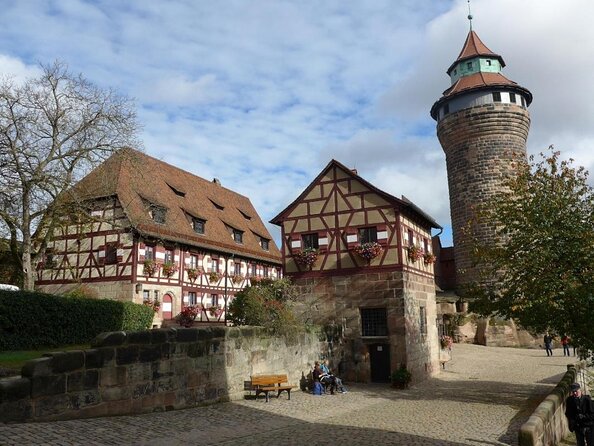
The tour ends at Kaiserburg, or the Imperial Castle of Nuremberg. The guide spends about 15 minutes here, making it the longest stop on the route.
That ending makes practical sense. Kaiserburg is one of Nuremberg’s major attractions, so you finish near a sight you may wish to explore on your own. The tour does not list castle admission as included, and the information provided identifies the guide as the included feature. Plan on treating the castle grounds and interiors as a separate part of your visit unless you confirm otherwise.
The final stories concern the castle’s darker side, including flying horses and women of bad life. These tales give the ending a strong sense of drama, even if you take them as legends rather than documented events.
Finishing at the castle also means the tour does not leave you far from the central sights. You can continue sightseeing, take photographs, or make your way back through the old town after the guide says goodbye.
What $19.60 gets you
At $19.60 per person, this is a low-cost way to add structure to an afternoon in Nuremberg. The price includes a Spanish-speaking guide and covers roughly ten points of interest over two and a half hours. Since the stops are free admission locations, you are paying for interpretation, route planning, and local storytelling rather than entry tickets.
That distinction matters. If you already know Nuremberg well and prefer to wander alone, you could visit many of these places without paying. But you would miss the connected stories about witchcraft, Kaspar Hauser, executioners, fountains, and medieval legends.
The value improves if you are visiting for the first time, speak Spanish more comfortably than German or English, or want a guided introduction without committing to a full-day program. The group can include up to 30 people, so this is not a private walk. Still, the limit is more controlled than an unrestricted public gathering.
The experience is booked an average of 31 days in advance, so reserving ahead is sensible if your schedule is fixed. Confirmation arrives at booking, and free cancellation is available until 24 hours before the start time. Changes or cancellations inside that window are not refunded.
Who should book this Spanish walking tour
I would recommend this tour to you if you enjoy unusual local stories and want more than a checklist of Nuremberg’s famous buildings. It is particularly well suited to Spanish-speaking visitors who want the guide’s humor and explanations to come naturally.
It also works well for a first afternoon in the city. The route introduces major landmarks while pointing out subjects you might otherwise miss. The castle finish gives you a useful next stop, and the 3:30 pm departure leaves the morning open.
Families may appreciate the legends about devils, tricksters, and flying horses, but the material about witch-hunting and executioners can be dark. Parents should decide if that tone suits their children.
You should think twice if you dislike walking, need a fully indoor activity, or want detailed access inside every major building. The tour is about streets, viewpoints, monuments, and spoken stories. It is not a museum tour, and admission to the sights is not part of the stated inclusion.
Final verdict: a smart way to meet Nuremberg’s stranger side
I would book this tour if I wanted a lively Spanish introduction to Nuremberg and had already seen, or planned to see, the city’s headline attractions. The strongest reasons are the unusual subjects, the clear old-town route, the castle finish, and the modest price.
The main tradeoff is simple: you are buying storytelling, not extensive interior visits. If that sounds right, this walk gives you a useful sense of the city’s medieval character, its darker customs, and its enduring legends. The repeated praise for Fede’s communication, preparation, humor, and ability to keep the group engaged in bad weather is another encouraging sign, though you should confirm the assigned guide when booking if that matters to you.
FAQ
Where does the Medieval Tour in Nuremberg in Spanish begin?
The tour begins at Hauptmarkt 14, 90403 Nürnberg, Germany.
What time does the tour start?
The scheduled start time is 3:30 pm.
Where does the tour end?
The tour ends at the Imperial Castle of Nuremberg, at Burg 17, 90403 Nürnberg, Germany.
How long does the tour last?
The experience lasts approximately 2 hours and 30 minutes.
Is admission to the attractions included?
The stated inclusion is a guide in Spanish. The itinerary lists free admission at each stop, but it does not state that admission to the Imperial Castle interiors is included.
Can I cancel for a full refund?
Yes. You can cancel for a full refund if you cancel at least 24 hours before the experience start time. Cancellations or changes made less than 24 hours before the start are not refunded.
Just added around Nuremberg
- Nuremberg: St. Johannis Friedhof &Hesperidengärten IN GERMAN★ 4.4 · 15 reviews
- Bayreuth: Private Guided Walking Tour★ 5.0 · 15 reviews
- Nuremberg: Medieval Time Travel for Kids★ 4.9 · 15 reviews
- PRIVATE Nuremberg WW2 and Old Town Day Tour (Product code: 87669P16)★ 4.5 · 15 reviews
- Bayreuth City Walking Tour★ 4.6 · 16 reviews
- Nuremberg: Medieval Ages Tour in Spanish★ 4.5 · 16 reviews
- PLAYMOBIL®-FunPark Entrance Ticket★ 4.5 · 17 reviews
- Nuremberg: Private guided tour of the Old Town in German★ 4.9 · 17 reviews
Nuremberg Tours, compared.

Tunnels and Secret Passages in the City Wall Tour
Read our review →
Walking Tour of Former Nazi Party Rally Grounds
Read our review →
Browse the lists this tour appears in