
Reviewed · NUREMBERG TOURS
Nuremberg: Medieval Time Travel for Kids
History gets hands-on in Nuremberg. This two-hour walk turns the Old Town into a classroom, using games, acting, objects, and short stories to explain how children lived in the Middle Ages. You learn about food, work, play, religion, water, and the city’s famous buildings without asking young children to stand still for a long lecture.
I especially like the active format, which gives children something to do at many stops. I also like the route itself: it links the Pegnitz, the market squares, St. Sebaldus Church, and the old lanes around Weißgerbergasse. The main limitation is simple but important: the tour is in German, and children under six cannot join.
The price is $11 per person, a fair deal for two hours with a live guide and several participatory activities. Families should bring comfortable shoes and clothing suited to the weather, since the experience takes place outdoors and involves steady walking through the Old Town.
In This Review
- Key points for families
- Starting beside the Henkerhaus
- Trödelmarkt and the first medieval questions
- The Pegnitz, water, and Liebesinsel
- Fleischhauerbrunnen and medieval work
- Hauptmarkt and Nuremberg’s famous market
- St. Sebaldus Church and the role of religion
- Weinmarkt and the rhythm of medieval childhood
- Finishing in Weißgerbergasse
- How much value do you get for $11?
- Who will enjoy this German-language walk?
- Practical booking details
- Should you book Nuremberg Medieval Time Travel for Kids?
- FAQ
- Where does the tour begin?
- How long does the walking tour last?
- What language is the tour in?
- Can children under six participate?
- Is the tour suitable for people with mobility impairments?
- What happens if I need to cancel?
Key points for families
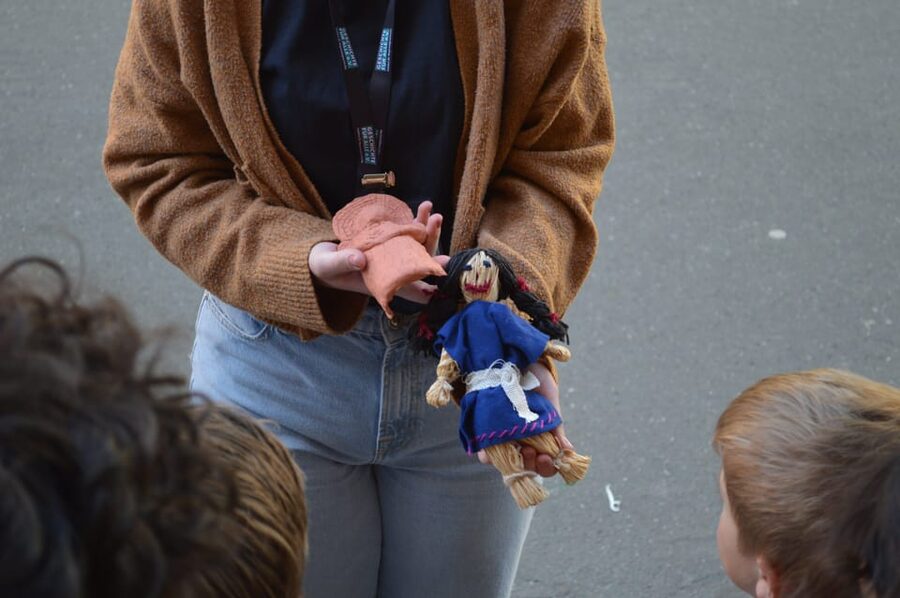
- History through play: Children take part in historical games and help stage a sacred ritual instead of only listening to explanations.
- A route with real variety: The walk moves from the Henkerhaus and Pegnitz to markets, fountains, St. Sebaldus Church, and Weißgerbergasse.
- Useful everyday questions: The guide explains what children ate, how they spent free time, and which jobs shaped medieval life.
- Best for ages six and up: The activities suit school-age children, with particularly strong appeal for children around seven to ten.
- German-language experience: The guide speaks German, so basic comprehension is important for getting the most from the stories and instructions.
- Strong value at $11: Two hours of guided history and group activities costs less than many standard city tours.
Starting beside the Henkerhaus
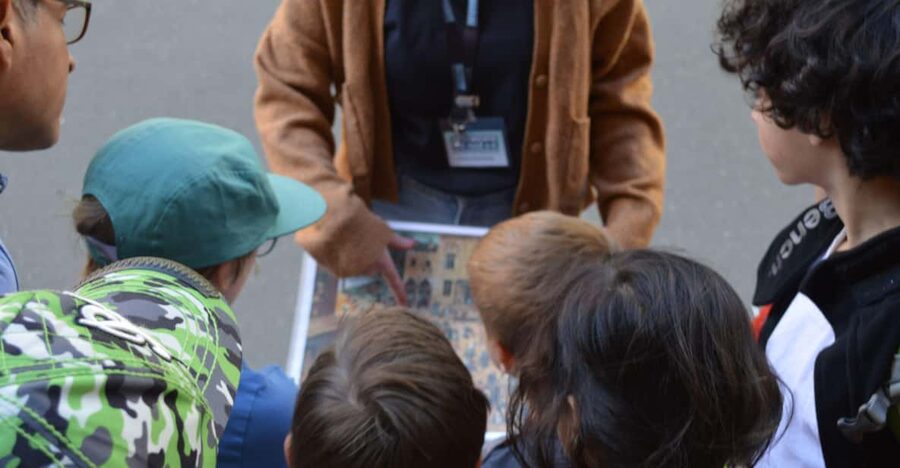
The meeting point is in front of the Henkerhaus, or Hangman’s House, at Trödelmarkt. Look for the guide wearing a green name badge and carrying a folder marked Geschichte Für Alle. This makes the starting point easier to identify, especially in the compact but busy Old Town.
The Henkerhaus is a fitting place to begin. Even before the walk starts, the building gives children a concrete reminder that medieval cities had very different rules, jobs, and ideas about daily life. The tour uses this setting to move into broader questions about childhood and society rather than focusing only on kings, battles, and castles.
You do not need to expect a formal museum visit as part of the tour. The listed activity is a guided walking tour, so the main value comes from the guide’s explanations, demonstrations, and group participation along the route.
The tour lasts about two hours. That is long enough to cover several parts of the Old Town but short enough for most school-age children to manage. You should still plan for frequent standing and walking, since the route includes several five-minute walks and one section of about seven minutes.
Other Nuremberg trips people book alongside this one:
- Bamberg: Guided Walking Tour
★ 4.6 · 3,202 reviews - Nuremberg: City Tour with the Bimmelbahn Train
★ 4.4 · 2,475 reviews - Nuremberg: Old Town Guided Walking Tour
★ 4.6 · 2,416 reviews
Trödelmarkt and the first medieval questions
The first guided section takes place at Trödelmarkt, near the meeting point. From here, the guide begins building a picture of ordinary life. The focus is not only on famous people. It is on questions children can understand: What did you eat? What did you do after work? What games did you play? What did adults expect from you?
This approach helps children connect with the past. A child may not care much about a date or a ruler, but food, play, chores, and school-age responsibilities are easier to picture. The tour also asks the fun question of whether knights and princesses really lived in Nuremberg, allowing the guide to separate storybook images from city life.
The teaching style is a major strength. The guide uses clear materials, acting, and participation, according to the experience details. That combination can hold attention better than a standard walking tour, particularly for children who lose interest when a guide talks for too long.
The exact number of participants is not provided, so the feel of the group can vary. For groups of 10 or more, the provider asks you to contact Geschichte Für Alle e.V. by email before booking.
The Pegnitz, water, and Liebesinsel
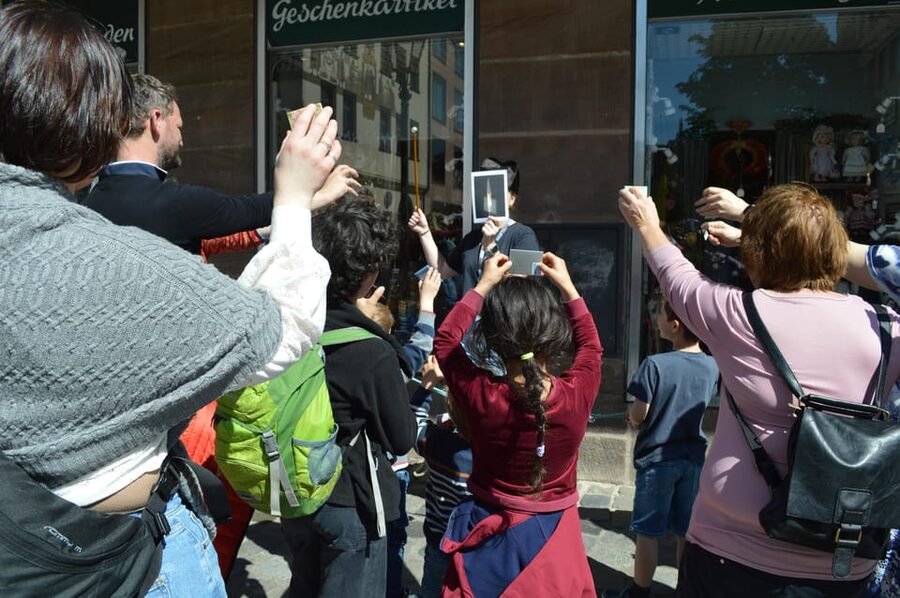
After Trödelmarkt, the group walks about five minutes to Liebesinsel. This part of the route brings the river Pegnitz into the story. Instead of treating the water as a pretty view alone, the guide explains how water was used in medieval times.
That practical angle is valuable. Children can begin to see the river as part of the city’s working life, not just scenery. Water affected cooking, cleaning, trade, crafts, and the placement of homes and businesses. The supplied information does not specify every example used by the guide, so you should expect a general explanation of medieval water use rather than a technical lesson.
Liebesinsel also gives the group a change of pace. The tour moves away from the first square and into a setting where the relationship between the city and the Pegnitz is easier to discuss. For children, a short walk beside the water can make the tour feel less like a sequence of monuments.
Parents should note that this is still a walking stop rather than a separate water activity. You will be learning beside the river, not taking a boat ride or participating in an activity on the water.
Fleischhauerbrunnen and medieval work
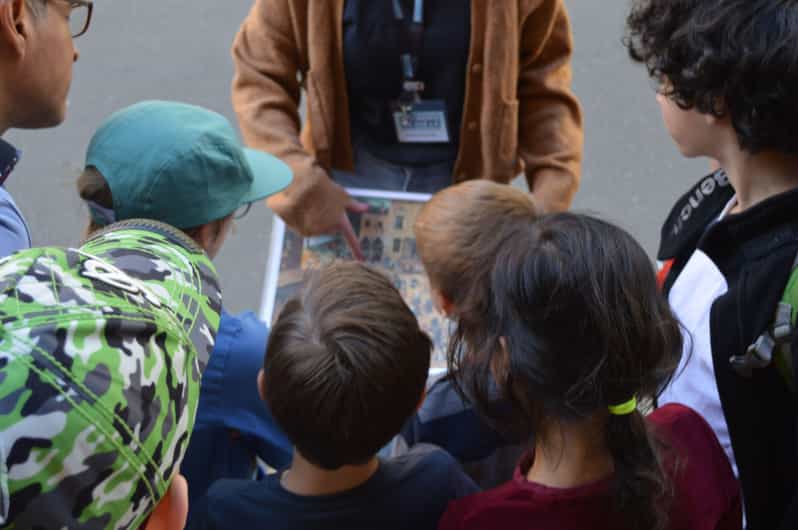
The next walk takes about five minutes and leads to Fleischhauerbrunnen. The fountain provides a useful opening for discussing medieval professions and working life. The tour looks at the jobs that kept the city fed and functioning, including the work suggested by the fountain’s name.
This is one of the most useful sections for families because it gives children a wider view of the Middle Ages. Medieval life was not only about nobles and soldiers. It also depended on tradespeople, food workers, craftspeople, religious figures, and families who worked from day to day.
The tour’s emphasis on different medieval professions helps children compare the past with their own lives. You may find that the guide uses the setting to explain how work shaped where people lived, what they sold, and how the city operated. The details provided do not list every profession covered, so the exact examples may depend on the guide.
This stop also adds physical variety. By this point, children have moved through several parts of the Old Town and are not being asked to absorb the entire subject in one place.
Something different for another day:
- Nuremberg: Tunnels and Secret Passages in the City Wall Tour
★ 4.8 · 2,334 reviews - Nuremberg: Medieval Dungeons Guided Tour
★ 4.8 · 1,726 reviews - Nuremberg: Walking Tour of Former Nazi Party Rally Grounds
★ 4.7 · 1,665 reviews - Medieval Tour in Nuremberg in Spanish
★ 5.0 · 1,374 reviews
Hauptmarkt and Nuremberg’s famous market
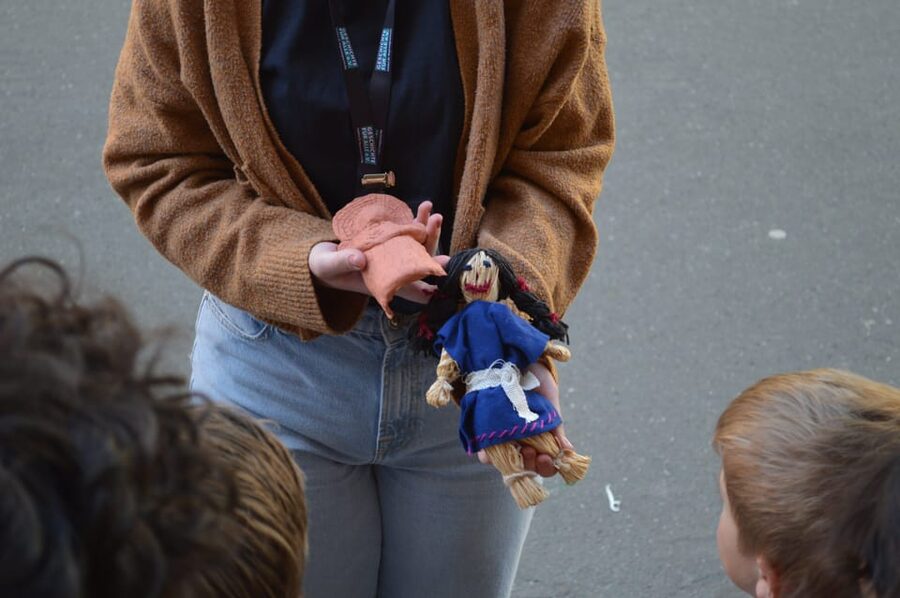
Another five-minute walk brings you to Hauptmarkt, the large central market square. This is the place best known today for Nuremberg’s annual Christmas market, but the tour uses it to explore the older role of markets in city life.
A medieval market was not simply a place to buy souvenirs or seasonal treats. It was where food, goods, work, social contact, and city rules came together. The guide can use this open square to explain what people bought, how food fit into daily life, and how public spaces helped organize the community.
The food section is especially appealing for children. They learn what children ate in the Middle Ages, which makes the past feel more immediate than a list of buildings. The supplied details do not specify a menu, so you should not expect food tasting. This is a history discussion, possibly supported by examples or materials.
Hauptmarkt can also be the busiest section of the route, particularly during the Christmas market season. Keep children close and allow extra time to locate the group if you arrive early or the square is crowded. The guide’s green badge and Geschichte Für Alle folder are useful identification marks.
St. Sebaldus Church and the role of religion
From Hauptmarkt, the group walks about five minutes to St. Sebaldus Church. Outside the church, the guide examines a relief and uses it to explain the role of the church in medieval society.
This is an important part of the tour because religion shaped far more than worship. The church influenced public rituals, community identity, celebrations, moral rules, and the rhythm of the year. Children take part in a joint staging of a sacred ritual, giving them a chance to see how belief could be expressed through action and ceremony.
The activity is designed as group participation rather than a private religious service. That distinction matters. The purpose is to help children understand a historical practice and the place of the church in daily life.
The church stop also introduces a subject that can be harder to explain to children in a conventional city tour. A relief gives the guide something visible to point toward, while the ritual gives children a way to remember the lesson. The experience information does not state that the group enters the church, so plan on the main explanation taking place outside.
Families should also remember that the tour is conducted in German. Children who understand German will get the full benefit from the ritual instructions, stories, and questions. Adults may be able to translate short points, but that can be difficult if the group is moving quickly.
Weinmarkt and the rhythm of medieval childhood
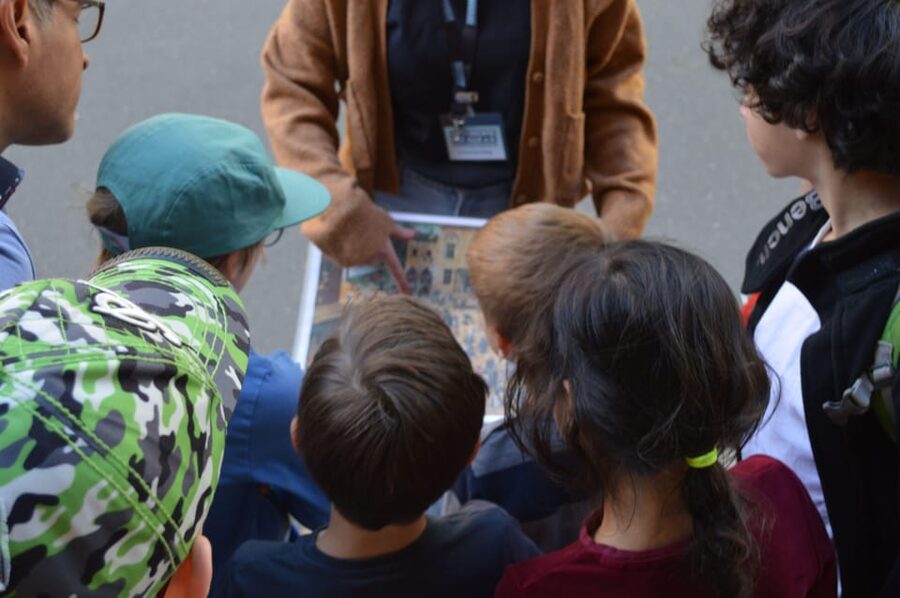
The walk from St. Sebaldus Church to Weinmarkt takes about five minutes. This section continues the discussion of childhood, leisure, food, and work. The guide connects the physical streets of the Old Town with the routines of children who lived in a very different society.
The central idea is that childhood was not the same in every period or social class. The tour looks at what children played with, how they spent free time, and how early they may have become involved in working life. These are strong questions for a family tour because children can compare their own routines with those of children centuries ago.
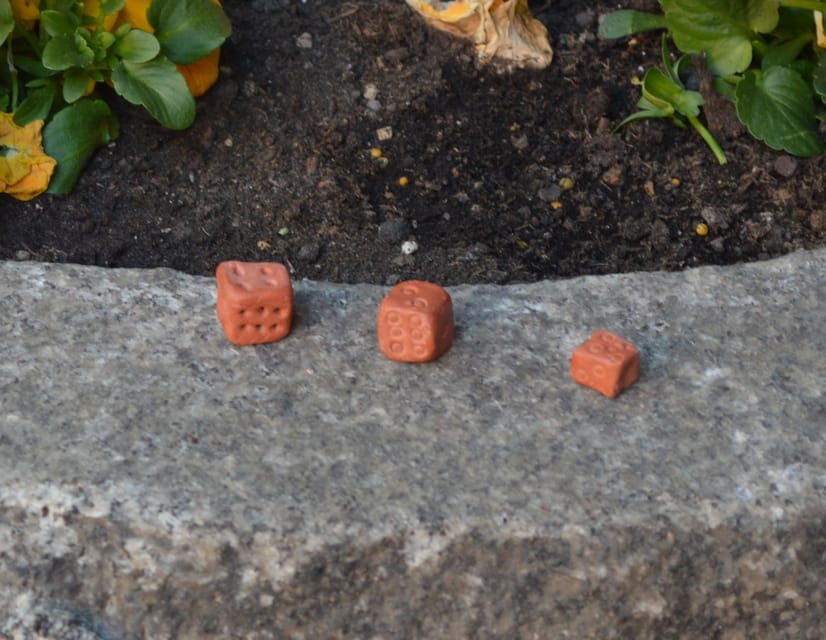
The historical games are a highlight here or at nearby stops. They give children a break from listening and allow them to learn through movement. The exact games are not specified, so you should expect simple group activities rather than a full reenactment event.
The games also help adults. Parents often know the broad outline of medieval history but may not know how to explain ordinary childhood. This tour fills that gap with topics that are easy to discuss on the walk home.
Finishing in Weißgerbergasse
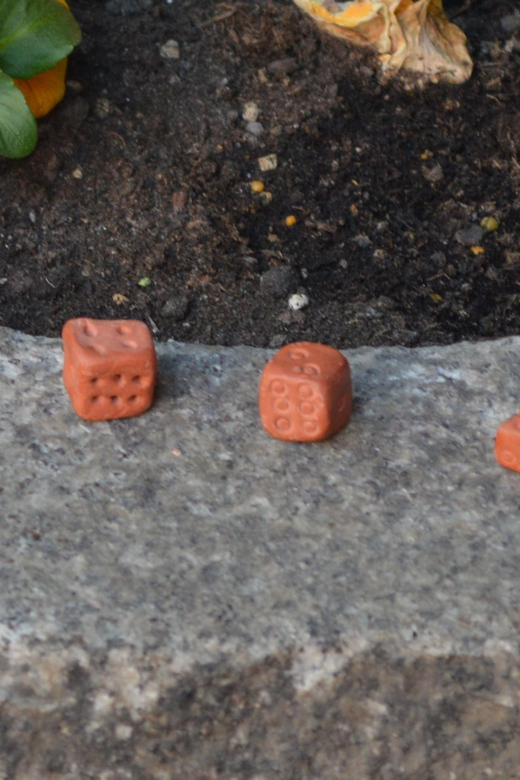
The final section takes about seven minutes on foot and ends at Weißgerbergasse. The route finishes in one of Nuremberg’s most recognizable historic streets, giving the walk a strong visual ending.
The experience does not include transportation back to the starting point. You should be prepared to make your own plans from Weißgerbergasse after the tour. Since the walk ends in the Old Town, you can continue sightseeing on foot, but the activity information does not promise a return transfer or additional guided time.
Ending here works well for a family group because the tour has gradually moved through different parts of the city rather than circling one square. By the end, children have encountered water, markets, work, religion, food, games, and city streets as parts of one connected story.
The finish also leaves you near an attractive area for further independent exploring. The tour itself ends at Weißgerbergasse, so any extra sightseeing, meals, or museum visits are separate plans.
How much value do you get for $11?
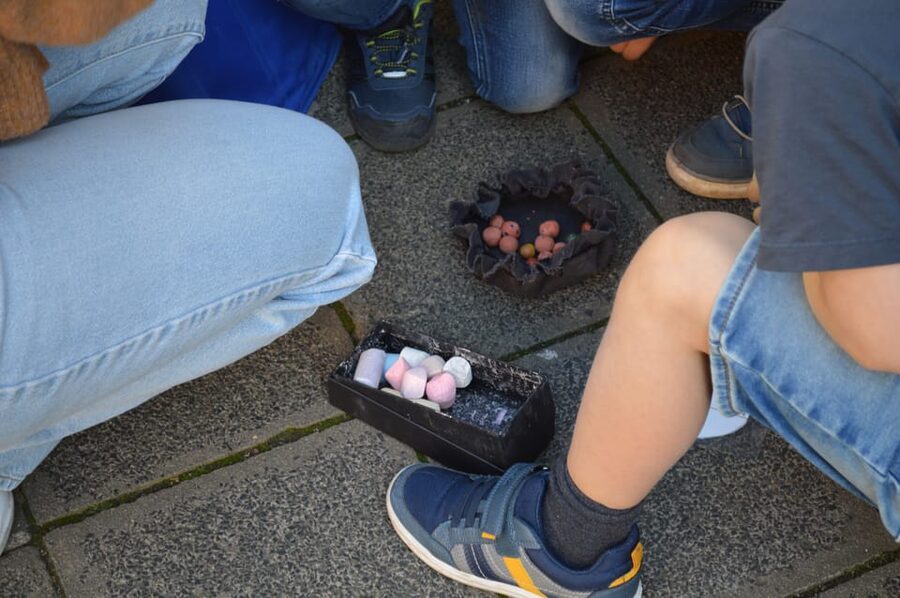
At $11 per person, this is a strong-value activity if your children can follow German. You receive two hours of guided interpretation, a planned Old Town route, historical games, participatory storytelling, and a lesson built around everyday life rather than only major monuments.
The price is particularly reasonable for families with several children. A standard private guide or a specialized family activity can cost much more, while this walk keeps the format affordable. You are paying for the guide’s presentation and structure, not for entrance tickets, food, transport, or a museum visit.
That last point matters. If you want indoor attractions or a snack included, this is not the right product. It is an outdoor walking experience, and its value depends on how much your family enjoys stories, acting, questions, and short activities.
The 4.9 rating from 15 verified bookings suggests very strong satisfaction, but the sample is small. The most consistent praise centers on the child-friendly presentation, the use of games, the acting, and the fact that adults can learn too. One family particularly enjoyed it with boys aged seven and eight, while another found it suitable for children aged six and ten.
Who will enjoy this German-language walk?
I would choose this for families with children roughly six to twelve who enjoy taking part rather than sitting quietly. The strongest fit appears to be children around seven and eight, since the activities can hold their attention while the historical themes remain understandable.
It can also work well for grandparents, parents, and children together. The subjects are simple enough for children but broad enough to give adults useful context about work, food, religion, and city life.
I would not book it for children under six, since they are specifically excluded. I would also think carefully before booking for anyone with mobility impairments. The route includes repeated walking between stops, and the activity is not suitable for people with mobility impairments.
German ability is the other key test. The tour language is German, and no other language is listed. If your child understands only a little German, the physical games may still be enjoyable, but the historical explanations will be harder to follow.
Wear comfortable shoes and weather-appropriate clothing. There is no promise of indoor shelter during the walking route, so weather can affect the experience.
Practical booking details
The guide meets you in front of the Henkerhaus at Trödelmarkt. Look for a green name badge and the folder labeled Geschichte Für Alle. The provider is Geschichte Für Alle e.V.
The tour runs for two hours, with starting times shown according to availability. You can cancel up to 24 hours before the start for a full refund, and the reserve now, pay later option lets you hold a place without paying at once.
For a group of 10 or more, contact the provider at [email protected]. Bookings made through GetYourGuide do not receive a separate invoice. The booking confirmation serves as proof of payment.
Should you book Nuremberg Medieval Time Travel for Kids?
Book it if your family wants active history in German, not a quiet monument tour. The combination of games, acting, a sacred ritual, and practical questions about food and work gives children a clear way into Nuremberg’s past.
Skip it if your children are under six, cannot understand German, or struggle with a two-hour outdoor walk. Also skip it if you want museum entry, food tasting, or transport included.
For families with German-speaking children aged six and up, the low price and carefully varied route make this an easy recommendation. It gives you a useful look at Nuremberg beyond knights and Christmas markets, while keeping children involved from the Henkerhaus to Weißgerbergasse.
FAQ
Where does the tour begin?
The tour begins in front of the Henkerhaus, also called the Hangman’s House, at Trödelmarkt in Nuremberg. The guide can be identified by a green name badge and a folder marked Geschichte Für Alle.
How long does the walking tour last?
The tour lasts two hours. The route includes several walks of about five minutes and one final walk of about seven minutes.
What language is the tour in?
The live guided tour is conducted in German. No other tour language is listed.
Can children under six participate?
No. The activity is not suitable for children under six years old.
Is the tour suitable for people with mobility impairments?
No. The activity is listed as unsuitable for people with mobility impairments because it is a walking tour through the Old Town.
What happens if I need to cancel?
You can cancel up to 24 hours in advance for a full refund. You can also reserve now and pay later, subject to the booking conditions.
Just added around Nuremberg
- Bayreuth: Private Guided Walking Tour★ 5.0 · 15 reviews
- Nuremberg: St. Johannis Friedhof &Hesperidengärten IN GERMAN★ 4.4 · 15 reviews
- PRIVATE Nuremberg WW2 and Old Town Day Tour (Product code: 87669P16)★ 4.5 · 15 reviews
- Bayreuth City Walking Tour★ 4.6 · 16 reviews
- Nuremberg: Medieval Ages Tour in Spanish★ 4.5 · 16 reviews
- PLAYMOBIL®-FunPark Entrance Ticket★ 4.5 · 17 reviews
- Nuremberg: Private guided tour of the Old Town in German★ 4.9 · 17 reviews
- Nuremberg: Medieval Darkness Exploration Game★ 4.0 · 18 reviews
Nuremberg Tours, compared.
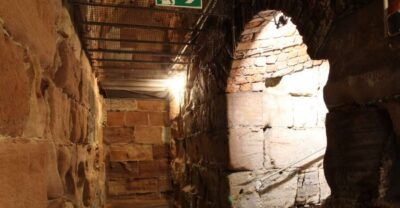
Tunnels and Secret Passages in the City Wall Tour
Read our review →
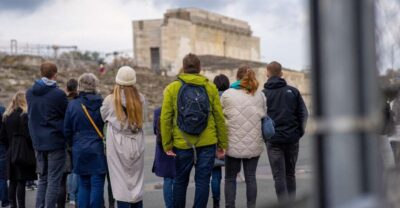
Walking Tour of Former Nazi Party Rally Grounds
Read our review →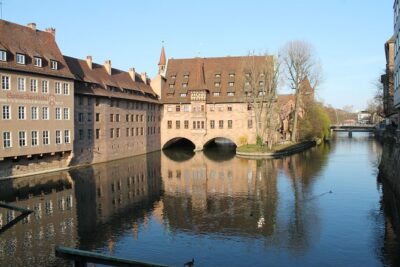
Browse the lists this tour appears in