
Reviewed · CITY TOURS
Nuremberg: Tunnels and Secret Passages in the City Wall Tour
Hidden below Nuremberg, the defenses tell the story. This one-hour walk takes you behind the sandstone walls of the Imperial Castle and into narrow corridors built for war. I like the chance to see parts of Nuremberg that you cannot reach on a normal castle visit, and I like how the tour connects damp tunnels, cannon-proof bastions, medieval weapons, and city politics into one clear story. The main drawback is physical: expect steep old stairs, ramps, uneven footing, low sections, and some tight spaces.
I also appreciate the $14 price, which is modest for access to both the defensive corridors and secret passages beneath the Imperial Castle. Guides such as Alan, Tom, Andreas, Martin, and Ralf have been praised for making the material lively and welcoming, though one practical issue matters: a few people found soft-spoken guides hard to hear in the tunnels.
In This Review
- Key points to know before you go
- Starting at the Historischer Kunstbunker
- Walking the sandstone city walls
- The moat and cannon-resistant bastions
- Inside the secret passages beneath the castle
- Guides who turn stone into a story
- What the $14 ticket is really buying
- Who should book this castle-wall tour?
- How to fit it into a Nuremberg day
- Should you book it?
- FAQ
- How long does the Nuremberg tunnels tour last?
- How much does the tour cost?
- Where is the meeting point?
- What languages are available?
- What should I wear?
- Is the tour suitable for wheelchair users or people with mobility impairments?
Key points to know before you go
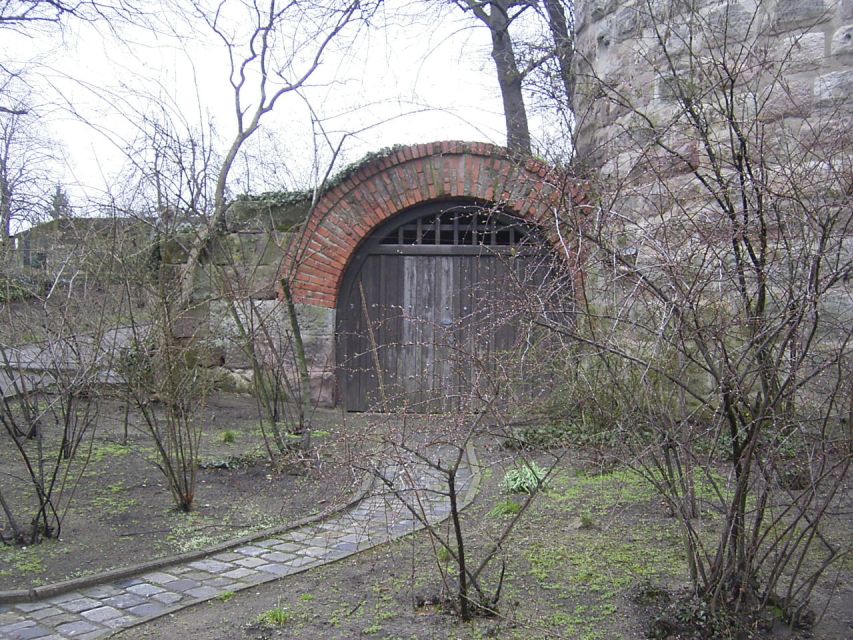
- The route goes below the Imperial Castle: You enter old passages cut into the sandstone rock, not just a standard city-wall walkway.
- Sixteenth-century bastions show later military design: These massive structures were made to withstand cannon fire.
- The tour is active, not leisurely: You climb many old stairs and ramps, with wet or muddy patches possible.
- Guides make the difference: The best guides use questions, humor, and clear explanations to bring the defenses to life.
- It costs $14 per person: For one hour of guided access to areas usually closed to casual visitors, I consider it good value.
- Warm, practical clothing matters: Wear non-slip shoes and avoid sandals, flip-flops, food, and drinks.
Starting at the Historischer Kunstbunker
The meeting point is in front of the Historischer Kunstbunker at Obere Schmiedgasse 52. That location places you close to the castle complex, so you are already in the right part of Nuremberg’s old town when the tour begins.
I would arrive early enough to find the entrance without rushing. The tour depends on punctuality, and one participant specifically found the guide strict about keeping to time. That is not a bad thing here. A group moving through narrow passages cannot easily wait for late arrivals.
The route is offered in English or German with a live guide. The English can be very good, but sound behaves oddly underground. If your guide speaks quietly, stay near the front and ask to move closer if needed. That small choice can make the difference between catching every detail and missing half the explanation.
The experience lasts one hour. That sounds brief, but the route packs in plenty because you are moving through tight spaces rather than covering a large outdoor area. One hour also works well in a Nuremberg sightseeing day. You can pair it with the castle, the old town, or the city walls without giving up half your afternoon.
More City Tours in Nuremberg
- Nuremberg: City Tour with the Bimmelbahn Train
★ 4.4 · 2,475 reviews - Bamberg: City Highlights Walking Tour
★ 4.6 · 679 reviews - Bayreuth: German City Walking Tour (Tourist Info)
★ 4.7 · 202 reviews
Walking the sandstone city walls
The first major idea is simple: Nuremberg’s defenses were not one wall built at one time. They were a working system, improved as weapons changed and attackers became more dangerous.
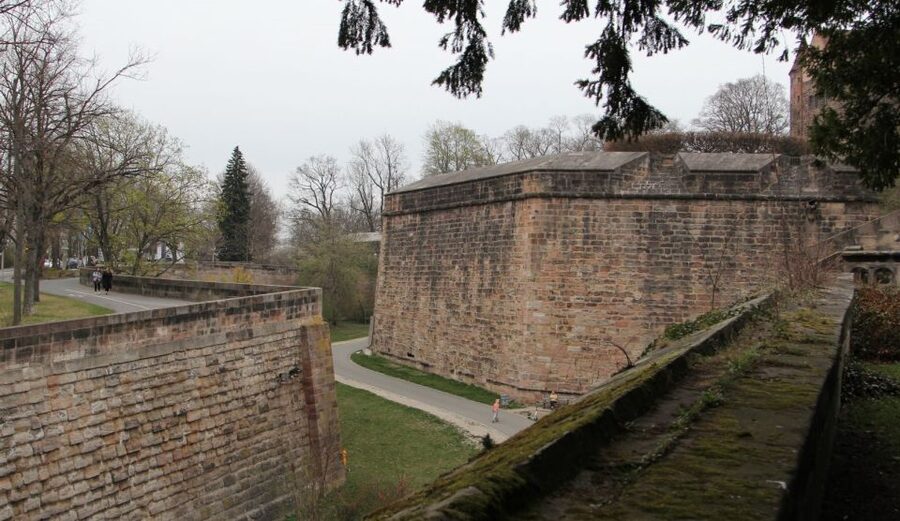
As you move along the city walls, you see how the castle rocks were used to create narrow tunnels and high-vaulted chambers. These spaces were practical military rooms, not decorative palace interiors. Their purpose was to help defenders watch, move, store weapons, and fire on anyone trying to force a way across the moat.
I enjoy this part because it changes how you look at the castle from outside. The tall sandstone walls can seem solid and silent from the street. Inside, they become a network of routes and firing positions. The castle was protected not only by height, but by angles, hidden movement, and carefully placed openings.
The setting also helps explain why Nuremberg was so difficult to conquer. A hostile force approaching the city faced walls, towers, a moat, and defenders who could attack from several directions. The design made it hard to find a safe approach.
This is also where the tour asks you to think like a medieval defender. You are shown the paths soldiers used and the points from which they could watch or fire. It is a useful way to understand the site. Instead of hearing only dates and rulers, you consider a practical question: if an enemy reached this spot, how would the city respond?
The moat and cannon-resistant bastions
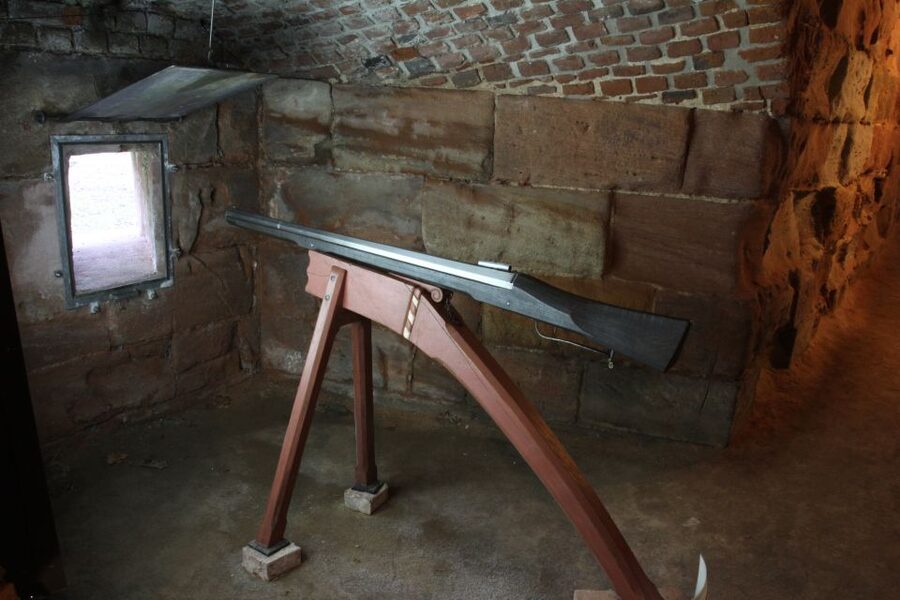
The moat is one of the most interesting parts of the defensive plan. The underground corridors were arranged so defenders could shoot at attackers as they tried to cross it. That detail turns the moat from a simple ditch into part of a coordinated weapon system.
The route also includes modern bastions built in the sixteenth century. Here, modern means later than the medieval core, not modern in the everyday sense. Their broad, heavy construction reflects the arrival of cannon fire, which forced European fortresses to change.
I value this historical progression. You can see how military architecture responds to technology. Tall medieval walls were useful, but cannon could batter them. The later bastions were shaped to absorb or resist that force, giving defenders stronger positions and better control over the approaches.
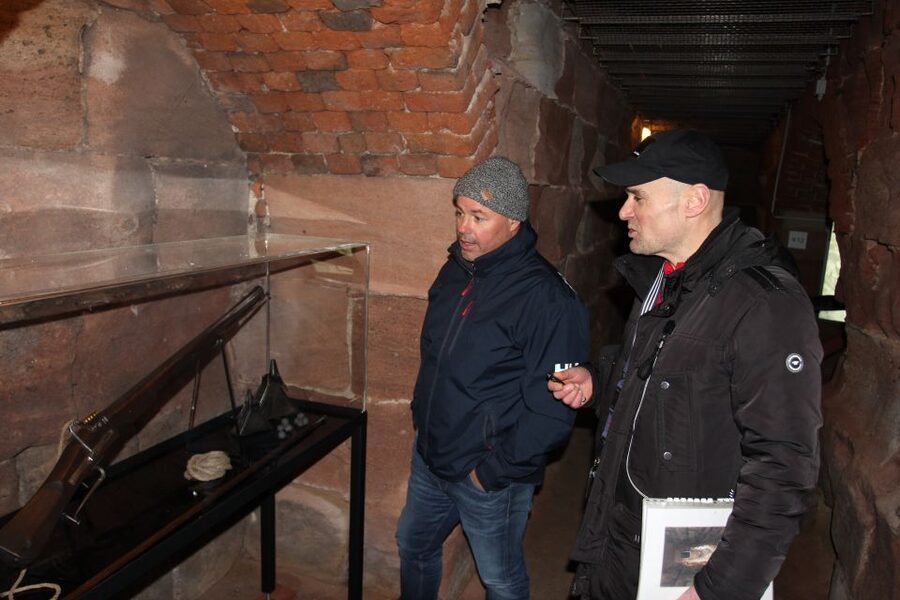
The guide explains how the walls and corridors worked together. You learn about firing positions, the moat, the movement of defenders, and weapons kept within the fortifications. The result is less a lesson about isolated stonework and more a picture of a city preparing for attack.
You should not expect a full military museum with large displays at every stop. The interest comes from the structures themselves and from the guide’s ability to explain what you are seeing. Tom and Andreas are among the guides praised for combining facts with humor, while Martin has been singled out for keeping the tour engaging for both adults and children.
Inside the secret passages beneath the castle
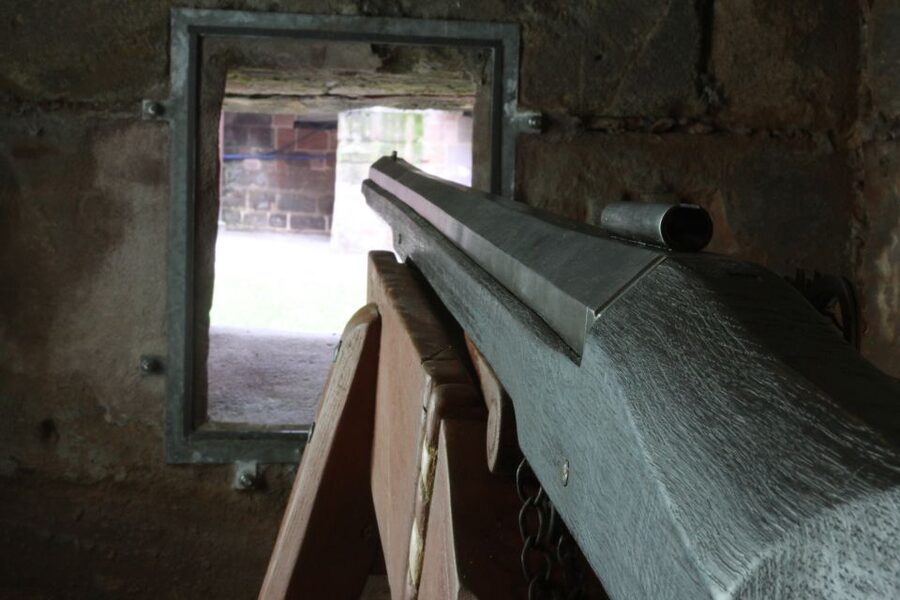
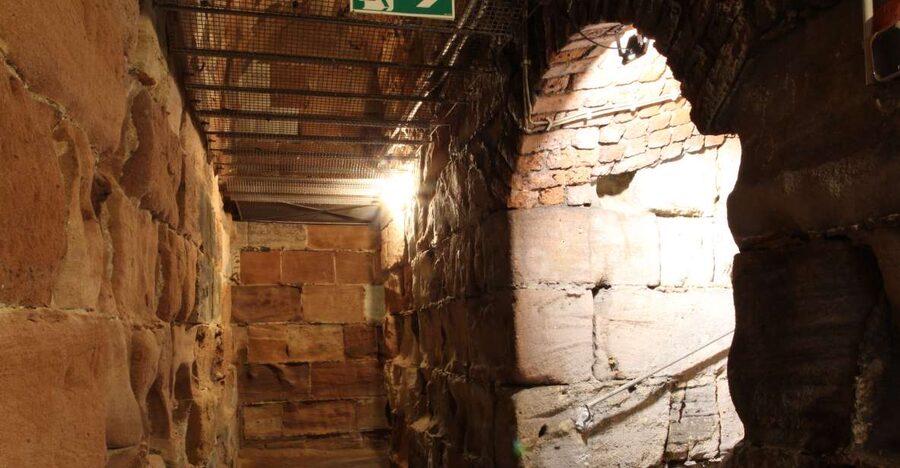
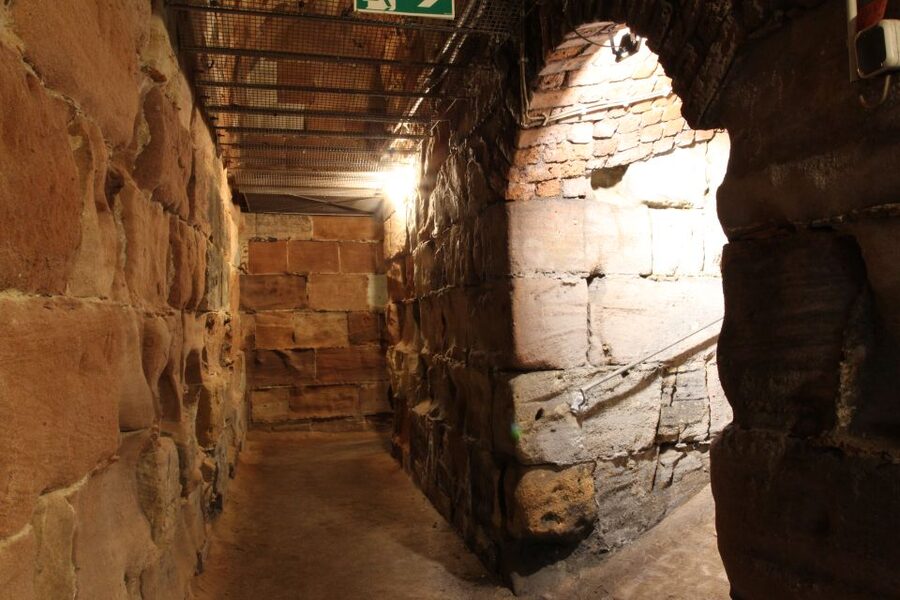
The strongest part of the tour is the underground section. You enter a maze of corridors beneath the Imperial Castle, moving through spaces cut into or built beside the sandstone rock.
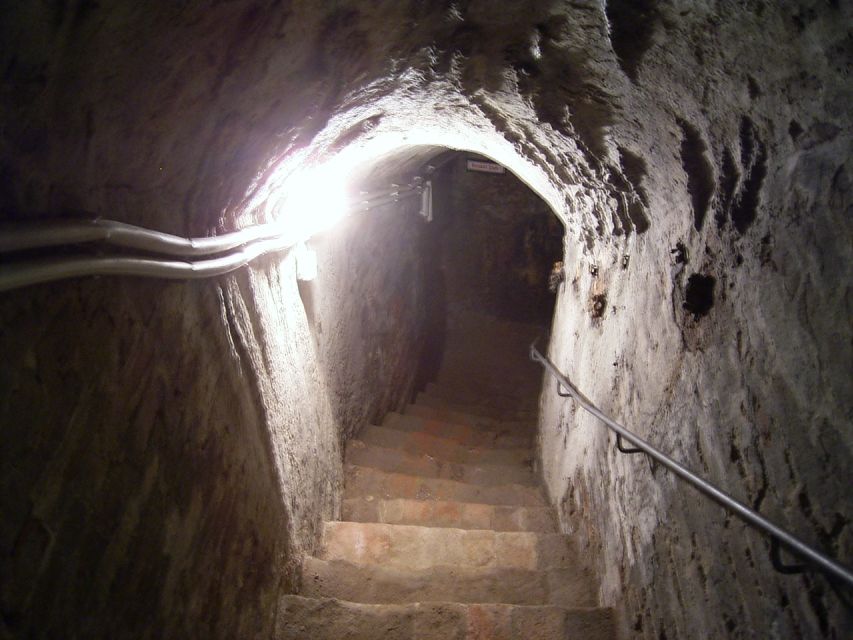
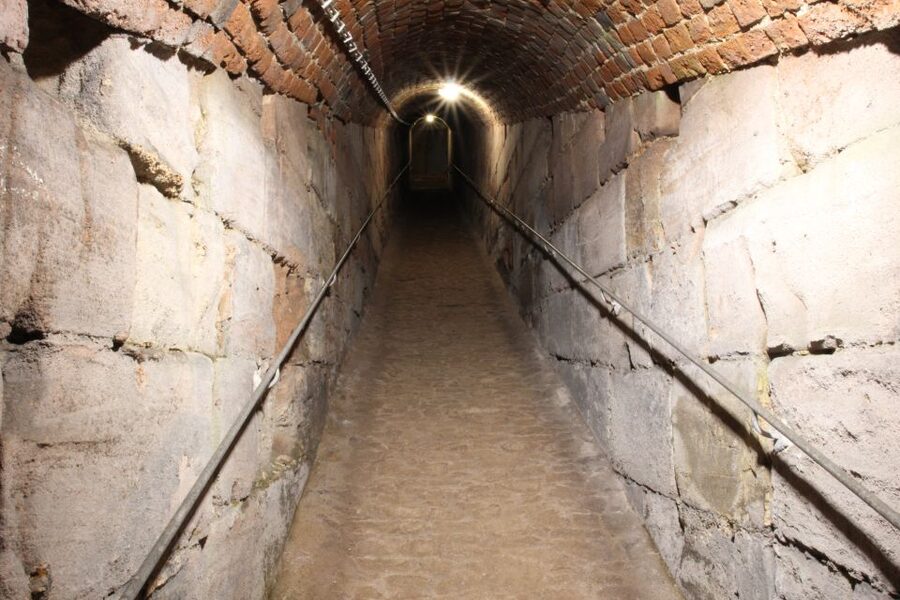
Some passages are narrow. One description puts sections at less than 1.5 meters high, so taller people may need to bend. Other parts are damp, and the stone can be wet or muddy. You may also encounter steep steps and ramps that feel more like a working fortification than a polished attraction.
That roughness is part of the appeal. I would not choose this tour for comfort, but I would choose it for a direct sense of place. The worn stone, low ceilings, and cramped turns help you picture soldiers moving through the same defensive system centuries ago.
The passages were designed as a labyrinth. That layout allowed defenders to reach different positions and fire toward enemies from multiple sides. Your guide points out how the system helped protect vulnerable sections of the castle and city wall.
The word secret can sound dramatic, so keep expectations sensible. This is not a treasure hunt or a theatrical adventure. The appeal is access to real defensive corridors and an explanation of how they functioned. You get a rare look at the working underside of the castle.
The underground route can also feel claustrophobic. If tight tunnels make you uneasy, think carefully before booking. You can leave with a better understanding of Nuremberg’s defenses, but the physical setting is unavoidable.
Something different for another day:
- Bamberg: Guided Walking Tour
★ 4.6 · 3,202 reviews - Nuremberg: Old Town Guided Walking Tour
★ 4.6 · 2,416 reviews - Nuremberg: Medieval Dungeons Guided Tour
★ 4.8 · 1,726 reviews - Nuremberg: Walking Tour of Former Nazi Party Rally Grounds
★ 4.7 · 1,665 reviews
Guides who turn stone into a story
The guide is central to the experience. In a tunnel, bare architecture can become confusing quickly. A good explanation tells you where you are, what a chamber was for, and how that space fit into the larger defense.
The strongest guide style here appears to be friendly, clear, and interactive. Alan has been praised for being fun and full of facts. Tom is noted for explaining things in a way children enjoyed. Ralf took care to explain when the group would return to a skipped feature, which helps you follow the route without wondering what you missed.
Several guides use questions to involve the group. That can be effective, especially when the question makes you inspect a wall opening or consider an attacker’s route. One person felt there were too many guessing questions and would have preferred a direct answer sooner. That is a fair point if you want a fast, lecture-style tour.
I would describe the guiding style as conversational rather than purely scripted. You may get questions, jokes, local details, and invitations to ask about Nuremberg beyond the tunnels. One guide adapted explanations for adults and children, and another answered questions about the town’s politics and different periods of its past while the group waited for shelter.
Because the tunnels can be hard for sound to carry, your position matters. Stand near the guide, keep side conversations low, and ask for repetition when needed. The information is one of the main reasons to pay for this experience, so do not let a missed sentence go by.
What the $14 ticket is really buying
At $14 per person, this is an inexpensive paid activity by German city-tour standards. The value does not come from duration alone. It comes from access.
You receive entry to the defensive corridors in the city walls and to the secret passages beneath the Imperial Castle. Those are not areas you can simply wander into during a normal walk through Nuremberg. The guide adds the interpretation that makes the stonework meaningful.
I would not compare this directly with a long castle tour or a major museum visit. It is a focused, one-hour experience about defense, construction, and life around the fortifications. If you want royal apartments, art, or a broad survey of every period in Nuremberg’s past, you will need another visit.
For a short itinerary, though, the price works well. You get a distinctive view of the city without committing to a half-day activity. It is also useful in poor weather because much of the route is underground. In summer, the cool passages can offer relief from the heat, although you should still bring warm clothing because the temperature below ground may feel chilly.
Several people wished the tour lasted longer. I understand that reaction. Once you begin to see how the tunnels connect, one hour can feel short. Still, the compact format makes it easy to fit around other plans, and the low cost reduces the risk of trying something unusual.
Who should book this castle-wall tour?
I would recommend it to you if you enjoy medieval fortifications, military engineering, local history, or unusual city experiences. It is especially good for someone who has already seen Nuremberg’s main streets and wants to understand what lies behind the walls.
Families can also enjoy it. A guide kept two boys aged eight and ten interested, and another made the material work for adults and children together. The tour gives younger visitors something concrete to look at: hidden paths, weapon positions, low passages, and defensive tricks.
You do not need to be a dedicated history enthusiast. The route is physical and visual enough to work as an experience in its own right. Still, you will get more from it if you enjoy asking how buildings were used and why they were designed in a certain way.
This is not a good fit for wheelchair users or people with mobility impairments. The route includes many old stairways and ramps, and the passages are not designed for easy access. Claustrophobia is another serious concern. There are no toilet breaks during the one-hour tour, so plan ahead.
Wear warm clothes and sturdy non-slip shoes. Do not wear sandals or flip-flops. Food and drinks are not allowed, and pets cannot join the tour, except for assistance dogs.
How to fit it into a Nuremberg day
The meeting point is close to the Imperial Castle, so I would plan this alongside time in the castle area. You can use the tour as a way to see the fortifications first, then explore the more familiar above-ground sights with a clearer sense of how the city was protected.
The one-hour length is convenient if you are visiting Nuremberg on a short break. It also gives you a defined activity in wet weather. An autumn participant found the underground route a good escape from rain, while another noted that the cool interior made it appealing on a hot summer day.
Do not schedule something immediately afterward if you dislike rushing. The route involves climbing, stopping for explanations, and moving through spaces where the group may need to stay together. The tour ends after one hour, but you may want a few minutes to regain your bearings and change your focus from underground defenses to the busy old town.
The tour provider is Förderverein Nürnberger Felsengänge e.V., an organization focused on Nuremberg’s rock passages. That local connection suits the experience. The tour feels tied to the city’s actual fabric rather than added as a generic castle activity.
Should you book it?
I would book the Nuremberg Tunnels and Secret Passages Tour if you want a short, affordable activity that shows you a side of the city most people miss. The access to the underground corridors is the key reason to go, while the explanations about moats, bastions, weapons, and firing positions give the visit real purpose.
Skip it if stairs, low ceilings, damp stone, or tight corridors will make you uncomfortable. It is also not the right choice if you want a broad tour of Nuremberg’s art, architecture, or twentieth-century history.
For everyone else, $14 is a sensible price for an hour inside the city’s defensive system. Wear proper shoes, stay near the guide, and arrive ready to crouch a little. Nuremberg’s most revealing history is not always at street level.
FAQ
How long does the Nuremberg tunnels tour last?
The tour lasts one hour.
How much does the tour cost?
The listed price is $14 per person.
Where is the meeting point?
Meet in front of the entrance to the Historischer Kunstbunker at Obere Schmiedgasse 52.
What languages are available?
The live tour guide speaks English or German.
What should I wear?
Bring warm clothing and wear sturdy, non-slip shoes. Sandals and flip-flops are not allowed.
Is the tour suitable for wheelchair users or people with mobility impairments?
No. The tour involves many old stairways and ramps and is not suitable for wheelchair users or people with mobility impairments. It is also not suitable for people with claustrophobia.
Just added around Nuremberg
- Bayreuth: Private Guided Walking Tour★ 5.0 · 15 reviews
- Nuremberg: St. Johannis Friedhof &Hesperidengärten IN GERMAN★ 4.4 · 15 reviews
- Nuremberg: Medieval Time Travel for Kids★ 4.9 · 15 reviews
- PRIVATE Nuremberg WW2 and Old Town Day Tour (Product code: 87669P16)★ 4.5 · 15 reviews
- Bayreuth City Walking Tour★ 4.6 · 16 reviews
- Nuremberg: Medieval Ages Tour in Spanish★ 4.5 · 16 reviews
- PLAYMOBIL®-FunPark Entrance Ticket★ 4.5 · 17 reviews
- Nuremberg: Private guided tour of the Old Town in German★ 4.9 · 17 reviews
City Tours, compared.

1-Hour City Tour by Boat with Guaranteed Seating
Read our review →
City History Canal Sightseeing Tour on a Motorboat
Read our review →


Browse the lists this tour appears in