
Reviewed · LGBTQ-FRIENDLY
Queer Berlin Tour: Birthplace of LGBTQ+ Movements
Berlin’s queer story is written on ordinary streets. This three-hour walking tour connects Schöneberg bars, Nazi-era persecution, Magnus Hirschfeld’s pioneering work, Christopher Isherwood’s Berlin, and the city’s postwar gay scene. I especially like the mix of major sights and tucked-away addresses, plus the use of photographs and music by guide Dan. The main consideration is pace: you cover a lot of ground, and metro fare is not included.
I also like the small-group or private format, which suits a subject that can call for thoughtful questions. Guides Dan and Justin have earned praise for lively storytelling, with Justin adding useful comparisons from his American background. Still, this is a serious history tour as well as a cultural walk, so expect material about Nazi persecution, murder, and Cold War repression.
In This Review
- Key points at a glance
- Why this queer Berlin walk matters
- Starting around Nollendorfplatz
- Hirschfeld, science, and the first emancipation movement
- The Nazi persecution memorial in Tiergarten
- Schöneberg, Isherwood, and the world behind Cabaret
- From postwar Schöneberg to Chez Romy Haag
- Unter den Linden and the queer lives of famous men
- Alexanderplatz and queer life behind the Iron Curtain
- Guide style, group size, and the walking pace
- Is $153 good value?
- Who should book this experience?
- Final verdict: book it for the stories
- FAQ
- How long does the Queer Berlin Tour last?
- Where does the tour start?
- Which languages are available?
- Is this a walking tour?
- Is metro fare included?
- What price should I expect?
- Can I book a private tour?
- Which parts of Berlin does the tour cover?
- Does the tour discuss Magnus Hirschfeld?
- Can I cancel the booking?
Key points at a glance
- Schöneberg’s queer past: Walk through the neighborhood once known as the world’s first gay ghetto, with links to cabaret, lesbian bars, clubs, and Christopher Isherwood.
- Magnus Hirschfeld’s legacy: Learn how the doctor and activist founded the Institute for Sexual Science and pushed early gay and trans rights into public view.
- Cabaret and celebrity connections: Hear about Marlene Dietrich, Ernst Röhm, Romy Haag, David Bowie, and the Berlin places tied to their lives.
- A wider view of Berlin: The route reaches Unter den Linden and Alexanderplatz, connecting queer history to Prussian, Nazi, postwar, and Cold War Berlin.
- Strong guide-led format: Dan and Justin bring personal perspective, images, music, humor, and clear storytelling to a complex subject.
- Practical planning: The experience lasts three hours, runs in German or English, and requires comfortable walking shoes. Metro fare costs extra.
Why this queer Berlin walk matters
Many Berlin tours focus on the Wall, royal monuments, or the Nazi period. This one asks you to see the city through queer lives, choices, fears, and victories. That changes familiar places. A square is no longer just a square, and a former nightclub becomes evidence of how quickly freedom can appear, disappear, and return.
Berlin became a major center of queer life in the late nineteenth and early twentieth centuries. Schöneberg, in particular, drew gay men, lesbians, artists, performers, writers, and people who wanted a life outside strict social rules. The tour uses that neighborhood as its main stage, then links it to central Berlin and East Berlin.
I appreciate that the route does not treat queer history as a side note. It includes scientists and organizers alongside famous performers. You hear about social spaces, but also about police pressure, Nazi violence, censorship, and the difficulties faced by LGBTQ people behind the Iron Curtain.
The tone appears to balance humor with painful history. Dan is described as using a lively, story-specific soundtrack and images during the walk. Justin has been praised for his love of Berlin and his ability to connect German events with familiar American history. That sort of comparison can help if you know little about Berlin’s queer past.
A few more tours and experiences worth a look
- Berlin: Gay Berlin Out in Schöneberg Walking Tour
★ 4.8 · 281 reviews - Berlin’s Gay, Lesbian, and Queer Scene Small-Group Walking Tour
★ 4.5 · 66 reviews - Street Art & Berlin Gay, Queer, Trans History + Free Gay Map
★ 4.9 · 15 reviews
Starting around Nollendorfplatz
The walk begins at a starting point that depends on the option you choose, then moves through Nollendorfplatz and Schöneberg. This is a useful opening because the area gives you an immediate sense of Berlin’s long queer connection rather than beginning with an abstract lecture.
Nollendorfplatz sits near the center of Schöneberg’s historic nightlife district. Here, the guide places the neighborhood within the wider social world of the 1920s and 1930s. You learn why this part of Berlin gained such a strong reputation and how bars, cabarets, apartments, and meeting places formed a network of queer life.
The phrase world’s first gay ghetto is used for Schöneberg in the tour description. It should be understood as a historical nickname, not as a formal district created by law. The point is that queer people gathered here in large numbers and built visible communities, businesses, and social circles.
This section is likely most rewarding if you enjoy seeing how history happened in normal-looking places. Berlin rarely gives you a perfectly preserved queer quarter. Instead, you get streets where the past must be explained, pictured, and imagined.
Hirschfeld, science, and the first emancipation movement
One of the tour’s most important stops is connected with the former Institute for Sexual Science, founded by Magnus Hirschfeld. Hirschfeld was a doctor, researcher, and activist who helped push discussions of sexuality and gender into public life at a time when such subjects were widely condemned.
The tour explains that Hirschfeld coined the term transsexualism and helped pioneer the gay rights movement. He also co-authored Anders als die Andern, or Different from the Others, in 1919, described here as the first pro-gay film in the world.
That film matters because it shows how early Berlin activists used popular culture to challenge prejudice. The Institute mattered for another reason: it offered research, advice, and a public challenge to rigid ideas about sex and gender. You are not simply hearing about a famous person. You are seeing how organized activism and scientific work supported one another.
The Nazi attack on the Institute gives this part of the tour its sharpest edge. Nazis closed it in 1933 and burned its library. The destruction was not only an assault on a building. It was an attempt to erase research, records, and a public argument for queer dignity.
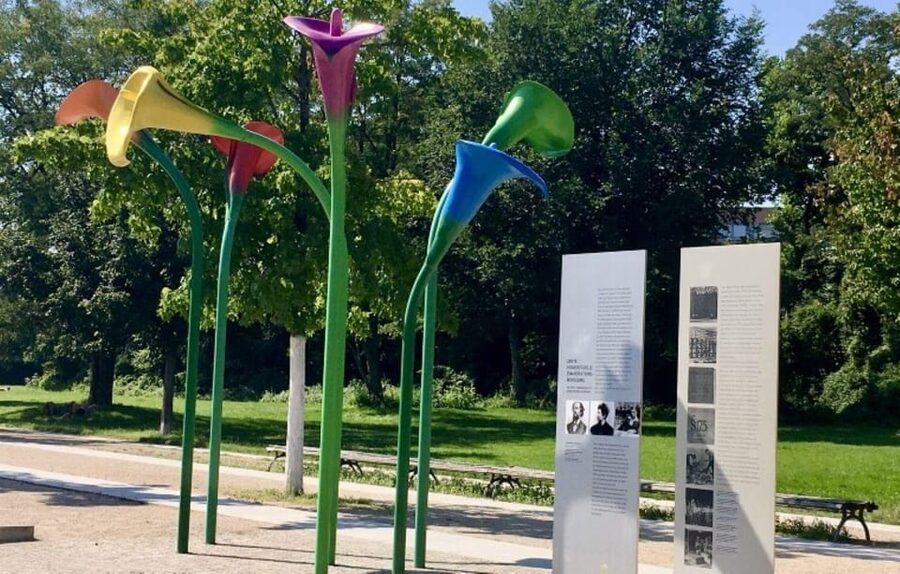
You also visit the Memorial to the First Homosexual Emancipation Movement. Its colorful design offers a contrast to the grim account of the book burning and persecution. The monument gives the guide a chance to explain the movement’s early aims and the people who pushed against criminalization and social shame.
The Nazi persecution memorial in Tiergarten
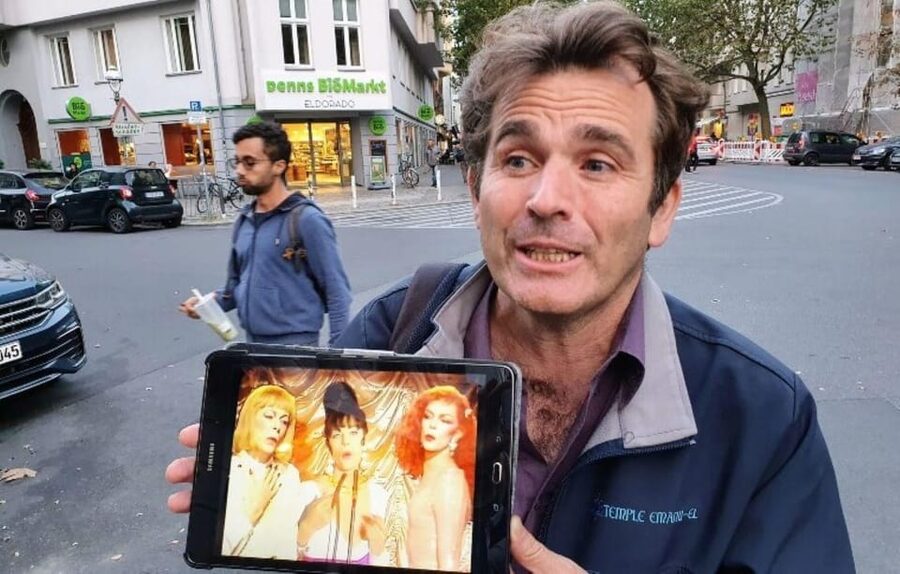
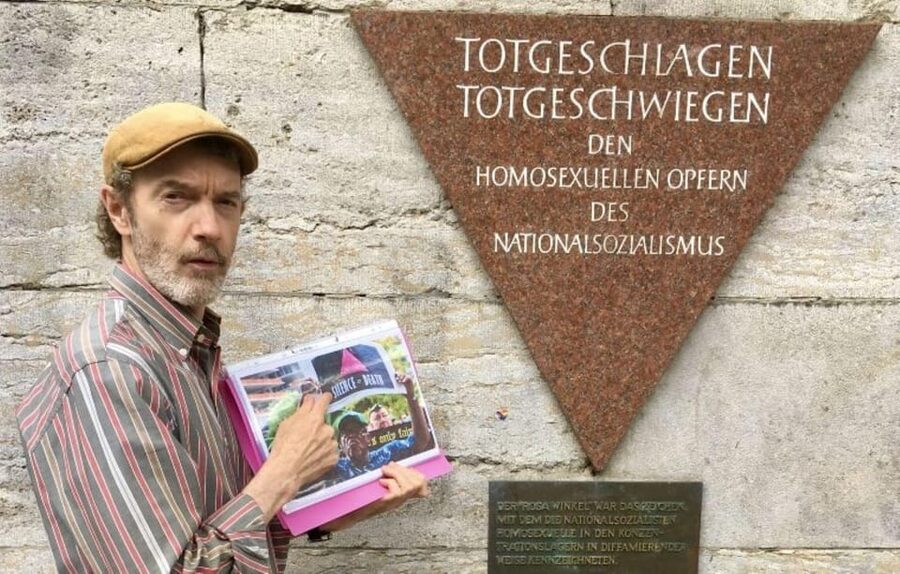
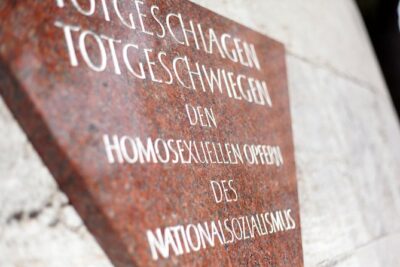
The Memorial to the Homosexuals Persecuted Under Nazism brings the subject into the present. Its location in the Tiergarten places a quiet, modern memorial within one of Berlin’s major public parks.
This stop is not just another photo opportunity. It makes clear that Nazi persecution was not limited to political opponents or Jewish people, though the Nazi regime targeted many groups. Gay men were arrested, imprisoned, and murdered, and lesbians also faced persecution, surveillance, and pressure to conform.
The tour also connects this history to Ernst Röhm, the openly gay head of the Sturmabteilung, the Nazi Brown Shirts. His position shows that the Nazi world could contain contradictions, but it never offered dependable safety to queer people. Röhm was executed during the 1934 Night of the Long Knives, also called the moral purge.
I value this part because it resists a simple story. Being powerful did not make Röhm secure. Public visibility could bring freedom in one setting and danger in another. Your guide can use his story to show how personal identity, political power, and Nazi ideology collided.
The subject matter is heavy. If you want a light sightseeing walk, this is not it. If you want a clear account of how queer freedom was attacked, this stop is essential.
Something different for another day:
- Berlin: Reichstag, Dome and Government District Guided Tour
★ 4.7 · 18,288 reviews - Berlin: 1-Hour City Tour by Boat with Guaranteed Seating
★ 4.3 · 16,993 reviews - Berlin: Boat Tour Along the River Spree
★ 4.4 · 11,252 reviews - Discover Berlin Half-Day Walking Tour
★ 5.0 · 9,624 reviews
Schöneberg, Isherwood, and the world behind Cabaret
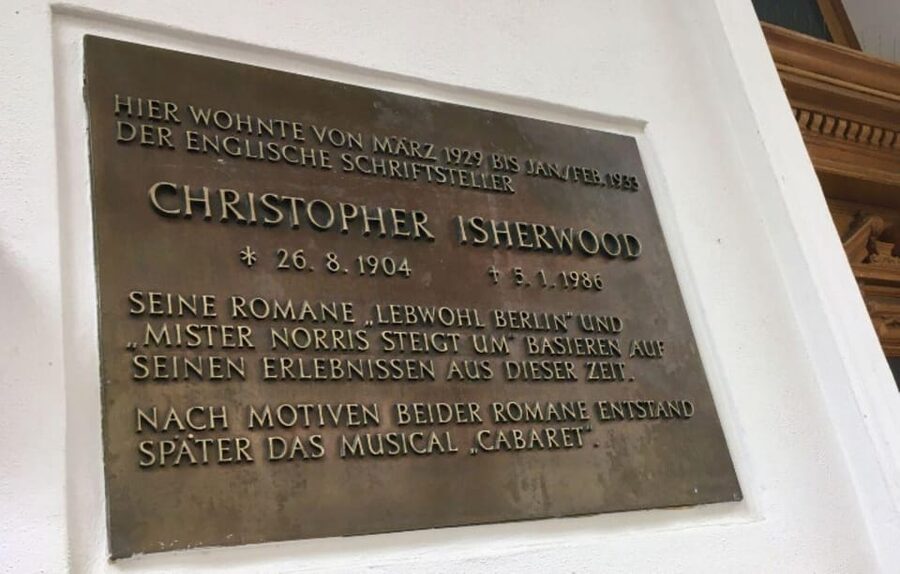
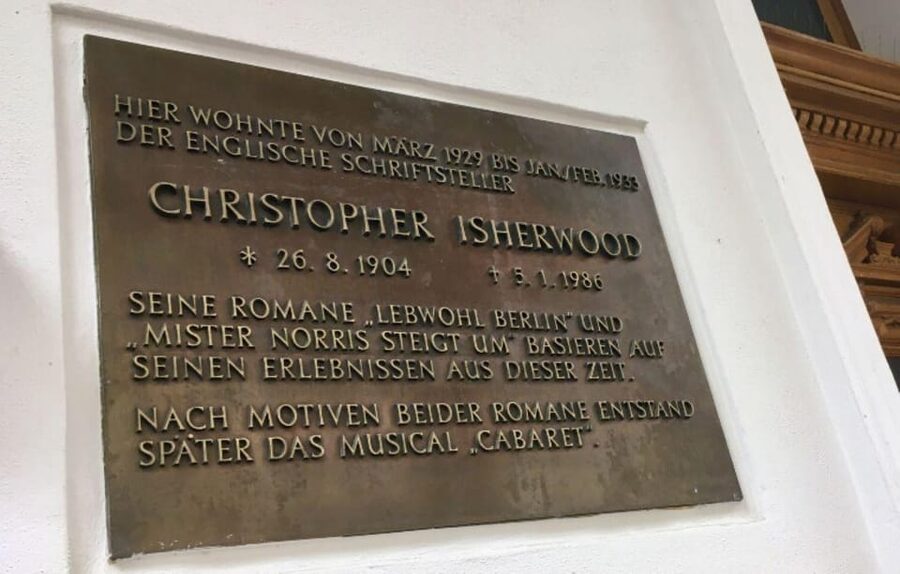
Back in Schöneberg, the tour follows the places tied to Christopher Isherwood. You see the former flat where the writer lived and learn how his Weimar-era experiences helped inspire Cabaret.
Isherwood’s Berlin was not a polished party scene. It was a city of rented rooms, nightclubs, shifting friendships, sexual freedom, and serious economic and political strain. The tour uses his former home and nearby nightlife sites to connect literature with the streets that shaped it.
You also pass clubs Isherwood frequented and a rent-boy dive that remains gay-run. That detail gives the walk a useful sense of continuity. Berlin’s queer life is not presented as something locked in a museum. Some places have vanished, while others still carry a living connection to the community.
The former El Dorado Cabaret is another key stop. Marlene Dietrich performed there, and the guide discusses notable regulars, including Röhm. El Dorado represents the glamour associated with Weimar Berlin, but the tour does not leave the story at glitter and celebrity. It places the cabaret within a society where queer culture could be visible and popular, yet still exposed to political backlash.
You may find the contrast between public performance and private danger especially striking. A nightclub could offer a temporary space for freedom, but a club alone could not protect its patrons from the changing political climate.
From postwar Schöneberg to Chez Romy Haag
The tour then turns to Schöneberg’s post-World War II rebirth as Berlin’s gay heart. This is important because queer history did not end in 1933, and it did not begin again only after the fall of the Wall.
The postwar city brought new clubs, performers, meeting places, and forms of community. The guide pays particular attention to Chez Romy Haag, an iconic nightclub of the 1970s. Romy Haag, a transgender actress, singer, and dancer, met David Bowie there, and their relationship helped inspire Bowie’s song Heroes.
This story gives the tour a strong link between Berlin’s club culture and international music history. It also puts a transgender performer at the center of the story, rather than treating trans history as an afterthought.
The Chez Romy Haag stop should appeal to music fans, but you do not need to know Bowie’s work to value it. The larger point is how clubs created room for people to perform, socialize, and form relationships beyond the rules of respectable society.
The tour also shows how each era built on the spaces before it. Weimar cabaret, Nazi destruction, postwar clubs, and 1970s nightlife are different chapters, but the streets connect them.
Unter den Linden and the queer lives of famous men
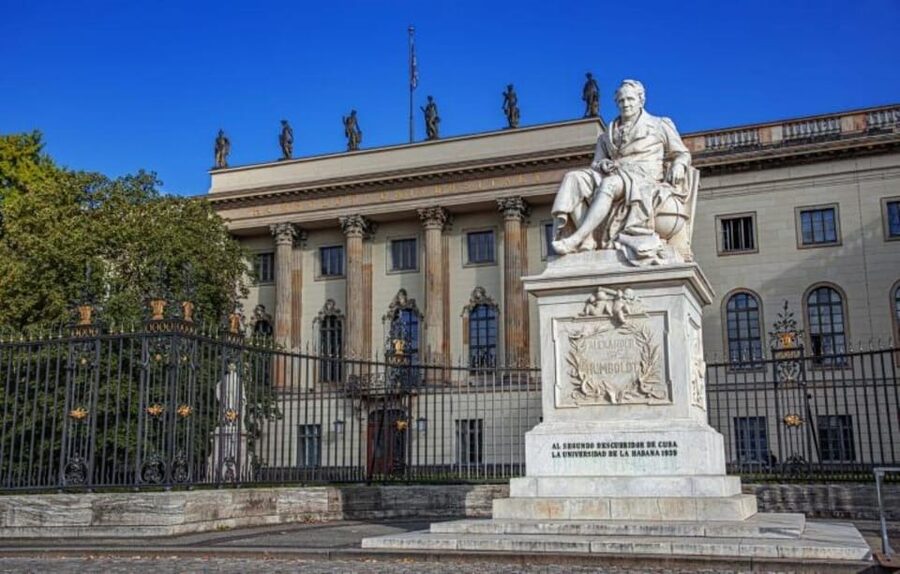
The route later reaches Unter den Linden, Berlin’s historic boulevard. Here, the focus broadens beyond Schöneberg and brings in earlier figures such as Prussian King Frederick the Great and explorer Alexander von Humboldt.
The guide explains how these men disguised or concealed their sexuality. Their stories remind you that queer Berlin did not begin with modern clubs or twentieth-century activism. Same-sex desire existed within royal courts, scientific circles, and elite society, even when public acceptance was limited.
This stop also shows why a good queer history tour needs more than a list of bars. Political authority, exploration, science, literature, and the arts all contain queer stories. The question is not simply where LGBTQ people went out at night. It is also how they built careers, managed public reputations, and found ways to live under restrictive rules.
Unter den Linden is a grand setting, but the tour’s value comes from the personal stories attached to it. You see the boulevard differently when the guide asks what famous men could say publicly, what they had to hide, and how later generations interpreted their lives.
Alexanderplatz and queer life behind the Iron Curtain

The final major setting is Alexanderplatz, the center of Cold War East Berlin. This changes the political frame once again. Instead of focusing only on Nazi persecution or West Berlin nightlife, the tour addresses the suffering of gay men and lesbians behind the Iron Curtain.
Alexanderplatz is a fitting endpoint because it represents the divided city and the restrictions of East Germany. The tour explains that queer people in the East faced their own forms of repression and hardship. The setting helps you remember that legal and political systems shaped LGBTQ lives on both sides of Berlin.
This final section also brings the walk into the modern period. By the end, you have followed queer Berlin from early emancipation campaigns to scientific research, cabaret, Nazi violence, postwar club culture, Cold War pressure, and today’s community.
The tour ends at Berlin or Impala Coffeeshop, depending on the arrangement. Since metro fare is not included, ask how the group moves between sections before you set out. The experience is sold as a walking tour, but the wide geographical range suggests that some transport may be useful.
Guide style, group size, and the walking pace
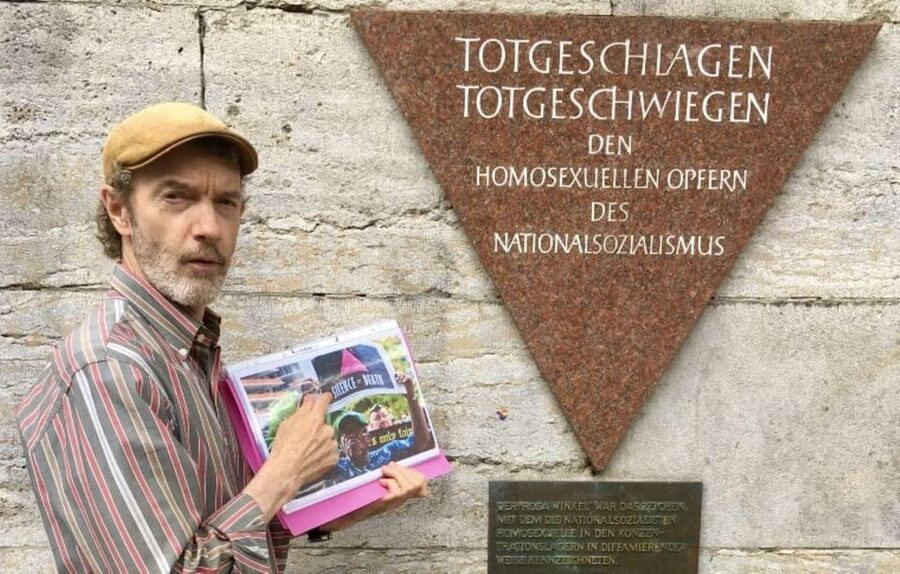
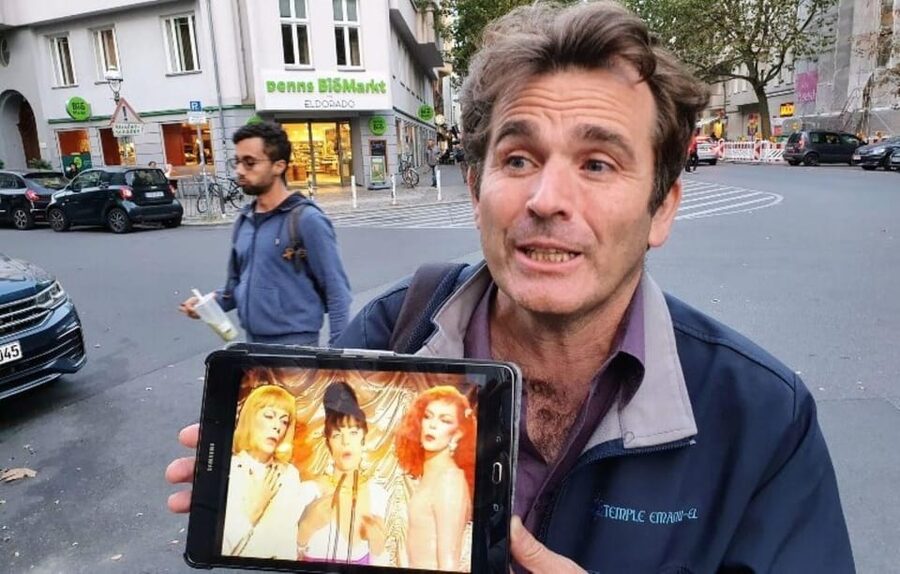
The guide is the heart of this experience. Dan is praised for a lively approach, personal perspective as a gay man in Berlin, photographs, music, humor, and detailed stories. He came to Berlin before the Wall came down, which gives his account a personal connection to the city’s later decades.
Justin brings another useful angle. He was born and raised in the United States, and his ability to compare German and American history helped make the material easier to follow for one group. Both guides are described as engaging, though the exact guide depends on availability.
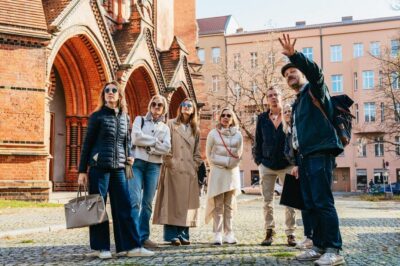
Private and small-group options are available. I would choose a small group if possible. The subject benefits from conversation, and a smaller party makes it easier to ask about people or places that catch your attention.
The walk lasts three hours, so wear comfortable shoes and expect steady movement. Contact the provider before booking if you have mobility concerns. The activity is explicitly a walking tour, and no special mobility arrangement is described.
Is $153 good value?
At $153 per person, this is not a cheap city walk. The price makes the most sense for someone who wants a focused expert-led history experience rather than a general introduction to Berlin.
You are paying for a three-hour route with several historical themes, a guide who supplies context at each stop, and access to stories that are easy to miss on your own. The subject covers science, activism, literature, film, music, royal history, Nazi persecution, postwar culture, and the Cold War. That is a lot to connect in one afternoon.
The value is strongest for first-time visitors who want a meaningful way to understand Schöneberg, or repeat visitors who have already seen Berlin’s standard sights. It is also a good fit if you care about LGBTQ history, queer arts, political movements, or the personal stories behind famous Berlin neighborhoods.
The price is harder to justify if you want a short, relaxed stroll or only a few photo stops. You should also budget for metro fare if the group uses public transport between parts of the route.
Free cancellation up to 24 hours before the tour and reserve-now, pay-later booking make the commitment less risky. Check the available starting time before booking, since the exact schedule varies.
Who should book this experience?
I would recommend it to:
- LGBTQ travelers looking for Berlin history told from a queer point of view
- Visitors interested in Magnus Hirschfeld and early gay rights work
- Fans of Cabaret, Marlene Dietrich, David Bowie, or Christopher Isherwood
- People who enjoy walking tours built around stories rather than monuments alone
- Repeat visitors who want a different view of Schöneberg and central Berlin
- Students and history-minded visitors who want links between personal lives and political change
You do not need special background knowledge. The guide’s job is to connect the names and places. Still, the tour will mean more if you arrive knowing that the day includes difficult material about Nazi persecution and the suffering of LGBTQ people during the Cold War.
The route works best for adults and older teens who can handle three hours of walking and serious historical discussion. It is offered in English or German, with private and small-group choices.
Final verdict: book it for the stories
Book this tour if you want to understand why Berlin became a major center of queer culture, and how fragile that freedom could be. The strongest parts are the Schöneberg walk, the Hirschfeld material, the Cabaret connections, and the personal storytelling associated with Dan and Justin.
Skip it if you want a purely cheerful nightlife tour or a compact route with no transport planning. For everyone else, the $153 cost buys a thoughtful look at Berlin through people who challenged social rules, created new spaces, and kept queer life alive through repeated periods of danger.
FAQ
How long does the Queer Berlin Tour last?
The tour lasts three hours.
Where does the tour start?
The starting or pickup location depends on the option selected at booking.
Which languages are available?
The tour is offered in German and English.
Is this a walking tour?
Yes. The experience is a guided walking tour, so you should plan for three hours on foot.
Is metro fare included?
No. Metro fare is not included in the tour price.
What price should I expect?
The listed price is $153 per person.
Can I book a private tour?
Yes. Private or small-group options are available.
Which parts of Berlin does the tour cover?
The route includes Nollendorfplatz, Schöneberg, the Tiergarten memorial, Unter den Linden, and Alexanderplatz.
Does the tour discuss Magnus Hirschfeld?
Yes. It covers Hirschfeld, his Institute for Sexual Science, his role in early gay rights work, and his use of the term transsexualism.
Can I cancel the booking?
You can cancel up to 24 hours in advance for a full refund. Reserve-now, pay-later booking is also available.
Just added around Berlin
- Private Photo Tour in Kreuzberg★ 5.0 · 3 reviews
- Kreuzberg Private Walking Tour: Immigrants, Artists & Hipsters★ 5.0 · 3 reviews
- Individual city tour Berlin for max. 8 persons★ 5.0 · 3 reviews
- Berlin’s Jewish Heritage: Private Tour of the Vibrant Jewish District★ 5.0 · 3 reviews
- Berlin & The Third Reich Private Guided Tour★ 5.0 · 3 reviews
- Private Analogue Photography Experience in Berlin★ 5.0 · 3 reviews
- Spy Mission in Berlin: Self-Guided Espionage Puzzle Quest★ 5.0 · 3 reviews
- Berlin Christmas Markets Walking Tour with Local Guide★ 5.0 · 3 reviews
LGBTQ-Friendly, compared.
Berlin’s Gay, Lesbian, and Queer Scene Small-Group Walking Tour
Read our review →
Street Art & Berlin Gay, Queer, Trans History + Free Gay Map
Read our review →
Browse the lists this tour appears in