
Reviewed · THEATRE, CABARET & COMEDY
Berlin: BKA Theater “Operetta for two gay tenors”
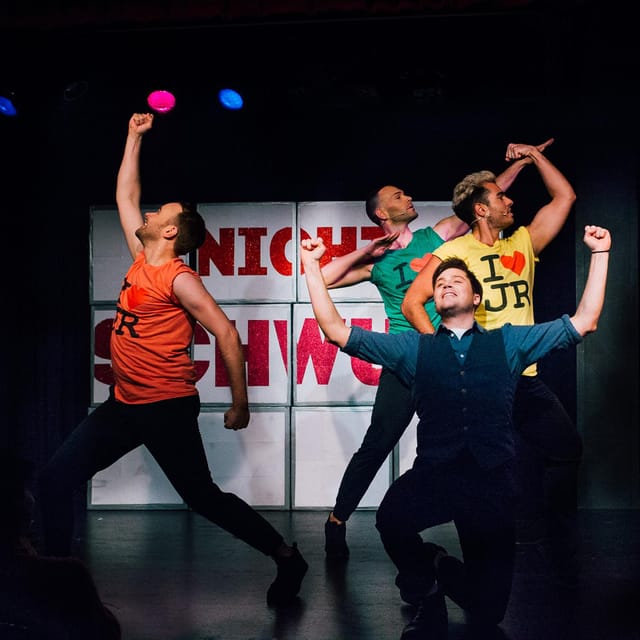
Operetta gets wonderfully unruly here. Berlin’s BKA Theater presents Operetta for Two Gay Tenors, a funny and touching show about love, sex, pride, self-doubt, country life, and the pull of the big-city scene. I like its fresh queer take on operetta and the cozy theater setting, where catchy tunes and hearty waltzes make the evening feel festive rather than academic.
I also like the show’s clear connection to Berlin’s 1920s operetta tradition, when old roles were stretched and diversity was celebrated with plenty of style. The main caution is practical: check the starting time carefully. One booking showed an 8 p.m. start even though the performance began at 7 p.m., causing a customer to miss almost half the show.
In This Review
- Key points to know before you book
- Why this operetta feels different
- Tobi and Jan’s country life
- Music with plenty of schmaltz
- The BKA Theater setting
- Why the story matters beyond the jokes
- A two-and-a-half-hour evening
- Value for an evening in Berlin
- Who will enjoy this show most
- Should you book Operetta for Two Gay Tenors?
- FAQ
- How long is Operetta for Two Gay Tenors?
- Where is the show performed?
- What is the operetta about?
- Is the show based on contemporary gay life?
- Is the performance wheelchair accessible?
- Can I cancel my booking?
- Do I need to pay when I reserve?
Key points to know before you book
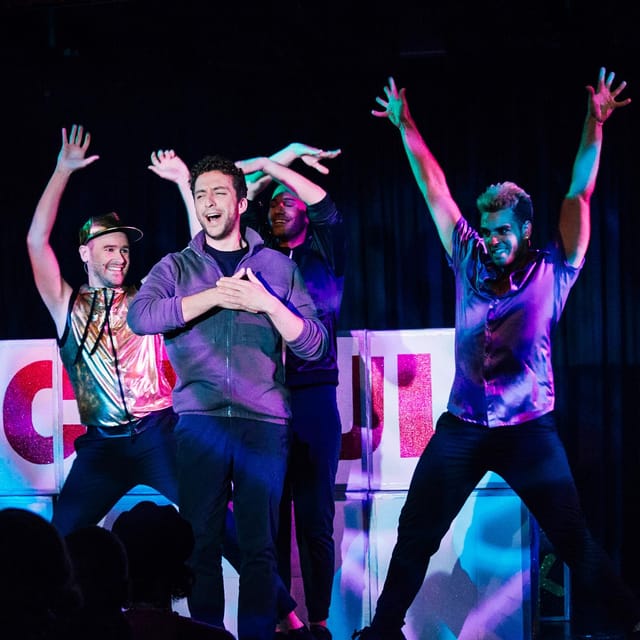
- A modern queer operetta: The story follows Tobi and Jan, a couple whose country idyll hides very different hopes and frustrations.
- Award-winning writing: Johannes Kram received the 2022 German Musical Theater Prize for Best Lyrics.
- Berlin meets the countryside: The show plays with the tension between village life, gay identity, and Berlin’s social scene.
- A two-and-a-half-hour evening: You get a full theater outing rather than a short cabaret set.
- Cozy theater and food: The BKA Theater offers an intimate setting with gastronomy available during your visit.
- Timing needs attention: Starting times can be especially important here, so confirm the exact hour before you leave for the theater.
Why this operetta feels different
Traditional operetta often brings together romance, mistaken identity, big emotions, and a good deal of musical excess. Operetta for Two Gay Tenors keeps that spirit, but turns its attention to contemporary gay life. The result is not a solemn lecture wrapped in music. It is a playful stage story with catchy numbers, broad humor, and moments of real tenderness.
The show calls itself the world’s first queer operetta. That claim gives you a useful sense of its place in the program: this is not simply a musical with two gay characters added to a familiar plot. Queer identity shapes the story, the jokes, the relationships, and the way the show looks back at older operetta traditions.
I like that balance. You get the sparkle of the genre, including schmaltzy waltzes and grand musical feeling, while the subject matter is current and personal. The comedy can be big, but the emotional questions are ordinary ones: Who gets to feel at home? What happens when two people want different lives? How much of an idealized life can a relationship carry?
The song titles give you a good preview of the show’s tone. Champagner von Aldi, Mein Fetisch ist die Operette, and Ich steh total auf Jens Riewa suggest a mix of camp, wordplay, pop references, and old-fashioned theatrical flair. You can expect the music to enjoy its own silliness rather than apologize for it.
More Theatre, Cabaret & Comedy in Berlin
- Berlin: 1.5-Hour Comedy Bus Tour in German
★ 4.5 · 1,165 reviews - Berlin: Laughing Spree Comedy Show on a Boat
★ 4.9 · 670 reviews - Quatsch Comedy Club Berlin: Die Live Show Entry Ticket
★ 4.7 · 634 reviews
Tobi and Jan’s country life
The story begins with a deceptively happy picture. Graphic designer Tobi and nurse Jan live together in the countryside in a small house with a garden, fruit trees, homemade jam, and friendly neighbors. It sounds like the tidy rural dream many people imagine when they want to escape city pressure.
But the couple does not see this life in the same way. Tobi left Berlin and its gay scene to pursue an idyllic country existence. He has invested emotionally in the house, the garden, and the idea of a welcoming village community. Jan, who has never left his home area, feels trapped there and can barely stand it.
That conflict gives the story its engine. You are not simply watching a city person teach a village person how to be free, or the other way around. Instead, both men carry their own version of dissatisfaction. Tobi may be idealizing the countryside, while Jan may be longing for a life he has not yet tried.
The annual shooting festival is part of how they met. That detail neatly joins the couple’s relationship to the local setting. It also gives the story a comic contrast between traditional village customs and the couple’s modern life together.
I find this setup useful because it avoids making the countryside a simple villain and Berlin a perfect answer. Rural life can offer home, routine, and friendly neighbors. It can also feel narrow. Berlin can offer freedom, community, and a gay scene. It can also bring pressure, uncertainty, and self-doubt. The show works best when it lets both places hold some truth.
Music with plenty of schmaltz
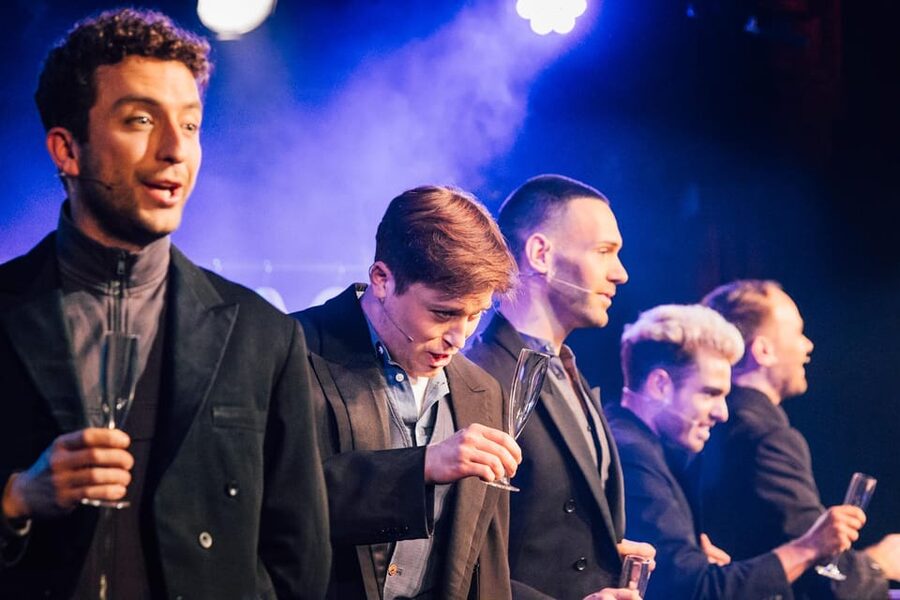
If you like your theater restrained and realistic, this may not be your ideal evening. The show is built around lively tunes, new operetta songs, and full-hearted waltzes. It takes pleasure in musical exaggeration.
That is part of the point. Operetta depends on heightened feeling. People do not merely fall in love, they sing about it. Private worries become public spectacle. A small disagreement can swell into a grand number. Here, that style gives the characters room to be ridiculous and sincere at the same time.
The music comes from Florian Ludewig, with lyrics by Johannes Kram. Kram’s work won the 2022 German Musical Theater Prize for Best Lyrics, and the production was also nominated for Best Book. Those honors matter because the words are central to this kind of show. Clever lyrics are not decoration. They carry the jokes, the cultural references, and the emotional turns.
The titles alone show how the production uses language. Aldi champagne, an operetta fetish, and a crush on television personality Jens Riewa all point to a world where high theatrical style meets everyday German culture. You do not need to know every reference to understand the comic shape, but German speakers may get extra pleasure from the wording and timing.
The songs also help the show connect with older Berlin traditions. The production presents itself as part of the rebirth of Berlin operetta, a form associated with the 1920s and its willingness to play with social roles and celebrate difference. A century later, this show takes that appetite for freedom and gives it a queer modern voice.
The BKA Theater setting
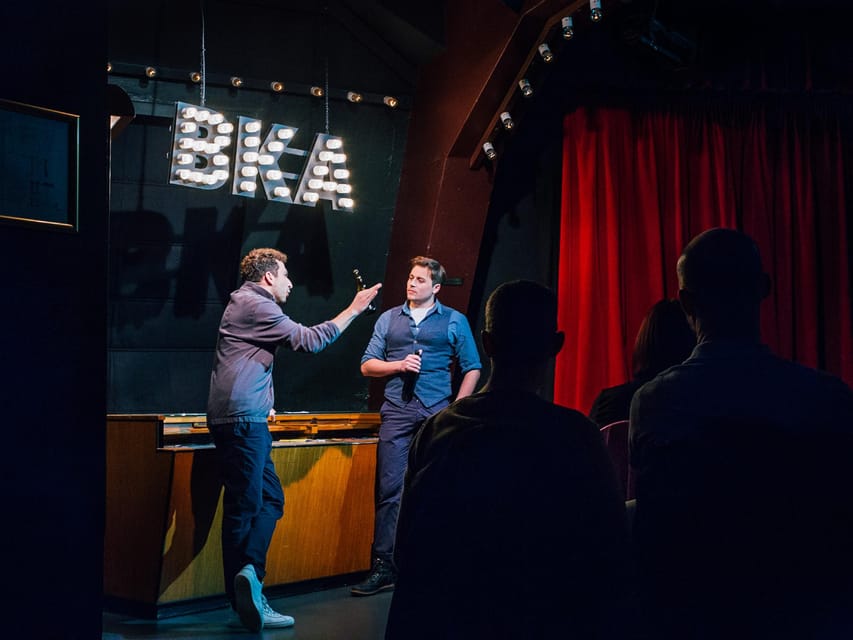
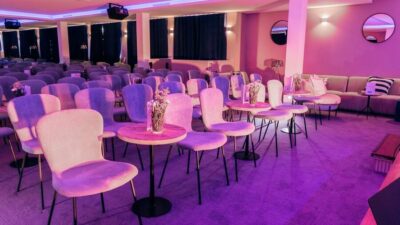
The BKA Theater provides a cozy setting for the performance. You are going to a theater known for cabaret and musical comedy, not a huge formal opera house. That changes the feel of the evening. The smaller setting suits a story built on direct comic exchanges, expressive songs, and a close relationship between performers and audience.
The theater is described as one of Berlin’s most beautiful theaters, and the experience includes the chance to enjoy its gastronomy. That makes the booking feel like an evening out rather than only a seat for a performance. You can plan to spend about two and a half hours with the show and the theater atmosphere.
Food and drink can add to the pleasure of an operetta, especially one that enjoys camp, celebration, and musical excess. Still, keep your expectations practical. The available information does not specify a menu, meal arrangement, or whether food is included in the ticket. Think of gastronomy as an option at the theater, not as a guaranteed dinner package.
The intimate setting may appeal most to you if you like cabaret, musical theater, and performances with a strong personality. If you prefer a large opera production with an orchestra pit, sweeping scenery, or a formal concert hall atmosphere, this is a different kind of night.
Something different for another day:
- Berlin: Reichstag, Dome and Government District Guided Tour
★ 4.7 · 18,288 reviews - Berlin: 1-Hour City Tour by Boat with Guaranteed Seating
★ 4.3 · 16,993 reviews - Berlin: Boat Tour Along the River Spree
★ 4.4 · 11,252 reviews - Discover Berlin Half-Day Walking Tour
★ 5.0 · 9,624 reviews
Why the story matters beyond the jokes
The show’s subject is gay life, but it does not reduce that life to one issue. It moves between love and sex, pride and self-doubt, the desire for belonging, and the strain of trying to live up to an ideal.
That range gives the comedy some weight. Tobi’s dream of a peaceful home is easy to understand, even if his picture of village life may be too polished. Jan’s frustration is also easy to understand, even if he has not tested every alternative. Their relationship becomes a meeting point for two competing ideas of happiness.
I appreciate that the show links personal feelings to social surroundings. A person can feel isolated in a place that looks friendly. A person can feel uncertain in a city that offers freedom. The show’s queer perspective is strongest when it treats its characters as full people, not symbols.
The production also asks what happens when an identity that once felt outside the mainstream becomes part of a public celebration. Operetta itself has always played with appearances, gender roles, desire, and social rules. By connecting the genre’s older history with present-day gay life, the show gives its humor a broader frame.
You do not need to know Berlin’s 1920s theater history to follow the plot. The historical connection is an added layer, not homework. If you enjoy seeing how a current production reshapes an older art form, you will find that connection rewarding.
A two-and-a-half-hour evening
The stated duration is 2.5 hours. That is long enough for a complete theater program, so you should plan the evening around it rather than squeeze it between several tightly timed attractions.
The exact performance schedule matters. Starting times can vary, and one serious timing problem resulted from an 8 p.m. listing when the show actually began at 7 p.m. The person arrived at 7:45 p.m. and missed almost half the performance. That is a major warning, especially if you are booking through a third-party platform or arranging dinner before the show.
I would confirm the start time directly in your final booking details and again before setting out. Allow enough time to reach the theater without relying on a last-minute arrival. Missing the opening of an operetta is not like missing a museum room. You may lose the character setup, the relationship between Tobi and Jan, and the musical ideas that make later jokes work.
The activity offers free cancellation up to 24 hours before the performance, which gives you some flexibility if your Berlin plans shift. It also allows you to reserve now and pay later. Those terms are useful, but they do not solve a same-day timing mistake, so checking the hour remains the most important practical step.
Value for an evening in Berlin
No ticket price is provided here, so I cannot tell you if this is a bargain at a specific amount. I can still help you judge the value. You are paying for a roughly two-and-a-half-hour theater experience, an award-winning production, a distinctive queer story, and the atmosphere of the BKA Theater.
That can be good value if you enjoy live performance and want something rooted in Berlin’s cabaret and operetta culture. The show offers more than a standard sightseeing stop because it gives you a taste of local theatrical humor, German-language wordplay, and a modern take on a historic Berlin genre.
The value is less clear if you are searching for a visual spectacle or an English-language event. The supplied information does not state that the performance is in English or that translations are available. If you do not understand German, ask before booking. Music, gesture, and comic energy may still carry some of the evening, but the lyrics and dialogue are clearly a major part of the experience.
Gastronomy may add to the overall value for you, particularly if you like settling into one venue for the night. Since food is not listed as included, budget for it separately if you plan to eat or drink at the theater.
Who will enjoy this show most
I would recommend Operetta for Two Gay Tenors to you if you enjoy musical comedy, cabaret, queer theater, or performances that mix sharp jokes with sincere feeling. It also suits anyone curious about how Berlin’s older theatrical traditions can be reshaped for a modern audience.
You will likely get the most from it if you are comfortable with camp humor, romantic complications, and operetta’s habit of making emotions larger than life. The show sounds intentionally playful, but its central relationship gives it a human center.
It may not suit you if you want a quiet drama, a conventional opera, or a tightly realistic story. The music is catchy and theatrical, the waltzes are deliberately schmaltzy, and the humor comes from putting big stage energy around everyday problems.
Accessibility is a positive practical point. The experience is wheelchair accessible. Other access details, such as seating arrangements or assistance, are not provided, so you should contact the BKA Theater if you need specific arrangements.
Should you book Operetta for Two Gay Tenors?
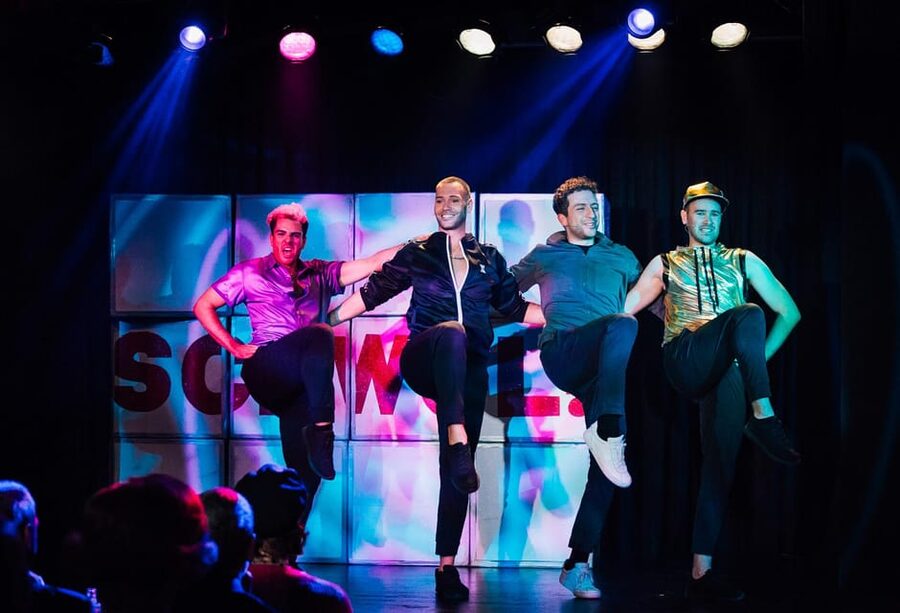
Book it if you want a distinctive Berlin theater night with award-winning lyrics, queer themes, and a generous helping of operetta flair. The country-versus-city story gives the show a relatable base, while the music and comic titles keep it from becoming heavy.
I would make two checks before paying. First, confirm the language and exact start time. Second, decide if a 2.5-hour musical performance fits your evening better than another sightseeing stop.
For the right audience, this is a strong choice: funny, warm, proudly theatrical, and tied to Berlin’s tradition of testing old rules. Just do not arrive based on an assumed 8 p.m. start. For this show, the clock deserves as much attention as the curtain.
FAQ
How long is Operetta for Two Gay Tenors?
The performance lasts about 2.5 hours.
Where is the show performed?
It is performed at the BKA Theater in Berlin, Germany.
What is the operetta about?
It follows Tobi and Jan, a gay couple living in the countryside. Tobi dreams of an idyllic rural life, while Jan dislikes the village and has never left his home area.
Is the show based on contemporary gay life?
Yes. The story explores gay life through themes including love, sex, pride, self-doubt, country life, and Berlin’s gay scene.
Is the performance wheelchair accessible?
Yes, the experience is listed as wheelchair accessible.
Can I cancel my booking?
You can cancel up to 24 hours in advance for a full refund.
Do I need to pay when I reserve?
No. The booking option allows you to reserve your place and pay later.
More LGBTQ-Friendly
- Berlin: Gay Berlin Out in Schöneberg Walking Tour
★ 4.8 · 281 reviews - Berlin’s Gay, Lesbian, and Queer Scene Small-Group Walking Tour
★ 4.5 · 66 reviews - Street Art & Berlin Gay, Queer, Trans History + Free Gay Map
★ 4.9 · 15 reviews - Queer Berlin Tour: Birthplace of LGBTQ+ Movements
★ 5.0 · 6 reviews
Just added around Berlin
- Kreuzberg Private Walking Tour: Immigrants, Artists & Hipsters★ 5.0 · 3 reviews
- Private Photo Tour in Kreuzberg★ 5.0 · 3 reviews
- Individual city tour Berlin for max. 8 persons★ 5.0 · 3 reviews
- Berlin’s Jewish Heritage: Private Tour of the Vibrant Jewish District★ 5.0 · 3 reviews
- Berlin & The Third Reich Private Guided Tour★ 5.0 · 3 reviews
- Private Analogue Photography Experience in Berlin★ 5.0 · 3 reviews
- Spy Mission in Berlin: Self-Guided Espionage Puzzle Quest★ 5.0 · 3 reviews
- Berlin Christmas Markets Walking Tour with Local Guide★ 5.0 · 3 reviews
Theatre, Cabaret & Comedy, compared.


Quatsch Comedy Club Berlin: Die Live Show Entry Ticket
Read our review →


Browse the lists this tour appears in