
Reviewed · NUREMBERG TOURS
Nürnberg: Mörder, Fälscher, Messerstecher
Crime shaped Nuremberg more than you might expect. This two-hour walk links the Hangman’s House, witch hunts, medieval prisons, public punishments, and famous Old Town landmarks into one clear story. I like the focus on real places, especially the route from Franz Schmidt’s former home to the dungeons and Hauptmarkt. I also like the price: at $15 per person, it gives you a focused history lesson without the cost of a museum-heavy tour.
The main drawback is language. The live guide speaks German, so you need solid German skills to follow the details and jokes. You also do not enter the Hangman’s House, town hall, or medieval dungeons, and the tour is not suitable for people with mobility impairments.
In This Review
- Key points to know before you book
- Why Nuremberg’s crime story makes a good walking tour
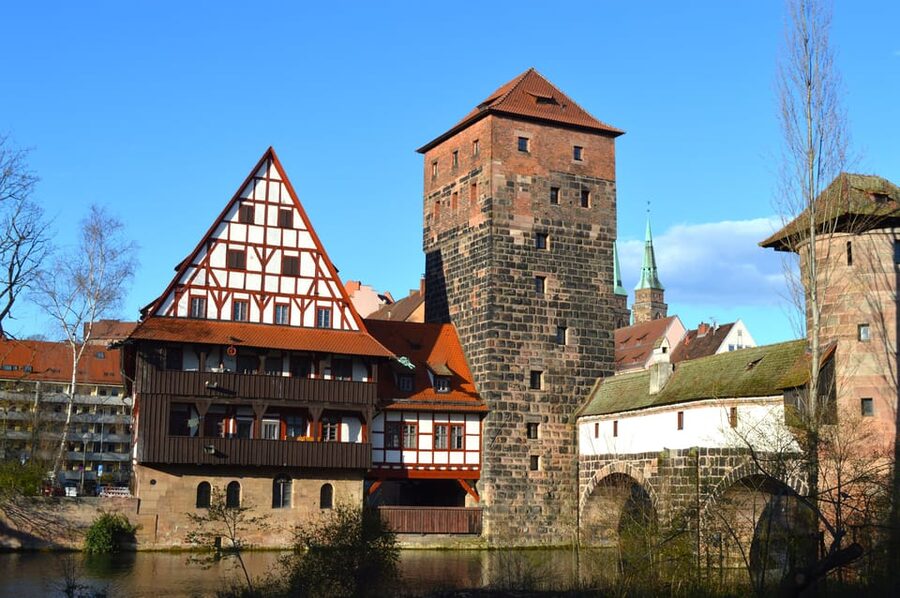
- Starting at the Henkerhaus and Franz Schmidt
- Weinmarkt and the history of witch hunts
- The town hall and medieval justice
- Inside the story of the Lochgefängnisse
- Hauptmarkt beyond the Christmas market
- Fleischbrücke and corporal punishment
- Findelgasse and Peter Henlein
- Finishing at the Schuldturm
- Guide quality and the German-only format
- Price, timing, and what you receive
- Who will enjoy this Nuremberg walk?
- Should you book Nürnberg: Mörder, Fälscher, Messerstecher?
- FAQ
- Where does the tour begin?
- How do I identify the guide?
- How long does the tour last?
- What language is the tour offered in?
- Is admission to the Hangman’s House included?
- Is admission to the town hall included?
- Is admission to the medieval dungeons included?
- Where does the tour finish?
- Is the tour suitable for people with mobility impairments?
- What should I bring?
- Can groups of 10 or more join?
- Can I cancel for a refund?
Key points to know before you book
- Franz Schmidt’s Hangman’s House: Begin outside the Henkerhaus and learn about Nuremberg’s best-known executioner and the unusual place he occupied in medieval society.
- Witch hunts at Weinmarkt: The historic wine market becomes the setting for a sobering look at witchcraft accusations and legal persecution.
- Medieval justice at the town hall: Hear how Nuremberg’s authorities handled crime, punishment, debt, and public order.
- Lochgefängnisse without an entry ticket: The route explains the purpose and conditions of the underground prison, but admission is not included.
- Hauptmarkt and the Christkindlesmarkt: See Nuremberg’s famous market square through the lens of executions, everyday crime, and public spectacle.
- A short Old Town route: The walk covers several central sights with only a few minutes between stops, ending near Vordere Insel Schütt.
Why Nuremberg’s crime story makes a good walking tour
Most Old Town tours focus on churches, grand buildings, and famous food. This one takes a different path. It asks what happened when people broke the law, were accused of witchcraft, failed to repay debts, or faced corporal punishment.
That theme gives familiar places a second layer. The Hauptmarkt is not only the home of the Christmas market. The town hall is not just an impressive civic building. The narrow streets and bridges become part of a story about law, fear, punishment, and power.
I like this approach because it keeps the tour grounded. You are not simply given dates and building names. You are shown how justice affected ordinary people and how crime was made public in a medieval city.
The walk lasts about two hours. That is long enough to build a clear story, but short enough to fit beside a museum visit, lunch, or another Old Town activity. The route is also compact. Most transfers take between one and five minutes, so little time is lost crossing town.
The subject matter is serious. You will hear about executions, witch hunts, prison conditions, and physical punishment. The guide’s job is to explain the past rather than soften it, so this suits you if you enjoy darker history and direct storytelling.
Other Nuremberg trips people book alongside this one:
- Bamberg: Guided Walking Tour
★ 4.6 · 3,202 reviews - Nuremberg: City Tour with the Bimmelbahn Train
★ 4.4 · 2,475 reviews - Nuremberg: Old Town Guided Walking Tour
★ 4.6 · 2,416 reviews
Starting at the Henkerhaus and Franz Schmidt
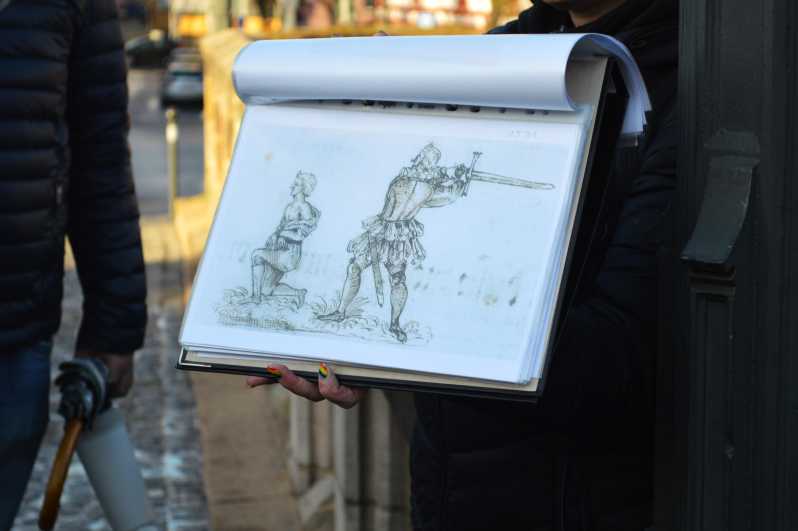
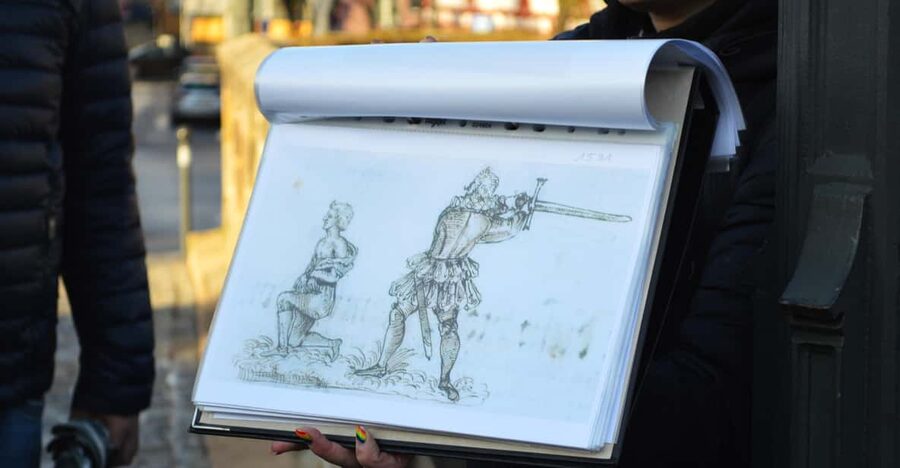
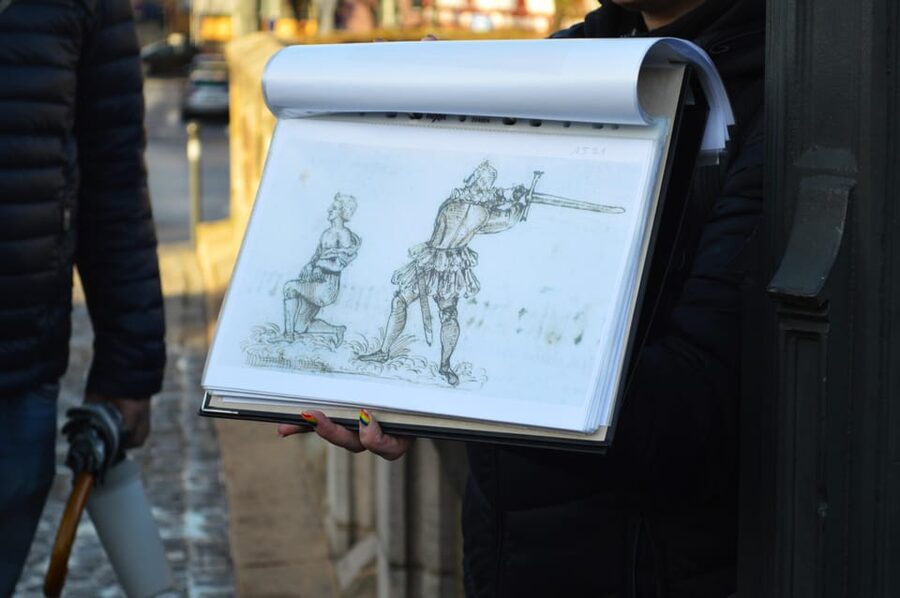
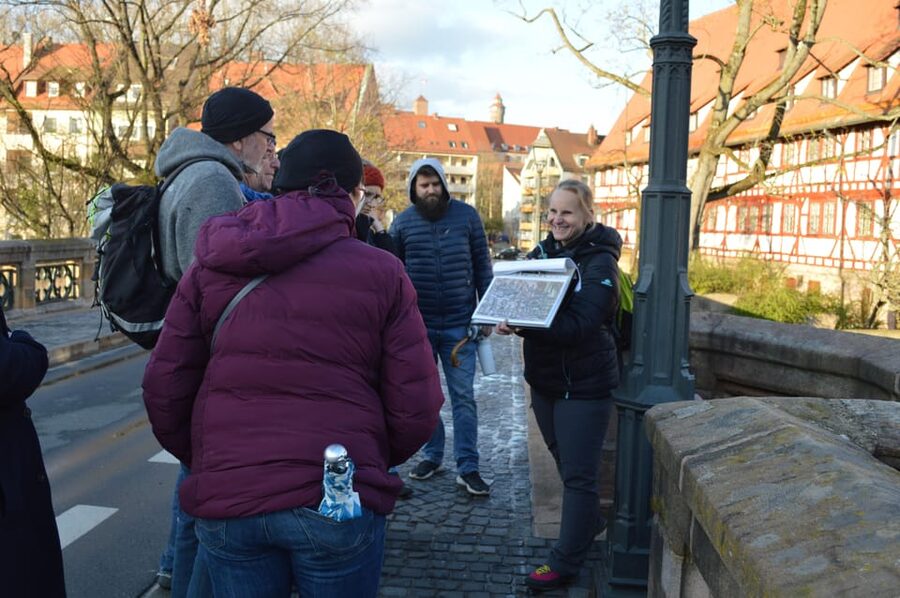
Meet in front of the entrance to the Henkerhaus Museum, known in English as the Hangman’s House. Look for a guide carrying a picture folder and wearing a green name tag marked Geschichte Für Alle.
The opening stop introduces the building and its most famous resident, Franz Schmidt. He was Nuremberg’s best-known hangman, and his story helps explain the strange social position of an executioner. The job was essential to the city’s justice system, but the person doing it could also be treated as an outsider.
This is a strong opening because it puts a human face on the subject. Instead of beginning with an abstract discussion of medieval law, you start with a man whose work involved sentencing, execution, and the practical machinery of punishment.
The tour does not include entry to the Hangman’s House. You learn about it from outside, so you may want to return separately if the museum interests you. The walking tour and the museum visit are different expenses.
The meeting point is easy to identify, but arrive with enough time to find the entrance. The guide’s picture folder and green name tag are useful if several groups gather nearby.
Weinmarkt and the history of witch hunts
From the Henkerhaus, the group walks about four minutes to Weinmarkt. This short move brings you into a new part of the story: witch hunts in Nuremberg.
The topic can be handled badly, with too much sensational detail and too little explanation. Here, the stop is meant to connect accusations of witchcraft to the city’s justice system. You learn how fear, suspicion, and legal authority could combine against people accused of supernatural crimes.
Weinmarkt is a useful place for this discussion because the guide can connect the physical Old Town to events that took place within the community. Witch hunts were not distant stories from another country. They involved neighbors, authorities, accusations, and court procedures.
I find this part especially valuable if you want social history rather than a simple list of punishments. It shows how a city’s legal system could be shaped by beliefs that now seem impossible, yet were treated seriously at the time.
Expect the guide to spend time explaining rather than rushing through the stop. The route is in German, and the subject includes terms and context that may be hard to follow if your German is basic.
The town hall and medieval justice
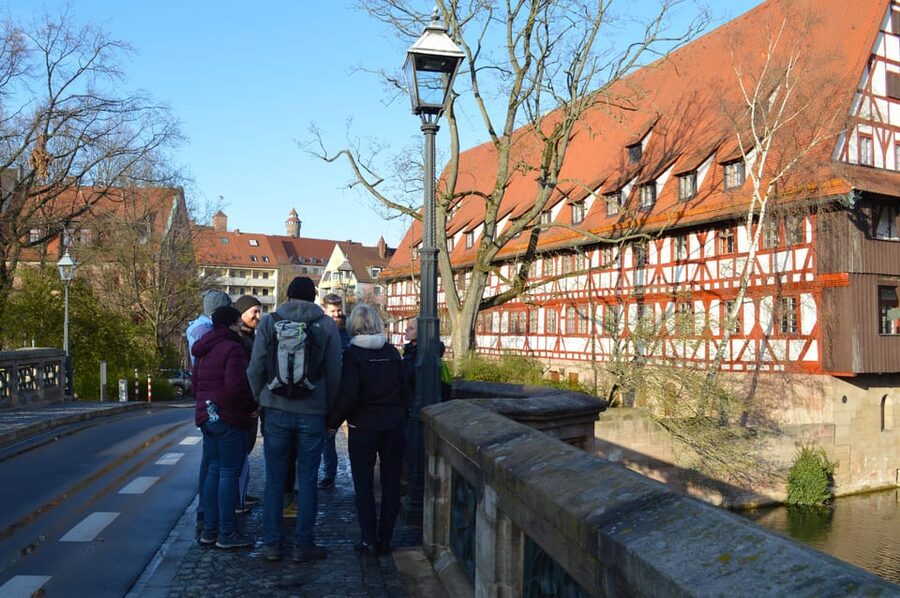
The next stop is Nuremberg’s Old City Hall, only about three minutes from Weinmarkt. The building gives the guide a natural setting for explaining how medieval justice worked.
You learn more about the officials, procedures, and ideas that shaped punishment in Nuremberg. This part should help you connect the hangman and the witch hunts to the wider system. The city needed courts, civic authorities, prisons, and public penalties, not just an executioner.
The town hall stop also adds architectural interest to a tour that could otherwise feel heavy. You are still looking at one of the Old Town’s important landmarks, but the focus is on what happened through civic power and law.
Entry to the town hall is not included. The tour takes place around the landmark, with the guide explaining its role. If you want to see the interior, plan that separately and check opening details for your date.
This is one of the better parts of the route for visitors who prefer context. You learn not only what punishment looked like, but why the authorities used it and how public order was understood in the medieval city.
Something different for another day:
- Nuremberg: Tunnels and Secret Passages in the City Wall Tour
★ 4.8 · 2,334 reviews - Nuremberg: Medieval Dungeons Guided Tour
★ 4.8 · 1,726 reviews - Nuremberg: Walking Tour of Former Nazi Party Rally Grounds
★ 4.7 · 1,665 reviews - Medieval Tour in Nuremberg in Spanish
★ 5.0 · 1,374 reviews
Inside the story of the Lochgefängnisse
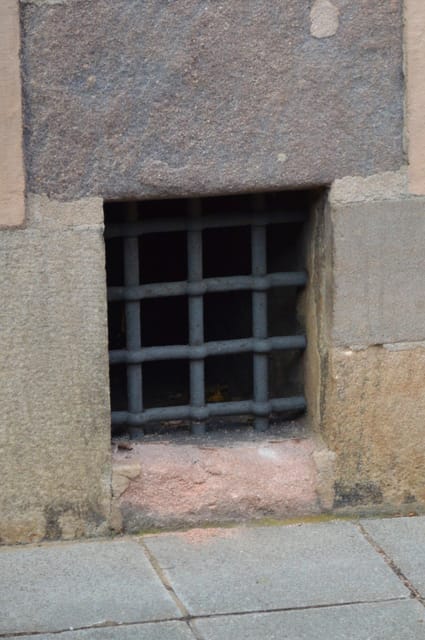
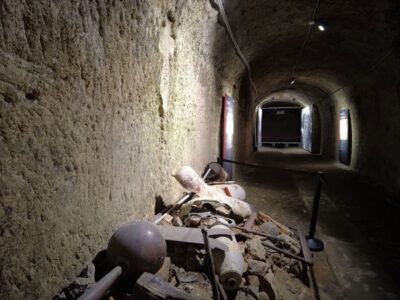
The route then turns to the medieval dungeons, called the Lochgefängnisse. These underground prison rooms were used to hold people under harsh conditions.
The guide explains the purpose of the prison and what life was like for its inmates. That distinction matters. A medieval jail was not necessarily designed around the modern idea of rehabilitation. It could serve as a holding place for accused people, debtors, or those awaiting judgment and punishment.
The name itself refers to the prison’s cell-like underground spaces. You get a sense of how confinement formed one part of the city’s legal process, between accusation and final judgment.
Entry to the medieval dungeons is not part of the $15 tour. That keeps the cost low, but it also means the tour cannot replace a full dungeon visit. I would treat the guide’s explanation as preparation for deciding if you want to buy a separate admission.
This stop may be difficult for anyone with mobility problems. The activity information specifically says it is not suitable for people with mobility impairments, and the route includes historic areas where smooth, easy access cannot be assumed. Comfortable shoes are important for everyone.
Hauptmarkt beyond the Christmas market
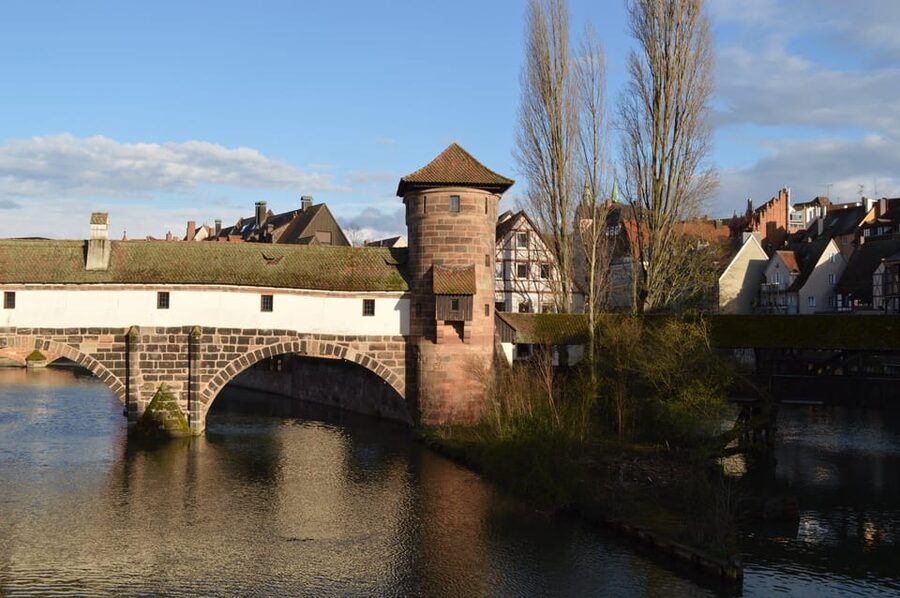
A one-minute walk brings you to Hauptmarkt, Nuremberg’s best-known market square. In December, this is where the Christkindlesmarkt takes place, making the square one of the city’s most photographed spots.
The tour gives the market a darker frame. You learn about the connection between the square, everyday crime, and the death penalty. Public places such as Hauptmarkt were not only used for commerce and festivals. They could also serve as stages where justice was displayed before the community.
That contrast is one of the tour’s cleverest ideas. During the Christmas season, the square is associated with lights, stalls, and holiday traditions. The tour asks you to remember that public squares had other roles in earlier centuries.
If you visit in December, expect the square to be crowded and noisy around the Christkindlesmarkt. That may make it harder to hear the guide, so stay close and keep the green name tag in sight. Outside the market season, the stop may feel calmer and easier for listening.
You also get a useful orientation point in the center of the Old Town. Even if you know Hauptmarkt from photographs, this explanation can change how you read the space.
Fleischbrücke and corporal punishment
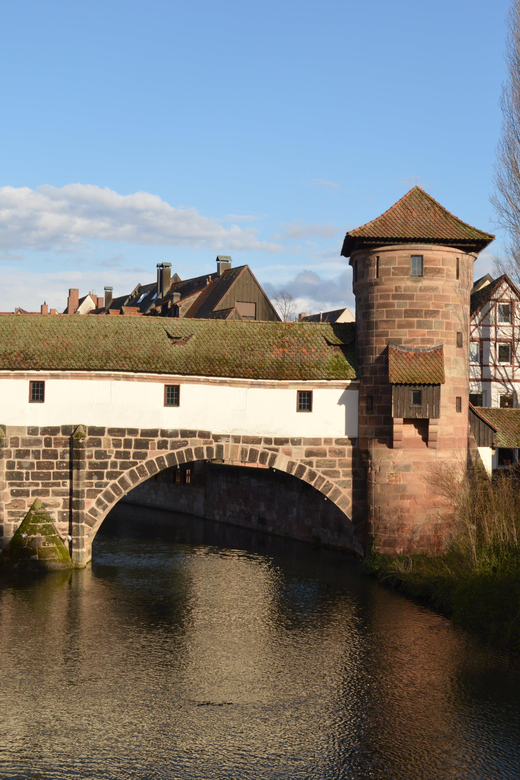
After Hauptmarkt, the walk continues for about two minutes to Fleischbrücke, the Meat Bridge. Here, the guide discusses corporal punishment in the Middle Ages.
This stop brings the subject away from courts and prisons and back into the streets. Punishment could be physical, visible, and meant to warn everyone who passed by. The bridge helps show how law was not hidden behind official doors. Its effects could be placed directly in the public view.
I appreciate this part because it connects the tour’s larger themes. The Hangman’s House introduced the person carrying out punishment. The town hall explained civic authority. The prison showed confinement. At Fleischbrücke, you consider how punishment was displayed to the public.
The stop is also brief enough to keep the tour moving. The route does not spend long periods walking between sites, so the guide can use more of the two hours for explanation.
Findelgasse and Peter Henlein
The walk then takes about five minutes to Findelgasse. Here, the subject shifts from punishment to the story of Peter Henlein, a famous watchmaker.
This may seem like a change of direction, but it adds variety. A tour about crime can become grim if every stop covers another execution or prison cell. Peter Henlein’s story gives the guide a chance to discuss a notable Nuremberg craftsperson while keeping the route tied to the city’s medieval and early modern past.
The supplied details do not specify exactly how Henlein connects to crime, forgery, or the title’s reference to murderers, forgers, and knife fighters. You should expect his story to be a short historical stop within the larger walk rather than a separate watchmaking tour.
Findelgasse also helps show how the Old Town’s streets are connected. You move from the main square and bridge into another historic lane, keeping the tour centered on places rather than a lecture in one room.
Finishing at the Schuldturm
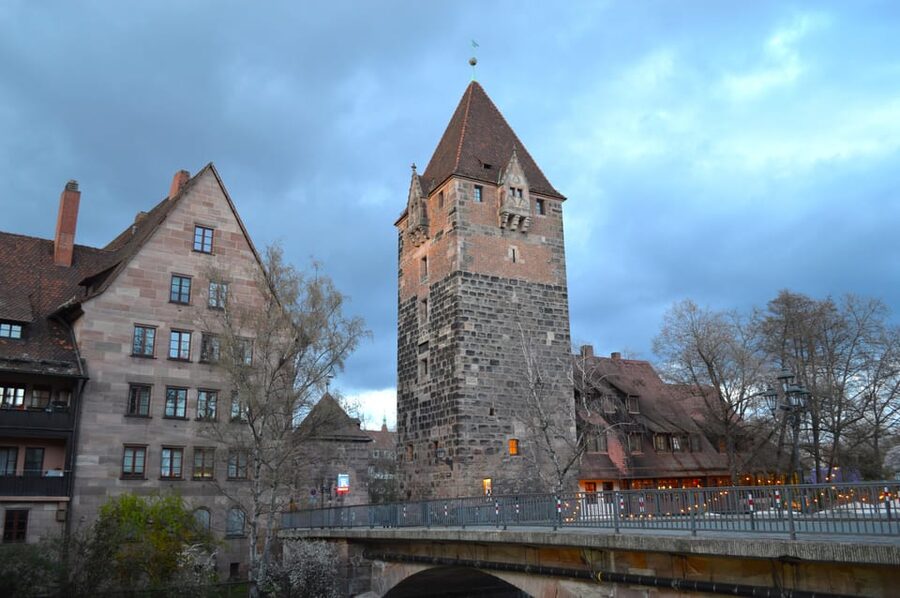
The final stop is in front of the Schuldturm, or Debt Tower. The guide explains its purpose and the people held there.
This ending works because it returns to the legal system from another angle. The tour has covered execution, witchcraft accusations, public punishment, and prison conditions. The Debt Tower adds the problem of unpaid obligations and shows that medieval confinement was not limited to violent crime.
The walk ends at Vordere Insel Schütt, in central Nuremberg. That is a practical finish because you remain close to the Old Town and can continue on foot to other sights, restaurants, or the river area.
The route is not a loop back to the Henkerhaus. If you need to return to your starting point, allow extra time for the walk back. The official walking portions are short, but your next stop may be in a different part of the city.
Guide quality and the German-only format
The experience uses a live, qualified guide rather than an audio recording. That matters for a subject with many details and difficult moral questions. You can ask questions as the tour develops, and the guide can adjust the explanation to the group.
The feedback available for this tour is unusually consistent. The overall score is 4.8 from 53 reviews, with repeated praise for clear explanations, strong subject knowledge, professional delivery, and thoughtful answers to questions. One recent German participant specifically praised the guide’s openness and care, even during rain and darkness. Another noted that the tour remained entertaining and easy to follow despite poor weather.
Those comments point to an important strength: the guide appears to do more than recite facts. You should expect a presentation that keeps moving and makes room for questions.
But the language limit is firm. The tour is offered in German only. If you understand German well, this can be a good way to hear local history in its original language. If you do not, the walk will be a poor value, even at $15, because the main product is spoken explanation.
Price, timing, and what you receive
At $15 per person, the tour is fairly priced for a two-hour guided walk through central Nuremberg. You are paying for the guide’s research, storytelling, and local route, not for admission to several museums.
The price includes:
- A two-hour walking tour
- A qualified live guide
It does not include admission to the Hangman’s House, town hall, or medieval dungeons. That is worth remembering when you plan your day. If you want to enter all three sites, the total cost will be higher than the advertised tour price.
You can cancel up to 24 hours before the start for a full refund, and you can reserve now while paying later. These options are useful if your Nuremberg schedule is still changing.
Groups of 10 or more should contact Geschichte Für Alle e.V. by email at [email protected]. A booking confirmation serves as proof of payment, and an invoice cannot be issued for bookings made through GetYourGuide.
Wear comfortable shoes and dress for the weather. The tour runs outdoors, and the route continues even in rain or darkness. The positive response to a rainy evening suggests the guide can keep the walk worthwhile in poor conditions, but you should still bring suitable clothing.
Who will enjoy this Nuremberg walk?
I would recommend this tour to you if you like:
- Local history told through real streets and buildings
- Medieval law, prisons, executions, and witch hunts
- Short walking tours with frequent stops
- Guided explanations rather than self-guided reading
- A low-cost introduction to Nuremberg’s less polished past
It is also a good choice if you have already seen the main churches and market squares and want a different way to understand them. The route uses familiar landmarks but gives them a new purpose.
I would skip it if you dislike grim subjects, need a fully step-free route, or do not understand German. I would also skip it if you want extensive museum access included in the ticket. This is a street-level history walk, not a package of admissions.
Should you book Nürnberg: Mörder, Fälscher, Messerstecher?
Book it if you want a compact, serious, and well-priced look at Nuremberg’s justice system. The strongest parts are the Franz Schmidt opening, the witch-hunt discussion at Weinmarkt, the explanation of the Lochgefängnisse, and the new meaning given to Hauptmarkt.
Go with realistic expectations. You will not enter the three named paid sites, and the German-only format requires good listening skills. If those points work for you, $15 buys a thoughtful two-hour route with a clear theme, a central finish, and plenty of detail that ordinary sightseeing can miss.
FAQ
Where does the tour begin?
The tour begins in front of the entrance to the Henkerhaus Museum, also called the Hangman’s House, in Nuremberg.
How do I identify the guide?
The guide carries a picture folder and wears a green name tag marked Geschichte Für Alle.
How long does the tour last?
The walking tour lasts two hours.
What language is the tour offered in?
The live tour guide speaks German.
Is admission to the Hangman’s House included?
No. Entry to the Hangman’s House is not included in the tour price.
Is admission to the town hall included?
No. The tour includes a guided explanation at the Old City Hall, but town hall admission is not included.
Is admission to the medieval dungeons included?
No. The tour discusses the Lochgefängnisse, but entry to the medieval dungeons is not included.
Where does the tour finish?
The tour finishes at Vordere Insel Schütt, 90403 Nürnberg-Mitte, Germany.
Is the tour suitable for people with mobility impairments?
No. The activity is listed as unsuitable for people with mobility impairments.
What should I bring?
Bring comfortable shoes and clothing suitable for the weather.
Can groups of 10 or more join?
Yes, but groups of 10 or more should contact Geschichte Für Alle e.V. by email at [email protected].
Can I cancel for a refund?
You can cancel up to 24 hours in advance for a full refund.
Just added around Nuremberg
- Bayreuth: Private Guided Walking Tour★ 5.0 · 15 reviews
- Nuremberg: St. Johannis Friedhof &Hesperidengärten IN GERMAN★ 4.4 · 15 reviews
- Nuremberg: Medieval Time Travel for Kids★ 4.9 · 15 reviews
- PRIVATE Nuremberg WW2 and Old Town Day Tour (Product code: 87669P16)★ 4.5 · 15 reviews
- Bayreuth City Walking Tour★ 4.6 · 16 reviews
- Nuremberg: Medieval Ages Tour in Spanish★ 4.5 · 16 reviews
- PLAYMOBIL®-FunPark Entrance Ticket★ 4.5 · 17 reviews
- Nuremberg: Private guided tour of the Old Town in German★ 4.9 · 17 reviews
Nuremberg Tours, compared.

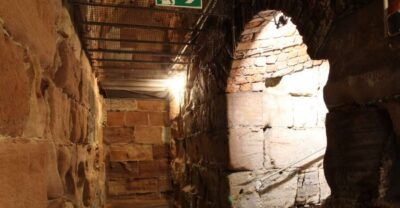
Tunnels and Secret Passages in the City Wall Tour
Read our review →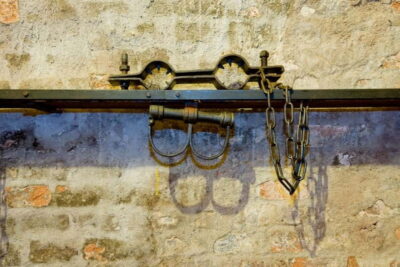
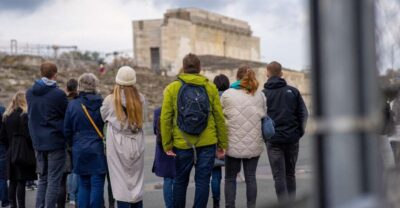
Walking Tour of Former Nazi Party Rally Grounds
Read our review →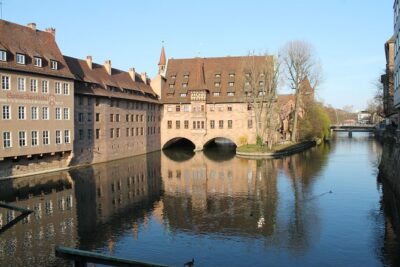
Browse the lists this tour appears in