
Reviewed · NUREMBERG TOURS
Nuremberg: 1.5-Hour Medieval Tour
Nuremberg’s old town tells its story in stone. This 90-minute medieval walking tour links the castle, Albrecht Dürer’s house, and the Sebalder and Lorenzer quarters, so you get a useful first look at the city rather than a single monument in isolation. I like the clear route and the focus on people, daily life, and Italian influence on Nuremberg.
I also like the value: $23 per person covers a live German-speaking guide and a compact introduction to central Nuremberg. The main consideration is language, since the tour is offered in German only. You’ll also need to be ready for a walking route that is not suitable for wheelchair users, and the tour requires at least 10 participants.
In This Review
- Key points to know before you book
- Starting at Hauptmarkt beside the Schöner Brunnen
- Nuremberg Castle and the Burgfreiung
- Albrecht Dürer’s house and the story behind the artist
- Walking through the Sebalder Altstadt
- Crossing into the Lorenzer Altstadt
- Venetian Nuremberg and Italian influence
- How the 90-minute format affects the experience
- Is $23 a fair price?
- Who should book this Nuremberg walking tour?
- Final verdict: a smart first look at medieval Nuremberg
- FAQ
- How long does the Nuremberg medieval tour last?
- Where does the tour begin?
- Where does the tour end?
- What language is the tour offered in?
- What sights are included in the route?
- Is admission to Nuremberg Castle included?
- Are food, drinks, or public transport included?
- Is the tour suitable for wheelchair users?
- How many people are needed for the tour?
Key points to know before you book
- The Schöner Brunnen is the starting point: Meet at Hauptmarkt square, beside Nuremberg’s famous fountain.
- Nuremberg Castle anchors the route: You’ll hear about the castle and the Burgfreiung, the protected area around it.
- Albrecht Dürer gets real attention: The walk includes his former home, his work, and the difficult times in which he lived.
- Two old-town districts are included: The route crosses the Sebalder Altstadt and Lorenzer Altstadt, giving you a broader view of Nuremberg.
- Italian connections are part of the story: The guide explains how Italian influence shaped German history and Nuremberg.
- The tour needs 10 participants: It is a practical point to check before booking, especially outside peak travel periods.
Starting at Hauptmarkt beside the Schöner Brunnen
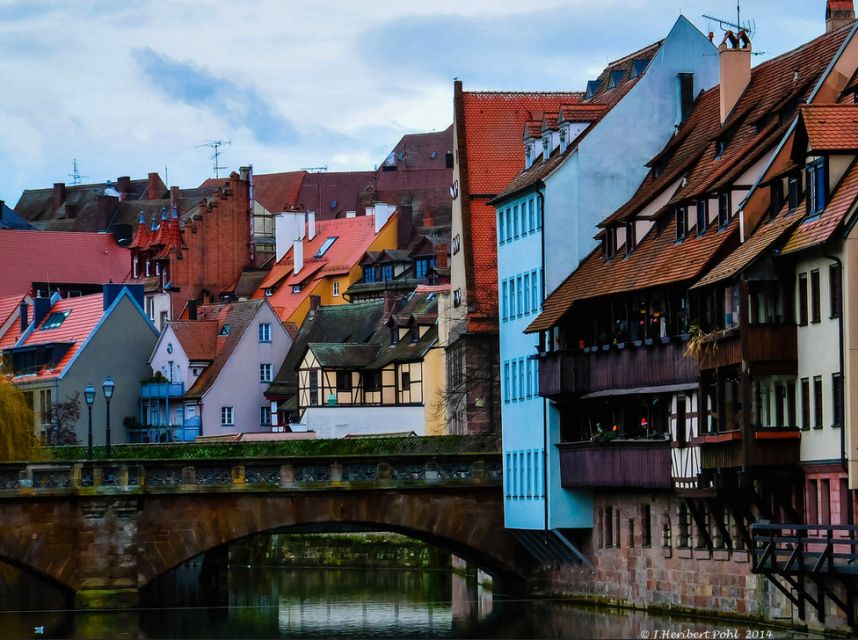
The tour begins at Hauptmarkt, Nuremberg’s central market square, at the Schöner Brunnen fountain. This is a sensible meeting point because it puts you right in the middle of the old town, with the main sights close by and no need for a bus or tram connection before the walk begins.
Arrive with enough time to locate the fountain and settle in. The meeting point is specific, but Hauptmarkt can be a busy place, so do not rely on arriving at the last minute. Since the walk ends back at the same location, you can easily continue sightseeing afterward or use the square as your next point of reference.
The opening part focuses on Nuremberg’s medieval development. That matters because the city is easier to understand when you see how its major areas connect. Rather than treating the castle, churches, lanes, and homes as separate photo stops, the guide sets them within the growth of Nuremberg.
This is a walking tour, not a castle interior visit. Entrance fees are not included, and the supplied details do not promise entry to Nuremberg Castle or any other building. I would book this experience for the outdoor context and guided explanation, not as a substitute for a paid castle visit.
Other Nuremberg trips people book alongside this one:
- Bamberg: Guided Walking Tour
★ 4.6 · 3,202 reviews - Nuremberg: City Tour with the Bimmelbahn Train
★ 4.4 · 2,475 reviews - Nuremberg: Old Town Guided Walking Tour
★ 4.6 · 2,416 reviews
Nuremberg Castle and the Burgfreiung
Nuremberg Castle is the visual high point of the route. Its position above the old town gives the tour a strong sense of place, while the surrounding streets help you see how power and ordinary city life once met at close quarters.
The guide also discusses the Burgfreiung, the protected area around the castle. This is one of the more specific features of the tour, and it should appeal to you if you prefer local terms and civic history to a quick list of dates. The word itself points to the special status of the castle precinct, and the discussion helps explain how the area functioned within medieval Nuremberg.
The castle section is likely to be most useful early in your visit. Once you know what the castle represented, later stops around the old town have more meaning. You can also return to the castle after the tour with a better idea of what you want to see.
Because the tour lasts only 1.5 hours, do not expect a detailed treatment of every castle building or a full account of Nuremberg’s rulers. The strength here is orientation. You get the main setting, a local explanation, and a route that moves naturally into the city below.
Albrecht Dürer’s house and the story behind the artist
From the castle area, the walk continues to Albrecht Dürer’s house. Dürer is one of Nuremberg’s best-known historical figures, but this stop aims to connect his work with his life and his troubled times rather than simply pointing out a famous address.
I like this approach because artists can become flat names in a guidebook. Hearing about Dürer in the streets where he lived gives you a more human point of reference. The tour includes information about his work, his life, and the hard conditions around him, helping you place his achievements in the period that produced them.
The house itself is included as an exterior stop on the walking route, but entrance is not part of the tour price. If you want to go inside, plan for a separate admission and additional time. The activity details do not specify an entrance ticket or an interior visit, so it is best to treat this part as a guided look at Dürer’s connection to Nuremberg.
A guide can also make this stop more rewarding than reading a plaque alone. The strongest praise for the experience goes to the personal storytelling. Bettina and Clara specifically praised Claudia, saying she brought history to life and made the tour special. That gives you a useful clue about the experience: the guide’s delivery is central to its value.
The guide assigned to your date may not be Claudia, so you should not book on the assumption that she will lead your group. Still, her mention suggests the provider, Wissentour Nürnberg, can offer a warm, story-led style rather than a dry recital.
Walking through the Sebalder Altstadt
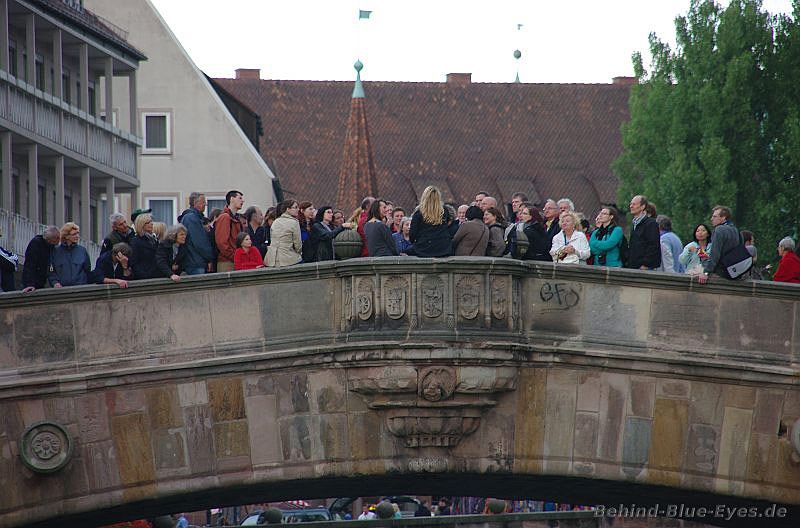
The Sebalder Altstadt, or Old Town of St. Sebald, forms one half of Nuremberg’s historic center. This section gives the tour room to explain how people lived, worked, and moved through the medieval city.
You will hear about personalities who lived and worked in Nuremberg during the Middle Ages. That wider cast is important. Dürer may be the headline name, but Nuremberg’s story is not just an artist’s biography. The guide uses other figures and places to show how the city developed and how living conditions changed over time.
I would pay attention to the contrast between the old setting and modern life. The streets may look carefully preserved today, but the tour asks you to think about what daily life was like before modern transport, sanitation, and housing standards. The supplied information does not promise a detailed reconstruction of medieval domestic life, so expect broad context rather than a room-by-room account.
The route also helps you get your bearings. A short guided walk is often most useful at the beginning of a city stay, when you are still learning which streets and districts fit together. Afterward, you can revisit the places that caught your attention without spending the first day trying to read the city map.
Something different for another day:
- Nuremberg: Tunnels and Secret Passages in the City Wall Tour
★ 4.8 · 2,334 reviews - Nuremberg: Medieval Dungeons Guided Tour
★ 4.8 · 1,726 reviews - Nuremberg: Walking Tour of Former Nazi Party Rally Grounds
★ 4.7 · 1,665 reviews - Medieval Tour in Nuremberg in Spanish
★ 5.0 · 1,374 reviews
Crossing into the Lorenzer Altstadt
The route continues through the Lorenzer Altstadt, the old town area associated with St. Lorenz. Seeing both the Sebalder and Lorenzer districts is a real advantage over a tour that stays on one side of the center.
The two areas give the walk a broader frame. You are not only looking uphill toward the castle or following Dürer’s story. You are also seeing how the old town was divided into districts and how Nuremberg’s urban life extended across the historic center.
The guide explains how conditions have changed to the present day. That comparison makes the tour more useful for you as a visitor because it connects the medieval city with the Nuremberg you see now. The details supplied do not list every church, bridge, or lane visited, so the exact sequence may vary with the guide and group.
Expect a steady stroll rather than a long stop at each sight. Ninety minutes is enough for a well-shaped introduction, but it calls for sensible expectations. If you want extensive time for photographs, interior visits, or detailed architectural study, you will need to continue exploring after the tour.
Venetian Nuremberg and Italian influence
One of the more unusual themes is the reference to Venetian Nuremberg and the role of Italians in German history. This gives the walk a wider frame than a standard medieval-city tour.
Nuremberg was connected to trade, ideas, and people moving across Europe. The Italian angle helps you see the city as part of a larger network rather than an isolated German settlement. You should not expect a full course in European economic history during a 90-minute walk, but this topic can add a welcome layer to the castle and old-town story.
I especially like that the tour includes this subject because it may lead you to notice details you would otherwise pass without thought. Architecture, commerce, and cultural exchange often leave traces in a city, even when the guide has only a short time to explain them.
The phrase Venetian Nuremberg is part of the advertised route, but no exact stop or monument is specified. Keep that in mind if you are booking mainly for one particular Venetian-style building. The value is the interpretation and connection to Italian influence, not a guaranteed visit to a named interior.
How the 90-minute format affects the experience
The tour’s length is one of its best features and one of its limits. At 1.5 hours, it fits neatly into a morning or afternoon and leaves plenty of time for the castle, museums, churches, or a meal afterward.
I would choose this format if you want a first orientation, a focused history lesson, or a guided walk between major points. It also suits you if you prefer not to commit half a day to a single activity. The route covers several themes without asking you to spend hours on your feet.
The short schedule means the guide must keep moving. You may hear the main story of Nuremberg’s medieval growth, Dürer, the two old-town districts, and Italian influence, but not every detail surrounding them. A longer private tour might allow more questions and slower stops, while this one gives you a compact overview.
A private group is available, which may be worth considering if you want more control over the pace or a more personal discussion. The details do not state the private-group price or size, so check those points before paying.
Is $23 a fair price?
At $23 per person, the tour offers reasonable value if you want a live guide and a structured route through central Nuremberg. You are paying for the explanation, not for admissions, food, drinks, or public transport.
That distinction matters. If you plan to enter Nuremberg Castle or Dürer’s house, those costs come separately. The price works best when you see the tour as a guided introduction, then choose your own paid sights afterward.
The strongest part of the value is the amount of ground covered in a short time. You get the castle area, Dürer’s house, both major old-town sections, and the Italian connection without arranging several separate visits. A 4.6 rating from 33 reviews also points to a consistently positive experience, with particular praise for clear, engaging guiding.
The minimum of 10 participants is the main booking point to watch. The activity may not be suitable for a very small party unless the private-group option applies. Check availability for the time you want and confirm that the minimum group requirement is met.
Who should book this Nuremberg walking tour?
I would recommend it to first-time visitors who want the main medieval landmarks explained in one sitting. It is also a good match for history-minded visitors, Dürer fans, and anyone who likes city walks built around stories rather than only photographs.
The tour can suit families with older children who can manage a 90-minute walk, though the supplied information does not specify a child age range. It may also work well for a short Nuremberg stop, since the central meeting point and return point keep the plan simple.
You may want a different option if you need an English-language guide. This experience is offered in German only. You should also reconsider it if you use a wheelchair, since it is not suitable for wheelchair users.
Wear practical walking shoes and keep your schedule slightly open around the start time. The route is outdoors, the exact starting times depend on availability, and the tour returns to Hauptmarkt rather than ending at a separate attraction.
Final verdict: a smart first look at medieval Nuremberg
I would book this tour if you want a concise, story-focused introduction to Nuremberg for $23. The combination of Nuremberg Castle, the Burgfreiung, Dürer’s house, both old-town districts, and Italian influence gives the walk more range than a simple photo tour.
I would skip it if you need English, wheelchair access, or guaranteed interior entry. For German-speaking visitors who can join a group of at least 10, it offers a practical way to understand the city before exploring its museums and buildings on your own. Claudia’s praised storytelling also suggests that the right guide can make the short route feel far more substantial than its running time.
FAQ
How long does the Nuremberg medieval tour last?
The tour lasts 1.5 hours, or 90 minutes.
Where does the tour begin?
It begins at Hauptmarkt square at the Schöner Brunnen fountain.
Where does the tour end?
The activity ends back at the meeting point at Hauptmarkt.
What language is the tour offered in?
The live tour guide speaks German. No other tour language is listed.
What sights are included in the route?
The route includes Nuremberg Castle, the Burgfreiung, Albrecht Dürer’s house, the Sebalder Altstadt, the Lorenzer Altstadt, and Venetian Nuremberg.
Is admission to Nuremberg Castle included?
No. Entrance fees are not included in the tour price.
Are food, drinks, or public transport included?
No. Food, drinks, and public transport are not included.
Is the tour suitable for wheelchair users?
No. The activity is not suitable for wheelchair users.
How many people are needed for the tour?
The minimum number of participants is 10. A private group option is available.
Just added around Nuremberg
- Bayreuth: Private Guided Walking Tour★ 5.0 · 15 reviews
- Nuremberg: St. Johannis Friedhof &Hesperidengärten IN GERMAN★ 4.4 · 15 reviews
- Nuremberg: Medieval Time Travel for Kids★ 4.9 · 15 reviews
- PRIVATE Nuremberg WW2 and Old Town Day Tour (Product code: 87669P16)★ 4.5 · 15 reviews
- Bayreuth City Walking Tour★ 4.6 · 16 reviews
- Nuremberg: Medieval Ages Tour in Spanish★ 4.5 · 16 reviews
- PLAYMOBIL®-FunPark Entrance Ticket★ 4.5 · 17 reviews
- Nuremberg: Private guided tour of the Old Town in German★ 4.9 · 17 reviews
Nuremberg Tours, compared.

Tunnels and Secret Passages in the City Wall Tour
Read our review →

Walking Tour of Former Nazi Party Rally Grounds
Read our review →
Browse the lists this tour appears in