
Reviewed · CITY TOURS
Munich Classic City Segway Tour (English or German Guide)
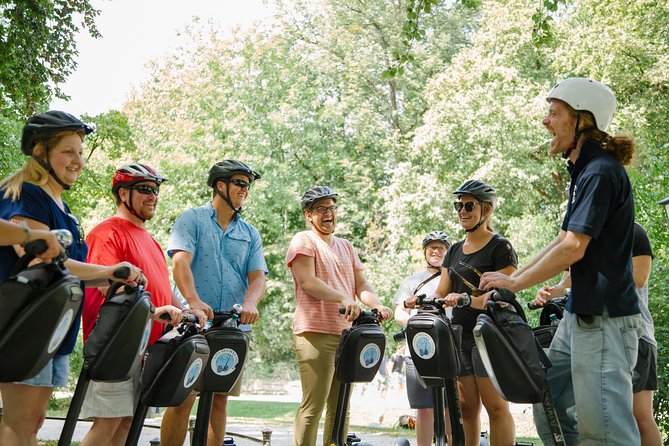
Munich is made for rolling sightseeing. This three to three-and-a-half-hour ride lets you cover far more ground than a walking tour, while still stopping often for photos and stories. I especially like the small group of no more than eight and the gentle training session before you head into the city. The route also mixes famous sights with lively places such as the Eisbach Wave and the Isar River.
The main drawback is that this is a sightseeing ride, not a museum tour. You pass the Pinakotheken and Residenz rather than going inside, and the Segway takes balance and confidence. At $92.19 per person, I see good value if you want a broad first look at Munich, but less value if you prefer slow, detailed visits to individual attractions.
In This Review
- Key points to know before booking
- Why a Segway works well in Munich
- Meeting at Karlsplatz and learning the machine
- Hofgarten and the English Garden
- Königsplatz, the Pinakotheken, and Munich’s difficult past
- Along the Isar River
- Odeonsplatz and the Residenz
- The Eisbach Wave and Munich’s modern character
- Briennerstrasse and the Maximilianeum
- The Angel of Peace and the ride back
- The guides and the feel of the experience
- Is $92.19 good value?
- Practical advice for choosing your date
- Who should book this Munich ride?
- Should you book the Munich Classic City Segway Tour?
- FAQ
- Where does the Munich Classic City Segway Tour start?
- Where does the tour end?
- How long does the Segway tour last?
- What languages are available?
- How many people can join the tour?
- Is Segway training included?
- What equipment is provided?
- Is luggage storage available?
- What is the minimum age?
- Can I cancel for a full refund?
- What happens if the weather is poor?
- Is the tour suitable for people with knee or balance problems?
Key points to know before booking
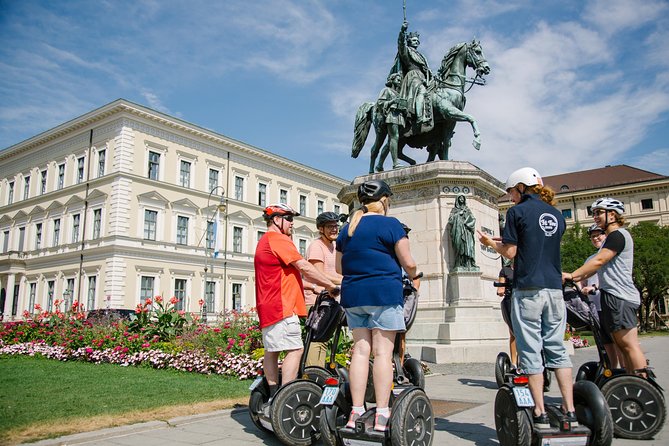
- Eight-person maximum: A small group gives you more room to ask questions and more personal help while learning to ride.
- Three-plus hours on the move: You can reach the English Garden, Königsplatz, the Isar, Odeonsplatz, and the Maximilianeum in one outing.
- Training comes first: Plan on 10 to 15 minutes of practice before the city ride begins.
- A useful history route: The tour includes royal Munich, Nazi-era sites, art museums, political buildings, and modern city life.
- The Eisbach Wave is a highlight: You may see Munich’s famous river surfers during the stop.
- Practical extras are included: Helmets, Segway use, sunscreen, raincoats, Wi-Fi, and luggage storage are provided.
Why a Segway works well in Munich
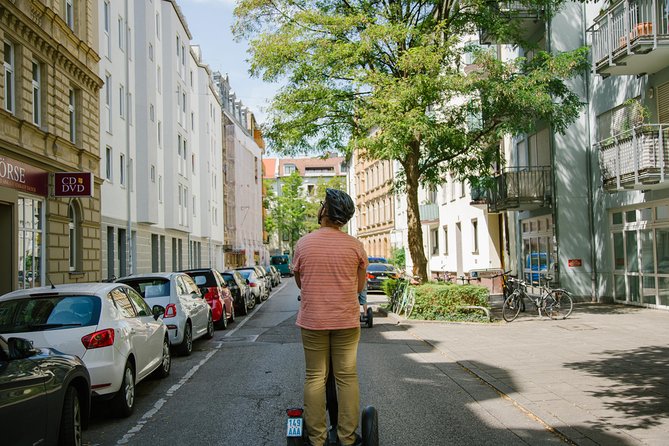
Munich’s central sights are spread across a wide area. A walking tour can show you the old center well, but it is harder to connect the royal palace, English Garden, art quarter, Isar River, and eastern monuments in a single outing. The Segway solves that problem without turning the experience into a fast bus ride.
You move slowly enough to notice streets and buildings, yet quickly enough to keep the route moving. The frequent stops are important. They give you time to take pictures, listen to the guide, and regain your balance before setting off again.
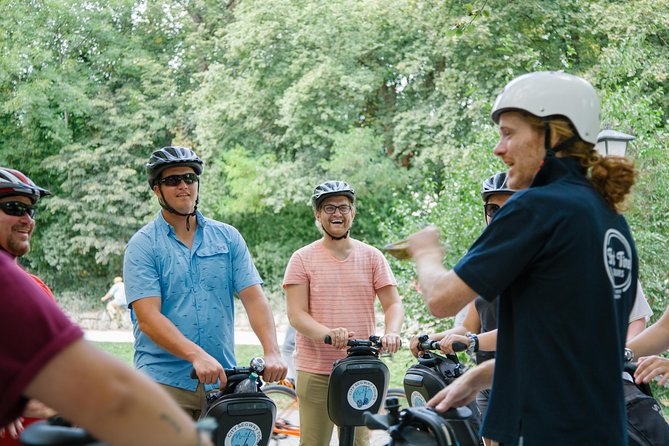
The small group is another real advantage. With a maximum of eight people, the guide can watch how everyone is handling the machine. Several riders have praised the patient instruction, especially for first-time Segway users. Rob, Robert, Mark, Karl, Dan, and Achim have all been singled out for friendly guiding, clear explanations, humor, or extra effort.
You should still take the physical requirements seriously. The tour is not recommended if you have knee or balance problems, and German law requires all participants to be over 14. Most people can take part, but you need enough balance to control a two-wheel motorized vehicle for several hours.
More City Tours in Munich
- Munich: Old Town & Viktualienmarkt City Walk in German
★ 4.7 · 2,304 reviews - Munich: City Bus Tour & FC Bayern Munich Allianz Arena Tour
★ 4.5 · 2,071 reviews - Munich City Hop-on Hop-off Tour
★ 3.5 · 1,233 reviews
Meeting at Karlsplatz and learning the machine
The tour begins at Karlsplatz 4, 80335 München. This central meeting point is near public transportation, so it should be practical to reach from other parts of Munich. The activity ends back at the same location, which makes it easy to continue sightseeing or return to your hotel afterward.
Before the city ride, you spend about 10 to 15 minutes learning the Segway. This is not a minor formality. It is the part that can make the rest of the outing comfortable rather than tense.
The staff provides the Segway and helmet, then gives you time to practice. First-time riders have especially appreciated the patient approach. If you have never used one, do not feel pressured to look polished right away. The most useful thing you can do is listen carefully and use the practice time well.
The shop also offers free Wi-Fi and luggage storage. Those extras will matter if you are carrying day bags or arriving before check-in. Sunscreen and a raincoat are included, which is useful in Munich’s changeable weather, though the tour itself requires good conditions.
Hofgarten and the English Garden
The early part of the route brings you through Hofgarten, a formal green space near the center of Munich. It is a pleasant change from city streets and a good place to get used to steering around other people and open paths.
From there, you ride into the English Garden, Munich’s central park and one of the major open spaces on the route. The stop is listed at about 10 minutes, so think of it as a compact introduction rather than an extended park visit.
The benefit here is scale. On foot, you would spend more time covering the park’s approaches. By Segway, you can see a slice of this huge urban park and still reach several distant sights later in the tour. The trade-off is that you will not have time to explore the English Garden at leisure.
The route also passes the Bavarian Chancellery. This is a useful stop for understanding modern Bavarian government and the way official buildings sit within Munich’s historic center. Your guide supplies the context, so pay attention to the short explanations rather than treating each stop as only a photo opportunity.
Königsplatz, the Pinakotheken, and Munich’s difficult past
Königsplatz is one of the most important historical stops. Today, it is known as a cultural center, but it also served as a Nazi marching ground. That contrast gives the place weight. The tour does not present Munich as a collection of pretty buildings only. It includes the city’s darkest political chapter as part of the story.
A guide such as Achim or Mark can make this kind of stop more useful by explaining what you are seeing and how it fits into Munich’s past. One piece of feedback described the route as a little too focused on Hitler, but still acceptable. That is worth keeping in mind. The Nazi era receives noticeable attention, and some people will value that direct treatment while others may prefer a lighter sightseeing route.
The Pinakotheken come next. These are among the world’s oldest art galleries, viewed from outside as part of the city ride. You will not have time to tour their collections during this activity, but the stop helps place Munich among Europe’s major art centers.
I like this pairing of Königsplatz and the Pinakotheken. One stop deals with political memory, the other with art and culture. Together, they show why a city tour can be more useful when it moves beyond the postcard sights.
More Segway & Scooter Tours in Munich
- Munich: City Highlights Guided Segway Tour
★ 4.6 · 266 reviews - Munich 3-Hour Segway Tour: Nazi Munich & Royal Architecture
★ 4.9 · 194 reviews - Munich Segway Tour
★ 5.0 · 181 reviews - Munich: City Highlights Guided Segway Tour
★ 4.5 · 161 reviews
Along the Isar River
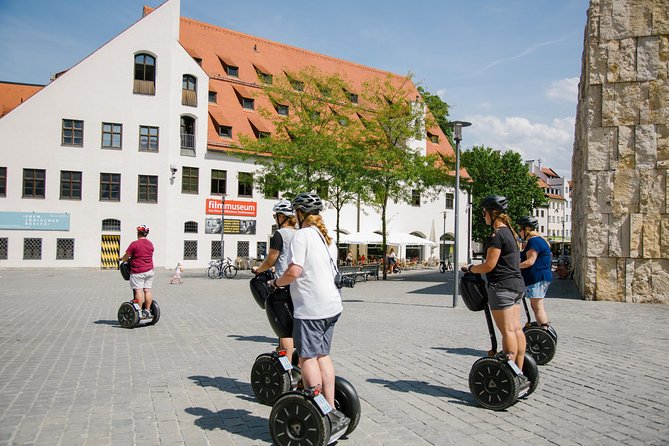
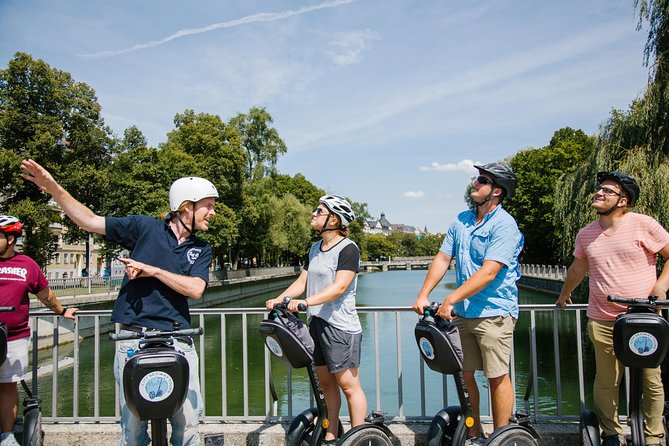
The Isar is central to Munich’s daily life and a popular place for relaxation. The route follows the riverbanks for about 10 minutes, giving you a different view of the city from the formal squares and palace buildings.
This is one of the sections where the Segway earns its keep. The river corridor adds breathing room to a route otherwise packed with monuments. You can enjoy the change of pace while your guide explains why the Isar matters to Munich.
The itinerary does not promise a long riverside break or a stop for food. Expect a moving sightseeing segment with time for pictures and commentary. If you want to spend an afternoon beside the river, plan that separately after the tour.
Odeonsplatz and the Residenz
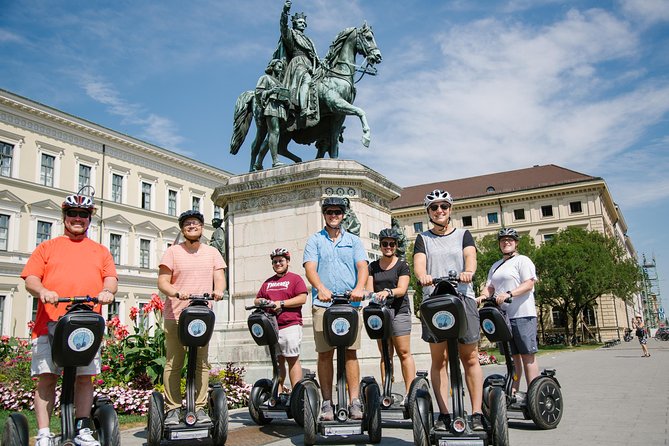
Odeonsplatz brings you back into the architectural heart of Munich. The square features the Feldherrnhalle and the Theatinerkirche, two landmarks that help explain the city’s royal and political identity.
The stop lasts about 10 minutes. That is enough for an introduction, a few photos, and a guide’s explanation, but not a full examination of the buildings. If you want to go inside the Theatinerkirche or study the square at a slower pace, return on your own.
You then ride through the Residenz München, the former royal palace complex. The guide tells stories of local aristocracy as you pass through the area. This is a good example of the tour’s strength: you get a quick sense of how Munich’s rulers shaped the city without spending the whole day indoors.
I would use this stop to mark places for a later return. The tour gives you orientation. Your own follow-up visit can provide the detailed rooms, art, and architecture that a moving group cannot.
The Eisbach Wave and Munich’s modern character
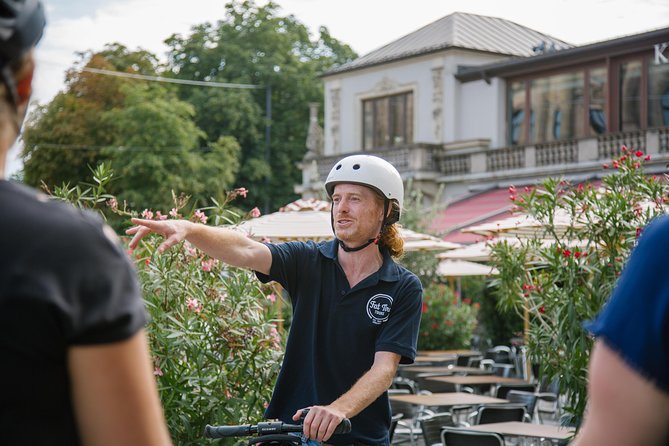
The Eisbach Wave is probably the most unexpected stop. Munich’s famous surfers perform on a standing wave in the river, right in the middle of the city. The tour allows about 10 minutes to watch the action.
This is the kind of sight that makes a city introduction memorable. It is not another palace façade or official monument. It shows Munich as a place where outdoor sport and city life meet in a surprising way.
The wave depends on what is happening when you arrive. The itinerary says you can be amazed by a performance from the surfers, but no activity can guarantee a particular person or exact display. Still, it is a smart inclusion because it breaks up the historical material and gives the route a modern pulse.
Briennerstrasse and the Maximilianeum
At Brienner Strasse 45, you pass the former headquarters of the National Socialist German Workers’ Party and Hitler’s office block. This is another short stop, listed at about five minutes, but it adds a specific location to the discussion of Nazi Munich.
The stop is brief, so do not expect a museum-style explanation or an interior visit. Its value comes from seeing the place in the city itself and connecting it to the wider account given at Königsplatz.
The Maximilianeum offers a very different story. This palatial building houses a foundation for gifted students and the Bavarian Landtag, or state parliament. It combines education, public service, and grand architecture in one landmark.
The route does not include admission inside. You see the exterior and hear about its role. That is typical of this tour: it gives you a strong list of places to recognize, then leaves detailed indoor sightseeing for another time.
The Angel of Peace and the ride back
The final listed stop is Friedensengel, the Angel of Peace. The monument commemorates 25 peaceful years after the Franco-German War. It provides a calmer ending after the stops connected with war, dictatorship, and political power.
The stop takes about five minutes. That is enough to photograph the monument and hear its basic story, though not enough to linger. From there, the tour returns to the Karlsplatz meeting point.
By the end, you have seen a broad cross-section of Munich: formal gardens, royal buildings, art institutions, government offices, difficult historical sites, a river, a major park, and a famous urban sport. You have not entered most of the attractions, but you will have a clearer sense of where they are and which ones deserve more time.
The guides and the feel of the experience
The guide can shape this outing more than any single monument. The strongest pattern in the feedback is praise for clear instruction, friendly conversation, historical explanations, and personal care.
Rob and Robert are praised for patience with beginners and for explaining Munich’s past. Mark is described as friendly and well informed, with a good grasp of local history. Karl is praised for mixing city information with the fun of riding. Achim is noted for humor and for giving a particularly good introduction on a Sunday, when there were fewer pedestrians and cars to manage. Dan is remembered for making the experience feel smooth from start to finish.
One guide even continued longer than necessary because the group was enjoying itself. That is a nice bonus, but I would not treat extra time as guaranteed. The stated duration is about three to three-and-a-half hours.
The English or German guide option makes this useful for a wide range of visitors. At booking, choose the language that will let you follow the history without effort. The tour is much better when you understand the explanations at each short stop.
Is $92.19 good value?
At $92.19 per person, this is not the cheapest way to see Munich. You are paying for the vehicle, helmet, instruction, guide, small group, and the ability to link far-flung sights in one half-day outing.
I think the price works best for a first or second day in Munich. You can quickly learn the shape of the center, spot attractions you want to revisit, and hear enough history to make later visits more meaningful. It is also a good choice if you have limited time and do not want to spend several hours walking between districts.
The value is weaker if your main goal is interior access. Admission to the Pinakotheken, Residenz, or other sights is not included, and the tour does not replace a museum visit. You are buying orientation and movement, not an all-access pass.
The booking pattern, with reservations often made about 28 days ahead, suggests that planning early is sensible. I would especially do so if your Munich dates are fixed.
Practical advice for choosing your date
This experience requires good weather. If poor conditions cancel the tour, you are offered another date or a full refund. Since the activity runs outdoors and depends on riding, check the forecast before setting aside your only free morning.
Free cancellation is available up to 24 hours before the start time. Changes or cancellations inside that window are not accepted for a refund, so keep your plans firm once the cutoff approaches.
You should also allow time before the start for check-in and training. Wear clothing that lets you balance and steer comfortably. The company supplies sunscreen and a raincoat, but those items are helpful backups, not a reason to ignore the forecast.
Who should book this Munich ride?
I would recommend it to first-time Munich visitors who want a fast orientation, active couples or friends, and anyone who finds a long walking tour tiring. It also suits people who enjoy learning history in short, lively pieces rather than sitting through a formal lecture.
It is less suitable if you have knee or balance problems, dislike motorized sightseeing, or want to spend substantial time inside museums and churches. The tour also has a minimum number of participants, so a cancellation is possible if that minimum is not met. In that case, you receive an alternative date or experience, or a full refund.
Should you book the Munich Classic City Segway Tour?
Book it if you want a fun, efficient introduction to Munich and are comfortable learning a new vehicle. The strongest reasons are the eight-person limit, the patient training, the range of neighborhoods, and the mix of royal, cultural, political, and modern sights.
Skip it if you want a slow historical walk or detailed access to museums. For most active visitors with only a few days in Munich, I think the tour earns its price by helping you get your bearings fast and showing you where to spend the rest of your stay.
FAQ
Where does the Munich Classic City Segway Tour start?
It starts at Karlsplatz 4, 80335 München, Germany.
Where does the tour end?
The activity ends back at the meeting point at Karlsplatz 4.
How long does the Segway tour last?
The tour lasts approximately three to three-and-a-half hours.
What languages are available?
You can take the tour with an English or German-speaking guide.
How many people can join the tour?
The group is limited to a maximum of eight participants.
Is Segway training included?
Yes. You receive about 10 to 15 minutes of Segway training before the city ride begins.
What equipment is provided?
The tour includes use of a Segway and a helmet. Sunscreen and a raincoat are also provided.
Is luggage storage available?
Yes. Complimentary luggage storage is available at the company shop, along with free Wi-Fi.
What is the minimum age?
All participants must be over 14, as required by German law.
Can I cancel for a full refund?
Yes, if you cancel at least 24 hours before the experience start time. Cancellations or changes made less than 24 hours before the start are not refunded.
What happens if the weather is poor?
If bad weather causes the tour to be canceled, you are offered a different date or a full refund.
Is the tour suitable for people with knee or balance problems?
No. It is not recommended for people with knee or balance problems.
Just added around Munich
- Munich: Private or Group Third Reich and WWII Walking Tour★ 4.9 · 13 reviews
- From Munich: Neuschwanstein Castle and Linderhof Private Tour★ 5.0 · 13 reviews
- Private Transfer from Munich to Salzburg with 2 hours for sightseeing★ 4.5 · 13 reviews
- Munich: Historical Walking Tour on the Rise of Hitler★ 5.0 · 13 reviews
- Private Scenic Transfer from Munich to Prague with 4h of Sightseeing★ 5.0 · 13 reviews
- From Munich: VIP day trip to Salzburg★ 5.0 · 14 reviews
- National Socialism WWII with licensed guide – private tour★ 5.0 · 14 reviews
- Munich: Walking Tour Old Town 3D VR Tour in GERMAN★ 4.3 · 14 reviews
City Tours, compared.
1-Hour City Tour by Boat with Guaranteed Seating
Read our review →
City History Canal Sightseeing Tour on a Motorboat
Read our review →
Browse the lists this tour appears in