

Reviewed · MUSEUMS
Hamburg: Museum of Illusions Ticket
Watch your senses misbehave. The Museum of Illusions Hamburg turns perception into a hands-on game, with more than 50 exhibits built around distorted rooms, visual tricks, puzzles, and gravity-defying photos. I like the mix of playful entertainment and simple lessons about how the brain interprets what you see. I also like that children and adults can try the exhibits together. The main drawback is size: at $17 per person, the value depends on how long you enjoy testing each station, and the compact setup can feel crowded or confusing.
You can walk on a ceiling, appear to change size, encounter floating heads, and lose your sense of direction in an infinite room. The Brain Gym adds a useful change of pace with hands-on dilemma games. Plan to bring a camera, but leave pets, food, and drinks outside.
In This Review
- Key points to know before you go
- What the Museum of Illusions Hamburg actually offers
- Floating heads, infinite rooms, and changing scale
- Defying gravity with a camera ready
- Brain Gym brings puzzles into the visit
- A practical look at the visit from start to finish
- How much time and value should you expect?
- Booking flexibility and simple rules
- Who will enjoy this most?
- The good and the less good
- Should you book the Museum of Illusions Hamburg?
- FAQ
- How many exhibits are at the Museum of Illusions Hamburg?
- How much does admission cost?
- How long is the ticket valid?
- Is the Museum of Illusions Hamburg wheelchair accessible?
- Can I cancel my booking?
- Can I bring food, drinks, or pets?
Key points to know before you go
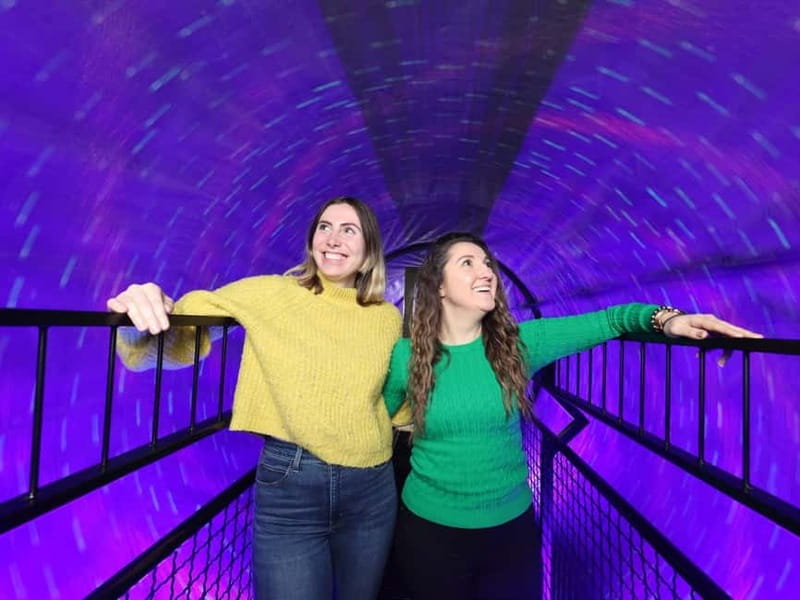
- More than 50 interactive stations: This is a hands-on attraction, not a quiet museum of framed displays.
- Photo-friendly illusions: The best moments are designed for you to become part of the picture.
- Brain Gym puzzles: Logic games give the visit more substance than simple optical tricks.
- Good for mixed ages: Families, friends, and solo visitors can all take part at their own pace.
- Compact venue: The large number of exhibits does not mean a large building, so allow for some crowding and wandering.
- Flexible booking: Your ticket is valid for one day, with free cancellation up to 24 hours ahead and a reserve-now, pay-later option.
What the Museum of Illusions Hamburg actually offers

This is not a traditional museum where you move quietly from case to case. You enter a collection of interactive stations, each asking you to question what your eyes report. The central idea is simple: your senses collect information, but your brain has to interpret it, and that interpretation can go wrong.
That makes the attraction especially easy to understand. You do not need a background in psychology or physics. You simply step into an exhibit, look at the result, and then work out why the effect happened.
The attraction has more than 50 exhibits. The exact pace depends on how long you spend at each one, how many people are waiting, and how much time you allow for photographs. I would not treat the ticket as a quick five-minute stop. To get fair value from the admission price, take your time and try the stations more than once when the effect changes with your position.
The setting is family-friendly, but adults are not left out. Many illusions work because you know what should happen, then watch the room or image contradict it. Children may enjoy the surprise first, while adults often enjoy figuring out the visual trick.
More Museums in Hamburg
- Hamburg: International Maritime Museum Entrance Ticket
★ 4.7 · 547 reviews - Hamburg: Entrance to the Museum Ship Cap San Diego
★ 4.7 · 467 reviews - Hamburg: RICKMER RICKMERS Museum Entry Ticket
★ 4.6 · 269 reviews
Floating heads, infinite rooms, and changing scale
The most memorable part of the visit is the group of illusions that challenge your sense of space and body. Floating heads sound like a small idea, yet they are effective because they take a familiar human image and place it somewhere your brain does not expect.
An infinite room pushes the same idea further. Reflections and repetition can make a limited space feel much larger or strangely endless. You are not just looking at an illusion from a distance. You become part of the scene, which makes it easier to understand why the eye accepts the false image.
The changing-size illusion offers another clear lesson. Your body does not actually grow or shrink, but the surrounding room can make it appear that way. This is one of the better parts of the attraction for photographs because the result is immediately readable in a picture.
I like exhibits such as these because they reward both curiosity and participation. You can simply enjoy the odd image, or you can stop and consider which lines, angles, reflections, or changes in perspective caused it. That gives the attraction a little more staying power than a room filled with visual jokes.
Defying gravity with a camera ready
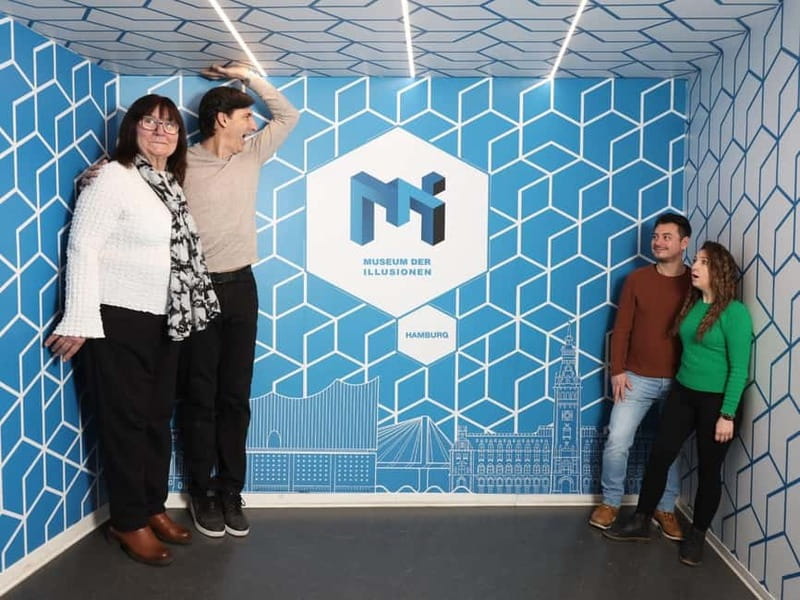
The promise of walking on the ceiling is one of the strongest reasons to bring a camera. The illusion depends on your position and the way the scene is viewed, allowing you to pose as if gravity has taken a day off.
These exhibits are built for shared participation. One person can pose while another takes the picture, then you can switch roles. If you are visiting alone, you may need to work out how to capture the effect, but the attraction specifically encourages you to record your experience with unique photos.
Bring a camera or phone with enough battery and storage. That advice is included for a reason: the photographs are not an extra decoration. They are part of the fun and help preserve effects that are difficult to describe afterward.
The photo element also changes the pace of the visit. You are likely to pause at an exhibit, adjust your position, take a picture, and then try again. That can be enjoyable, but it can also slow movement through the rooms when several people want the same station. A little patience helps.
Brain Gym brings puzzles into the visit

The Brain Gym is an important counterpoint to the optical illusions. Instead of asking only what you see, these stations ask you to solve tricky dilemmas and work your brain in a different way.
I like this area because it gives families and friends something to do together. A visual illusion can be enjoyed in seconds, but a puzzle may lead to a short discussion, a wrong answer, and another attempt. That adds a social side to the experience.
The puzzles also make the attraction useful for people who prefer challenges to posing for pictures. You do not have to love every optical effect to find something worthwhile here. The combination of perception tests and problem-solving keeps the visit from feeling like one long series of photo backdrops.
Still, keep the scale in mind. This is a modest attraction rather than an all-day museum. The Brain Gym adds variety, but it does not turn the visit into a full afternoon activity by itself.
Something different for another day:
- Hamburg: Sex and Crime in St. Pauli Tour for Ages 18+
★ 4.7 · 15,447 reviews - Hamburg: 1.5-Hour Harbor and Speicherstadt Day Cruise
★ 4.6 · 14,200 reviews - Hamburg: 90-Minute Evening Lights Harbor Cruise
★ 4.5 · 7,728 reviews - Hamburg: 2-Hour XXL Port of Hamburg Cruise Tour
★ 4.7 · 6,979 reviews
A practical look at the visit from start to finish
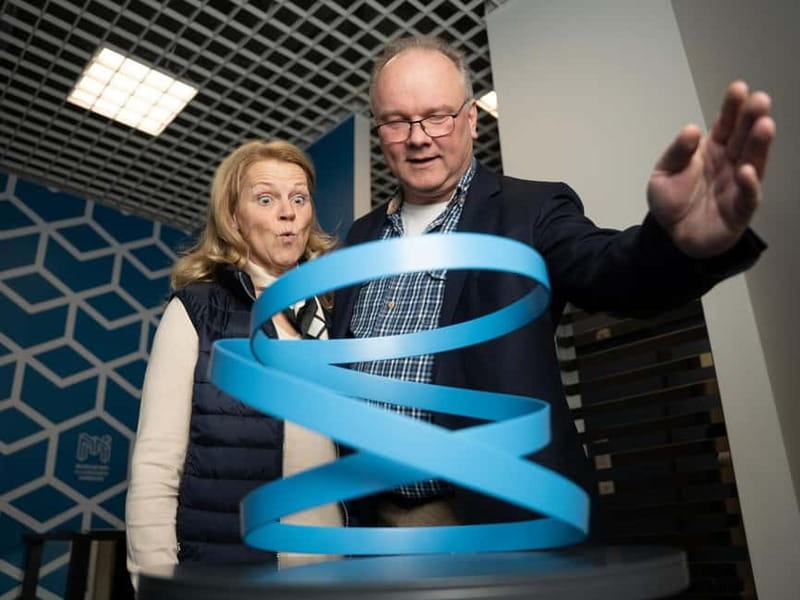
After entry, you can move among the interactive stations at your own pace. There is no guide-led route or stated fixed sequence, so you decide how much attention to give each illusion.
Start by getting your bearings. With more than 50 stations, it is easy to move from one effect to the next without noticing how the exhibits differ. Take a moment to read or consider the purpose of each setup, then try it instead of rushing straight to the camera.
Next, spend time with the room-based illusions. These usually make the strongest first impression because they alter your sense of space and position. They also work well for group photographs.
After that, look for the effects that change your apparent size or make ordinary body positions look impossible. These are good choices for families because the result is easy to see and share.
Leave time for the Brain Gym rather than treating it as an afterthought. If you have children with you, this section can help break up the photo-taking. If you are with adults or friends, the puzzles can create a friendly contest without requiring any special skill.
Finish with a second pass through your favorite stations if the space and crowd allow. The first attempt is often about understanding the trick. The second attempt is about getting the better photograph or seeing how a small change in position affects the result.
One caution comes from the layout. The attraction has been described as not especially well designed, with people wandering around and children running into pictures. I would keep a close eye on young children, especially around photo areas, and avoid assuming that every station will have a clear one-way flow.
How much time and value should you expect?
The ticket costs $17 per person and is valid for one day. That price is reasonable if you enjoy interactive exhibits, take photographs, and spend time with the puzzles. It is less convincing if you expect a large museum with extensive displays or a long, structured program.
The number of exhibits helps, but quantity alone does not determine value. Some stations may hold your attention for several minutes, while others may make their point almost immediately. Your visit becomes better value when you treat the museum as a place to experiment rather than a checklist of 50 stops.
The attraction is best for a short, focused outing. It can fill a gap in a Hamburg day, offer a change from conventional sightseeing, or give a family an indoor activity built around doing rather than simply looking.
The $17 admission also includes the full collection of exhibits rather than a separate charge for the Brain Gym or the photo stations. That makes the price easier to judge, since the main activities are part of one ticket.
People with disabilities pay a reduced price of €13 per person. One accompanying person is free for a visitor with a severe disability classified B or H. The attraction is wheelchair accessible, which is useful practical information when planning a visit.
Booking flexibility and simple rules
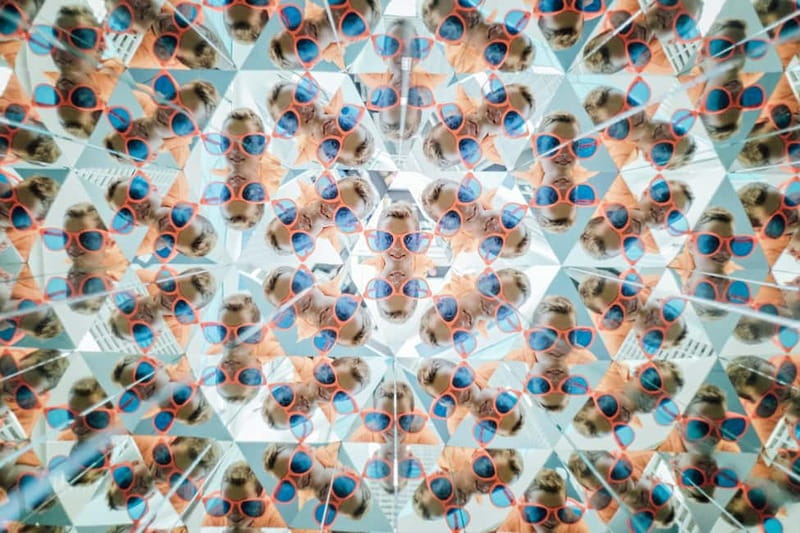
The ticket is valid for one day, and you should check availability for the available starting times. You can cancel up to 24 hours in advance for a full refund, and the reserve-now, pay-later option lets you hold a place without paying immediately.
The attraction also offers skip-the-ticket-line entry. That can save some time at the entrance, though it does not remove the possibility of waiting at popular exhibits once inside.
Bring a camera. Do not bring pets, food, or drinks into the museum. These rules are easy to follow, but planning around them prevents an unnecessary interruption.
Because the venue can feel small, I would avoid judging the experience by the number of hours you spend there. A compact visit can still be worthwhile if you enjoy the stations and leave with good photographs. The important question is not how big the building is, but how actively you take part.
Who will enjoy this most?
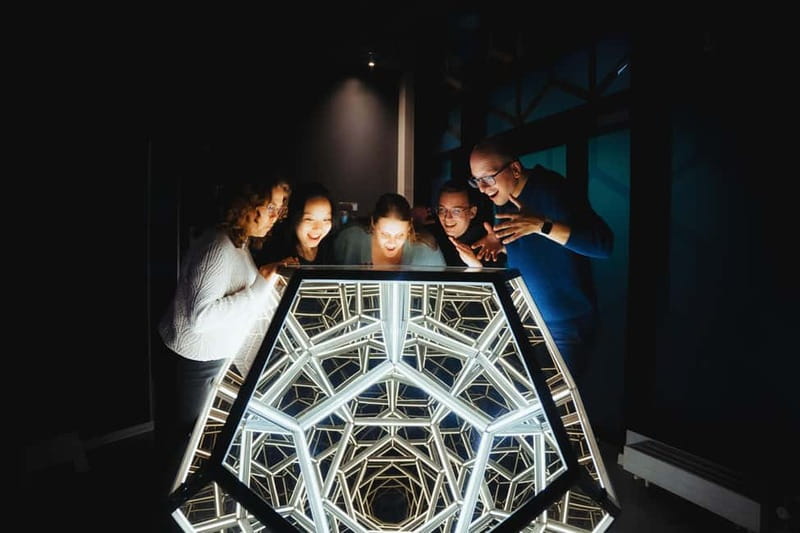
I would recommend the Museum of Illusions Hamburg to families looking for an activity where children can touch, pose, test, and solve. The exhibits give younger visitors something concrete to do, while adults can enjoy the visual mechanics and the challenge of getting a good photograph.
It also suits friends who like playful group activities. The best effects need someone to pose and someone to take the picture, so the format naturally encourages cooperation.
Solo visitors can enjoy it too, especially if they like perception puzzles and do not mind arranging photographs without a partner. The experience is less dependent on a guide or a group than a conventional tour.
I would be more cautious if you dislike crowded interactive spaces, have very limited time, or expect a detailed science museum. The attraction explains ideas about perception through experience, but the main appeal is participation and surprise.
The good and the less good
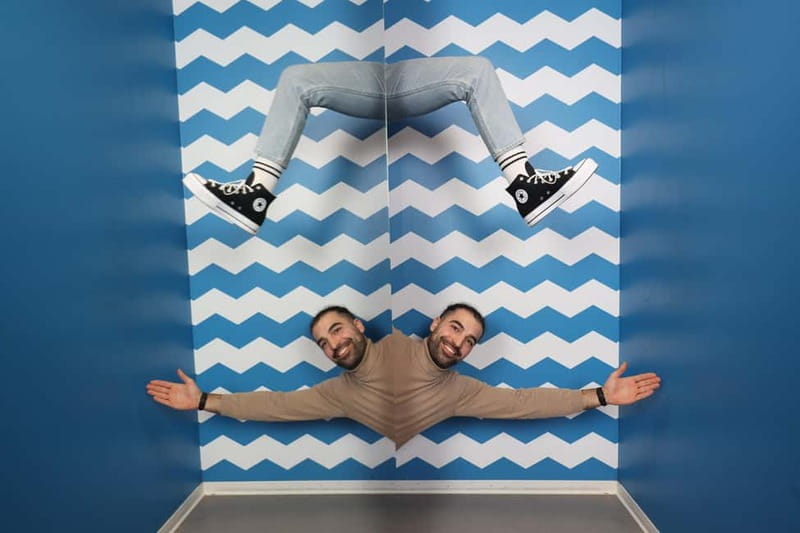
The strongest feature is the variety. More than 50 stations let you move between rooms, body illusions, visual effects, photographs, and logic games. That variety helps different people find something they enjoy.
The family focus is another clear advantage. You can explain the basic idea to a child, try the effect together, and compare the result. There is no need to stand silently and protect fragile displays.
The weakest feature is the layout. A small space with many interactive points can become untidy in practice. People may wander without a clear route, and children may run into the picture setups. I would stay alert and accept that the visit may feel more free-form than polished.
The attraction also depends heavily on your participation. If you stand back and look quickly, it may feel slight for the price. If you pose, retake photographs, attempt the puzzles, and think about how the effects work, the visit has more substance.
Should you book the Museum of Illusions Hamburg?
Book it if you want an accessible, playful stop with optical tricks, funny photographs, and puzzles that work for several age groups. The $17 price makes sense for an active visit, especially when you use the Brain Gym and take time with the exhibits.
Think twice if you want a large museum, a guided explanation, or a calm route through carefully arranged galleries. The space is small, and the layout may feel aimless when busy.
My practical advice is to go with a camera, allow enough time to try the stations properly, and keep young children close around the photo areas. For a family or friend group that enjoys hands-on fun, this is a worthwhile Hamburg activity. For everyone else, it is best treated as a compact burst of entertainment rather than a major museum visit.
FAQ
How many exhibits are at the Museum of Illusions Hamburg?
The museum has more than 50 interactive exhibits and stations focused on perception, optical illusions, photographs, and puzzles.
How much does admission cost?
The listed price is $17 per person. People with disabilities pay a reduced price of €13 per person.
How long is the ticket valid?
The ticket is valid for one day. You should check availability for the starting times offered.
Is the Museum of Illusions Hamburg wheelchair accessible?
Yes, the museum is wheelchair accessible.
Can I cancel my booking?
Yes. You can cancel up to 24 hours in advance for a full refund.
Can I bring food, drinks, or pets?
No. Pets, food, and drinks are not allowed. You should bring a camera to capture the interactive illusions.
Just added around Hamburg
- Hamburg: Private 1.5-Hour Walking Tour of St. Pauli★ 4.9 · 13 reviews
- Mister X Hamburg 2h city tour, hunting & games for all ages★ 5.0 · 13 reviews
- Yacht Sailing After Work Tour of Hamburg Harbor★ 5.0 · 13 reviews
- Free Tour: Port, Red Light District and Beatles. You decide how much to pay at the end★ 3.9 · 13 reviews
- Private 5-Hour Hamburg Countryside Tour with a former policeman★ 5.0 · 14 reviews
- Hamburg: After work Millerntor stadium tour with drinks★ 4.8 · 14 reviews
- Hamburg: Guided Walking Tour★ 4.2 · 14 reviews
- Hamburg: Tour of Blankenese on the Banks of the Elbe★ 4.5 · 14 reviews
Museums, compared.





Skip-the-Line: Berlin Wall Museum at Checkpoint Charlie
Read our review →
Browse the lists this tour appears in