
Reviewed · MUSEUMS
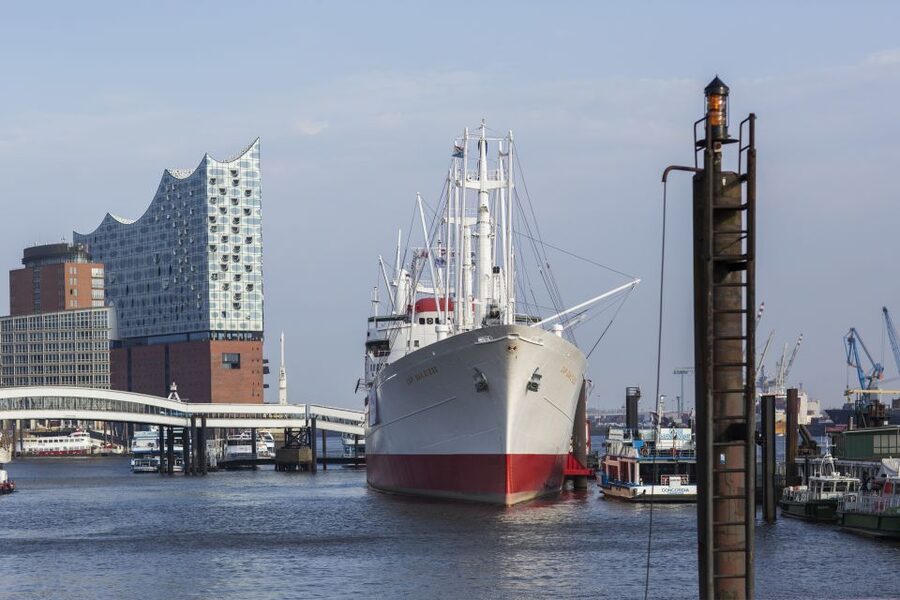
Hamburg: Entrance to the Museum Ship Cap San Diego
Step aboard Hamburg’s floating time machine. The Cap San Diego lets you picture Atlantic crossings of the 1960s and 1970s, when this handsome cargo ship carried goods between Hamburg, Rio de Janeiro, and Buenos Aires. I like the freedom to explore from bridge to hatch, and I like that the ship still feels mechanical and practical rather than polished into a lifeless exhibit.
At $14 per person, the admission offers a good amount to see for a full day of validity. I also appreciate the two serious historical displays, one about emigrants leaving Hamburg between 1850 and 1930, and another about cargo handling from the 1960s to today. The main drawback is the ship itself: stairs, tight passages, and an easy-to-miss route make it a poor choice for wheelchair users or anyone uneasy in confined spaces.
In This Review
- Key things to know before boarding
- Start at Überseebrücke with Hamburg’s harbor at your feet
- Picture the 1960s on the Atlantic route
- Take the bridge for a lookout’s view
- Hear the ship’s pulse in the engine room
- Sit in the saloon and imagine passenger life
- Follow the story of Hamburg’s emigrants
- See changing cargo work in Hatch 2
- Allow time for a self-guided route
- Is $14 a fair price?
- Who will enjoy Cap San Diego most?
- Final verdict: Should you book Cap San Diego?
- FAQ
- Where is the Cap San Diego entrance?
- What are the museum’s opening hours?
- How much does admission cost?
- How long is the ticket valid?
- Is the visit guided?
- Is Cap San Diego wheelchair accessible?
- Is the ship suitable for people with limited mobility?
- Is the ship suitable for people with claustrophobia?
Key things to know before boarding
- A real 1961 cargo ship: Cap San Diego is the last surviving member of six fast general cargo ships built for the Hamburg South shipping company.
- Explore at your own pace: You can move through the bridge, saloon, hatches, engine room, and other parts without a live guide.
- Two useful historical stops: Hatch 2 explains general cargo and container handling, while a documentary covers Hamburg’s emigration port.
- The engine room is the star for many visitors: Go below deck to see where the ship’s working power came from.
- Allow time for stairs and orientation: The route is not fully obvious at first, though you can quickly get your bearings.
- Good value for maritime history: The $14 ticket is valid for one day, and an audio guide is available if you select that option.
Start at Überseebrücke with Hamburg’s harbor at your feet
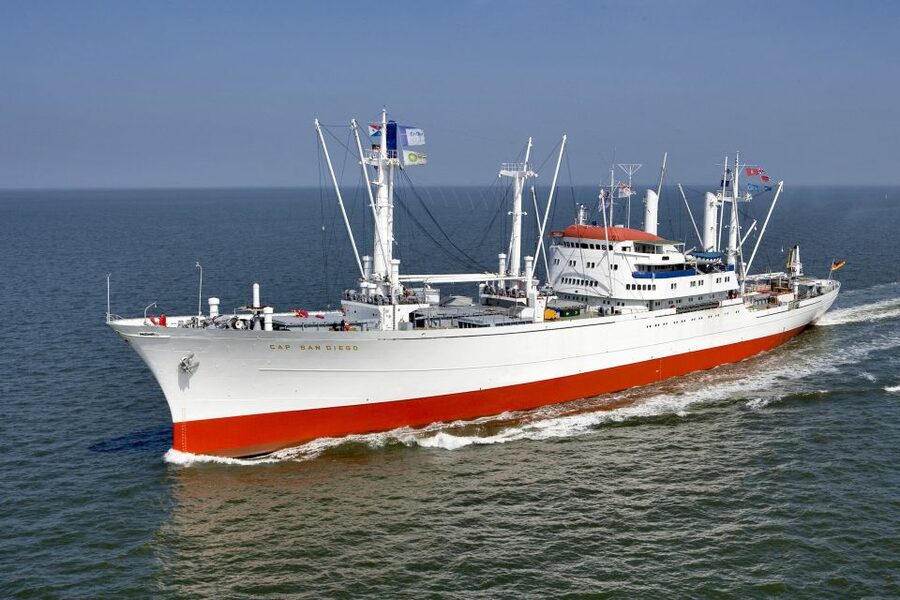
The ship entrance is at the end of Überseebrücke, a fitting place to begin. You are not walking into a recreated gallery built to resemble a ship. You are boarding the actual Cap San Diego, a vessel that worked the South American route until the end of 1981.
That distinction matters. The ship’s scale, corridors, metal fittings, hatches, and working spaces give the visit a physical quality that a standard maritime museum cannot match. You can imagine cargo moving through the vessel, crew working around the clock, and passengers relaxing while the ship made its long Atlantic crossings.
The museum is open daily from 10 a.m. to 6 p.m. The ticket is valid for one day, so you do not need to rush through every section in a short time slot. That is helpful because the ship rewards slow wandering. You may want to inspect a technical room, return to a display, and then go back on deck for a different view of Hamburg’s harbor.
There is no live guide leading a group. You explore independently, with an audio guide available if you choose that ticket option. This setup suits people who like to read, pause, and follow their own interests. It is less suitable if you want a carefully narrated route with someone explaining each room as you go.
More Museums in Hamburg
- Hamburg: International Maritime Museum Entrance Ticket
★ 4.7 · 547 reviews - Hamburg: RICKMER RICKMERS Museum Entry Ticket
★ 4.6 · 269 reviews - Hamburg: Museum of Illusions Ticket
★ 4.2 · 122 reviews
Picture the 1960s on the Atlantic route
The central idea of the visit is an imaginary voyage across the Atlantic. The ship’s story connects Hamburg with Rio de Janeiro and Buenos Aires, then brings you back again through the life of a working cargo vessel.
Cap San Diego was built in 1961 as one of six fast general cargo ships for Hamburg South. It continued on South American routes until 1981, making it a useful bridge between two eras of shipping. General cargo ships carried many separate kinds of goods, loaded piece by piece. Container shipping later changed that rhythm, making cargo handling faster and more standardized.
You can feel that transition as you move through the ship. The vessel is not presented only as an object from the past. It also explains how maritime freight changed from the 1960s to the present day. For anyone curious about how ports and ships actually worked, that practical angle is valuable.
I would treat the visit as a series of small scenes rather than a single linear attraction. On the bridge, you can imagine yourself keeping watch and guiding the ship across open water. In the saloon, the mood shifts. This is where you picture passengers listening to light music and enjoying the social side of a long voyage.
The contrast between the bridge and saloon gives the ship character. One area is about responsibility and navigation. The other is about comfort and routine. You are not simply looking at labels in a museum case. You are moving between the spaces that shaped daily life aboard ship.
Take the bridge for a lookout’s view
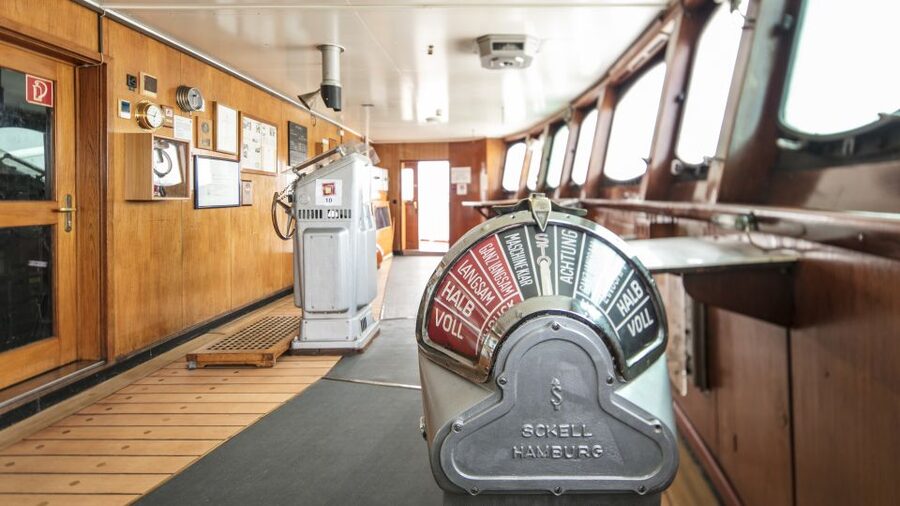
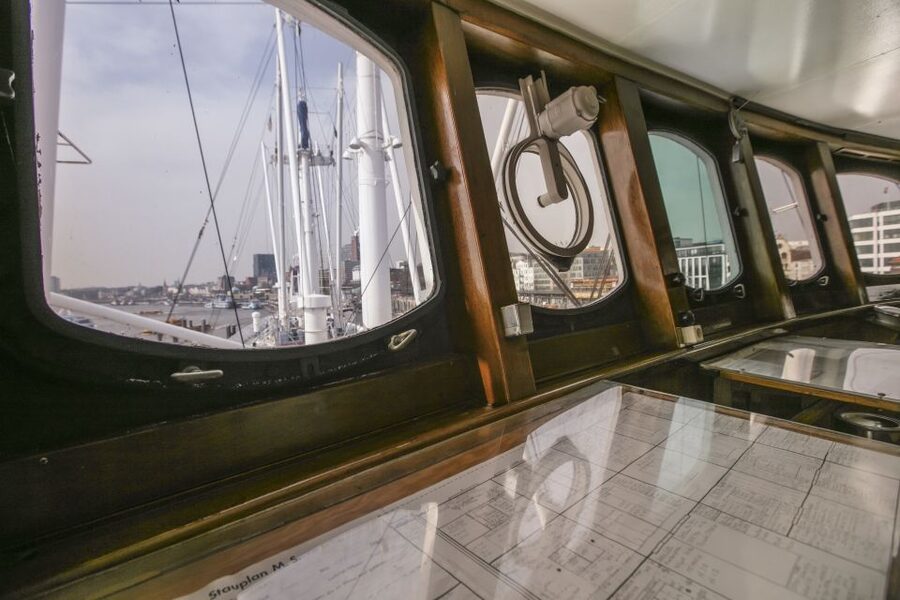
The bridge is one of the best places to begin because it gives you a sense of the ship as a whole. From here, you can imagine the lookout’s job and the steady attention needed during an ocean crossing.
The experience is intentionally imaginative. You should not expect a theatrical performance or a costumed crew. Instead, the ship’s controls and position do the work. The setting helps you understand how different the pace of a sea journey was before modern travel became quick and routine.
This is also a good stop for visitors who enjoy machines and working environments. The bridge links the ship’s human decisions with the technical systems below. After seeing it, heading down toward the engine room creates a natural progression.
Because the route is self-guided, signage may not always make the ideal order clear. It is possible to miss a turn or reach a room from an unexpected direction. One useful approach is to take a few minutes at the beginning to understand the layout instead of hurrying toward the most obvious stairway.
Hear the ship’s pulse in the engine room
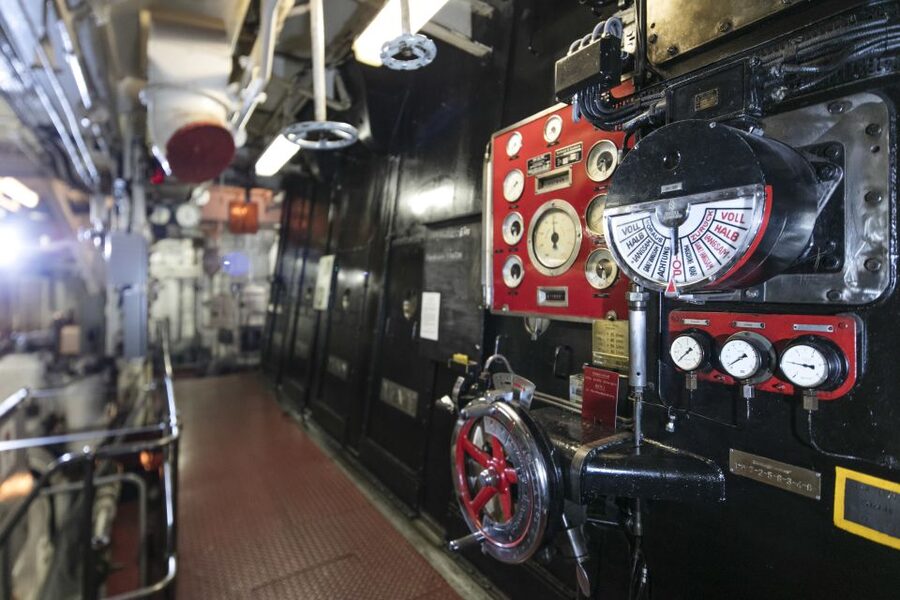
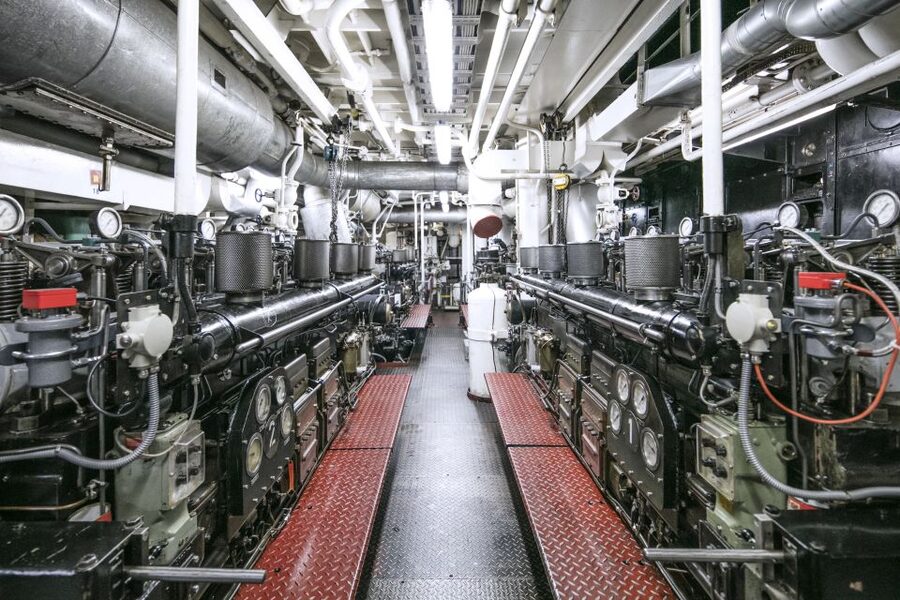
The engine room gives the visit its strongest physical sense of scale. Standing deep within the Machine Room lets you picture the force that drove Cap San Diego across the Atlantic.
You can expect a large, industrial setting rather than a quiet display room. The attraction here is the machinery itself and the way it reveals the labor behind every voyage. The bridge may show you where the ship was directed, but the engine room explains how it moved.
This section is especially worthwhile if you enjoy transport museums, engineering, or old working technology. It also helps children and younger visitors connect the ship’s story to something concrete. Instead of hearing only that the vessel traveled to South America, you can see the kind of equipment that made those journeys possible.
The engine room is below deck, and reaching it means using stairs. The same is true of several other parts of the ship. If stairs are difficult for you, the visit will be limited. Cap San Diego is not wheelchair accessible and is not recommended for people with limited mobility.
Tight areas are another issue. The ship has narrow routes and enclosed spaces, so it is not a good match for anyone with claustrophobia or mazeophobia. This is not a minor footnote. It shapes how comfortably you can explore the vessel.
Something different for another day:
- Hamburg: Sex and Crime in St. Pauli Tour for Ages 18+
★ 4.7 · 15,447 reviews - Hamburg: 1.5-Hour Harbor and Speicherstadt Day Cruise
★ 4.6 · 14,200 reviews - Hamburg: 90-Minute Evening Lights Harbor Cruise
★ 4.5 · 7,728 reviews - Hamburg: 2-Hour XXL Port of Hamburg Cruise Tour
★ 4.7 · 6,979 reviews
Sit in the saloon and imagine passenger life
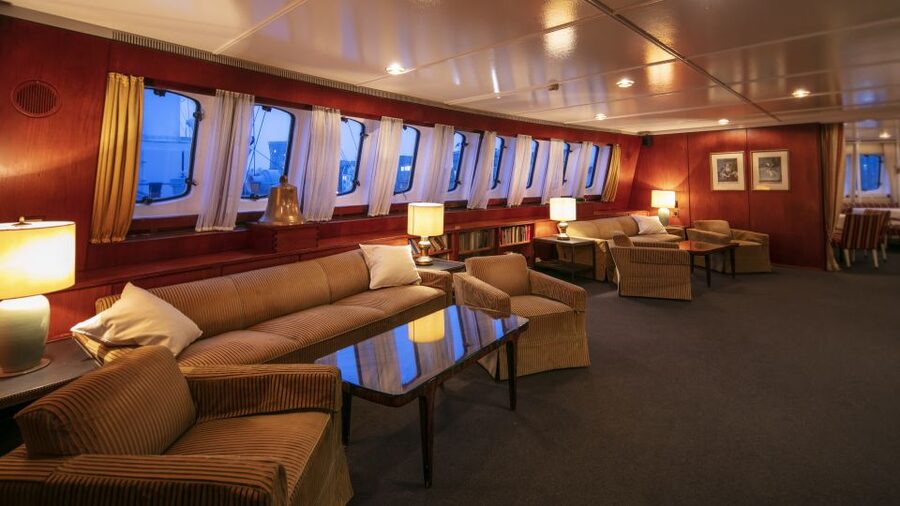
The saloon offers a calmer counterpoint to the engine room. Here, the imagined voyage becomes more social. You can picture passengers settling in with light music during the trip toward South America.
This part helps prevent the ship from becoming only a technical exhibit. Cargo, engines, and navigation are important, but long voyages also involved waiting, conversation, meals, and quiet routines. The saloon gives you a way to think about the human side of sea travel.
I would not expect a full entertainment program or a live recreation of a 1960s crossing. The value is in the atmosphere and the preserved setting. It is a place to pause after the stairs and machinery, then continue with the historical displays.
For families, this may be one of the easier areas to appreciate because it requires less technical background. For adults, it provides a useful contrast with the working parts of the ship. You see how the same vessel served different needs depending on where you stood.
Follow the story of Hamburg’s emigrants
During the self-guided visit, you can watch the documentary A Suitcase Full of Hope: Emigration Port of Hamburg. It focuses on the fate of emigrants between 1850 and 1930.
This adds a wider human story to the ship. Cap San Diego represents a later period, but Hamburg’s port had already played a major role in departures long before this cargo vessel was built. The documentary helps you think about what ocean travel meant to people leaving Europe with limited certainty about what waited ahead.
The title points to the emotional scale of emigration. A suitcase could hold the practical remains of an old life, while the sea journey opened an uncertain new one. This is a useful stop for anyone interested in family history, migration, or the social role of Hamburg’s port.
I would give the documentary proper time rather than treating it as background material. The engine room shows the ship’s physical power. This film shows the personal stakes connected to ocean travel. Together, they make the visit more than a tour of machinery.
See changing cargo work in Hatch 2
Hatch 2 contains the permanent exhibition General Cargo and Container Handling. It explains sea freight from 1960 to today through historical images and explanatory text.
This is one of the most useful parts of the museum for understanding why Cap San Diego matters. General cargo shipping involved handling separate loads, often with more visible human effort and more complex organization. Container shipping later changed the process by standardizing the cargo unit.
The display connects the ship’s working life with changes still visible in modern ports. You can see the vessel not only as a preserved relic, but also as evidence of a major shift in international trade.
The information is designed to be clear, with photographs and text rather than a specialized lecture. You do not need a background in shipping to follow the main idea. Still, visitors who already enjoy maritime technology may want extra time here, especially if they like seeing how one old vessel fits into a larger industrial story.
Hatch 2 also gives the tour a practical focus. Instead of asking you to admire the ship only for its age, it explains what the ship did and how cargo transport changed around it.
Allow time for a self-guided route
A full day of validity does not mean you need a full day aboard. It means you have room to set your own pace, revisit an area, and avoid squeezing the ship into a narrow appointment.
Most people will want enough time for the main spaces, the engine room, the bridge, the saloon, the documentary, and Hatch 2. The exact length depends on how closely you read the displays and how long you spend looking at machinery.
The lack of a live guide has both strengths and weaknesses. I like being able to linger without holding up a group. You can focus on the sections that appeal to you and move on when a display is less interesting.
The tradeoff is that you must organize your own route. The path could be marked more clearly, and at first you may need to work out where the next section is. This is manageable, especially since the ship is open for independent exploration, but it is worth knowing before you arrive.
An audio guide can add structure if you prefer narration. It is included only when that option is selected, so check your booking choice rather than assuming it comes with every ticket.
Is $14 a fair price?
At $14 per person, Cap San Diego offers strong value for anyone interested in ships, Hamburg’s port, migration, or industrial history. The ticket covers entry and gives you one full day of validity, not just a brief timed walk-through.
The price is particularly reasonable because the ship includes several kinds of experience in one visit. You get maritime atmosphere on deck, technical spaces below, passenger areas, a documentary, and a cargo-handling exhibition.
The value is lower if you dislike self-guided museums or cannot manage stairs. In that case, much of the ship will be difficult or impossible to reach. The ticket is inexpensive, but accessibility and comfort matter more than price.
For a short Hamburg visit, the attraction also works well as a focused harbor stop. You do not need to commit to a full-day guided excursion. You can plan your time around the 10 a.m. to 6 p.m. opening window and choose how much of the ship fits your schedule.
Who will enjoy Cap San Diego most?
I would recommend this experience to:
- People who enjoy historic ships, engines, and working transport
- Visitors curious about Hamburg’s role as a port
- Families with older children who can handle stairs
- Anyone interested in emigration between 1850 and 1930
- Visitors who prefer independent sightseeing
- People who want a hands-on alternative to a standard museum
I would be cautious about recommending it to anyone with limited mobility, wheelchair users, or people who find narrow and maze-like interiors stressful. The ship’s physical layout is central to the experience, not something you can easily avoid.
The attraction also suits visitors who enjoy imagining daily life. You can place yourself on the bridge, in the saloon, or beside the engines and build your own picture of a 1960s Atlantic crossing. That personal element is one reason the ship feels more memorable than a collection of photographs alone.
Final verdict: Should you book Cap San Diego?
Book it if you want a practical, atmospheric look at Hamburg’s maritime past for $14. The ship’s best features are its preserved working spaces, the engine room, the bridge, the saloon, and the clear explanation of cargo transport from general freight to containers.
Give yourself permission to wander rather than searching for a perfect route. Start at the ship entrance at the end of Überseebrücke, take your time with the documentary and Hatch 2, and expect stairs throughout the visit.
Skip it if confined spaces make you uncomfortable or if mobility limitations prevent you from using multiple stairways. For everyone else, Cap San Diego is a worthwhile Hamburg stop, especially when you want history you can see at close range and feel under your feet.
FAQ
Where is the Cap San Diego entrance?
Go directly to the ship entrance at the end of Überseebrücke in Hamburg.
What are the museum’s opening hours?
The museum is open daily from 10 a.m. to 6 p.m.
How much does admission cost?
Admission costs $14 per person.
How long is the ticket valid?
The ticket is valid for one day.
Is the visit guided?
No. Cap San Diego is explored independently as a self-guided museum ship. An audio guide is available if you select that option.
Is Cap San Diego wheelchair accessible?
No. The museum ship is not wheelchair accessible.
Is the ship suitable for people with limited mobility?
It is not recommended because the ship has multiple flights of stairs.
Is the ship suitable for people with claustrophobia?
No. The museum is not recommended for people with claustrophobia or mazeophobia because of its enclosed and maze-like ship layout.
Just added around Hamburg
- Mister X Hamburg 2h city tour, hunting & games for all ages★ 5.0 · 13 reviews
- Hamburg: Private 1.5-Hour Walking Tour of St. Pauli★ 4.9 · 13 reviews
- Yacht Sailing After Work Tour of Hamburg Harbor★ 5.0 · 13 reviews
- Free Tour: Port, Red Light District and Beatles. You decide how much to pay at the end★ 3.9 · 13 reviews
- Private 5-Hour Hamburg Countryside Tour with a former policeman★ 5.0 · 14 reviews
- Hamburg: Guided Walking Tour★ 4.2 · 14 reviews
- Hamburg: After work Millerntor stadium tour with drinks★ 4.8 · 14 reviews
- Hamburg: Tour of Blankenese on the Banks of the Elbe★ 4.5 · 14 reviews
Museums, compared.





Skip-the-Line: Berlin Wall Museum at Checkpoint Charlie
Read our review →
Browse the lists this tour appears in