
Reviewed · OLD TOWN WALKS
Fall in Love with Munich in a Private Old Town Walking Tour
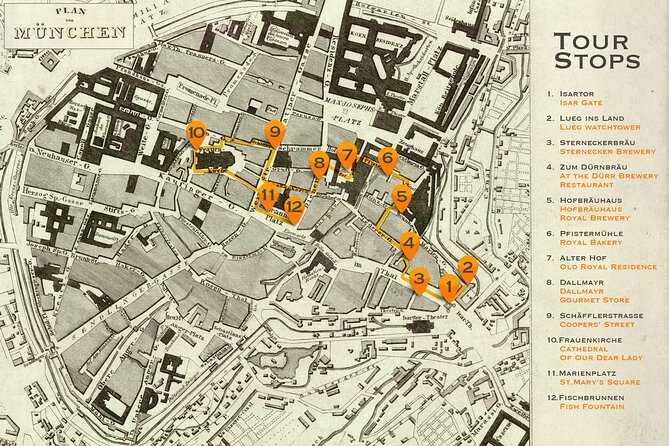
Munich rewards a closer look. This private Old Town walk with Victoria packs medieval legends, royal stories, Nazi-era history, beer traditions, and local food advice into two hours. I like the small private format, which lets your group of up to six ask questions and adjust the pace. I also like the smart route from Isartor to Marienplatz, which gives you a useful first map of central Munich without wasting time on transport.
The main consideration is the brisk schedule. Ten stops in about two hours means most places are explained from outside or with a short look inside, rather than explored at museum length. Still, Victoria’s use of maps and historical images on an iPad adds welcome context, and her restaurant, coffee, beer hall, and museum suggestions can make the rest of your stay better.
In This Review
- Key points to know before you book
- A private introduction to Munich’s Old Town
- Starting at Isartor and Munich’s medieval foundations
- Nazi history at Sterneckerbräu
- Old taverns and the Hofbräuhaus interior
- Pretzels, princes, and Munich’s first royal residence
- Dallmayr and the edible side of Munich
- Schäfflerstraße and the dance that outlasted the plague
- Frauenkirche and the Devil’s footprint
- Marienplatz, the Weißwurst story, and the Glockenspiel
- What the $157.28 group price really buys
- Who will get the most from this walk
- Should you book Fall in Love with Munich?
- FAQ
- How long does the tour last?
- How many people can join the private tour?
- What is the tour price?
- Where does the tour begin?
- Where does the tour end?
- Is the tour offered in English?
- Are entrance fees included?
- Can I cancel for a full refund?
Key points to know before you book
- Isartor begins the story with medieval walls, trade, and Munich’s origins.
- The route handles difficult Nazi history directly at Sterneckerbräu.
- Hofbräuhaus includes a look inside its main hall, not just an exterior photo stop.
- Victoria uses images and maps on an iPad to make vanished buildings and past events easier to picture.
- The walk ends at Marienplatz, a useful place to continue sightseeing, eat, or stop for coffee.
- The $157.28 group price works best for families or friends sharing one private guide.
A private introduction to Munich’s Old Town
This is a history-led walking tour, but it is not a dry procession of dates. Victoria builds the walk around stories: a city founded through trade, a clock that seems to run backward, a royal zoo with an unexpected political role, and a devil’s footprint inside Munich’s cathedral.
That approach matters in Munich. The Old Town is compact, and you can reach many of these sights on your own. What you cannot easily get on your own is the thread connecting them. A former royal bakery becomes part of the story of the pretzel. A street named for coopers opens into a tale of plague, dance, and civic memory. A famous beer hall becomes a place to discuss royal privilege, brewing law, and the darker political events tied to the building.
Victoria’s background in medieval history and architecture, as described during the experience, appears to shape the tour’s focus. She also brings visual material on an iPad, including pictures and maps. That is especially useful when a building has changed, when a historic scene no longer exists, or when the architecture needs a little explanation.
The tone is friendly and flexible. Victoria has adjusted starting times for delayed arrivals, accommodated groups with a six-month-old baby and grandparents, and kept teenagers interested with a mix of visual material, humor, and short stories. Those details suggest a guide who pays attention to the people in front of her rather than delivering one fixed speech.
More Old Town Walks in Munich
- Munich: Old Town & Viktualienmarkt City Walk in German
★ 4.7 · 2,304 reviews - Munich Old Town Walking Tour
★ 4.5 · 1,287 reviews - Munich: Spooky Tour of Old Town in German
★ 4.6 · 1,112 reviews
Starting at Isartor and Munich’s medieval foundations
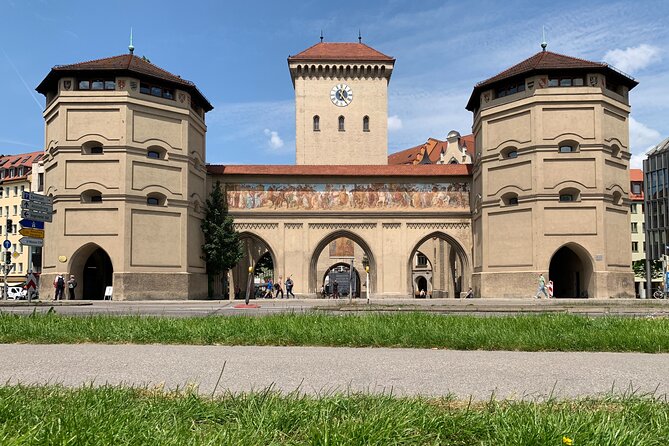
The meeting point is beneath the central arch of Isartor, at Isar Gate, Tal 50. This is a sensible beginning because you are immediately looking at one of the surviving symbols of Munich’s medieval defenses.
The first 15 minutes cover the city wall, the disguised remains of the medieval fortifications, and the legend of Munich’s foundation. Victoria also explains how trading one product helped turn Munich into a major city. That economic angle is useful. It moves the story beyond kings and churches and shows how ordinary commerce helped shape the city.
This opening also includes two unusual local details. You hear about Munich’s beloved comedian, Karl Valentin, whose museum occupies the gate towers, and the curious Bavarian idea that time runs backward. These touches give the tour a lighter start before it moves into more serious history.
Isartor is near public transportation, and the route afterward continues on foot through the Old Town. Wear comfortable shoes, though the walk is only about two hours and is described as moving at a comfortable pace.
Nazi history at Sterneckerbräu
At Sterneckerbräu, the tour addresses one of the more difficult chapters in Munich’s past. You see the location where Adolf Hitler gave his first public speech, an event connected with his joining the German Workers’ Party. Victoria also explains how the building later became an important location for the Nazi Party.
The stop lasts about 10 minutes, so do not expect a full study of Munich under National Socialism. What you get is a clear historical marker in the middle of the Old Town. That can be valuable because Munich’s polished streets and grand façades can make the past feel remote. This stop places political history directly onto the city map.
I appreciate that the itinerary does not avoid this subject in favor of only royal stories and beer. The treatment is brief, but it gives you a starting point for asking questions or choosing additional sites later. If WWII history is your main reason for visiting Munich, you will likely want a separate, more focused experience.
Old taverns and the Hofbräuhaus interior
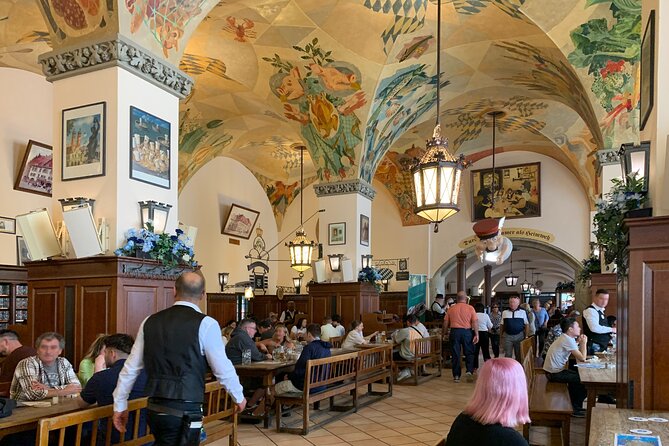
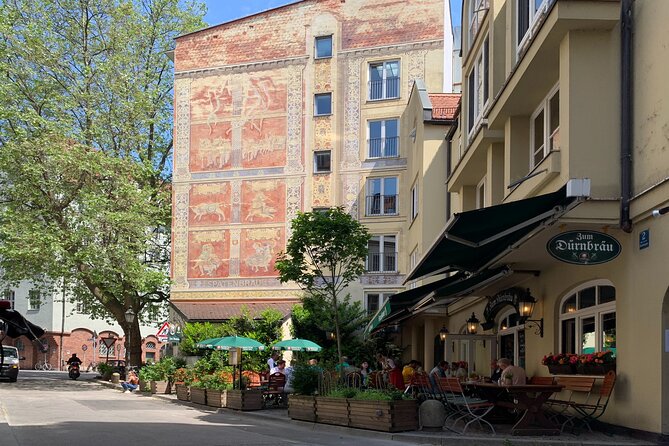
The five-minute passage along Dürnbräugasse introduces Munich’s oldest tavern and the story of how it preserved that title for more than five centuries. This is a quick stop, but it helps explain how food and drink are woven into the city’s identity.
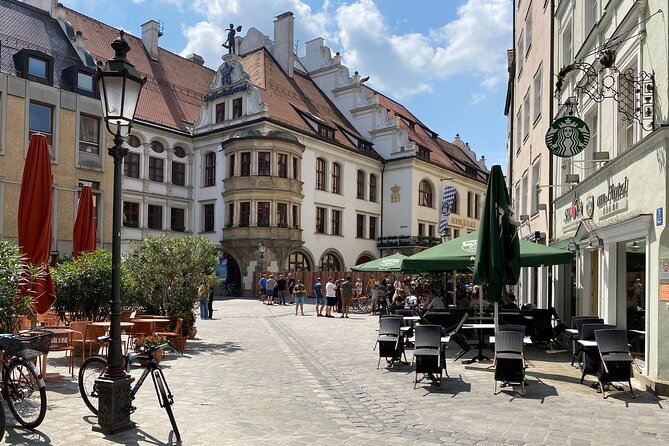
The larger food and beer section comes at Hofbräuhaus München. You spend about 20 minutes at the former royal brewery, now one of the world’s most famous beer halls. Victoria takes you inside the main hall, where you can see the interior, the regulars’ tables, and the special storage cells holding the personal beer mugs of regular patrons.
That detail gives the beer hall a more human scale. Instead of treating Hofbräuhaus as only a grand tourist landmark, the tour shows you a working social tradition. Victoria also covers the Bavarian brewing tradition, the beer purity law, Oktoberfest, and the difference between a beer hall and a beer garden.
You should not expect food or drinks to be included. The experience includes the guided visit, but meals and beverages are separate. That is actually useful here, since you can return later if you want to eat or have a beer after receiving Victoria’s advice.
Hofbräuhaus can be crowded and noisy, especially at popular times. A private guide helps you make sense of the room, but you will still be in a famous public beer hall rather than a quiet historic interior. The short visit is best viewed as an introduction.
More Walking Tours in Munich
- Munich: Third Reich & WWII Walking Tour
★ 4.6 · 6,181 reviews - Third Reich Walking Tour Munich
★ 4.5 · 4,291 reviews - Munich: Night Watchman Walking Tour
★ 4.7 · 2,092 reviews - Munich Ghosts and Spirits Evening Walking Tour
★ 5.0 · 1,900 reviews
Pretzels, princes, and Munich’s first royal residence
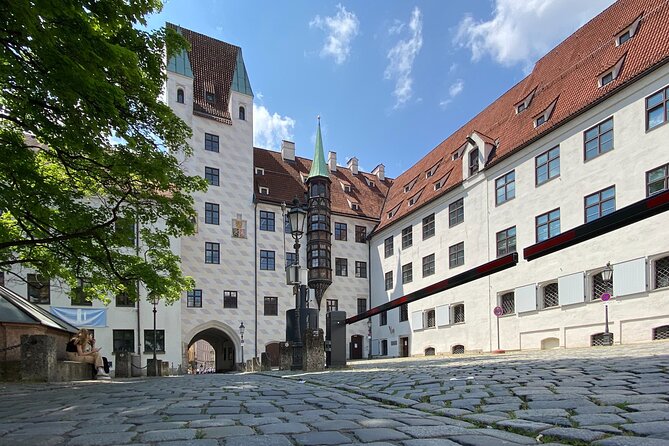
At Restaurant Pfistermühle, Victoria points out the former royal bakery and explains the legend of the pretzel and its symbolic link to Munich. This 10-minute stop shows how a simple local food can carry religious and civic meaning.
The next stop, Alter Hof, shifts the focus to the Wittelsbach royal family. You enter the inner courtyard of Munich’s first royal residence and hear the legend of the Royal Zoo. The story also connects to Holy Roman Emperor Louis IV, giving the courtyard a role in larger European politics.
Victoria explains how Munich’s flag received its colors here as well. That is a good example of the tour’s method: begin with a place you can see, then use it to explain a wider story about power, symbols, and the city’s development.
Alter Hof is a compact courtyard rather than a grand palace tour. You will not spend a long time examining royal rooms, but the setting gives you a tangible link to Munich’s ruling family. The stop is particularly helpful if you plan to visit other Wittelsbach sites later.
Dallmayr and the edible side of Munich
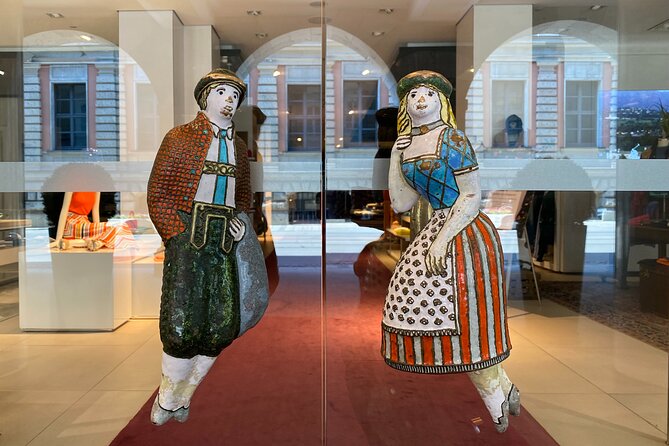
The five-minute stop at Dallmayr Delikatessenhaus is short, but it may be one of the most useful for your own time in Munich. This historic gourmet store has royal connections and has grown into one of Europe’s major delicatessen companies.
Victoria shares details from Dallmayr’s past and offers advice for food lovers and coffee drinkers. That practical layer is repeated throughout the experience. Several people who booked the tour found her restaurant, coffee, and beer recommendations especially helpful, and some returned to places she suggested during their stay.
You will not have a tasting included, and the stop is primarily an introduction from the street. Still, it gives you a clear place to investigate later if you want a polished food or coffee break in the Old Town.
Schäfflerstraße and the dance that outlasted the plague
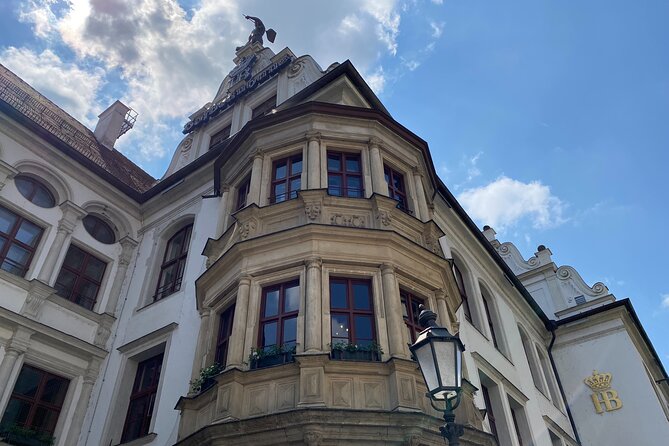
Schäfflerstraße, or Coopers’ Street, is another five-minute stop with more meaning than its length suggests. Here you learn Munich’s best-known legend about a traditional dance performed after a 16th-century plague threat was contained.
The dance is still performed in Bavaria’s capital. That connection between an old civic story and a continuing tradition helps you see Munich as more than a collection of restored buildings. It also gives the walk a welcome change of pace after the royal and political material.
As with several stops, the value comes from the explanation rather than from a long physical visit. You are crossing a street, not attending a performance. If you want to see the dance itself, this tour does not promise that.
Frauenkirche and the Devil’s footprint
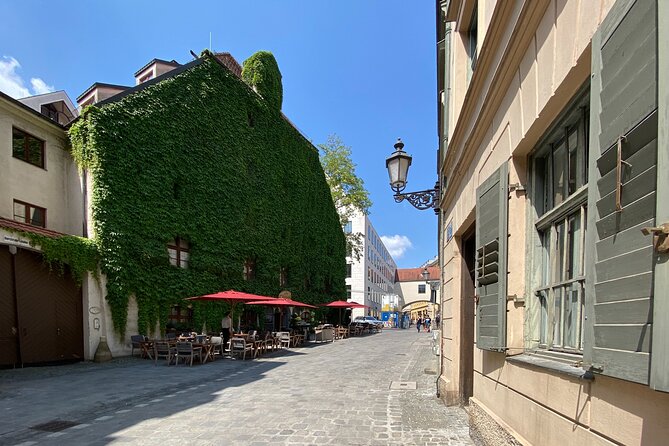
The 20-minute visit to Frauenkirche is one of the more substantial stops. Munich’s cathedral is presented through its construction legend, its distinctive interior, and the famous Devil’s footprint.
Victoria also explains the wind that surrounds the cathedral throughout the year, regardless of season. This unusual detail turns an architectural visit into a small investigation. You are encouraged to look, notice, and connect the building’s design with the stories attached to it.
The cathedral stop benefits from the guide’s architectural background. A large church can feel impressive but confusing when seen without context. Here, the legends and design details give you a reason to study the interior rather than simply step inside, take a photograph, and leave.
The itinerary lists admission as free for the stops, and entrance fees are included in the tour price. Food and drinks are not included. Since the experience is outdoors for much of its length, weather can affect your comfort, although one group continued to enjoy the walk during light rain because Victoria kept the history engaging.
Marienplatz, the Weißwurst story, and the Glockenspiel
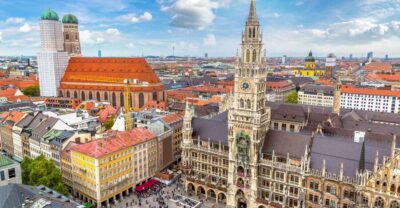
The final 20 minutes unfold at Munich Marienplatz, the city’s central square and the natural end point for an Old Town orientation. You see the Fischbrunnen, or Fish Fountain, and hear about Wallet Washing and the Butchers’ Jump, two local customs linked to the fountain.
Victoria also points out where Munich’s white sausage, Weißwurst, was invented and explains the odd circumstances behind its creation. This is exactly the sort of detail that helps you order and understand local food later, rather than treating it as a menu item with no background.
The square itself is framed by the New Town Hall and Old Town Hall. The New Town Hall’s Glockenspiel is the visual finale, with its mechanical figures reenacting two important scenes from Munich’s past to carillon music.
The tour ends here, not back at Isartor. That is convenient because Marienplatz is the heart of the Old Town and a good launch point for independent sightseeing. Victoria provides ideas for nearby sights, restaurants, coffee, and beer, so you can continue directly into your own plans.
One practical point: the Glockenspiel operates at set times, but the supplied tour details do not state the performance schedule or promise that your walk will coincide with one. Ask about timing when you book if seeing it in motion is important to you.
What the $157.28 group price really buys
The price is $157.28 for a private group of up to six people. For one person or a couple, that is a fairly serious outlay for two hours. For a family or group of six, the cost works out to about $26.21 per person, which is much easier to justify for a private guide.
The value is not in admission tickets, since the listed stops are free. You are paying for Victoria’s preparation, storytelling, visual aids, route planning, and personal attention. You also receive a digital map of the itinerary and suggestions for the rest of your visit.
A group that wants a quick orientation will get more from this than a group seeking long visits inside every building. The experience covers a lot of ground, but it does so through short explanations. I would consider it good value when you use the advice afterward, especially the food, coffee, beer, museum, and further sightseeing suggestions.
Who will get the most from this walk
I would recommend this tour for a first visit to Munich, especially if you have only a day or two. It gives you a working outline of the Old Town and helps you decide which places deserve a longer return visit.
Families are also a strong match. Victoria has kept infants, grandparents, teenagers, and adults engaged, and she has made room for a bathroom break during the walk. The private format means your group does not need to match the pace of strangers.
History fans will appreciate the range, from medieval walls and the Wittelsbach family to Nazi politics and post-plague tradition. Food and drink fans will value the advice on Weißwurst, pretzels, Dallmayr, coffee, Hofbräuhaus, and beer gardens.
You might choose something else if you want a dedicated WWII tour, a museum visit, a brewery tasting, or a long architectural study. This is an overview with personality, not a specialist course.
The tour is offered in English, and confirmation arrives at booking. Service animals are allowed, most people can participate, and the route is near public transportation. Free cancellation is available up to 24 hours before the start time. Changes or cancellations inside that window are not accepted for a refund.
Should you book Fall in Love with Munich?
Book it if you want a private, story-filled orientation that combines major sights with odd local legends and useful advice. Victoria’s warmth, clear English, visual aids, and ability to adjust to families are central to the experience.
Skip it if your priority is spending a long time inside each attraction or examining Munich’s wartime past in detail. For most first-time visitors, though, the two-hour route offers a smart introduction, and ending at Marienplatz leaves you perfectly placed to keep exploring on your own.
FAQ
How long does the tour last?
The private walking tour lasts approximately two hours.
How many people can join the private tour?
The price covers one private group of up to six people.
What is the tour price?
The listed price is $157.28 per group of up to six people.
Where does the tour begin?
The tour begins under the central arch of Isartor, at Isar Gate, Tal 50, 80331 Munich, Germany.
Where does the tour end?
The walk ends at Marienplatz, Munich’s central square in the Old Town.
Is the tour offered in English?
Yes. The tour is offered in English, with a guide fluent in English.
Are entrance fees included?
Yes. Entrance fees are included, and the listed stops have free admission. Food and drinks are not included.
Can I cancel for a full refund?
Yes. You can cancel at least 24 hours before the local start time for a full refund. Cancellations or changes made less than 24 hours before the experience are not accepted for a refund.
Just added around Munich
- Munich: Private or Group Third Reich and WWII Walking Tour★ 4.9 · 13 reviews
- From Munich: Neuschwanstein Castle and Linderhof Private Tour★ 5.0 · 13 reviews
- Private Transfer from Munich to Salzburg with 2 hours for sightseeing★ 4.5 · 13 reviews
- Munich: Historical Walking Tour on the Rise of Hitler★ 5.0 · 13 reviews
- Private Scenic Transfer from Munich to Prague with 4h of Sightseeing★ 5.0 · 13 reviews
- From Munich: VIP day trip to Salzburg★ 5.0 · 14 reviews
- National Socialism WWII with licensed guide – private tour★ 5.0 · 14 reviews
- Munich: Walking Tour Old Town 3D VR Tour in GERMAN★ 4.3 · 14 reviews
Old Town Walks, compared.
Old Town & Viktualienmarkt City Walk in German
Read our review →
The Night Watchman Old Town Walking Tour in German
Read our review →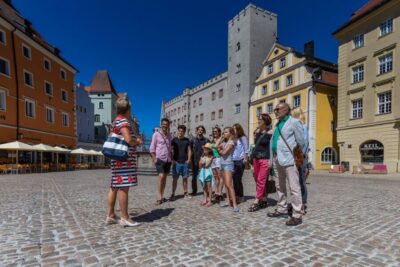
Browse the lists this tour appears in