
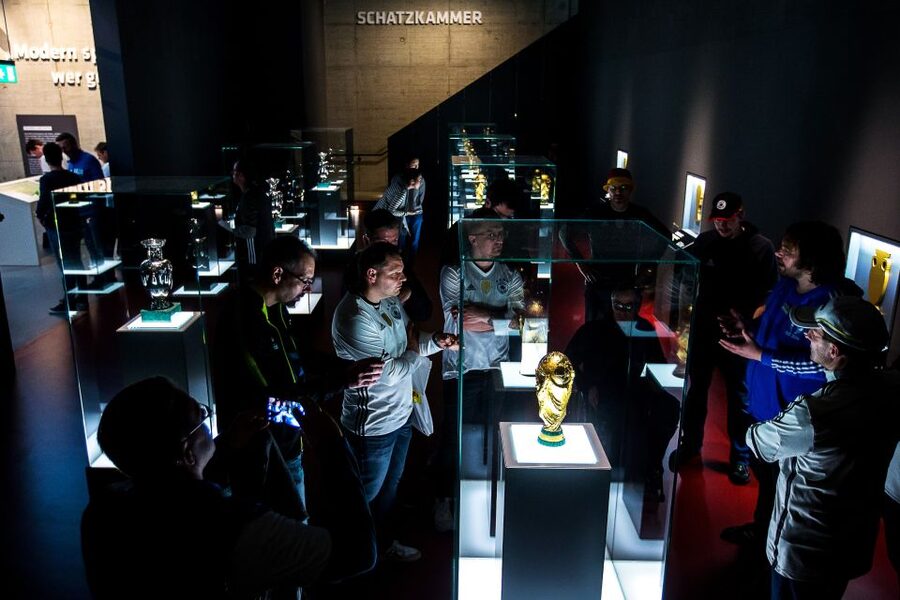
Reviewed · MUSEUMS
Dortmund: German Football Museum
Football history comes alive here. Dortmund’s German Football Museum combines about 1,600 exhibits with film, sound, and hands-on activities, so you do more than look at old shirts and trophies. You can revisit the Miracle of Bern, meet the 2014 world champions in a 3D cinema, and try your hand at football commentary. I like the museum’s mix of serious history and playful activities. I also like that it gives women’s and men’s football, amateurs, professionals, referees, and fans a place in the same story. The main consideration is simple: if football does little for you, the $23 admission may feel steep.
You can spend up to a full day here, though your ideal visit depends on how much time you give the films and interactive stations. Families will appreciate the small playing field, while football followers will have plenty to examine in the displays. A recent rating of 4.6 out of 5 from 484 reviews reflects the museum’s strong appeal, especially its informative content and friendly, helpful staff.
In This Review
- Key points at a glance
- Why the German Football Museum is worth your time
- Starting with the Miracle of Bern
- Meeting the 2014 world champions in 3D
- Trying the Sky Reporter Room
- Taking the ball to the multifunctional arena
- A wider story than famous men’s teams
- How much time should you allow?
- What the $23 admission gets you
- Location and simple planning advice
- Who will enjoy this museum most?
- Final verdict: should you book it?
- FAQ
- Where is the German Football Museum located?
- How much does admission cost?
- How long is the ticket valid?
- Is a guide included?
- Are food and drinks included?
- Can I cancel my booking?
Key points at a glance

- Relive the Miracle of Bern: See how one of Germany’s most important football moments fits into the national story.
- Meet the 2014 world champions: The 3D cinema offers a more dramatic way to connect with Germany’s latest men’s World Cup triumph.
- Call the match in the Sky Reporter Room: Step into the reporter’s cabin and test your voice, timing, and football knowledge.
- Let children play on the small field: The multifunctional arena gives younger visitors a chance to kick a ball instead of only watching one.
- See the whole football world together: The exhibition includes fans, referees, amateurs, professionals, women’s football, and men’s football.
- Plan a food break: Dining options are available for your half-time pause, but food and drinks are not part of admission.
Why the German Football Museum is worth your time
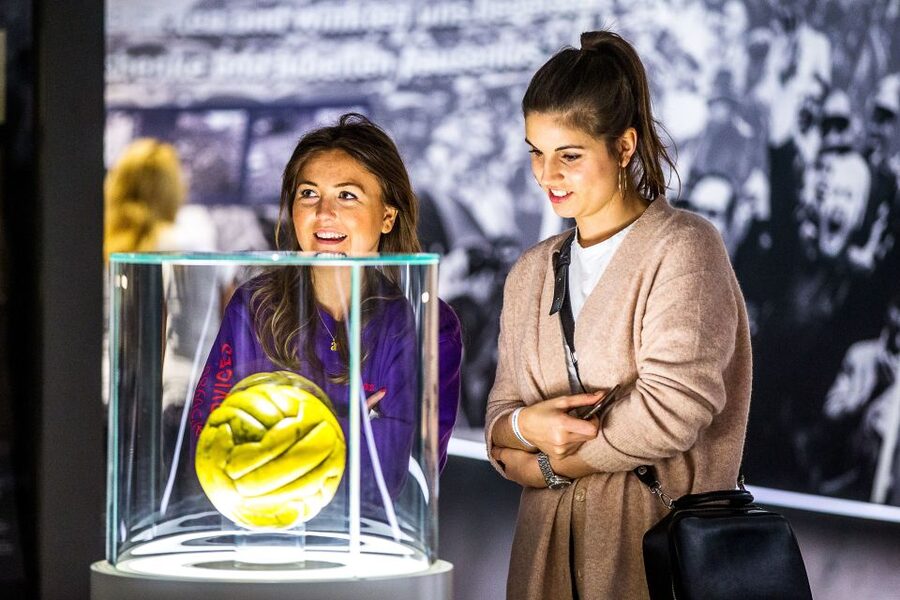
The museum works best when you think of it as a football culture museum rather than a simple hall of memorabilia. The objects matter, but so do the stories around them. Football here is presented as sport, entertainment, identity, work, competition, and shared memory.
I especially like the way the exhibition places famous players beside the people and institutions that make the sport possible. Referees are part of the story. So are amateur clubs, supporters, women’s teams, and professional footballers. That broader view gives the museum more weight than a display devoted only to winning goals and famous shirts.
The museum also avoids making you stand still for the entire visit. You can watch a film, listen to commentary, study exhibits, and then move into a small playing area. That change of pace matters, particularly if you are visiting with children or with someone who is curious about football but not yet a devoted fan.
The experience is presented in a modern style, with carefully designed scenery and interactive sections. I would not expect a quiet, traditional museum visit. Instead, you get a theatrical and hands-on presentation of German football, with plenty to see and several ways to take part.
More Museums in Germany:
- Berlin: Jewish Museum Berlin Entrance Ticket
★ 4.5 · 8,393 reviews - Berlin: DDR Museum Tickets
★ 4.3 · 3,443 reviews - Berlin: Natural History Museum Entrance Ticket
★ 4.6 · 3,382 reviews
Starting with the Miracle of Bern
One of the most important sections takes you back to the Miracle of Bern. This refers to West Germany’s unexpected victory in the 1954 World Cup final, a match that became much more than a sporting result.
The museum uses this moment to show how football can become part of a country’s shared memory. You are not simply looking at the result of an old match. You are seeing why that victory carried such emotional force and why it still matters in German football culture.
For football followers, this section gives useful context before you move on to later generations of the game. For anyone less familiar with German football, it offers an accessible starting point. You do not need to know every player or tournament to understand the importance of the event.
The museum’s large collection helps place the Miracle of Bern within a longer story. About 1,600 exhibits cover football in many forms, so this historic match is not treated as an isolated achievement. It becomes one chapter in a continuing account of players, teams, supporters, and national pride.
I would give this section time rather than rushing toward the interactive attractions. The playing field may be the obvious hit with children, but the older match footage, objects, and historical setting provide the strongest reason for adults to visit.
Meeting the 2014 world champions in 3D
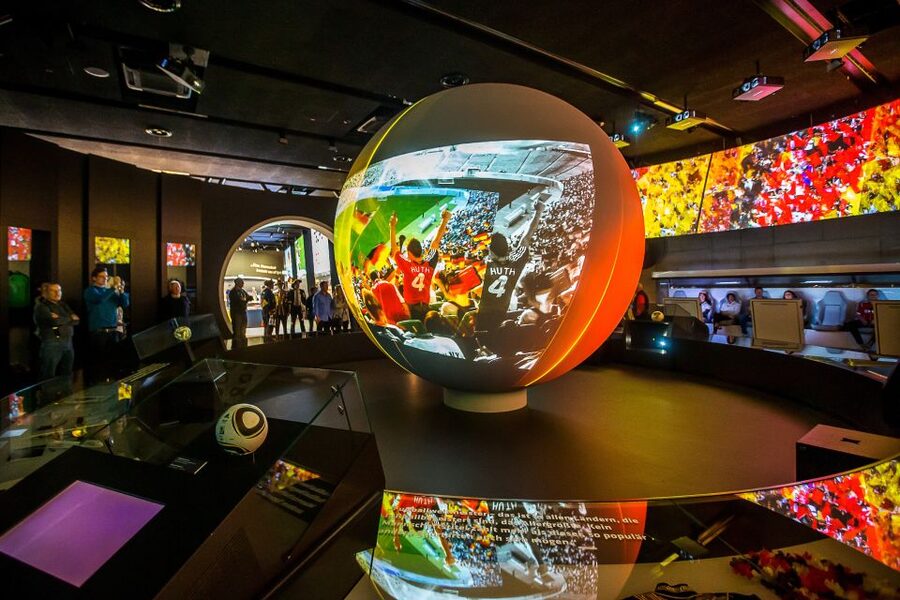
The 2014 World Cup is another major stop. Germany’s men’s team won the tournament in Brazil, and the museum brings that success to life in a 3D cinema.
This is a useful contrast with the Miracle of Bern. The older victory is presented as an important historical memory, while the 2014 triumph feels closer to the present. You can see how the national team’s story changes across generations, from black-and-white football memories to a modern international championship.
The cinema format gives the section a more active feel than a standard wall display. If you enjoy match atmosphere, this should be one of the highlights of your visit. You get a chance to connect with the 2014 team as a shared national moment rather than only reading a list of scores.
The film also helps visitors who may not spend much time examining every object. A well-timed visual presentation can make the major themes easier to follow, especially for younger visitors. You still have the exhibits around it, but the cinema gives the story a clear burst of energy.
I would treat this as a central part of the museum rather than a quick extra. The 2014 champions are one of the clearest links between football history and the sport you recognize today.
Trying the Sky Reporter Room
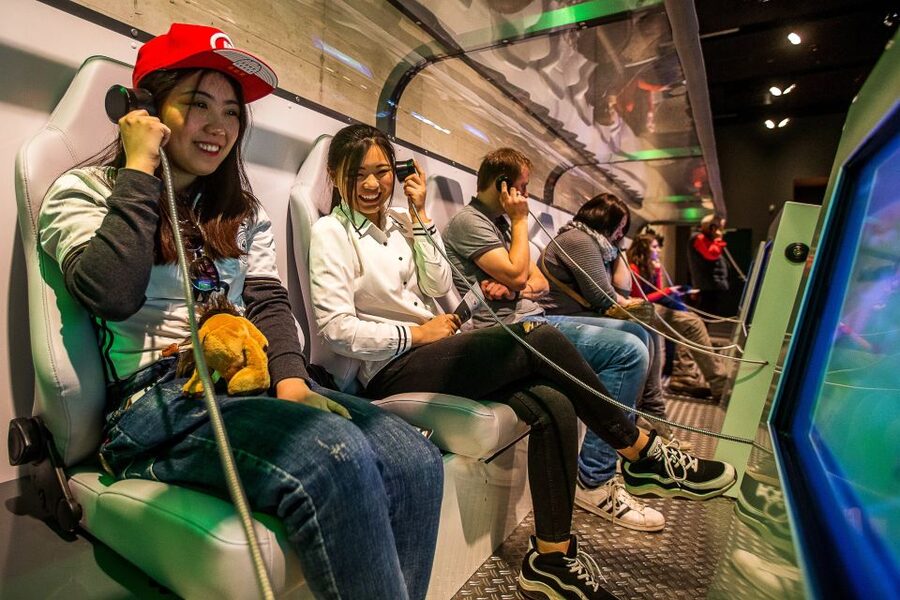
The Sky Reporter Room is one of the museum’s most memorable hands-on features. Here, you can become a commentator in a reporter’s cabin and try to sound like the person calling a live match.
This activity reveals how much skill goes into football broadcasting. A commentator needs timing, observation, clear speech, and a feel for the action. You may arrive thinking it is an easy bit of fun, then discover that describing a match quickly is harder than it appears.
I like this feature because it changes your role. You are no longer only watching football history. You are asked to perform part of it. That small shift makes the museum feel more personal, and it gives children and adults a reason to laugh together.
The reporter’s cabin should suit families, groups of friends, and anyone who enjoys interactive attractions. It is also a good choice for visitors who are less interested in reading long displays. You can take part, test yourself, and understand another side of the sport.
There is a minor limitation. Activities like this can be more appealing when the museum is lively, but some visitors may prefer quiet displays and historical objects. If you want a purely scholarly museum, the reporter room may feel like a diversion. For most people, it adds welcome variety.
Something different for another day:
- Berlin: Reichstag, Dome and Government District Guided Tour
★ 4.7 · 18,288 reviews - Berlin: 1-Hour City Tour by Boat with Guaranteed Seating
★ 4.3 · 16,993 reviews - Hamburg: Sex and Crime in St. Pauli Tour for Ages 18+
★ 4.7 · 15,447 reviews - Hamburg: 1.5-Hour Harbor and Speicherstadt Day Cruise
★ 4.6 · 14,200 reviews
Taking the ball to the multifunctional arena
The small playing field in the multifunctional arena gives children their own moment. They can grab a ball and see if they have the skills to kick it like the adults on screen.
This area is especially helpful if you are visiting as a family. Children do not have to spend the entire day looking at objects connected to a sport they may not yet understand. The playing field gives them a physical activity and helps connect the exhibition to the game itself.
The scale matters. This is described as a small playing field, not a full stadium or professional training ground. You should approach it as a short, playful break rather than a major sporting session.
It also gives adults a chance to watch rather than explain. A child who has been asking what makes football difficult can get a simple answer by trying to control and kick the ball. That practical moment may be more memorable than a long explanation.
If you are visiting without children, you can still appreciate the arena as part of the museum’s larger design. It shows that football is not only about famous tournaments. It is also about the basic pleasure of playing.
A wider story than famous men’s teams
A strong feature of the exhibition is its attempt to bring different parts of football into the same setting. The scenography connects fans and referees, amateurs and professionals, women’s football and men’s football.
That balance is important. A museum focused only on national teams and major trophies would give you a narrow version of the sport. By including referees, the exhibition recognizes the people who enforce the rules. By including fans, it recognizes the atmosphere and loyalty that make football more than a ninety-minute contest.
The inclusion of amateur football also gives the museum a more familiar human scale. Most people who play football will never enter a World Cup final. They still understand the game through local clubs, casual matches, family traditions, and weekend competition.
The presence of women’s and men’s football helps broaden the account further. You can see the sport as a shared world with different histories and experiences, not just as a record of one national men’s team.
I would pay attention to these links as you move through the museum. The best parts are not always the flashiest ones. The value often comes from seeing how the pieces fit together and how the sport touches people at several levels.
How much time should you allow?
The activity is valid for one day, and you can plan it as a full-day stop if football is a major interest. The museum has enough material, films, and interactive features to support a long visit, especially if you read carefully and give time to the cinema and reporter cabin.
You may need less time if you are making a quick Dortmund stop. The most important sections to prioritize are the Miracle of Bern, the 2014 world champions in 3D, the Sky Reporter Room, and the small playing field for children.
I would avoid setting an overly strict schedule. The interactive areas can change the pace of your visit, and you may want to stay longer with a section that catches your attention. The museum is better suited to a flexible half-day or full-day plan than to a rushed dash through the exhibits.
A half-time break is easy to plan because several dining options are available. Food and drinks are not included, so keep that cost separate from the $23 admission. If you are visiting with children, the meal break can also divide the day into manageable sections.
What the $23 admission gets you
At $23 per person, admission is not the cheapest museum ticket, but it covers access to a large exhibition with around 1,600 exhibits, a 3D cinema, a commentary activity, and a playing area.
I see the value most clearly if you use the museum as a substantial Dortmund activity rather than a quick photo stop. The more time you spend with the historical sections and interactive displays, the more reasonable the price feels.
Families may find the ticket easier to justify because different age groups have different things to do. Children can use the playing field, adults can follow the history, and everyone can try the reporter cabin or watch the film.
For a committed football fan, the cost is likely to feel fair. The museum covers major German football moments while also showing the wider culture around the sport. For a casual visitor, I would consider the price carefully and make sure the Miracle of Bern, 2014 team, and interactive features genuinely appeal to you.
The ticket includes museum access only. You should budget separately for food and drinks, and no guide is included. The upside is that you can set your own pace rather than follow a fixed guided group.
Location and simple planning advice
The museum is at Platz der Deutschen Einheit 1, 44137 Dortmund. That address is the key detail to keep handy when planning your day in the city.
You can skip the ticket line with the booked admission, which saves time at the entrance. Starting times are based on availability, so check the schedule before you commit to a particular part of your day.
The activity offers free cancellation up to 24 hours in advance, and you can reserve now while paying later. Those policies are useful if your Dortmund plans may shift, though I would still check the exact booking conditions before purchase.
The museum does not include a guide, so you should expect to explore independently. That suits visitors who like to stop where they wish, but anyone wanting personal explanations should plan to rely on the exhibition itself.
Who will enjoy this museum most?
I would recommend the German Football Museum first to football fans, families, and visitors who enjoy interactive cultural attractions. The combination of historical moments, film, commentary, and football play gives each group something useful to do.
It also suits people who want to understand Germany through sport. The Miracle of Bern shows how a match can carry national meaning, while the 2014 section connects that older story with a modern championship.
Children should have enough variety to stay interested, especially if they can use the small field. Still, I would not assume every child will want to spend a full day here. The museum is football-focused from beginning to end, so younger visitors who are not interested in the sport may need the interactive areas to keep the visit moving.
I would be more cautious if you dislike sports museums or prefer art, architecture, or general German history. The presentation is broad within football, but it does not move beyond that subject.
Final verdict: should you book it?
Yes, if football is part of your travel plans in Dortmund. The museum offers more than old memorabilia. You can connect major German victories with the people, rules, broadcasts, and everyday play that shape the sport.
My favorite reasons to go are the historical force of the Miracle of Bern and the chance to become a commentator in the Sky Reporter Room. Families should add the small playing field to their plan, while modern football fans should make time for the 2014 world champions in 3D.
At $23, it is best value when you allow several hours and use the interactive features instead of racing through the exhibits. Book it if you want an informative, hands-on football visit. Skip it only if football is not likely to hold your attention, since the museum stays firmly focused on the game.
FAQ
Where is the German Football Museum located?
The museum is at Platz der Deutschen Einheit 1, 44137 Dortmund, Germany.
How much does admission cost?
The listed price is $23 per person. Admission includes access to the German Football Museum.
How long is the ticket valid?
The ticket is valid for one day. Check availability for the starting times offered when you book.
Is a guide included?
No. The admission covers access to the museum, but a guide is not included.
Are food and drinks included?
No. Food and drinks are not included in the admission price. Dining options are available for a half-time break.
Can I cancel my booking?
Yes. You can cancel up to 24 hours in advance for a full refund. Reserve now and pay later is also available, subject to the booking terms.
Just added around Germany
- e-Scavenger hunt Aachen: Explore the city at your own pace★ 4.0 · 13 reviews
- Munich: Private or Group Third Reich and WWII Walking Tour★ 4.9 · 13 reviews
- Canyoning Advanced Day Trip★ 5.0 · 13 reviews
- Wiesbaden Biebrich: Outdoor Escape Game★ 4.7 · 13 reviews
- Berlin: Private Guided Tour of the Main Sights★ 5.0 · 13 reviews
- From Munich: Neuschwanstein Castle and Linderhof Private Tour★ 5.0 · 13 reviews
- Trier, Moselle: Wine excursion with boat trip★ 3.9 · 13 reviews
- From Dresden: Guided Day Tour by Bus of Seiffen Toy Village★ 4.0 · 13 reviews
Museums, compared.


Skip-the-Line: Berlin Wall Museum at Checkpoint Charlie
Read our review →
Browse the lists this tour appears in