
Reviewed · MEMORIAL & CONCENTRATION CAMP TOURS
Dachau Small-Group Half-Day Tour from Munich By Train
Some places demand your full attention. This five-hour Dachau tour combines round-trip public transport from Munich with a guided visit to one of Germany’s most important memorial sites. I like the careful historical build-up on the train and bus, and I like having a guide handle the route through a large, emotionally difficult site. The main drawback is the subject itself: this is a somber experience, not a light sightseeing outing.
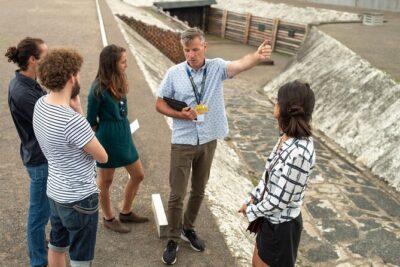
You meet at Marienplatz at 8:45 a.m. for a sharp 9:00 departure, then travel with a licensed guide to Dachau. I also like the small-group limit of 20 people, which makes it easier to hear explanations and ask questions. Still, you should expect plenty of walking on gravel and concrete, changing weather, and limited time to read every museum display on your own.
In This Review
- Key points to know before booking
- Why a guided Dachau visit matters
- From Marienplatz to Dachau by train and bus
- Entering through the Jourhaus gate
- The camp grounds, barracks, and daily life
- The museum and the story behind the system
- The crematorium area and the weight of the visit
- Price, group size, and overall value
- Weather, clothing, and emotional preparation
- Who should book the Dachau tour?
- Should you book this experience?
- FAQ
- Where does the Dachau tour begin?
- What time should I arrive?
- How long does the tour last?
- Is transportation to Dachau included?
- Is food included?
- Can children join the guided tour?
- Can I cancel for a full refund?
Key points to know before booking
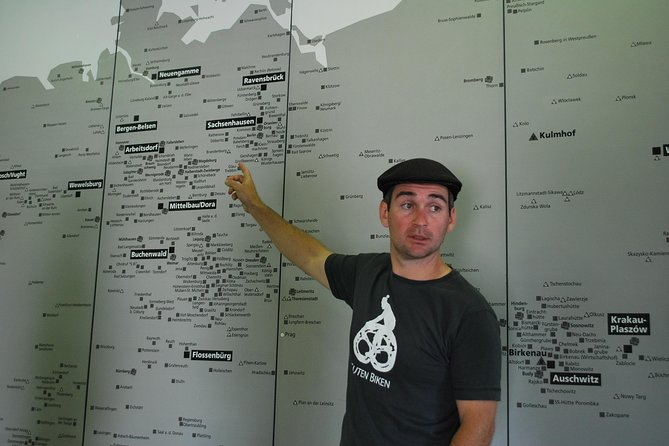
- The tour starts with the Nazi rise to power: Your guide explains Hitler’s appointment as Chancellor, the Reichstag fire, and the creation of the concentration-camp system before you reach Dachau.
- Train and bus connections are included: You do not need to work out Munich public transport on your own, and guides such as James have been praised for keeping transfers orderly.
- The site visit covers the main accessible areas: Expect the Jourhaus gate, the prisoner registration system, camp categories, the barracks area, memorial buildings, and the crematorium area.
- It is a serious memorial visit: The material includes persecution, imprisonment, forced labor, mass death, liberation, and the camp’s postwar history.
- The group is capped at 20 people: That is small enough for a personal feel, though the memorial can still be busy with other groups.
- Plan for weather and walking: The tour moves between indoor and outdoor areas, so comfortable shoes and suitable clothing matter.
Why a guided Dachau visit matters
Dachau is not difficult to reach from Munich, but reaching the memorial is only half the job. The site is large, the history is layered, and much of its meaning comes from understanding how each area functioned. A guide gives you that structure.
I value the way this tour begins before arrival. On the train and bus, the guide sets out the rise of the Nazi Party during the 1920s, Hitler’s appointment in 1933, and the early use of concentration camps. That preparation helps you understand Dachau as part of a developing system, rather than as an isolated place of cruelty.
The tour also explains Dachau’s role as a model for other camps. You learn about the three major phases of the camp system, the SS training facility, prisoner categories, and the difference between concentration camps, ghettos, and extermination camps. That wider context is important because Dachau was not simply a prison with walls around it. It helped establish methods and practices used across the Nazi camp network.
The experience has received a 4.9 rating from 811 reviews, with 98 percent recommending it. Those figures suggest a very consistent level of satisfaction, particularly with the guides and organization. The strongest praise focuses on James, who has been described as an expert on both the history and the practical details of the route. One account also singled out Samuel for linking the past with present-day questions about government and injustice.
More memorial visits:
- Dachau Concentration Camp Memorial Site Tour from Munich by Train
★ 4.5 · 5,637 reviews - From Munich: Dachau Memorial Site Day Tour
★ 4.8 · 2,723 reviews - From Munich: Dachau Memorial Site Half-Day Trip
★ 4.7 · 2,526 reviews
From Marienplatz to Dachau by train and bus
The meeting point is Marienplatz 15 in central Munich. You should arrive by 8:45 a.m., 15 minutes before the 9:00 start. The train leaves on time and cannot wait for late arrivals, so this is not the morning to cut things close.
The public transport portion is included in the $60.46 price. You travel by train from central Munich and then continue by bus to the memorial site. The bus connection is a useful detail to know in advance. You are not simply stepping off a train beside the entrance.
This is where a good guide earns the fee. James has been praised for knowing which part of the platform is best for waiting and for reducing unnecessary delays between connections. When there is a short wait, the guide continues the historical explanation rather than letting the group stand around without context.
I see two advantages here. First, the route is less stressful than navigating it alone, especially if you are unfamiliar with Munich’s transit system. Second, the journey becomes part of the lesson. By the time you reach Dachau, you have already heard how the Nazi state came to power and why camps were created.
There is no food or drink included. Refreshments can be purchased at several places around the meeting area, but you should bring or buy what you need before leaving. The tour lasts about five hours, so a small snack and water are sensible preparations.
Entering through the Jourhaus gate
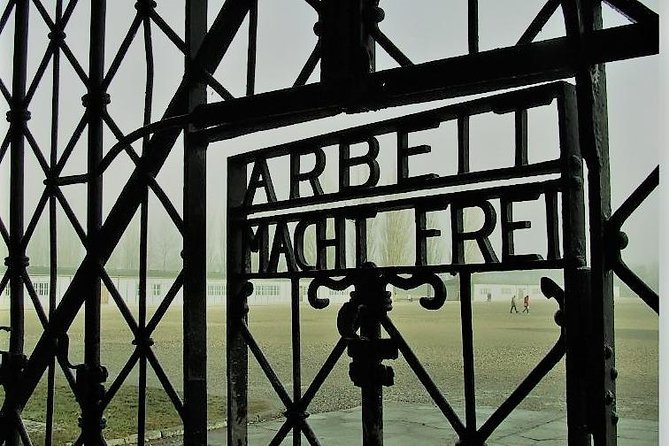
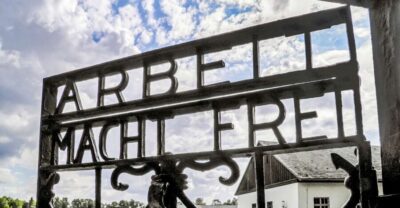
At Dachau, the visit begins with the Jourhaus, the main gatehouse. Its entrance carries the infamous phrase Arbeit Macht Frei. Seeing those words in their original setting is one of the tour’s most powerful moments, but the guide helps place them in context instead of treating them as a dramatic photo opportunity.
From here, the tour examines how prisoners entered the camp, how they were registered, and how the Nazi system assigned categories. Prisoners were identified by different markings, including colored symbols on their uniforms. Your guide explains how these categories reflected the regime’s system of persecution and control.
This part can be especially useful if you have read about the Holocaust but have not studied the administrative side of the camp system. The Nazi persecution was not random. It used records, classifications, transport, rules, and institutions to turn people into categories and numbers. Walking through the registration process makes that machinery easier to understand.
The guide’s tone matters here. The most praised guides, including James, are described as respectful and compassionate, with a clear concern for the victims. That is exactly what you want at a memorial. A strong guide does not fill every silence or turn suffering into spectacle.
The camp grounds, barracks, and daily life
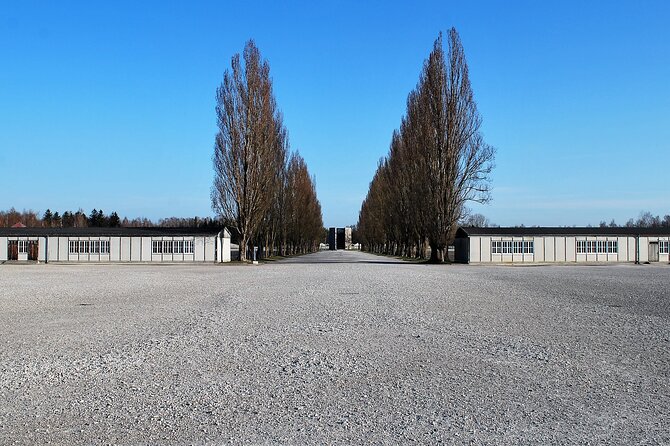
The tour covers all areas open to the public, including the former prisoner area and the reconstruction of the barracks. You will walk across gravel and concrete, so comfortable shoes are more than a minor suggestion. The route also includes outdoor sections exposed to rain, wind, cold, or sun.
The guide explains daily life in the camp, how the prisoner population changed over time, and how people were treated from arrival onward. You learn about the camp’s three main phases and the ways Dachau developed during the Nazi period.
A particularly useful part of the visit is the explanation of Dachau’s function as an SS training facility. That detail shows how the camp was tied to the wider machinery of Nazi terror. It was not only a place where prisoners were held. It was also connected to the training and operation of the SS system.
The site can be crowded, with several tour groups moving through the same spaces. Guides have to adjust their route and timing. James has been praised for moving the group around crowded areas while still covering the key points. That flexibility helps the visit feel orderly instead of like a slow queue.
You do receive some time to look around by yourself. Still, one practical criticism is fair: five hours is enough for a strong guided visit, but not enough to study every museum panel at length. If you enjoy reading every document and display, you may wish you had more independent time. The trade-off is that the guide keeps the day moving and gives you a clear account of the site.
A few more tours and experiences worth a look
- Dachau Concentration Camp Memorial Tour with Train from Munich
★ 4.5 · 955 reviews - Guided Dachau Concentration Camp Memorial Site Tour with Train from Munich
★ 5.0 · 920 reviews - Nuremberg Guided Day Trip from Munich by Train
★ 4.5 · 546 reviews - From Munich: Nuremberg Day Trip by Train
★ 4.4 · 357 reviews
The museum and the story behind the system
The indoor museum and documentation displays provide material that is hard to absorb without a guide. The tour places Dachau within the larger story of ghettos, concentration camps, and extermination camps, while also keeping attention on the individual prisoner experience.
The discussion of Kristallnacht is an important part of the program. The November 1938 pogrom marked a major escalation in the persecution of Jewish people and led to the first large influx of Jewish prisoners at Dachau. Understanding that change helps you see how Nazi persecution moved from discrimination and public violence toward organized mass imprisonment and murder.
You also examine the period after liberation. The tour covers what happened at Dachau after American forces arrived, then follows the memorial’s later development, including the period from 1945 until the documentation center was unveiled in 1965.
That postwar section is easy to overlook, but I consider it one of the tour’s strengths. Memorial sites are not frozen in time. Their meaning changes as survivors, governments, communities, and later generations decide how to preserve the truth. Learning about Dachau after 1945 helps explain why the site looks and functions as a memorial today.
The crematorium area and the weight of the visit
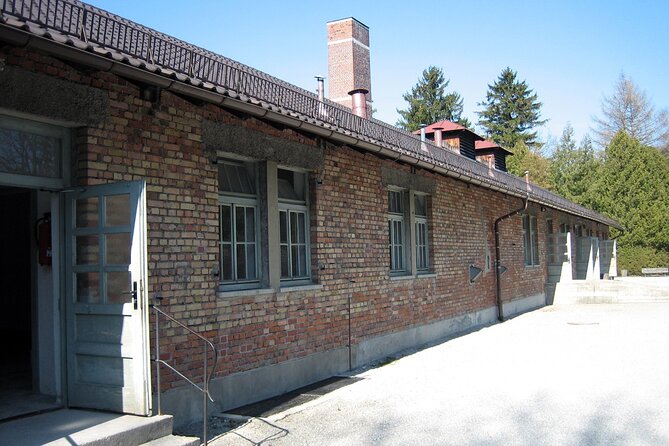
The crematorium area is among the most difficult parts of the tour. The guide explains its role and the conditions surrounding the final phase of the camp system. This section is emotionally heavy, and you should not expect to leave feeling cheerful or relaxed.
Several people describe the experience as humbling, moving, or hard to process. That is not a warning against going. It is a warning to give the visit the seriousness it deserves. You may find that the quiet of the memorial grounds is as affecting as the factual explanations.
The site does not rely on theatrical effects. Its force comes from the physical place, the documented evidence, and the knowledge that ordinary life continued nearby while prisoners suffered inside the camp. A visit can make the past feel less distant, particularly when you move through the same spaces described in the historical account.
The best guides allow the facts to carry the weight. They answer questions, explain difficult subjects plainly, and avoid sensational language. James is repeatedly praised for doing this well. He also keeps the group together and makes sure everyone can hear, even when other groups are nearby.
Price, group size, and overall value
At $60.46 per person, this is a fair price for a five-hour experience that includes a licensed guide and public transport to and from the memorial. The admission ticket to the memorial site is free, so most of what you are paying for is the guide’s time, historical instruction, and transport coordination.
You could reach Dachau independently for less than the tour price, but you would need to arrange the train and bus, understand the site layout, and prepare your own historical framework. The tour is most valuable if you want clear explanations and do not want to spend part of the morning studying transit connections.
A group of up to 20 people is a reasonable compromise. It is not a private tour, and the memorial may still feel busy. Yet the size is small enough that you should be able to hear the guide and ask questions. Several accounts praise the smooth organization and the ability to keep the group moving without rushing.
I would not choose this tour for someone who wants a quiet, self-directed museum visit. The guide controls the pace, and the visit includes a lot of spoken history. I would choose it for anyone who wants the setting explained carefully, especially on a first visit.
Weather, clothing, and emotional preparation
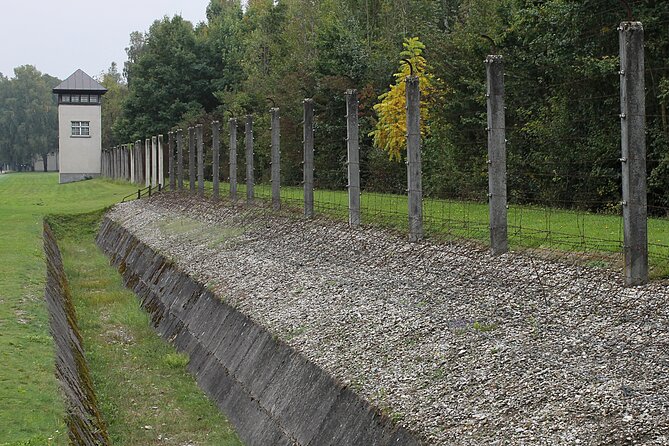
The tour includes indoor and outdoor areas, so check the forecast before leaving. Wear shoes that can handle gravel and concrete. On a cold or rainy day, the outdoor parts can feel especially demanding, although the guide may keep the group inside when possible.
Bring water and arrange snacks before departure. Food and drinks are not provided during the tour. Refreshments can be purchased near the meeting point, but you should not count on a formal meal break.
The memorial does not allow children under 14 to join guided tours. Students can select the youth price category, but a valid student ID must be shown on the day. Service animals are allowed, and the activity is near public transportation.
You should also allow yourself a little quiet time after returning to Munich. This is not a tour to squeeze between two cheerful activities without a pause. The five-hour schedule ends back at the Marienplatz meeting point, but the emotional effect may last longer.
Who should book the Dachau tour?
I recommend this tour if you are interested in World War II, the Holocaust, German history, or the way modern societies remember mass violence. It is especially useful if you want more than a quick walk around the grounds. The guide explains the Nazi rise to power, camp administration, prisoner life, liberation, and the memorial’s later development in one connected visit.
Families with teenagers 14 or older may find it meaningful, provided everyone is prepared for difficult material. Students and history-focused visitors should get strong value from the clear explanations and chance to ask questions.
I would think twice if you are traveling with young children, dislike guided schedules, or know that a concentration-camp memorial would be too emotionally intense. You can also skip the tour if you prefer to spend long periods reading exhibits independently.
Should you book this experience?
Book it if you want a serious, well-organized introduction to Dachau without managing the train and bus connections yourself. The strongest reasons are the included transport, the small group, and the guides’ careful handling of both logistics and painful history.
The tour is not enjoyable in the usual sightseeing sense, and it should not be marketed that way. It is a necessary, sobering visit. Arrive early, dress for the weather, wear comfortable shoes, and give yourself time afterward. For most first-time visitors to Dachau, that preparation makes the experience more thoughtful and worthwhile.
FAQ
Where does the Dachau tour begin?
The tour begins at Marienplatz 15, 80331 München, Germany.
What time should I arrive?
You should arrive by 8:45 a.m. for check-in. The tour leaves at 9:00 a.m. sharp and cannot wait for late arrivals.
How long does the tour last?
The experience lasts approximately five hours and ends back at the Marienplatz meeting point.
Is transportation to Dachau included?
Yes. Public transport costs to and from the memorial site are included. The route uses a train from Munich and a bus to reach the memorial.
Is food included?
No. Food and drinks are not included. Refreshments can be purchased near the meeting point, but snacks and drinks are not available during the tour itself.
Can children join the guided tour?
Children under 14 are not allowed to join guided tours at the memorial site.
Can I cancel for a full refund?
Yes. You can cancel at least 24 hours before the experience start time for a full refund. Cancellations or changes made less than 24 hours before the start are not refunded or accepted.
Just added around Munich
- Munich: Private or Group Third Reich and WWII Walking Tour★ 4.9 · 13 reviews
- From Munich: Neuschwanstein Castle and Linderhof Private Tour★ 5.0 · 13 reviews
- Private Transfer from Munich to Salzburg with 2 hours for sightseeing★ 4.5 · 13 reviews
- Munich: Historical Walking Tour on the Rise of Hitler★ 5.0 · 13 reviews
- Private Scenic Transfer from Munich to Prague with 4h of Sightseeing★ 5.0 · 13 reviews
- From Munich: VIP day trip to Salzburg★ 5.0 · 14 reviews
- National Socialism WWII with licensed guide – private tour★ 5.0 · 14 reviews
- Munich: Walking Tour Old Town 3D VR Tour in GERMAN★ 4.3 · 14 reviews
Memorial & Concentration Camp Tours, compared.
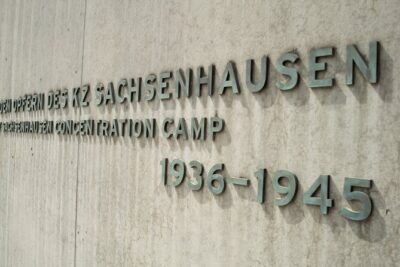
Sachsenhausen Concentration Camp Tour in English
Read our review →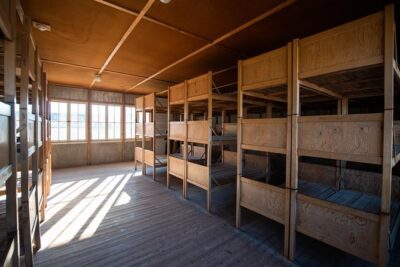
Dachau Concentration Camp Memorial Site Tour from Munich by Train
Read our review →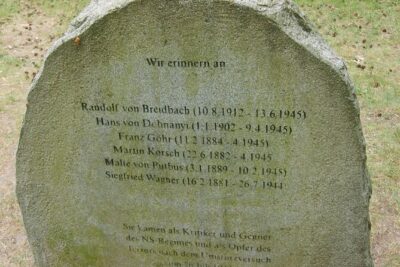
Sachsenhausen Concentration Camp Memorial Tour
Read our review →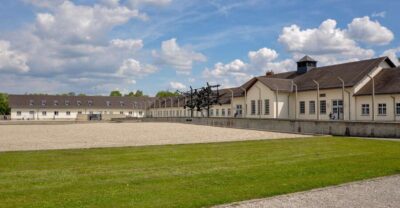
Sachsenhausen Concentration Camp Bus Tour in English from Berlin
Read our review →Sachsenhausen Concentration Camp Tour in English
Read our review →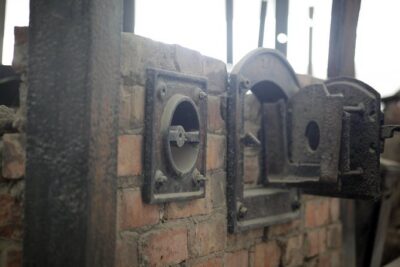
Sachsenhausen Concentration Camp Memorial Tour (Max. 15 Guests)
Read our review →Browse the lists this tour appears in