
Reviewed · NUREMBERG TOURS
Bamberg: Immersive Medieval Tour
Medieval Bamberg feels close enough to touch. This 75-minute tour brings the city’s past to life with a glass of genuine mead and a playful role as a noble lady or humble craftsman. I like the hands-on details, especially collecting water from a well and striking a fire, and I like that the route uses quieter side streets as well as famous buildings. The guide-led storytelling gives Bamberg’s old stones a human scale.
The main caution is language: the live tour is in German. At $23 per person, the price is fair for a short, theatrical city walk with mead included, but you should not book it expecting a full-day sightseeing tour or a standard English-language history lesson.
In This Review
- Key points at a glance
- Why this Bamberg tour feels different
- Starting with mead at Geyerswörthstraße 5
- Choosing your medieval identity
- Reading Bamberg through its landmark buildings
- Leaving the grand story for ordinary lives
- Drawing water and striking a fire
- Why the side streets matter
- The German-language guide makes a difference
- Is $23 a fair price for 75 minutes?
- Who should book this experience?
- My verdict on the medieval Bamberg experience
- FAQ
- Where does the Bamberg medieval tour meet?
- How long does the tour last?
- What language is the live tour in?
- Is mead included?
- What activities are part of the tour?
- Can I cancel the booking?
Key points at a glance
- A mead welcome sets the mood: You begin with a small serving of medieval-style honey wine before the tour gets under way.
- You take on a historical role: You are invited to act as a noble lady or a simple craftsman for the length of the experience.
- Hands-on tasks replace passive sightseeing: You may draw water from a well and use a fire striker to wake the embers in a stove.
- Bamberg’s famous sights provide the backdrop: The route connects the colorful Old Town Hall and ancient Romanesque cathedral with stories from daily life.
- Quieter lanes help during busy periods: The route can lead away from the main crowds, a useful feature during Advent market season and on weekends.
- The tour is German-language and compact: At 75 minutes, it fits neatly into a day of sightseeing, but German comprehension matters.
Why this Bamberg tour feels different

Bamberg is already a fine place for ordinary sightseeing. Its old center has survived with an unusual sense of continuity, and the city’s grand buildings tell the official story well enough. This experience takes a different path. Instead of asking you to look at another facade and remember another date, it asks you to imagine how people used the city.
That shift matters. Medieval history can feel distant when it is reduced to emperors, bishops, and construction dates. Here, you get fire, water, food, fear, religion, and social rank. The result is less like a lecture and more like a short piece of living theater set in a real UNESCO World Heritage Site.
The tour centers on Bamberg’s rise under German emperor Henry II. In the 11th century, he wanted the city to become a second Rome. That ambition helps explain why Bamberg has such imposing religious and civic architecture. You are not only seeing an attractive old town. You are seeing a place shaped by a ruler with grand plans.
Other Nuremberg trips people book alongside this one:
- Bamberg: Guided Walking Tour
★ 4.6 · 3,202 reviews - Nuremberg: City Tour with the Bimmelbahn Train
★ 4.4 · 2,475 reviews - Nuremberg: Old Town Guided Walking Tour
★ 4.6 · 2,416 reviews
Starting with mead at Geyerswörthstraße 5
You meet the guide at Tourismus- und Kongressservice Bamberg, Geyerswörthstraße 5, 96047 Bamberg. That clear meeting point is useful because you can arrive, orient yourself, and make sure you are in the right place before the storytelling begins.
The welcome drink is a genuine mead. It is a small touch, but it does real work. Honey wine gives the opening a taste and scent connected to the period, and it signals that this will not be a plain walk through town. You are being asked to leave modern sightseeing mode for a while.
The drink is included in the $23 price. You should still treat it as part of the presentation rather than expecting a full tasting. The supplied information does not specify the amount, variety, or whether another nonalcoholic option is available. If you do not drink alcohol, ask before booking.
The experience does have a clear rule that alcohol and drugs are not allowed. Since mead is part of the tour, that wording is worth clarifying with the provider if you have concerns. Do not bring extra alcohol with you.
Choosing your medieval identity
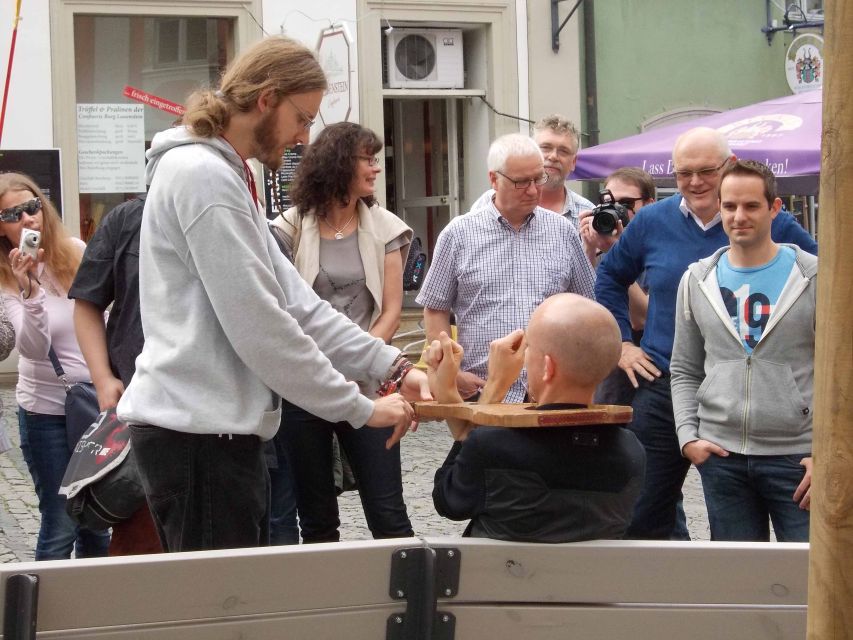
After the welcome, you take on a role for the duration of the tour. You may become a noble lady or a simple craftsman. That choice gives the experience a bit of structure and helps you think about how differently people occupied the same city.
A noble person and a working craftsperson would not have had the same duties, status, or view of Bamberg. The role-play is not meant to turn you into a professional actor. It is a simple way to pull you into the social world behind the buildings.
I like this approach because it makes the history personal without requiring a costume-heavy production. You are not simply told that medieval society was divided by rank. You are given a position within that society and encouraged to see the town through it.
The supplied details do not promise a particular costume, script, or assigned character. Think of the role as a guided point of view, supported by authentic props and practical tasks. If you prefer a quiet, conventional walking tour, this may feel more theatrical than you want. If you enjoy participation, it should add energy without taking over the visit.
Reading Bamberg through its landmark buildings
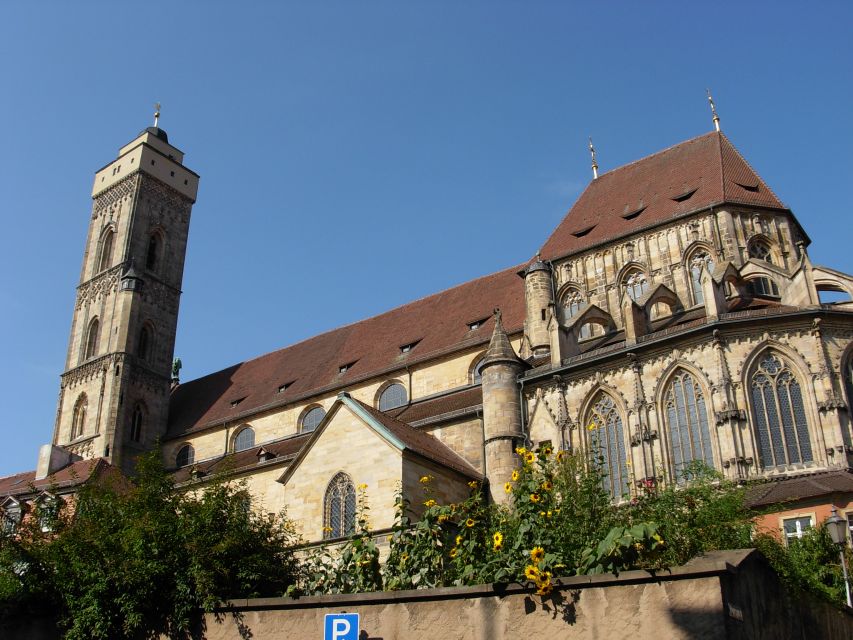
The tour uses Bamberg’s preserved buildings as its main stage. Among the key sights are the colorful town hall and the city’s ancient Romanesque cathedral. These are not decorative stops added simply for a photo. They help explain how Bamberg developed over the centuries.
The town hall offers a useful lesson in civic identity. Its colorful appearance makes it easy to remember, while its position in the city gives the guide a chance to explain how power, administration, and urban space came together. You will hear how Bamberg’s buildings influenced central European town planning and urban development.
The cathedral shifts the focus toward religion and imperial ambition. Its Romanesque form reaches back to the early medieval period and connects directly with Henry II’s wish to make Bamberg a major spiritual center. The tour helps you see the cathedral as part of a larger plan, not just an isolated church.
The information does not give a fixed list of every stop or promise interior access. You should expect to view and interpret these major structures rather than assume that the tour includes a full indoor cathedral visit. If entering the cathedral is high on your list, plan separate time for it.
Something different for another day:
- Nuremberg: Tunnels and Secret Passages in the City Wall Tour
★ 4.8 · 2,334 reviews - Nuremberg: Medieval Dungeons Guided Tour
★ 4.8 · 1,726 reviews - Nuremberg: Walking Tour of Former Nazi Party Rally Grounds
★ 4.7 · 1,665 reviews - Medieval Tour in Nuremberg in Spanish
★ 5.0 · 1,374 reviews
Leaving the grand story for ordinary lives
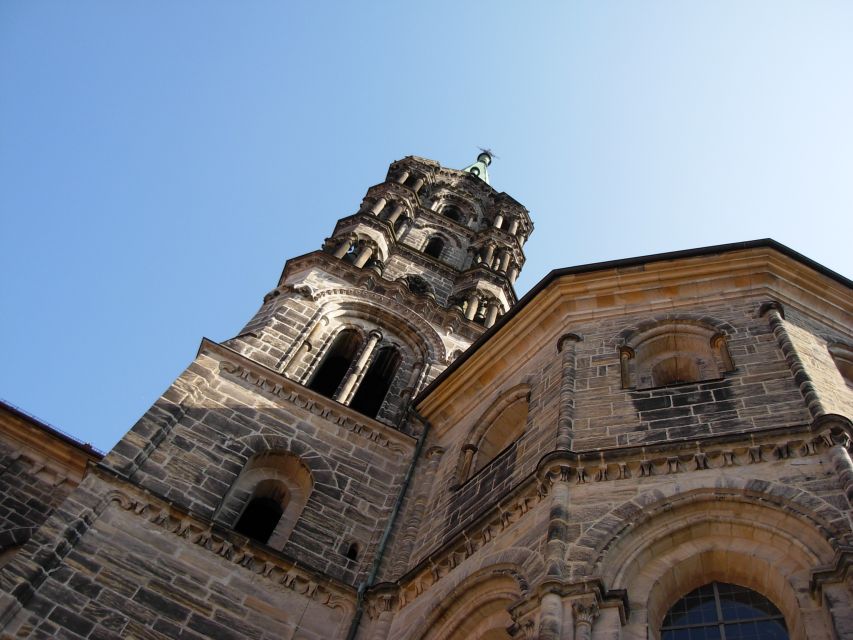
The best idea here is the move from official history to everyday life. Henry II and Bamberg’s architectural growth give the tour its broad frame, but the guide also asks you to think about how common people lived, loved, and died.
That human focus keeps the tour from becoming a parade of rulers. Medieval life was shaped by work, faith, household duties, illness, social rank, and fear of forces people could not explain. The references to demons, witches, and witches’ ointment show how the period looked at danger and misfortune.
This material should appeal to you if you like history with a little darkness around the edges. It is not presented as a modern lecture on medicine or folklore in the supplied description. Instead, it uses the beliefs of the time to show how people made sense of their world.
The tone appears to be lively rather than grim. A guide can talk about death and superstition while still keeping the group engaged, and the high overall rating of 4.7 from 232 ratings supports the sense that the presentation works for many people. Still, the subject matter may not suit young children or anyone seeking only bright, postcard-style Bamberg.
Drawing water and striking a fire
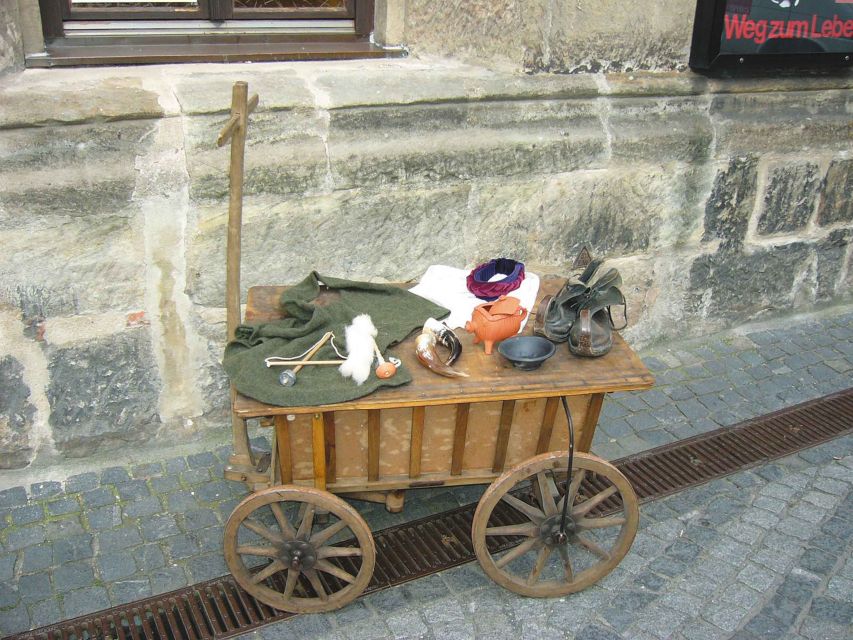
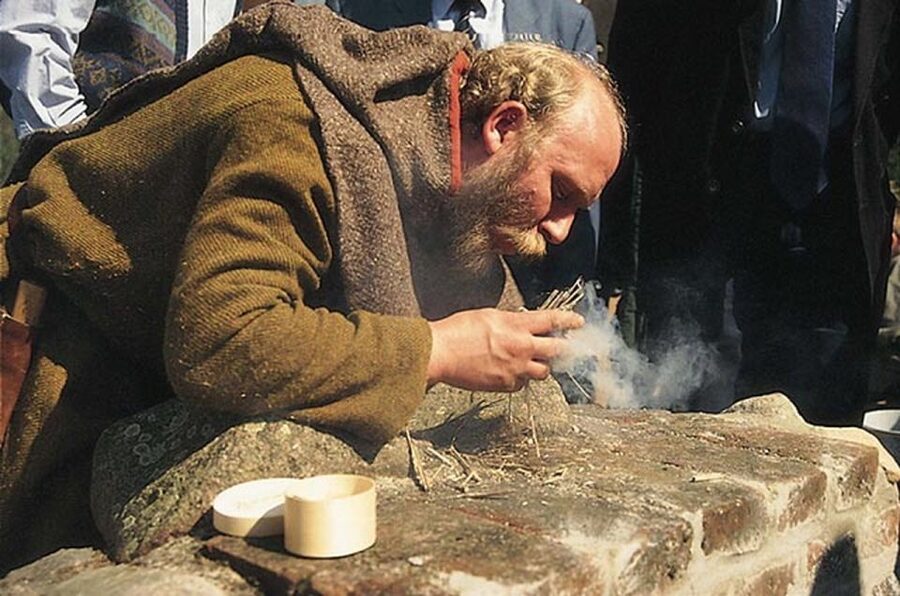
The hands-on props are the part I would value most. You can collect water from wells and ignite stove embers with a fire striker, activities that connect directly to the practical work of earlier centuries.
These actions are small, but they make a strong point. Medieval life depended on repeated physical tasks that modern homes hide from you. Water did not arrive through a tap, and fire did not appear with a button press. Handling the tools, even briefly, gives you a better sense of time, effort, and routine than a long explanation alone.
The wording indicates that these activities are part of the interactive approach, but it does not guarantee that every person will perform every task. The guide may organize participation according to the group and available props. You should expect chances to take part, not a private workshop built around each individual.
There is also a memorable practical detail from the colder season: one guide carried the prop basket throughout the tour without gloves despite freezing temperatures. That image says something about the care put into the presentation. A guide who carries the materials for the whole route, even in winter, is making the objects part of the story rather than treating them as a quick photo opportunity.
Why the side streets matter
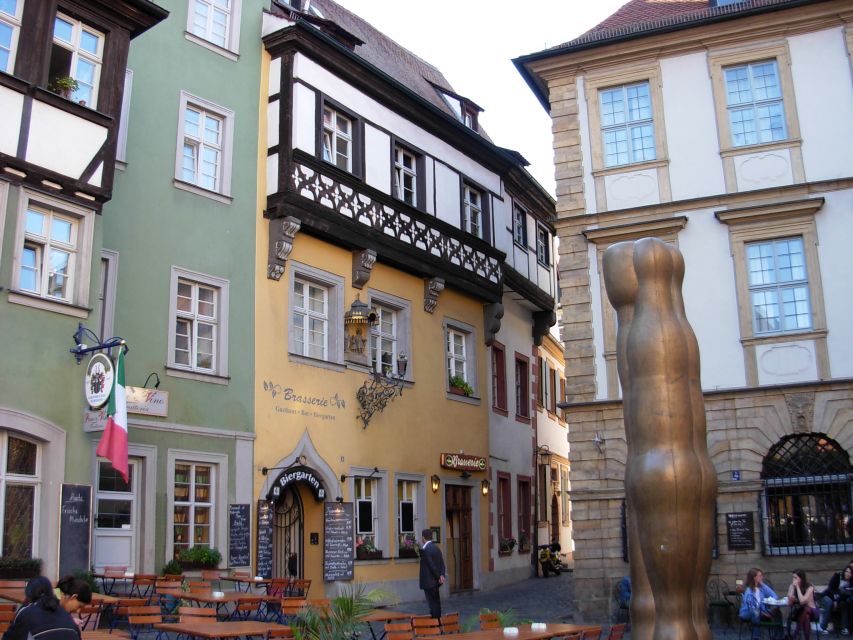
Bamberg can become crowded around the Advent market and on weekends. The route’s use of back lanes is therefore more than a pleasant extra. It gives you a chance to hear the guide and picture earlier life away from the thickest foot traffic.
Quieter streets also suit this theme. A narrow lane, an old wall, or a less famous corner can suggest daily life better than a packed public square. The tour still connects with the major sights, but it does not appear to spend all 75 minutes in the busiest zones.
You should not read this as a promise of an empty route. Bamberg is a popular historic city, and conditions change with the calendar. The practical lesson is to expect a mix of notable buildings and less crowded lanes, especially useful when the central areas are full.
Wear shoes suitable for city walking, since the experience moves through historic streets and includes several active elements. The supplied details do not state the route’s accessibility, surface conditions, or stair count, so ask the provider directly if those points affect your plans.
The German-language guide makes a difference
The live guide speaks German. This is the single most important booking consideration.
If you understand German, the format should give you a lively way to connect stories, buildings, and objects. The guide’s personality is central to the experience, and the available comments repeatedly praise the warm welcome, the sympathetic presentation, and the sense that the guide cares about the work. One particularly enthusiastic description points to a guide who carried the basket through bitter cold and clearly loved the job.
If you do not understand German, you may still enjoy the sights, gestures, props, and atmosphere, but you will miss much of the historical content. This is not a self-guided audio route where you can switch languages at will. Confirm the language before paying, especially if you are booking for a mixed-language group.
The presentation is described as carefully staged and entertaining. That is good news for German-speaking families, couples, and small groups who want more than dates and architectural labels. It also means the guide’s delivery will shape the experience more than it would on a basic sightseeing route.
Is $23 a fair price for 75 minutes?
At $23 per person, this tour sits in the reasonable range for a guided city experience that includes a drink and interactive elements. You are paying for the guide’s preparation, the props, the role-play, the local setting, and the mead, not simply for 75 minutes of walking.
The value is strongest if you would otherwise spend your time looking at Bamberg’s buildings without much context. The tour gives you a short, focused introduction to the city’s medieval identity and may help you notice details later when you explore on your own.
The value is weaker if you want broad coverage of all Bamberg sights, a long cathedral visit, or a tour in English. Seventy-five minutes goes quickly. This experience gives you a theme and a taste of the city, not a complete replacement for a general Bamberg city tour.
The option to reserve now and pay later can help if your schedule is still changing. You can also cancel up to 24 hours in advance for a full refund, according to the booking terms. Keep those conditions in mind, but focus first on the basic fit: German language, medieval theme, and a compact format.
Who should book this experience?
I would recommend it most strongly to:
- German-speaking adults who enjoy history presented through stories and objects
- Families with older children who like role-play and simple practical activities
- Visitors who want Bamberg’s past explained through ordinary life as well as major buildings
- People visiting during a crowded weekend or Advent market period who appreciate quieter side streets
- Repeat visitors looking for a new way to see familiar parts of the city
I would be more cautious if you want a formal academic lecture, a long architectural survey, or a tour conducted in English. The dark references to witches, demons, and death may also be a poor match for very young children, though the tone itself is presented as lively and accessible.
My verdict on the medieval Bamberg experience
This is a short tour with a clear personality. The mead, role-play, authentic props, wells, fire striker, and medieval beliefs give it more texture than a standard walk from one landmark to another.
I especially like the balance between Bamberg’s grand ambitions and the lives of ordinary people. Henry II’s dream of a second Rome explains the cathedral and urban form, while the water and fire activities remind you who had to make daily life work.
Book it if you understand German and want a playful, hands-on way to connect with Bamberg’s medieval past. Skip it if you need English commentary or a complete survey of the city. For the right audience, $23 is a sensible price for 75 minutes that can make the rest of your Bamberg visit easier to see with fresh eyes.
FAQ
Where does the Bamberg medieval tour meet?
The meeting point is Tourismus- und Kongressservice Bamberg, Geyerswörthstraße 5, 96047 Bamberg.
How long does the tour last?
The tour lasts 75 minutes.
What language is the live tour in?
The live guide conducts the tour in German.
Is mead included?
Yes. The tour includes a glass of medieval mead at the start.
What activities are part of the tour?
The interactive experience may include collecting water from wells and using a fire striker to ignite embers in a stove. You also take on the role of a noble lady or simple craftsman during the tour.
Can I cancel the booking?
You can cancel up to 24 hours in advance for a full refund. The reserve-now, pay-later option is also available.
Just added around Nuremberg
- Bayreuth: Private Guided Walking Tour★ 5.0 · 15 reviews
- Nuremberg: St. Johannis Friedhof &Hesperidengärten IN GERMAN★ 4.4 · 15 reviews
- Nuremberg: Medieval Time Travel for Kids★ 4.9 · 15 reviews
- PRIVATE Nuremberg WW2 and Old Town Day Tour (Product code: 87669P16)★ 4.5 · 15 reviews
- Bayreuth City Walking Tour★ 4.6 · 16 reviews
- Nuremberg: Medieval Ages Tour in Spanish★ 4.5 · 16 reviews
- PLAYMOBIL®-FunPark Entrance Ticket★ 4.5 · 17 reviews
- Nuremberg: Private guided tour of the Old Town in German★ 4.9 · 17 reviews
Nuremberg Tours, compared.
Tunnels and Secret Passages in the City Wall Tour
Read our review →

Walking Tour of Former Nazi Party Rally Grounds
Read our review →
Browse the lists this tour appears in