
Reviewed · MUSEUMS
Tickets Dresden Transport Museum
Old machines tell surprisingly human stories. Dresden Transport Museum brings together trains, cars, aircraft, boats, and hands-on displays in the Johanneum at Neumarkt, making it an easy, flexible stop for anyone curious about how people moved through time. I especially like the wide range of transport under one roof and the interactive activities, including a penny-farthing, steam locomotive, and digital boat regatta. The main drawback is practical: a ticket had no QR code or similar code, which caused a delay at the entrance.
You can spend roughly two to three hours here at your own pace, with no tour group setting the tempo. At $13.25 per person, the ticket is reasonably priced for a central Dresden museum with several large exhibition areas, though you will get the best value if you take time with the displays rather than making a quick pass through.
The museum also offers free Wi-Fi and a downloadable audioguide app. The app is available in English, German, Czech, Russian, and German Sign Language, which gives you more control than a standard guided visit. Just remember to download it on your own mobile device once connected.
In This Review
- Key Things to Know Before You Go
- Four Modes of Movement Inside the Johanneum
- Steam Power and the Rail Transport Displays
- Road Traffic With a Hands-On Twist
- Boats, Digital Regattas, and the Navigation Hall
- Aviation and the Value of the Full Collection
- A Royal Stable in Central Dresden
- How Much Time Should You Allow?
- Price, Ticket Trouble, and Practical Planning
- Who Will Enjoy Dresden Transport Museum Most?
- Should You Book the Dresden Transport Museum Ticket?
- FAQ
- Where is the Dresden Transport Museum located?
- How long does a visit take?
- What types of transport are displayed?
- Is the audioguide available in English?
- Is the museum open every day?
- What does the ticket include?
Key Things to Know Before You Go
- Four kinds of transport share one museum: Explore road traffic, rail transport, aviation, and navigation in a single visit.
- The hands-on exhibits are a real strength: Try a penny-farthing, board a steam locomotive, and design a boat for a digital regatta.
- The setting is part of the story: The museum occupies the former royal stable building used by Saxon kings for more than 400 years.
- The collection reaches back to 1877: Its roots lie in the Royal Saxon State Railway museum, one of Germany’s oldest technical collections.
- Plan for two to three hours: That gives you time for the major halls and interactive stations without rushing.
- Check your ticket at the door: A booking confirmation without a QR code may require extra help from the museum desk.
Four Modes of Movement Inside the Johanneum
Dresden Transport Museum is not just a hall of old trains. Its 5,000 square metres cover road traffic, rail transport, aviation, and navigation, so the visit keeps changing character as you move from one section to the next.
That variety is useful if your interests do not match those of everyone in your group. One person can focus on locomotives, another on cars, and children can move toward the hands-on stations. You do not need to commit to a single theme for the afternoon.
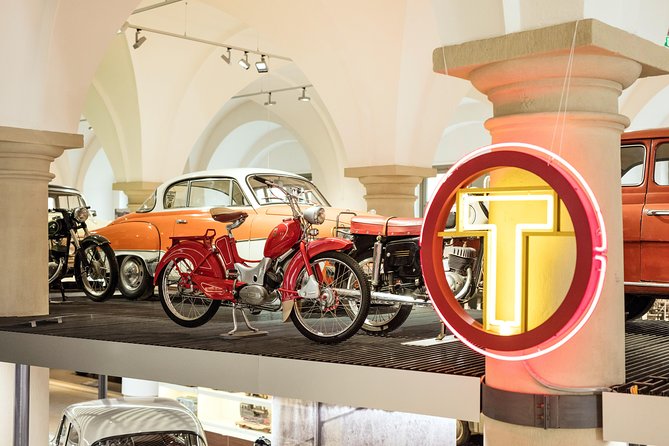
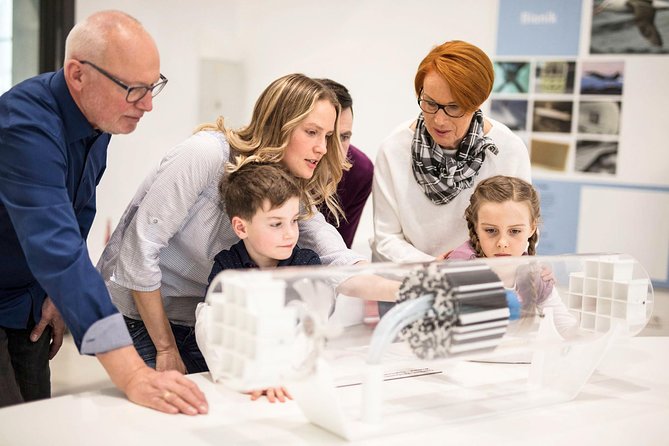
The collection includes original objects, large models, and rare vehicles. That mix matters. A full-size vehicle gives you a sense of scale, while a model can explain a system or machine in a way that a large object cannot. The museum uses both approaches to tell stories about technology and the people who developed, operated, and depended on it.
I would give yourself at least two hours. You can move faster, but the museum is designed for stopping, looking closely, and trying things. If you want to use the audioguide as well, three hours will feel more comfortable.
More Museums in Dresden
- Dresden: Church of Our Lady Guided Tour of Gallery
★ 4.7 · 2,421 reviews - Dresden: Zwinger Museum Entry Ticket
★ 4.7 · 1,436 reviews - Dresden: Guided Walking Tour and Chocolate Museum Ticket
★ 4.5 · 385 reviews
Steam Power and the Rail Transport Displays
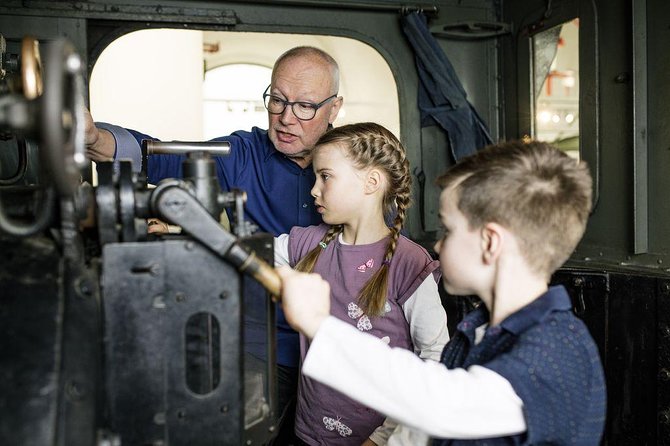
The steam locomotive is likely to be one of the biggest draws. Seeing an actual historic locomotive gives the rail section a physical presence that photographs and small models cannot match. You can board the locomotive, turning a display into something you can enter and examine from close range.
This is especially useful for children, who may understand a train better after seeing its size and interior space. Adults who enjoy engineering will find plenty of reason to slow down too. The museum connects the machines to broader stories about mobility, rather than treating them as isolated objects.
The rail collection also links directly to Dresden’s institutional past. The museum began in 1952, but its roots go back to a Royal Saxon State Railway museum founded in 1877. That makes the railway section more than a collection of old equipment. It reflects Germany’s long interest in documenting the systems that helped shape modern travel and industry.
The possible weakness is that transport museums can feel uneven if one subject interests you far more than another. If trains are your main reason for coming, you may move quickly through the aviation or navigation displays. The ticket still gives you access to every open exhibition, so the extra sections offer useful value even if you spend most of your time beside the rails.
Road Traffic With a Hands-On Twist
The road transport section brings the subject down to street level. Instead of looking only at large machines, you can explore how people moved on roads and how vehicle design changed over time.
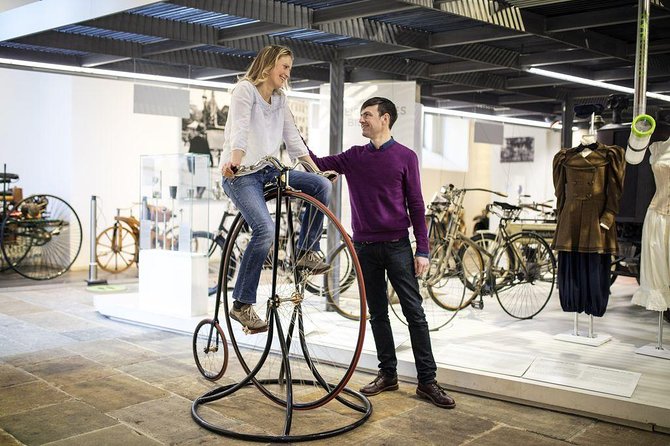
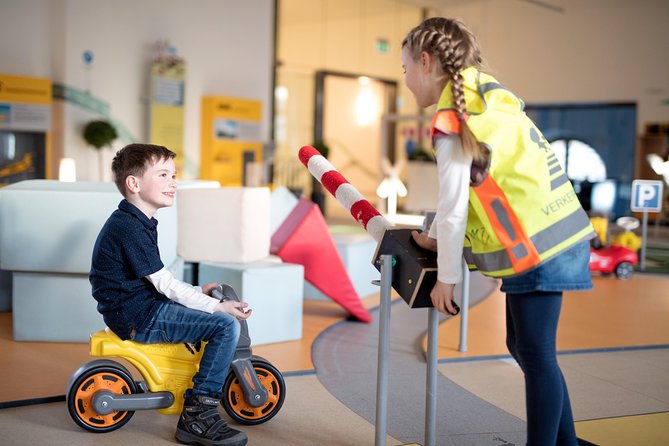
The penny-farthing is a particularly good interactive feature. You can ride it rather than simply view it behind a barrier, which gives you a direct sense of the balance and design problem behind this unusual bicycle. It is a small activity, but it turns an old object into a physical lesson.
Hands-on stations are important here because they prevent the museum from becoming a silent parade of machinery. You can learn by trying, balancing, comparing, and making choices. For families, that can be the difference between a museum visit that lasts two hours and one that ends after twenty minutes.
The road section also works well for visitors who are less interested in technical detail. You do not need to understand engineering to appreciate the basic question behind each display: how did people make travel faster, safer, or more practical?
Boats, Digital Regattas, and the Navigation Hall
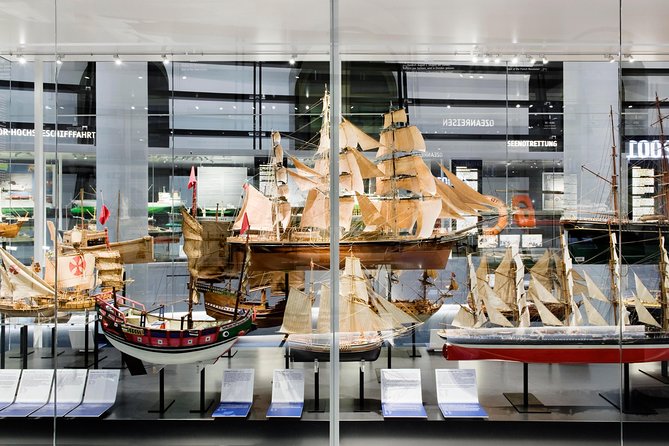
Navigation gives the museum another change of pace. You can design your own boat and take part in a digital regatta, combining transport history with a simple creative challenge.
This activity should appeal to children, but it is not limited to them. It offers a break from reading labels and looking at fixed objects. You make a design choice, see it used in a digital setting, and connect the result to the basic problems of moving across water.
The navigation section also rounds out the museum’s four-part approach. Roads and railways dominate many transport collections, while aviation and boats receive less attention. Here, the presence of all four modes helps you compare the different demands of land, air, and water travel.
Because the museum is self-guided, you can spend as much or as little time here as you like. That freedom is a plus, but it also means you need to set your own rhythm. The audioguide can help if you want more explanation, while the interactive stations can carry the visit if you prefer learning by doing.
Something different for another day:
- Dresden: Semperoper Tickets and Guided Tour
★ 4.7 · 12,102 reviews - Dresden: The Original Night Watchman Tour in Lantern Light
★ 4.6 · 6,653 reviews - Dresden: Semperoper and Old Town Tour
★ 4.8 · 5,735 reviews - Dresden: River Sightseeing Boat Cruise
★ 4.3 · 5,323 reviews
Aviation and the Value of the Full Collection
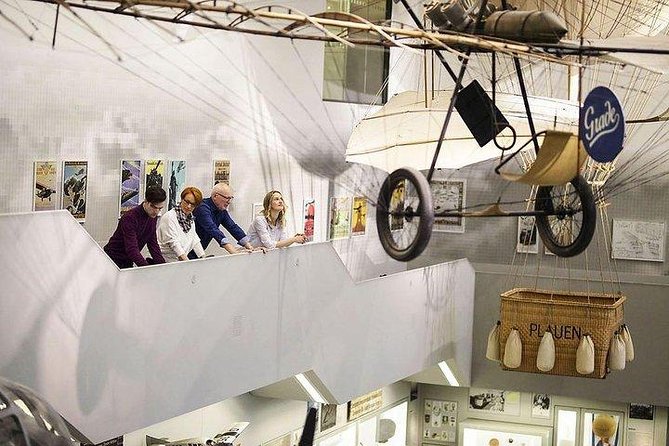
The aviation displays add scale and variety to the visit. You will find the subject presented alongside rail, road, and navigation rather than in a separate specialist museum. That arrangement lets you consider how different forms of transport solve similar problems in different ways.
You may find the aviation area more rewarding if you use the audioguide, especially if you want a clear thread connecting the objects. The free app is available in English, and the museum provides free Wi-Fi so you can download it on your own phone. Other available languages are German, Czech, Russian, and German Sign Language.
Using your own device is convenient, but bring it charged. The supplied information does not indicate that a separate audio device is provided, so the app is the practical option for visitors who want commentary. If you prefer not to use your phone, you can still explore the open exhibitions independently.
This flexibility suits a mixed group. You can pause the app, skip a display, or let children spend time at the activities without holding up a guide or group. The tradeoff is that the experience depends more on your own choices and attention.
A Royal Stable in Central Dresden
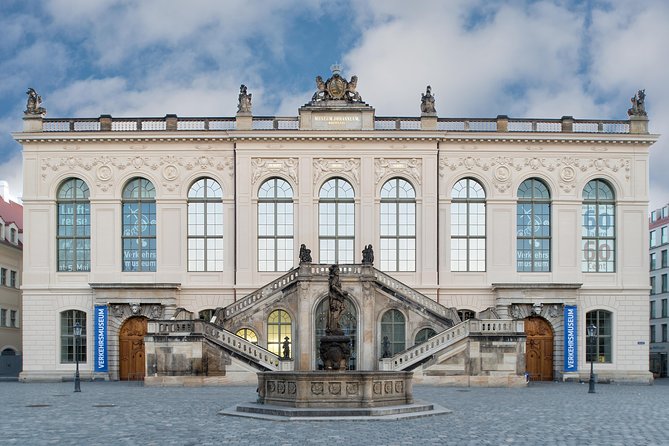
The building itself adds a strong sense of place. The museum occupies the former royal stable building used by Saxon kings for their coaches and horses for more than 400 years.
That setting helps connect modern transport history with older forms of movement. Before railways, cars, aircraft, and engineered boats changed daily life, royal coaches and horses were essential tools of travel and power. You are not viewing transport in an anonymous modern warehouse. You are seeing it in a building with its own connection to vehicles and travel.
The museum sits at the Johanneum on Neumarkt, a central Dresden location near public transportation. You will need to arrange your own transport to the museum, and parking fees are not included, so public transport is the simpler choice if you are not already in the centre.
Its central position also makes the museum easy to pair with other Dresden sightseeing. The ticket does not include transport to or from the attraction, but the location means you can treat the museum as part of a walking day around the city rather than as a separate long outing.
How Much Time Should You Allow?
The suggested visit length is two to three hours. I think that is a fair estimate if you want to see the main open exhibitions and try several interactive stations.
A two-hour visit works if you focus on the major vehicles and activities. Add another hour if you want to use the audioguide, read more of the background material, or let children repeat the hands-on features at their own speed.
You can also make the museum shorter or longer without wasting the ticket. Since the visit is independent, you are not tied to a fixed departure time. That is useful on a Dresden day when weather, meals, or other plans change.
The ticket covers all open exhibitions, including road, rail, and air traffic, navigation, a temporary exhibition, the model railway, and the traffic garden. Temporary displays can change, so do not assume a particular subject will be present on a future date. The core transport sections provide the reliable reason to visit.
Price, Ticket Trouble, and Practical Planning
At $13.25 per person, this is good value for a museum that combines four transport subjects, historic vehicles, interactive features, and a central location. The price becomes especially reasonable for families who can use the activities to keep different age groups interested.
It is less compelling if you want only a quick look at one locomotive. In that case, two to three hours may be more time than you want to spend. I would book it when you enjoy museums that reward curiosity and self-guided wandering, not when you are simply filling a spare half-hour.
One practical issue deserves attention. A ticket used at the entrance did not include a QR code or similar code, and this caused problems at the ticket desk. The museum apologized and said it would discuss the matter with its staff, but you should still have your confirmation ready and allow a little extra time at the entrance.
The experience is offered in English, and the audioguide app adds language support. Confirmation is provided at booking, and free cancellation is available if you cancel at least 24 hours before the local start time. A cancellation within 24 hours is not refundable, and late changes are not accepted.
The museum is closed on Mondays, except Easter Monday and Whitsun Monday. It is also closed on December 24, December 25, December 31, and January 1, so check the calendar before building it into your sightseeing day.
Service animals are allowed, the museum is near public transportation, and most people can take part. Food, drinks, transportation, and parking are not included.
Who Will Enjoy Dresden Transport Museum Most?
I would recommend this museum most strongly to families, transport enthusiasts, and anyone who likes museums with activities rather than displays alone. The penny-farthing, steam locomotive, and boat regatta give children several ways to stay involved.
It also suits a mixed-interest group. You can separate for a while, explore different sections, and meet again without worrying about a guide keeping everyone together. The four transport themes make it easier for each person to find something appealing.
History and technology fans will appreciate the museum’s older roots and the connection to Saxon railway collections. Visitors who prefer a tightly guided narrative may find the independent format less satisfying, although the audioguide provides structure in several languages.
If you have limited time in Dresden, the museum works best when you are already visiting Neumarkt or the central area. It is not an attraction with transport or parking included, so factor in your route before buying.
Should You Book the Dresden Transport Museum Ticket?
Book it if you want a flexible two to three-hour museum visit with genuine hands-on activities, rare vehicles, and four transport subjects in one historic building. The $13.25 price is fair, particularly for families and anyone who will use the interactive stations and audioguide.
Skip it if your schedule allows only a very short stop or if transport history is not your interest. Before going, check the opening days, download the audioguide through the free Wi-Fi, and prepare for a possible ticket-code issue at the door. For a central Dresden museum that lets you set your own pace, it is a practical and enjoyable choice.
FAQ
Where is the Dresden Transport Museum located?
It is located in the Johanneum at Neumarkt in Dresden, Germany.
How long does a visit take?
A visit takes approximately two to three hours, depending on how much time you spend with the exhibits, audioguide, and hands-on activities.
What types of transport are displayed?
The museum covers road traffic, rail transport, aviation, and navigation.
Is the audioguide available in English?
Yes. You can download the free audioguide app using the museum’s Wi-Fi. It is available in English, German, Czech, Russian, and German Sign Language.
Is the museum open every day?
No. It is closed on Mondays, except Easter Monday and Whitsun Monday. It is also closed on December 24, December 25, December 31, and January 1.
What does the ticket include?
The ticket includes admission to all open exhibitions, including road, rail, and air traffic, navigation, the temporary exhibition, model railway, and traffic garden. Food, drinks, transportation, and parking fees are not included.
Just added around Dresden
- From Dresden: Guided Day Tour by Bus of Seiffen Toy Village★ 4.0 · 13 reviews
- Dresden: Christmas Sightseeing Tour with a ‘Pflaumentoffel’★ 4.5 · 13 reviews
- Dresden: Bike Rental – City Bike with Option Children Seat★ 4.5 · 13 reviews
- Sightseeing tour by ConferenceBike★ 5.0 · 14 reviews
- Dresden Neustadt: Scavenger Hunt for Children★ 4.8 · 15 reviews
- Dresden: Scavenger Hunt to Elbe River & Castles★ 4.7 · 15 reviews
- Street Art Tour Dresden Neustadt★ 4.0 · 15 reviews
- Dresden: 150-minute Trabi tour as a guided city tour★ 4.9 · 15 reviews
Museums, compared.





Skip-the-Line: Berlin Wall Museum at Checkpoint Charlie
Read our review →
Browse the lists this tour appears in