
Reviewed · BERLIN WALL TOURS
Private Walking Tour: Berlin Wall, Cold War and Checkpoint Charlie
The Wall still speaks through Berlin. This private two-hour walk connects the Berlin Wall Documentation Center, an original watchtower, the Palace of Tears, and Checkpoint Charlie in a clear, moving sequence. I like the private format, which lets your guide adjust the pace and explain the parts of Cold War Berlin that interest you most. I also like the subway ride on a former ghost train line, a clever way to connect the city’s divided past with its present-day transport system. The main drawback is that public-transport tickets cost extra, and two hours leaves little time for lingering at every display.
This is a strong choice if you want more than a quick photo at Checkpoint Charlie. Guides including Winfried, Tankred, Gerhard, and Daniel have earned praise for making difficult history understandable, personal, and even enjoyable for teenagers. At $149.78 per person, the price makes the most sense for a small private group that values direct conversation and a flexible pace.
In This Review
- Key points to know before you book
- Start at Bernauer Strasse, where the Wall split a neighborhood
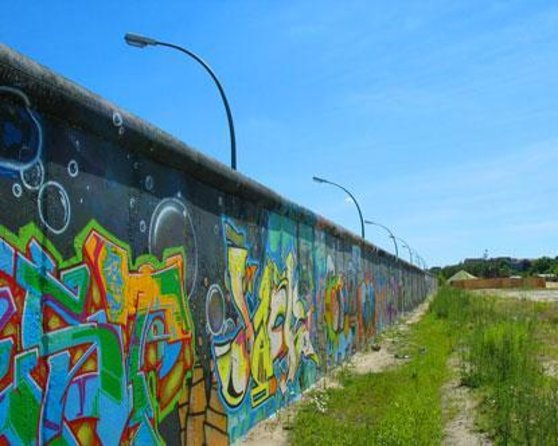
- See an original GDR watchtower and surviving Wall sections
- Ride Berlin’s former ghost-train route
- Pause at the Palace of Tears
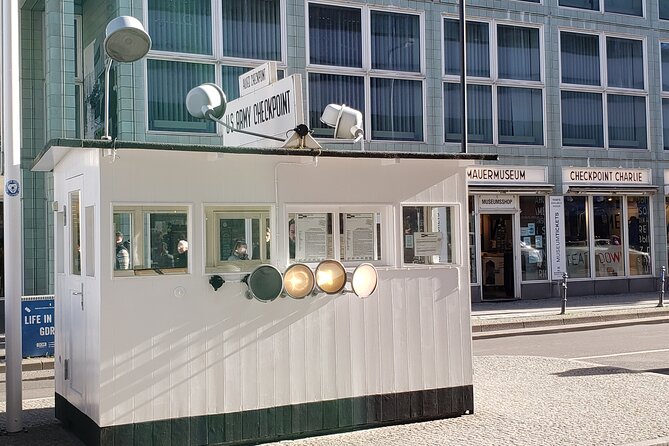
- Finish at Checkpoint Charlie and the 1961 tank standoff
- What the private format adds
- Is $149.78 per person good value?
- Who should choose this Berlin Wall walk?
- Should you book this private Berlin history tour?
- FAQ
- How long does the private Berlin Wall tour last?
- Where does the tour begin?
- Where does the tour end?
- Is the tour conducted in English?
- Are public-transport tickets included?
- Is admission to the main stops included?
- Can I cancel for a full refund?
Key points to know before you book
- The tour begins at Bernauer Strasse, one of Berlin’s most powerful surviving Wall sites, with escape stories, an open-air exhibition, maps, and original remains.
- You see a remaining GDR watchtower and Wall sections, rather than only reconstructed markers or souvenir-style displays.
- The subway ride adds historical context, following a former ghost-train route through stations once sealed off near the Wall.
- The Palace of Tears explains the human cost of division, especially the painful farewells between families separated by the border.
- Checkpoint Charlie provides the Cold War finale, including the 1961 US and Soviet tank confrontation.
- A private guide changes the experience, allowing questions, family-friendly explanations, and a pace suited to your group.
Start at Bernauer Strasse, where the Wall split a neighborhood
Your meeting point is at Bernauer Straße in central Berlin, outside the Berlin Wall Documentation Center. This is an excellent place to begin because the Wall was not an abstract line here. It cut directly through a lived-in neighborhood, separating homes, streets, churches, and families.
The first part lasts about 45 minutes. You walk along the former death strip and visit authentic sites connected with escape attempts. Maps and an open-air exhibition help you understand the physical layout of divided Berlin, which can otherwise be hard to picture from scattered monuments around the city.
Bernauer Strasse is especially powerful because its buildings became part of the border. Some residents tried to escape through windows when their homes stood on the eastern side and the Wall formed directly outside. Others made successful attempts across the barriers, while some died in the effort.
You also hear about the famous East German soldier who jumped over the barbed wire. Details like this put a human face on the political crisis. Instead of hearing only about governments and military alliances, you see how a single decision at a border could change, or end, a life.
I find this opening useful for another reason: it gives you a working picture of the Wall’s design. The border was not simply one concrete slab. The former death strip included multiple barriers and controlled space, making escape dangerous. The maps and documentation help you read the surviving sections with greater care.
The site is free, but free does not mean superficial. It is one of the most important parts of the tour. If you arrive early, resist the temptation to rush through the outdoor exhibits before meeting your guide. The explanations here form the foundation for everything that follows.
More Walking Tours in Berlin
- Discover Berlin Half-Day Walking Tour
★ 5.0 · 9,624 reviews - Berlin: Third Reich and Cold War 2 Hour Walking Tour
★ 4.9 · 6,830 reviews - Berlin: Discover Berlin Walking Tour
★ 4.9 · 5,998 reviews
See an original GDR watchtower and surviving Wall sections
The next stop takes about 10 minutes and focuses on one of the last remaining watchtowers built along the death strip. You also see original pieces of the Wall.
This is a short stop, but it gives the history a physical scale. A photograph can show the Wall, yet standing near a watchtower makes the system of surveillance easier to grasp. The tower represents the authority behind the border, while the preserved Wall sections show the barrier that ordinary people faced when trying to cross.
Do not expect a long museum visit here. The value comes from the guide’s explanation and from seeing original structures in place. Because the stop is brief, listen closely and ask questions while you have the chance.
The contrast between this area and the more commercial parts of Berlin matters. Around Checkpoint Charlie, Cold War history is surrounded by busy streets, souvenir shops, and staged photo opportunities. At Bernauer Strasse, the remains and documentation feel more closely tied to the actual geography of division.
Ride Berlin’s former ghost-train route
The tour then uses public transportation to reach the Palace of Tears. The subway tickets are not included, so you need to buy or carry the required ticket separately. The exact fare is not provided, but this expense is a practical detail to remember when calculating the total cost.
During the division of Berlin, some underground stations near the Wall were closed to ordinary East Berlin passengers. Trains passed through without stopping, and the dim, sealed stations gave these routes the nickname ghost trains. The name captures the gloomy feeling of moving through a city that was physically close but politically split.
This part is more than a transfer between sights. It lets you experience how Berlin’s division affected daily infrastructure. A subway ride seems ordinary now, yet the same network once reflected the border above ground. I like this connection because it prevents the tour from becoming a series of unrelated monuments.
The ride also gives you a change of pace after the outdoor walk. Still, keep your expectations sensible. This is a normal public-transport journey used to explain a former division, not a dedicated sightseeing train with a special vehicle or presentation. Your guide’s commentary is what gives it meaning.
One practical point: the tour includes walking and public transportation in a compact two-hour schedule. Wear comfortable shoes and keep your ticket easy to reach. A private format helps with timing, but the guide cannot control subway delays or the pace of other passengers.
Pause at the Palace of Tears
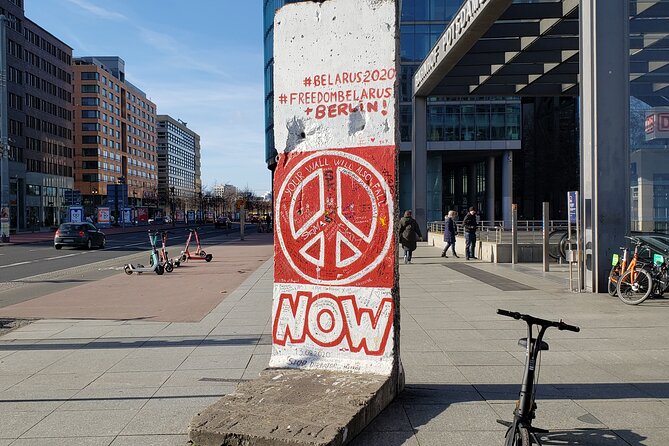
The Palace of Tears is one of the tour’s most affecting stops. Its official role was a border crossing where people from West Berlin could visit relatives in the East. The painful part came later, when they had to return west and say goodbye at the checkpoint.
The name is not decorative. It refers to the real farewells that took place there. Families might be allowed to meet, but their time together was controlled, and the departure point forced them to separate again.
You spend about 30 minutes at the building and its indoor documentation center. This adds an important personal layer to the larger political story. At Bernauer Strasse, you learn how the border was built and escaped. At the Palace of Tears, you see how it shaped family visits and emotional life.
I especially recommend this stop for families with older children or teenagers. The subject is serious, but it is easier to understand when explained through ordinary experiences: visiting a relative, waiting at a checkpoint, and having to leave again under strict rules. Guides have been praised for keeping teenagers interested and for answering questions without turning the subject into a dry lecture.
This is also where the private format can pay off. You can ask about the difference between a visit and a permanent move, or about how the border affected people from East and West Berlin. A large group may need to keep moving, while your guide can spend a little more time on the questions your group actually has.
The building and documentation center are included without an admission charge. The stop is indoors, which makes it useful if you need a break from the weather, though the tour remains primarily a walking experience rather than a museum tour.
More Berlin Wall walks:
- Skip-the-Line: Berlin Wall Museum at Checkpoint Charlie
★ 4.1 · 2,041 reviews - Berlin: East Side Gallery Spree Cruise in a Solar Catamaran
★ 4.0 · 1,039 reviews - Cold War, Berlin Wall, Spies and the East Side Gallery
★ 5.0 · 1,024 reviews - Berlin: Guided Bike Tour of the Berlin Wall and Third Reich
★ 4.7 · 499 reviews
Finish at Checkpoint Charlie and the 1961 tank standoff
The final major stop is Checkpoint Charlie, about 20 minutes into the closing section. This was a former military checkpoint and one of the most tense Cold War locations in Berlin.
In 1961, American and Soviet tanks faced each other here. For a short period, the confrontation brought the superpowers into direct contact, with the danger of a much wider conflict hanging over the city. Your guide explains why this crossing mattered and how it fitted into the larger division of Berlin.
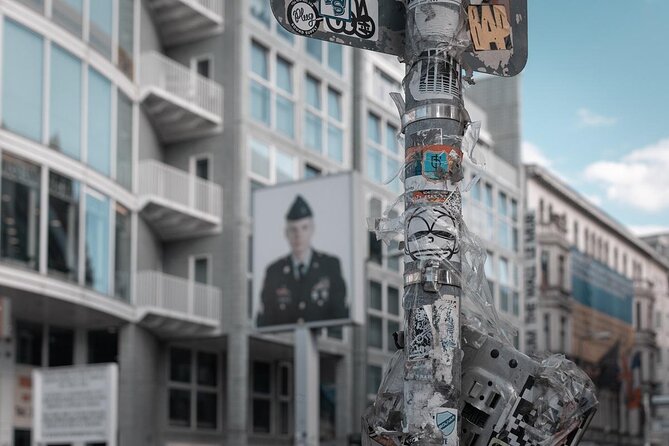
Checkpoint Charlie is easy to reach and hard to miss, but it can also feel crowded and commercial. That is the chief weakness of ending here. The famous guardhouse and checkpoint sign are associated with the Cold War, yet the modern setting can make the place feel less solemn than Bernauer Strasse or the Palace of Tears.
A guide helps separate the real history from the modern presentation. You can learn what the checkpoint actually controlled, why the 1961 standoff mattered, and how the site became a symbol far beyond Berlin.
The tour ends at the Wall Museum on Friedrichstraße, at the Checkpoint Charlie area. The museum is not included as part of the guided tour, but you may visit afterward. This is a useful arrangement because you can decide if you want more indoor exhibits without forcing every member of your group into another museum visit.
Give yourself extra time after the tour if the Wall Museum interests you. The walk itself ends in about two hours, and the museum is a separate activity. The supplied schedule does not state its admission price or visiting hours, so check those details before planning your next appointment.
What the private format adds
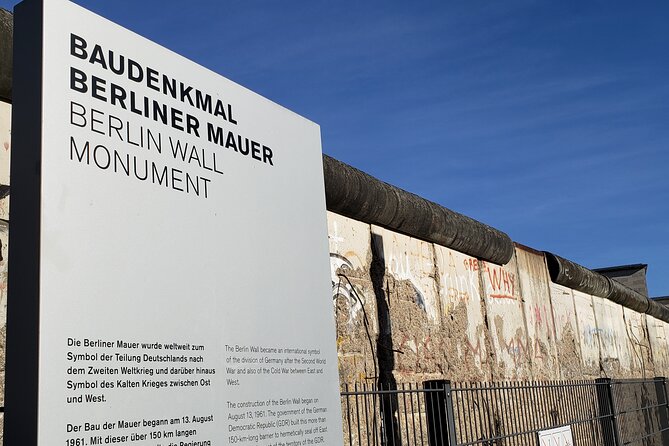
A private tour means only your group participates. That matters most at places such as Bernauer Strasse, where questions can quickly move from basic facts to personal stories, escape attempts, and the meaning of the border for divided families.
The guide can also adjust the speed. A family with a 12-year-old may need clearer explanations and shorter stretches of focused history. Adults with a strong interest in Cold War politics may prefer more detail about the military confrontation and border system.
The strongest guide praise centers on personality as well as historical skill. Winfried has been described as friendly and highly informative about the post-World War II era. Tankred is known for making the locations come alive, while Gerhard and Daniel have been praised for strong explanations and an easy manner.
Those individual guide assignments are not guaranteed, so you should not book solely for one name. The useful pattern is that the guiding style appears to be conversational rather than mechanical. One guide even offered a restaurant recommendation that helped a family find lunch afterward, a small but practical benefit of having a local person available for questions.
Safety and timing also get attention. A guide accompanies you as you board local trains, which is reassuring if you are unfamiliar with Berlin’s transit system. You still need to watch your belongings and follow normal city precautions, but the guide handles the route between the historical stops.
Is $149.78 per person good value?
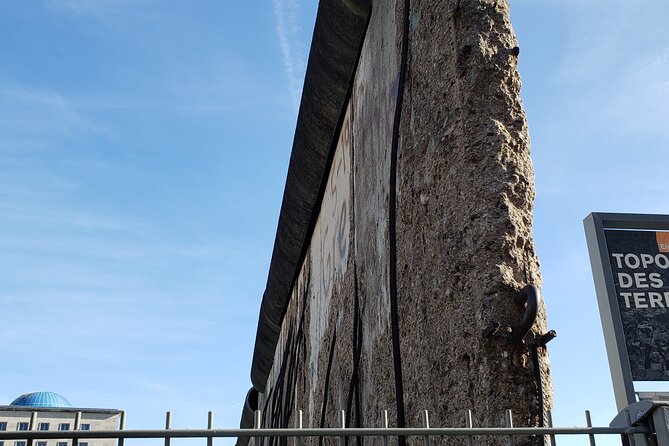
At $149.78 per person, this is not a budget sightseeing walk. The price becomes easier to justify when you divide it among a private group and consider what is included: a professional guide, a tailored pace, four connected historical areas, and the public-transport link between them.
You do not pay separate admission for the listed stops, but transit tickets are extra. The price also does not include entry to the Wall Museum after the tour. If your group consists of several people and prefers direct conversation, the private arrangement may offer better value than a cheaper large-group excursion.
For one or two people, the cost is harder to defend unless this is a top priority in Berlin. You are paying for interpretation and flexibility, not for expensive entrance tickets. If you are content to read signs independently and move at your own pace, you can visit several of these areas without a private guide.
The tour is booked an average of 72 days ahead, so popular dates may fill early. That is especially worth noting if your Berlin schedule is fixed. Confirmation is normally issued at booking, though bookings made within nine days of the date may receive confirmation within 48 hours, subject to availability.
Free cancellation is allowed up to 24 hours before the local start time. Changes or cancellations inside that window are not accepted for a refund. Keep that deadline in mind before buying transit tickets or arranging a tightly timed follow-up activity.
Who should choose this Berlin Wall walk?
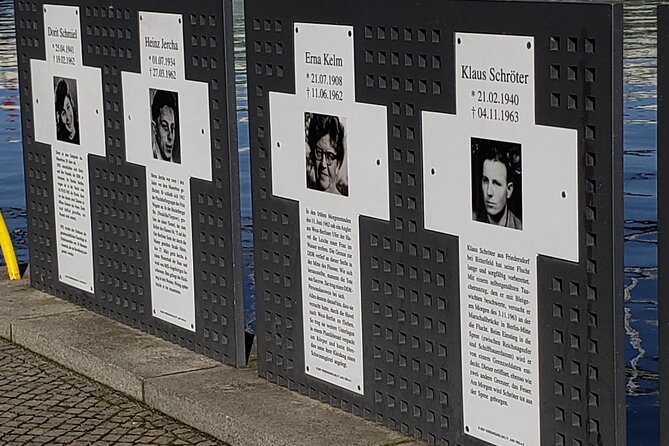
I would recommend it to first-time Berlin visitors who want a clear introduction to the Wall and Cold War period. The route moves from escape attempts and border construction to family separation and military confrontation, so the story develops naturally.
It suits families particularly well. The guide can adapt explanations, and the private setting avoids the pressure of keeping up with a large group. The positive comments about teenagers enjoying the tour suggest that the personal stories and changing locations help hold attention.
It is also a good fit for history-minded visitors who dislike shallow sightseeing. You see surviving structures, documentation centers, an original watchtower, and a former border checkpoint. The tour does not simply point at a famous sign and move on.
You should think twice if you want a slow museum day. The tour lasts about two hours and covers several locations, so the pace is purposeful. You will have time to understand each stop, but not unlimited time to read every exhibit.
Most people can participate, and service animals are allowed. The route is near public transportation, though the combination of walking, subway boarding, and outdoor sites means you should plan for a mobile outing rather than a seated one.
Should you book this private Berlin history tour?
Book it if you want Berlin’s Wall story explained by a guide who can connect places, people, and events. Bernauer Strasse provides the strongest start, the ghost-train ride adds an unusual link between sites, the Palace of Tears brings the story into family life, and Checkpoint Charlie supplies the dramatic Cold War finish.
I would be more cautious if you are watching every euro or already plan to visit the Wall sites independently. The $149.78 price is a premium for a private guide, and public transit plus any Wall Museum visit cost extra.
For a small family or group with limited time, I think the price can be worthwhile. You get a focused route, no strangers in your party, and room for questions. Book early if your dates matter, bring comfortable shoes, budget separately for transit, and leave time after the tour if you want to visit the Wall Museum.
FAQ
How long does the private Berlin Wall tour last?
The tour lasts approximately two hours.
Where does the tour begin?
It begins at Bernauer Straße, 10115 Berlin, at the Berlin Wall Documentation Center area.
Where does the tour end?
It ends at Checkpoint Charlie, Friedrichstraße 43-45, 10117 Berlin, near the Wall Museum.
Is the tour conducted in English?
Yes. The experience is offered in English.
Are public-transport tickets included?
No. Tickets for public transportation are not included in the tour price.
Is admission to the main stops included?
The listed stops have no separate admission charge. Entry to the Wall Museum after the tour is not included.
Can I cancel for a full refund?
Yes, if you cancel at least 24 hours before the experience start time. Cancellations or changes made less than 24 hours before the start time are not accepted for a refund.
Just added around Berlin
- Berlin: Private Guided Tour of the Main Sights★ 5.0 · 13 reviews
- Private Highlights of Berlin Bike Tour★ 5.0 · 13 reviews
- Modern Berlin Private Walking Tour: Diverse, Vibrant and Exciting German Capital★ 5.0 · 13 reviews
- Tour in Berlin from Warnemünde and Rostock Cruise Port★ 4.1 · 13 reviews
- Berlin: Stasi Museum Private Guided Tour with Entry Ticket★ 4.8 · 13 reviews
- Private Food Tour Experience with a born and bred Berliner★ 5.0 · 14 reviews
- Berlin: Rheinsberg Palace Entrance Ticket★ 4.8 · 14 reviews
- Berlin in one day – day tour with an expert guide★ 5.0 · 14 reviews
Berlin Wall Tours, compared.
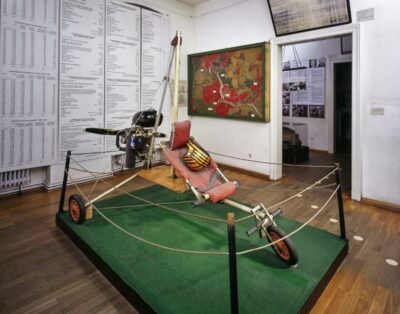
Skip-the-Line: Berlin Wall Museum at Checkpoint Charlie
Read our review →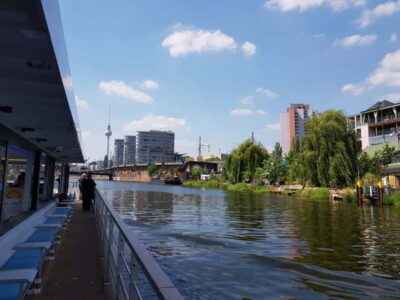
East Side Gallery Spree Cruise in a Solar Catamaran
Read our review →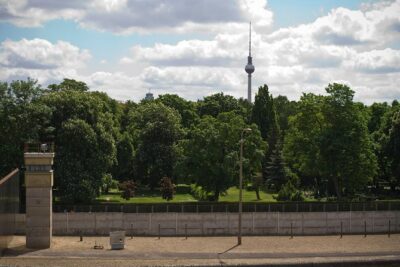
Cold War, Berlin Wall, Spies and the East Side Gallery
Read our review →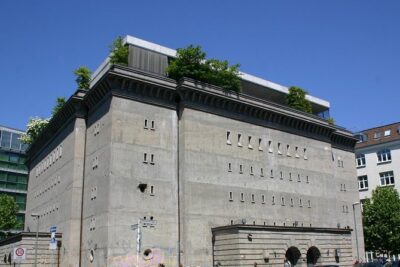
Guided Bike Tour of the Berlin Wall and Third Reich
Read our review →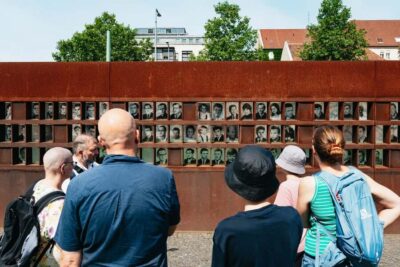
Cold War, Berlin Wall, Spies and the East Side Gallery
Read our review →Browse the lists this tour appears in