Reviewed · PRIVATE
Private Tour of David Bowie’s West-Berlin
Berlin still carries Bowie’s fingerprints. This private three-hour walk links the places behind Where Are We Now? with the West Berlin of the 1970s, from Potsdamer Platz to Hansa Studios and the apartment Bowie shared with Iggy Pop. I like the small private format and the way the tour connects music with Berlin’s changing streets. I also like that public transport is part of the route, not just a ride to the next stop.
The main drawback is pace. Seven stops, train rides, and a fair amount of walking leave limited time at each place. You will see former locations and exterior views rather than enter most Bowie sites. Guide Martin is a strong reason to consider it, especially if you want music, architecture, German culture, and 20th-century Berlin explained together.
In This Review
- Key points to know before booking
- Why Bowie’s West Berlin still matters
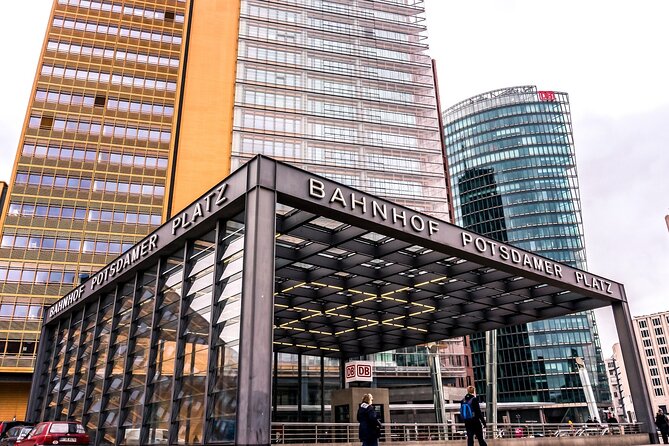
- Potsdamer Platz and the city Bowie remembered
- Hansa Studios, where the Berlin Trilogy took shape
- Zoo Station and the Christiane F. connection
- KaDeWe, groceries and a famous West Berlin address
- The former Dschungel at Nürnberger Strasse 53
- Neues Ufer and Bowie’s late-night drink
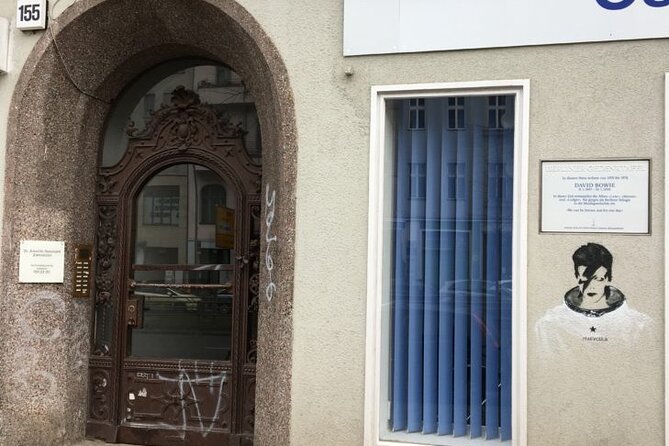
- Hauptstrasse 155, Bowie’s Berlin home
- What the three-hour format feels like
- The value of a private group of up to eight
- Who will get the most from this Bowie tour
- Practical tips for a better afternoon
- Should you book David Bowie’s West Berlin?
- FAQ
- How long does the David Bowie West Berlin tour last?
- How many people can join the private tour?
- What is the price of the tour?
- Where does the tour start?
- Where does the tour end?
- Are public transport tickets included?
- Can I have a drink at Neues Ufer?
- Is free cancellation available?
Key points to know before booking
- The route follows Bowie’s Berlin references: Potsdamer Platz, Zoo Station, KaDeWe, and other places linked to Where Are We Now?
- Hansa Studios is a major highlight: You stop outside the studio where Bowie recorded much of his Berlin Trilogy.
- The tour is private for up to eight people: Your group gets the guide’s full attention rather than joining a large crowd.
- You will use Berlin’s trains: Public transport links the central and City West stops, so allow for walking and station changes.
- The Dschungel is gone, but its address remains: You see the former site of one of Bowie’s regular nightspots.
- The final stop is Bowie’s former home: The tour ends at Hauptstraße 155, where flowers and candles are often left outside.
Why Bowie’s West Berlin still matters
David Bowie’s Berlin period is often reduced to three albums and a dramatic change of sound. This tour gives that period a physical setting. You move through places where Bowie worked, shopped, drank, lived, and watched Berlin change around him.
The timing matters. West Berlin in the 1970s was an isolated enclave surrounded by East Germany. It had a rough edge, a strong counterculture, and a creative freedom that drew musicians and artists. The tour also shows how much has changed since then. Places that once felt shabby or charged may now be polished, busy, or completely redeveloped.
That contrast is one of the best reasons to book. You are not simply checking off Bowie addresses. You are comparing the city he knew with the Berlin you see today.
The route also follows Where Are We Now?, Bowie’s later, reflective song about Berlin. Its references give the walk a clear thread, while the guide adds context about the people and places behind the lyrics.
A few more tours and experiences worth a look
- Berlin: Private Reichstag and Glass Dome Tour
★ 4.8 · 2,226 reviews - Berlin Private Complete History All Day Walking Tour
★ 5.0 · 474 reviews - Private Walking Tour Berlin Third Reich Hitler and World War II
★ 5.0 · 360 reviews
Potsdamer Platz and the city Bowie remembered
The tour begins around Potsdamer Platz, with the listed meeting point at Deutsche Kinemathek on Mauerstraße 79. Confirm the exact starting instructions when you book, since the route description identifies Potsdamer Platz as the first sightseeing stop while the meeting details give the Deutsche Kinemathek address.
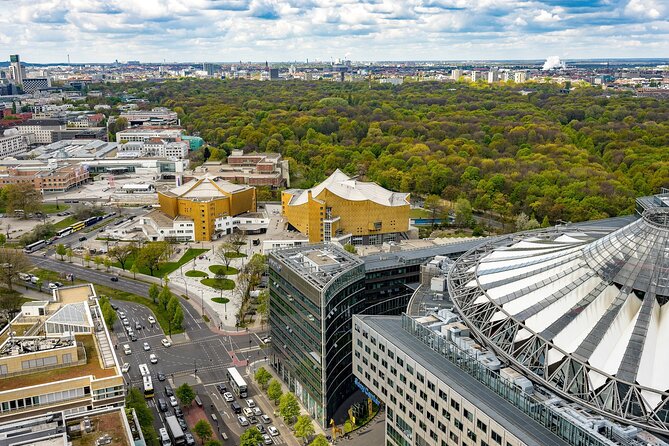
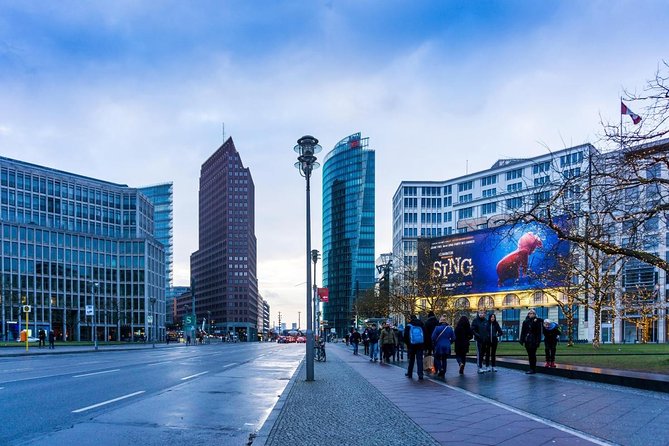
Potsdamer Platz is useful as an opening scene because its past is unusually visible. It was once a major center of Berlin life, then became a no-man’s-land divided by the Wall, and later returned as a modern commercial district. The tour uses that change to explain how radically Berlin has been rebuilt.
You get about 15 minutes here. That is enough for orientation and a short talk, but not a long architectural visit. I would arrive ready to listen rather than expecting a full tour of the surrounding buildings.
Bowie’s reference to Potsdamer Platz in Where Are We Now? makes this more than a standard city-center stop. You begin with a place that captures the tour’s larger idea: Berlin is full of old names, new buildings, and memories that no longer match what sits in front of you.
Hansa Studios, where the Berlin Trilogy took shape
Hansa Studios is likely the central stop for serious Bowie fans. Bowie recorded much of his Berlin Trilogy here, including work associated with Low, “Heroes”, and Lodger. The experience focuses on the exterior, with time for photographs and a look at the animated Bowie image displayed in one of the windows.
The stop lasts about 20 minutes, making it one of the longer visits. That extra time helps because the building itself may not look like a conventional attraction. Its value comes from what happened inside and from the guide’s explanation of the recording period.
You should keep your expectations practical. This is not presented as a studio recording session or an interior museum visit. You see the location, hear the story, and connect the building with music that changed Bowie’s career.
I like this stop because it turns an abstract album credit into a real address. If you have listened to the Berlin Trilogy, the connection can be especially strong. If you know Bowie mainly through his greatest hits, Martin’s wider explanation can help place this period in his work.
Zoo Station and the Christiane F. connection
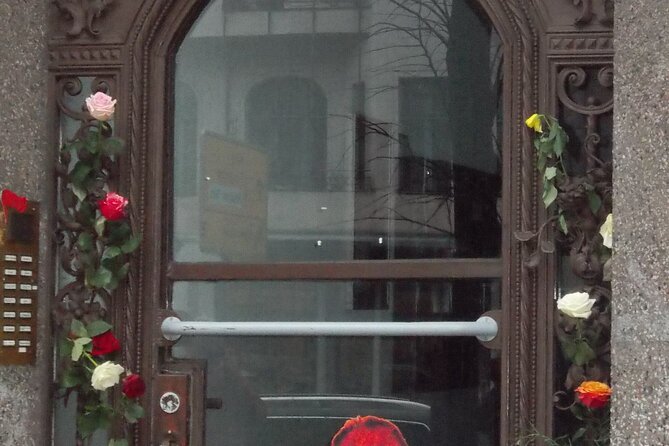
From Hansa Studios, the group takes the train toward City West and stops at Bahnhof Zoologischer Garten, commonly called Zoo Station. The station is linked to Christiane F., whose story became widely known through her book and the later film. Bowie’s music was used throughout the film, giving Zoo Station an important place in the story of his Berlin years.
The stop lasts roughly 15 minutes. The point is not to search for a preserved 1970s scene. The description makes clear that Zoo Station has changed, and that the once-dingy atmosphere is no longer the same.
That change is worth discussing. Berlin’s famous places can lose their old character as the city modernizes, but the connections remain. Here, Bowie’s music, Christiane F.’s story, and the station’s former reputation meet in one location.
This stop may appeal most to people interested in the wider culture around Bowie rather than only his albums. It also shows how his work became part of Berlin’s film and youth culture, not just its music scene.
Something different for another day:
- Berlin: Reichstag, Dome and Government District Guided Tour
★ 4.7 · 18,288 reviews - Berlin: 1-Hour City Tour by Boat with Guaranteed Seating
★ 4.3 · 16,993 reviews - Berlin: Boat Tour Along the River Spree
★ 4.4 · 11,252 reviews - Discover Berlin Half-Day Walking Tour
★ 5.0 · 9,624 reviews
KaDeWe, groceries and a famous West Berlin address
Kaufhaus des Westens, better known as KaDeWe, is one of Berlin’s best-known department stores. Bowie used to buy groceries there, and the store is referenced in Where Are We Now?
The tour gives you about 15 minutes at the building. Admission is free, but shopping and drinks are not part of the tour price. You may have time to look inside or return later on your own, but the guided stop is short.
KaDeWe adds an ordinary detail to Bowie’s story. Recording in a major studio is the glamorous part. Buying food at a department store is much more everyday, and that is exactly why it helps make his Berlin life feel real.
I would not book this tour solely for an extended KaDeWe visit. The value here is the story and the song reference. If you want to explore the store properly, plan a separate visit.
The former Dschungel at Nürnberger Strasse 53
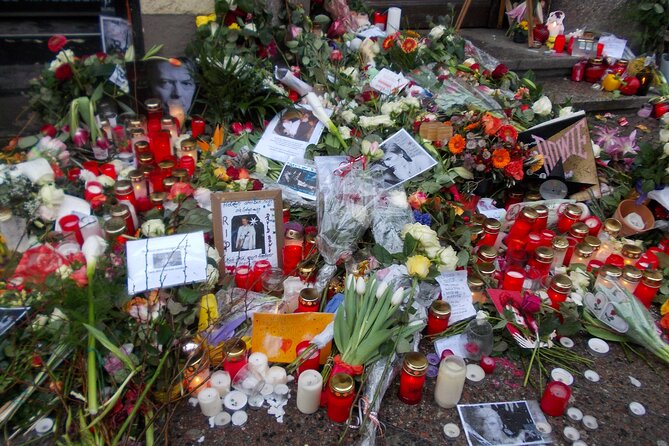
The Dschungel was one of Bowie’s regular hangouts, and the tour visits its former location at Nürnberger Strasse 53. The nightclub no longer exists, but the address remains.
This is a good example of what the tour does best. You are shown a place that cannot offer a preserved interior, display, or formal exhibit. Instead, Martin explains how the location fitted into Bowie’s nights in West Berlin.
You get around 15 minutes here. That is enough to understand the site, take in the present-day setting, and consider the gap between a famous club’s reputation and its current appearance.
There is also a useful lesson for Bowie fans: much of this tour depends on imagination. You will not walk through the old Dschungel or see a room arranged as it was in the 1970s. The guide’s storytelling carries much of the experience.
Neues Ufer and Bowie’s late-night drink
The group takes the train again to Neues Ufer, formerly called Anderes Ufer. This local gay bar was a place where Bowie spent time, often stopping in for a nightcap. The bar was open around the clock at that time, which helps explain why it became part of his routine.
The guided stop lasts about 10 minutes. You can choose to have a drink after the tour, but it is optional and not included in the price. That flexibility is useful. You can finish the formal walk, order something if you feel like lingering, or continue to the final address.
Neues Ufer gives the tour a more personal side. Hansa Studios shows Bowie at work, while this stop points to the social world around him. It also places his Berlin years within the city’s gay nightlife, an important part of the atmosphere the tour aims to recover.
Because the stop is short, you should not expect a long bar visit during the guided portion. Think of it as a historical address with the option to stay for a drink afterward.
Hauptstrasse 155, Bowie’s Berlin home
The tour ends at Hauptstrasse 155, the building Bowie called home from 1976 to 1978. This is one of the most personal stops because it was not only a workplace or nightlife address. It was his home for almost three years.
The building is a turn-of-the-century property, and flowers, candles, or other tributes are often placed on a ledge outside. Those small memorials give the address a quiet sense of connection between the present and Bowie’s Berlin years.
You spend about 15 minutes here, and the tour ends nearby. That makes the final stop practical if you want to continue exploring Schöneberg afterward. It also means you should plan your day from this location rather than from the original meeting point.
I appreciate the choice to finish here. Ending at a home gives the route a human scale. After studios, stations, stores, and clubs, you finish at the place where Bowie actually lived.
What the three-hour format feels like
The advertised duration is about three hours. Within that time, you visit seven locations, walk between some stops, and use Berlin’s public transport for longer connections. That is a full morning or afternoon, not a slow café stroll.
Each stop is short, generally 10 to 20 minutes. This keeps the route moving, but it limits long conversations at any one address. You should wear comfortable shoes and be ready for a moderate level of physical activity.
The train rides are part of the appeal. They show how the different parts of West Berlin fit together and keep the tour from becoming an exhausting all-day walk. Tickets are not included, so budget separately for public transport.
The mobile ticket is convenient, and confirmation is sent at booking. The tour is near public transport, and service animals are allowed. The operator recommends a moderate level of fitness, which seems sensible given the walking, station access, and changing locations.
The value of a private group of up to eight
The price is $285.07 per group, with up to eight people included. For one person, that would be expensive. For a full group, it works out to about $35.63 per person before transport costs. For four people, it is about $71.27 each, and a couple would pay the full group rate between them.
That pricing makes this most attractive for families, friends, or a small group of Bowie fans. A private format also gives you room to ask about related subjects. Martin has guided tours covering Bowie, architecture, and the Holocaust, and his past work has included custom content for a student studying GCSE history.
That detail matters if your interests go beyond music. A good guide can connect Bowie’s story with Berlin’s architecture, wartime scars, divided-city politics, and everyday German culture. The available feedback gives Martin strong praise for his professionalism, broad subject range, and ability to tailor a tour.
You should still understand what you are paying for. The fee covers guiding services, not train tickets, coffee, tea, or other purchases. There are no listed admission charges for the stops, since the tour focuses on outdoor locations and exterior views.
Who will get the most from this Bowie tour
This experience suits you best if you:
- Listen to Bowie’s Berlin albums or Where Are We Now?
- Want context rather than a simple list of addresses
- Prefer a private guide to a large group
- Enjoy connecting music with architecture and social history
- Are happy visiting former locations that may no longer look as they did
- Have a small group that can share the fixed price
It is less suitable if you want a museum-style Bowie exhibition, long indoor visits, or a relaxed tour with plenty of time at each stop. The route is about places and interpretation, not collections of costumes, instruments, or personal objects.
Families can also benefit, especially if the guide adapts the discussion to different ages. Martin has already created a custom history-focused experience for a GCSE student, so a group with mixed interests may find the private setup useful.
Practical tips for a better afternoon
Confirm the meeting point before setting out. The supplied details list Deutsche Kinemathek at Mauerstraße 79 as the start, while the route begins with Potsdamer Platz. The final address is Hauptstraße 155 in Schöneberg, near Bowie’s former home.
Keep your phone charged. The tour uses a mobile ticket, and you may want it for directions, transport information, and photographs at Hansa Studios.
Bring money or a transport ticket for the train portions. Public transport is used during the tour, and tickets are not included. A drink at Neues Ufer is also optional and costs extra.
Build in time after the tour if KaDeWe or Neues Ufer interests you. The formal stops are brief, so you may want to return to one of them without the group’s schedule.
Free cancellation is available if you cancel at least 24 hours before the local start time. Changes or cancellations made inside that window are not accepted for a refund.
Should you book David Bowie’s West Berlin?
Book it if you want Berlin explained through Bowie’s daily life, music, and social world. The strongest parts are Hansa Studios, the changing view of Potsdamer Platz, the former Dschungel site, and the final address at Hauptstrasse 155.
The tour offers real value for a private group of several people, especially when you want to ask questions or request wider cultural context. Guide Martin’s ability to discuss architecture, German culture, and history adds weight beyond the Bowie theme.
Skip it if you need interiors, exhibits, or a slow-paced route. Most stops are exterior locations, and the schedule moves quickly. For the right audience, though, this is a focused way to understand why Bowie’s West Berlin still matters.
FAQ
How long does the David Bowie West Berlin tour last?
The tour lasts approximately three hours.
How many people can join the private tour?
The private tour accommodates up to eight people in one group.
What is the price of the tour?
The listed price is $285.07 per group of up to eight people.
Where does the tour start?
The meeting details list Deutsche Kinemathek, Mauerstraße 79, 10117 Berlin, Germany. The sightseeing route begins with Potsdamer Platz, so confirm the exact meeting instructions after booking.
Where does the tour end?
The tour ends at Hauptstraße 155, 10827 Berlin, near David Bowie’s former home.
Are public transport tickets included?
No. The tour uses trains between some locations, but tickets and similar costs are not included.
Can I have a drink at Neues Ufer?
Yes. Having a drink at Neues Ufer after the tour is optional, but it is not included in the tour price.
Is free cancellation available?
Yes. You can cancel for a full refund up to 24 hours before the experience’s local start time. Changes or cancellations made less than 24 hours before the start are not accepted for a refund.
Just added around Berlin
- Kreuzberg Private Walking Tour: Immigrants, Artists & Hipsters★ 5.0 · 3 reviews
- Private Photo Tour in Kreuzberg★ 5.0 · 3 reviews
- Individual city tour Berlin for max. 8 persons★ 5.0 · 3 reviews
- Berlin’s Jewish Heritage: Private Tour of the Vibrant Jewish District★ 5.0 · 3 reviews
- Berlin & The Third Reich Private Guided Tour★ 5.0 · 3 reviews
- Private Analogue Photography Experience in Berlin★ 5.0 · 3 reviews
- Spy Mission in Berlin: Self-Guided Espionage Puzzle Quest★ 5.0 · 3 reviews
- Berlin Christmas Markets Walking Tour with Local Guide★ 5.0 · 3 reviews
Private, compared.


Berlin Private Complete History All Day Walking Tour
Read our review →
Munich Private Tour with a Local – Highlights & Hidden Gems
Read our review →
Private Walking Tour Berlin Third Reich Hitler and World War II
Read our review →
Your private 3-hour Hamburg driving tour with a former policeman
Read our review →
Private Berlin: Iconic Sights and Hidden Gems Walking Tour
Read our review →
1.5-Hour Private Tour through Historical Old Town
Read our review →