
Reviewed · MEMORIAL & CONCENTRATION CAMP TOURS
Private Sachsenhausen Concentration Camp Memorial Tour
History demands attention here. This private Sachsenhausen tour takes you from central Berlin to one of Nazi Germany’s first purpose-built concentration camps, with a licensed guide who can explain both the site and the political events around it. I like the private format, which lets your group ask questions and set the pace, and I like the strong historical context, from the rise of the Nazi dictatorship to the camp’s changes during World War II.
The main drawback is practical: transportation is not included, and the full experience takes about six hours. You meet at the Academy of Arts near Pariser Platz, then make your own way to Sachsenhausen with public transport or another arrangement. That adds a little work, but the price can be good value for a group of up to five.
In This Review
- Key points to know before booking
- Why a private Sachsenhausen visit matters
- Meeting at Pariser Platz and reaching Sachsenhausen
- Tower A and the camp entrance
- The former camp kitchen and its exhibition
- The infirmary and pathology building
- Station Z and the execution facility
- The SS and Gestapo Prison
- Former prisoner barrack blocks
- The historical story behind Sachsenhausen
- How the guides shape the day
- Is $390.50 good value for up to five people?
- Who should book this experience?
- Should you book the private Sachsenhausen tour?
- FAQ
- How long does the private Sachsenhausen tour last?
- Where does the tour begin and end?
- Is transportation included?
- How many people can join the private tour?
- What parts of Sachsenhausen are visited?
- Is the guide licensed?
- Can I cancel for a full refund?
Key points to know before booking
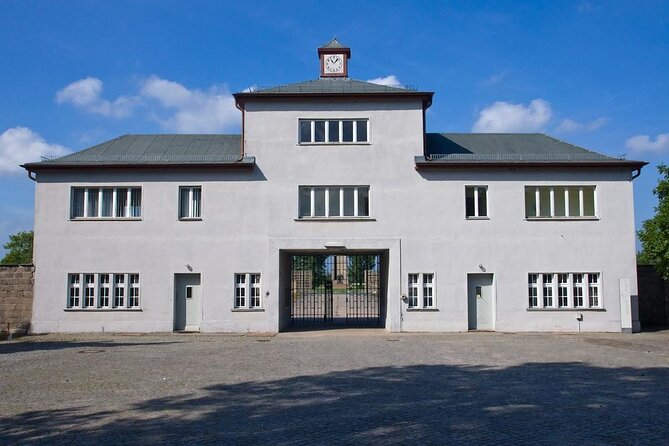
- The tour covers the camp’s major surviving sites, including Tower A, Station Z, the infirmary, the SS and Gestapo Prison, the former kitchen, and prisoner barracks.
- You receive a private tour, so your group can ask sensitive questions, pause for explanation, or spend more time in areas that matter most to you.
- The guide is licensed and trained by the Camp Memorial Foundation, an important point at a site where accuracy and care matter.
- The historical frame reaches beyond the camp itself, connecting its changing prisoner population to Nazi rule and World War II.
- Guides praised by name include Aaron, Paul, and Julian, with particular praise for their teaching, flexibility, and help with transport.
- The $390.50 group price covers up to five people, making the cost easier to justify when shared by a family or small private party.
Why a private Sachsenhausen visit matters
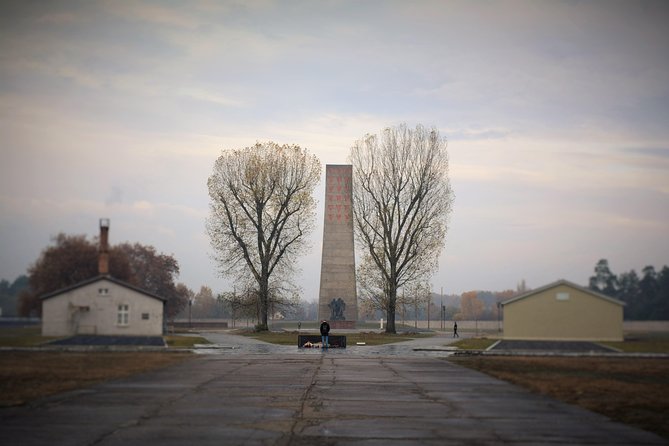
Sachsenhausen is not a quick photo stop. It is a memorial site built around difficult evidence, empty spaces, surviving structures, and exhibitions that require explanation. I would not choose this tour simply because it is private. I would choose it because a good guide can help you understand how the camp operated and how it changed over time.
The private setup gives you room to ask direct questions without holding up a large group. You may want to discuss prisoner categories, the role of the SS, the camp’s connection to the Nazi system, or the difference between what remains visible and what has disappeared. A private guide can adjust the pace for your group rather than delivering the same script to everyone.
That matters especially for families. One guide, Aaron, was praised for explaining the subject clearly to two teenagers. Another family described the day as somber but valuable, with a guide who adjusted to its requests. This is not a light outing, but careful teaching can help younger visitors understand the subject without turning the day into a blur of grim facts.
More memorial visits:
- Berlin: Sachsenhausen Concentration Camp Tour in English
★ 5.0 · 5,711 reviews - Berlin: Sachsenhausen Concentration Camp Memorial Tour
★ 4.7 · 3,716 reviews - Sachsenhausen Concentration Camp Bus Tour in English from Berlin
★ 5.0 · 1,962 reviews
Meeting at Pariser Platz and reaching Sachsenhausen
The stated meeting point is the Academy of Arts at Pariser Platz 4, near Berlin’s Brandenburg Gate. The tour ends back at this same meeting point. Public transport tickets and private transportation are not included, so you should allow time to sort out that part of the day.
This arrangement is worth understanding before you pay. The listed experience is not a private car transfer from your hotel. The meeting point is central, and the guide-led portion at Sachsenhausen is the main service. One family particularly valued having its guide walk it through the different transport modes to and from the camp, describing this as less stressful than handling the route alone.
Because the total outing lasts roughly six hours, you should treat it as a substantial day trip from Berlin. The memorial visit itself is listed at about three hours, leaving the remaining time for travel and the meeting arrangements. Wear shoes suited to walking and outdoor ground, and bring what you need for several hours away from central Berlin. Those are sensible precautions for any extended memorial visit, even though the supplied details do not specify a required dress code or equipment.
Tower A and the camp entrance
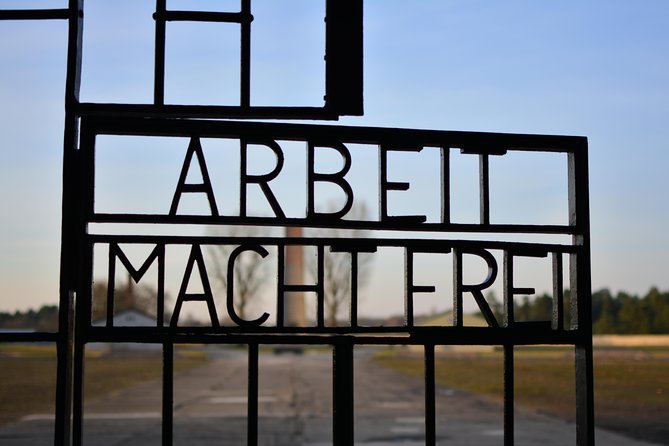
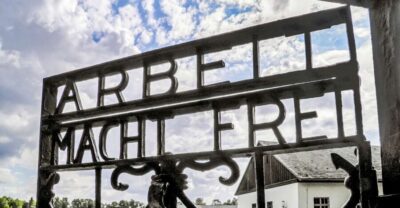
The tour begins at Tower A, the main entrance. This is the natural place to start because it introduces the camp’s controlled design and the way prisoners entered a system built to remove freedom, privacy, and identity.
A guide can give this first stop its proper meaning. Instead of seeing an isolated gatehouse, you begin to understand the relationship between the entrance, the camp interior, and the SS presence around it. The tour’s purpose is not only to point out buildings. It explains how Sachsenhausen came into being, how its function developed, and how the prisoner population changed.
I appreciate that the tour sets the camp within the political growth of Nazi Germany during the 1930s. That context helps you see Sachsenhausen as part of an expanding system, not as an event separate from the government and society that created it.
The former camp kitchen and its exhibition
The former camp kitchen contains an exhibition and gives the tour a place to work through documents, objects, and interpretation connected with daily camp life. This stop can help balance the open grounds, where the scale of the site may otherwise feel hard to grasp.
The kitchen is also a useful reminder that concentration camps required an organized system of labor, food distribution, control, and administration. The exhibition can place individual spaces within that larger structure. Your guide’s explanation matters here because written displays cannot always answer the questions that arise while you are standing in the building.
The strongest guide reports point to this kind of teaching. Aaron was praised for building a clear timeline of the period’s politics and for explaining the camp’s evolution. Paul was valued for adding suggestions for books and films for people who wanted to continue studying after the visit. Those details suggest a guide who treats the memorial as part of a larger course in history, not simply a list of rooms.
A few more tours and experiences worth a look
- Berlin: Private Reichstag and Glass Dome Tour
★ 4.8 · 2,226 reviews - Berlin Private Complete History All Day Walking Tour
★ 5.0 · 474 reviews - Private Walking Tour Berlin Third Reich Hitler and World War II
★ 5.0 · 360 reviews - Private Berlin: Iconic Sights and Hidden Gems Walking Tour
★ 5.0 · 292 reviews
The infirmary and pathology building
The camp infirmary and pathology building are among the stops on the route. These spaces bring the medical side of camp control into view and can be especially hard to process. The tour information does not promise a particular display or testimony in these buildings, so you should expect your guide to provide the main structure and explanation.
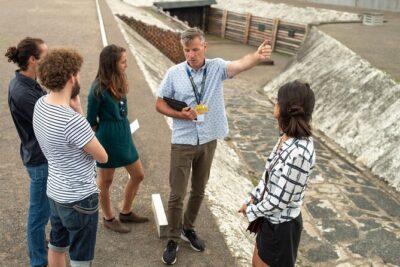
This is one reason a private tour can work better than a rushed group visit. You can ask for clarification, take a quiet pause, or move on when the material becomes too much. The guide can also adjust the level of detail for your party. That flexibility was a repeated strength in the feedback about Aaron, Paul, and Julian.
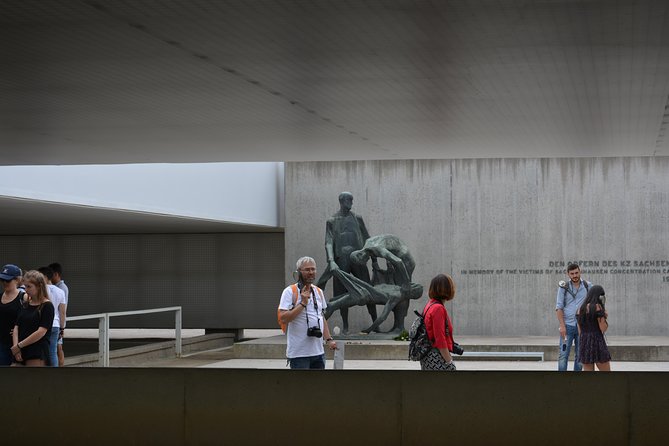
You should also know that the subject is emotionally heavy. The memorial grounds have been described as deeply moving, and families with children emphasized the importance of teaching this history so future generations can recognize the danger of such systems. Book this with the right frame of mind, not as a standard sightseeing excursion.
Station Z and the execution facility
Station Z was the purpose-built execution facility. Its inclusion gives the tour a direct connection to the killing process within the camp system. This is likely to be one of the most difficult points of the visit, and your guide’s tone and pacing will matter greatly.
The tour does not treat Sachsenhausen only as a place of imprisonment. By including Station Z, it addresses the machinery of murder and the way violence was organized within the camp. That helps explain the full range of the site’s function, from detention and forced labor to execution.
I would keep this stop focused and allow time afterward to absorb what you have seen. The private format does not make the subject easier, but it can make the visit more humane. You are not forced to compete with a large group for the guide’s attention, and you can ask questions that might feel difficult in a crowded tour.
The SS and Gestapo Prison
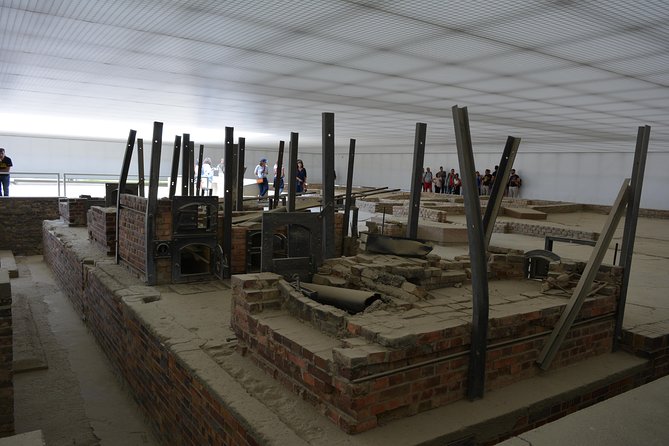
The former SS and Gestapo Prison shows another part of the camp system: punishment, interrogation, and imprisonment under Nazi authority. Its presence helps distinguish Sachsenhausen from a simple prisoner compound. The camp included different layers of control, and this building points to the direct power of the SS and Gestapo.
The guide’s job here is to connect the building with the wider structure of Nazi rule. The tour aims to explain how the system developed and how the types, numbers, and nationalities of prisoners changed over time. That approach gives the prison more meaning than a brief stop for photographs.
For you, the value is in seeing how the site operated at several levels. There were prisoners, guards, administrators, investigators, and political authorities. Understanding those links can make the history more precise and less abstract.
Former prisoner barrack blocks
The former prisoner barrack blocks show the physical setting of daily confinement. Even where structures no longer survive in full, the layout of the grounds can help you understand the camp’s scale and organization.
This is a place where a private guide can respond to your interests. You may want to ask about prisoner nationalities, changing prisoner groups, or how the camp developed during the war. The experience is not limited to one national story. Its stated focus includes the shifts in prisoner types, numbers, and nationalities as Nazi policy hardened and the war changed the camp.
The open grounds can also be tiring. Three hours at the memorial, alongside transport time, is a serious commitment. The guide may give you short periods to look around on your own. One account specifically valued having time alone in parts of the camp, which is a useful feature for a memorial where silence can be as important as explanation.
The historical story behind Sachsenhausen
The most valuable part of this tour is the timeline. You are not only told what happened in individual buildings. You learn how the camp began, how it expanded, and how its prisoner population shifted as Nazi Germany moved from dictatorship into war.
That wider frame was praised repeatedly. Aaron was noted for explaining the politics of the period and placing the camp within the broader war. Another guide was credited with offering much more than basic facts, including further reading and film suggestions. This kind of teaching helps you leave with a clearer understanding of cause and change.
The tour also connects pre-war Germany, the camp years, and the period after the war. One family described the visit as a useful start to a wider Holocaust education journey. That is a good way to view it. Sachsenhausen cannot tell every part of Holocaust history, but it can help you understand one concentration camp within the system that Nazi Germany built.
How the guides shape the day
The named guides associated with the experience include Aaron, Paul, and Julian. The strongest praise centers on several practical qualities: clear teaching, personal attention, flexibility, and care with difficult subjects.
Aaron was described as able to build a political timeline, explain the camp’s development, teach teenagers, and adapt the route to the group. Paul was praised for his detailed grasp of the site, his easy manner, and his ability to suggest books and films. Julian was described as exceeding expectations with detailed explanations and a professional approach.
You cannot guarantee a particular guide unless the operator confirms one for your date. Still, these comments point to the standard you should hope for: a guide who can explain facts without flattening the human cost, answer questions without showing off, and give you space when the material calls for it.
One guide even helped show the best way back to a hotel. That is beyond the core memorial route, but it shows why personal service can matter on a day that involves public transport and a difficult subject.
Is $390.50 good value for up to five people?
The price is $390.50 per group, with up to five people included. The value depends heavily on your group size. For five people, the cost works out to about $78 per person before transport. For two people, the per-person figure is much higher.
I think the price is easiest to justify for a family or small group that wants a private, guided visit rather than a general outing. You are paying for several hours of the guide’s time, site interpretation, private attention, and help placing Sachsenhausen within German and wartime history. You are not paying for private transportation or public transport tickets, so include those costs in your planning.
The 100 percent recommendation rate and five-star average from 16 ratings suggest a very strong response, though the sample is small. The praise is also specific rather than vague. People valued the guides’ teaching, the ability to move at their own pace, time for questions, and help with the journey. Those are the features that make the price feel worthwhile.
Who should book this experience?
I would recommend this tour to adults, families with older children or teenagers, history-focused visitors, and anyone who wants time for serious questions. It suits people who prefer a private conversation to a fixed group script.
It is also a good choice if you want a clear introduction before visiting other Holocaust memorial sites. One family considered it a strong start to its Holocaust education journey, and I can see why. The guide can provide a structure for the period and explain how one camp fit into a broader system.
I would think twice if you want a short, easy excursion or if your group is not ready for difficult material. This is a somber visit, and the combination of walking, transport, and emotional weight can make six hours feel long. The private format gives you flexibility, but it cannot change the nature of the memorial.
You can cancel for a full refund up to 24 hours before the start time. Changes or cancellations inside that window are not accepted for a refund. Confirmation arrives when you book, service animals are allowed, and the meeting point is near public transportation.
Should you book the private Sachsenhausen tour?
Book it if you want careful teaching, a private pace, and a fuller understanding of how Sachsenhausen developed within Nazi Germany. The strongest reasons are the licensed memorial-trained guide, the private group of no more than five, and the specific praise for Aaron, Paul, and Julian’s clear explanations and flexibility.
The price makes the most sense when split among several people. Plan your transport in advance, allow the full six hours, and prepare yourself and your children for a serious memorial visit. If those conditions fit your plans, this is a thoughtful and well-supported way to visit Sachsenhausen.
FAQ
How long does the private Sachsenhausen tour last?
The experience lasts approximately six hours. The visit at Sachsenhausen itself is listed at about three hours, with the rest of the time covering the overall outing and transport arrangements.
Where does the tour begin and end?
The tour begins at the Academy of Arts, Pariser Platz 4, 10117 Berlin, Germany. It ends back at the same meeting point.
Is transportation included?
No. Public transport tickets and private transportation are not included. You are responsible for arranging or paying for transportation to and from Sachsenhausen.
How many people can join the private tour?
The price covers one private group of up to five people. Only your group participates in the activity.
What parts of Sachsenhausen are visited?
The route includes Tower A, the camp infirmary and pathology building, Station Z, the former camp kitchen exhibition, the SS and Gestapo Prison, and former prisoner barrack blocks.
Is the guide licensed?
Yes. The tour includes a professional guide licensed and trained by the Camp Memorial Foundation.
Can I cancel for a full refund?
Yes. You can cancel at least 24 hours before the experience start time for a full refund. Cancellations or changes made less than 24 hours before the start time are not accepted for a refund.
Just added around Berlin
- Berlin: Private Guided Tour of the Main Sights★ 5.0 · 13 reviews
- Private Highlights of Berlin Bike Tour★ 5.0 · 13 reviews
- Modern Berlin Private Walking Tour: Diverse, Vibrant and Exciting German Capital★ 5.0 · 13 reviews
- Tour in Berlin from Warnemünde and Rostock Cruise Port★ 4.1 · 13 reviews
- Berlin: Stasi Museum Private Guided Tour with Entry Ticket★ 4.8 · 13 reviews
- Private Food Tour Experience with a born and bred Berliner★ 5.0 · 14 reviews
- Berlin: Rheinsberg Palace Entrance Ticket★ 4.8 · 14 reviews
- Berlin in one day – day tour with an expert guide★ 5.0 · 14 reviews
Memorial & Concentration Camp Tours, compared.
Sachsenhausen Concentration Camp Tour in English
Read our review →
Dachau Concentration Camp Memorial Site Tour from Munich by Train
Read our review →
Sachsenhausen Concentration Camp Memorial Tour
Read our review →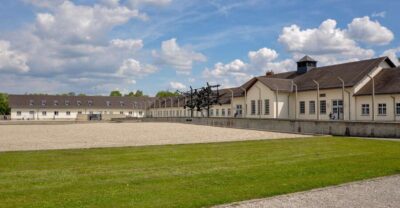
Sachsenhausen Concentration Camp Bus Tour in English from Berlin
Read our review →Sachsenhausen Concentration Camp Tour in English
Read our review →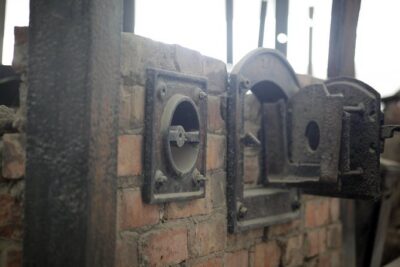
Sachsenhausen Concentration Camp Memorial Tour (Max. 15 Guests)
Read our review →Browse the lists this tour appears in