

Reviewed · OLD TOWN WALKS
Münster: Old Town Historical Walking Tour by “Geo Epoche”
Münster’s past is stranger than it looks. This two-hour walk turns the old town into a living lesson about the Anabaptists, the radical religious movement that briefly took control of the city. I like the way the tour joins major sights with sharp historical stories, and I like the supplied brochure, which uses old pictures and diagrams to show how Münster once looked.
The Anabaptist focus gives this walk a clear purpose rather than a general list of monuments. The guide also explains places such as Lambertikirche, the Krameramtshaus, Prinzipalmarkt, and the Historical City Hall. The main caution is practical: the tour is in German, takes place outdoors in all weather, and may feel less comfortable during heavy rain. One recent group also found that a booking expected to be private included additional participants, so confirm the group arrangement if that matters to you.
In This Review
- Key points at a glance
- Why Münster’s Anabaptist story makes this walk different
- Meeting at the Lamberti fountain
- Lambertikirche and the first chapter of the story
- Krameramtshaus and the city behind the façades
- Prinzipalmarkt and Münster’s public face
- The Historical City Hall and the cost of public power
- What the brochure adds to the walk
- Two hours, $29, and what you are really paying for
- Weather, walking pace, and group comfort
- Who will enjoy this tour most
- My booking advice for Münster
- FAQ
- Where does the Münster historical walking tour begin?
- How long does the tour last?
- What language is the tour offered in?
- What sights are covered?
- Is food or drink included?
- Does the tour operate in bad weather?
Key points at a glance

- Anabaptist history takes center stage: Learn how the movement gained power in Münster and reshaped the city.
- Starts at the Lamberti fountain: Meet in front of Lambertikirche, a useful central point in the old town.
- Historic photos add visual context: The included brochure helps connect today’s streets with the city of the past.
- Major sights appear along the route: See Lambertikirche, Krameramtshaus, Prinzipalmarkt, the Historical City Hall, and other landmarks.
- German-language guiding only: You need enough German to follow a detailed spoken history tour.
- Two hours and $29 per person: A reasonable price if you enjoy focused local history and want more than a quick look at Münster’s center.
Why Münster’s Anabaptist story makes this walk different

Many old-town tours move from church to market square, giving you dates and architectural labels before sending you on your way. This one has a darker, more unusual thread. It centers on the Anabaptists and the period when they came to power in Münster.
That focus matters because it gives the streets a human story. You are not simply looking at Lambertikirche or the Prinzipalmarkt as attractive city sights. You are hearing how political and religious ideas affected daily life, public space, and the way the city was organized.
The tour explains how the Anabaptists gained control and how they radically redesigned Münster. That subject is especially useful for visitors who already know the city’s polished historic center can hide difficult chapters. The guide’s anecdotes are meant to bring those events closer to everyday life, showing how people in the past experienced the changes around them.
I would choose this walk if you enjoy history with a strong narrative. If you only want an easy introduction to Münster’s buildings, the Anabaptist material may feel more detailed than expected. One recent participant described the presentation as very vivid but, at times, too detailed. That is a fair warning. The tour is not just a relaxed stroll with occasional facts.
More Old Town Walks in Germany:
- Dresden: Semperoper and Old Town Tour
★ 4.8 · 5,735 reviews - Nuremberg: Old Town Guided Walking Tour
★ 4.6 · 2,416 reviews - Munich: Old Town & Viktualienmarkt City Walk in German
★ 4.7 · 2,304 reviews
Meeting at the Lamberti fountain
The walk begins at the Lamberti fountain in front of the entrance to Lambertikirche. This is a sensible starting point because the church is one of Münster’s key landmarks and the fountain gives you a clear place to gather.
Arrive ready to walk, not ready to sit. The route covers ancient streets and several outdoor stops, with the guide explaining what happened at each location. Since the activity takes place rain or shine, your comfort depends heavily on shoes and clothing. Wear supportive shoes and bring weather-appropriate layers.
The meeting point also sets the tone. Lambertikirche is not just a convenient church square. It connects directly with the Anabaptist story, so the tour begins with a place that helps frame the rest of the walk.
You should also keep in mind that the tour is offered in German. The subject includes names, events, and political changes that may be difficult to follow if your German is limited. The brochure’s historic images and diagrams can help, but they do not replace understanding the spoken explanation.
Lambertikirche and the first chapter of the story
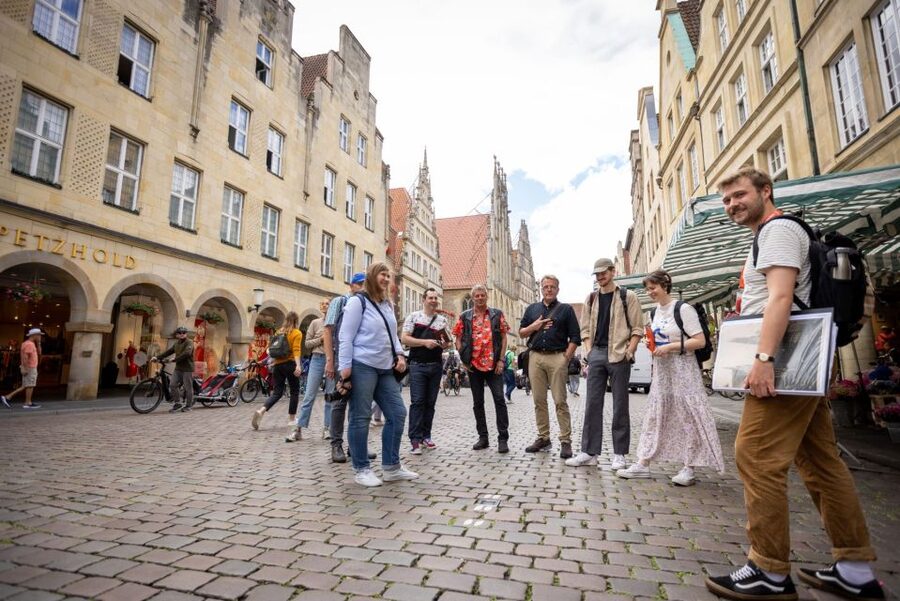
Lambertikirche is one of the first major stops and an important anchor for the tour. Here, the guide introduces the Anabaptist period and begins explaining how the movement came into power in Münster.
That opening is valuable because it gives you the basic framework before the walk moves through the city. You learn to look at the old town not only as a collection of buildings, but as the setting for a major social and religious upheaval.
The guide uses anecdotes and historical images to make the material more concrete. Instead of asking you to remember a string of dates, the presentation connects events to recognizable places. This approach can make a complex story easier to follow, especially when you later pass other sites linked to the period.
Expect the discussion here to be more than a quick introduction. The subject is central to the whole tour, and the guide may spend time explaining the movement, its rise, and its effect on Münster. If you prefer short commentary at each stop, you may find the detail heavy. If you like a full story, this is where the tour earns its price.
Krameramtshaus and the city behind the façades
The Krameramtshaus adds another layer to the walk. The building is one of the historic places covered on the route, giving you a chance to consider the commercial and civic life of old Münster alongside its religious conflicts.
A good historical walk helps you picture the people who used a building, not just admire its age. Here, the guide’s anecdotes are intended to show how residents lived and how the city functioned in the past. The supplied brochure supports that process with images from earlier periods and diagrams that help you compare past and present.
This is one of the reasons I like the format. The old town can look tidy and self-contained today, but its buildings once served practical purposes and were tied to arguments about power, belief, and control. The route uses those places to show how large events touched ordinary city life.
The information provided does not promise entry into each building, so plan on seeing the sights from the route rather than treating this as an interior tour. The value comes from the guide’s explanation and the relationship between each stop.
More Historical Tours in Germany:
- Leipzig: City History Canal Sightseeing Tour on a Motorboat
★ 4.7 · 6,232 reviews - Berlin: Natural History Museum Entrance Ticket
★ 4.6 · 3,382 reviews - Leipzig: 1.5-Hour Historical Walking Tour in German
★ 4.7 · 2,217 reviews - Berlin: World Heritage Cruise to Potsdam
★ 4.5 · 1,435 reviews
Prinzipalmarkt and Münster’s public face
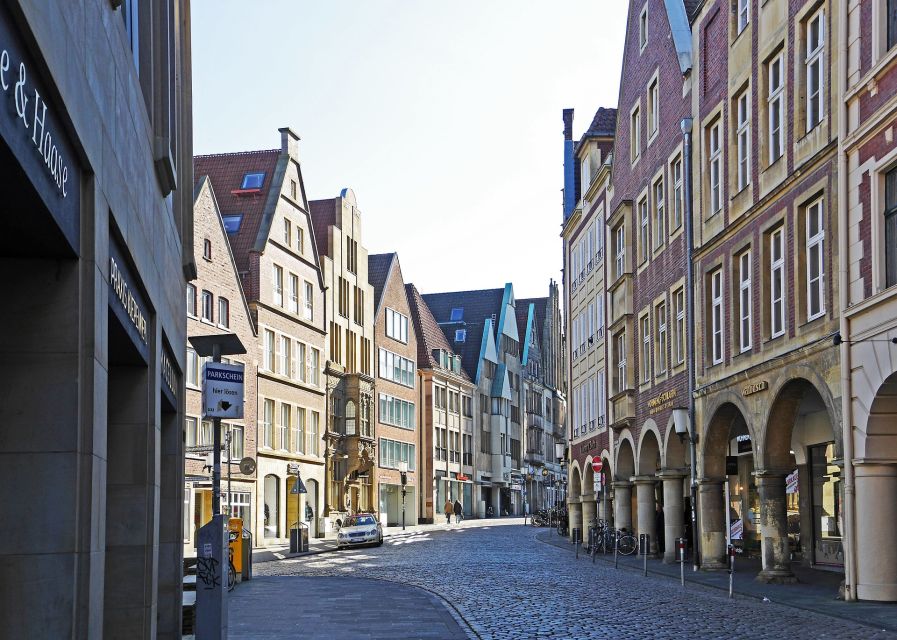
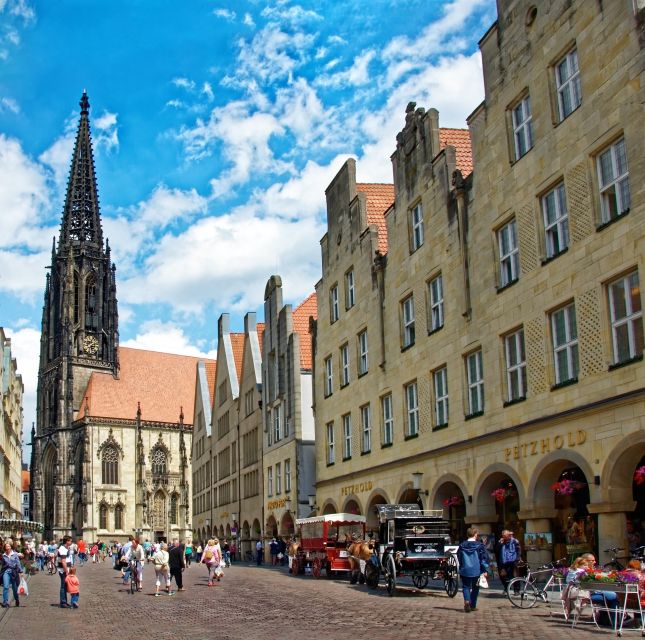
The Prinzipalmarkt is likely to be one of the most memorable visual sections of the walk. Its historic façades and arcades provide a striking setting, but the tour asks you to look beyond the postcard view.
Public squares and market streets often reveal how a city presents itself. On this tour, the Prinzipalmarkt becomes part of the story of Münster’s authority, commerce, and public life. The guide connects the place to the wider changes brought by the Anabaptists and to the people who lived and worked here.
You will probably appreciate the contrast between the attractive setting and the serious subject. Münster’s old town is easy to enjoy at street level, yet its past includes conflict and radical change. The guide’s historical photographs and diagrams help you see how much the city has changed, even when the street plan or landmark remains familiar.
Give yourself room to listen. A busy public square can make it harder to hear, and the tour’s value depends on the spoken commentary. If the weather is poor, this stop may be less pleasant, since there is no promise that the explanation will move indoors.
The Historical City Hall and the cost of public power

The Historical City Hall is another major stop on the route. It gives the tour a natural place to discuss Münster’s civic leadership and the contest over who had the right to shape the city.
The Anabaptist story is not presented as an isolated religious episode. It is also a story about government, public order, and the radical redesign of an urban community. At the city hall, those issues become easier to picture because the building represents civic authority.
This part of the walk should appeal to you if you like political history as much as religious history. The guide explains the changes through stories and anecdotes, rather than leaving you with only an architectural description.
The supplied information does not say that the tour includes an interior visit to the Historical City Hall. I would therefore treat it as an exterior stop unless the guide tells you otherwise. That is not a major weakness for a walking tour, but it is useful to know before you arrive.
What the brochure adds to the walk
The included brochure contains illustrative pictures from the past. This is a small feature, but it can make a real difference during a city walk.
Old photographs and diagrams give you something to study while the guide explains the site. You can compare a familiar street or building with its earlier appearance, which helps turn abstract history into something visible.
I also like the fact that the brochure gives you a way to remember the tour afterward. A spoken explanation can disappear once you move on to the next sight. The images offer a simple record of the places and ideas covered.
The brochure will not solve the language issue. Since the live tour is in German, you need to understand German speech to get the full benefit of the guide. Still, the visual material is useful support, particularly for anyone who learns best by seeing historical evidence.
Two hours, $29, and what you are really paying for
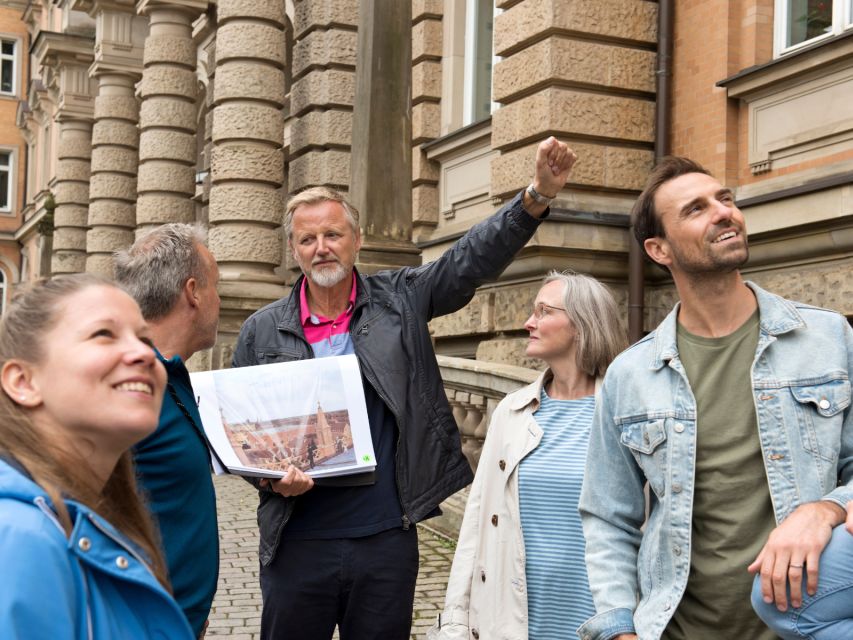
At $29 per person, this is not the cheapest way to walk around Münster. You can see the old town’s streets and major façades without paying for a guide. The question is whether you want the context that turns those sights into a connected story.
For a two-hour tour, the price is reasonable if you are interested in the Anabaptists and want a focused explanation from a live guide. You are paying for local interpretation, a planned route, historical visuals, and the time saved by having the main sites linked together.
The value is weaker if you do not understand German or if you want a broad introduction to every side of Münster’s history. This tour has a clear subject, and it stays with it. You will hear about Lambertikirche, the Krameramtshaus, Prinzipalmarkt, the Historical City Hall, and other locations, but the Anabaptist period remains the main concern.
The flexibility helps. You can reserve now and pay later, and cancellation is available up to 24 hours before the tour for a full refund. Those terms are useful when your schedule depends on changing weather or a shifting city itinerary.
One point deserves special attention: a recent group that had arranged an individual booking was surprised to find six additional people joining. The information does not establish that this is normal, but I would confirm whether your reservation is private or shared before paying extra for exclusivity.
Weather, walking pace, and group comfort
The route involves leisure walking, not a strenuous hike. Even so, the activity is not suitable for people with mobility impairments, and comfortable shoes are specifically recommended.
Because the tour runs in all weather, rain can affect the experience more than the route description suggests. One October group wished they had spent more time hearing the history under cover instead of standing at outdoor stops in bad weather. That is a useful lesson: check the forecast, bring proper rain gear, and do not assume the tour will be moved indoors.
Weather also changes how much you enjoy the old town. On a dry day, you can focus on the buildings and the guide’s story. In steady rain, you may spend more energy protecting yourself and listening through wet conditions.
Pets are not allowed. If you are arranging a group outing, make sure everyone is comfortable with a two-hour outdoor program and German-language commentary.
Who will enjoy this tour most
I would recommend this walk to you if you enjoy:
- Religious and political history
- Unusual stories about how cities changed
- Guided walks with a clear theme
- Historic photographs and visual aids
- Exploring a city on foot at a relaxed pace
- Hearing detailed commentary in German
It is a particularly good fit for someone who has already seen Münster’s center and wants to understand it better. Familiar streets can look different once you know what happened there.
I would be more cautious if you want a short, light introduction, need English guiding, dislike standing outdoors in poor weather, or have difficulty walking through an old town. The tour is also not the best match for visitors who mainly want interiors, food, shopping, or architectural detail without political history.
The rating of 4.7 from 51 reviews supports the idea that the format works well for many people. The strongest praise centers on the guide being friendly, informative, and entertaining. That combination matters: a serious subject is easier to follow when the presentation remains lively.
My booking advice for Münster
Book this tour if the Anabaptist chapter is the reason you want a guide. At $29, you receive two hours of focused storytelling, several important old-town stops, and a historical brochure that helps you see the city through past and present.
Before booking, check three things. Make sure you can follow German, prepare for rain or cold, and ask whether your booking is private or shared if group size matters. I would also choose comfortable shoes and allow enough time at the meeting point, the Lamberti fountain in front of Lambertikirche.
Skip it if you want an English tour, an indoor museum visit, or a general overview with only brief facts. For the right audience, though, this is a useful way to give Münster’s handsome old center a more serious human story.
FAQ
Where does the Münster historical walking tour begin?
The meeting point is the Lamberti fountain in front of the entrance to Lambertikirche.
How long does the tour last?
The walking tour lasts two hours.
What language is the tour offered in?
The live tour guide speaks German.
What sights are covered?
The route includes Lambertikirche, the Krameramtshaus, Prinzipalmarkt, the Historical City Hall, and other old-town landmarks.
Is food or drink included?
No. Food and drinks are not included in the tour price.
Does the tour operate in bad weather?
Yes. The tour takes place rain or shine, so you should bring weather-appropriate clothing and comfortable shoes.
More Walking Tours in Germany
- Discover Berlin Half-Day Walking Tour
★ 5.0 · 9,624 reviews - Berlin: Third Reich and Cold War 2 Hour Walking Tour
★ 4.9 · 6,830 reviews - Munich: Third Reich & WWII Walking Tour
★ 4.6 · 6,181 reviews - Berlin: Discover Berlin Walking Tour
★ 4.9 · 5,998 reviews
Just added around Germany
- e-Scavenger hunt Aachen: Explore the city at your own pace★ 4.0 · 13 reviews
- Munich: Private or Group Third Reich and WWII Walking Tour★ 4.9 · 13 reviews
- Canyoning Advanced Day Trip★ 5.0 · 13 reviews
- Wiesbaden Biebrich: Outdoor Escape Game★ 4.7 · 13 reviews
- Berlin: Private Guided Tour of the Main Sights★ 5.0 · 13 reviews
- From Munich: Neuschwanstein Castle and Linderhof Private Tour★ 5.0 · 13 reviews
- Trier, Moselle: Wine excursion with boat trip★ 3.9 · 13 reviews
- From Dresden: Guided Day Tour by Bus of Seiffen Toy Village★ 4.0 · 13 reviews
Old Town Walks, compared.


Old Town & Viktualienmarkt City Walk in German
Read our review →


The Night Watchman Old Town Walking Tour in German
Read our review →
Browse the lists this tour appears in