
Reviewed · MUNICH TOURS
Munich’s Hidden Architecture Guided Tour
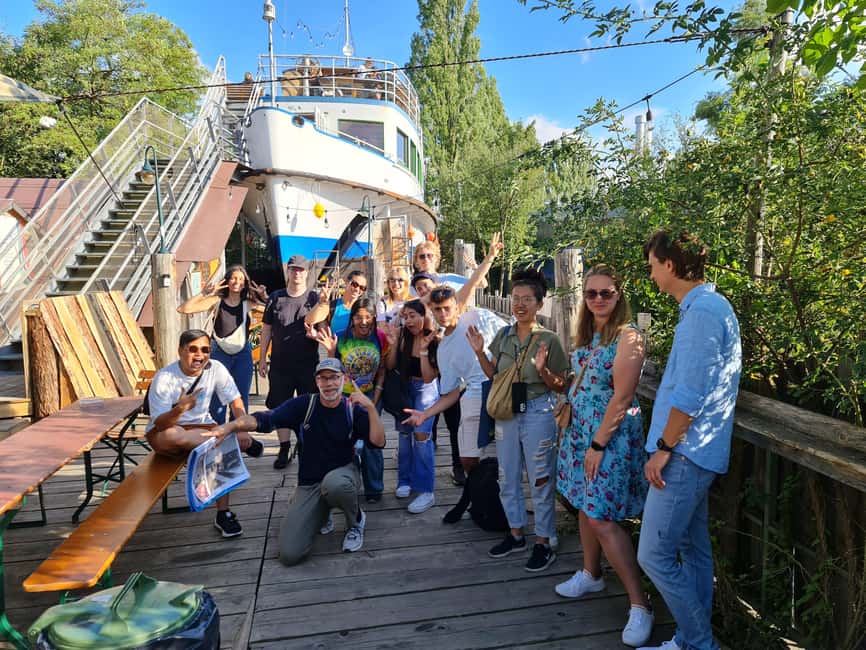
Munich has a wilder side. This two-hour walk with architect and guide Philipp takes you south of the postcard center, through Giesing, along the Isar, past street art, cultural spaces, and three alternative Christmas markets. I like the way the tour connects architecture with everyday city life, rather than treating buildings as isolated monuments. I also like the mix of river scenery, old neighborhoods, creative venues, and local history.
The main drawback is practical: this is an outdoor winter walk, and you need comfortable shoes and warm clothing. The route is not suitable for wheelchair users or people with mobility impairments, and some stops are best appreciated for their atmosphere rather than for a formal indoor visit.
In This Review
- Key points at a glance
- Why this southern Munich walk is worth your time
- Meeting Philipp at Piazza Zenetti
- From Münchner Volkstheater to Bahnwärter Thiel
- The ship on the bridge at Alte Utting
- Dreimühlenstraße and the character of Giesing
- Crossing the Isar at Wittelsbacherbrücke
- Claude-Lorrain-Straße and Little Venice
- Christmas markets beyond the main squares
- What Philipp does particularly well
- Walking conditions, timing, and who should book
- Is $36 a good value?
- Should you book Munich’s southern architecture walk?
- FAQ
- Where does the tour start?
- How do I reach Piazza Zenetti?
- How long does the tour last?
- Which languages are available?
- Does the tour include Christmas markets?
- Is food or drink included?
- What should I bring?
- Is the tour suitable for wheelchair users?
Key points at a glance
- A different Munich: Leave the central sights behind and explore southern districts with a local, alternative character.
- Philipp’s architectural eye: His background as an architect helps explain small design details, urban changes, and the story behind unusual places.
- Three Christmas markets: The seasonal route includes several distinctive markets rather than only the familiar central ones.
- Alte Utting: See the former ship on the bridge at Lagerhausstrasse, a striking cultural project praised by The New York Times.
- Isar and Willow Island: The walk includes river views, natural scenery, and Little Venice near the water.
- Small-group feel: A private group is available, and the tour is offered in English or German.
Why this southern Munich walk is worth your time
Many first visits to Munich stay close to Marienplatz, the Residenz, and the old town’s grand façades. Those places deserve their fame, but they show only one version of the city. This walk heads into districts south of the center, where old working neighborhoods, new cultural projects, street art, river paths, and independent gathering places sit close together.
I like that the route is not simply a collection of photo stops. Philipp frames the area through more than 700 years of local history, architecture, and urban change. That gives you a better sense of why Giesing feels different from the polished center and why Munich continues to change beyond its traditional image.
The experience also has a strong seasonal identity. During winter, the route includes three Christmas markets, including a particularly unusual market at the end. These are not presented as a quick shopping break tacked onto a standard city tour. They are part of the southern districts’ social life and help show how Munich celebrates outside the major tourist routes.
At $36 per person, the price is fair for a two-hour guided walk, especially if you value interpretation rather than simply following a map. You are paying for Philipp’s preparation, local knowledge, and architectural viewpoint. Food, drinks, and transportation are extra, so budget for those separately.
A few more tours and experiences worth a look
- Munich 3-Hour Guided Bike Tour
★ 4.5 · 1,731 reviews - Munich’s Beer Halls and Breweries: 3-Hour Guided Tour
★ 4.6 · 928 reviews - Guided Dachau Concentration Camp Memorial Site Tour with Train from Munich
★ 5.0 · 920 reviews
Meeting Philipp at Piazza Zenetti
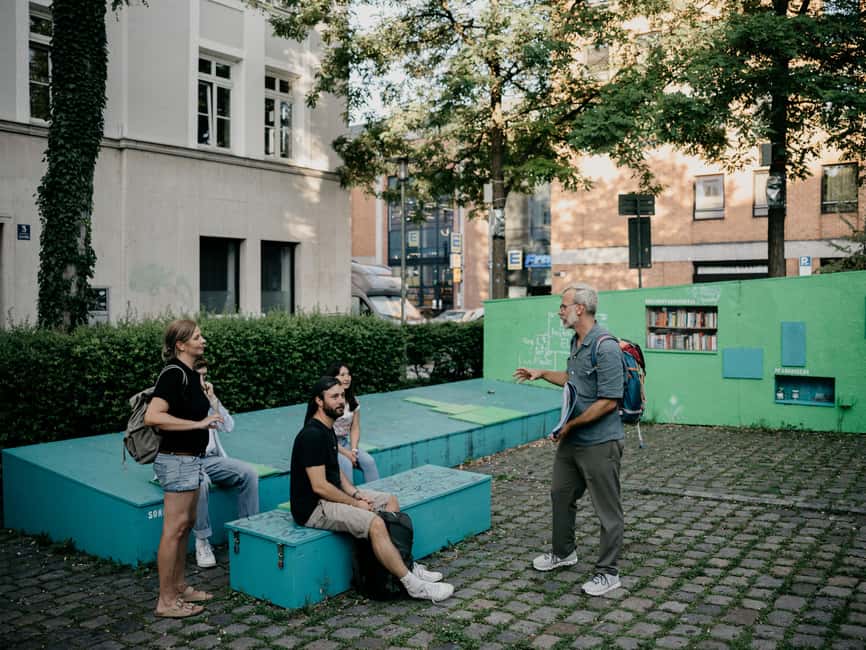
The walk begins at Piazza Zenetti, at the intersection of Tumblingerstrasse and Zenettistrasse. Look for turquoise and green outdoor furniture, small trees in boxes, and Philipp carrying a colorful backpack with a blue folder.
The easiest public transport option is the U3 or U6 to Goetheplatz. From there, allow about 10 minutes to walk to Zenettiplatz. Give yourself a little extra time in winter, since arriving cold and rushed is a poor start to a walking tour.
Piazza Zenetti is a useful opening point because it introduces you to the kind of urban setting this experience favors. You are not beginning at a grand palace or cathedral. You are starting in a public neighborhood space, which puts the focus on how people use the city.
The tour is available in English or German. A private group can also be arranged, which may be useful if you want to ask many architecture questions or have a special request. Starting times vary, so check availability before building the walk into your day.
From Münchner Volkstheater to Bahnwärter Thiel
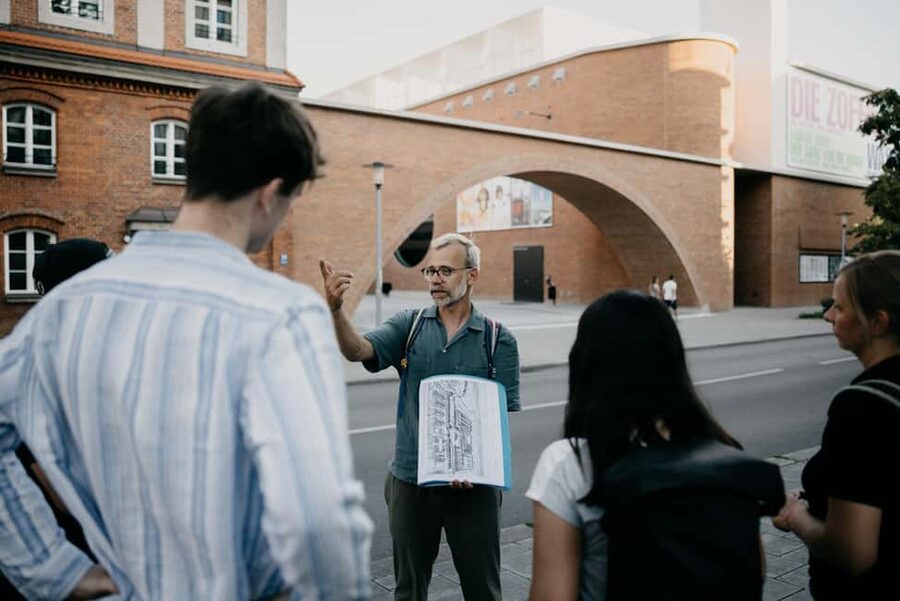
The Münchner Volkstheater is one of the first guided stops. Here, Philipp can set the tone for the tour by showing how cultural institutions shape a district and how contemporary city life fits into Munich’s older structure.
This is not a theater performance, and you should not expect a long indoor visit. The value lies in the explanation and the surrounding city context. If you enjoy architecture, pay attention to how Philipp points out forms, materials, and the relationship between a cultural building and its public spaces.
Next comes Bahnwärter Thiel, one of the tour’s strongest examples of alternative Munich. The site uses shipping containers, wood, and temporary-looking structures to create a cultural hub. It offers a sharp contrast with the formal architecture associated with the old center.
I particularly like this stop because it raises a useful question: what counts as architecture in a changing city? A container-based arts space may not have the permanence of a church or palace, yet it can become an important meeting point. Philipp’s architectural training is especially useful here, since he can discuss not only what looks unusual but also how the place works.
The exact atmosphere can vary with the season, schedule, and activity at the site. Think of Bahnwärter Thiel as a place to understand Munich’s creative side, not as a guaranteed event venue with a fixed program.
The ship on the bridge at Alte Utting
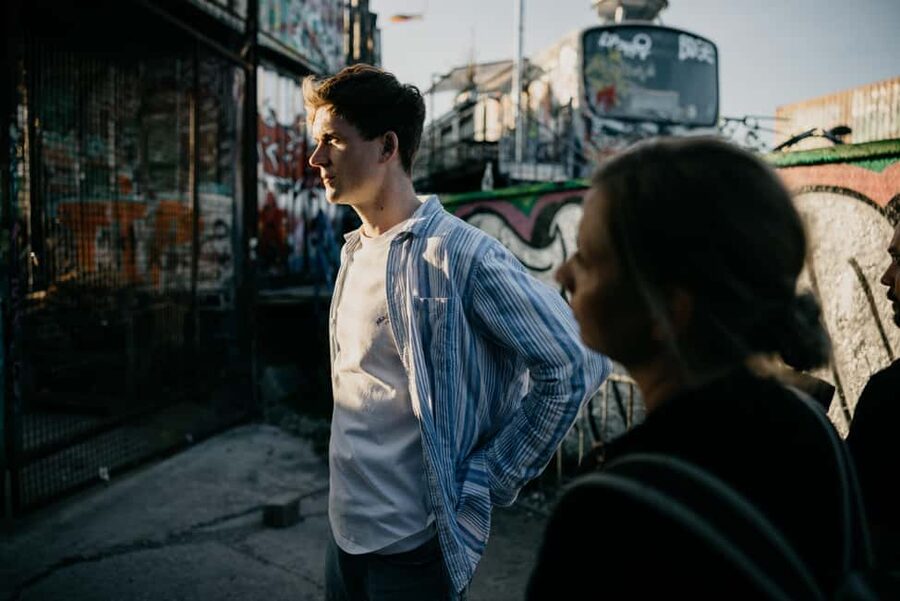
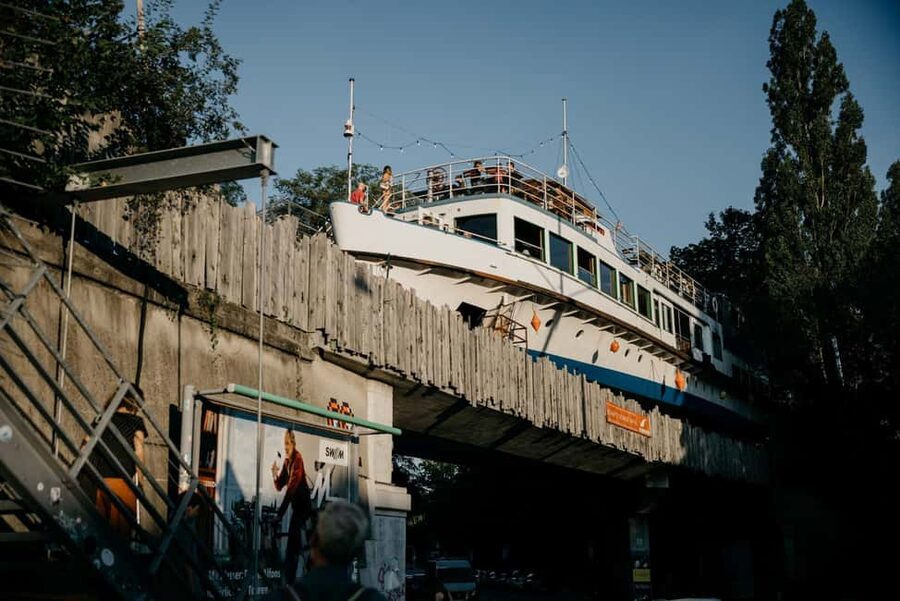
The stop at MS Utting on Lagerhausstrasse is likely to be the most memorable visual moment. A ship sits on a bridge, far from open water, and the result is wonderfully strange.
The project is known as Alte Utting, and its unusual setting attracted attention from The New York Times. The newspaper’s headline focused on the boat on the bridge as a sign that Munich may be getting cooler. That description captures the appeal without giving the place too much polish: it is odd, inventive, and very Munich.
Here, I would listen closely to the story behind the project rather than simply taking a photograph. The ship is part of the wider pattern this tour explores, where old or displaced objects receive new uses as cultural spaces.
Do not assume that the tour includes food or drinks at Alte Utting. Those are not included in the $36 price. If the setting is open and you have time afterward, you can decide whether to return independently, but the guided experience is about the site and its role in the city.
Something different for another day:
- From Munich: Neuschwanstein & Linderhof Castle Full-Day Trip
★ 4.5 · 12,494 reviews - Neuschwanstein & Linderhof Castle-Fairytale Day Tour from Munich
★ 4.5 · 7,275 reviews - Munich: Third Reich & WWII Walking Tour
★ 4.6 · 6,181 reviews - Dachau Concentration Camp Memorial Site Tour from Munich by Train
★ 4.5 · 5,637 reviews
Dreimühlenstraße and the character of Giesing
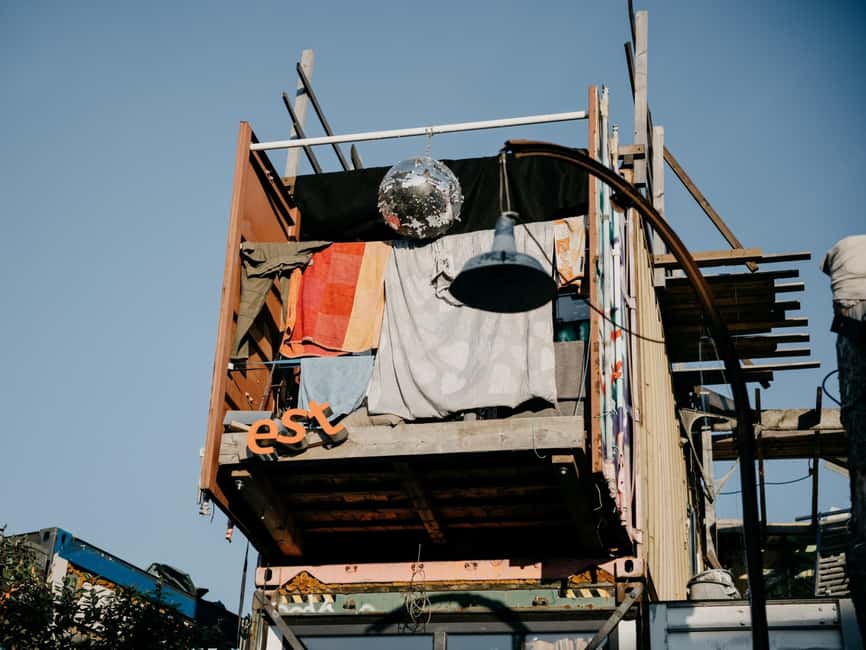
From Alte Utting, the walk continues toward Dreimühlenstraße and then across the Isar area toward Giesing. This is where the experience shifts from individual cultural projects to the character of a whole neighborhood.
Giesing is described as one of Munich’s last authentic districts, with its own local identity. That does not mean it is untouched or frozen in the past. It means you get a look at a part of the city that has not been reduced to a tidy visitor route.
Philipp’s approach seems especially useful for this section. He explains the history of the southern districts while drawing attention to small details that are easy to miss. People who already live in Munich have found the tour useful for seeing familiar streets from another angle, which says something about the depth of the route.
You may notice a mix of old housing, newer cultural activity, and everyday neighborhood spaces. The tour does not promise a grand monument at every corner. Its strength is the connection between modest streets and the larger story of Munich’s growth.
Crossing the Isar at Wittelsbacherbrücke
The Isar provides a welcome change of pace. At Wittelsbacherbrücke, the route opens toward the river, nature, and the city’s outdoor side.
In winter, this part can be cold, particularly after sunset. Bring a proper coat, gloves, and a hat, not just a festive scarf for photographs. The guide specifically recommends warm clothing and comfortable shoes, and you should take that advice seriously.
The river section also gives the tour breathing room. After the containers, street art, and urban projects, the water and open views help you see how Munich’s natural setting influences its neighborhoods. The city is not only a collection of buildings. The Isar is part of its daily rhythm.
This section may appeal to photographers, especially if the tour takes place at night. The experience includes the opportunity to see the city and river after dark, though the exact light and atmosphere will depend on the season and starting time.
Claude-Lorrain-Straße and Little Venice
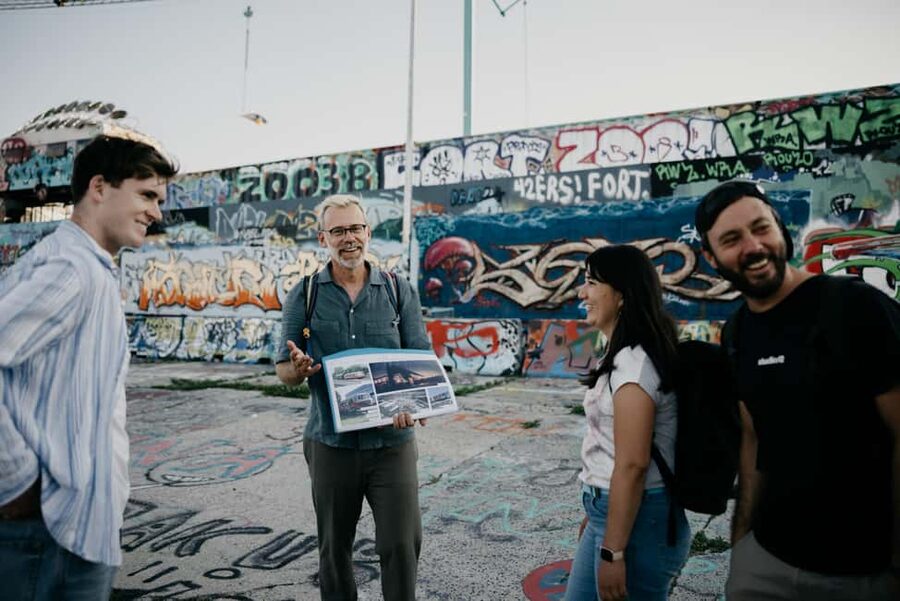
Claude-Lorrain-Straße continues the walk through Munich’s southern side before the route reaches Little Venice. These stops help tie together the tour’s main themes: neighborhood life, water, architecture, and overlooked corners.
Little Venice is one of those names that sets an expectation, so keep it in proportion. You are not getting a full-scale European canal city. You are seeing a small riverside area with a particular local atmosphere, and Philipp provides the context that makes the setting more meaningful.
The appeal here is contrast. Earlier stops focus on repurposed structures and cultural activity. Little Venice brings you back to water, greenery, and a quieter view of Munich. The tour works best when you appreciate these changes in mood rather than waiting for one spectacular monument.
The route finishes at Gans Woanders, a colorful cultural and dining spot associated with the alternative side of Munich. Since the meeting details also describe the activity as ending back at the meeting point, confirm the exact finish arrangement when you book. The supplied route information names Gans Woanders as the finish, so plan your evening with that location in mind.
Christmas markets beyond the main squares
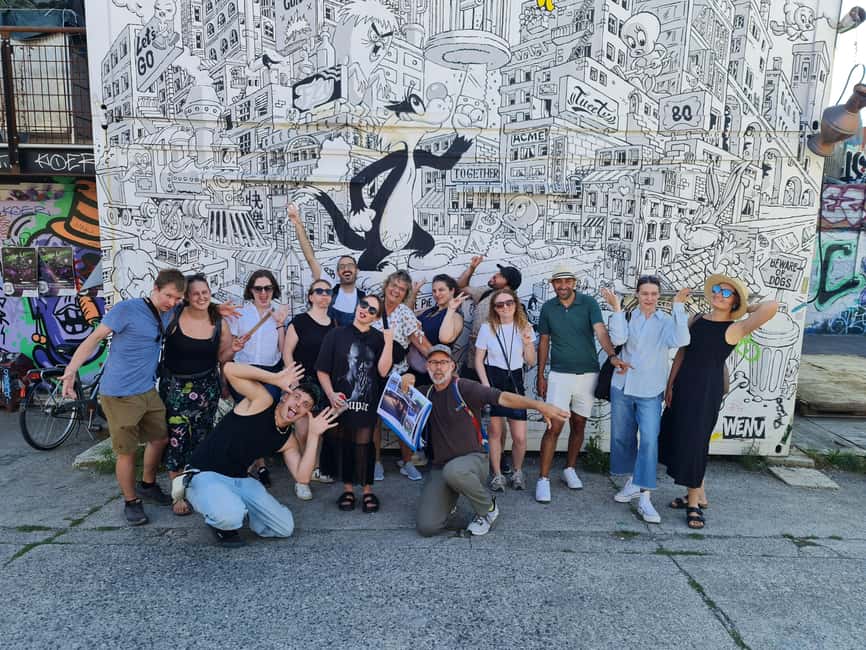
The winter version of this walk includes three alternative Christmas markets. That is a major reason to book during the festive season, particularly if you have already seen the central markets or want something less conventional.
The tour does not provide food or drinks, so bring money for anything you want to buy. A market stop can add cost, but it also gives you a chance to sample seasonal treats and browse local stalls at your own pace.
I like the way these markets fit the rest of the experience. You are not simply moving from one famous sight to another. You are seeing how southern neighborhoods create their own seasonal identity through food, decoration, music, and temporary public spaces.
Keep in mind that the Christmas market element is seasonal. If you are visiting outside the winter period, check the current availability and route details rather than assuming all three markets will operate year-round.
What Philipp does particularly well
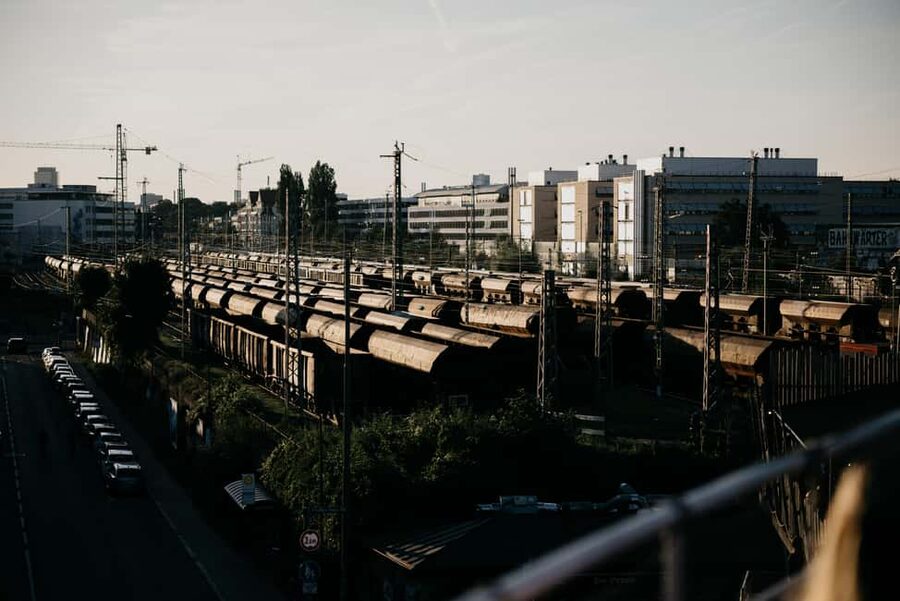
The strongest praise for this experience centers on Philipp’s guiding. His explanations are described as informative, thorough, and engaging, with a clear ability to answer questions and connect architecture to ordinary city life.
That matters because the route includes places you might otherwise pass without understanding. A ship on a bridge is easy to photograph. Learning how it became a cultural landmark gives the image a story. A street covered in art is interesting. Understanding the district around it makes the scene more than decoration.
Philipp is also praised for giving useful recommendations during and after the walk. That can add real value to a two-hour experience, since you may leave with ideas for where to return, eat, or explore independently.
The guide’s architectural background is another advantage. You do not need to be an architecture specialist. In fact, the tour may be most rewarding if you are curious but not highly trained, since Philipp can help you notice details without turning the walk into a technical lecture.
Walking conditions, timing, and who should book
This is an active outdoor walk lasting two hours. Comfortable walking shoes are essential, and winter clothing is not optional. The route includes streets, river areas, and cultural sites, so conditions can change as you move through the city.
The tour is not suitable for wheelchair users or people with mobility impairments. Participation is at your own risk. It is also listed as unsuitable for people over 95 years old, a detail worth noting when planning for a mixed-age group.
I would recommend this experience to:
- First-time Munich visitors who want more than the old town
- Repeat visitors who have already covered the classic sights
- People interested in architecture, street art, and urban change
- Couples and small groups who enjoy walking and conversation
- Residents who want a fresh look at Munich’s southern districts
- Winter visitors who want Christmas markets with a local, alternative feel
I would choose another activity if you want a short, easy stroll with lots of indoor time, major royal buildings, or guaranteed access to exhibits. This tour asks you to accept a little cold and uncertainty in exchange for a more personal view of the city.
Free cancellation is available up to 24 hours before the start, and you can reserve now and pay later. Those terms are useful if your winter schedule is still shifting, though you should still check the current time and meeting instructions before departure.
Is $36 a good value?
At $36 per person, this is not the cheapest way to walk around Munich. You could explore the districts independently with a map and pay nothing for the route itself.
The question is what you would miss without a guide. Bahnwärter Thiel, Alte Utting, Giesing, the Isar, and Little Venice are connected here by a story about Munich’s alternative culture and long urban development. Philipp’s architectural perspective helps turn scattered places into a coherent experience.
The value is strongest for curious visitors who would otherwise walk past these areas without context. It is also strong for anyone who wants practical recommendations and a guide who welcomes questions. The value is weaker if you prefer to move quickly, avoid winter weather, or spend your sightseeing time inside traditional monuments.
Should you book Munich’s southern architecture walk?
Book it if you want to see Munich as a living city rather than only as a historic center. You will get street art, repurposed spaces, river scenery, Giesing’s local character, three seasonal markets, and the memorable sight of Alte Utting.
I would especially choose it for a second day in Munich, or for a first visit by someone who prefers creative neighborhoods to standard sightseeing. Wear warm layers, allow time to reach Piazza Zenetti, and bring a camera. If you want a private experience, ask about arranging a private group or special request before booking.
Skip it if mobility limitations make a two-hour outdoor walk difficult, or if you are looking for a classic city-center tour. For the right audience, though, $36 buys more than a route. It buys a guided way to notice the Munich that many visitors miss.
FAQ
Where does the tour start?
The tour starts at Piazza Zenetti, at the street intersection of Tumblingerstrasse and Zenettistrasse.
How do I reach Piazza Zenetti?
The recommended route is to take the U3 or U6 to Goetheplatz, then walk about 10 minutes to Zenettiplatz.
How long does the tour last?
The guided walk lasts two hours.
Which languages are available?
The live guide offers the tour in English or German.
Does the tour include Christmas markets?
Yes. The winter experience includes visits to three alternative Christmas markets.
Is food or drink included?
No. Food and drinks are not included in the price.
What should I bring?
Bring comfortable walking shoes, warm clothing, and a camera. Winter conditions can be cold.
Is the tour suitable for wheelchair users?
No. The experience is not suitable for wheelchair users or people with mobility impairments.
Just added around Munich
- Munich: Private or Group Third Reich and WWII Walking Tour★ 4.9 · 13 reviews
- From Munich: Neuschwanstein Castle and Linderhof Private Tour★ 5.0 · 13 reviews
- Private Transfer from Munich to Salzburg with 2 hours for sightseeing★ 4.5 · 13 reviews
- Munich: Historical Walking Tour on the Rise of Hitler★ 5.0 · 13 reviews
- Private Scenic Transfer from Munich to Prague with 4h of Sightseeing★ 5.0 · 13 reviews
- From Munich: VIP day trip to Salzburg★ 5.0 · 14 reviews
- National Socialism WWII with licensed guide – private tour★ 5.0 · 14 reviews
- Munich: Walking Tour Old Town 3D VR Tour in GERMAN★ 4.3 · 14 reviews
Munich Tours, compared.
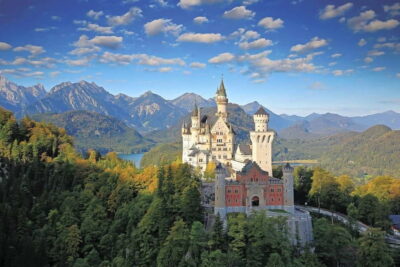
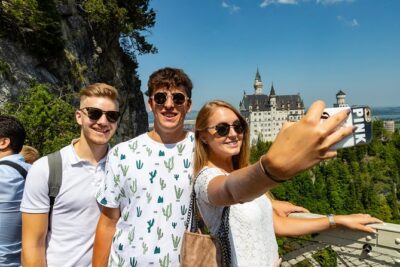
Neuschwanstein & Linderhof Castle-Fairytale Day Tour from Munich
Read our review →
Dachau Concentration Camp Memorial Site Tour from Munich by Train
Read our review →
Munich Hop-On Hop-Off Tour: 1-Day or 2-Day Ticket
Read our review →
Browse the lists this tour appears in