
Reviewed · MUNICH TOURS
Munich: Scary Tour with actors in GERMAN
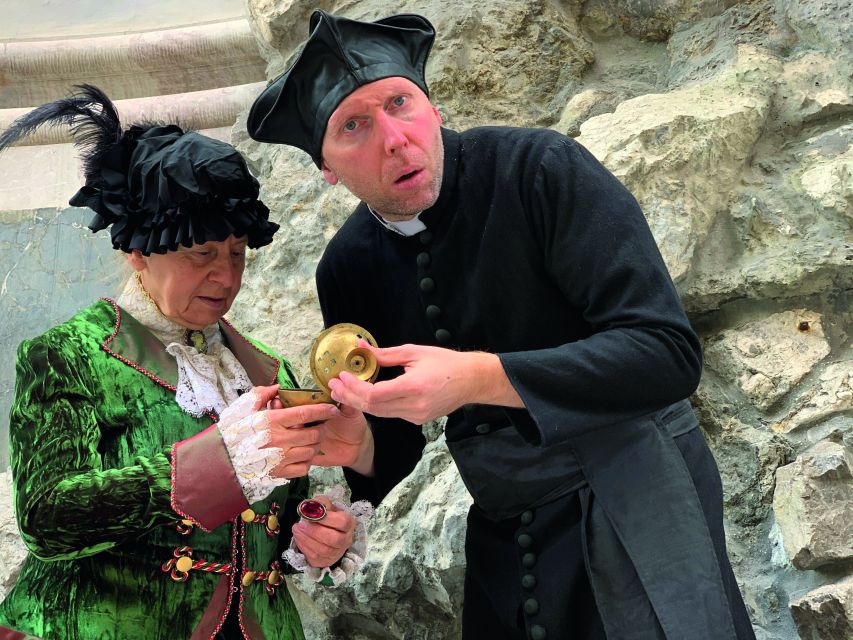
Munich gets darker after sunset. This 90-minute walking tour turns the old center into a stage, using professional actors to bring witch hunts, executions, prostitution, and devil legends to life. I like the way the performances break up the storytelling, and I like the route linking major sights with lesser-known tales. The main drawback is clear: the tour is in German only, so you need strong listening skills to follow the plot and historical details.
The meeting point under the Karlstor archway is easy to find, though the city center can be busy in the evening. Look for the guide carrying a big blue Weis(s)er Stadtvogel bag. The tour runs rain or shine, so your comfort depends partly on the weather.
In This Review
- Key points about Munich’s frightening past
- Meeting the tour under the Karlstor archway
- Neuhauser Tor and the road toward punishment
- The unfortunate goldsmith at Schöner Turm
- The Frauenkirche, the devil, and a very large question
- The Town Hall and the alchemist Marco Bragadino
- St. Peter’s Church and the working life of a hangman
- The Old Town Hall and Munich’s former red-light district
- How the acting affects the experience
- Price, timing, and who gets good value
- Should you book the Munich Scary Tour?
- FAQ
- What language is the tour conducted in?
- How long does the Munich Scary Tour last?
- Where does the tour meet?
- Which Munich sights are included on the route?
- What subjects does the tour cover?
- Does the tour run in bad weather?
Key points about Munich’s frightening past
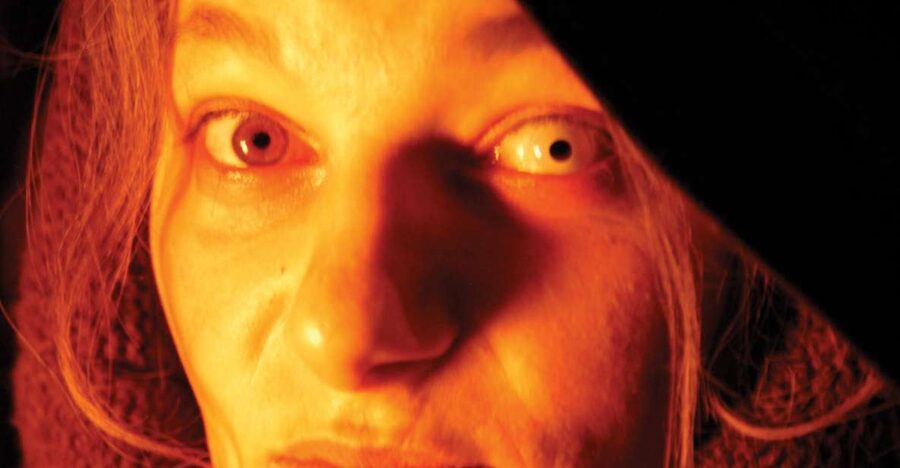
- Actors replace a standard city lecture: Historic costumes and short dramatic scenes keep the 90 minutes moving.
- The route covers major landmarks: You walk from Neuhauser Tor past St. Michael’s Church, the Frauenkirche, the Town Hall, St. Peter’s Church, and the Old Town Hall.
- The stories are genuinely dark: Witch hunts, torture, hangings, prostitution, and alleged pacts with the devil are central themes.
- Local legends meet documented events: The tour connects familiar buildings with stories about Renata, Father Ignatius, Marco Bragadino, and Munich’s executioners.
- The German language matters: This is not a visual performance with simple narration. Much of the value comes from understanding the spoken stories.
- The price buys more than a walk: At $46 per person, you are paying for a live theatrical program, several performers, and a carefully linked city route.
Meeting the tour under the Karlstor archway
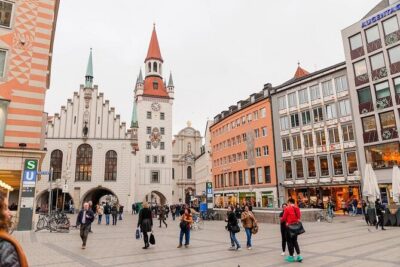
The experience begins at Karlsplatz, also called Stachus, beneath the archway of the Karlstor. This was once one of Munich’s city gates, and it makes a fitting starting point because the tour soon turns to criminals being led out of town toward execution.
The guide should be easy to spot. Look for the large blue bag marked Weis(s)er Stadtvogel in white letters. That detail matters in a busy square, particularly if several city tours are gathering nearby.
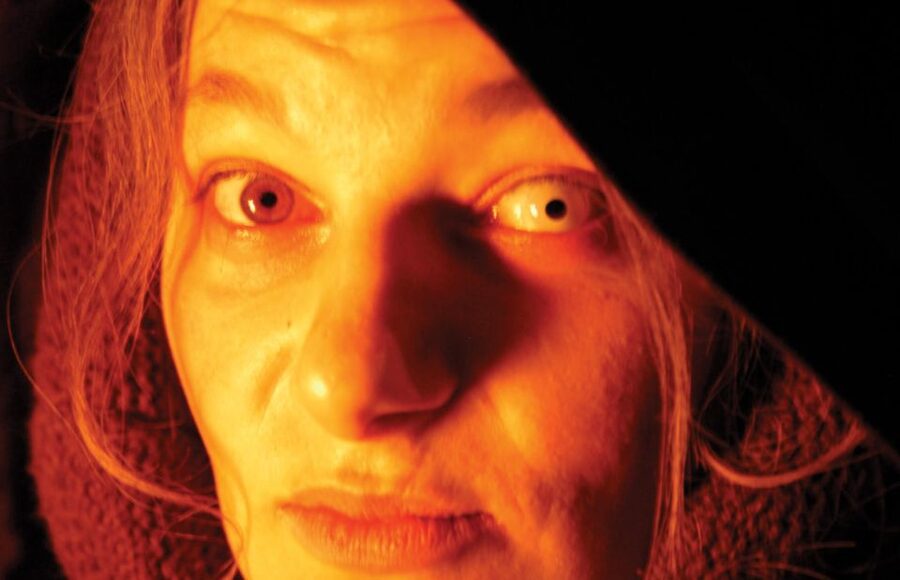
From the start, expect a walking performance rather than a conventional sightseeing tour. You are not simply following a guide from one monument to the next. Actors appear in historic dress, take on characters, and present scenes that give the facts a human face.
That approach has a practical benefit. Dark subjects can become a blur when presented as a list of dates and punishments. A quarrel, a frightened prisoner, or a desperate attempt to escape can make the setting easier to remember. The performances also give the group a change of pace, which is why the tour feels short despite its grim subject matter.
The tone is theatrical, but the content is intended to be researched and informative. You should expect some humor mixed with grim material, not a pure haunted-house attraction.
Other Munich trips people book alongside this one:
- From Munich: Neuschwanstein & Linderhof Castle Full-Day Trip
★ 4.5 · 12,494 reviews - Neuschwanstein & Linderhof Castle-Fairytale Day Tour from Munich
★ 4.5 · 7,275 reviews - Munich: Third Reich & WWII Walking Tour
★ 4.6 · 6,181 reviews
Neuhauser Tor and the road toward punishment
The first part of the walk explains how Munich dealt with delinquents. The Neuhauser Tor was connected with the route taken by condemned people as they were led outside the city for execution.
This detail helps explain an old urban pattern. Execution sites were commonly placed outside town, away from the main streets and the respectable center. The tour uses that question as a way into the city’s older ideas about public punishment, shame, and social order.
You then move along the historic Salzstraße toward the former Jesuit school. The route is valuable because it does not treat Munich’s grand buildings as isolated sights. Instead, it links them to institutions that shaped public belief and punishment.
The subject turns to witch hunts in the 16th century. One of the dramatic scenes centers on Duchess Renata and Jesuit Father Ignatius. Their argument brings religious fear and political power into the same story, showing how accusations of witchcraft could grow from a society already primed to suspect disaster.
At St. Michael’s Church, the tale becomes especially vivid. During construction, the collapse of the tower was blamed on an unusual storm and, according to the period thinking presented here, on cursed women. You learn how a building accident could be folded into a larger story about sin, magic, and divine warning.
The church itself is an impressive stop, but the performance gives you a different reason to look closely. Instead of only admiring the architecture, you are asked to consider the fear surrounding its construction.
The unfortunate goldsmith at Schöner Turm
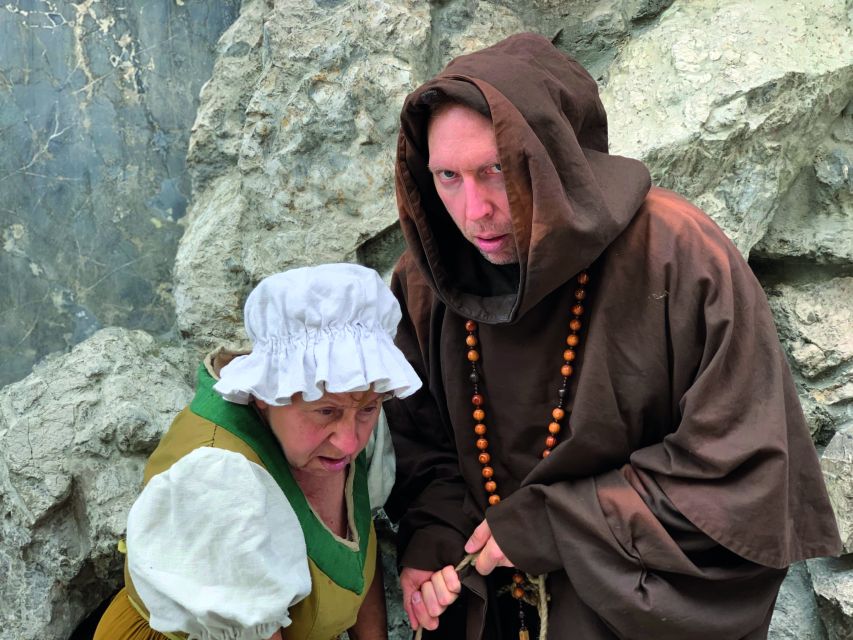
The next stop is Schöner Turm, where the tour presents the sad story of an unlucky goldsmith. The details supplied for the tale are intentionally brief, so you should expect the actor and guide to carry much of the scene.
What makes this stop useful is the shift from broad witch-hunt fears to an individual fate. A city’s past can feel abstract when you hear only about laws and institutions. A single person facing accusation or punishment gives the larger subject a personal scale.
The show also uses the physical setting. A narrow street or old tower can suggest confinement far better than a modern lecture room. You may find that the most effective moments are not the loudest scenes, but the pauses when an actor lets the location do some of the work.
The tour is still a public walking route, not a private theater. You will be standing outdoors, listening among other people, and moving through the city. If you want a quiet architectural tour, the acting may feel intrusive. If you enjoy history presented with movement and character, it adds welcome energy.
The Frauenkirche, the devil, and a very large question
A sudden gust of wind leads the group toward the Frauenkirche, Munich’s most recognizable church. Here, the story introduces the Prince of Darkness and the supposed bargain that helped the master builder construct the church.
This is one of the tour’s most playful sections. You hear why the devil was involved, why it is so windy around the church, and the wonderfully odd question of the devil’s shoe size. The humor gives the audience a break from executions and torture without abandoning the central subject of superstition.
The legend also shows how people used stories to explain things they could not easily understand. Wind, unusual footprints, structural features, and impressive buildings could all become evidence of supernatural activity.
The Frauenkirche is a major Munich sight, so this portion works well for first-time visitors. You get the landmark, then a story that changes the way you look at it. Keep in mind that this is an outdoor walking tour. The experience is about the building and its surrounding stories, not an extended indoor visit.
The witch stories continue here, with references to potions, broom rides, toad tongues, and children’s hands. Some material is disturbing. Parents should decide for themselves if the subject fits younger children, since the tour deals openly with cruelty, executions, and accusations against women.
Something different for another day:
- Dachau Concentration Camp Memorial Site Tour from Munich by Train
★ 4.5 · 5,637 reviews - Neuschwanstein Castle Tour from Munich
★ 4.5 · 5,117 reviews - Third Reich Walking Tour Munich
★ 4.5 · 4,291 reviews - Munich Hop-On Hop-Off Tour: 1-Day or 2-Day Ticket
★ 4.3 · 4,161 reviews
The Town Hall and the alchemist Marco Bragadino
At the magnificent Town Hall, another character appears: the alchemist Marco Bragadino. He presents himself as a supposed goldsmith and tries to persuade the group of his abilities.
This section shifts the mood from witchcraft to fraud, ambition, and the hunger for easy wealth. The character adds a comic edge, but the underlying point is serious. Munich’s old streets were filled not only with religious fear, but also with people who used mystery and performance to influence others.
The stop also gives the tour a strong architectural setting. The Town Hall is one of the city center’s major landmarks, yet the story asks you to notice the people who once sought power and money around such public spaces.
The performances are not described as elaborate stage productions, and you should not expect lighting, scenery, or reserved seats. Their strength comes from the actors’ delivery and the way the scenes interrupt the walk. Several comments describe the acting as funny, well made, and effective at breaking up a potentially monotonous presentation.
That is the clearest reason to choose this format. If you learn best through character and dialogue, the scenes should help the facts stick. If you prefer quiet self-guided sightseeing, you may find the group stops and theatrical interruptions less appealing.
St. Peter’s Church and the working life of a hangman
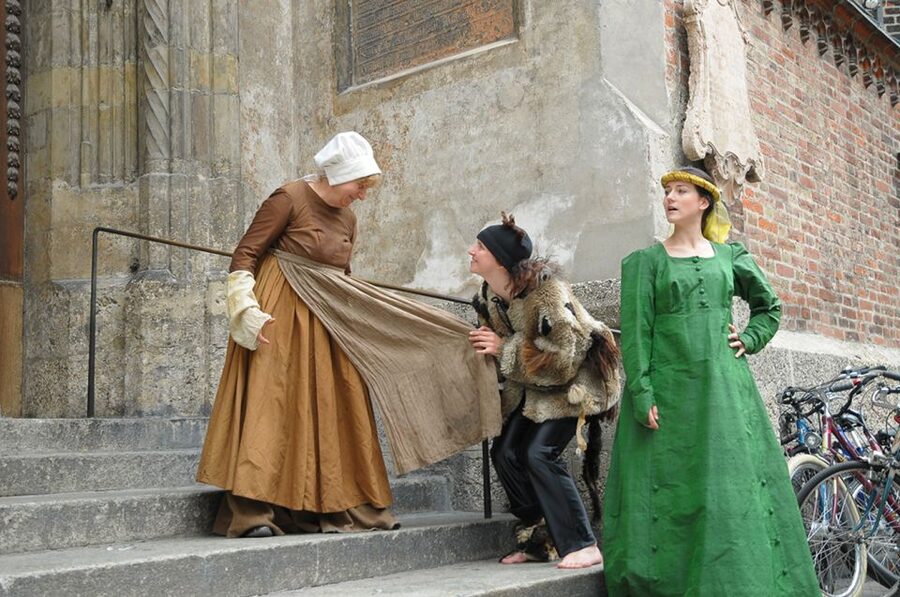
At St. Peter’s Church, the tour gets into the everyday life of the executioner. This is one of the more unusual subjects on the route because it looks beyond the condemned person and asks who carried out the punishment.
You learn how a hangman looked, why people avoided him, and how someone might obtain a gallows rope. The tour also explains the strange connection among hangmen, prostitutes, and witches. In Munich, executioners were not limited to torture chambers and gallows. They were also linked to prostitution and acted as pimps.
That detail gives the walk a sharper social angle. The people who performed necessary but despised work often lived at the edge of polite society. The tour presents them as part of a larger network of occupations that respectable citizens needed but did not want near their homes.
The scene of a beautiful woman escaping certain death adds another dramatic turn. It keeps the section from becoming only a grim explanation of punishment and gives the actors a chance to stage a moment of suspense.
St. Peter’s is a useful point to hear this material because the church represents a formal, public side of old Munich. Nearby streets, meanwhile, held people whose work and status were far less respectable. The contrast is part of the tour’s appeal.
The Old Town Hall and Munich’s former red-light district
The route continues to the Old Town Hall, where you cross the site of the former torture chamber while hearing gruesome stories. The wording is important: this is a historical location and storytelling stop, not a modern attraction with a torture exhibit.
The old torture chamber section is likely to be one of the most unsettling moments. The tour uses the place to explain how punishment was made visible and how authorities used fear to control the population. The actors add emotional force, but the guide’s factual explanations keep the scene connected to Munich’s past.
At the Platzl, the subject changes again. This area was Munich’s red-light district until the 1972 Olympic Games. The tour explains how prostitution was removed from the historic center as the city presented itself as a clean and decent cosmopolitan capital.
This is a particularly useful final chapter because it brings the old stories into the modern era. Witch hunts and gallows can feel remote. The story of a red-light district disappearing because of urban image and civic policy feels much closer to the city you see today.
The tour also connects this past to the famous Munich song about Rosi and the restricted district. You do not need to know the song to understand the point: popular culture preserved a piece of city history after the streets themselves had changed.
How the acting affects the experience
The strongest feature is the combination of facts and performance. Several recent comments describe the tour as both entertaining and informative, with the actors pulling people out of the monotony that can creep into a standard walking lecture.
That praise makes sense from the structure. The tour moves through several centuries and many grim subjects. Without character scenes, the material could feel heavy. The actors provide rhythm, while the guide explains the connections among buildings, beliefs, crimes, and punishments.
The performances also involve the people on the tour. One assessment specifically notes that participants were included in the acting. You should be prepared for some direct interaction rather than remaining entirely anonymous in the crowd.
The acting is meant to support the historical content, not replace it. The guide supplies background and explains links between the stories. This balance is why the experience appeals to people who want substance but do not want a dry lecture.
The German language is the deciding factor. One booking in the available feedback expressed disappointment that no English or Chinese tour was offered. That is not a small issue. Much of the comedy, tension, and historical meaning depends on spoken German, so basic phrase recognition will not be enough.
Price, timing, and who gets good value
At $46 per person, this costs more than a basic city walk. The price is easier to justify because you receive a 90-minute route, a live guide, and a professional acting team in historic costumes.
I would consider it good value if you specifically want a theatrical experience. You are paying for preparation, character work, and a carefully connected route through central Munich. The tour also covers several famous sights, so it can help you place the city’s dark stories on a first visit.
The value is weaker if you want detailed architectural access or a long stop at each church. The emphasis is on performance and narrative. You will hear more about witch trials, executioners, and prostitution than about art, music, or construction techniques.
The current rating is 4.7 from 59 reviews, with repeated praise for the acting, the clear explanations, and the entertaining pace. One comment called the price more than fair, while others described the experience as educational, amusing, and easy to follow.
The meeting point is central, and the tour lasts only 90 minutes, so it fits neatly before or after dinner. Wear shoes suitable for city walking and check the evening forecast. The tour operates rain or shine, and there is no promise of indoor shelter.
The activity is wheelchair accessible, which makes the format more broadly usable. Still, it remains a moving outdoor walk, so you should consider your own comfort with city surfaces, weather, and standing during scenes.
Should you book the Munich Scary Tour?
Book it if you understand German well and want Munich presented through people, scandals, legends, and uncomfortable questions. I especially recommend it for visitors who have already seen the main monuments and want a more unusual explanation of what happened around them.
Skip it if you need English, Chinese, or another language, or if you prefer a calm architecture tour. The dark themes also make it a poor match for anyone looking for light sightseeing.
For the right audience, the tour offers a lively way to connect the Karlstor, Frauenkirche, Town Hall, St. Peter’s, and the Old Town Hall. You leave with more than spooky tales. You get a picture of how Munich treated outsiders, explained disasters, staged punishment, and reshaped its public image.
FAQ
What language is the tour conducted in?
The tour is conducted in German, with a live German-speaking guide and actors. No English or Chinese option is provided in the available tour details.
How long does the Munich Scary Tour last?
The tour lasts 90 minutes.
Where does the tour meet?
The meeting point is at Karlsplatz, also called Stachus, under the archway of the Karlstor. The guide carries a large blue bag with the white words Weis(s)er Stadtvogel.
Which Munich sights are included on the route?
The walk passes Neuhauser Tor, St. Michael’s Church, the Frauenkirche, the Town Hall courtyard, St. Peter’s Church, and the Old Town Hall.
What subjects does the tour cover?
The stories focus on witch hunts, prostitution, torture, executions, hangmen, alchemy, and legends about the devil. The tour also discusses Munich’s former red-light district around the Platzl.
Does the tour run in bad weather?
Yes. The tour takes place rain or shine. It is also listed as wheelchair accessible.
Just added around Munich
- Munich: Private or Group Third Reich and WWII Walking Tour★ 4.9 · 13 reviews
- From Munich: Neuschwanstein Castle and Linderhof Private Tour★ 5.0 · 13 reviews
- Private Transfer from Munich to Salzburg with 2 hours for sightseeing★ 4.5 · 13 reviews
- Munich: Historical Walking Tour on the Rise of Hitler★ 5.0 · 13 reviews
- Private Scenic Transfer from Munich to Prague with 4h of Sightseeing★ 5.0 · 13 reviews
- From Munich: VIP day trip to Salzburg★ 5.0 · 14 reviews
- National Socialism WWII with licensed guide – private tour★ 5.0 · 14 reviews
- Munich: Walking Tour Old Town 3D VR Tour in GERMAN★ 4.3 · 14 reviews
Munich Tours, compared.
Neuschwanstein & Linderhof Castle-Fairytale Day Tour from Munich
Read our review →
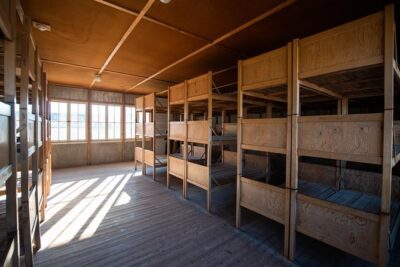
Dachau Concentration Camp Memorial Site Tour from Munich by Train
Read our review →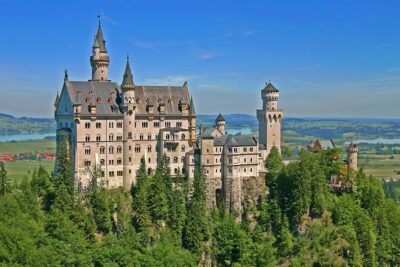
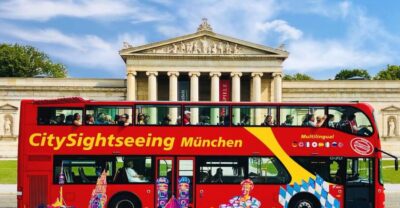
Munich Hop-On Hop-Off Tour: 1-Day or 2-Day Ticket
Read our review →
Browse the lists this tour appears in