
Reviewed · HISTORICAL TOURS
Historical city tour in the African Quarter in Berlin
Colonial history hides in plain sight. This two-hour walk through Berlin’s African Quarter uses street signs, squares, maps, and place names to explain Germany’s connection with Africa during the colonial era. I like the clear focus on a part of Berlin that many city tours skip, and I like that the route asks direct questions rather than treating history as a list of dates.
The strongest features are the small group size of up to 20 people and the guide’s engaging way of handling difficult subjects. A possible drawback is the modest rating of 3.7 from six reviews, which suggests the experience may depend heavily on the individual guide and the group on your date. At $33.57 per person, you are paying for interpretation and discussion, not paid entry to monuments.
In This Review
- Key details before you book
- Why Berlin’s African Quarter deserves a closer look
- Starting on Swakopmunder Straße
- Anna-Mungunda-Allee and the question of renaming
- Manga-Bell-Platz and Gustav Nachtigal
- Kongostraße and the 1884 Congo Conference
- What the two-hour format feels like
- Group size, guide style, and the human factor
- Is $33.57 a fair price?
- Who should take this walk?
- How to decide before you book
- FAQ
- Where does the African Quarter tour begin?
- Where does the tour finish?
- How long does the tour last?
- How many people can join the tour?
- Is the tour accessible by public transportation?
- What happens if the weather is poor?
Key details before you book
- Swakopmunder Straße begins the tour: The opening stop connects an ordinary Berlin street with Swakopmund and Germany’s role in Namibia.
- Street names become the main exhibits: Anna-Mungunda-Allee and Manga-Bell-Platz open questions about colonial officials, resistance, and the naming of public spaces.
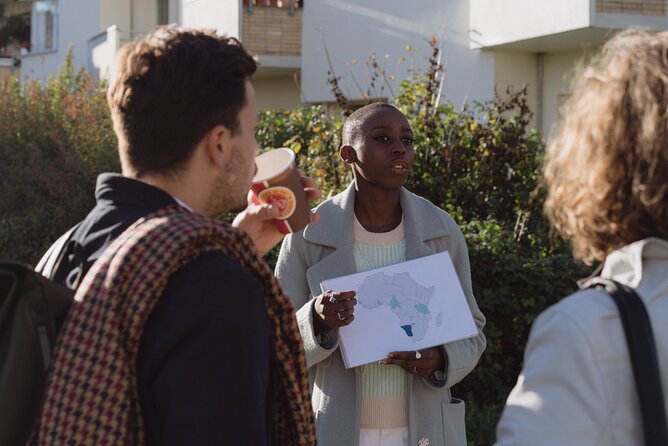
- Kongostraße leads to the 1884 Congo Conference: You will see a map showing Africa before and after the conference and learn why African representatives were absent.
- The route lasts about two hours: The four named stops each have an indicated five-minute visit, with the rest of the time used for walking and explanation.
- The group is capped at 20 people: That is small enough for questions without making the tour feel like a private guide experience.
- The walk ends at Rehberge: You start at Swakopmunder Str. 44 and finish at Rehberge, so plan for a point-to-point walk rather than a return to the start.
Why Berlin’s African Quarter deserves a closer look
Berlin’s African Quarter is made up of 22 streets. Their names refer to African countries, European cities, and figures connected with Germany’s imperial period. That makes the district useful for a historical walking tour: you do not need a museum display in front of you to begin asking questions.
A street name can look harmless when you are rushing to an appointment. Here, it becomes a clue. Why was a place given that name? Who chose it? What did Berlin’s leaders believe about Africa at the time? What does the name mean now?
This tour focuses on the colonial period beginning in the 20th century, a part of German-African history that is not always part of a standard Berlin sightseeing program. The experience is built around a change in viewpoint. Instead of presenting imperial history only through German institutions and officials, it encourages you to consider the people and countries affected by those decisions.
That approach matters because the subject is not simply old history. The names remain in the city, and public debate about how streets should be named continues. The tour gives you background for understanding those debates without reducing them to a quick photo stop.
I also like the scale of the subject. You are not being asked to cover all of Germany’s colonial past in a few hours. You are walking through one district and using its streets as evidence. That keeps the discussion tied to the place beneath your feet.
More City Tours in Berlin
- Berlin: 1-Hour City Tour by Boat with Guaranteed Seating
★ 4.3 · 16,993 reviews - Berlin: City Sightseeing Hop-On Hop-Off Bus Tour
★ 4.1 · 4,233 reviews - Potsdam: City and Castles Tour
★ 4.7 · 3,721 reviews
Starting on Swakopmunder Straße
The tour begins at Swakopmunder Str. 44, in the 13351 Berlin postal area. The first stop is Swakopmunder Straße, where the guide asks what Swakopmund has to do with Berlin and what role Germany played in Namibia.
The name gives the tour its first practical lesson: Berlin’s African Quarter is not named at random. A street can preserve a connection to a country thousands of miles away, even when the people walking along it have no idea why the name is there.
You can expect roughly five minutes at this listed stop, but the walk as a whole lasts about two hours. That means the guide has time to place the street in a larger story and to move between the stops at a manageable pace. The exact amount of time spent walking and talking will depend on the group.
This opening works well because it starts with a specific place rather than a broad lecture. You hear a name, locate it on the map of Berlin, and then connect it with Namibia. I find that kind of start easier to remember than a long introduction packed with dates.
The limitation is that the stop itself is not a paid attraction. There is no admission ticket or formal exhibit. You are looking at the street and listening to the guide, so the quality of the explanation is central to the experience.
Anna-Mungunda-Allee and the question of renaming

The next stop is Anna-Mungunda-Allee. Here, the discussion turns to Petersallee, including the person after whom it was named and the question of whether the street should be renamed.
This is one of the most useful parts of the route for anyone interested in how cities deal with uncomfortable public memory. A street sign is not neutral. It gives a person or event a place in daily life, and that choice can be challenged later.
The guide’s questions are practical: Who was Peters? Why did the name appear here? What reasons support a change? You are not simply told that a name is controversial and then hurried onward. The stop invites you to think about how Berlin decides what belongs in its public spaces.
The listing gives this stop about five minutes, but it should carry more weight than that number suggests. A short explanation can open questions that stay with you for the rest of the walk. If you are interested in memorials, place names, and how history is presented in modern cities, this may be one of the most valuable stops.
I would listen carefully to the exact explanation of the renaming debate. The supplied information does not provide every detail about Petersallee, and the guide’s discussion is where the historical context will be filled in. That is also a reminder that this is an interpretation-led walk, not a self-guided route with extensive written information at each corner.
Manga-Bell-Platz and Gustav Nachtigal
Manga-Bell-Platz brings the tour to a central square in the African Quarter. The key question here is why the square was named after Gustav Nachtigal and what role he played in the colonial era.
The stop is a good example of how the tour links a person to a public space. You are not just memorizing a name. You are considering why that person was honored, what the choice says about the period, and how that decision looks from a present-day point of view.
The square’s name also shows how several parts of the district work together. Swakopmunder Straße points toward Namibia. Anna-Mungunda-Allee raises the issue of renaming. Manga-Bell-Platz brings a particular colonial figure into the discussion. Each stop adds another way to read the neighborhood.
The scheduled stop is about five minutes, with the wider two-hour route providing room for context. I would expect the guide to spend time explaining the relationship between Nachtigal and the naming of the square, but the supplied details do not specify the full biography or the exact format of the presentation.
That lack of detail is not necessarily a problem. It means you should approach the walk ready to listen and ask questions. A strong guide can make a short street-corner explanation useful. One poor fit for the tour would be someone seeking a large museum collection, elaborate staging, or a long list of fully documented exhibits.
More Historical Tours in Berlin
- Berlin: Natural History Museum Entrance Ticket
★ 4.6 · 3,382 reviews - Berlin: World Heritage Cruise to Potsdam
★ 4.5 · 1,435 reviews - Berlin Historical Highlights Walking Tour
★ 4.9 · 657 reviews - Berlin Private Complete History All Day Walking Tour
★ 5.0 · 474 reviews
Kongostraße and the 1884 Congo Conference
Kongostraße takes the tour to one of its clearest historical subjects: what happened in Berlin in 1884 and why the Congo Conference matters.
The guide uses a map of Africa before and after the Berlin conference. This is a valuable teaching tool because maps make political change visible. Rather than leaving the conference as an abstract event, the tour shows how boundaries and colonial control were connected to decisions made in Berlin.
The guide also asks why no one from Africa was present. That question goes to the heart of the power imbalance behind the conference. European governments discussed African territories without African participation. You are encouraged to consider not only what the conference decided, but who had the authority to make those decisions and who was left out.
This is listed as another five-minute stop, but it is likely to be one of the most important moments of the walk. The map gives the discussion something concrete to follow, and the location ties the historical event back to Berlin itself.
I appreciate that the tour does not treat the Congo Conference as a remote event that belongs only in a textbook. The street name and the map connect the conference to the city around you. You begin to see Berlin as a place that helped shape colonial policy, not merely as a later observer of events overseas.
The possible downside is that a single walking tour cannot provide every detail about the conference, German colonial rule, or the countries affected. If you already have a strong academic interest in the subject, you may want additional reading or a museum visit afterward. For a two-hour introduction, though, this stop gives the route a firm historical center.
What the two-hour format feels like
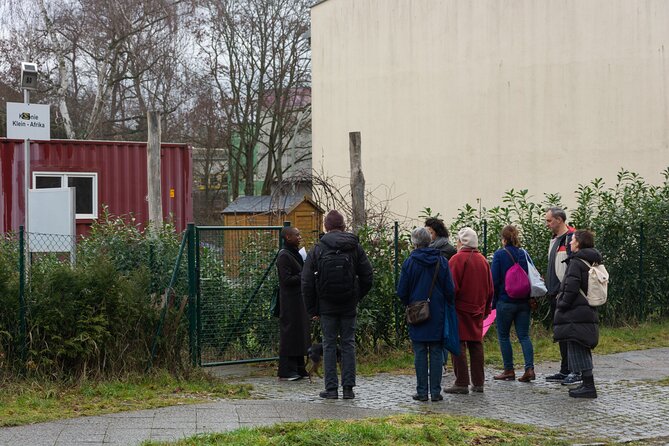
The experience lasts about two hours and is delivered on foot. Four named stops each list an approximate five-minute visit, so much of the tour consists of walking, transitions, and spoken explanation between locations.
That format suits you if you learn best by connecting ideas to real streets. You will not sit in one room while a guide talks at you. Instead, the neighborhood itself supplies the setting. The route begins on Swakopmunder Straße and ends at Rehberge, at the 13349 Berlin postal address.
The point-to-point design is worth noting. You should not assume you will finish where you began. Since the start and end addresses are different, check your onward plans before setting out. The tour is near public transportation, which makes the route practical for a wider Berlin itinerary, though no specific station or transit line is provided.
A two-hour walk is also long enough to give the subject room, but short enough to fit beside other plans. You will want to allow time before the start to reach Swakopmunder Str. 44 and avoid scheduling something immediately after the final stop. Walking tours rarely end with the same precision as a train timetable.
The mobile ticket keeps the entry process simple. There is no attraction admission included because the stops are public streets and squares. Your ticket confirms your place on the guided experience.
Group size, guide style, and the human factor
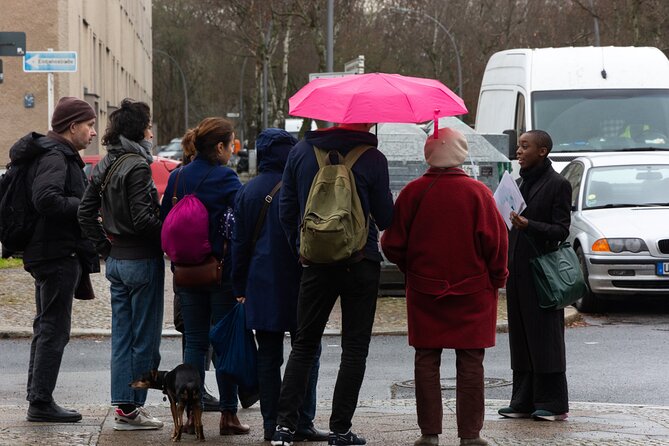
The maximum group size is 20 people. That is a useful middle ground. You are not paying for a private walk, but the group is still limited enough for the guide to speak to the whole group and take questions.
The strongest praise for this experience focuses on the guide’s engaging approach and ability to make the history compelling. That matters here more than it would on a simple sightseeing stroll. Colonial history can become dry when presented as names and dates, or uncomfortable when handled without care. The guide needs to connect the facts to the streets while keeping the discussion clear.
I would book this tour for the explanation, not for scenery or entertainment. The district’s value is in its names, questions, and historical connections. The tour promises a change of perspective, and the best version of that experience will depend on how thoughtfully the guide handles the subject.
The overall rating is 3.7 from six reviews, so I would keep expectations balanced. There is strong praise for the experience as a must-do historical tour, but the limited number of ratings does not give you a large body of evidence. Consider the subject itself before booking. If you want an entertaining highlight reel of Berlin, this may feel too specialized. If you want to understand a difficult part of the city’s past, the focus is a strength.
Is $33.57 a fair price?
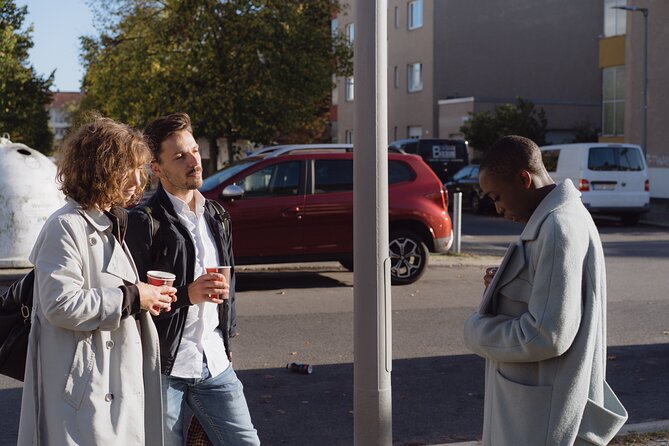
At $33.57 per person, the cost is reasonable if you value a focused guided discussion. The tour lasts about two hours, which works out to roughly $16.79 per hour. You are paying for the guide’s research, route planning, historical framing, and answers to questions rather than for entry to a landmark.
That distinction helps you judge the price fairly. A visitor who expects tickets to museums, palaces, or monuments included may feel the cost is high. A visitor who regularly pays for walking tours and wants a specialist subject may find it fair.
The group limit of 20 improves the value. A very large group can make a street-corner history tour hard to follow, especially when the guide is pointing to signs or maps. A capped group gives you a better chance of hearing the explanation and asking a question.
I would also consider the route’s unusual focus. Many Berlin tours cover the Brandenburg Gate, the Berlin Wall, or the major museums. This walk offers a different subject at a moderate price. Its value increases if the African Quarter is already part of your Berlin plans, since you can add historical meaning to a district you might otherwise pass through without noticing.
Who should take this walk?
I would recommend it to you if you have an interest in:
- German colonial history and its links with Africa
- The meaning of street names and public memorials
- The debate over changing names connected with colonial figures
- The 1884 Congo Conference
- Berlin neighborhoods beyond the usual central sights
- Guided walks built around discussion and historical context
The tour may also suit students, educators, and visitors who want a more thoughtful subject after seeing Berlin’s major landmarks. It offers a useful change from military history, Cold War history, and royal history, which receive more attention on many city routes.
You may want to skip it if your time in Berlin is extremely short and you only want the city’s headline sights. The African Quarter is a specialized stop, and the tour does not promise grand interiors, famous artworks, or paid attractions.
Most people can take part, and service animals are allowed. The tour requires good weather, so a rainy or otherwise poor-weather day can lead to a different date or a full refund. It also requires a minimum number of participants, so an underfilled departure may be rescheduled or refunded.
Free cancellation is available if you cancel at least 24 hours before the start time. Changes or cancellations made within 24 hours are not accepted for a refund, so keep that deadline in mind.
How to decide before you book
I would book this experience if you want Berlin to explain itself through ordinary places. The route’s best idea is simple: street names are historical evidence. Swakopmunder Straße, Anna-Mungunda-Allee, Manga-Bell-Platz, and Kongostraße give the guide four starting points for a larger conversation about Germany and Africa.
I would also book it if you prefer a small, focused group and a guide who invites questions. The positive response to the guide’s engaging style is important because the walk depends on clear storytelling rather than admission to a major attraction.
I would think twice if you need guaranteed weather, a fully fixed end time, or a tour packed with physical sights. The subject is serious, the route is educational, and the experience can vary with the guide and group. At $33.57, it is a fair choice for a specialized historical walk, but it is not a general introduction to Berlin.
FAQ
Where does the African Quarter tour begin?
The tour begins at Swakopmunder Str. 44, 13351 Berlin, Germany.
Where does the tour finish?
The walk ends at Rehberge, 13349 Berlin, Germany.
How long does the tour last?
The walking tour lasts approximately two hours.
How many people can join the tour?
The maximum group size is 20 participants.
Is the tour accessible by public transportation?
The experience is near public transportation, although no specific station or transit line is provided.
What happens if the weather is poor?
If poor weather causes cancellation, you will be offered a different date or a full refund. The same choice applies if the minimum number of participants is not met.
Just added around Berlin
- Private Photo Tour in Kreuzberg★ 5.0 · 3 reviews
- Kreuzberg Private Walking Tour: Immigrants, Artists & Hipsters★ 5.0 · 3 reviews
- Individual city tour Berlin for max. 8 persons★ 5.0 · 3 reviews
- Berlin’s Jewish Heritage: Private Tour of the Vibrant Jewish District★ 5.0 · 3 reviews
- Berlin & The Third Reich Private Guided Tour★ 5.0 · 3 reviews
- Private Analogue Photography Experience in Berlin★ 5.0 · 3 reviews
- Spy Mission in Berlin: Self-Guided Espionage Puzzle Quest★ 5.0 · 3 reviews
- Berlin Christmas Markets Walking Tour with Local Guide★ 5.0 · 3 reviews
Historical Tours, compared.
City History Canal Sightseeing Tour on a Motorboat
Read our review →

Bamberg: Guided Beer History Tour with Optional Tasting
Read our review →Browse the lists this tour appears in