
Reviewed · HISTORICAL TOURS
Explore Berlin Tour: History and Highlights
Berlin makes you work for its story. This three-hour walking tour links the Brandenburg Gate, Reichstag, Holocaust Memorial, Berlin Wall-era sites, and Museum Island into one clear route through the city’s past. I like the way it connects grand Prussian buildings with the damage of World War II, Nazi rule, division, and reunification. I also like the focus on explanation, not just photo stops. The main drawback is pace: one guide, Al, gave such detailed talks that one small group had too little time for photographs and independent looking.
You meet outside Hopfingerbräu on Ebertstraße, right beside the Brandenburg Gate, and finish back at the same spot. The route is packed, so wear comfortable shoes and expect to listen while standing. It is a useful first look at central Berlin, especially if you want a historian’s framework before exploring museums on your own.
In This Review
- Key points to know before you book
- Why this Berlin history walk works as a first introduction
- Starting beside the Brandenburg Gate
- Reichstag and the political heart of Berlin
- The Holocaust Memorial and Hitler’s bunker
- From Nazi administration to the Topography of Terror
- Checkpoint Charlie and the divided city
- Gendarmenmarkt and Bebelplatz
- Unter den Linden and Museum Island
- A packed route with a classroom feel
- Is $31 a good value in Berlin?
- Who should book this three-hour walk?
- Should you book Explore Berlin Tour: History and Highlights?
- FAQ
- Where does the tour meet?
- How long does the tour last?
- What language is the tour offered in?
- Is the tour wheelchair accessible?
- Are food and drinks included?
- Can I cancel the tour for a full refund?
Key points to know before you book
- A three-hour route covers thirteen major stops, from the Brandenburg Gate and Reichstag to Museum Island.
- The tour handles Berlin’s hardest subjects directly, including Hitler’s bunker, the Holocaust Memorial, Nazi terror, and the Berlin Wall era.
- Guide Al received especially strong praise for tailoring his explanations, checking the group’s well-being, and adding detail beyond standard guidebook material.
- The meeting point is easy to locate in theory, outside Hopfingerbräu at Ebertstraße 24, but one booking party had trouble finding the guide because no flag or clear sign was visible.
- The $31 price is fair for a live three-hour history walk, particularly if you use it to plan the rest of your Berlin sightseeing.
- The tour is offered in English and is wheelchair accessible, with food and drinks not included.
Why this Berlin history walk works as a first introduction
Berlin is not a city you understand by looking at one palace or one church. Its center is a series of layers, and many of the most important places are only a few minutes apart on foot. One block may recall Prussian power, while the next points to dictatorship, war, division, or the return of a united German capital.
This tour gives you that broad structure. You move from the imperial past through World War I, the Nazi period, the ruins and memorials of World War II, the Cold War, and modern Berlin. That range is the strongest reason to book it early in your stay.
I especially value a guide who explains how the city changed, not just what happened at each address. Al was praised for adjusting his explanations to the people in the group and for offering more than the usual printed facts. He also kept people informed about progress and regularly checked that everyone was doing well.
That style can make the experience feel personal rather than rehearsed. It can also mean a lot of talking. If you prefer quiet time at every monument, this may feel too lecture-heavy. If you want a clear base of information, the detail is a major benefit.
More Historical Tours in Berlin
- Berlin: Natural History Museum Entrance Ticket
★ 4.6 · 3,382 reviews - Berlin: World Heritage Cruise to Potsdam
★ 4.5 · 1,435 reviews - Berlin Historical Highlights Walking Tour
★ 4.9 · 657 reviews
Starting beside the Brandenburg Gate
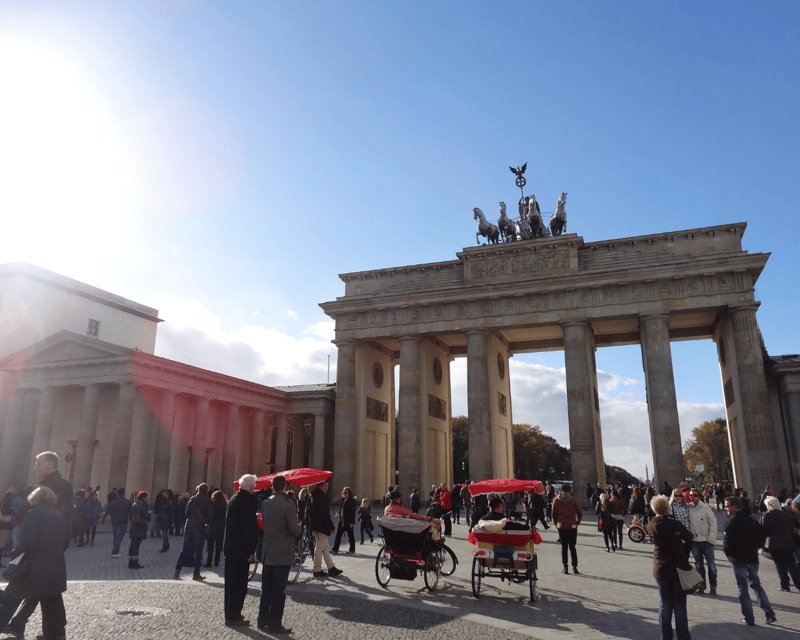
The tour begins at Ebertstraße 24, outside Hopfingerbräu, beside the Brandenburg Gate. This is a practical meeting point in the middle of Berlin’s historic district, but pay attention when you arrive. A small group once had difficulty spotting the guide because there was no flag or obvious marker.
The Brandenburg Gate is the natural opening scene. Built as a Prussian city gate, it later became one of Berlin’s strongest symbols of division and reunification. You spend about 20 minutes here with a guide, enough time to place the monument in the city’s political story rather than treat it as a quick picture stop.
You will likely hear how the gate’s meaning changed across different periods. It was once tied to royal power, later became part of the imagery of the divided city, and finally served as a symbol of a reunited Berlin. That shift in meaning is a useful lesson for the rest of the tour: Berlin’s monuments rarely have only one story.
Reichstag and the political heart of Berlin
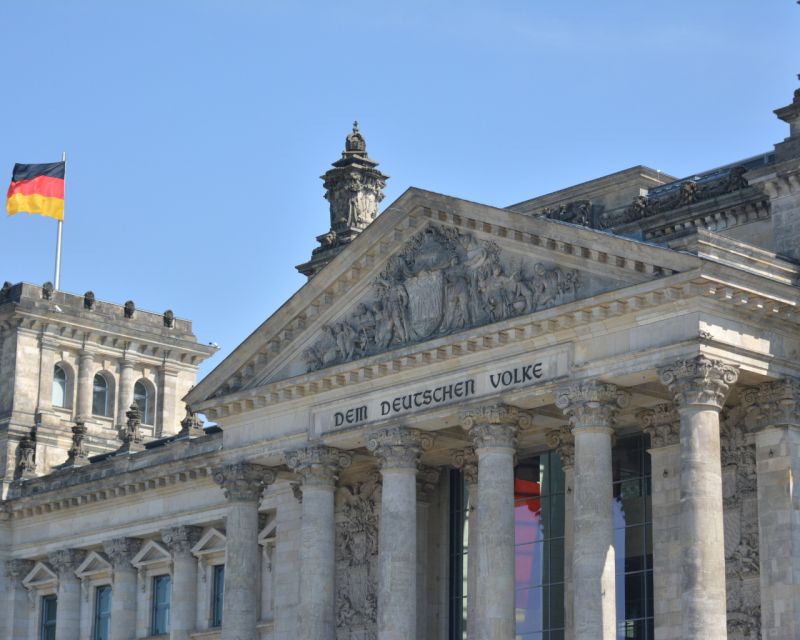
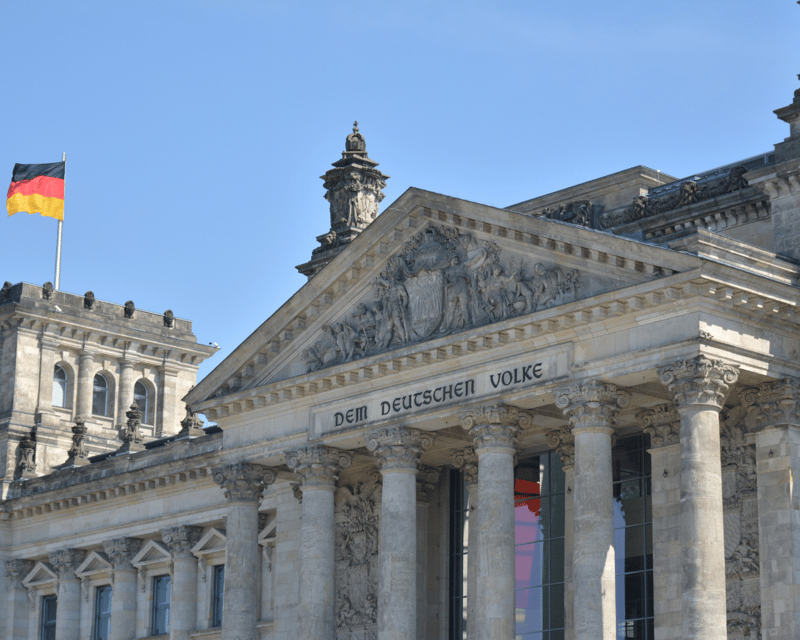
The next stop is the Reichstag, where you have about 20 minutes for sightseeing. The building is closely tied to Germany’s modern political life, and its location helps you understand why this area became such a powerful center of government.
The tour does not list an interior visit, dome entry, or special admission. Think of this as an exterior stop with historical explanation. That matters because you should not arrive expecting to go inside the parliament building as part of the walk.
The Reichstag works well in this position because it follows the Brandenburg Gate and keeps the focus on national power. The guide can help connect the old imperial capital with the later republic and the rebuilt political center of present-day Germany.
The Holocaust Memorial and Hitler’s bunker
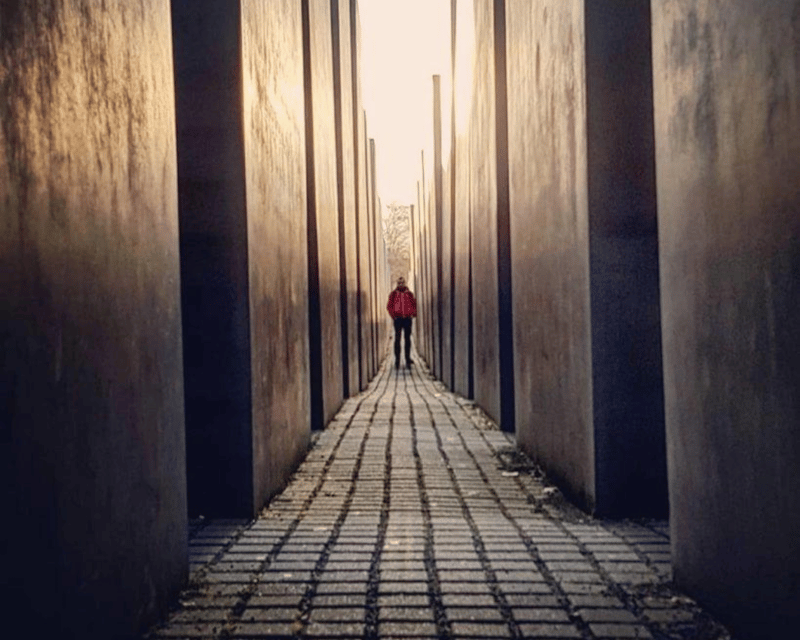
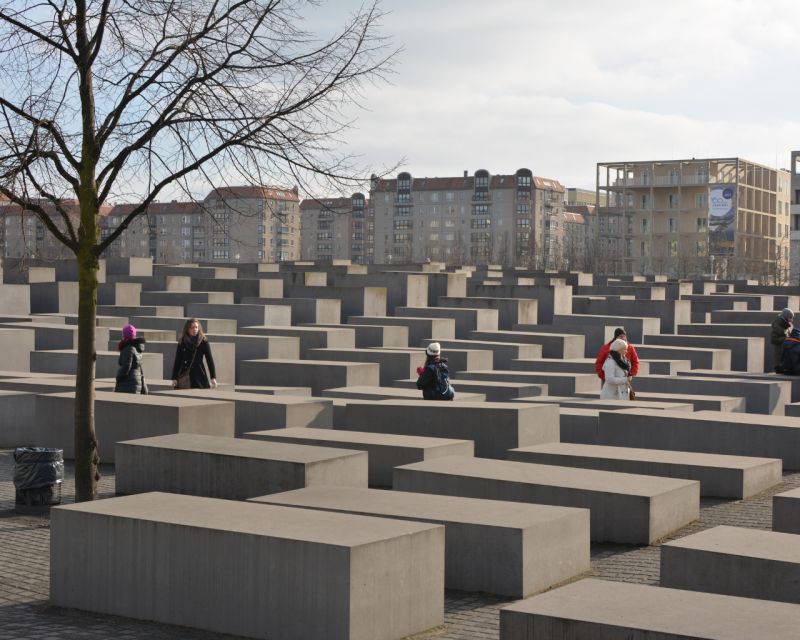
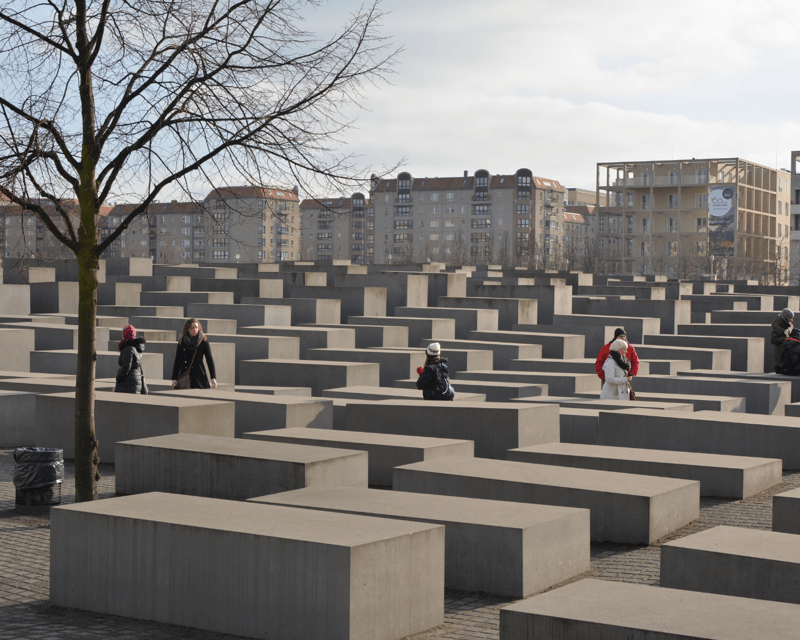
The Memorial to the Murdered Jews of Europe receives about 15 minutes of guided attention. Its field of concrete blocks is designed to create a serious, uneasy place for reflection. A guide can help you approach it with the needed context rather than reduce it to an unusual photo background.
This is one of the points where the tour’s direct treatment of difficult history matters most. You are not simply hearing about the Nazi period in a museum room. You are standing in the center of Berlin, close to places where national decisions had terrible consequences.
The route then continues to the site of Hitler’s bunker, with about 15 minutes for sightseeing. The bunker itself is not presented as an open attraction. The value is in understanding the location and the final stage of the Nazi regime, while also recognizing that very little visible structure remains for you to see.
That can disappoint anyone expecting dramatic ruins or an underground visit. It is still a meaningful stop because the ordinary surface of the area contrasts sharply with what took place beneath it.
Something different for another day:
- Berlin: Reichstag, Dome and Government District Guided Tour
★ 4.7 · 18,288 reviews - Berlin: 1-Hour City Tour by Boat with Guaranteed Seating
★ 4.3 · 16,993 reviews - Berlin: Boat Tour Along the River Spree
★ 4.4 · 11,252 reviews - Discover Berlin Half-Day Walking Tour
★ 5.0 · 9,624 reviews
From Nazi administration to the Topography of Terror
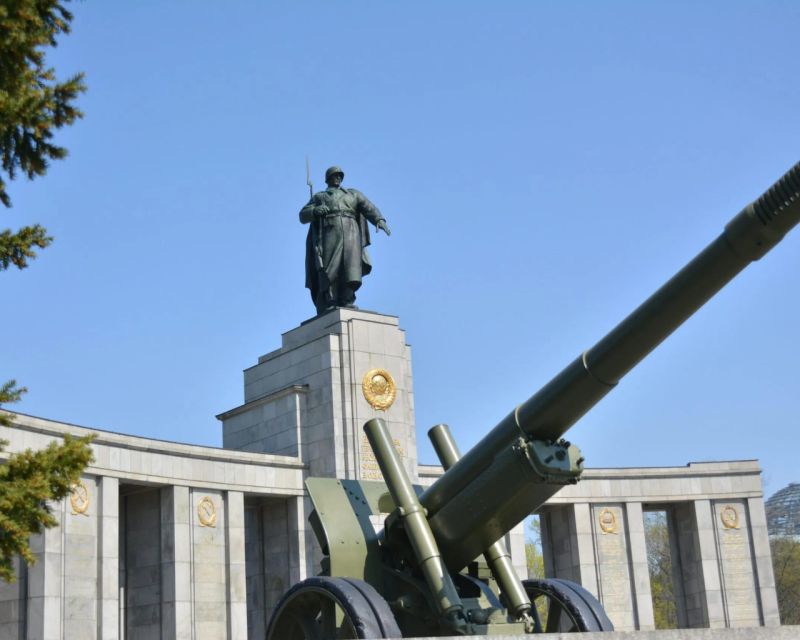
The German Finance Ministry receives about 15 minutes of sightseeing time. The building is important for its connection to the history of German government and for the way surviving structures can carry several periods at once.
This part of the route helps bridge the gap between political power and the machinery of dictatorship. You are not only seeing famous monuments. You are also being shown less obvious places that help explain how Berlin functioned.
The Topography of Terror follows, with roughly 20 minutes of guided discussion. This is one of the tour’s strongest historical stops. The site focuses on Nazi persecution and state terror, and it gives the guide a chance to explain the system behind the crimes rather than mention them only in passing.
Allow yourself to listen carefully here. The content is serious, and the tour’s emphasis on detail may feel intense. Still, this is the kind of stop that gives the rest of central Berlin greater meaning. Buildings and streets become connected to decisions, institutions, and people, rather than floating as separate sights.
Checkpoint Charlie and the divided city
At Checkpoint Charlie, the guide spends about 20 minutes explaining one of Berlin’s best-known Cold War locations. The crossing point became a symbol of the separation between East and West Berlin, and its name remains familiar even to people who know little about the city.
The site today can feel more like a busy sightseeing stop than a preserved border crossing. That is precisely why a guide is useful. You need someone to separate the historical checkpoint from the modern displays and photo opportunities.
I would not expect a long period of free exploration here. The schedule moves steadily, and the guide’s explanation takes up most of the stop. The benefit is that you receive the political background in one place, then continue through the former divided city with a better sense of what the Wall meant in daily life.
Gendarmenmarkt and Bebelplatz
Gendarmenmarkt receives about 15 minutes of guided attention. The square is one of central Berlin’s grand architectural spaces, and it provides a change of mood after the Nazi and Cold War sites. Its formal design reflects the city’s Prussian and later imperial ambitions.
This is a good place to see how Berlin’s beauty and painful past exist side by side. The tour does not treat history as a parade of tragedies. It also shows the architectural confidence of the older city and the way public spaces were shaped by power.
Bebelplatz follows, with another 15-minute explanation. The square is tied to one of the most chilling episodes of Nazi cultural repression, making it an important stop even though it is easy to pass without noticing its meaning.
These two locations reward close listening. Their architecture can distract you from the history beneath it, and the guide’s job is to make those links visible. If you enjoy taking your own photographs, you may want to ask for a brief pause after the explanation, since the schedule gives limited free time.
Unter den Linden and Museum Island
The walk continues along Unter den Linden for about 20 minutes. This grand boulevard connects several of Berlin’s major institutions and historic buildings. It is also a useful orientation point, helping you understand the layout of the central district.
A practical strength of the tour is that the guide explains how to get around Berlin as well as what you are seeing. That makes the route more useful than a one-off history talk. You begin to recognize how the Brandenburg Gate, Museum Island, Gendarmenmarkt, and other central sights relate to one another.
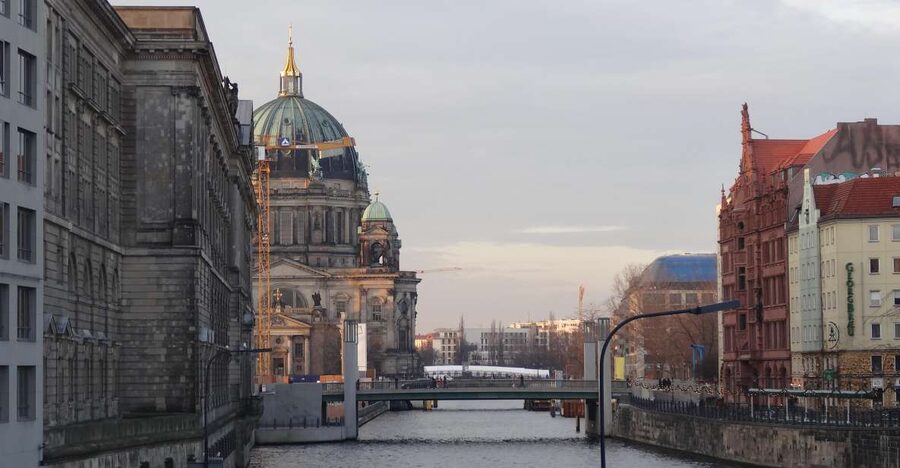
Museum Island is the final major sightseeing stop before returning to Ebertstraße. The tour does not include museum admission, so you are seeing the district from outside. That is still valuable because the island brings the route back to Berlin’s role as a cultural and political capital.
You may want to save one of the museums for a separate visit. After three hours of walking and listening, you will have enough context to choose which collection interests you most. The tour gives you the map and the historical background; it does not replace time inside the museums.
A packed route with a classroom feel
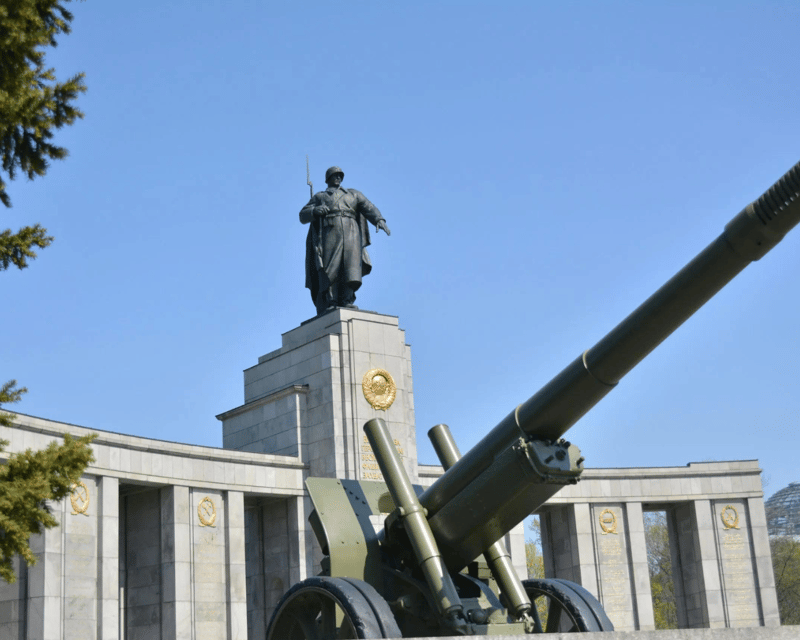
The schedule includes about 20 minutes at the Brandenburg Gate, Reichstag, Topography of Terror, Checkpoint Charlie, and Unter den Linden, with shorter stops at several other sites. The walking time between them fills the gaps, so the tour covers a lot of ground without becoming a full-day commitment.
That efficiency is both its appeal and its limitation. You can tick off many essential central sights in one morning or afternoon, but you will not have long stretches to wander. One small group found the guide’s continuous talking left too little time for photographs and independent looking.
I would book this tour if you enjoy learning on the move. I would be more cautious if you want a relaxed walk with frequent breaks. The experience is closer to an outdoor history class than to a casual stroll, and that distinction matters.
The tour is wheelchair accessible, according to the activity details. Since it is a walking route through central Berlin, you should still confirm the current starting time and any personal mobility needs when booking. Food and drinks are not included, so bring what you need for three hours.
Is $31 a good value in Berlin?
At $31 per person, the tour offers a reasonable way to organize your first look at central Berlin. You get three hours with a live English-speaking guide and a route that includes the Brandenburg Gate, Reichstag, Holocaust Memorial, Hitler’s bunker, German Finance Ministry, Topography of Terror, Checkpoint Charlie, Gendarmenmarkt, Bebelplatz, Unter den Linden, and Museum Island.
That is a substantial list for the price. You are paying for interpretation and orientation, not entry tickets. If you visited every museum or memorial independently, you would still need to research the connections between the sites. The guide handles that work while you walk.
The value rises if you are new to Berlin or have only a short stay. It can help you decide which places deserve a longer return visit. The value is lower if you already know Berlin’s twentieth-century history well or prefer to read at your own pace.
The available rating is 4.7 from five ratings, with especially strong praise for Al’s detail, calm manner, and ability to tailor the talk. One low rating focused on the meeting point and the amount of speaking rather than a lack of historical content. That tells me the main question is not whether you will learn something. It is whether you enjoy learning in a steady, guide-led format.
Who should book this three-hour walk?
I would recommend it to first-time visitors who want a strong orientation before exploring Berlin alone. It also suits families with older children or young adults who can handle serious historical subjects and several hours on foot. A 21-year-old joined one family group and found the experience worthwhile, which suggests the format can work across ages.
History enthusiasts will appreciate the wide sweep from medieval beginnings and Prussia through the world wars, Nazi rule, the Berlin Wall, and reunification. The route also suits anyone who wants to understand why Berlin can look elegant, damaged, rebuilt, and divided within the same afternoon.
I would hesitate if your priority is shopping, food, museum interiors, or unstructured photography. You will not receive meals, drinks, or museum admission, and the schedule leaves limited time for wandering at each stop.
Arrive early at Ebertstraße 24 and look carefully for the guide outside Hopfingerbräu. Since one group had trouble identifying the meeting point, a clear confirmation with the provider would be sensible. Comfortable shoes are essential, and a drink is worth carrying.
Should you book Explore Berlin Tour: History and Highlights?
Book it if you want Berlin’s major sights tied together by one strong historical narrative. The route is efficient, the price is fair, and the guide-led format can give you a useful base for the rest of your visit.
Skip it if you want long photo breaks or a quiet walk. The best match is a curious first-time visitor who prefers clear explanations and is willing to stand, listen, and keep moving. For that person, this tour offers a serious and practical introduction to Berlin without taking up an entire day.
FAQ
Where does the tour meet?
The meeting point is outside Hopfingerbräu at Ebertstraße 24, 10117 Berlin, right next to the Brandenburg Gate.
How long does the tour last?
The walking tour lasts three hours and returns to Ebertstraße 24.
What language is the tour offered in?
The tour is conducted in English with a live guide.
Is the tour wheelchair accessible?
Yes, the activity details state that the tour is wheelchair accessible.
Are food and drinks included?
No. Food and drinks are not included in the tour price.
Can I cancel the tour for a full refund?
Yes. You can cancel up to 24 hours in advance for a full refund. You can also reserve now and pay later.
Just added around Berlin
- Kreuzberg Private Walking Tour: Immigrants, Artists & Hipsters★ 5.0 · 3 reviews
- Private Photo Tour in Kreuzberg★ 5.0 · 3 reviews
- Individual city tour Berlin for max. 8 persons★ 5.0 · 3 reviews
- Berlin’s Jewish Heritage: Private Tour of the Vibrant Jewish District★ 5.0 · 3 reviews
- Berlin & The Third Reich Private Guided Tour★ 5.0 · 3 reviews
- Private Analogue Photography Experience in Berlin★ 5.0 · 3 reviews
- Spy Mission in Berlin: Self-Guided Espionage Puzzle Quest★ 5.0 · 3 reviews
- Berlin Christmas Markets Walking Tour with Local Guide★ 5.0 · 3 reviews
Historical Tours, compared.

City History Canal Sightseeing Tour on a Motorboat
Read our review →

Bamberg: Guided Beer History Tour with Optional Tasting
Read our review →Browse the lists this tour appears in