
Reviewed · MUSEUMS
Dresden: Albertinum Museum Entry Ticket
Rodin greets you at the door. That opening makes the Albertinum feel focused from the start, not like a storage room with labels. I like the mix of painting and sculpture, and I like the clear sweep from 19th-century Romanticism to contemporary art. You can see Caspar David Friedrich, Auguste Rodin, Wilhelm Lehmbruck, Birgit Diecker, and Tony Cragg under one roof.
The $16 entry price is fair if you enjoy art and plan to spend time with it. I also like the one-day validity, since it gives you room to fit the museum around the rest of Dresden. The main caution is timing: technical construction closes the second floor from April 7 through April 17, so part of the collection may be unavailable during those dates.
In This Review
- Key points before you go
- What the Albertinum does best
- Starting with Rodin’s The Thinker
- Caspar David Friedrich and German Romantic feeling
- Wilhelm Lehmbruck’s Kneeling Woman
- Contemporary works and unexpected materials
- Painting beside sculpture
- East, West, yesterday, and tomorrow
- How much time should you allow?
- Is the $16 ticket good value?
- Who should visit the Albertinum?
- Should you book the Albertinum?
- FAQ
- How much does admission to the Albertinum cost?
- How long is the ticket valid?
- What art can I see at the Albertinum?
- Can I see Caspar David Friedrich at the museum?
- Is the Albertinum wheelchair accessible?
- Are children admitted free?
Key points before you go

- Rodin’s The Thinker opens the visit: The famous sculpture sets the tone for the Albertinum’s move toward modern art.
- Caspar David Friedrich is a major draw: His German Romantic works give the painting collection a strong emotional center.
- The collection spans 1800 to today: You move from Romanticism through modern art and into contemporary work.
- Painting and sculpture share the same route: The museum is useful for comparing how artists treat the body, space, nature, and ideas.
- A $16 ticket is valid for one day: You have flexibility instead of being tied to a short entry window.
- The second floor has a temporary closure: From April 7 through April 17, check what remains open before booking.
What the Albertinum does best
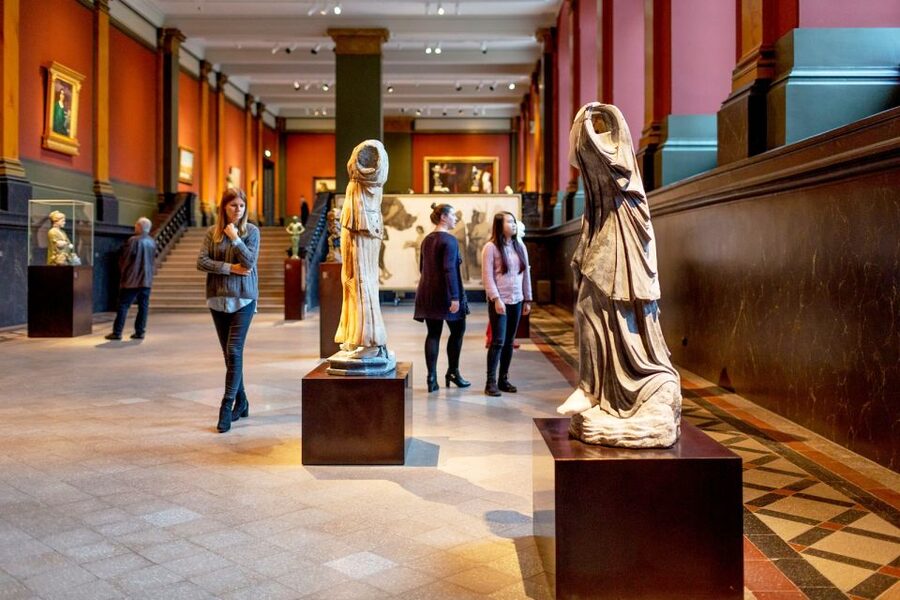
The Albertinum is built around a useful artistic conversation: painting meets sculpture, East meets West, and older art meets the present day. That gives your visit more shape than a simple march from one famous object to another.
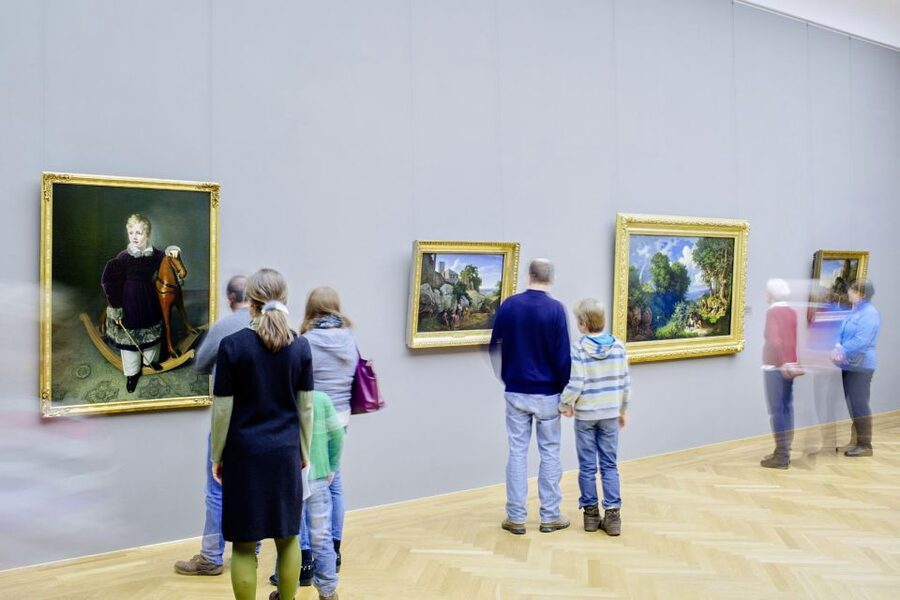
The museum presents the Galerie Neue Meister, or New Masters Gallery, alongside the Skulpturensammlung, or Sculpture Collection. The sculpture collection covers works from 1800 onward, while the painting displays reach from the 19th century into contemporary art. You can move between flat images and three-dimensional forms, then notice how the two mediums handle similar themes.
I like this arrangement because it makes the visit feel connected. A painted figure can be compared with a carved or modeled body nearby. A landscape can be considered next to an abstract form. You do not need an art degree to follow the basic thread. Look at how artists use posture, light, weight, and empty space, and the museum starts to make sense.
The collection also gives you a useful view of changing artistic priorities. Romantic painters put feeling, nature, and individual experience at the center. Later artists questioned traditional beauty, changed the shape of the human figure, and eventually treated ordinary materials and mathematical forms as serious artistic subjects.
More Museums in Dresden
- Dresden: Church of Our Lady Guided Tour of Gallery
★ 4.7 · 2,421 reviews - Dresden: Zwinger Museum Entry Ticket
★ 4.7 · 1,436 reviews - Dresden: Guided Walking Tour and Chocolate Museum Ticket
★ 4.5 · 385 reviews
Starting with Rodin’s The Thinker
The first major work you encounter is Auguste Rodin’s The Thinker. That placement matters. Rodin helped push sculpture away from smooth, idealized figures and toward stronger movement, tension, and psychological force.
Take a moment before moving on. Look at the figure’s pose, the way the body seems to carry its own weight, and the contrast between stillness and strain. The title suggests thought, but the sculpture also suggests physical effort. It is a good introduction to the Albertinum because it asks you to consider sculpture as more than a pleasing object.
The Thinker also acts as a bridge into the 20th century. The collection that follows includes works that challenge conventional forms and materials. Starting with Rodin helps you see that modern art did not appear out of nowhere. It grew from artists testing what the human body, a sculpture, and a museum display could be.
If you arrive with children, this is an easy work to discuss. Ask them what the figure is thinking, why the pose looks uncomfortable, or how the artist makes a seated person seem powerful. The museum allows children under 17 to enter the exhibition free when accompanied by an adult, but you still need to book a child ticket.
Caspar David Friedrich and German Romantic feeling
Caspar David Friedrich is one of the strongest reasons to choose this museum. His work is associated with German Romanticism, a movement that treated nature as a place of awe, mystery, and personal reflection.
Friedrich’s paintings reward slow looking. Do not rush past them in search of the sculpture galleries. Notice how the image can feel quiet but emotionally charged. Nature often seems larger than the people inside it, and the human figure may appear to be pausing before something difficult to explain.
For me, Friedrich gives the Albertinum its emotional anchor. Contemporary works can be witty, strange, or technically inventive. Friedrich offers a different kind of power. His paintings ask you to slow your pace and consider solitude, distance, and the limits of human control.
The museum’s broader chronological range makes this section even more useful. You can see how later artists reject, adapt, or echo earlier ideas about beauty and feeling. If you know only one name before visiting, make it Friedrich. If you already know his work, the Albertinum gives you a setting in which to compare him with artists from later periods.
Wilhelm Lehmbruck’s Kneeling Woman
Wilhelm Lehmbruck’s Kneeling Woman, made in 1911, brings the human figure into a different mood. This is not the confident, balanced body found in many classical sculptures. The work points toward modern sculpture, where proportion, pose, and emotional expression can be altered to create unease or vulnerability.
The date is worth remembering. In 1911, artists across Europe were testing old rules. Lehmbruck’s figure belongs to that period of change. The body is still recognizable, but it no longer needs to look conventionally perfect.
I recommend comparing it with Rodin’s The Thinker. Both works use the human body to suggest a state of mind, yet they do so in different ways. Rodin gives you concentrated physical force. Lehmbruck’s Kneeling Woman can prompt a quieter response, with more attention to fragility and distortion.
This is where the Albertinum is more rewarding than a quick checklist visit. The individual names matter, but the relationships between the works matter just as much.
Something different for another day:
- Dresden: Semperoper Tickets and Guided Tour
★ 4.7 · 12,102 reviews - Dresden: The Original Night Watchman Tour in Lantern Light
★ 4.6 · 6,653 reviews - Dresden: Semperoper and Old Town Tour
★ 4.8 · 5,735 reviews - Dresden: River Sightseeing Boat Cruise
★ 4.3 · 5,323 reviews
Contemporary works and unexpected materials
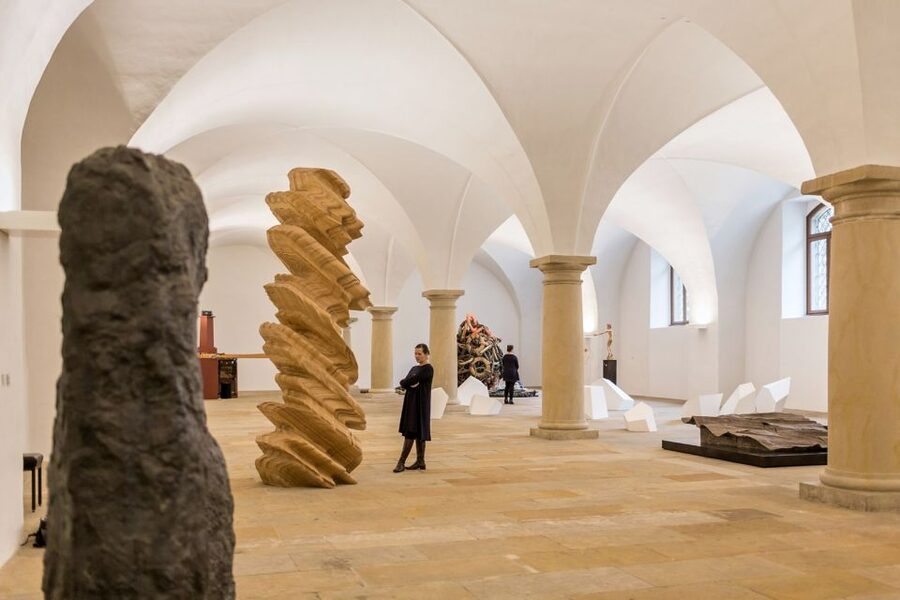
The Albertinum does not stop with familiar masters. Birgit Diecker’s Seelenfänger and Tony Cragg’s mathematically stacked cube show how contemporary artists can reshape your idea of sculpture.
The details of Cragg’s cube are especially useful to keep in mind. It uses wood, fabric scraps, and loose-leaf binders, then arranges them into a mathematical form. Those materials are ordinary and perhaps even slightly awkward. The result asks you to look at structure, repetition, and balance instead of expecting sculpture to be made from marble or bronze.
I like this kind of work because it gives you something concrete to discuss. You can ask why these materials were chosen, how the shape holds together, and whether the finished form feels more like an object, a calculation, or an idea. You may not love every contemporary piece, and that is part of the point. The collection gives you room to test your own response.
Seelenfänger adds another contemporary voice to the route. Its title suggests a work concerned with capturing or holding something intangible, although the exact meaning is yours to work out in front of it. Approach these pieces with patience. If a work seems puzzling, spend a minute looking at its texture, scale, and materials before deciding that it says nothing.
Painting beside sculpture
The Albertinum’s greatest practical strength is its combination of painting and sculpture. Many museums separate these forms into different buildings or unrelated rooms. Here, the pairing encourages you to compare how artists create presence.
A painting can suggest depth with color and perspective. A sculpture occupies actual space, catches changing light, and asks you to walk around it. You can use that difference as your guide through the museum.
I would not try to memorize every artist or period. Instead, choose a few comparisons. Friedrich’s treatment of nature can be set against a later abstract work. Rodin’s body can be compared with Lehmbruck’s altered figure. Cragg’s constructed cube can be considered beside older ideas about craftsmanship and permanent materials.
This approach helps if you are not normally a museum person. You have a simple task: look at what is shown, how it is made, and what changes when you move around it. The Albertinum becomes less about passing an art test and more about noticing how artists solve visual problems.
East, West, yesterday, and tomorrow
The museum describes its collection as a meeting place for East and West, as well as for the past and the future. That broad range can feel ambitious, but it gives you a useful view of art after 1800.
The 19th-century works connect to established artistic traditions, while the modern and contemporary pieces show artists questioning those traditions. You may find that the collection’s most interesting moments come from this changeover. A realistic figure can lead to a distorted body. A carefully made object can lead to a work built from everyday scraps.
I appreciate that the Albertinum does not limit itself to one national style or one artistic argument. At the same time, a broad collection can feel less tidy than a small specialist museum. If you prefer a narrow focus, you may want to choose only two goals before arriving, perhaps Friedrich and Rodin, then allow extra time for the contemporary rooms.
How much time should you allow?
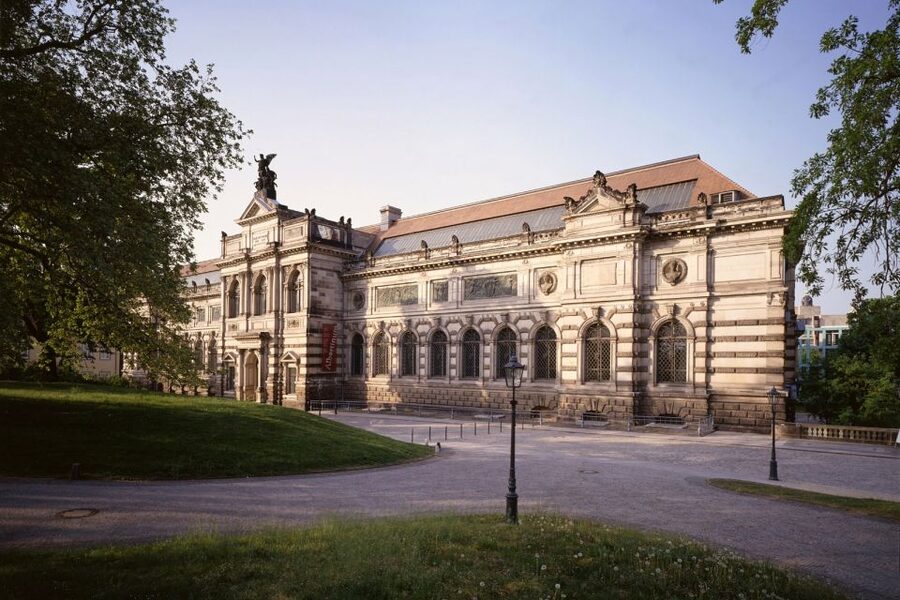
The ticket is valid for one day, not just one fixed visit period. That is helpful if you are building a full day in Dresden and want some flexibility. You can check availability for starting times before booking, while the museum’s official website should be your final source for current opening hours.
The supplied information does not give a fixed visit length, so I would not plan your day around an exact number of minutes. Your pace will depend on how closely you look at Friedrich, Rodin, and the contemporary works.
For a quick art visit, focus on The Thinker, Friedrich, Kneeling Woman, Seelenfänger, and Cragg’s cube. If you enjoy reading labels and comparing periods, allow a longer block in your schedule. Comfortable shoes are a sensible choice, and a camera is listed as something to bring, subject to any museum rules in force on the day.
Check the construction notice carefully. The second floor is closed from April 7 through April 17 because of necessary technical work. That does not mean the entire Albertinum is closed, but it does mean the full collection may not be available.
Is the $16 ticket good value?
At $16 per person, the ticket is a reasonable buy for anyone who already plans to visit Dresden for its art museums. The value comes from the range: you are not paying to see one isolated highlight. You get access to painting and sculpture from Romanticism through contemporary art, including major names and less familiar material.
The ticket is less useful if you have only a few spare minutes and dislike modern or contemporary work. The museum’s appeal depends on variety, and that variety includes pieces that may challenge your taste.
The one-day validity improves the calculation. You are not forced into a rushed sprint, and you can plan around the rest of your day. Reserve now and pay later is also available, with free cancellation up to 24 hours in advance for a full refund. That flexibility matters when weather, transport, or other Dresden plans may change.
The rating of 4.5 from 149 submitted ratings suggests a broadly positive response, while the short Russian comment translating to everything was pleasing gives a small but clear signal that the overall experience met expectations. It does not tell you which artwork will be your favorite, so use the collection’s range as the main reason to go.
Who should visit the Albertinum?
I would recommend the Albertinum to you if you like art history but want more than one period in a single stop. It is especially suitable for anyone interested in German Romanticism, modern sculpture, or the shift from traditional materials to contemporary construction.
Families can also make good use of it. The free admission for children under 17, when accompanied by an adult and booked with a child ticket, lowers the cost. Rodin’s figure, the unusual materials in Cragg’s work, and the contrast between realistic and altered bodies give you simple subjects for conversation.
The museum is wheelchair accessible, which is important for planning a comfortable visit. Still, the temporary second-floor closure may affect the route, so check the official museum information before you go.
I would be more cautious if your schedule is very tight, if the construction dates overlap your visit, or if your main interest is only one narrow period. In that case, confirm what is open and decide if the available galleries match your priorities.
Should you book the Albertinum?
Book it if you want a serious but manageable art stop in Dresden. The combination of Caspar David Friedrich, Rodin’s The Thinker, Lehmbruck, and contemporary works gives you plenty to see for $16. I especially like the way the collection lets you compare painting and sculpture rather than treating them as separate subjects.
Before paying, check the official opening hours and the April 7 to April 17 second-floor closure. If the main galleries you want are open, the one-day validity, flexible cancellation, wheelchair access, and free admission for children under 17 make this an easy addition to a Dresden itinerary.
FAQ
How much does admission to the Albertinum cost?
The entry ticket costs $16 per person.
How long is the ticket valid?
The ticket is valid for one day. Check availability for the starting times offered when you book.
What art can I see at the Albertinum?
You can see paintings from the Galerie Neue Meister and sculptures from the Skulpturensammlung. The works range from Romanticism and the 19th century through modern and contemporary art.
Can I see Caspar David Friedrich at the museum?
Yes. The Albertinum displays masterworks by German Romantic artist Caspar David Friedrich.
Is the Albertinum wheelchair accessible?
Yes, the activity is listed as wheelchair accessible.
Are children admitted free?
Children under 17 can enter the exhibition free when accompanied by an adult. You still need to book a child ticket.
Just added around Dresden
- From Dresden: Guided Day Tour by Bus of Seiffen Toy Village★ 4.0 · 13 reviews
- Dresden: Christmas Sightseeing Tour with a ‘Pflaumentoffel’★ 4.5 · 13 reviews
- Dresden: Bike Rental – City Bike with Option Children Seat★ 4.5 · 13 reviews
- Sightseeing tour by ConferenceBike★ 5.0 · 14 reviews
- Dresden Neustadt: Scavenger Hunt for Children★ 4.8 · 15 reviews
- Dresden: Scavenger Hunt to Elbe River & Castles★ 4.7 · 15 reviews
- Street Art Tour Dresden Neustadt★ 4.0 · 15 reviews
- Dresden: 150-minute Trabi tour as a guided city tour★ 4.9 · 15 reviews
Museums, compared.


Skip-the-Line: Berlin Wall Museum at Checkpoint Charlie
Read our review →
Browse the lists this tour appears in