Reviewed · BERLIN TOURS
Daily First Rickshaw promotion in Combi Vehicle public Group 90€
Berlin fits a lot into four easy wheels. This private rickshaw ride gives you a close look at central Berlin without the strain of a long walking tour. I like the small two-person format and the way the guide can stop beside major sights for photographs. I also like the covered seat, blanket, bottled water, and door-to-door movement between monuments.
The main consideration is price. At about $216.74 per group of up to two, or a stated promotional rate of €90 for the daily first rickshaw, the value depends heavily on which price you receive. This is not a museum-entry tour, and four hours in a rickshaw can feel long if you prefer exploring interiors on foot.
In This Review
- Berlin’s major sights in one comfortable ride
- Why a rickshaw works well in central Berlin
- Alexanderplatz and Museum Island: a fast start with grand views
- Bebelplatz reveals Berlin’s darker chapter
- Gendarmenmarkt offers Berlin at its most polished
- Checkpoint Charlie puts the Cold War in view
- Topography of Terror brings the Nazi era into focus
- Potsdamer Platz shows the city remade
- The Holocaust Memorial demands a quiet pause
- The Brandenburg Gate closes the central route
- Comfort, weather, and the practical details
- Is the $216.74 price fair?
- Who should book this Berlin ride?
- Final verdict: book it for comfort and context
- FAQ
- How long does the Berlin rickshaw tour last?
- How many people can join one rickshaw?
- What language is the tour offered in?
- Where does the tour start?
- Where does the tour finish?
- Are admission tickets included?
- Is this tour suitable for less mobile people?
- Can I cancel for a full refund?
Berlin’s major sights in one comfortable ride
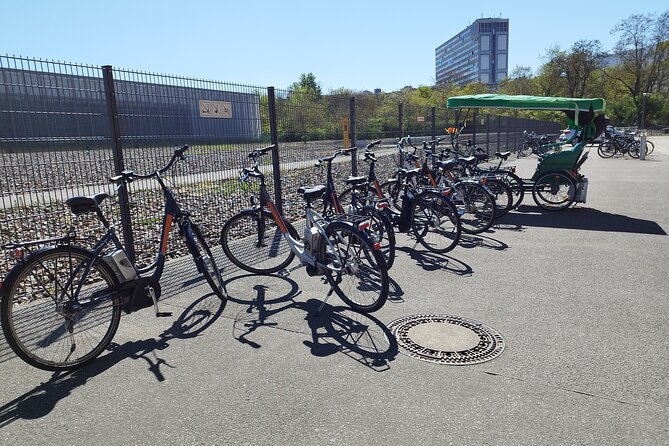
- A private group of up to two: You get a personal guide rather than a large coach or crowded walking group.
- Nine central Berlin stops: The route covers Alexanderplatz, Museum Island, Bebelplatz, Gendarmenmarkt, Checkpoint Charlie, Potsdamer Platz, the Holocaust Memorial, and the Brandenburg Gate.
- A strong history focus: The tour connects Prussian Berlin, Nazi Germany, the Berlin Wall, reunification, and modern government.
- Easy sightseeing for less mobile visitors: You enter the rickshaw in only a few steps and can stop close to monuments for photographs.
- A 9 a.m. start is worth considering: The guide specifically recommends this time because the sights are less crowded.
- Weather protection matters: A roof and blanket helped keep one couple comfortable during a rainstorm, though Berlin weather can still affect the experience.
Why a rickshaw works well in central Berlin
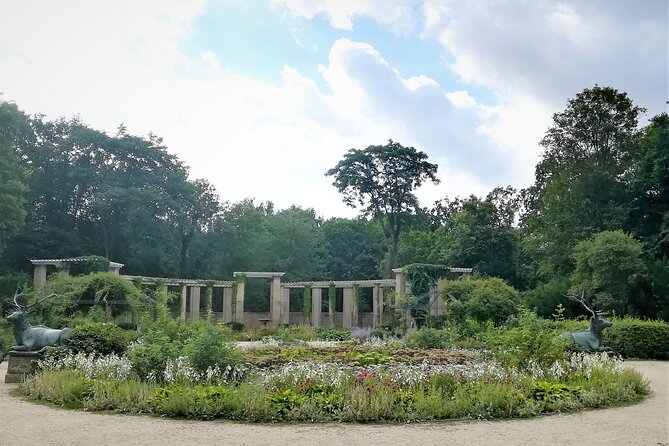
Berlin’s central sights are spread across a surprisingly large area. A walking route from Alexanderplatz to the Brandenburg Gate takes effort, especially when you add photo stops, traffic crossings, and time spent orienting yourself.
The rickshaw solves that problem in a simple way. You sit while the driver handles the movement between sights, and you can focus on the buildings and stories around you. I like this format for a first day in Berlin because it gives you a broad map of the center without asking you to spend the whole day underground or on foot.
The vehicle also gets you close to monuments. The tour information says you can stop almost anywhere for photographs and can even view some sights without leaving the rickshaw. That makes a real difference if you have limited mobility, sore knees, or simply want a gentler introduction to the city.
This is a private experience for a maximum of two people. Extra rickshaws can be added for larger groups, but the supplied details do not give the added price. If you are traveling with friends or family, confirm that cost before booking.
The guide is a major part of the value. Levi is named in the tour material, and the comments describe him as friendly, amusing, safe, and good at adapting the ride to personal interests. One couple also praised his photography, saying he stopped often for pictures and even allowed time for snacks.
Other Berlin trips people book alongside this one:
- Berlin: Reichstag, Dome and Government District Guided Tour
★ 4.7 · 18,288 reviews - Berlin: 1-Hour City Tour by Boat with Guaranteed Seating
★ 4.3 · 16,993 reviews - Berlin: Boat Tour Along the River Spree
★ 4.4 · 11,252 reviews
Alexanderplatz and Museum Island: a fast start with grand views
The stated route begins at Berlin’s tallest structure, the 365-meter Fernsehturm on Alexanderplatz. The tower itself is an excellent orientation point, even if you do not go up. Admission is not included, and the tour allows only about five minutes here, so think of this as an exterior photo stop rather than a tower visit.
From Alexanderplatz, the rickshaw passes the Red Town Hall, Marien Church, and Neptune Fountain before reaching Museum Island. This opening stretch gives you a quick look at several layers of Berlin: civic buildings, church architecture, public sculpture, and the old city center.
Museum Island receives about 15 minutes. That is enough to see the setting and photograph the Berlin Cathedral, but not enough to visit the museums. The complex includes the Altes Museum, Neues Museum, Bode Museum, Berlin Cathedral, and the City Palace area. Admission to this stop is free because the tour does not include entry tickets.
I would treat Museum Island as a preview. If you want the Pergamon Museum or Neues Museum, plan a separate visit. The rickshaw tour is useful here because it shows you where the museums are, helping you choose which one deserves your limited museum time later.
Bebelplatz reveals Berlin’s darker chapter
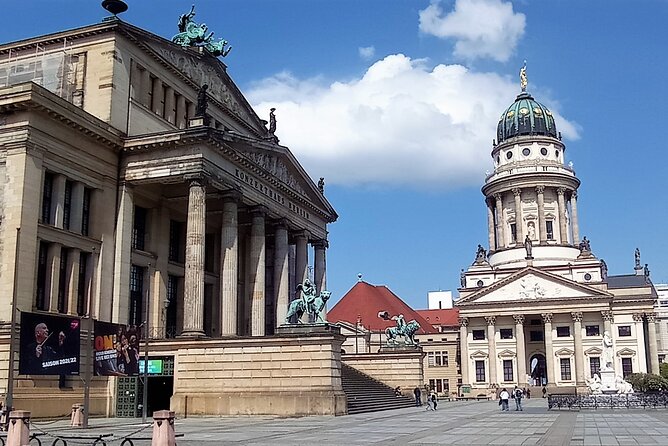
Bebelplatz is one of the most important stops on the route, despite the short ten-minute visit. The square forms part of the Forum Fridericianum, a group of major buildings that includes the State Opera, Humboldt University, the State Library, the Law Faculty, and St. Hedwig’s Cathedral.
The square is also linked to the Nazi book burning of May 10, 1933. Books labeled anti-German were destroyed here in a public display of repression. That event gives Bebelplatz a weight that is easy to miss if you only photograph the surrounding architecture.
This is where a good guide matters. The buildings are attractive, but the story is the real reason to stop. You can expect an exterior explanation rather than an extended museum-style lesson, since the schedule allows ten minutes and no entry ticket is included.
Gendarmenmarkt offers Berlin at its most polished
Gendarmenmarkt is one of the city’s grandest squares. The former Royal Concert Hall sits between the German Cathedral and French Cathedral, with statues and monuments completing the composition.
The tour allows another ten minutes. That is enough for a look around and a few photographs, but not for a leisurely architectural study. The square has been affected by construction at various times, so the exact visual experience can change. Still, its proportions and cluster of monumental buildings make it one of the most rewarding quick stops.
I like the contrast between Bebelplatz and Gendarmenmarkt. At Bebelplatz, the guide can point out how culture was attacked. At Gendarmenmarkt, you see the ceremonial side of Berlin’s past, with churches, concert architecture, and formal public space packed into one location.
Something different for another day:
- Discover Berlin Half-Day Walking Tour
★ 5.0 · 9,624 reviews - Berlin: Hop-on Hop-off Bus Tour with Live Commentary
★ 4.3 · 8,579 reviews - Berlin: Government District around the Reichstag Guided Tour
★ 4.7 · 8,447 reviews - Berlin: Reichstag, Plenary Chamber, Cupola & Government Tour
★ 4.6 · 8,422 reviews
Checkpoint Charlie puts the Cold War in view
Checkpoint Charlie receives only five minutes, so keep your expectations in check. You will see the former border crossing and hear about the Berlin Wall, which divided the city for 28 years before its fall in 1989.
The site is a useful reminder of Berlin’s divided past, but it is also one of the city’s most commercialized historic locations. The rickshaw format helps by keeping the visit short and focused. You do not lose a large part of the afternoon to a place that may not require a long stop.
The tour also follows part of the former border strip. Original sections and memorial markers help connect the checkpoint to the wider story of families, friends, and communities separated by the wall. If this subject interests you, ask the guide for suggestions for a longer Berlin Wall visit after the tour.
Topography of Terror brings the Nazi era into focus
The ten-minute stop at the Topography of Terror is one of the route’s most serious moments. This documentation center explains the crimes of the Nazi period and occupies a site connected to the institutions of Nazi terror.
The tour also passes Martin-Gropius-Bau, a pre-war exhibition building known for major temporary shows. The supplied information notes exhibitions connected with Ai Weiwei and David Bowie, giving you a sense of the building’s modern cultural role.
The Prussian Landtag is also part of this section of the route. Its late nineteenth-century building links the area to Prussian political history. In a short span, you move from Nazi documentation to art exhibitions and older government architecture.
Again, ten minutes is enough for context, not a full museum visit. The Topography of Terror deserves more time if you want to read its exhibits carefully. I would mark it as a place to return to, especially if twentieth-century German history is a main reason for your Berlin visit.
Potsdamer Platz shows the city remade
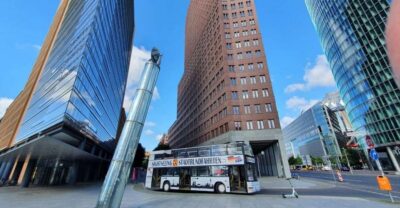
Potsdamer Platz presents a different Berlin. After the Second World War and the city’s division, the area fell into disrepair. Following German reunification in 1990, it became one of Europe’s largest construction sites.
The result is a group of modern towers and futuristic buildings, with the Sony Center as its best-known feature. The stop lasts about ten minutes and offers a quick look at how reunification changed the physical center of Berlin.
This part of the tour is valuable because it prevents the city from becoming only a collection of old monuments. Berlin’s story includes rebuilding, new commercial districts, and the attempt to connect areas once separated by war and politics.
The Holocaust Memorial demands a quiet pause
The Memorial to the Murdered Jews of Europe is one of the tour’s most important stops. Its field of concrete blocks commemorates the six million Jews murdered under National Socialism.
The schedule gives you ten minutes. You can walk among the blocks or view them from the rickshaw, but ten minutes is brief for a memorial that rewards silence and personal reflection. The site is open to the public, while the underground information center requires a separate visit if you want more historical detail.
The tour’s emphasis here is remembrance and the responsibility to oppose cruelty and intolerance. That message fits naturally with the earlier stop at Bebelplatz and the Topography of Terror. Together, these sites create a clear historical thread rather than a random checklist of attractions.
The Brandenburg Gate closes the central route
The Brandenburg Gate is the grand finish to the listed sightseeing route. Once a city gate, it became a symbol of Berlin’s division and later of German reunification.
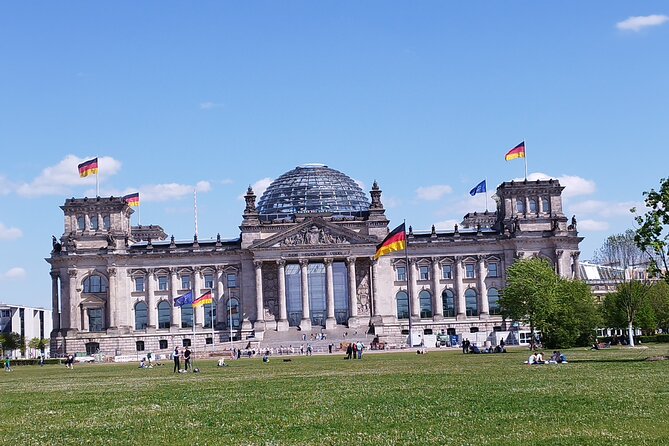
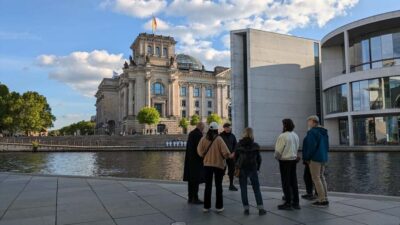
The final section also includes the Memorial to the Murdered Sinti and Roma, the Reichstag and Bundestag, the Chancellery, and the wider government district. The information provided does not specify a separate time allowance for every one of these places, so expect exterior views from the rickshaw and guide commentary rather than interior access.
The route begins in the former eastern part of central Berlin and crosses toward the government district. That movement gives the tour a useful geographic shape. You are not only seeing famous monuments, you are watching the city shift from royal Berlin to Nazi-era sites, Cold War borders, reunified architecture, and today’s political center.
Comfort, weather, and the practical details
The rickshaw includes WiFi, bottled water, and alcoholic beverages. The vehicle has a roof, and blankets are available. One especially useful detail comes from a rainy outing: the guide pulled over during a storm, continued explaining Berlin, and used the roof and blanket to help keep the couple dry and warm.
That does not make the ride weatherproof. Berlin rain can still affect visibility and comfort, so check the forecast and dress sensibly. The guide’s willingness to adapt is encouraging, but you should not book this expecting guaranteed sunshine.
The meeting point is Weinbergsweg 6, 10119 Berlin. The ride ends back at the same meeting point. The location is near public transportation, and confirmation is provided when you book.
The experience is offered in English. The supplied details also say most people can participate and that it suits less mobile visitors. You enter the rickshaw in only a few steps, and the vehicle can stop close to monuments. It is still sensible to ask about your specific mobility needs before booking, since the information does not describe wheelchair storage or transfer assistance.
Is the $216.74 price fair?
The listed price is $216.74 per group of up to two, while the promotion is described as a daily first rickshaw rate of €90. Those figures are far apart, so check the actual price displayed for your date and booking conditions before making a decision.
At the full listed price, this is not the cheapest way to see Berlin. You are paying for a private guide, a four-hour vehicle, flexible photo stops, and a comfortable ride through a wide section of central Berlin. For two people, the cost becomes easier to justify because it is a group price rather than two separate per-person charges.
The value is strongest if you want personal attention, have limited time, dislike large groups, or cannot manage a long walking route. It is weaker if you mainly want museum interiors, since admission is not included and most stops are short exterior visits.
Tips are not included. WiFi, water, and alcoholic beverages are listed as included, though those extras should not be the main reason you book. The guide’s ability to adjust the route to your interests is more important.
Who should book this Berlin ride?
I would recommend it for a couple seeing Berlin for the first time, especially if you want a broad introduction before choosing which sites to revisit. It also suits older visitors and people who want to reduce walking while staying close to the monuments.
Families may like the informal style, particularly because the guide can keep the ride light and stop for photographs. The tour is also a good match for anyone interested in the connections between Prussian Berlin, Nazi persecution, the Berlin Wall, and reunification.
I would hesitate if you want a slow museum day or detailed time inside each memorial. The schedule covers nine major areas in about four hours, so the experience is about orientation, storytelling, and comfortable movement. You will need separate visits for the museums and documentation centers.
Starting at 9 a.m. is a smart choice. The guide recommends it because the sights are less crowded, and an earlier start gives you a calmer look at places such as Museum Island and the Brandenburg Gate.
Final verdict: book it for comfort and context
Book this rickshaw tour if you want to see a large part of central Berlin without a tiring walk. The strongest features are the private two-person format, the guide’s friendly style, frequent photo stops, and the ability to get close to major monuments.
Skip it if your priority is entering museums or spending long periods at memorials. At the full listed price, it makes the most sense for two people who value comfort and personal guiding. If you can secure the stated €90 first-rickshaw promotion, the value becomes much more attractive.
FAQ
How long does the Berlin rickshaw tour last?
The tour lasts approximately four hours.
How many people can join one rickshaw?
One rickshaw accommodates a maximum of two people. Additional rickshaws can be added for larger groups.
What language is the tour offered in?
The tour is offered in English.
Where does the tour start?
The meeting point is Weinbergsweg 6, 10119 Berlin, Germany.
Where does the tour finish?
The activity ends back at the meeting point.
Are admission tickets included?
Admission tickets are not included for the Fernsehturm, and the tour generally focuses on exterior views. Museum Island and the other listed outdoor stops have no additional admission charge during the ride.
Is this tour suitable for less mobile people?
The experience is described as suitable for less mobile people. You enter the rickshaw in a few steps, and the vehicle can stop close to monuments.
Can I cancel for a full refund?
You can cancel for a full refund if you do so at least 24 hours before the experience starts. Cancellations or changes made less than 24 hours before the start time are not accepted for a refund.
Just added around Berlin
- Kreuzberg Private Walking Tour: Immigrants, Artists & Hipsters★ 5.0 · 3 reviews
- Private Photo Tour in Kreuzberg★ 5.0 · 3 reviews
- Individual city tour Berlin for max. 8 persons★ 5.0 · 3 reviews
- Berlin’s Jewish Heritage: Private Tour of the Vibrant Jewish District★ 5.0 · 3 reviews
- Berlin & The Third Reich Private Guided Tour★ 5.0 · 3 reviews
- Private Analogue Photography Experience in Berlin★ 5.0 · 3 reviews
- Spy Mission in Berlin: Self-Guided Espionage Puzzle Quest★ 5.0 · 3 reviews
- Berlin Christmas Markets Walking Tour with Local Guide★ 5.0 · 3 reviews
Berlin Tours, compared.
Reichstag, Dome and Government District Guided Tour
Read our review →
1-Hour City Tour by Boat with Guaranteed Seating
Read our review →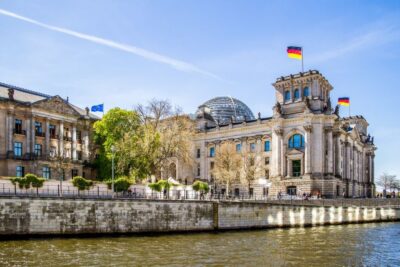

Government District around the Reichstag Guided Tour
Read our review →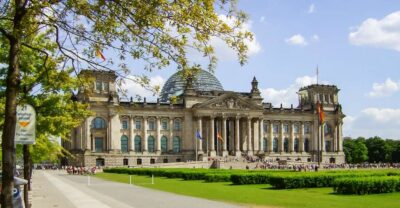
Reichstag, Plenary Chamber, Cupola & Government Tour
Read our review →