
Reviewed · MEMORIAL & CONCENTRATION CAMP TOURS
Dachau Memorial Public Tour
Dachau asks for your full attention. This five-hour tour makes that easier with a small group capped at 15 people and a professional guide who gives the site its needed historical context. I like the chance to see the memorial with a guide, and I like that the outing begins and ends at Marienplatz, a simple base in central Munich. The main drawback is the price: at $118.74 per person, you are paying mainly for guidance and organization, since admission to the memorial itself is free.
The subject is painful, and the tour is not built for light sightseeing. Guides Charlotte and Michael have been praised for clear, passionate teaching, with Michael leading a respectful minute of silence outside the crematorium. You should also allow for the emotional weight of the visit, along with the practical fact that food and drinks are not included during the roughly five-hour outing.
In This Review
- Key points to know before booking
- Why Dachau belongs on a Munich itinerary
- Meeting at Marienplatz at 10:00 a.m.
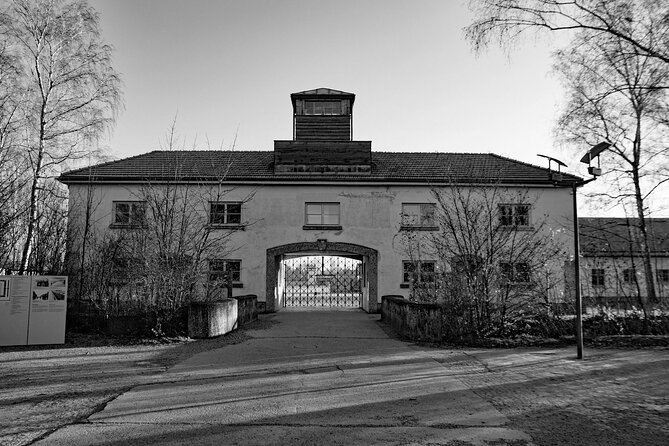
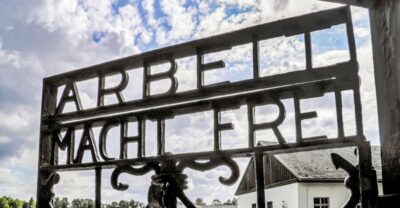
- Entering through the Jourhaus and Main Gate
- The Roll Call Area and International Monument
- Inside the Former Maintenance Building museum
- The Bunker and reconstructed barracks
- Religious memorials and the crematorium area
- Guard towers, walls, and the structure of control
- The guide makes the biggest difference
- Is $118.74 a fair price?
- Who should book this memorial tour?
- Should you book the Dachau Memorial Public Tour?
- FAQ
- Where does the Dachau Memorial Public Tour begin?
- What time does the tour start?
- How long does the tour last?
- Where does the tour end?
- What is included in the price?
- Is admission to the Dachau Memorial Site included?
- Can I cancel for a full refund?
Key points to know before booking
- Dachau was the Nazis’ first concentration camp in Germany, opened in 1933 for political prisoners before becoming a forced-labor camp.
- The maximum group size is 15, giving the guide a better chance to speak clearly and answer questions.
- Charlotte and Michael received strong praise for explaining both Dachau and the wider Second World War period.
- The tour visits the main memorial areas, including the Jourhaus gate, Roll Call Area, museum, prison, barracks, religious memorials, guard towers, and crematorium area.
- The outing lasts about five hours, starts at 10:00 a.m. from Fischbrunnen at Marienplatz, and returns to the same meeting point.
- The $118.74 cost includes a professional guide, but not food or drinks. Admission to the memorial site is free.
Why Dachau belongs on a Munich itinerary
Dachau was opened in 1933, making it the first concentration camp established by the Nazis in Germany. It began as a prison for political opponents, then became a model for the wider camp system and a place where methods of terror were developed and taught.
Over its 12 years of operation, more than 200,000 people from 34 nations were imprisoned there. Around 40,000 people were killed. Those numbers are hard to grasp on their own, which is why a guided visit can matter. A good guide connects the physical site to the people who were held there and explains how Dachau changed over time.
I would not treat this as just another stop between Munich museums and beer halls. The memorial asks you to slow down and pay attention. The buildings, open spaces, prison cells, religious memorials, and remaining security structures do not tell the whole story by themselves. The guide helps put them in order.
The tone also matters. This is not a theatrical tour, and it should not be. The most praised part of the experience is the guide’s serious, informed approach. Charlotte was singled out for her command of Dachau and the wider wartime history of Germany and Europe. Michael was praised for his clear explanations and for leading a minute of silence near the crematorium.
More memorial visits:
- Dachau Concentration Camp Memorial Site Tour from Munich by Train
★ 4.5 · 5,637 reviews - From Munich: Dachau Memorial Site Day Tour
★ 4.8 · 2,723 reviews - From Munich: Dachau Memorial Site Half-Day Trip
★ 4.7 · 2,526 reviews
Meeting at Marienplatz at 10:00 a.m.
The tour begins at Fischbrunnen, Marienplatz 8, in central Munich, at 10:00 a.m. Starting in the city center is useful if you are staying near the old town or using Munich’s public transport system. The meeting point is near public transportation, which makes it easier to reach than a departure point on the city’s edge.
Because the tour returns to the same meeting point, you do not need to arrange a separate return plan. That is helpful after an emotionally demanding visit. You can finish the day where you started, with the rest of Munich still within reach.
The exact transport arrangements are not provided in the tour details, so you should check the meeting instructions after booking. Your confirmation arrives at the time of booking, and the mobile ticket is convenient for keeping the details close at hand.
The 10:00 a.m. start gives you a clear half-day plan. The total duration is about five hours, so you should not schedule a tight lunch reservation or another major activity immediately afterward. The memorial deserves time, and the group may pause for explanation and reflection.
Entering through the Jourhaus and Main Gate
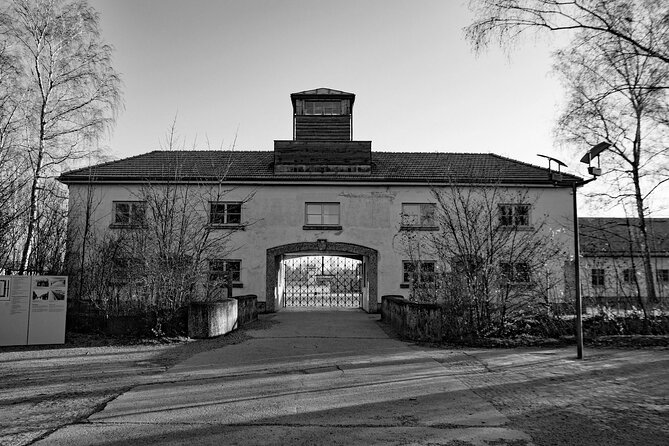
The first major point at the memorial is the Main Gate, known as the Jourhaus. This was not simply an entrance for visitors. It was tied to the camp administration and formed part of the system that controlled the prisoners’ daily lives.
Walking through this gate gives the visit a strong beginning. You move from the ordinary world into a place designed to strip people of freedom, privacy, and dignity. A guide can explain the role of the gate and administration without reducing the experience to a quick photo stop.
I appreciate that the tour begins with the site itself rather than a long introduction away from Dachau. The physical setting gives the history a sharper focus. You are not only hearing about an institution from a textbook. You are seeing the structures that helped make it function.
At the same time, do not expect the entire original camp to survive unchanged. Some parts have been preserved, while others have been reconstructed or marked through memorial installations. The guide’s explanations help you understand what is original, what has been rebuilt, and why the site looks as it does today.
The Roll Call Area and International Monument
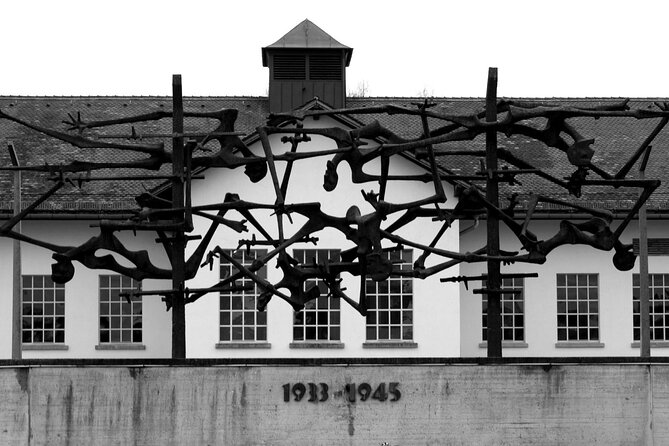
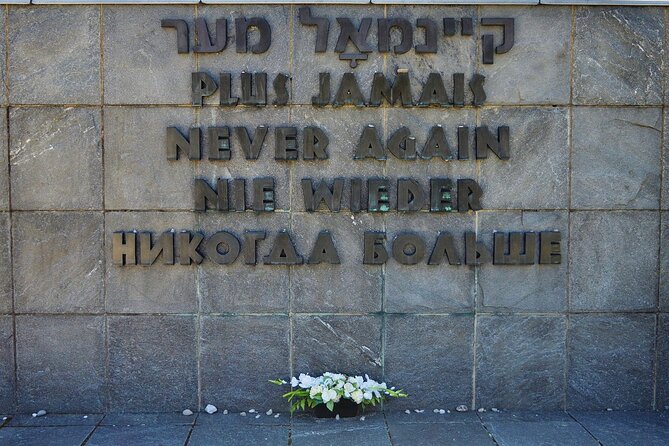
From the gate, the tour continues to the Roll Call Area. This large space was used to assemble prisoners for counting and inspection. Today, it is marked by the International Monument, created in memory of those who suffered at Dachau.
This area may feel stark because of its size and openness. That is part of its force. A place built for control and public humiliation now serves as a place of remembrance. The contrast is not accidental, and your guide can help explain the meaning of the monument and the space around it.
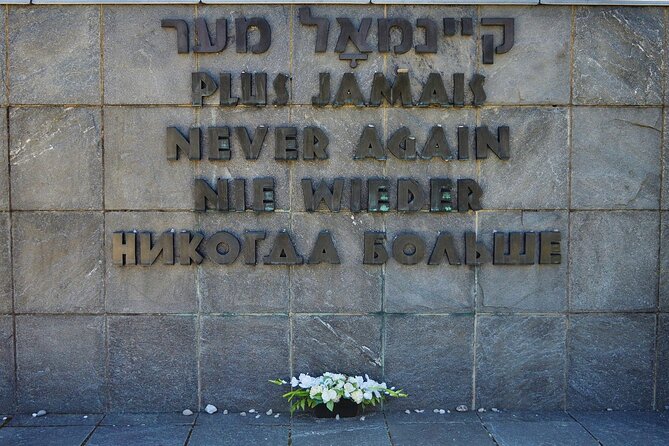
The International Monument also reflects the many nationalities represented at Dachau. The camp held people from 34 nations, so the history is not limited to Germany or to one group of victims. You should expect the guide to connect the local site with the wider European history of Nazi persecution.
This is one of the places where a small group helps. With no more than 15 people, it is easier to stay together and hear the explanation. A much larger crowd can make a memorial visit feel rushed or scattered. Here, the group size supports a quieter pace.
Something different for another day:
- From Munich: Neuschwanstein & Linderhof Castle Full-Day Trip
★ 4.5 · 12,494 reviews - Neuschwanstein & Linderhof Castle-Fairytale Day Tour from Munich
★ 4.5 · 7,275 reviews - Munich: Third Reich & WWII Walking Tour
★ 4.6 · 6,181 reviews - Neuschwanstein Castle Tour from Munich
★ 4.5 · 5,117 reviews
Inside the Former Maintenance Building museum
The Former Maintenance Building now houses the main museum. This is where you get the fuller historical framework for what happened at Dachau, including exhibits and documentary material.
I see this museum stop as essential, not optional. The outdoor grounds show you the camp’s layout, but the museum explains how the camp was established, how it operated, and how its role changed. It also helps place individual buildings into the larger system.
Dachau began as a camp for political prisoners in 1933. Later, it became a forced-labor camp holding more than 200,000 people over its years of operation. That change is important. The museum can help you understand how a site created for one purpose became part of a much broader machinery of imprisonment, labor, and murder.
The exhibits and documentaries may be difficult to absorb. I would take your time rather than trying to remember every date and figure. Focus on the main pattern: the creation of the camp, the expansion of Nazi persecution, the daily control of prisoners, the use of forced labor, and the deaths that followed.
Because the tour is guided, you can also ask for clarification as you go. The praise given to Charlotte and Michael suggests that the quality of the explanation is one of this outing’s strongest features.
The Bunker and reconstructed barracks
The Bunker was the camp prison. Its purpose was punishment and control within an already brutal system. Seeing it gives you a more specific sense of how prisoners could face additional confinement and abuse inside the camp.
The tour also enters two reconstructed barracks. These offer a glimpse into the conditions of prisoners’ daily lives. They are not simply rooms to walk through. They help show the cramped, controlled nature of life inside Dachau and the lack of privacy built into the camp system.
You should keep one point in mind: reconstructed buildings are interpretations of the past, not untouched time capsules. That does not make them unhelpful. It means you should listen closely to the guide’s explanation of what has survived and what has been recreated.
The barracks are likely to be among the most accessible parts of the visit because they make daily life easier to picture. The museum supplies the larger history, while the barracks bring the experience down to the scale of beds, rooms, and human routines controlled by the camp authorities.
Religious memorials and the crematorium area
Dachau includes several religious memorials. Together, they express remembrance across different faiths and point to the diversity of the people imprisoned at the camp. They also provide a different mood from the administrative buildings, prison, and barracks.
Do not rush past these memorials as minor additions. They are part of the site’s effort to remember victims as people with identities, beliefs, and communities, rather than only as statistics. Their presence also reflects the international and religious range of those held at Dachau.
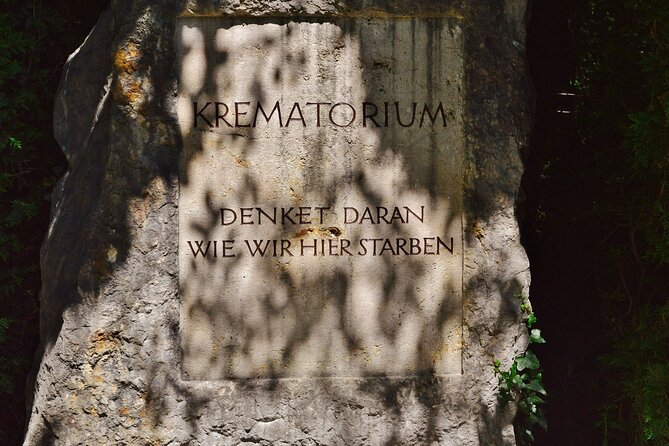
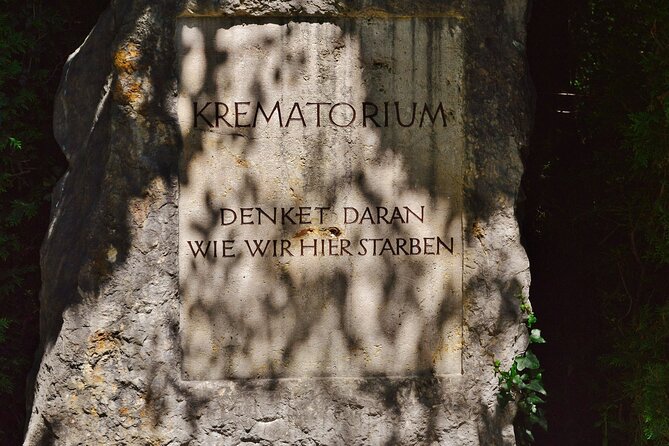
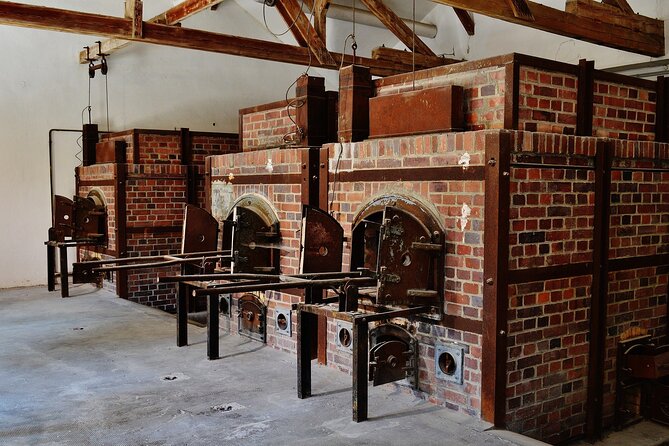
The crematorium area is one of the most difficult parts of the visit. The tour includes this area, and Michael was praised for leading a minute of silence outside the crematorium to remember those who died. That pause is a small but meaningful part of the experience. It gives the group a chance to stop listening, stop moving, and show respect.
You should prepare yourself for the emotional shift here. Earlier sections explain the camp’s structure and daily life. The crematorium area brings the killing directly into focus. A respectful guide will not turn this into spectacle, and the reported approach from Michael suggests the moment is handled with care.
Guard towers, walls, and the structure of control
The security installations include guard towers, sections of the outer wall, and other features that show how the camp was enclosed and controlled. These details can seem practical at first, but they reveal the physical system behind the terror.
A camp does not operate through ideology alone. It needs gates, walls, towers, rules, guards, and procedures. Seeing those structures helps explain how prisoners were prevented from leaving and how the camp authorities maintained power over daily movement.
Some sections of the outer wall have been partially reconstructed. Again, the guide’s role is important because you need context to understand the difference between original remains and later reconstruction. The physical traces may be incomplete, but their function is clear when explained on site.
This part of the tour also helps you understand Dachau as a model for other camps. It was not only a place where prisoners suffered. It became an Academy of Terror, a training ground for brutality and an example for the wider concentration-camp system.
The guide makes the biggest difference
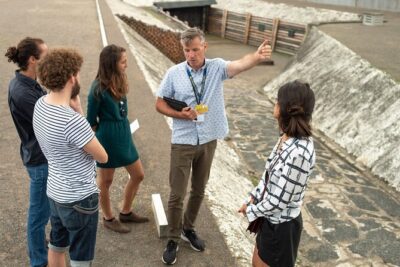
The strongest reason to choose this tour is the guide. The memorial site is free, but the history is complicated, painful, and easy to encounter in fragments. A professional guide gives you a sequence, explains the terms, and helps you connect the buildings to the people who lived and died there.
Charlotte received praise for her command of Dachau and the wider history of Germany and Europe during the Second World War. That wider knowledge matters because Dachau cannot be understood as an isolated place. Michael was praised for being informative and passionate, and for creating a quiet memorial moment near the crematorium.
The group limit of 15 is another practical advantage. It is small enough for the guide’s voice to reach the group more easily and for questions to feel possible. It also reduces the risk of being lost in a large crowd during transitions between buildings.
Still, guide quality can vary from one departure to another. Charlotte and Michael are named guides associated with particularly positive experiences, but you cannot assume either one will lead your departure. The included professional guide is the core value, yet the exact personality and teaching style may differ.
Is $118.74 a fair price?
At $118.74 per person, this is not a budget outing. Since admission to the Dachau Memorial Site is free, the cost pays for the guide, organization, and the round-trip experience from central Munich.
I think the price can be justified if you want structured historical teaching and do not want to manage the visit alone. The five-hour duration is substantial, and the maximum group size of 15 is better than a mass tour. The value is strongest for you if this is your first visit to Dachau and you want help understanding the site in context.
The price is harder to justify if you mainly want transport or a quick look around. Food and drinks are not included, and you should plan for those yourself. You are also paying for a serious educational experience, not entertainment.
Group discounts may help if you are booking for several people. Free cancellation is available if you cancel at least 24 hours before the 10:00 a.m. start time. Changes or cancellations inside that period are not accepted for a refund, so keep the cutoff in mind when your plans are uncertain.
Who should book this memorial tour?
I would choose this tour if you want:
- A guided introduction to Dachau from Munich
- A small group rather than a large organized crowd
- Clear historical background alongside the physical site
- A half-day plan that begins and ends in central Munich
- A respectful visit that includes time near the crematorium area
- Help connecting Dachau to the wider history of Nazi Germany and Europe
You should think carefully before booking if you are looking for a light or flexible morning. The subject is grave, and the visit may stay with you after you leave. The schedule is also fixed, with a 10:00 a.m. start and a total duration of about five hours.
Most people can participate, and the site is near public transportation. Still, the information does not provide detailed mobility notes for every part of the memorial, so you should ask the provider if you have specific access needs.
Should you book the Dachau Memorial Public Tour?
Yes, if you want a serious, guided visit and value context more than saving money. The free admission does not remove the need for thoughtful interpretation, and this tour’s small group and praised guides are its clearest strengths.
I would book it well ahead, since it is typically reserved about 36 days in advance. Choose it for the careful explanations, the complete five-hour visit, and the chance to approach the memorial with a professional guide. Do not book it expecting casual sightseeing. Dachau is a place for memory, honesty, and attention, and this tour appears best suited to that purpose.
FAQ
Where does the Dachau Memorial Public Tour begin?
It begins at Fischbrunnen, Marienplatz 8, 80331 Munich, Germany.
What time does the tour start?
The tour starts at 10:00 a.m.
How long does the tour last?
The experience lasts approximately five hours.
Where does the tour end?
The tour ends back at the meeting point at Marienplatz.
What is included in the price?
The price includes a local professional guide on the public guided tour.
Is admission to the Dachau Memorial Site included?
Admission to the memorial site is listed as free. The tour price covers the guided experience.
Can I cancel for a full refund?
Yes. You can cancel for a full refund if you do so at least 24 hours before the experience start time. Cancellations or changes made less than 24 hours before the start are not accepted for a refund.
Just added around Munich
- Munich WWII and Dachau Concentration Camp Private Tour with Licensed Guide★ 5.0 · 3 reviews
- Munich Photoshoot: A Must-Have Holiday Experience!★ 5.0 · 3 reviews
- München: Braukurs mit Führung und Verkostung★ 4.2 · 4 reviews
- Mozart and German Composers Private Tour in Munich★ 4.8 · 4 reviews
- CITY QUEST Munich: reveal the secrets of this city!★ 4.0 · 4 reviews
- Private audio book city rally in Munich city centre★ 4.0 · 4 reviews
- Culinary Haidhausen – The Food Tour★ 4.3 · 4 reviews
- Private Munich History and Beer Culture Walking Tour★ 5.0 · 4 reviews
Memorial & Concentration Camp Tours, compared.
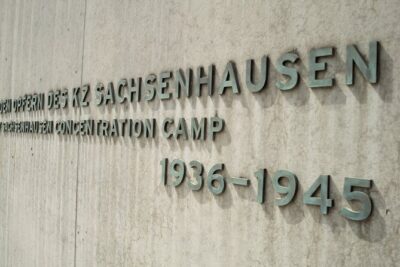
Sachsenhausen Concentration Camp Tour in English
Read our review →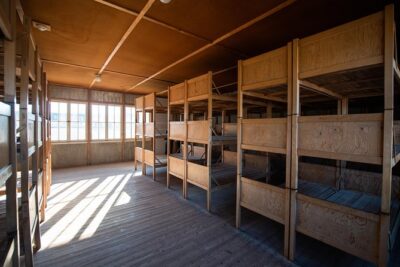
Dachau Concentration Camp Memorial Site Tour from Munich by Train
Read our review →
Sachsenhausen Concentration Camp Memorial Tour
Read our review →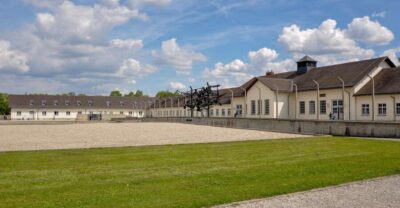
Sachsenhausen Concentration Camp Bus Tour in English from Berlin
Read our review →Sachsenhausen Concentration Camp Tour in English
Read our review →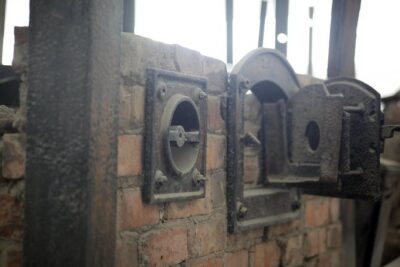
Sachsenhausen Concentration Camp Memorial Tour (Max. 15 Guests)
Read our review →Browse the lists this tour appears in