Reviewed · PRIVATE
Cold War Berlin – Private Live Virtual Experience
Cold War stories come alive from your sofa. This one hour private Zoom tour links Berlin’s divided past with places you can see in real time, from Checkpoint Charlie to the old Berlin Wall. I like the live format because you can ask questions instead of watching a fixed recording, and I like the mix of famous sights with odd details such as East Germany’s Trabant cars. The main drawback is simple: you see Berlin on a screen, not under your own feet.
I also like the private setup, since only your group takes part. That makes this a good Sunday evening activity for a household, family, or small group of friends. Still, the tour covers a lot in about an hour, and the visual quality will depend on your internet connection, device, and the guide’s outdoor conditions.
In This Review
- Four things to know before you book
- Why a virtual Cold War tour can work
- Gropius Bau, five minutes of art and wartime scars
- Topography of Terror and the Berlin Wall, 15 minutes
- Trabant cars and everyday life in East Germany
- Checkpoint Charlie and the 1961 tank standoff
- What the $23 price really buys you
- Who will enjoy this most
- The guides and the tone of the session
- Timing, technology, and cancellation details
- Should you book Cold War Berlin?
- FAQ
- How long does the Cold War Berlin virtual experience last?
- What software do I need?
- Is the tour private?
- Can I ask the guide questions?
- Which Berlin sites are included?
- Is admission to the sites included?
- What is the cancellation policy?
- What happens if poor weather cancels the experience?
Four things to know before you book
- Checkpoint Charlie provides the dramatic finale: Learn why the 1961 tank standoff brought the Cold War close to nuclear conflict.
- The Berlin Wall appears in its original setting: The route includes the former SS and Gestapo headquarters and the wall site beside it.
- A Trabant collection adds humor to serious history: East Germany’s famous mass produced car gives the tour a useful everyday angle.
- Your guide is live and available for questions: Past sessions have featured engaging guides named Sam and Taylor.
- The experience is private for $23: Your own group participates, with group discounts available.
- You need Zoom and a suitable device: The software must be downloaded before you join.
Why a virtual Cold War tour can work
Berlin is a city where history often hides in plain sight. A remaining section of wall, a former border crossing, or a scarred building can look ordinary until someone explains what happened there. This experience uses a live guide to give those places meaning while you watch from home.
You are not simply being shown a slideshow. The guide connects with your group through Zoom and takes you through several Berlin sites in real time. You can ask questions as the story develops, which is especially useful with Cold War history. The subject can become a blur of dates, leaders, walls, tanks, and political systems unless someone keeps tying it to actual places.
The format also suits a particular kind of evening. If a full trip to Berlin is not possible, this offers a short introduction that may help you decide what you want to see later. One past participant said the session gave them ideas for a future visit to Germany. That is a fair way to view the tour: not a replacement for Berlin, but a guided preview with a clear theme.
The private format matters too. You do not have to compete with a large online audience to ask a question. Your group can set the pace to some degree, though the one hour schedule means the guide still needs to keep moving.
A few more tours and experiences worth a look
- Berlin: Private Reichstag and Glass Dome Tour
★ 4.8 · 2,226 reviews - Berlin Private Complete History All Day Walking Tour
★ 5.0 · 474 reviews - Private Walking Tour Berlin Third Reich Hitler and World War II
★ 5.0 · 360 reviews
Gropius Bau, five minutes of art and wartime scars
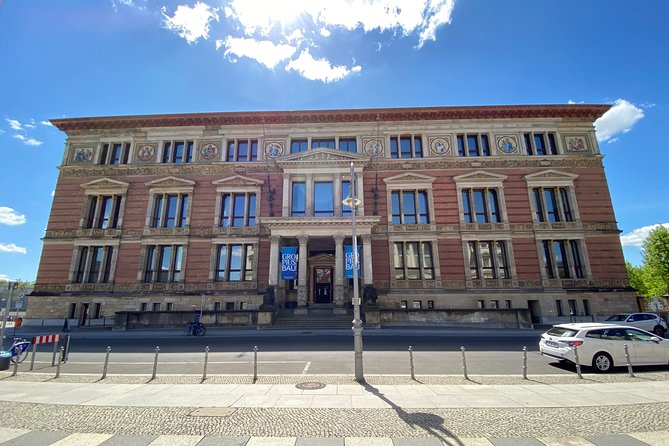
The virtual route begins at Gropius Bau, one of Berlin’s noted art galleries. The building is especially useful as an opening point because it connects the older history of Berlin with the conflicts that shaped the twentieth century.
It still carries bullet scars from the Second World War. That detail gives you an immediate reminder that Berlin’s Cold War story did not begin in isolation. The divided city grew out of the destruction and political struggle that followed the war.
The stop lasts about five minutes, so do not expect a full art museum visit. Admission is not included, and for a virtual experience that means the value comes from the guide’s presentation of the building rather than access to its interior collections. I appreciate the choice because it gives the tour a visual beginning and places the later Cold War events in a wider setting.
For you, the best question to ask here is how the building’s wartime damage fits into Berlin’s postwar story. The live format gives you room to ask that kind of connecting question rather than simply receiving a list of facts.
Topography of Terror and the Berlin Wall, 15 minutes
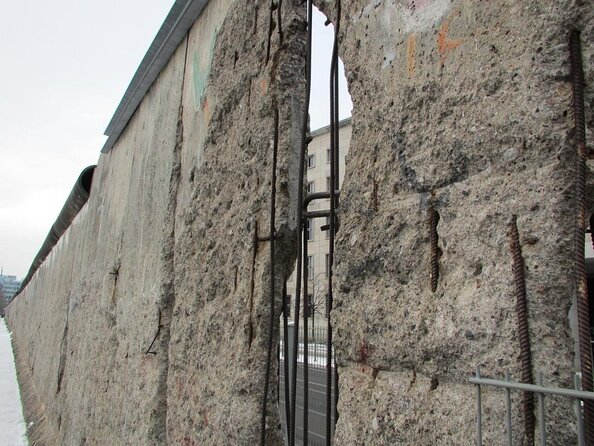
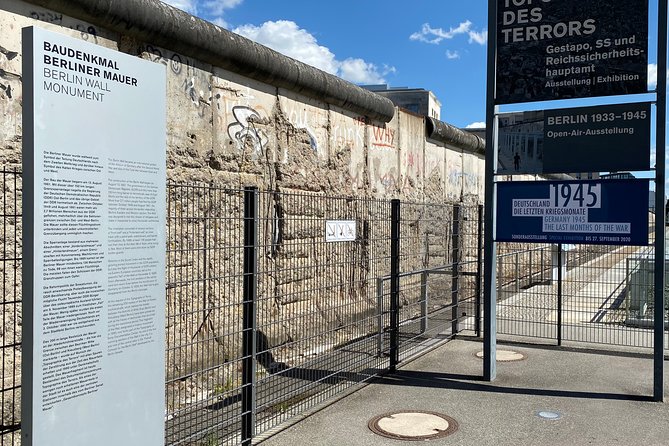
The next section moves to the Topography of Terror, located at the former headquarters of the SS and Gestapo. This is the tour’s darkest stop, and the guide’s job is not only to explain what happened there, but also to show how Nazi terror and the later division of Berlin occupied the same city.
The site is free, and the virtual stop lasts about 15 minutes. That is enough time for the guide to connect the location with the wall beside it, but not enough for every detail. If you have a strong interest in Nazi Germany as well as the Cold War, you may want to treat this portion as an introduction rather than a full visit to the documentation center.
The Berlin Wall is described here as one of the most brutal symbols of the Cold War. That wording is justified by the wall’s purpose and by the human cost of dividing Berlin. From your screen, you can follow the guide along the site and ask for clarification about how the border worked, why it was built, and what it meant to people living in the city.
This is also where the live aspect earns its keep. A prerecorded video might show the wall, but it cannot respond when you ask why a particular stretch remains, how the border affected daily life, or how the site changed after reunification. You should use the question function. It is one of the clearest advantages over simply watching a documentary.
Trabant cars and everyday life in East Germany
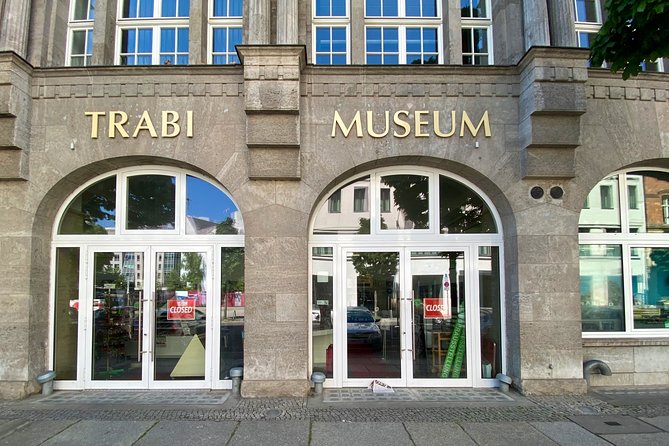
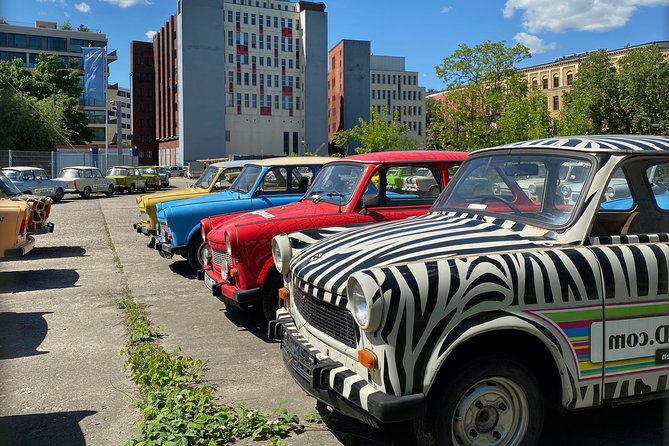
After the heavier material, the tour shifts to the Trabi Museum. Here you see a fleet of Trabants, the mass manufactured car associated with East Germany. The car was made with a body material often described as cardboard, giving it an instantly memorable place in popular images of the former East Germany.
This five minute stop adds welcome balance. Cold War history is often told through presidents, military threats, border speeches, and espionage. The Trabant brings the story down to street level. It shows the kind of object that shaped ordinary life and became a symbol of a political system.
The stop also gives the hour a touch of humor without making the subject silly. A small car can open a useful conversation about manufacturing, shortages, consumer life, and the differences between East and West. Those details help you understand that the Cold War was not only a contest between armies. It affected what people drove, bought, waited for, and saw around them.
Admission is not included, and the virtual format does not offer a physical museum visit. Still, the collection works well on screen because the cars are large, distinctive objects. If you are watching with children or with someone who does not usually enjoy political history, this may be the most accessible stop.
Something different for another day:
- Berlin: Reichstag, Dome and Government District Guided Tour
★ 4.7 · 18,288 reviews - Berlin: 1-Hour City Tour by Boat with Guaranteed Seating
★ 4.3 · 16,993 reviews - Berlin: Boat Tour Along the River Spree
★ 4.4 · 11,252 reviews - Discover Berlin Half-Day Walking Tour
★ 5.0 · 9,624 reviews
Checkpoint Charlie and the 1961 tank standoff
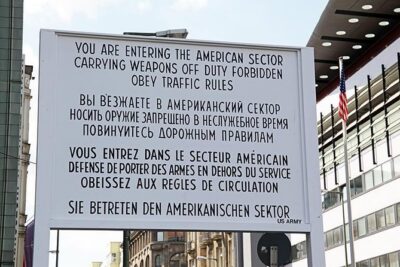
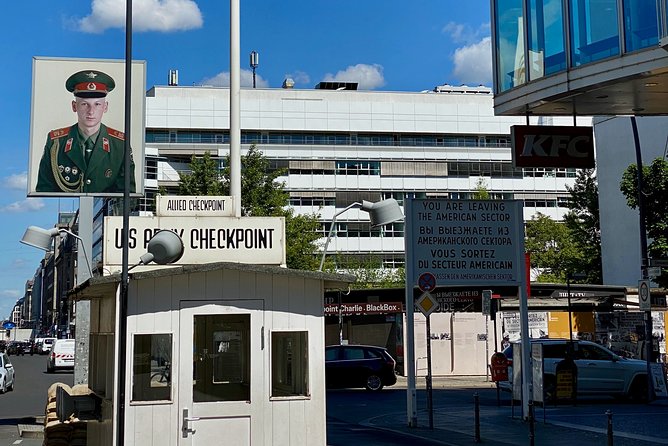
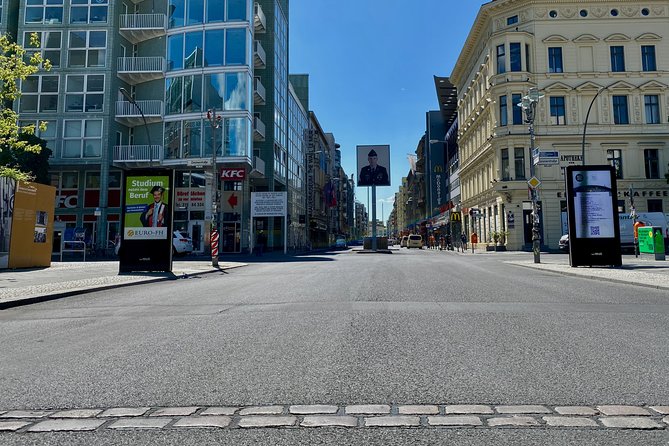
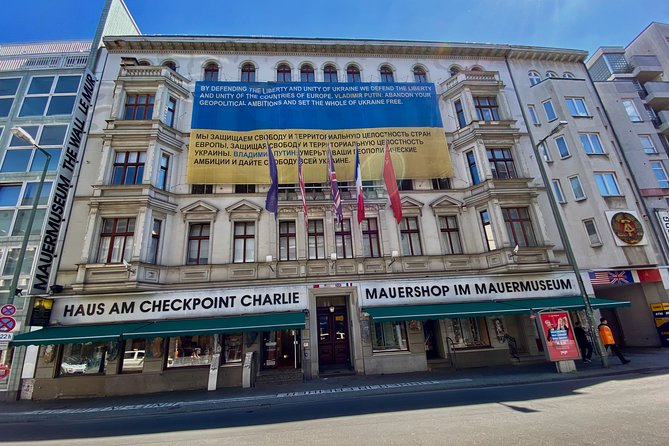
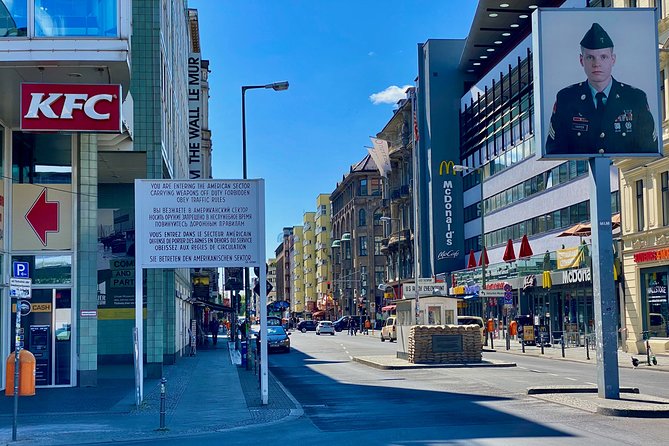
The final main stop is Checkpoint Charlie, the best known crossing point through the Berlin Wall. The name is familiar, but the guide’s explanation is what gives the place weight. In 1961, American and Soviet tanks faced each other here, bringing Berlin to the edge of a crisis with possible nuclear consequences.
The stop lasts about 15 minutes and is free. It is a strong choice for the ending because it brings the Cold War’s central themes into one location: divided authority, military pressure, competing political systems, and the danger of a small confrontation becoming a global disaster.
You may already know Checkpoint Charlie from photographs and guidebooks. That familiarity can work against the site, since the surrounding area has become a busy tourist zone. A live guide helps separate the historical crossing from the modern image and explains why this particular point mattered.
The tour ends at the Black Box exhibition. The supplied information identifies it as an excellent exhibition, but does not provide further detail about its displays or current access. You should think of this as the closing historical reference point rather than a promise of a long museum visit.
Because this is the final stop, save your questions about the Cold War’s end, the wall’s fall, or the meaning of Checkpoint Charlie for this section if they have not already come up. The guide can then tie the earlier stops together.
What the $23 price really buys you
At $23, this is priced as a short guided activity rather than a full museum program. I think the value is strongest if you are booking for a private household or small group. You are paying for a professional local guide, live interaction, and a focused route through four important Berlin locations.
The private format changes the calculation. A public online talk may be cheaper per person, but it does not necessarily give your group the same chance to ask questions. If several people are joining together, group discounts may improve the value further.
The price is less attractive if you expect a full virtual tour of Berlin or detailed access to every museum mentioned. The experience lasts about one hour, and two stops are only five minutes each. You should book it for the guide’s interpretation and the live connection, not for a long look inside the museums.
I would also compare it with what you want from the evening. If you need a low cost, structured activity during a period when travel is difficult, $23 is reasonable. If you are already in Berlin, a physical visit will give you more freedom and a stronger sense of place. The online version earns its price by being convenient and interactive.
Who will enjoy this most
I would recommend this experience to:
- People planning a future Berlin trip who want historical context first
- Families or households seeking a shared Sunday evening activity
- Students and history fans who want to ask a guide direct questions
- Small groups unable to travel but interested in twentieth century Europe
- First time Berlin visitors who want to know which Cold War sites deserve time later
It may be less suitable for you if you dislike video calls, want a long museum tour, or prefer to explore without a fixed schedule. You also need to download Zoom onto a device before taking part.
The experience is described as suitable for most people, and only your group participates. That makes it easier to keep the session focused on your own interests. You can ask about the wall, the border crossing, the cars, or the buildings instead of waiting for a large audience to get its turn.
The guides and the tone of the session
Two guide names appear in the positive feedback: Sam and Taylor. Sam was praised for being engaging and for making the experience feel like an escape from ordinary routine. Taylor was singled out several times for a strong presentation and good command of the subject.
I cannot promise which guide you will receive, but those comments point to the quality that matters most here. A virtual tour needs more than facts. The guide must keep the screen interesting, explain places clearly, and respond naturally when you ask something unexpected.
That personal contact is the reason I would choose this over a standard video. One participant finished the session wanting to see more of Berlin, while another appreciated being taken to important Cold War sites from home during a time when travel felt risky. Those are useful signs of what the experience does best: it creates interest and gives you a sense of a real appointment in Berlin.
Still, keep your expectations in the right place. A screen cannot provide the physical scale of the wall, the atmosphere around Checkpoint Charlie, or the feeling of standing beside a bullet scarred building. The guide can provide context, but you will need a later in person visit for the full experience.
Timing, technology, and cancellation details
Plan for roughly one hour, though the listed stops add up to about 40 minutes of site time. The remaining time can allow for introductions, movement between locations, explanations, and questions. Have Zoom installed before the start and use a device that lets you see the guide and the sites clearly.
Confirmation is sent within 48 hours of booking, subject to availability. The activity begins and ends at the listed Berlin meeting point, which for a virtual tour functions as the online starting arrangement rather than a physical meeting you must reach.
Free cancellation is available if you cancel at least 24 hours before the local start time. Cancellations inside that window are not refunded, and changes made inside 24 hours are not accepted. The experience also requires good weather, so if poor weather causes a cancellation, you will be offered another date or a full refund.
That weather rule may seem unusual for an online activity. It makes sense because the guide is presenting outdoor Berlin locations in real time. You should keep the schedule flexible enough to accept a new date if conditions interfere.
Should you book Cold War Berlin?
I would book this if you want a short, private, interactive history session and you are happy to experience Berlin through a screen. The route has a good rhythm: a damaged gallery, the former Nazi headquarters and Berlin Wall, a Trabant collection, then Checkpoint Charlie and the 1961 tank crisis.
The strongest reason to book is the guide. Sam and Taylor received praise for making the session engaging, clear, and inspiring. The ability to ask questions gives you more than a recording, while the $23 price keeps the commitment modest.
I would skip it if you are already in Berlin and can visit these places yourself, or if you want a detailed museum tour with lots of time at each stop. For everyone else, this is a practical introduction to Berlin’s Cold War story, and it may leave you with a useful list of places to see when you eventually arrive in the city.
FAQ
How long does the Cold War Berlin virtual experience last?
The experience lasts approximately one hour.
What software do I need?
You need to download Zoom onto a device before participating.
Is the tour private?
Yes. Only your group participates in this private tour or activity.
Can I ask the guide questions?
Yes. The experience is live and interactive, so you can ask the guide questions during the session.
Which Berlin sites are included?
The route includes Gropius Bau, the Topography of Terror, a section of the Berlin Wall, the Trabi Museum, Checkpoint Charlie, and the Black Box exhibition.
Is admission to the sites included?
Admission is listed as free for the Topography of Terror and Checkpoint Charlie. Admission is not included for Gropius Bau or the Trabi Museum.
What is the cancellation policy?
You can receive a full refund if you cancel at least 24 hours before the experience starts. Cancellations made less than 24 hours before the start time are not refunded.
What happens if poor weather cancels the experience?
You will be offered a different date or a full refund if the experience is canceled because of poor weather.
Just added around Berlin
- Kreuzberg Private Walking Tour: Immigrants, Artists & Hipsters★ 5.0 · 3 reviews
- Private Photo Tour in Kreuzberg★ 5.0 · 3 reviews
- Individual city tour Berlin for max. 8 persons★ 5.0 · 3 reviews
- Berlin’s Jewish Heritage: Private Tour of the Vibrant Jewish District★ 5.0 · 3 reviews
- Berlin & The Third Reich Private Guided Tour★ 5.0 · 3 reviews
- Private Analogue Photography Experience in Berlin★ 5.0 · 3 reviews
- Spy Mission in Berlin: Self-Guided Espionage Puzzle Quest★ 5.0 · 3 reviews
- Berlin Christmas Markets Walking Tour with Local Guide★ 5.0 · 3 reviews
Private, compared.


Berlin Private Complete History All Day Walking Tour
Read our review →
Munich Private Tour with a Local – Highlights & Hidden Gems
Read our review →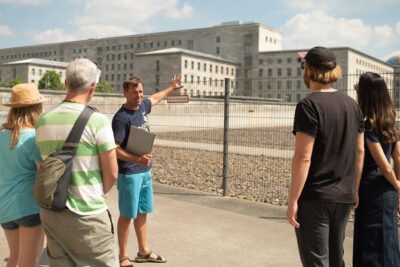
Private Walking Tour Berlin Third Reich Hitler and World War II
Read our review →
Your private 3-hour Hamburg driving tour with a former policeman
Read our review →
Private Berlin: Iconic Sights and Hidden Gems Walking Tour
Read our review →
1.5-Hour Private Tour through Historical Old Town
Read our review →