
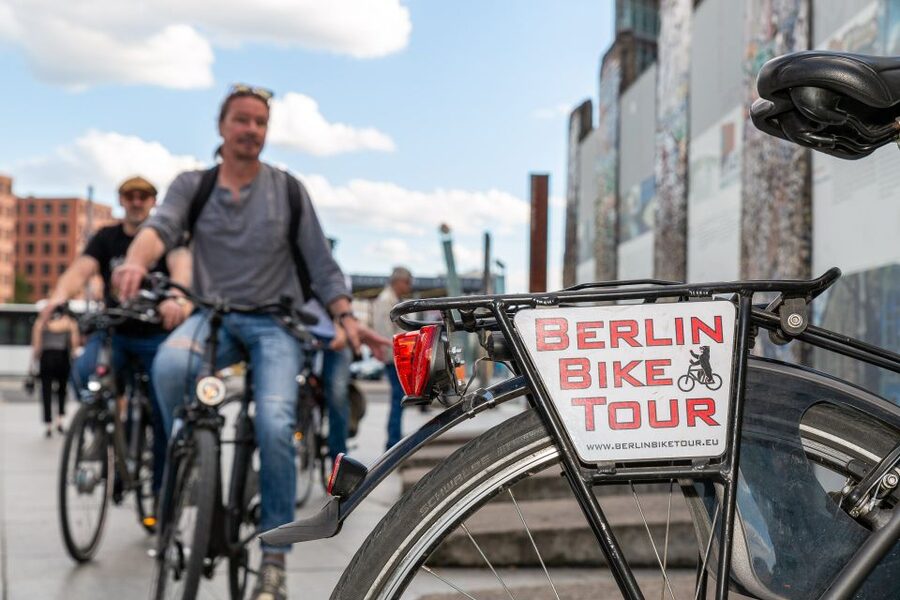
Reviewed · BERLIN WALL TOURS
Berlin Wall History Small Group Cycling Tour
The Wall is gone, but its route still tells the story. This four-hour bike tour follows Berlin’s former border from Bornholmer Straße toward Checkpoint Charlie, linking memorials, watchtowers, border crossings, and quiet stretches of the old death strip. I like the small group of three to eight, which keeps the ride personal, and I like how the route joins famous sights with places you could easily miss on foot. The main drawback is that the live guide speaks German, so you will need enough German to follow the commentary.
You begin at the exact place where East Germans first crossed the border on November 9, 1989, then pedal through Mauerpark, Bernauer Straße, Invalidenstraße, the government district, Brandenburg Gate, Potsdamer Platz, and Checkpoint Charlie. Guides named Markus and Kathrin have earned especially warm praise for making the history clear and relaxed. Bring a camera, sunglasses, and a sun hat, but leave large bags behind.
In This Review
- Key points to know before you book
- Starting where the Wall first opened
- Bornholmer Straße and Mauerpark
- Bernauer Straße, where the Wall cut through homes
- Chausseestraße and the ghost-station story
- Invaliden Graveyard and Invalidenstraße
- Along the Government Bank to the Parliament of Trees
- Brandenburg Gate and the route into central Berlin
- Friedrichstraße and the Palace of Tears
- Checkpoint Charlie and the last stretch
- What the $36 price really includes
- Weather, language, and practical limits
- Who should book this Berlin Wall ride?
- Should you book it?
- FAQ
- Where does the Berlin Wall cycling tour start?
- Where does the tour finish?
- How long does the cycling tour last?
- How many people are in the group?
- What language is the tour conducted in?
- Is a bicycle included?
- What happens if it rains?
- Can I cancel the booking?
Key points to know before you book
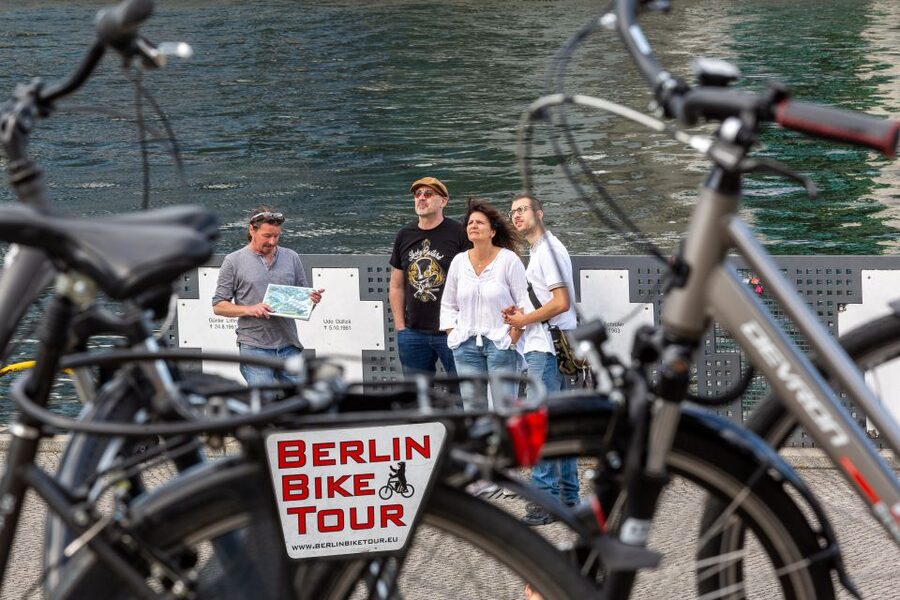
- Start at Bornholmer Straße: Meet at 75 Bornholmer Straße, close to the former border crossing and easy public transport connections.
- Follow the Wall’s former route: The ride uses Berlin’s Mauerweg, with surviving watchtowers, Wall fragments, memorials, and sections of former border ground.
- See more than the headline sights: Mauerpark, the Invaliden Graveyard, the Parliament of Trees, the Tränenpalast, and the New Synagogue all add depth to the ride.
- Small really means small: With three to eight participants, you can hear the guide and ask questions without dealing with a large group.
- Plan for four hours outside: The tour runs in all weather. A rain poncho is provided when needed, but sensible clothing still matters.
- German is the tour language: The guide is live and the commentary is in German, an important point for anyone who does not understand it well.
Starting where the Wall first opened
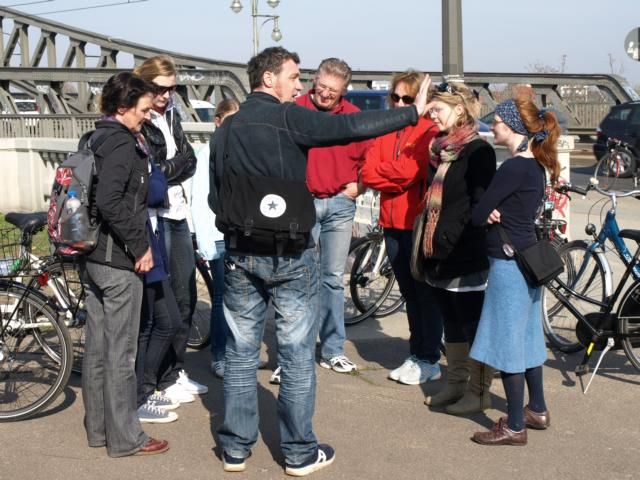
The tour begins at 75 Bornholmer Straße, at the Square of the 9th November 1989. This is not a random meeting point. It marks the first East German border crossing where people were allowed through on the night the Wall fell.
That opening gives the ride a strong beginning. Instead of starting with a general city introduction, you begin with the moment that changed Berlin and Europe. The guide can then explain the Wall as you ride through the places where its effects were felt, not just as a line on a map.
The meeting point is simple to reach. Björnsonstraße tram stop is about one minute away, served by M1, M13, and M50. Bornholmer Straße S-Bahn station is about two minutes away, with S1, S2, S8, S25, and S85 service. Schönhauser Allee is another option, about a ten-minute walk away, with S-Bahn and U-Bahn connections.
You receive a bicycle, the tour fee is included, and a city guide leads the group. Since the ride returns to the same meeting point, you do not need to work out a new route at the end. That is useful if you have evening plans or want to leave your luggage at your accommodation.
More Bike Tours in Berlin
- Berlin: Sights and Highlights Bike Tour with a Local Guide
★ 4.8 · 2,698 reviews - Berlin Highlights 3-Hour Bike Tour
★ 5.0 · 948 reviews - Berlin City Bike Tour with Beer Garden Stop
★ 5.0 · 917 reviews
Bornholmer Straße and Mauerpark
The first section takes you across the former border-control area at Bornholmer Straße and into Mauerpark. Today, cherry trees soften a place once defined by fences, guards, and armed border control. The contrast is one of the tour’s most effective teaching tools.
The guide explains how the cherry trees came to be planted along Bornholmer Straße. Their presence is not simply decorative. It reflects the effort to mark the old border with a living symbol, giving this section a human scale that photographs alone cannot provide.
You also see an original watchtower and part of the former death strip. Very little of the Berlin Wall remains in one continuous piece, so surviving structures matter. A watchtower helps you picture how the border was monitored, while the open ground around it shows why escape was so dangerous.
Mauerpark is now a public green space, but the name itself preserves the memory of the Wall. Cycling through it lets you see how Berlin has reused former border ground without erasing its past. You should expect the city around you to look ordinary. That is part of the lesson: many places connected to the Wall are now woven into daily Berlin life.
Bernauer Straße, where the Wall cut through homes
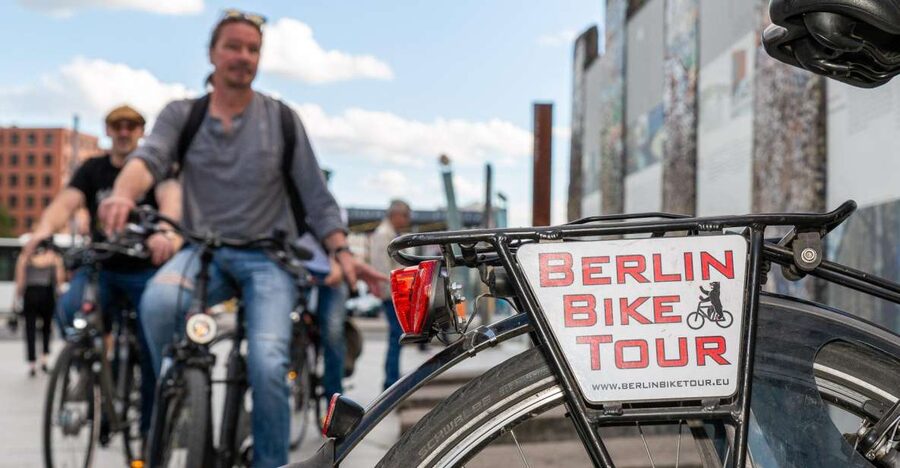
Bernauer Straße is one of the most powerful stops on the route. The Berlin Wall Memorial here preserves a section of the former border and explains how the barrier split the street, buildings, and families.
This area is especially useful because the Wall did not feel like an abstract political boundary. In Bernauer Straße, it ran directly beside homes. Residents faced the barrier from their windows, and the street became one of the best-known places for attempted escapes and dramatic separations.
The memorial helps you understand the border system as more than a concrete wall. The former death strip included fences, patrol routes, watchtowers, and open areas designed to expose anyone trying to cross. Seeing the surviving parts in place gives the guide something solid to point toward.
You may find this section more sobering than the famous central sights later in the ride. That is a strength, but it also means the tour is not a light sightseeing spin. The stories include tragic and fateful events, so you should come ready to give the subject your attention.
Chausseestraße and the ghost-station story
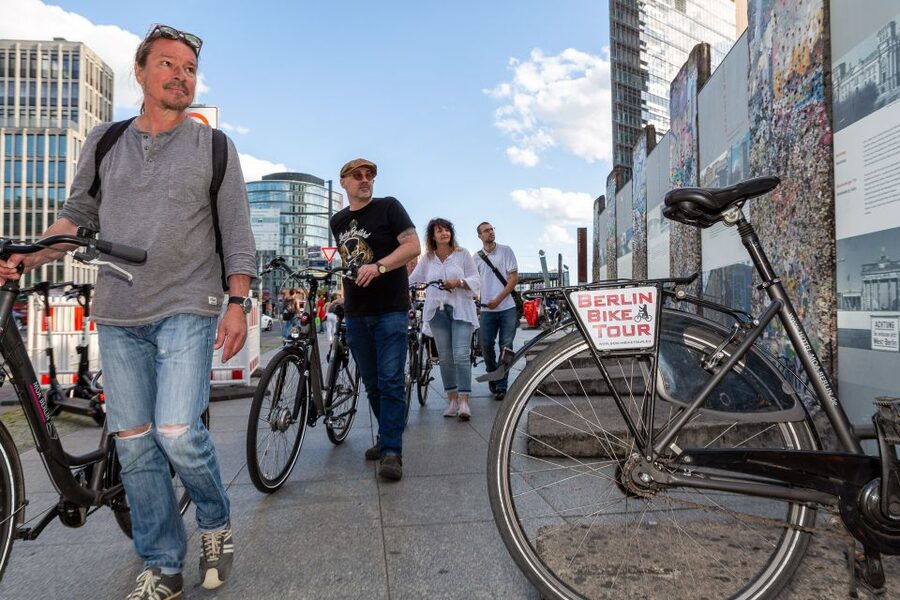
The route continues to Chausseestraße, a former border crossing and the location of a ghost station. During the division of Berlin, some trains traveling through East Berlin passed stations that were closed to West Berlin passengers. These sealed platforms became known as ghost stations.
The stop adds an underground dimension to the Wall story. You are not only looking at barriers above ground. You are also learning how the division affected transport, daily movement, and the city’s basic systems.
The former border crossing at Chausseestraße gives the guide another chance to explain how people moved between East and West, and how tightly those movements were controlled. The value here comes from the connection between large political decisions and ordinary routines, such as taking a train or crossing a street.
The ride does not promise entry into every site. It is a guided cycling route, so the emphasis is on seeing locations and hearing their stories from outside or along the route. If you want long indoor museum visits, this is not the right format. If you want several locations linked into one clear story, it works well.
More Historical Tours in Berlin
- Berlin: Natural History Museum Entrance Ticket
★ 4.6 · 3,382 reviews - Berlin: World Heritage Cruise to Potsdam
★ 4.5 · 1,435 reviews - Berlin Historical Highlights Walking Tour
★ 4.9 · 657 reviews - Berlin Private Complete History All Day Walking Tour
★ 5.0 · 474 reviews
Invaliden Graveyard and Invalidenstraße
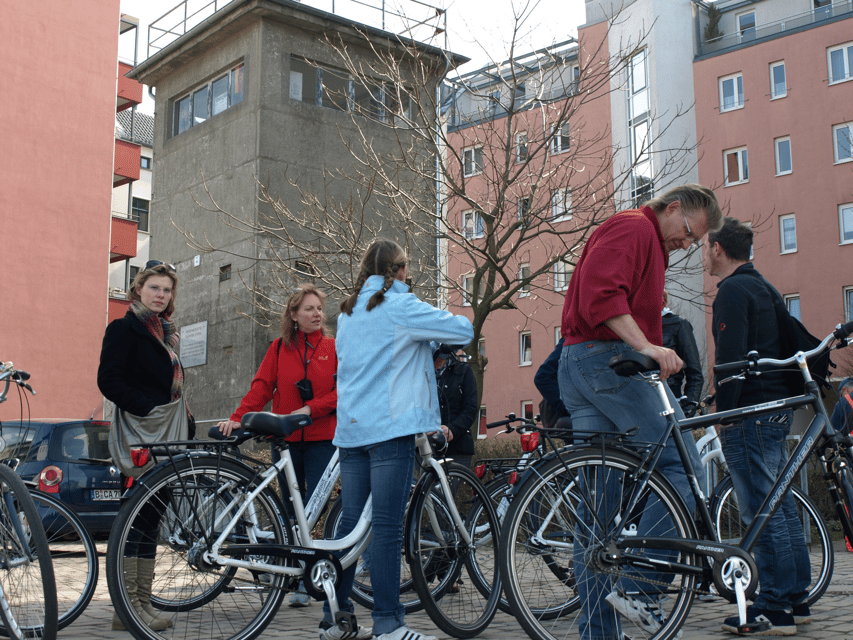
At the Invaliden Graveyard, the route reaches another place where Berlin’s earlier past overlaps with the Wall era. The former border crossing at Invalidenstraße shows how the division was built into established parts of the city.
This stop helps prevent a common mistake: thinking the Wall only affected neighborhoods at the city’s edge. It cut through central Berlin, near institutions, streets, rail routes, and historic sites. The border crossing at Invalidenstraße made that division visible in a place that had long been part of Berlin’s urban life.
I like this section because it broadens the story. You are not simply collecting photographs of Wall remains. You are seeing how the border threaded through cemeteries, streets, public spaces, and government areas.
A bicycle is particularly useful here. The tour can connect several separated sites without asking you to spend the day changing trains or walking long distances between them. At $36 per person, that combination of transport and guiding gives the outing solid value, especially if Berlin’s Wall history is a main reason for your visit.
Along the Government Bank to the Parliament of Trees
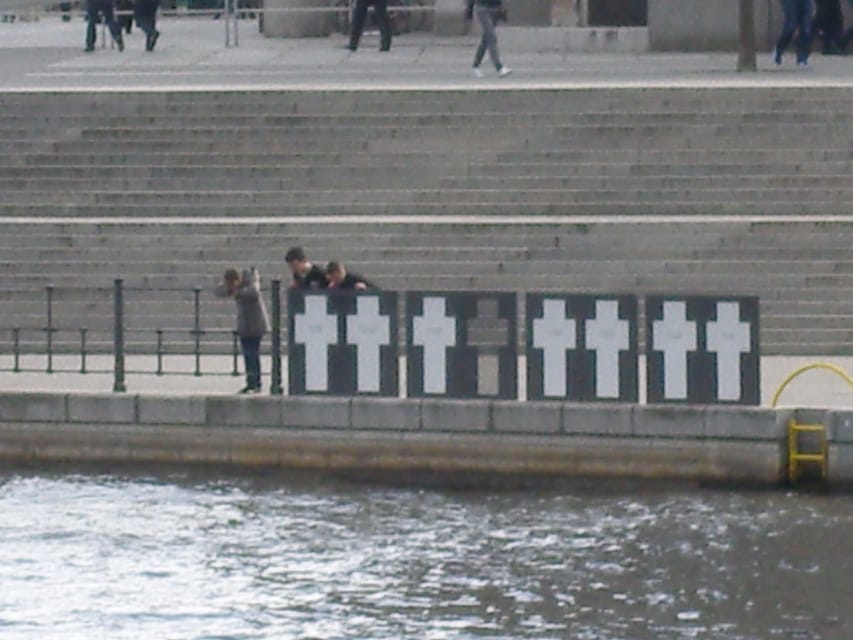
The ride then follows the Government Bank toward the Parliament of Trees. This section brings the former border route close to Berlin’s political center and shows how the city has remembered the people who died trying to cross.
The Parliament of Trees is a memorial made from a former section of the Wall. Its name points toward reflection rather than military power. The setting gives you time to consider the human cost of the border while remaining close to the institutions that now represent a united Germany.
The government district also provides a useful change of mood. Earlier stops focus on homes, stations, cemeteries, and border machinery. Here, the route connects the Wall to present-day national government and public memory.
Do not expect every part of this stretch to look like a preserved historical site. Berlin has changed dramatically, and much of the former Wall route is now a normal street or open public space. The guide’s explanations are what connect those modern surroundings to the past.
Brandenburg Gate and the route into central Berlin
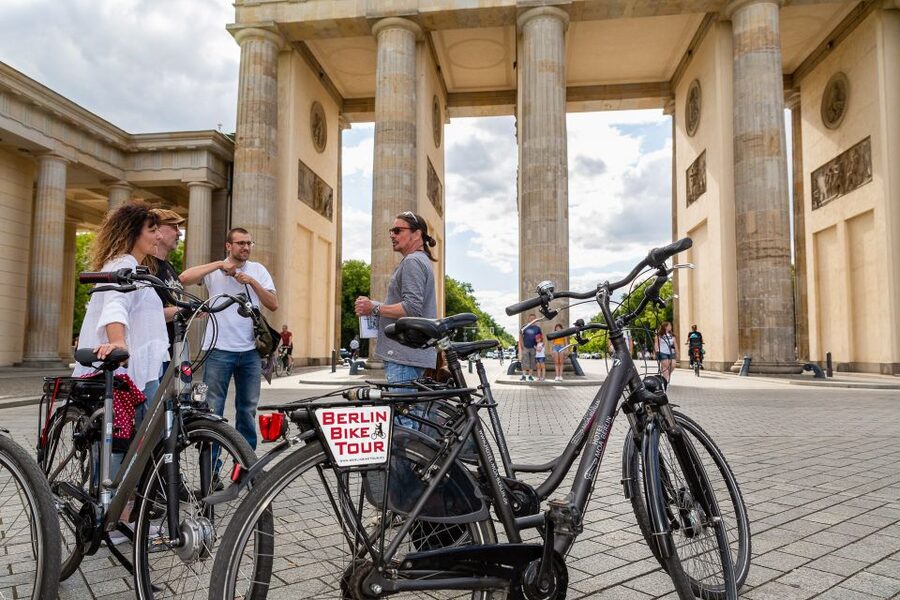
The ride reaches the Brandenburg Gate, one of Berlin’s essential sights and one of the most loaded symbols of the city’s division. For decades, the gate sat beside the Wall and represented separation. Today, it is one of the clearest symbols of a reunited Berlin.
Cycling through the gate gives the tour a memorable central moment. You are not only stopping for a photograph. You are seeing how a major public monument changed meaning as the political border disappeared.
From here, the route continues through the heart of Berlin. You pass Potsdamer Platz, another place transformed by reunification, and continue toward Checkpoint Charlie. These famous locations can be crowded and polished, so the guide’s historical framing matters.
Potsdamer Platz is particularly useful for understanding how quickly Berlin changed after the Wall fell. Its modern appearance can make it hard to picture the former border, but that is precisely why it belongs on this ride. The guide helps you compare the current city with the divided zone that once occupied the same ground.
Friedrichstraße and the Palace of Tears
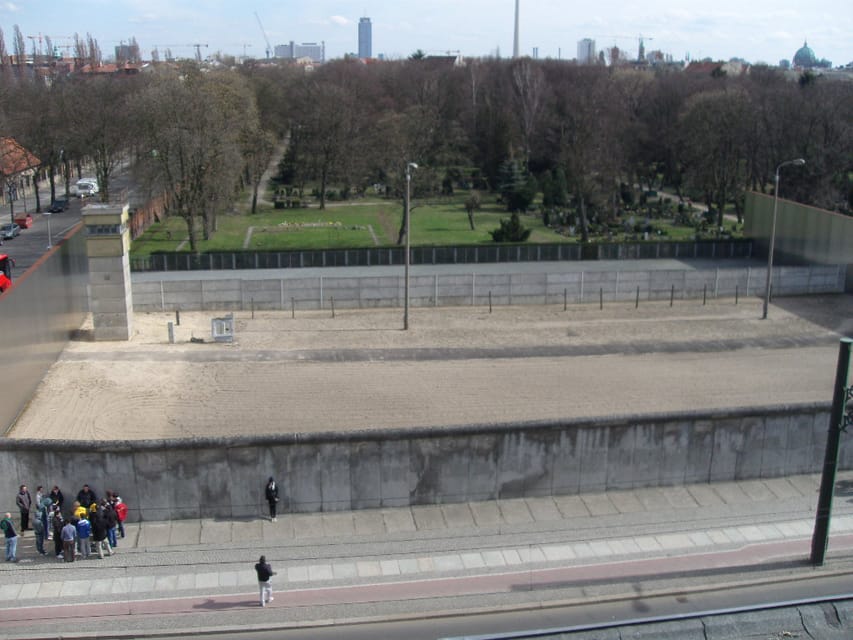
The Tränenpalast, or Palace of Tears, on Friedrichstraße is one of the route’s strongest central stops. It was a border crossing where people said goodbye to relatives leaving East Berlin. The name comes from those painful farewells.
The site brings the politics of the Wall down to a personal level. A border is not only a fence or a checkpoint. It can also be the place where families part without knowing when they will meet again.
The tour also passes the Friedrichstadt Palace, Museum Island, the New Synagogue, and the Old Berlin Post Office. These sights broaden the ride beyond Wall structures and show how the former border ran through a city full of culture, religion, government, and commerce.
You should not expect extended visits inside these attractions. They function as landmarks along the cycling route, with the guide connecting them to the city’s divided past. If you want to visit Museum Island museums, plan a separate block of time.
Checkpoint Charlie and the last stretch
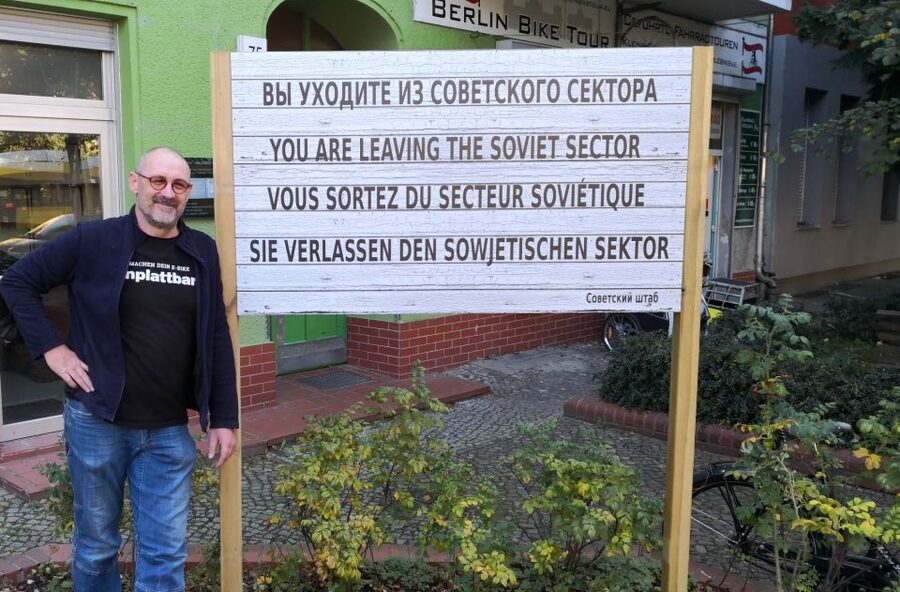
Checkpoint Charlie is the best-known former crossing in Berlin, but its fame can also make it feel more staged than some earlier stops. The tour earns its value by reaching it after you have seen less polished and more substantial parts of the former border.
By this point, you have followed the Wall from its first opening point to one of its most famous crossings. The route has included an original watchtower, Wall memorials, a former death strip, ghost-station history, cemeteries, central government areas, and memorial art.
The ride finishes back at the starting point rather than at Checkpoint Charlie. That return matters. You can leave the bicycle where you began, and the tour does not leave you to navigate back across the city after four hours of cycling.
The complete route is long enough to give you a broad view of Berlin’s Wall story, but it is not designed as a slow museum tour. You will need to listen while standing or cycling between stops. I would choose it early in your Berlin stay, when the information can help you understand the rest of the city.
What the $36 price really includes
At $36 per person, this is a strong-value half-day experience if you want both transportation and interpretation. The fee includes the bicycle, guide, and tour fees, so you are paying for a moving history lesson rather than simply renting a bike.
The small group improves that value. A maximum of eight people makes it easier to hear stories at street-side stops and ask for clarification. The minimum group size is three, so confirm availability for your date before building your whole day around it.
A four-hour ride also covers ground that would take much longer on foot. You visit former border points from Bornholmer Straße through central Berlin, yet the tour returns to its original meeting point. That saves time and reduces the need to manage Berlin’s transport system between each location.
Food and drink are not included. Bring what you need for four hours, but do not bring a large bag or luggage. You should carry your passport or ID card, sunglasses, a sun hat, and a camera. The stated requirements do not list special cycling equipment, so keep your packing simple.
Weather, language, and practical limits
The tour operates in all weather. On rainy days, a rain poncho is provided, but you should still dress for outdoor conditions. A wet four-hour ride can feel very different from a sunny one, so check the forecast and wear practical clothing.
The guide speaks German. This is the most important limitation for many people. If you understand German, the small group and praised guides such as Markus and Kathrin can make the tour especially rewarding. If you do not, you may miss the stories that give the stops their meaning.
The tour has a rating of 4.9 from 149 reviews, with repeated praise for its relaxed, informative style. One strong theme is that guides make the ride feel calm even while covering difficult material. Another is the route itself, which uses quieter streets even in central Berlin, helping you see more of the city without spending the whole time beside heavy traffic.
The tour includes free cancellation up to 24 hours before departure, and you can reserve now and pay later. Those policies are useful if your weather plans are uncertain, but the more important choice is language. German comprehension will shape your experience far more than the booking flexibility.
Who should book this Berlin Wall ride?
I would choose this tour if you want a clear introduction to Berlin’s Cold War past and prefer moving through real locations instead of sitting in a classroom. It suits active visitors who are comfortable spending four hours outdoors and want to cover a wide section of the city.
It is also a good choice for anyone who has already seen Brandenburg Gate and Checkpoint Charlie but wants to understand them in context. The early stops at Bornholmer Straße, Mauerpark, Bernauer Straße, and Chausseestraße are less obvious parts of a standard central Berlin walk.
Families and small groups may appreciate the limited group size, provided everyone can manage the cycling pace and follow German commentary. The experience is not ideal if you want a short sightseeing ride, an indoor museum visit, or an English-language guide.
Should you book it?
Book this tour if Berlin’s Wall story matters to you, you understand German, and you like learning through a city rather than from a single museum. The route covers a remarkable number of meaningful places for $36, and the bicycle makes the distance practical.
Skip it if you need English commentary, dislike cycling in changing weather, or want plenty of time inside each memorial and museum. For the right person, though, this is an unusually efficient way to connect the first border opening at Bornholmer Straße with the famous central sites, while still seeing the quieter traces that give Berlin’s divided past its human weight.
FAQ
Where does the Berlin Wall cycling tour start?
The tour starts at 75 Bornholmer Straße, Berlin 10439, at the Square of the 9th November 1989.
Where does the tour finish?
The ride ends back at the meeting point on Bornholmer Straße.
How long does the cycling tour last?
The tour lasts four hours. Starting times depend on availability.
How many people are in the group?
The group has a minimum of three participants and a maximum of eight.
What language is the tour conducted in?
The live tour guide speaks German.
Is a bicycle included?
Yes. A bicycle is included in the tour price.
What happens if it rains?
The tour operates in all weather. A rain poncho is provided when necessary on rainy days.
Can I cancel the booking?
Yes. You can cancel up to 24 hours in advance for a full refund. You can also reserve your place and pay later.
More Bike Tours around Berlin
- Berlin Highlights: 3-Hour Bike Tour
★ 4.9 · 809 reviews - Berlin Highlights Sightseeing Bike Tour in Small Groups
★ 5.0 · 652 reviews - Berlin: Alternative Bike Tour of Kreuzberg & Friedrichshain
★ 4.7 · 548 reviews - Berlin: Highlights Guided Bike Tour
★ 4.8 · 414 reviews
More Berlin Wall Tours
- Skip-the-Line: Berlin Wall Museum at Checkpoint Charlie
★ 4.1 · 2,041 reviews - Berlin: East Side Gallery Spree Cruise in a Solar Catamaran
★ 4.0 · 1,039 reviews - Cold War, Berlin Wall, Spies and the East Side Gallery
★ 5.0 · 1,024 reviews - Berlin: Guided Bike Tour of the Berlin Wall and Third Reich
★ 4.7 · 499 reviews
Just added around Berlin
- Berlin: Private Guided Tour of the Main Sights★ 5.0 · 13 reviews
- Private Highlights of Berlin Bike Tour★ 5.0 · 13 reviews
- Modern Berlin Private Walking Tour: Diverse, Vibrant and Exciting German Capital★ 5.0 · 13 reviews
- Tour in Berlin from Warnemünde and Rostock Cruise Port★ 4.1 · 13 reviews
- Berlin: Stasi Museum Private Guided Tour with Entry Ticket★ 4.8 · 13 reviews
- Private Food Tour Experience with a born and bred Berliner★ 5.0 · 14 reviews
- Berlin: Rheinsberg Palace Entrance Ticket★ 4.8 · 14 reviews
- Berlin in one day – day tour with an expert guide★ 5.0 · 14 reviews
Berlin Wall Tours, compared.
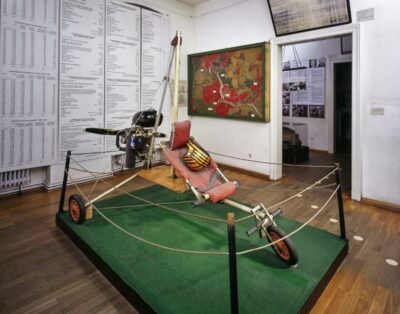
Skip-the-Line: Berlin Wall Museum at Checkpoint Charlie
Read our review →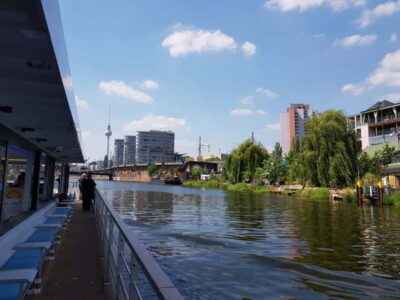
East Side Gallery Spree Cruise in a Solar Catamaran
Read our review →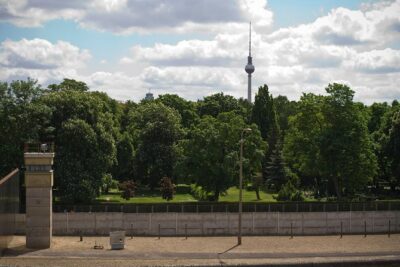
Cold War, Berlin Wall, Spies and the East Side Gallery
Read our review →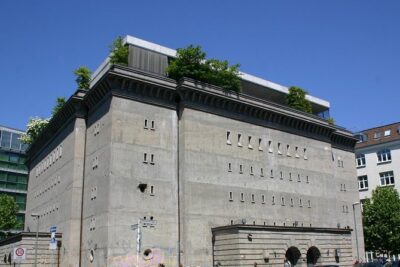
Guided Bike Tour of the Berlin Wall and Third Reich
Read our review →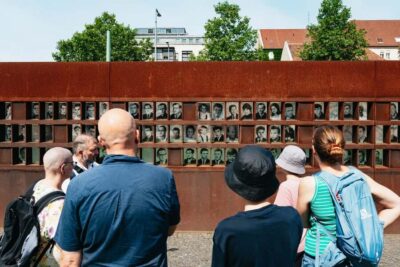
Cold War, Berlin Wall, Spies and the East Side Gallery
Read our review →Browse the lists this tour appears in