
Reviewed · HISTORICAL TOURS
Berlin Uncensored: A History of Sex & Freedom
Berlin has always had a rebellious side. This three-and-a-half-hour walk follows it through cabarets, sexual science, Nazi repression, divided-city politics, and today’s club culture. I like the mix of serious history and playful technology, especially the 200-plus archival photos, videos, recordings, and quotes that give lost places a face and a voice. I also like that sociologist and certified sex educator Jeff handles sensitive subjects with care rather than cheap shock value.
The main drawback is simple: you mostly view historic sites from the street instead of entering them. The AR helps, but one past participant found it less impressive than expected, and three hours without a scheduled refreshment stop can feel long. Still, for adults who want a different angle on Berlin and enjoy thoughtful discussion, this is an unusually strong choice.
In This Review
- Key points at a glance
- Why this unusual Berlin walk works
- Meeting at Nollendorfplatz
- Magnus-Apotheke and the 1920s story
- A sober pause at the Nazi persecution memorial
- Kurfürstenstraße and the sex trade
- Schwerinstraße and Nollendorfstraße
- Prinz Eisenherz and the Metropol
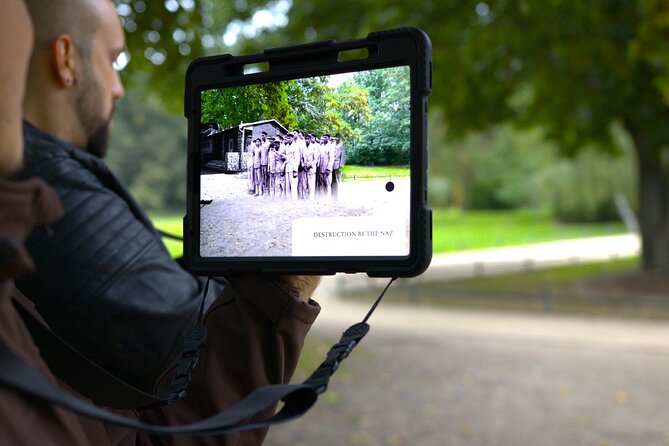
- How the augmented reality actually helps
- East, West, and the Berlin after 1945
- Berlin today, from KitKat to Folsom Europe
- Price, pace, and practical value
- Accessibility and who should book
- Should you book Berlin Uncensored?
- FAQ
- Where does Berlin Uncensored begin?
- How long does the tour last?
- What language is the tour in?
- Is public transportation included?
- Is the tour wheelchair accessible?
- Are children allowed to join?
- What does the AR element include?
- Can I cancel or delay payment?
Key points at a glance
- Berlin’s 1920s nightlife: Learn how clubs, cabarets, nudism, and sexual experimentation helped shape the city’s international reputation.
- The birth of sexual science: Visit the former site of the Institute for Sexual Science and explore its work on desire, health, contraception, and relationships.
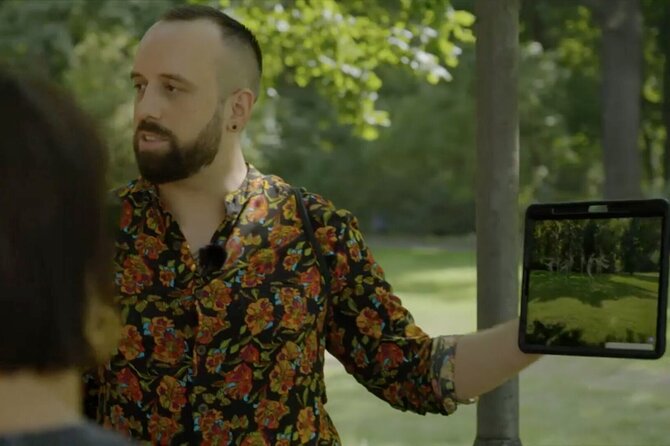
- AR with a purpose: Jeff uses an iPad to show historic images, videos, sounds, and recreated views of vanished places.
- A difficult political story: The route covers Nazi censorship and persecution, then compares sexual life in East and West Berlin.
- Small-group discussion: With a maximum of 10 people, the walk can feel more like a seminar with city streets attached.
- Modern Berlin tips: You receive background on KitKat Club, Berghain, Lab.Oratory, Folsom Europe, and the city’s kink and electronic music scenes.
Why this unusual Berlin walk works
This is not a tour about famous buildings alone. It uses sex as a way to explain Berlin’s politics, medicine, art, religion, gender roles, censorship, and nightlife. That broader aim gives the walk more weight than a collection of risqué stories.
You begin near Nollendorfplatz, a district strongly linked with queer life and Berlin’s changing sexual culture. From there, Jeff connects ordinary streets with places that have disappeared, changed names, or lost their original purpose. The point is not simply to locate an old club. It is to understand why that club could exist at one moment, why it was shut down later, and what its memory means now.
The group size matters. Ten people is the stated limit, so you should be able to hear the guide and ask questions without speaking across a crowd. A small group also suits the subject. Discussions can become personal or political, and a giant group would make that harder.
Jeff’s background is a major asset. He is presented as a sociologist, journalist, and certified sex educator who has studied Berlin’s sexual past for more than a decade. His role is not just to deliver dates and names. He places sex work, queer rights, contraception, feminism, and sexual identity within their social setting.
More Historical Tours in Berlin
- Berlin: Natural History Museum Entrance Ticket
★ 4.6 · 3,382 reviews - Berlin: World Heritage Cruise to Potsdam
★ 4.5 · 1,435 reviews - Berlin Historical Highlights Walking Tour
★ 4.9 · 657 reviews
Meeting at Nollendorfplatz
The meeting point is in front of the Alnatura organic supermarket at Else-Lasker-Schüler-Straße 18, 10783 Berlin. Look for the entrance to the store at Nollendorfplatz. This is a practical starting point, but you should arrive with your public transport ticket already sorted, since transport is not included.
The tour lasts 210 minutes. That is enough time for a serious historical arc, but it is also a long time on foot. Wear comfortable shoes and bring water. There is no formal meal or refreshment stop built into the schedule, so plan accordingly.
The route includes several short walks of about five and ten minutes between stops. You are not racing from sight to sight. Instead, the walking sections help connect the neighborhoods and give Jeff time to explain how the city changed around them.
Magnus-Apotheke and the 1920s story
The first guided stop is Magnus-Apotheke, where you spend about 20 minutes. This section introduces Berlin’s connection to contraception and sexual health, including the claim that the first rubber condom was made in Berlin.
That detail quickly shifts the mood away from a simple nightlife tale. Berlin’s sexual past was also tied to practical medical inventions and changing ideas about personal control. Contraception affected relationships, health, and the balance of power between men and women. It also helped create arguments about who had the right to make decisions about sex and family life.
The tour then places these developments beside the notorious clubs and cabarets of the 1920s. Berlin’s nightlife brought art, performance, gender play, kink, and sexual commerce into the same rooms. The boundaries between stage act and private desire could be intentionally blurred.
The archival material is especially useful here. Historic photographs and quotations can show the style of the period far better than a spoken description alone. Jeff also uses quizzes and discussion, which gives the group something to do beyond listening.
A sober pause at the Nazi persecution memorial
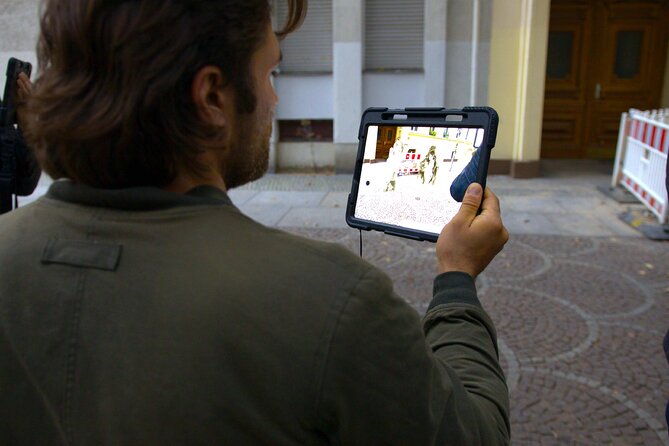
After a short walk, you reach the Memorial to the Homosexuals Persecuted Under Nazism. The guided portion lasts about 15 minutes, but the subject carries far more weight than the timetable suggests.
This is where the tour’s playful opening gives way to a hard look at state control. You learn how erotic magazines, cabarets, and clubs were suppressed, and how people were targeted because of their sexuality. The tour also addresses sex workers and sexual minorities, along with the gap between Nazi public morality and private behavior.
That last point is important. The Nazi regime did not apply one clean set of sexual rules to everyone. It used censorship, criminal law, propaganda, and persecution in ways that served political power. Jeff’s sociological approach helps explain those contradictions rather than presenting the period as a simple story of freedom followed by repression.
The memorial makes the history physical. You are not only hearing about policy in a classroom. You are standing in a place designed to keep persecution visible. This part may feel emotionally heavy, so it is worth knowing that the tour is not pure nightlife entertainment.
Something different for another day:
- Berlin: Reichstag, Dome and Government District Guided Tour
★ 4.7 · 18,288 reviews - Berlin: 1-Hour City Tour by Boat with Guaranteed Seating
★ 4.3 · 16,993 reviews - Berlin: Boat Tour Along the River Spree
★ 4.4 · 11,252 reviews - Discover Berlin Half-Day Walking Tour
★ 5.0 · 9,624 reviews
Kurfürstenstraße and the sex trade
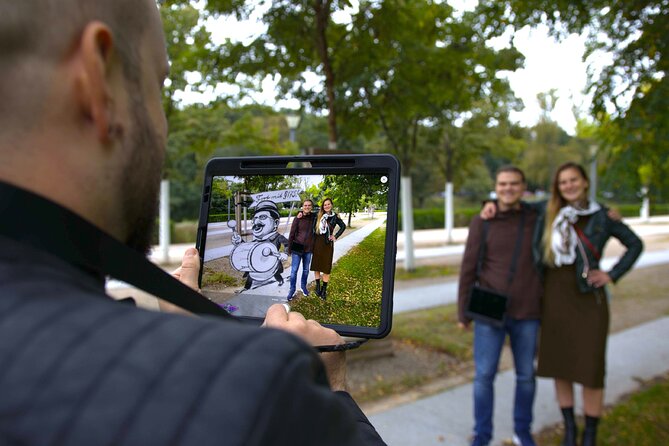
Kurfürstenstraße receives about 20 minutes of guided attention. The area allows Jeff to discuss Berlin’s sex trade and the changing public attitude toward prostitution.
The route does not promise entry into clubs or private venues. Instead, you examine the street setting and use photos, videos, and narration to reconstruct what happened there. That approach is useful for understanding how sexual commerce fits into a city, but it may disappoint you if you expect a behind-the-scenes visit.
The tour also includes unusual material about religious involvement in prostitution, including church-established prostitution huts. That detail shows how Berlin’s sexual economy could intersect with institutions that publicly condemned or regulated sexual behavior.
Expect direct discussion, but not a party atmosphere. The goal is to explain work, power, money, and public space. If you prefer history that avoids uncomfortable topics, this may not be your ideal walk. If you want a frank account of how cities function, this stop adds real value.
Schwerinstraße and Nollendorfstraße
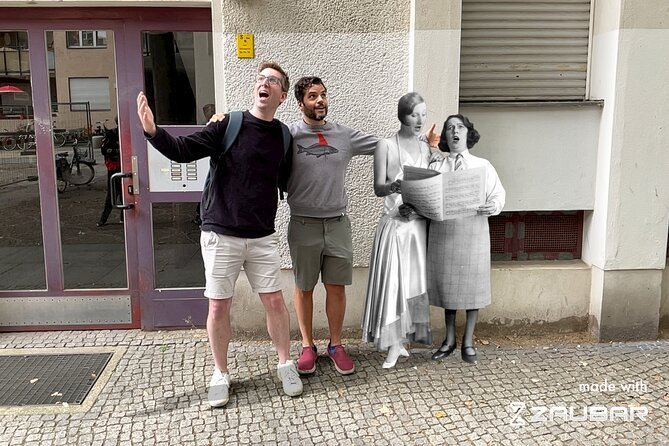
Schwerinstraße receives about 15 minutes, followed by roughly 10 minutes at Nollendorfstraße. These stops broaden the story beyond the male gay scene and bring in lesbian bars, queer organizing, feminist liberation, and changing ideas about gender.
That balance matters. Berlin’s sexual past cannot be reduced to famous men’s clubs or the current fetish scene. The walk gives space to women’s venues and liberation movements, while also showing how different groups faced different limits and risks.
The route’s streets are not presented as frozen museum pieces. Their meaning changed with war, dictatorship, postwar division, AIDS, activism, and nightlife trends. You might find that the most interesting part is the contrast between what the street looks like now and what once happened there.
The walk also reaches the AIDS crisis and its effect on Berlin’s sexual communities. This adds a public-health and social dimension to the tour. It shows that sexual freedom is not only about personal expression. It depends on education, medical care, political organizing, and the willingness to challenge shame.
Prinz Eisenherz and the Metropol
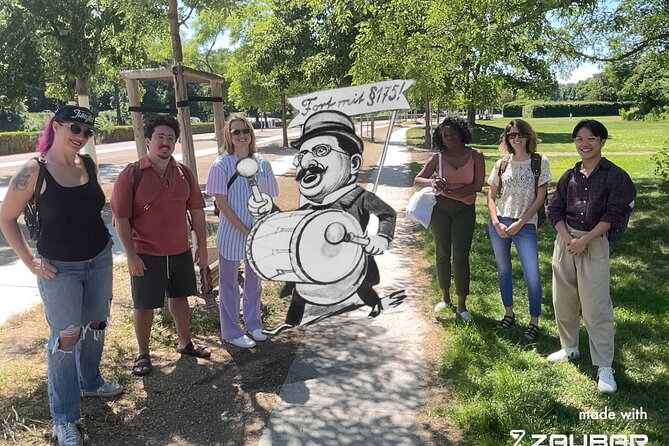
At Denns BioMarkt, the guided discussion lasts around 15 minutes. This may sound like an ordinary retail stop, but the itinerary uses everyday locations to anchor stories in the present city rather than keeping everything in a museum district.
The next stop, Prinz Eisenherz, receives about 20 minutes. This location connects with queer publishing, books, and the role of written material in building communities. Magazines and books can carry ideas when clubs are closed or public speech is restricted. They also help preserve the memory of movements that authorities tried to erase.
Metropol is the final major stop, with about 20 minutes of guided time. Its connection with performance and nightlife brings the tour back toward the cultural world introduced at the beginning. You can see how Berlin’s old cabaret tradition relates to current clubs and underground scenes, even though the city’s venues and audiences have changed.
The tour returns to Alnatura, giving you a clear finish near the original meeting point. That makes onward planning easier, especially if you want to continue talking with the group or head toward dinner.
How the augmented reality actually helps
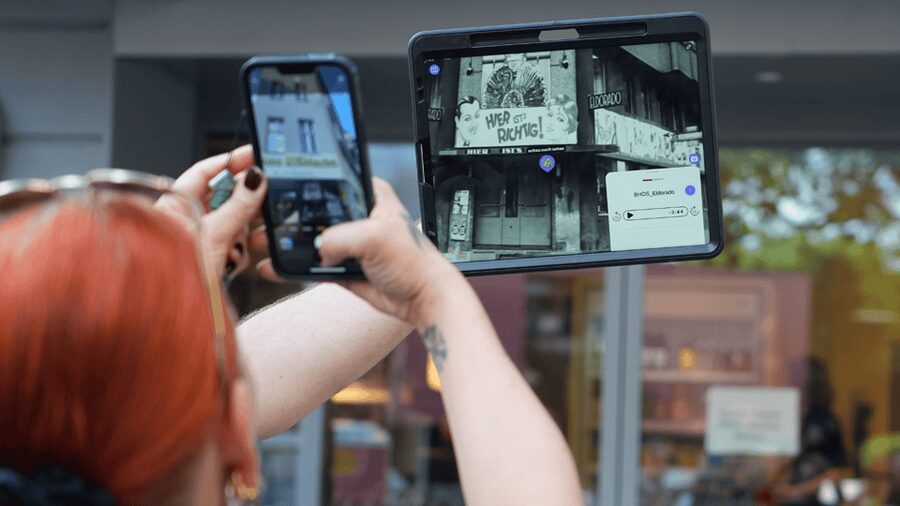
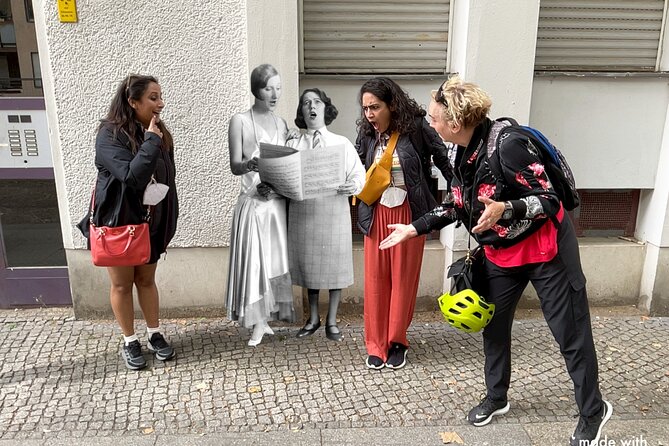
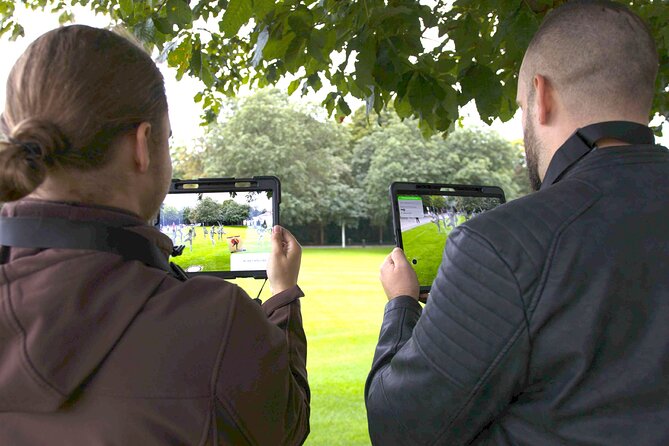
The AR element is a tool, not the whole show. Jeff uses an iPad to display old photographs, video clips, audio recordings, and reconstructed images while you stand at or near the relevant location. He can also create AR-enhanced photos called Mixies.
I like this method when a building has vanished or changed beyond recognition. A street corner alone may tell you very little about a club from the 1920s. Seeing an archival image over the modern setting gives the location a stronger connection to the past.
Still, keep your expectations sensible. This is not a full virtual reality attraction, and you are not entering recreated clubs through digital scenery. One person felt the AR was weaker than expected and wanted more access to the actual places. That is a fair criticism. The technology works best as visual support for Jeff’s stories, not as a replacement for physical interiors.
The strongest aspect is the scale of the archive. More than 200 photos, recordings, videos, and quotations provide variety, and English subtitles are available on all videos, with German subtitles on some. Jeff’s use of the material is more important than the novelty of holding an iPad.
East, West, and the Berlin after 1945
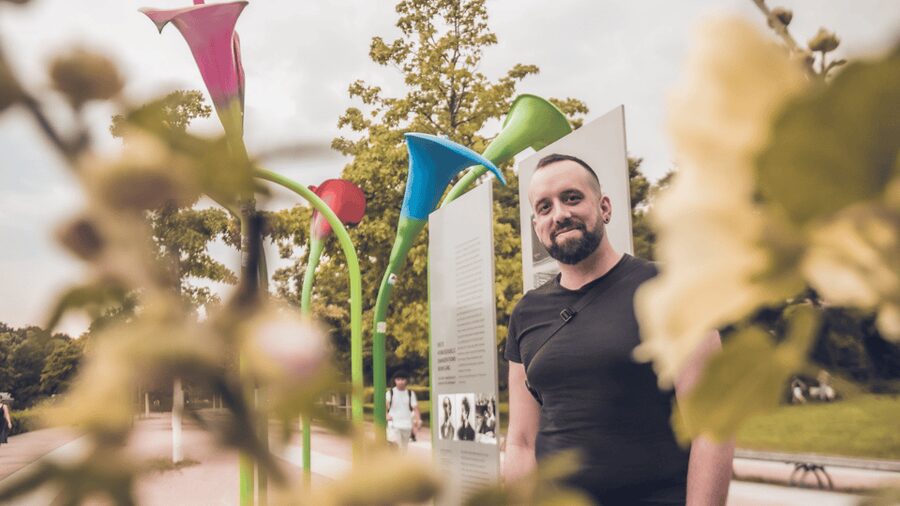
The postwar section examines how the Wall split sexual culture as well as neighborhoods and families. West Berlin became a center of sexual liberation, while East Germany promoted nudism, known as FKK, within a more controlled political system.
That contrast avoids an easy freedom-versus-repression story. Nudism did not mean that every form of sexuality was accepted, just as West Berlin’s famous nightlife did not mean equal freedom for everyone. The tour compares relationships, gender roles, sexual behavior, and state control on both sides.
This is one of the most useful parts for anyone who already knows a little about the Wall. Political division shaped daily life in ways that went far beyond checkpoints and concrete. Sexual expression, clothing, privacy, and social groups all developed under different rules.
The story then moves toward modern Berlin and the effects of the AIDS crisis. It ends with today’s sex-positive culture, but it does not pretend the city’s current reputation appeared from nowhere. The walk links modern clubs and festivals to earlier struggles over visibility, health, and personal choice.
Berlin today, from KitKat to Folsom Europe
The final contemporary section covers KitKat Club, Berghain, Lab.Oratory, Folsom Europe, fetish events, and electronic music. You receive insider context about the scenes rather than a promise of club entry or guaranteed access.
That distinction is useful. Berlin’s best-known clubs often have strict door policies, changing schedules, and rules that are not obvious to first-time visitors. A historical tour cannot guarantee admission, but it can help you understand why these places matter and how they fit into the city’s wider culture.
Folsom Europe is discussed as Europe’s largest fetish festival. The tour also looks at underground kink and electronic music communities. This material should appeal to adults who want more than a standard list of clubs. You learn how spaces develop their own codes, communities, and ideas about consent and freedom.
You should not book this expecting a pub crawl or a night out. The focus is education, history, and context. The nightlife tips are an added benefit, not the main event.
Price, pace, and practical value
At $81 per person, this is not a budget walking tour. I think the price makes sense if you value a specialist guide, a maximum group of 10, and a large archive of visual material. The subject is narrow, and the tour offers a level of research and presentation that a general city walk is unlikely to match.
The value drops if you mainly want to enter historic buildings or visit active clubs. Most stops are viewed from outside, and the tour does not include food, drinks, or public transport. You are paying for interpretation, discussion, and access to a carefully selected body of material.
The pace can also affect your calculation. Three and a half hours is a long sitting for the legs and a long listening session for the mind. A past participant suggested adding a reserved lunch or beer stop, and that would certainly make the schedule easier for some people. Bring water and consider eating beforehand.
The tour offers free cancellation up to 24 hours before departure and a reserve-now, pay-later option. Those policies are useful if your Berlin plans are still moving around, but the key decision is whether the subject and format suit you.
Accessibility and who should book
The route is wheelchair accessible, though some paths may be bumpy. Accessible toilets can be arranged on request. If you have a visual disability, the guide can provide detailed descriptions of the visual material. Some sections may include strong sensory input, and indoor mask use can be arranged when needed.
This is for adults only. Children under 18 cannot join.
I would recommend it most strongly to:
- Adults interested in queer history, feminism, gender, or sexual health
- Visitors who want Berlin explained through social change rather than monuments
- People who enjoy discussion and are comfortable with direct sexual subject matter
- Museum and archive fans who like photographs, recordings, and historical evidence
- Repeat Berlin visitors looking for a new way to understand familiar neighborhoods
I would be more cautious if you dislike long walks, need frequent breaks, or expect a club tour with indoor access. The material is frank, and some sections on Nazi persecution and the AIDS crisis are difficult.
Should you book Berlin Uncensored?
Book it if you want a serious, adult history walk with humor, debate, and a fresh view of Berlin. Jeff’s energy and careful handling of the subject are the tour’s greatest strengths, and the small group keeps the experience personal.
Do not book it solely for the AR or because you expect to party during the afternoon. The digital material supports the history, but it does not replace entering the original venues. At $81, I see this as good value for curious adults who want expert interpretation and unusual archival content, not for visitors seeking a cheap sightseeing stroll.
FAQ
Where does Berlin Uncensored begin?
It begins directly in front of the entrance to the Alnatura organic supermarket at Else-Lasker-Schüler-Straße 18, 10783 Berlin, near Nollendorfplatz.
How long does the tour last?
The tour lasts 210 minutes, or three and a half hours.
What language is the tour in?
The live tour is conducted in English.
Is public transportation included?
No. You need to bring your own public transport ticket.
Is the tour wheelchair accessible?
Yes, the tour is wheelchair accessible, although some paths may be bumpy. Accessible toilets can be arranged on request.
Are children allowed to join?
No. The experience is not suitable for children under 18.
What does the AR element include?
The guide uses an iPad to show historical photos, videos, audio recordings, and recreated views of lost places. You can also take personalized AR-enhanced Mixies photos.
Can I cancel or delay payment?
You can cancel up to 24 hours before the tour for a full refund. You can also reserve your place and pay later.
Just added around Berlin
- Kreuzberg Private Walking Tour: Immigrants, Artists & Hipsters★ 5.0 · 3 reviews
- Private Photo Tour in Kreuzberg★ 5.0 · 3 reviews
- Individual city tour Berlin for max. 8 persons★ 5.0 · 3 reviews
- Berlin’s Jewish Heritage: Private Tour of the Vibrant Jewish District★ 5.0 · 3 reviews
- Berlin & The Third Reich Private Guided Tour★ 5.0 · 3 reviews
- Private Analogue Photography Experience in Berlin★ 5.0 · 3 reviews
- Spy Mission in Berlin: Self-Guided Espionage Puzzle Quest★ 5.0 · 3 reviews
- Berlin Christmas Markets Walking Tour with Local Guide★ 5.0 · 3 reviews
Historical Tours, compared.
City History Canal Sightseeing Tour on a Motorboat
Read our review →
Bamberg: Guided Beer History Tour with Optional Tasting
Read our review →Browse the lists this tour appears in