
Reviewed · REICHSTAG TOURS
Berlin: Guided Walking Tour around the Reichstag
Berlin’s political heart rewards a closer look. This private walk links the Reichstag, Chancellery, and Spree with stories about how Germany’s parliament works today. I like the clear route through major buildings, and I like the guides’ personal approach, especially Stefan’s memories of East Berlin before the Wall fell. The main catch is simple: you see the government buildings from outside, with no interior visit to the Reichstag or Chancellery.
I also like the private-group format. For $234 per group of up to 30 people, the price can be fair for a family or larger party, though it is harder to justify for only one or two people. You get a focused look at Berlin’s political center rather than a general city walk.
Plan on two hours of walking, mostly around broad streets, bridges, river paths, and open public spaces. The meeting point is easy to reach at the Bundestag U5 station, but arrive ready to wait outside and listen closely near busy roads.
In This Review
- Key points at a glance
- Why this corner of Berlin deserves two hours
- Starting at Paul-Löbe-Allee and the U5
- The Chancellery: where national politics becomes physical
- The Swiss Embassy and the patchwork of Berlin’s capital
- Paul-Löbe House and the practical side of parliament
- White Crosses and the Wall strip
- Marshall Bridge and the Spree walk
- ARD Hauptstadtstudio and the public side of politics
- Bundestag administration and the Jakob-Kaiser-Haus
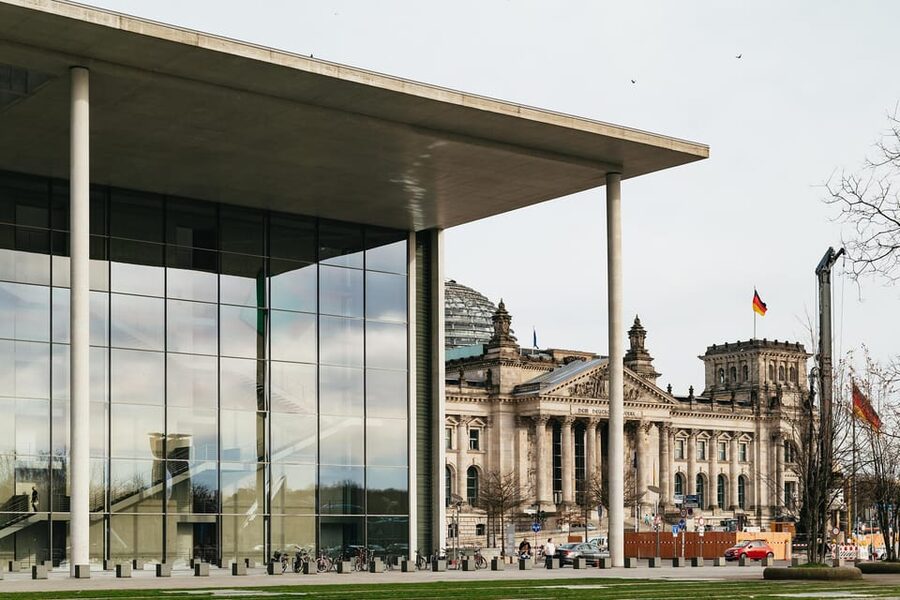
- The Reichstag: the famous finish
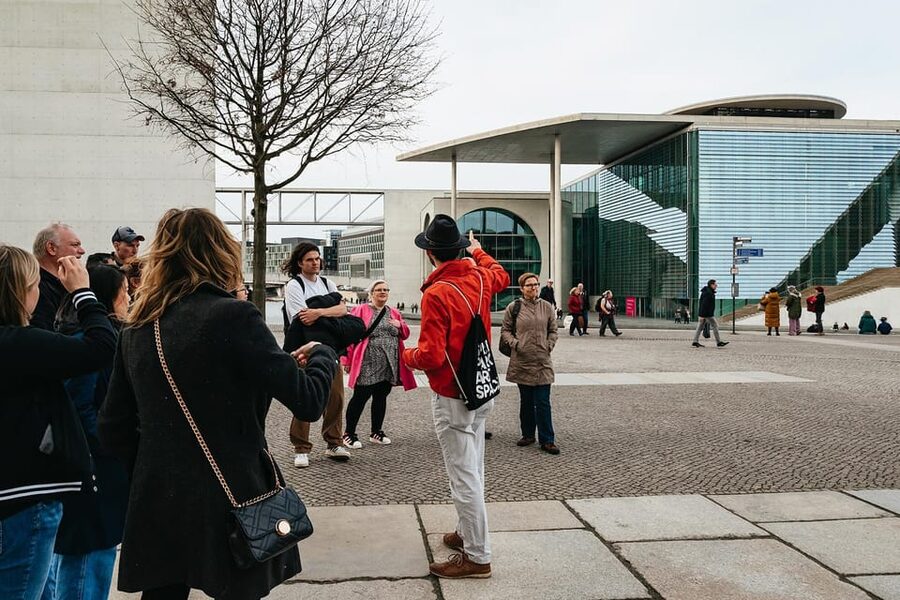
- What the guides add to the walk
- Art, architecture, and the questions worth asking
- Price, private groups, and who gets good value
- Access, languages, and useful planning notes
- Should you book this Reichstag walking tour?
- FAQ
- How long is the guided walking tour?
- Where does the tour begin?
- Where does the tour finish?
- Does the tour enter the Reichstag?
- Does the tour enter the German Chancellery?
- Which languages are available?
- Is the tour wheelchair accessible?
Key points at a glance
- A two-hour route through Berlin’s working government district: See the Reichstag, German Chancellery, Paul-Löbe House, Jakob-Kaiser-Haus, and other federal buildings.
- Personal stories add weight: Guides explain the buildings, the Wall, and modern politics in an engaging way. Stefan has shared memories of living in East Berlin before reunification.
- The tour stays outdoors: You will not enter the Reichstag or Chancellery, so this is a street-level introduction rather than a parliamentary building tour.
- The Spree and Wall history are part of the route: The walk connects modern government with traces of Berlin’s divided past, including the White Crosses.
- Private groups can make the price work: At $234 for up to 30 people, the per-person cost improves sharply with a family, school group, or larger party.
- English and German tours are available: The walk is wheelchair accessible and can be booked with flexible cancellation up to 24 hours ahead.
Why this corner of Berlin deserves two hours
Berlin’s government district is not an old quarter of narrow lanes and ornate churches. It is a working zone of ministries, parliamentary offices, security gates, river paths, memorials, and large modern buildings. That is exactly what makes it worth seeing with a guide.
You are looking at the place where national decisions are made, but the buildings do not always explain themselves. Why is the Chancellery so large? How does the Bundestag function? Where do members of parliament work, meet, eat, and move between offices? The guide supplies the practical answers while you walk from one building to the next.
I like this approach because it treats architecture as part of politics. The government district was rebuilt after reunification, and its design had to do more than look important. It had to house a working parliament, communicate openness, and fit beside the remains of a divided city.
You also get a useful contrast. The route passes sleek federal buildings along the Spree, then reaches the White Crosses and the Wall strip, where the past feels far less polished. Berlin’s political story is not separate from the city’s Cold War story. Here, the two sit side by side.
More Walking Tours in Berlin
- Discover Berlin Half-Day Walking Tour
★ 5.0 · 9,624 reviews - Berlin: Third Reich and Cold War 2 Hour Walking Tour
★ 4.9 · 6,830 reviews - Berlin: Discover Berlin Walking Tour
★ 4.9 · 5,998 reviews
Starting at Paul-Löbe-Allee and the U5
The meeting point is the intersection of Paul-Löbe-Allee and Konrad-Adenauer-Straße, beside exit D of the Bundestag station on the U5. Look for the elevator outside the subway exit. This is a practical meeting place because it puts you directly beside the parliamentary district rather than sending you through a long city-center transfer.
I would arrive a few minutes early. One booking group had to wait about 10 minutes before the guide made contact, so the meeting procedure may not always be instant. Have your phone available, keep an eye out for the guide, and do not wander far from the elevator.
The walk lasts two hours and uses a series of roughly 10-minute stops. That rhythm should suit you if you like a guided overview with regular pauses. It may feel too brisk if you want to stop for long photographs or read every sign along the way.
The Chancellery: where national politics becomes physical
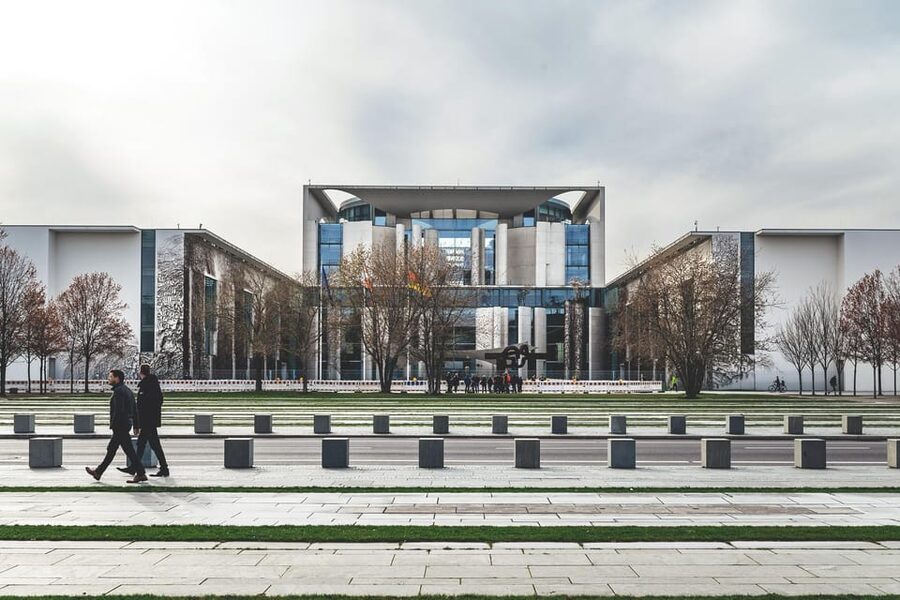
The first major stop is the German Chancellery. The guide explains what happens inside and how the Chancellor receives official visitors. Since there is no interior access, the value here comes from understanding the building’s purpose and design from the outside.
This is a good place to ask questions. The Chancellery is not simply a grand office. It is a workplace, a meeting site, and a public symbol of federal power. A strong guide can help you read the building in all three ways.
The short stop also sets up one of the tour’s main themes: does a parliament need to look grand and ceremonial, or should it look open and practical? You will hear how the government district tries to balance authority with the idea of a modern democracy.
The Swiss Embassy and the patchwork of Berlin’s capital
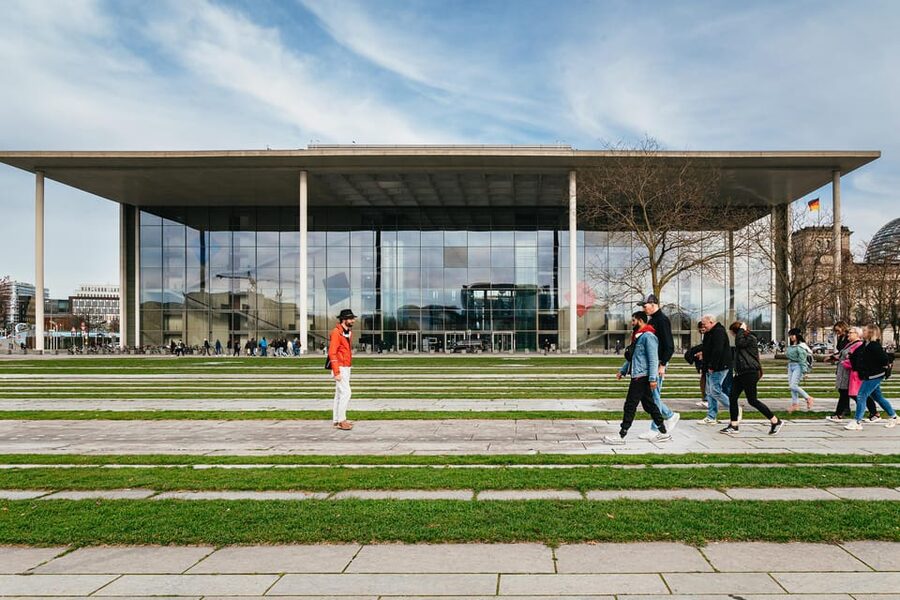
The Swiss Embassy follows on the route. This stop gives the walk a wider frame because the government district is not made up only of German federal buildings. Diplomatic sites sit close to the parliament, reminding you that national politics and international relationships share the same small section of Berlin.
The guide provides about 10 minutes here. Do not expect a formal embassy visit. It is an exterior stop, useful for understanding how the area combines government offices, diplomatic buildings, public streets, and river access.
I appreciate stops like this because they break up what could otherwise become a procession of large administrative buildings. You are not just checking off the Reichstag. You are seeing how the capital operates as a connected district.
More Reichstag visits:
- Berlin: Reichstag, Dome and Government District Guided Tour
★ 4.7 · 18,288 reviews - Berlin: Government District around the Reichstag Guided Tour
★ 4.7 · 8,447 reviews - Berlin: Reichstag, Plenary Chamber, Cupola & Government Tour
★ 4.6 · 8,422 reviews - Berlin: Government District Tour and Reichstag Dome Visit
★ 4.6 · 4,254 reviews
Paul-Löbe House and the practical side of parliament
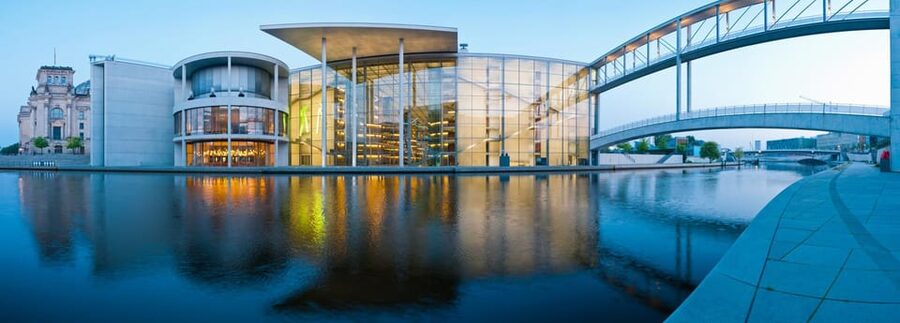
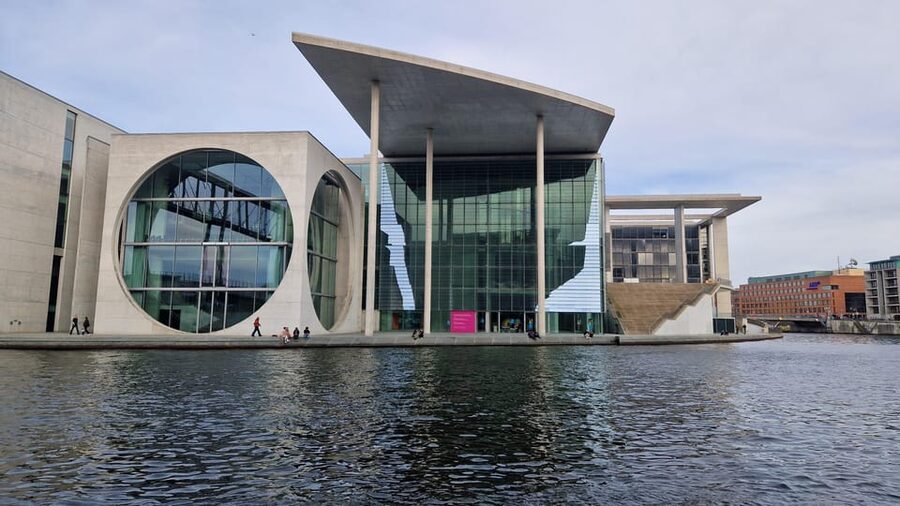
Paul-Löbe House is one of the key parliamentary buildings on the route. The guide explains how the Bundestag works and what kind of activity takes place in the offices around the main Reichstag building.
This is where the tour’s practical questions become especially useful. You may learn how members of parliament work away from the famous debating chamber, how offices are arranged, and how a modern parliament supports its daily business.
The building’s appearance also matters. It is less about royal display and more about function, transparency, and movement. Ask the guide about the architecture if that interests you. The tour is designed to explain not only what you are seeing, but why the federal district looks the way it does.
White Crosses and the Wall strip
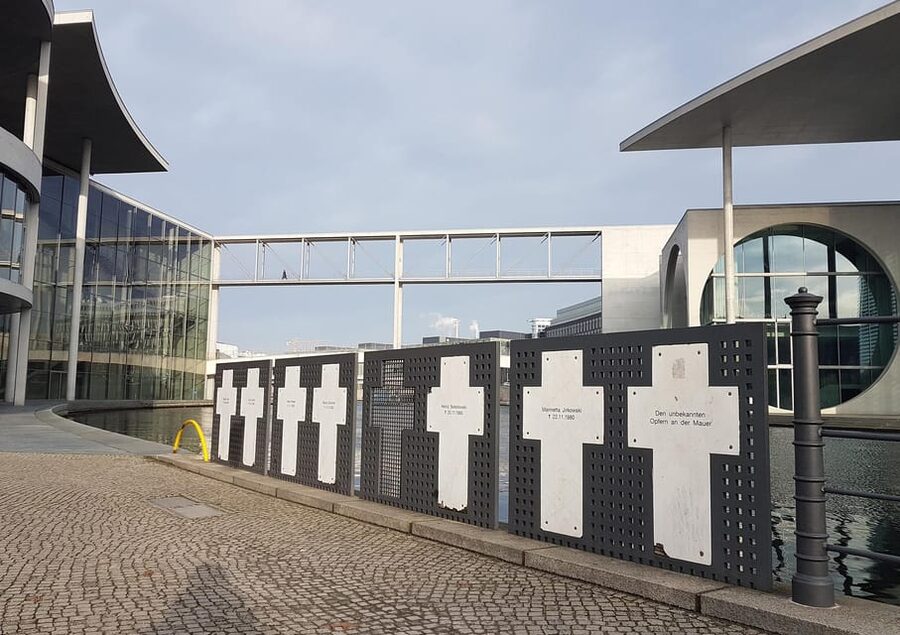
The White Crosses are the most emotionally direct point on the route. They mark people who died trying to cross the Berlin Wall. After the modern government buildings, this memorial brings you back to the human cost of the city’s division.
The stop is brief, but do not treat it as a quick photo point. The guide connects the memorial to the Wall strip and explains the stories behind the border area. This gives the rest of the tour more meaning. You are not looking at a new capital built on an empty site. You are walking through a place shaped by separation, escape attempts, reunification, and political change.
The memorial also helps explain why Berlin’s government quarter feels different from older European capital districts. The city had to create a new political center while remaining honest about its recent past.
Marshall Bridge and the Spree walk
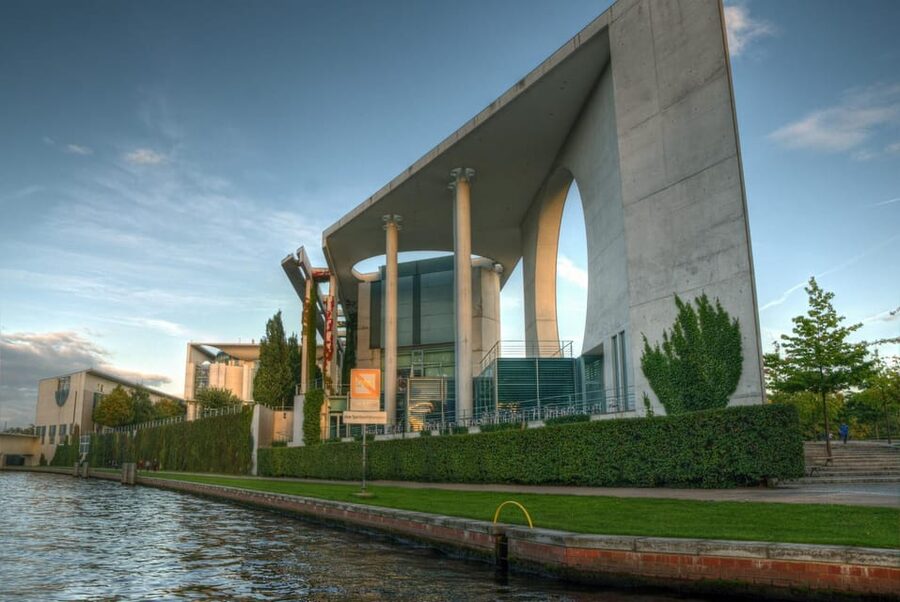
At Marshall Bridge, the route shifts toward the river. Walking along the Spree lets you see the government district from a more open angle. The water, bridges, offices, and public paths make it easier to understand how the area was planned as a connected part of the city.
This is one of the more pleasant stretches of the walk. You get room to look around, and the guide can point out relationships between buildings that are harder to grasp from a single street corner. The Spree also reinforces the link between Berlin’s geography and its politics.
The route is still urban, so expect broad paved paths and city traffic rather than a quiet nature walk. Wear comfortable shoes, particularly if you plan to continue sightseeing afterward.
ARD Hauptstadtstudio and the public side of politics
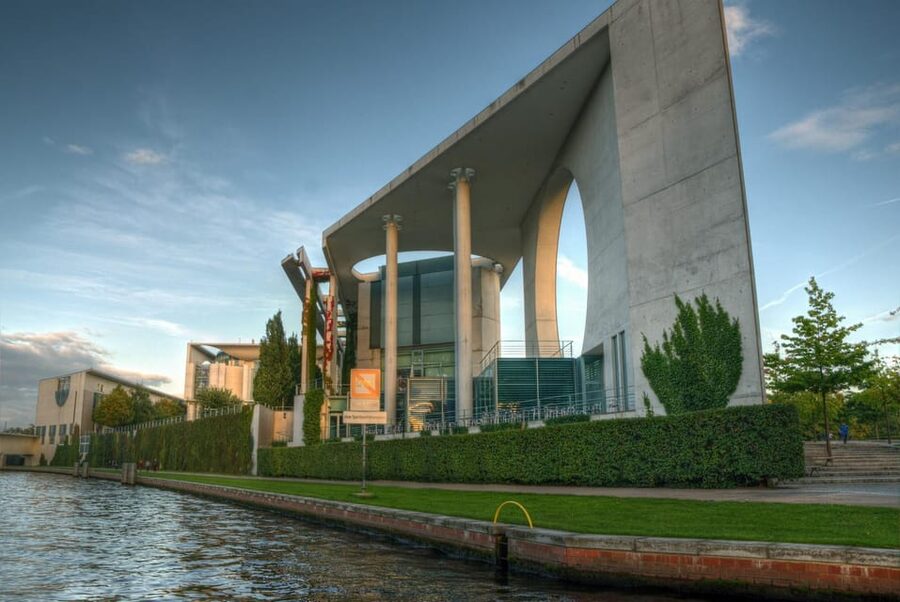
The ARD Hauptstadtstudio Berlin brings media into the story. Politics is not only made in offices and parliamentary chambers. It is also explained, debated, and presented to the public through national broadcasting.
The guide discusses the role of this capital studio and its place near the government district. This stop helps you understand how political decisions reach people outside the buildings you are seeing.
I find this part especially helpful for anyone interested in how government and communication work together. The district was built for administration, but it also functions as a stage where political activity becomes public news.
Bundestag administration and the Jakob-Kaiser-Haus
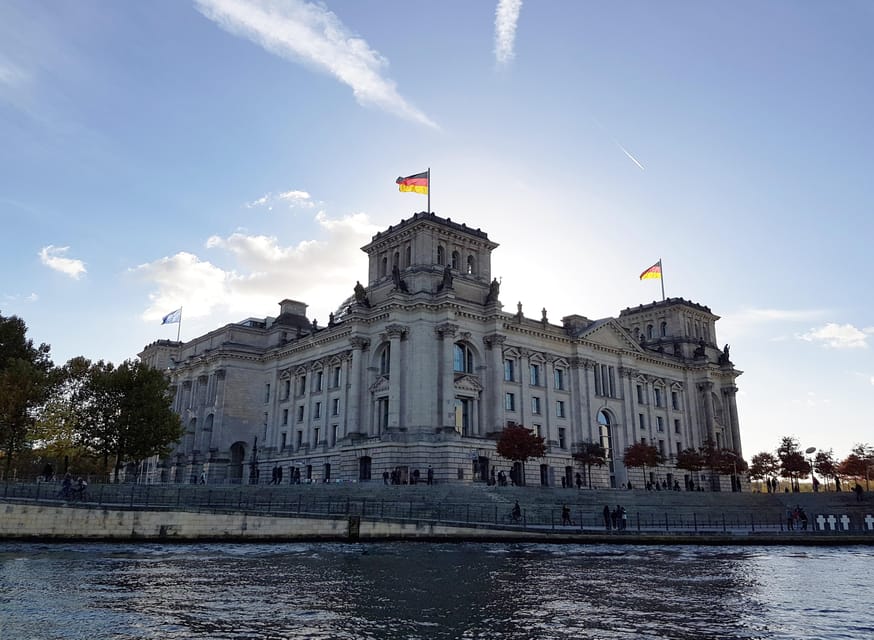
The walk continues past the Verwaltung des Deutschen Bundestages, or the administration of the German parliament. This is a useful reminder that a parliament needs far more than a debating room. Staff, offices, services, records, and daily operations all support the visible side of democracy.
Next comes Jakob-Kaiser-Haus, another important parliamentary complex. The guide explains its place in the district and how the various buildings work together. This is where the route can feel most technical, but the short stops keep it manageable.
If you prefer architecture and civic planning, you will likely enjoy these sections. If you mainly want famous sights, they may feel less dramatic than the Reichstag itself. Their value lies in showing you the machinery behind the public face of government.
The Reichstag: the famous finish
The Reichstag is the final major stop and the natural climax of the walk. You learn about the building, its role in the Bundestag, and the changes that turned it into a symbol of reunified Germany.
Keep your expectations clear: this tour does not take you inside. You will not visit the debating chamber, dome, or interior exhibits as part of this experience. That limitation matters because many people associate the Reichstag with its glass dome and expect an indoor visit.
Still, an exterior explanation can be worthwhile. The guide places the Reichstag within the full political district rather than treating it as an isolated monument. By the time you arrive, you have seen the Chancellery, parliamentary offices, media facilities, riverfront, bridge, and Wall memorials. The Reichstag then feels like the center of a working system.
The tour finishes at Platz der Republik, near the Reichstag. This is a convenient end point for continuing around the government district on your own.
What the guides add to the walk
The strongest part of the experience is the storytelling. The guide is expected to explain politics and architecture in an entertaining way, not simply recite dates and building names.
Stefan received particular praise for mixing facts with humor and his personal memories of East Berlin before the Wall came down. That kind of first-person perspective can change the tone of the walk. You are not only hearing about the division of Berlin as a distant subject. You are hearing how the city felt to someone who lived through it.
Another guide was praised for giving varied information and keeping the group engaged after a delayed meeting. A German-speaking booking described the guide simply as competent, while an English-language experience was valued for its enthusiasm and storytelling.
The guide quality matters here because much of the tour is about buildings that you cannot enter. A dry explanation would leave you looking at office blocks. A lively guide can show you the decisions, debates, art, and human stories tied to those façades.
Art, architecture, and the questions worth asking
The route raises questions that give the district more depth. What should a working parliament look like? Does a democratic building need to appear monumental? How can public art speak about politics without becoming decoration?
You may also hear about artworks in the government district, tunnels, dining places for members of parliament, and how political work is communicated. These subjects make the walk feel less like a standard sightseeing circuit and more like an introduction to the daily life of the capital.
The exact detail you receive will depend on the guide and the questions you ask. I would come prepared with a few: Where does the Chancellor meet foreign leaders? How do members of parliament move between buildings? What changed after reunification? Which parts of the Wall remain nearby?
Price, private groups, and who gets good value
The cost is $234 for a private group of up to 30 people. For a couple, that is a substantial price for two hours, especially since the guide is the only included item and there is no interior admission.
For a family, reunion group, school group, or company party, the calculation looks much better. A group of 10 pays about $23 per person, while a full group of 30 pays less than $8 per person. You are paying for a dedicated guide and a route focused on one subject, not for tickets or transport.
The private format also gives you more control over the conversation. You can ask about Cold War Berlin, federal politics, architecture, or the Wall instead of following the interests of a large mixed group.
The rating is very strong at 4.8 from eight bookings, with repeated praise for engaging explanations, humor, personal stories, and broad subject coverage. I would place more weight on those repeated comments about guide quality than on the number alone.
Access, languages, and useful planning notes
The tour is available in English and German and is wheelchair accessible. The meeting point is next to the elevator at the U5 Bundestag station, which helps with access from public transport.
You should still allow for the practical realities of an outdoor city walk. There are roads, open plazas, bridges, and river paths, and you will be standing or walking for two hours. The tour does not include admission to the Reichstag or Chancellery, so arrange a separate interior visit if that is important to you.
Cancellation is free up to 24 hours before the start, and you can reserve now and pay later. Those terms are useful if your Berlin schedule is still shifting.
Should you book this Reichstag walking tour?
Book it if you want Berlin’s government district explained rather than merely photographed. It suits you especially well if you care about modern politics, the Wall, architecture, or the way a capital city communicates power.
I would also recommend it for families and larger private groups, where the $234 fee becomes reasonable. Choose another option if your main goal is entering the Reichstag dome or Chancellery, since neither interior is included.
For the best experience, arrive early at U5 exit D, confirm the guide before leaving the meeting point, and ask questions about the buildings that interest you. With a strong guide such as Stefan, the walk can turn a collection of official façades into a clear story about Berlin, democracy, division, and reunification.
FAQ
How long is the guided walking tour?
The tour lasts two hours.
Where does the tour begin?
It begins at the intersection of Paul-Löbe-Allee and Konrad-Adenauer-Straße, next to the Bundestag U5 subway exit D, in front of the elevator.
Where does the tour finish?
The tour finishes at Platz der Republik in Berlin-Mitte.
Does the tour enter the Reichstag?
No. The tour does not include an interior visit to the Reichstag.
Does the tour enter the German Chancellery?
No. There is no interior tour of the Chancellery.
Which languages are available?
The live tour guide is available in English and German.
Is the tour wheelchair accessible?
Yes, the activity is wheelchair accessible.
Just added around Berlin
- Private Photo Tour in Kreuzberg★ 5.0 · 3 reviews
- Kreuzberg Private Walking Tour: Immigrants, Artists & Hipsters★ 5.0 · 3 reviews
- Individual city tour Berlin for max. 8 persons★ 5.0 · 3 reviews
- Berlin’s Jewish Heritage: Private Tour of the Vibrant Jewish District★ 5.0 · 3 reviews
- Berlin & The Third Reich Private Guided Tour★ 5.0 · 3 reviews
- Private Analogue Photography Experience in Berlin★ 5.0 · 3 reviews
- Spy Mission in Berlin: Self-Guided Espionage Puzzle Quest★ 5.0 · 3 reviews
- Berlin Christmas Markets Walking Tour with Local Guide★ 5.0 · 3 reviews
Reichstag Tours, compared.
Reichstag, Dome and Government District Guided Tour
Read our review →
Government District around the Reichstag Guided Tour
Read our review →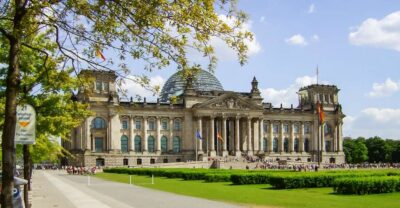
Reichstag, Plenary Chamber, Cupola & Government Tour
Read our review →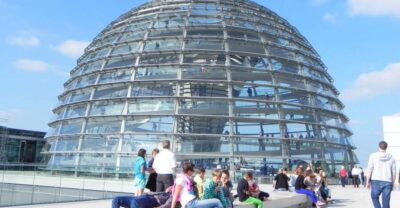
Government District Tour and Reichstag Dome Visit
Read our review →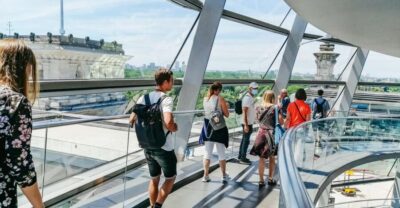
Government Quarter Tour and Reichstag Dome Visit
Read our review →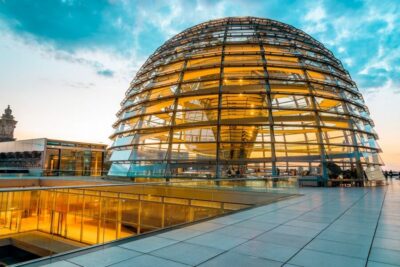

Rooftop Breakfast at Käfer Restaurant Reichstag
Read our review →
Rooftop Aperitif at Reichstag Käfer Restaurant
Read our review →Browse the lists this tour appears in