Reviewed · BERLIN TOURS
Berlin: GDR witness tour in small group
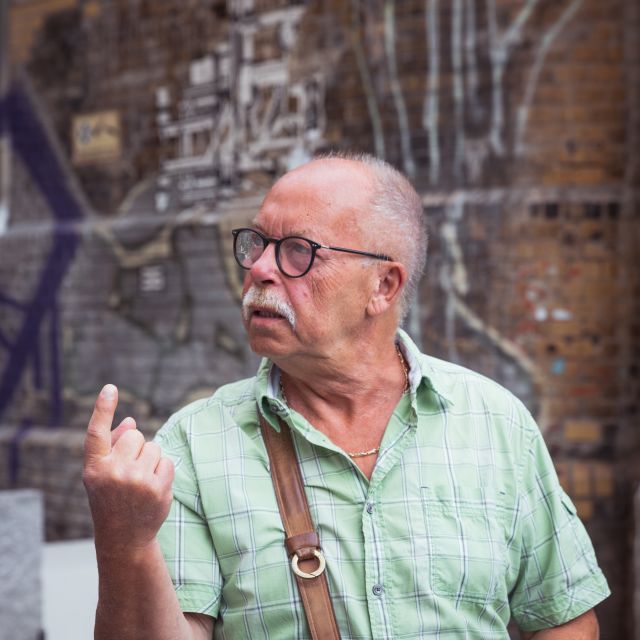
The Wall still speaks through one survivor. This small-group Berlin tour brings you close to the GDR through Karl-Heinz Richter, a former political prisoner who describes his failed escape, Stasi detention, and ordinary life in East Germany. I like the personal account and the focus on details that textbooks often flatten. I also like the modest price, about $27, for a two-and-a-half-hour meeting with someone who lived through these events.
The main caution is that the experience depends heavily on Richter’s storytelling and is conducted in German. One participant found the talk shorter than expected and felt some parts of the account did not fit together. That makes this a powerful but personal history lesson, not a polished museum presentation.
In This Review
- Key points at a glance
- Why Karl-Heinz Richter’s story matters
- Friedrichstrasse and the failed attempt to reach the West
- Inside the story of Stasi detention in Berlin-Pankow
- Everyday life under the GDR system
- How the small-group format changes the experience
- German-language delivery and who should book
- Is $27 a fair price?
- Weather, timing, and practical expectations
- How this tour compares with a standard Berlin history visit
- My verdict: book it for the voice, not the sightseeing
- FAQ
- Where does this GDR tour take place?
- How long is the tour?
- Who leads the tour?
- What language is the tour conducted in?
- What does Karl-Heinz Richter discuss?
- Is the tour wheelchair accessible?
- Is hotel transportation included?
- Does the tour run in bad weather?
- How much does the tour cost?
- Can I cancel the booking?
Key points at a glance
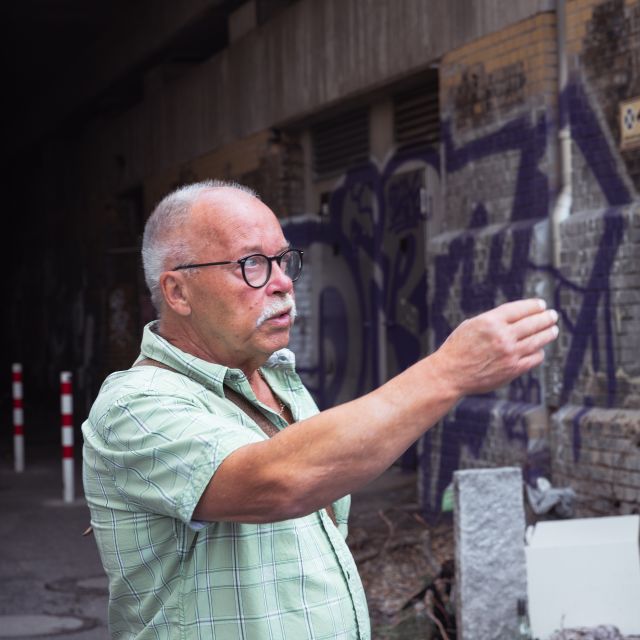
- Karl-Heinz Richter tells his own story: Born in Brandenburg in 1946 and raised in East Berlin, he experienced the GDR as a young man rather than studying it from a distance.
- A failed escape at Friedrichstrasse: Three years after the Wall went up, Richter tried to jump onto a moving train at Friedrichstrasse station while attempting to reach the West.
- Stasi imprisonment is central: He explains his months in pre-trial detention at the Stasi prison in Berlin-Pankow and the conditions he faced there.
- Daily life gets equal attention: The talk covers the effect of state surveillance on ordinary East German society, not only the dramatic escape attempt.
- German-language format: The live guide language is German, so you should be comfortable following a detailed spoken account in German.
- Small-group setting: The format allows a more direct encounter with the speaker than a large sightseeing tour, but the quality rests on the guide’s presentation.
Why Karl-Heinz Richter’s story matters
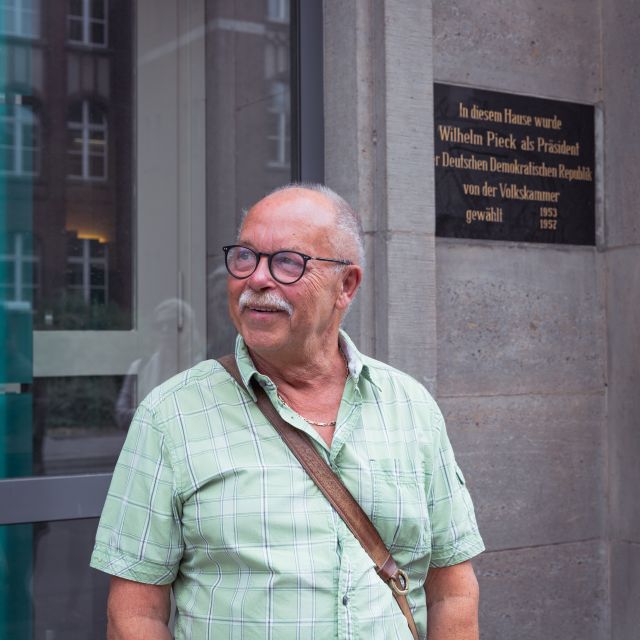
Berlin’s Cold War past can feel tidy when reduced to dates, walls, checkpoints, and museum panels. Richter’s story brings back the uncertainty behind those facts. He was born in Schwarzheide, in Brandenburg, in 1946, and grew up with his family in East Berlin. That places his childhood and youth inside the young East German state, not outside it as an observer.
This matters because the GDR was not only a political system. It was the place where people went to school, worked, raised children, made friends, and tried to plan their futures. Richter’s account helps you see how a government could shape private choices, family life, travel, and even casual conversation.
I value this kind of tour because it gives you a human scale. Instead of hearing only that escape attempts were dangerous, you hear about one young man deciding that leaving was worth the risk. Instead of seeing the Stasi as a distant agency, you hear how its presence affected a prisoner and the people around him.
The experience is also a reminder that personal testimony has limits. Memory is intimate, but it is not the same as a court transcript or an archive. One participant felt that parts of Richter’s account seemed inconsistent and possibly embellished. You should listen carefully, ask questions if the format allows, and treat the talk as a firsthand perspective rather than the final word on every detail of GDR history.
Other Berlin trips people book alongside this one:
- Berlin: Reichstag, Dome and Government District Guided Tour
★ 4.7 · 18,288 reviews - Berlin: 1-Hour City Tour by Boat with Guaranteed Seating
★ 4.3 · 16,993 reviews - Berlin: Boat Tour Along the River Spree
★ 4.4 · 11,252 reviews
Friedrichstrasse and the failed attempt to reach the West
The emotional center of the tour is Richter’s escape attempt. Three years after the Berlin Wall was built, he planned to flee to the West and tried to jump onto a moving train at Friedrichstrasse station.
Even without a large set of visual attractions, that episode gives the discussion a clear setting. Friedrichstrasse was one of the places where divided Berlin became a daily reality. A station that might otherwise seem like a normal transport point could also represent borders, surveillance, and the danger of making the wrong move.
Richter’s account focuses on the decision itself and its consequences. Trying to board a moving train was not a casual act. It was a desperate plan, and it failed. The failed attempt led to his arrest and months of detention.
You should not expect a staged reenactment or an action-packed visit. The power here comes from hearing the story explained by the person who lived it. The tour asks you to picture the pressure of that moment and the narrow choices available to someone trying to leave East Germany.
For history-minded visitors, this is likely the most memorable part of the experience. You gain a specific event to connect with Friedrichstrasse, rather than simply hearing that the station once lay within a divided city.
Inside the story of Stasi detention in Berlin-Pankow
After the escape attempt, Richter spent several months in pre-trial detention at the Stasi prison in Berlin-Pankow. His description of that period is a major reason to choose this experience.
The word Stasi can become vague when used too often. Richter gives it a face and a personal cost. He discusses the conditions of detention and the interrogation methods used by the state security service. This section is likely to be serious and unsettling, particularly because it deals with imprisonment before a normal legal resolution.
The setting is important even if the tour does not promise a complete visit through every former prison room. The prison in Berlin-Pankow represents the machinery that confronted people accused of political offenses. Richter’s memories connect that institution to one individual’s fear, uncertainty, and loss of freedom.
I like that the tour does not stop with the escape attempt. A dramatic failed flight can make a neat story, but the detention that followed explains the price paid afterward. You hear about what happened once the plan failed, when the state had control and Richter had very little power.
The description of Stasi interrogation methods also helps you understand how political control worked. Surveillance was not only about secret files. It could involve questioning, pressure, detention, and the attempt to break a person’s confidence. Richter’s account places those methods in a lived setting.
This part may not suit children or anyone looking for a light introduction to Berlin. The subject is imprisonment and political repression. You should choose it because you want a serious account, not because it promises entertainment.
Everyday life under the GDR system
The tour reaches beyond one escape story to explain daily life in East Germany. That broader view is one of its strongest features.
Richter speaks about the influence of the Stasi throughout East German society. This is useful because surveillance did not affect only people who tried to cross the border. It shaped how many people viewed authority, trusted others, and judged what could safely be said.
A personal story can make this point more clearly than a list of institutions. You may come away thinking less about the Stasi as a remote agency and more about the atmosphere its presence created. The experience aims to show how political pressure could reach into everyday relationships and decisions.
The account also gives you a chance to consider different experiences of the GDR. Richter’s story is that of a man who planned to escape and became a political prisoner. It is not a complete portrait of every East German family, workplace, or community.
That distinction is worth keeping in mind. If you want a broad survey of the GDR, pair this tour with a museum or memorial that offers documents, objects, photographs, and multiple perspectives. If you want one direct voice, the tour fills a different role.
Something different for another day:
- Discover Berlin Half-Day Walking Tour
★ 5.0 · 9,624 reviews - Berlin: Hop-on Hop-off Bus Tour with Live Commentary
★ 4.3 · 8,579 reviews - Berlin: Government District around the Reichstag Guided Tour
★ 4.7 · 8,447 reviews - Berlin: Reichstag, Plenary Chamber, Cupola & Government Tour
★ 4.6 · 8,422 reviews
How the small-group format changes the experience
A small group is a good match for a personal testimony. You are closer to the speaker, and the atmosphere can feel more like a serious conversation than a standard city excursion.
The advantage is focus. You are not being moved quickly from one attraction to another, and the central subject does not get buried beneath a long list of Berlin sights. The entire two-and-a-half-hour period is built around GDR life, the escape attempt, imprisonment, and Stasi control.
The drawback is that the format gives you less visual variety. If you need constant movement, photographs, or a long list of physical landmarks, this may feel slow. The experience depends on your willingness to listen.
The small-group setting also means that the guide’s delivery matters greatly. The strongest response to the experience came from the private insights and the sense of feeling Richter’s experiences with him. That emotional connection is the tour’s main reward.
At the same time, one participant reported that the tour finished in about one-and-a-half hours rather than the advertised two-and-a-half. That is a serious value concern at a price of about $27, especially if you expect a full-length program. I would confirm the starting details and allow for the possibility that the actual storytelling time may vary.
German-language delivery and who should book
The live tour language is German. This is not a minor detail. You should book only if you can follow spoken German well enough to understand a personal account involving political institutions, imprisonment, and historical events.
A strong command of everyday German may not be enough if you struggle with long explanations or unfamiliar historical terms. There is no stated English-language option, and the supplied details identify German as the only language.
The tour suits:
- German-speaking visitors interested in the GDR and Cold War Berlin
- People who prefer oral history to a standard sightseeing route
- Adults who want a serious account of political imprisonment
- Visitors who already know the basic story of the Berlin Wall and want a personal perspective
- Anyone interested in how state surveillance affected ordinary life
It may be a poor fit if you want an English tour, a broad overview of Berlin, or a visit built around many physical sights. It also may not suit younger children because the subject includes failed escape, detention, and interrogation.
The tour is wheelchair accessible, which makes the format available to a wider range of visitors. Still, you should check the exact meeting arrangements when booking, since hotel pickup and drop-off are not included.
Is $27 a fair price?
At about $27 per person, the tour is priced below many longer guided experiences in Berlin. The value comes from access to Richter’s firsthand account, not from transport, entrance tickets, or a packed sightseeing schedule.
I consider the price fair if you receive the full two-and-a-half-hour session and care about personal testimony. A former political prisoner speaking about his own escape attempt and detention offers something a standard city tour cannot easily reproduce.
The value drops if the talk ends after roughly one-and-a-half hours. One participant specifically felt that the shorter duration made the €24 price too high. That criticism is worth taking seriously because there are no listed admissions or transfers to offset a shortened program.
You should also remember what is included. The tour provides a guide, but not hotel pickup or drop-off. You pay for the guided experience itself and make your own way to the meeting point.
The reserve-now, pay-later option gives you some practical flexibility, and cancellation is free up to 24 hours before the start time for a full refund. Those policies reduce the risk of booking, though they do not change the question of whether the subject and German-language format suit you.
Weather, timing, and practical expectations
The tour runs rain or shine. Plan accordingly, even though the main value is the spoken account rather than outdoor sightseeing. You should check the forecast and dress in a way that will keep you comfortable if any portion of the experience takes place outside.
The advertised duration is two-and-a-half hours. Starting times vary, so you need to check availability for the date you want. Do not schedule a tight connection immediately afterward, especially since the actual length may vary according to the guide’s presentation.
There is no hotel pickup or drop-off. You will need to reach the meeting point independently, and the available information does not specify a transport arrangement beyond the tour itself.
Because this is a small-group meeting with a contemporary witness, arrive ready to listen rather than expecting a conventional hop-on, hop-off route. You may find the experience most rewarding if you know a little about the Wall, East Berlin, and the Stasi before you arrive.
How this tour compares with a standard Berlin history visit
A typical Berlin history tour tries to cover many sites and periods in a short time. This experience does the opposite. It narrows the subject to one man’s life and uses his story to explain a wider system.
That narrow focus is an advantage if you want emotional detail. Richter’s failed attempt at Friedrichstrasse and his detention in Pankow give you concrete events to remember.
It is a limitation if you need full historical balance. You will not get every political change, economic issue, or social group within the GDR from one person’s testimony. The best way to use this tour is as a personal layer added to other Berlin history sites.
The most praised element is the directness of the account. The experience can make the past feel immediate without turning it into a theatrical show. You are listening to a witness describe what happened to him, including the fear and uncertainty surrounding his attempt to leave.
My verdict: book it for the voice, not the sightseeing
I recommend this tour to German-speaking visitors who want a serious, personal account of East Germany. Karl-Heinz Richter’s story of growing up in East Berlin, attempting to escape through Friedrichstrasse, and enduring Stasi detention gives the GDR a human face.
Book it if you value firsthand testimony, can accept a talk-centered format, and are comfortable with difficult subjects. The price is reasonable when the full two-and-a-half-hour experience is delivered.
Think twice if you need English, want a broad city tour, or would be disappointed by a shorter session. The mixed response about the duration and the concern over inconsistent details mean you should approach this as one person’s powerful memory, best paired with a museum or memorial for wider context.
FAQ
Where does this GDR tour take place?
The experience takes place in Berlin, with the story connected to Friedrichstrasse station and the Stasi prison in Berlin-Pankow.
How long is the tour?
The advertised duration is 2.5 hours. Starting times vary, so you need to check availability for your chosen date.
Who leads the tour?
The central guide is Karl-Heinz Richter, a contemporary witness and former political prisoner who experienced the GDR firsthand.
What language is the tour conducted in?
The live tour guide language is German. No other tour language is specified.
What does Karl-Heinz Richter discuss?
He discusses everyday life in East Germany, his planned escape to the West, his failed attempt at Friedrichstrasse station, his detention in the Stasi prison in Berlin-Pankow, and Stasi interrogation methods.
Is the tour wheelchair accessible?
Yes, the experience is listed as wheelchair accessible.
Is hotel transportation included?
No. Hotel pickup and drop-off are not included.
Does the tour run in bad weather?
Yes. The tour takes place rain or shine.
How much does the tour cost?
The listed price is $27 per person.
Can I cancel the booking?
Yes. You can cancel up to 24 hours in advance for a full refund. You can also reserve the experience and pay later.
Just added around Berlin
- Kreuzberg Private Walking Tour: Immigrants, Artists & Hipsters★ 5.0 · 3 reviews
- Private Photo Tour in Kreuzberg★ 5.0 · 3 reviews
- Individual city tour Berlin for max. 8 persons★ 5.0 · 3 reviews
- Berlin’s Jewish Heritage: Private Tour of the Vibrant Jewish District★ 5.0 · 3 reviews
- Berlin & The Third Reich Private Guided Tour★ 5.0 · 3 reviews
- Private Analogue Photography Experience in Berlin★ 5.0 · 3 reviews
- Spy Mission in Berlin: Self-Guided Espionage Puzzle Quest★ 5.0 · 3 reviews
- Berlin Christmas Markets Walking Tour with Local Guide★ 5.0 · 3 reviews
Berlin Tours, compared.
Reichstag, Dome and Government District Guided Tour
Read our review →
1-Hour City Tour by Boat with Guaranteed Seating
Read our review →

Government District around the Reichstag Guided Tour
Read our review →
Reichstag, Plenary Chamber, Cupola & Government Tour
Read our review →