
Reviewed · HISTORICAL TOURS
Alternative tour, History off the beaten path
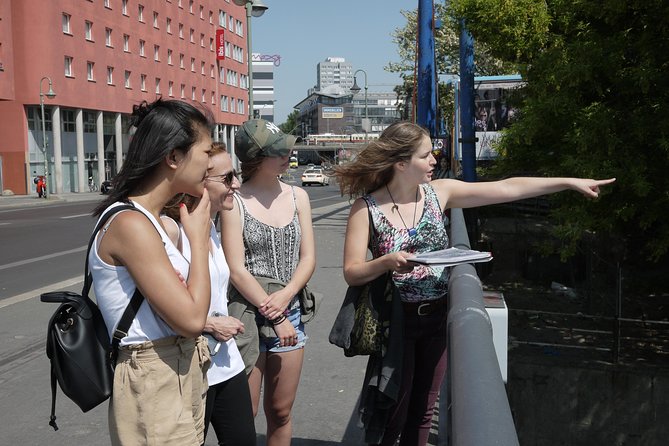
Berlin has more stories than postcard sights. This three-hour walk with Annabelle follows lesser-seen corners of Friedrichshain and Kreuzberg, connecting football culture, architecture, the Berlin Wall, former squats, and the city’s unusual social history. I like the intimate group size, capped at 10, and the guide’s lively, personal approach. I also like that the route begins near Ostbahnhof and finishes at Mariannenplatz, taking you away from the usual central Berlin circuit.
The main consideration is value. At $100.93 per person, this is not a cheap orientation walk, especially since drinks and snacks cost extra. The experience makes the most sense if you want a highly personal history tour rather than a broad first look at Berlin’s famous monuments.
In This Review
- What makes this Berlin walk different
- Starting near Ostbahnhof: why the meeting point matters
- Football as a key to Berlin’s social story
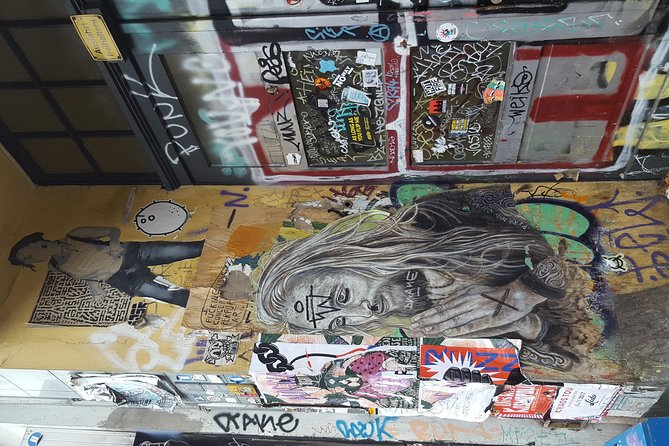
- YAAM and the city’s alternative side
- Former squats, no-man’s-land, and unexpected green space
- Learning Berlin through architecture and street details
- Why the small group changes the experience
- The three-hour pace and what to bring
- Is $100.93 a fair price?
- Who will get the most from this walk?
- My verdict: book it for the story, not the checklist
- FAQ
- Where does the tour start?
- Where does the tour finish?
- How long does the experience last?
- What language is offered?
- How much does the tour cost?
- Is the group large?
- Is YAAM included?
- Are food and drinks included?
- Can I reach the meeting area by public transportation?
- What happens if bad weather cancels the tour?
What makes this Berlin walk different
- A football-themed way to read Berlin: The tour uses football as one entry point into the city, rather than treating history as a list of dates and rulers.
- Annabelle’s personal guiding style: Her energy, enthusiasm, and local feel are central to the experience.
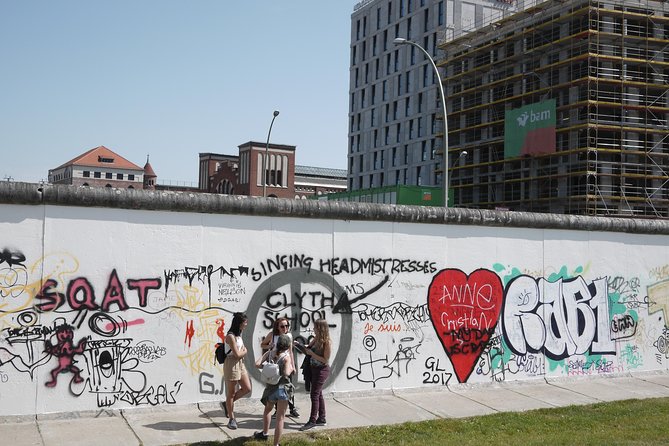
- A route through unusual Berlin: Expect discussion of former squats, no-man’s-land areas, architectural details, and green spaces that most standard tours skip.
- A short YAAM passage: The route includes a brief, 10-minute passage to YAAM, a useful taste of Berlin’s alternative cultural side.
- A small group capped at 10: You get a better chance to hear the guide and ask questions than on a large city walk.
- A social finish: The tour ends around Mariannenplatz, with the option to spend money on a drink or meal afterward.
Starting near Ostbahnhof: why the meeting point matters
The tour begins at Ostbahnhof, on Koppenstraße 3 in Berlin. This is a practical starting point for a route focused on the eastern side of the city, especially Friedrichshain and Kreuzberg. You can reach the area by S-Bahn using lines S3, S5, S7, and S9.
That location also gives you a useful sense of departure from the standard Berlin sightseeing path. You are not beginning at Brandenburg Gate, Museum Island, or Checkpoint Charlie. Instead, the tour starts in a part of the city linked to postwar division, changing neighborhoods, alternative culture, and the city’s long habit of reinventing itself.
Bring comfortable shoes. The experience lasts about three hours and includes walking between several places, even though only YAAM is identified as a formal stop. The route is best understood as a guided city walk with many short points of interest, not as a series of long indoor visits.
The end point is Mariannenplatz in the Friedrichshain-Kreuzberg district. Kottbusser Tor, served by the U8, is the closest named transport option provided for the finishing area. Since you do not return to Ostbahnhof, plan your next stop from Kreuzberg rather than assuming you will finish where you began.
More Historical Tours in Berlin
- Berlin: Natural History Museum Entrance Ticket
★ 4.6 · 3,382 reviews - Berlin: World Heritage Cruise to Potsdam
★ 4.5 · 1,435 reviews - Berlin Historical Highlights Walking Tour
★ 4.9 · 657 reviews
Football as a key to Berlin’s social story
The football angle is one of the most unusual features here. Berlin football is not only about matches and scores. In a city divided for decades, neighborhood identity, politics, migration, and local pride often overlap with clubs and their supporters.
The supplied details do not identify a particular team or match-related activity, so you should not book this expecting a game or stadium visit. Instead, football appears to be a way for Annabelle to explain how Berlin communities express belonging and how the city’s neighborhoods developed their own character.
That approach can work well if you already know the main facts of Berlin’s past but want to understand how history affects daily life. You may hear less about a famous monument as an isolated object and more about the people, streets, and communities around it.
I especially like this format for anyone who finds conventional historical tours too formal. The guide’s style is described as warm, energetic, and conversational. That matters on a three-hour walk, because a route through ordinary streets depends on explanation. Without a strong guide, a former squat, an architectural detail, or a strip of greenery can look like just another part of town.
YAAM and the city’s alternative side
YAAM is the named stop on the route, with a 10-minute express passage and admission included. The short timing tells you something important: this is not a long, detailed visit to every part of the venue. Think of it as a quick introduction to one of Berlin’s alternative cultural spaces.
YAAM is useful in this tour because it helps connect the city’s history to its creative and community life. The route is interested in places that do not fit neatly into a traditional sightseeing plan. A stop like this gives the walk a different rhythm from a tour that moves only between museums and royal buildings.
You should keep your expectations precise. The published itinerary gives only a brief passage to YAAM, so the real value comes from the explanation around the place and how it fits into the wider route. If you want a full venue visit, a long stop, or a scheduled food experience, this walk may feel too quick.
Still, the short visit can work well for a first introduction. You see one part of the city’s alternative scene, then continue through the streets where the social and historical story develops.
Former squats, no-man’s-land, and unexpected green space
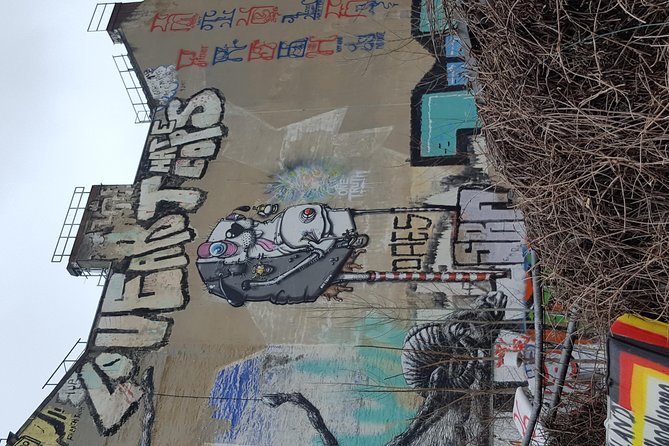
The most distinctive material concerns places that many standard tours leave out. The route includes discussion of the historic roots of squats, a former no-man’s-land area, and a green corridor that has grown in or around a place once marked by division.
These subjects give you a more grounded way to think about Berlin after the Wall. The city’s history is not limited to the Wall memorials and museum displays. It also appears in arguments over housing, the use of empty land, informal communities, and what happens when a once-forbidden area becomes available again.
The tour’s appeal is strongest here. You are not simply checking off famous sights. You are using streets and small urban details to understand how Berlin changed after 1989 and why some neighborhoods developed a strong alternative identity.
The information provided does not name every stop, so I would not expect a fixed list of major landmarks. That lack of detail is a drawback for anyone who wants to know the exact route before booking. It is also part of the attraction for people who prefer a more exploratory walk.
Annabelle’s personality seems especially important on these sections. Historical context can make an ordinary corner meaningful, but only if it is clearly explained. The available feedback repeatedly praises her enthusiasm, personal connection to Berlin, and ability to add anecdotes at street level rather than recite a memorized script.
Something different for another day:
- Berlin: Reichstag, Dome and Government District Guided Tour
★ 4.7 · 18,288 reviews - Berlin: 1-Hour City Tour by Boat with Guaranteed Seating
★ 4.3 · 16,993 reviews - Berlin: Boat Tour Along the River Spree
★ 4.4 · 11,252 reviews - Discover Berlin Half-Day Walking Tour
★ 5.0 · 9,624 reviews
Learning Berlin through architecture and street details
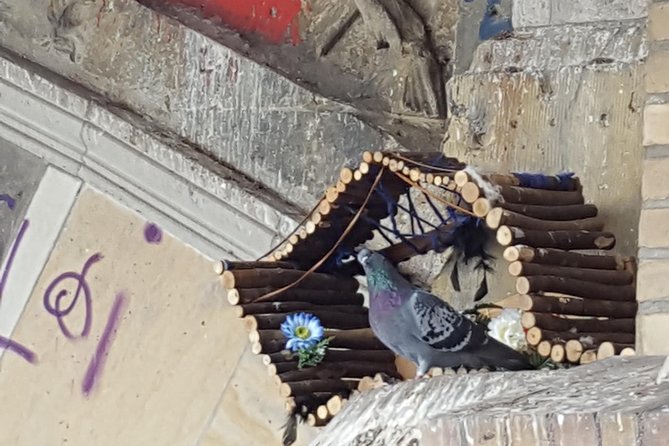
Architecture is another strong part of the experience. The tour combines historical explanation with the physical details of the neighborhoods, so you can expect to pause at buildings, streets, and spaces that might otherwise pass unnoticed.
This is a good format for curious walkers. You may already know that Berlin was divided, but architectural clues can show how that division affected the city. A street corner, a gap between buildings, or a changed use of land can tell a smaller story about the past.
The route also seems to connect architecture with social history. That is more useful than treating buildings as isolated sights. You can look at how an area changed, who used it, and what happened when Berlin’s political boundaries shifted.
Do not expect the polished presentation of a major museum. This is an outdoor experience, and the quality depends on the guide, weather, group dynamics, and how much time the route has at each place. The benefit is direct contact with the city. The tradeoff is that you may spend part of the tour simply walking between points.
Why the small group changes the experience
The maximum group size is 10 people. That is a strong feature for a history walk with a conversational guide. You can usually hear more clearly, stay closer to the guide, and ask questions without stopping a large crowd.
A small group also suits the personal nature of this route. The walk is not designed as a mass-market procession through Berlin’s top attractions. It is built around Annabelle’s interpretation of the city and her ability to connect with the people joining her.
The available rating is 5 out of 5 from seven ratings, and the praise focuses heavily on her energy, warmth, and command of the subject. That is meaningful because the experience offers no long list of included attractions to carry the visit. The guide is the main feature.
At the same time, a small group does not guarantee a private tour. You will still share the pace and interests of the other participants. If you want a quiet, self-directed walk, a private guide, or a detailed architectural lecture, this may not be the right format.
The three-hour pace and what to bring
Three hours is long enough to build a story but short enough to fit into a full day in Berlin. I would schedule it early in your stay if you want the route to shape the rest of your visit. It can introduce neighborhoods and themes you may want to explore later on your own.
The experience is offered in English. Confirmation arrives when you book, and service animals are allowed. The activity is near public transportation, and most people can participate, but the information does not provide a detailed accessibility description or a precise walking distance.
Because weather can cancel the experience, check the forecast and keep some flexibility in your schedule. If poor weather causes cancellation, you are offered another date or a full refund. You can also cancel for a full refund up to 24 hours before the start time. Changes or cancellations made within 24 hours are not refunded.
Wear shoes suitable for several hours outside. Carry water, especially in warm weather, and leave room in your budget for a drink at the end. Snacks are not included, and the final social stop is an optional expense rather than part of the $100.93 price.
Is $100.93 a fair price?
The price is high for a three-hour walking tour. GST is included, but snacks and drinks are not, so your actual spending can rise if you join the group for refreshments afterward.
The value depends on what you want from Berlin. If you want a cheap overview of the main sights, you can find better value elsewhere. A standard public walking tour or self-guided route will cover more famous monuments for less money.
If you want a small-group experience led by a passionate guide, the calculation changes. You are paying for Annabelle’s personal interpretation, the unusual route, the limited group size, and the chance to see Berlin through subjects such as football culture, squats, former border zones, and local architecture.
I would call it a specialist tour rather than a general bargain. The price is easier to justify for a repeat visitor, a history-minded guest, or someone who has already seen the main central sights. For a first-time visitor with only one day in Berlin, the cost may feel harder to defend because the tour does not focus on the city’s most famous landmarks.
The excellent 5/5 rating from seven ratings supports the guide-led value, but the sample is small. I would treat it as encouraging evidence, not a guarantee that every group will have the same experience.
Who will get the most from this walk?
I would recommend the tour to you if you like:
- Local stories instead of a checklist of monuments
- Berlin’s postwar division and the changes after the Wall
- Architecture, neighborhood history, and urban details
- Small groups and direct conversation with a guide
- Alternative culture, football, squats, and unusual city spaces
- Ending a tour with an optional drink or meal among new acquaintances
It may not suit you if you need a precise, landmark-heavy schedule. It is also a weaker match if you dislike outdoor walking, want extensive time at each stop, or prefer tours with every food and admission cost included.
Families and mixed-age groups can participate, since the supplied information says most people can take part. Still, the subject matter may appeal most to older children and adults who can follow discussions about political change, housing, urban space, and Berlin’s divided past.
My verdict: book it for the story, not the checklist
I would book this tour if I wanted to see a less polished, more personal side of Berlin and had already allowed time for the city’s major sights. Annabelle’s enthusiasm appears to be the heart of the experience, and the route offers unusual subjects that you are unlikely to encounter on a standard central-city walk.
I would skip it if $100.93 feels steep for three hours or if you want famous landmarks, formal museums, or a clearly published stop-by-stop route. The short YAAM passage and extra cost for refreshments also matter.
For the right person, this is a thoughtful introduction to Berlin’s neighborhoods and social history. Go with comfortable shoes, an open mind, and a little extra money for the final drink. You will get the most from it if you want to understand how Berlin became Berlin, not just photograph where it happened.
FAQ
Where does the tour start?
It starts at Ostbahnhof, at Koppenstraße 3, 10243 Berlin, Germany.
Where does the tour finish?
It ends at Mariannenplatz, Mariannenplatz, 10997 Berlin, in the Friedrichshain-Kreuzberg district.
How long does the experience last?
The tour lasts approximately three hours.
What language is offered?
The experience is offered in English.
How much does the tour cost?
The listed price is $100.93 per person.
Is the group large?
No. The activity has a maximum of 10 participants.
Is YAAM included?
Yes. The route includes a brief 10-minute passage to YAAM, and admission is included.
Are food and drinks included?
No. Snacks are not included, and you should expect to pay extra for a drink at the end.
Can I reach the meeting area by public transportation?
Yes. Ostbahnhof is served by S-Bahn lines S3, S5, S7, and S9. Kottbusser Tor, served by the U8, is listed as a transport option for the finishing area.
What happens if bad weather cancels the tour?
You will be offered a different date or a full refund if poor weather causes cancellation.
Just added around Berlin
- Kreuzberg Private Walking Tour: Immigrants, Artists & Hipsters★ 5.0 · 3 reviews
- Private Photo Tour in Kreuzberg★ 5.0 · 3 reviews
- Individual city tour Berlin for max. 8 persons★ 5.0 · 3 reviews
- Berlin’s Jewish Heritage: Private Tour of the Vibrant Jewish District★ 5.0 · 3 reviews
- Berlin & The Third Reich Private Guided Tour★ 5.0 · 3 reviews
- Private Analogue Photography Experience in Berlin★ 5.0 · 3 reviews
- Spy Mission in Berlin: Self-Guided Espionage Puzzle Quest★ 5.0 · 3 reviews
- Berlin Christmas Markets Walking Tour with Local Guide★ 5.0 · 3 reviews
Historical Tours, compared.
City History Canal Sightseeing Tour on a Motorboat
Read our review →

Bamberg: Guided Beer History Tour with Optional Tasting
Read our review →Browse the lists this tour appears in