
Reviewed · BERLIN WALL TOURS
2.5-Hour Berlin Wall and Memorial Sites Walking Tour
The Wall speaks most clearly on foot. This 2.5-hour walk follows the former border from the November 9, 1989 square to Nordbahnhof, linking famous memorials with lesser-known traces of Berlin’s divided past. I like the small group of no more than 12 people, and I like that a local guide explains the Cold War through the actual streets where it happened.
The price is reasonable at $25.45, especially for a guided route through several important sites. I also appreciate the personal touch reported by visitors, including a guide who shared memories from her own life in divided Berlin. The main consideration is physical: you walk for two and a half hours, mostly outdoors, with no hotel pickup or transport included.
In This Review
- Key points about this Berlin Wall walk
- Why this 2.5-hour route matters
- Starting at the Square of November 9, 1989
- Ulbricht Curve and Schwedter Way
- Gleim Tunnel and Berlin Wall Park
- Bernauer Strasse Memorial and the Church of Reconciliation
- The Wall Memorial viewing platform
- Ending at Nordbahnhof and the former ghost station
- Is $25.45 a fair price?
- Who should book this walking tour?
- Should you book the Berlin Wall and Memorial Sites Walking Tour?
- FAQ
- How long is the Berlin Wall walking tour?
- Where does the tour start?
- What time does the tour begin?
- Where does the tour end?
- What sites are included?
- How large is the group?
Key points about this Berlin Wall walk
- Start at Bornholmer Strasse, the border crossing tied to the Wall’s opening on November 9, 1989.
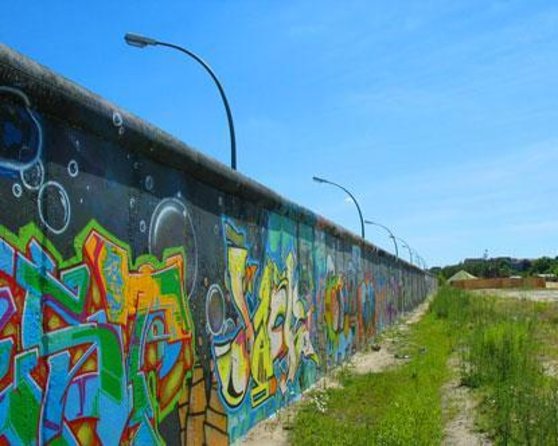
- Follow the former death strip toward Nordbahnhof, seeing Wall traces that are easy to miss without guidance.
- Visit Bernauer Strasse Memorial, Berlin Wall Park, the Church of Reconciliation, and other key sites.
- Hear personal and local stories, including accounts shaped by lived experience of the Wall.
- Walk in a small group, capped at 12 people, for easier questions and a more direct exchange with the guide.
- Finish near Nordbahnhof, a former ghost station connected to Berlin’s divided rail system.
Why this 2.5-hour route matters
Berlin can make the Wall feel strangely absent. Much of the original structure is gone, and the city has grown around its former border. That is why a walking tour can help. You are not simply looking at a remaining slab of concrete. You are following the route of the border, crossing spaces once controlled by guards, fences, watchtowers, and strict movement rules.
This walk covers the 28-year period when the Wall split Berlin and Germany. The guide’s job is to connect dates and political events with physical places. At Bornholmer Strasse, for example, you begin on ground linked with the Wall’s fall. Later, the route takes you through areas connected with escape attempts, the death strip, divided streets, and a railway station altered by the border.
I like this approach because it gives the tour a clear story. You begin at the place where the Wall opened and then walk backward through the system that made the border so hard to cross. The route ends at Nordbahnhof, where the city’s divided transport network provides one more reminder that the Wall affected ordinary daily life, not only major political events.
The route is also useful for first-time visitors. You could find some of these points on your own, but the connections between them are not always obvious. A guide can point out Wall traces documented by the city but easily missed by someone rushing between larger memorials.
More Walking Tours in Berlin
- Discover Berlin Half-Day Walking Tour
★ 5.0 · 9,624 reviews - Berlin: Third Reich and Cold War 2 Hour Walking Tour
★ 4.9 · 6,830 reviews - Berlin: Discover Berlin Walking Tour
★ 4.9 · 5,998 reviews
Starting at the Square of November 9, 1989
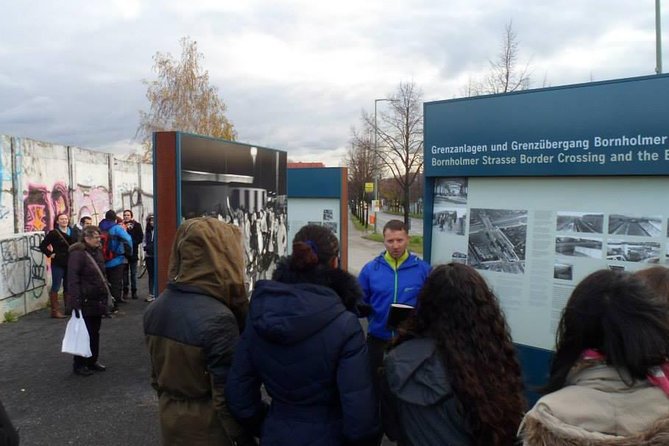
The meeting point is Bornholmer Strasse 75A, at the Square of November 9, 1989. The tour begins at 3:00 pm, so you should arrive with enough time to locate the exact starting point before the group sets off.
This is a fitting place to begin. The square marks the former Bornholmer Strasse border crossing, one of the most important locations linked to the Wall’s opening. You hear how the border changed after 28 years of division, then begin walking along the old boundary.
The strength of this opening is its sense of place. You are not starting with a museum display or a general lecture. You are standing at a former crossing point and then tracing the border from there. I find that this kind of beginning helps you understand the rest of the walk, since the sites ahead become parts of one connected route.
The guide also introduces the former death strip, the controlled area between sections of the border. The term is stark, but it helps explain why crossing the Wall was not a simple matter of climbing over one barrier. You will hear about the security system and the dangers faced by people who tried to escape.
Ulbricht Curve and Schwedter Way
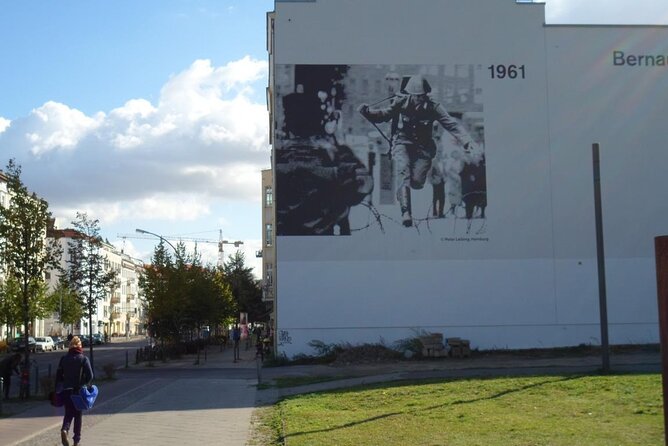
The next portion includes the Ulbricht Curve and Schwedter Way. These names may not mean much before the walk, but they are part of the route’s value. They show how the border cut through ordinary parts of Berlin, including roads and paths that once connected neighborhoods.
The tour does not limit itself to the best-known Wall photographs. You follow smaller traces and documented remnants along the former border. Some of these details may be easy to pass without noticing, especially if you are exploring alone. The guide helps you read the ground and understand how the border once ran through the area.
Schwedter Way also brings the tour into a less polished part of the Wall story. You are not seeing only official memorials. You are seeing the route as a physical boundary that shaped movement through the city. That makes the walk feel more practical and grounded than a short stop at a preserved Wall section.
The guide’s explanation matters here. One visitor described the tour as full of information about things they would never have known. That is a useful description of what you are paying for. The concrete remains are only part of the experience. The guide supplies the context that turns a path, bend, or tunnel into evidence of a divided city.
Gleim Tunnel and Berlin Wall Park
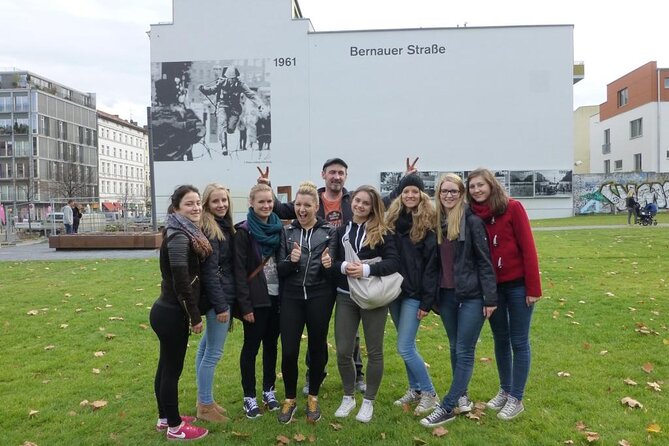
The route continues to Gleim Tunnel and Berlin Wall Park. The tunnel adds another layer to the story because underground routes were part of the struggle to get across the border. The tour includes the former Bernauer Strasse tunnel as well, so you receive more than one look at the ways people tried to pass beneath the Wall.
Berlin Wall Park gives the walk room to breathe. It is one of the main named stops, but the experience is still based on walking through the former border zone rather than moving from one isolated exhibit to another. I like that the park appears as part of a longer route, since you can better understand its place within the old Wall corridor.
This is also where the group format can help. With a maximum of 12 people, you have a better chance to hear the guide clearly and ask a question without turning the tour into a large crowd exercise. The experience is not private, but it should feel more direct than a big coach group.
Keep in mind that this is an outdoor walking tour. The description calls for a moderate level of physical fitness, and that is worth taking seriously. You should be ready to walk for the full two and a half hours, with a pause included along the way. Food and drinks are not included, so bring what you need for the afternoon.
More Berlin Wall walks:
- Skip-the-Line: Berlin Wall Museum at Checkpoint Charlie
★ 4.1 · 2,041 reviews - Berlin: East Side Gallery Spree Cruise in a Solar Catamaran
★ 4.0 · 1,039 reviews - Cold War, Berlin Wall, Spies and the East Side Gallery
★ 5.0 · 1,024 reviews - Berlin: Guided Bike Tour of the Berlin Wall and Third Reich
★ 4.7 · 499 reviews
Bernauer Strasse Memorial and the Church of Reconciliation
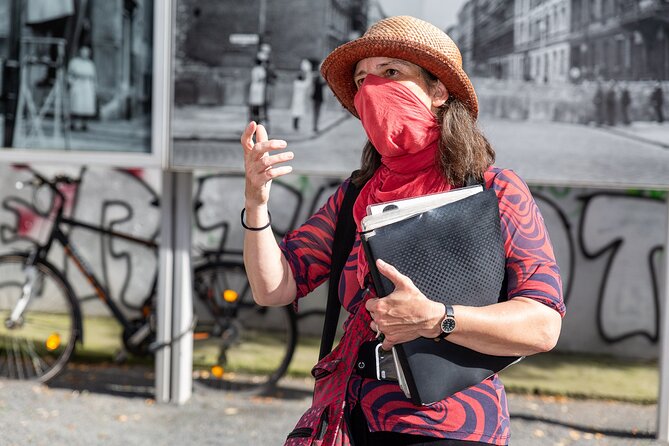
Bernauer Strasse is one of the most important parts of the tour. The memorial area preserves a substantial section of the former border and helps show how the Wall divided buildings, sidewalks, and homes. This was not an abstract line far from daily life. In Berlin, the border could run directly beside a building or across a familiar route to work.
The Bernauer Strasse tunnel is also included. Here, the guide can explain the underground attempts to cross beneath the Wall and the risks involved. The stop gains power from being part of the route rather than a detached story. You walk the former boundary, then learn how people tried to get underneath it.
The Church of Reconciliation is another key stop. Its inclusion broadens the tour beyond concrete barriers and escape routes. It points to the way religious and neighborhood buildings could become trapped or altered by the Wall. You see how the border changed the identity of the surrounding area.
I would give these stops your full attention. They are not simply photo opportunities. The memorials ask you to picture a city where streets, homes, churches, and transport links were controlled by a hard border. The guide’s job is especially important here, and the strongest feedback about this experience focuses on the guide’s clear explanations and personal stories.
One Dutch visitor described the guide as kind and full of information, with personal experience of the Wall. No guide name is provided, but that detail is useful. If your guide also brings firsthand memories, listen closely. Personal recollections can add a human scale to the political story, though the quality of any walking tour will depend partly on the individual guide leading your group.
The Wall Memorial viewing platform
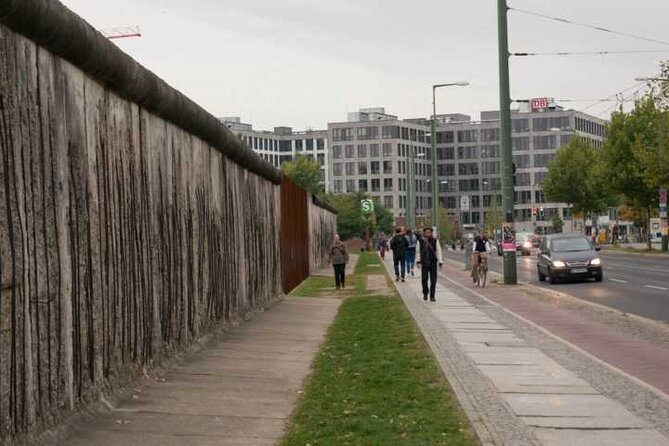
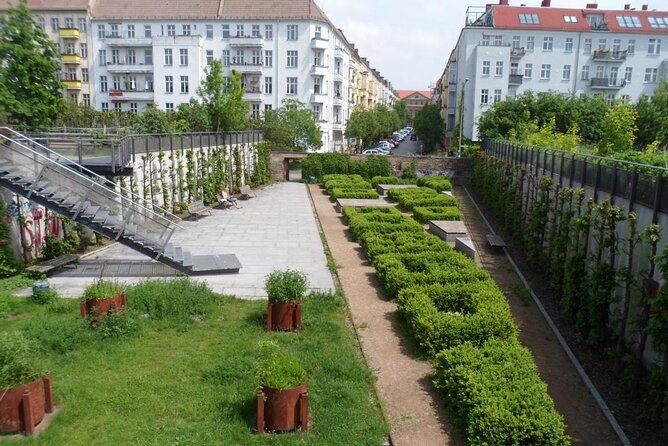
The viewing platform at the Berlin Wall Memorial gives you a chance to look across the former border area from above. After walking along the route, this wider view helps you understand the arrangement of the Wall and the death strip.
This is one of the tour’s most useful visual moments. Ground-level traces can be hard to piece together, especially in a city where modern buildings and roads have changed the surroundings. From the platform, you can better grasp the space between the former border elements and why the area was so difficult to cross.
The tour includes a pause, which helps break up the walk. Still, do not mistake the pause for a full meal break. Food and drinks are not included, and the tour finishes at Nordbahnhof rather than returning to the starting point. Plan your afternoon around that one-way route.
The supplied details also say that long lines are skipped. That benefit is more relevant at some memorial facilities than others, but it means you are not expected to spend the tour waiting in a queue. The main value remains the guide and route, not a promise of fast entry to a large indoor attraction.
Ending at Nordbahnhof and the former ghost station
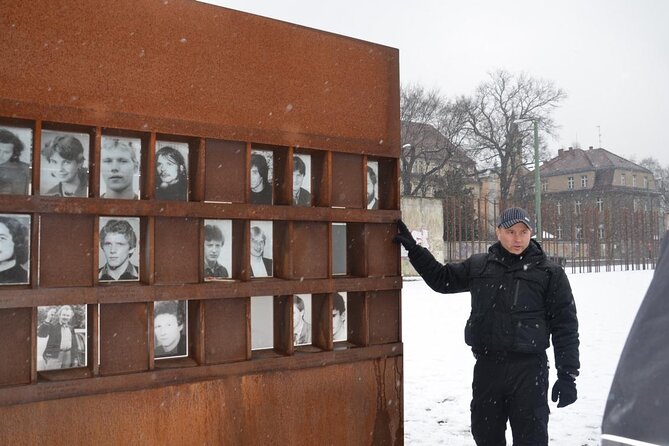
The walk finishes at Berlin-Nordbahnhof, at Invalidenstrasse 131. This is a practical ending because Nordbahnhof is connected to the former ghost-station story. During Berlin’s division, some stations in the eastern part of the city were closed to ordinary passengers while trains passed through a guarded and divided system.
The station gives the final part of the walk a different focus. At earlier stops, you have followed fences, paths, tunnels, and memorial grounds. Here, the story reaches public transport. The Wall affected how people moved across Berlin, and a station that could no longer function normally made that division part of everyday travel.
Ending at Nordbahnhof also means you should plan your next stop from there. Hotel pickup and drop-off are not included, and transportation to or from the attractions is your responsibility. Since the tour starts in one part of Berlin and finishes in another, check your route before arriving.
Is $25.45 a fair price?
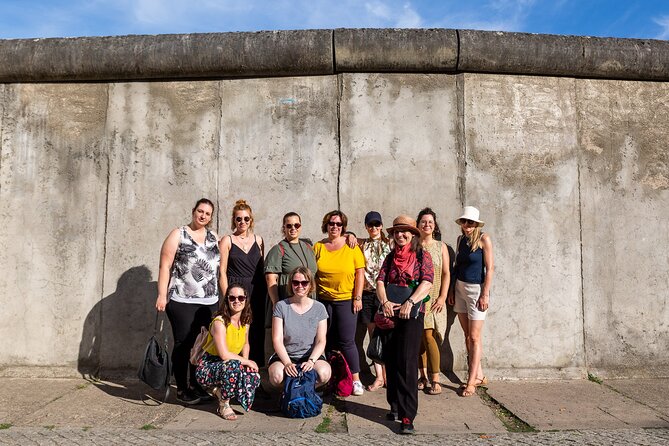
At $25.45 per person, I consider this good value if you want an explanation-led visit rather than a quick look at Wall remains. You receive a professional local guide, a small-group format, and a route covering several significant sites over two and a half hours.
The value comes from the range of stops. You visit Bornholmer Strasse, Ulbricht Curve, Schwedter Way, Gleim Tunnel, Berlin Wall Park, Bernauer Strasse, the Church of Reconciliation, the viewing platform, and Nordbahnhof. A self-guided walk could cover some of these places, but you would need to research the route and historical connections yourself.
The price is less appealing if you want a short, effortless sightseeing stop. This is not a hop-on bus experience, and there is no transport between sites. You pay in part with your time and energy. For me, that trade works because walking along the old border is central to understanding it.
The tour has a 5 out of 5 rating from 22 reviews, with 100 percent recommending it. That is a small sample, so I would not treat the numbers as a guarantee. Still, the praise is consistent around the same point: the guide provides clear, interesting information and adds details you would likely miss alone.
Who should book this walking tour?
I would choose this tour if you want a focused introduction to Berlin’s Wall memorials and prefer a guide to explain what you are seeing. It suits first-time Berlin visitors, anyone interested in Cold War history, and people who want to connect famous sites with less obvious Wall traces.
It is also a good fit if you value a small group. Twelve people is still a group, but it allows for a more personal exchange than a large city tour. The chance to ask questions is useful when the route includes unfamiliar names such as Ulbricht Curve and Schwedter Way.
You may want a different plan if you have limited mobility or do not enjoy extended walks. The tour requires moderate physical fitness, runs for about two and a half hours, and includes outdoor stops. It also begins at 3:00 pm, so check that the timing fits your Berlin schedule.
I would not book it for food, shopping, or a broad city tour. The subject is tightly focused on the Wall and its memorial sites. That focus is its strength, but it means you should pair it with other parts of Berlin if you want a wider introduction to the city.
Should you book the Berlin Wall and Memorial Sites Walking Tour?
Yes, if you want to understand Berlin’s Wall through places rather than dates alone. The route is well chosen, the cost is modest, and the small group gives the guide room to explain personal and local details.
Book it when you can manage a 2.5-hour walk and arrange your own transport to Bornholmer Strasse and from Nordbahnhof. I especially recommend it for anyone who might otherwise visit only the most famous Wall section. This tour shows you how the border ran through the city, how people tried to cross it, and how its fall began at the very place where your walk starts.
You can cancel for a full refund up to 24 hours before the 3:00 pm start time. If the minimum group size is not met and the operator cancels, you are offered another date or experience, or a full refund.
FAQ
How long is the Berlin Wall walking tour?
The tour lasts approximately 2 hours and 30 minutes.
Where does the tour start?
It starts at Bornholmer Strasse 75A, 10439 Berlin, at the Square of November 9, 1989.
What time does the tour begin?
The scheduled start time is 3:00 pm.
Where does the tour end?
The walk ends at Berlin-Nordbahnhof, Invalidenstrasse 131, 10115 Berlin.
What sites are included?
Stops include the former Bornholmer Strasse border crossing, Ulbricht Curve, Schwedter Way, Gleim Tunnel, Berlin Wall Park, Bernauer Strasse tunnel, the Church of Reconciliation, the Berlin Wall Memorial viewing platform, and Nordbahnhof.
How large is the group?
The tour has a maximum of 12 travelers.
Just added around Berlin
- Berlin: Private Guided Tour of the Main Sights★ 5.0 · 13 reviews
- Private Highlights of Berlin Bike Tour★ 5.0 · 13 reviews
- Modern Berlin Private Walking Tour: Diverse, Vibrant and Exciting German Capital★ 5.0 · 13 reviews
- Tour in Berlin from Warnemünde and Rostock Cruise Port★ 4.1 · 13 reviews
- Berlin: Stasi Museum Private Guided Tour with Entry Ticket★ 4.8 · 13 reviews
- Private Food Tour Experience with a born and bred Berliner★ 5.0 · 14 reviews
- Berlin: Rheinsberg Palace Entrance Ticket★ 4.8 · 14 reviews
- Berlin in one day – day tour with an expert guide★ 5.0 · 14 reviews
Berlin Wall Tours, compared.
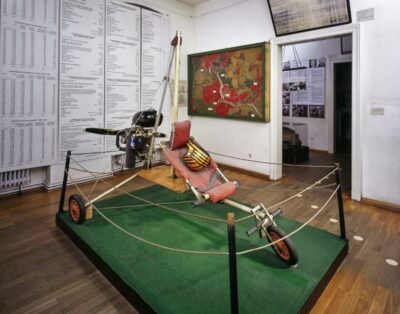
Skip-the-Line: Berlin Wall Museum at Checkpoint Charlie
Read our review →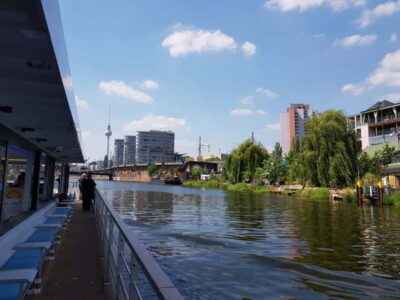
East Side Gallery Spree Cruise in a Solar Catamaran
Read our review →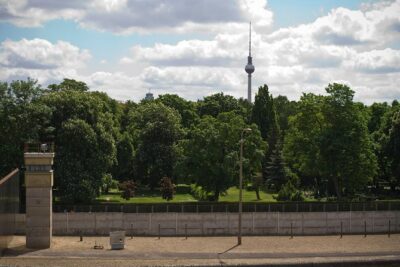
Cold War, Berlin Wall, Spies and the East Side Gallery
Read our review →
Guided Bike Tour of the Berlin Wall and Third Reich
Read our review →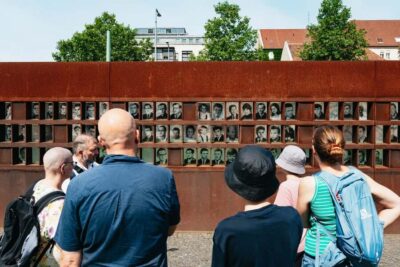
Cold War, Berlin Wall, Spies and the East Side Gallery
Read our review →Browse the lists this tour appears in