
Reviewed · NUREMBERG TOURS
Tour en español al Campo Zeppelin
Nuremberg’s Nazi past is written in stone. This Spanish-language tour makes the vast Nazi Party Rally Grounds easier to understand, with stops at Luitpoldhain, Congress Hall, Große Straße, and Zeppelin Field. I especially like the low $20 price and the chance to explore with Federico, a guide praised for his clear explanations and strong storytelling. The main drawback is that you must pay separately for public transportation and the Documentation Center.
You get about three hours of guided history, including bus rides from the old town and several outdoor walks. Comfortable shoes matter, and you should be ready for rain or shine. The tour is wheelchair accessible, but the large grounds and steady movement between sites are worth considering when planning your day.
In This Review
- Key points to know before you book
- Why this Nuremberg tour matters
- Meeting at Hauptmarkt and riding to the grounds
- Luitpoldhain and the ritual of political power
- Congress Hall and the cost of grand plans
- Große Straße, a route made for display
- Zeppelin Field and the strongest image of the tour
- The return ride and the three-hour pace
- How $20 compares with the experience
- Who will appreciate this Spanish-language visit
- What to bring and how to prepare
- Should you book the Zeppelin Field tour?
- FAQ
- Where does the tour begin?
- How do I find the guide?
- What language is the tour conducted in?
- How long does the tour last?
- Is public transportation included?
- Is admission to the Documentation Center included?
- Is the tour wheelchair accessible?
- What should I bring?
Key points to know before you book
- Federico’s Spanish commentary is the main attraction: His explanations connect the buildings, ceremonies, propaganda, and rise of the Nazi Party.
- The tour covers four important areas: Luitpoldhain, Congress Hall, Große Straße, and Zeppelin Field each show a different side of the Nazi regime.
- You see the grounds, but the Documentation Center entrance costs extra: The tour includes an exterior visit and guided explanation, not admission to the museum.
- The starting point is central: Meet in front of the Church of Our Lady at Hauptmarkt, where the guide carries a red and white umbrella.
- The price is unusually modest: At $20 per person, this is a strong value if you want context rather than a quick photo stop.
- Plan for outdoor conditions: The tour runs in all weather, so bring suitable shoes and clothing.
Why this Nuremberg tour matters
Nuremberg is often introduced through its medieval center, its castle, and its lively Hauptmarkt. Yet a short public transport ride takes you to a very different part of the city: the former Nazi Party Rally Grounds.
This area was designed to project power. The scale is the point. Open parade routes, huge stone structures, broad gathering spaces, and rigid geometry were meant to make individuals feel small and the state feel permanent.
That is why a guide adds real value here. On your own, you can see an enormous unfinished building or a long road disappearing into the distance. With a Spanish-speaking specialist, you can connect those spaces to the Nazi Party’s rise, its ceremonies, and its attempt to control public life through spectacle.
I would not treat this as a light sightseeing outing. The subject is serious, and the tour deals with Nazi propaganda, military display, political power, and the memory of Hitler’s failed 1923 Putsch. The presentation is educational rather than theatrical, which suits the place.
The experience also helps you understand why Nuremberg was selected for major Nazi Party events. The city’s symbolic importance and its ability to host enormous gatherings made it useful to the regime. The grounds then turned that symbolism into architecture and mass ceremony.
Other Nuremberg trips people book alongside this one:
- Bamberg: Guided Walking Tour
★ 4.6 · 3,202 reviews - Nuremberg: City Tour with the Bimmelbahn Train
★ 4.4 · 2,475 reviews - Nuremberg: Old Town Guided Walking Tour
★ 4.6 · 2,416 reviews
Meeting at Hauptmarkt and riding to the grounds
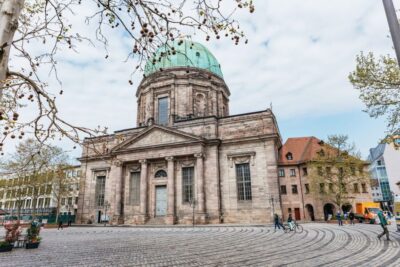
The tour begins in front of the Church of Our Lady at Hauptmarkt, one of Nuremberg’s easiest central meeting points. Look for the guide holding a red and white umbrella. That detail is simple, but it helps when several groups are gathering around the square.
From there, you travel by bus for about 20 minutes. Your public transport ticket is not included, so make sure you have one before the tour begins. The ride is not just dead time. It shifts you from the compact old town into the broad former rally area, helping you see how different the two parts of Nuremberg feel.
The full experience lasts about three hours, including the outbound and return bus rides. That gives you roughly two hours of guided stops and walking, with each major area receiving about 20 to 30 minutes of attention.
You should not expect a long museum visit during this outing. The focus is on the grounds and their physical relationship to one another. If you want extensive indoor exhibits, you may need extra time before or after the tour.
Luitpoldhain and the ritual of political power
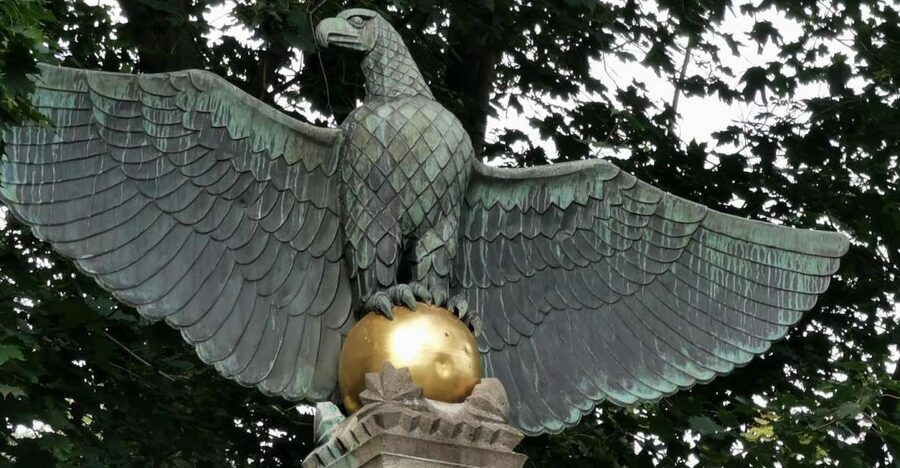
The first major stop is Luitpoldhain, where you receive about 30 minutes of guided explanation. This is a useful opening because it introduces the way the Nazi Party used ceremonies, memorials, uniforms, and mass gatherings to build loyalty.
The area was associated with annual remembrance of Hitler’s Putsch. It also hosted ceremonies involving the SS and SA. Those events were not casual political meetings. They were carefully staged public performances designed to create unity, obedience, and emotional force.
A guide can point out how the setting worked as a stage. The broad open space allowed large formations and formal movement. The ceremonies used bodies, flags, uniforms, music, and architecture together. When you stand there today, the space can look surprisingly plain, which makes the historical explanation even more important.
I like this stop because it gives you a way to read the entire rally ground. You begin to notice that the site was built for crowds and spectacle, not for ordinary city life. The physical emptiness today also creates a sharp contrast with the intended image of total control.
Expect a measured explanation rather than a sensational one. Federico has been praised for answering questions and turning the tour into a conversation, so this is a good point to ask about the political symbols and ceremonies you are seeing.
Congress Hall and the cost of grand plans
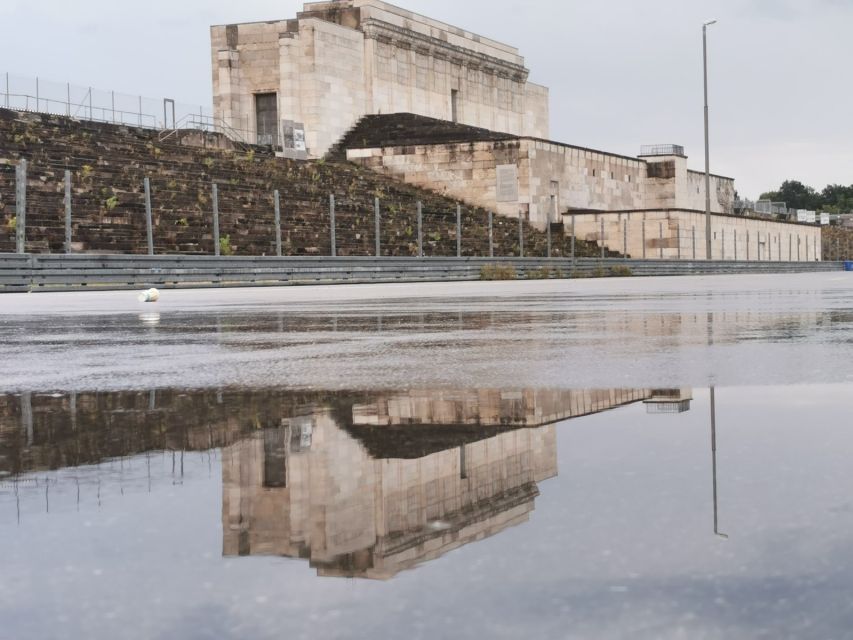
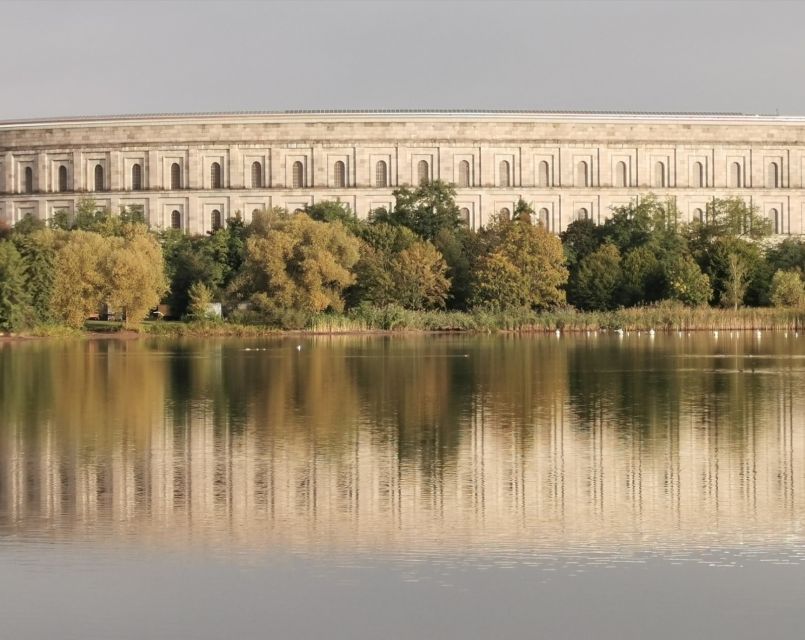
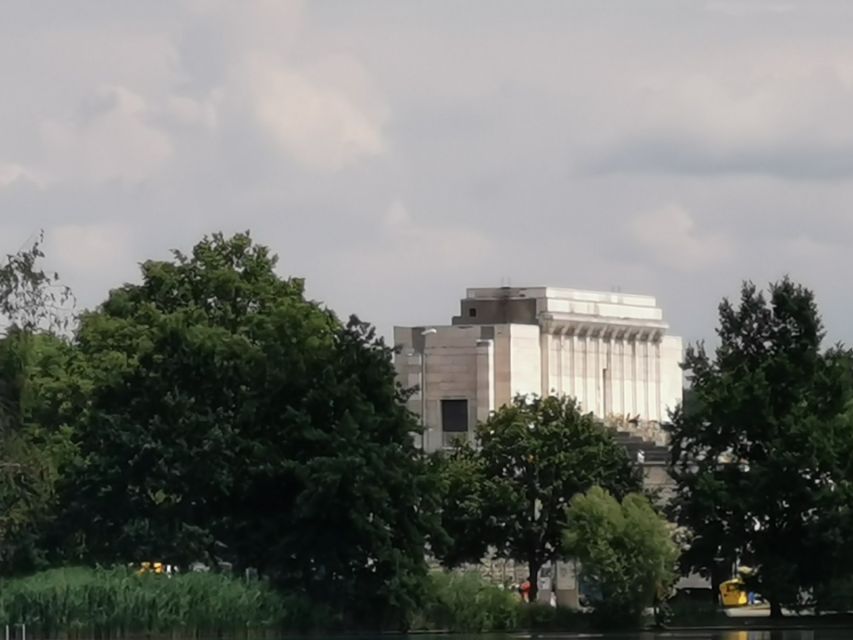
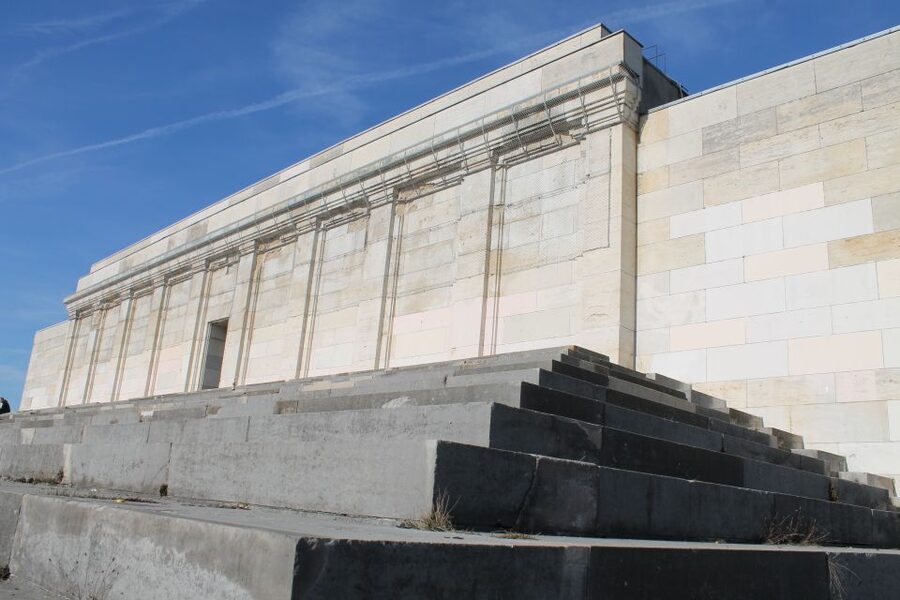
Next comes the Congress Hall, a huge structure that shows the regime’s ambition in concrete and stone. You spend about 20 minutes here with the guide.
The building is difficult to absorb at first. Its size is not accidental. It was intended to communicate permanence, authority, and the supposed strength of the Nazi state. Even unfinished or incomplete spaces can make the intended message clear: this was politics built at monumental scale.
Your guide helps separate appearance from purpose. Instead of seeing only a massive facade, you learn how Congress Hall fit into the broader plan for party congresses and mass political display. The building was part of a larger effort to turn Nuremberg into a ceremonial center for the Nazi Party.
This stop is particularly useful if you enjoy architecture but do not want architecture separated from history. The structure tells you something about how dictatorship uses public construction. It also shows the gap between political fantasy and what can actually be built.
The Documentation Center Nazi Party Rally Grounds is located here. Entrance to the center is not included in the $20 tour price, and the guided schedule lists about 20 minutes at this stop. Confirm what your specific departure includes if you hope to go inside, since the supplied tour details clearly exclude the admission fee.
That exclusion is not a deal breaker, but it affects your budget and timing. The tour still offers value through the outdoor explanation, while an indoor visit would be an additional choice for readers who want more written material and exhibits.
Something different for another day:
- Nuremberg: Tunnels and Secret Passages in the City Wall Tour
★ 4.8 · 2,334 reviews - Nuremberg: Medieval Dungeons Guided Tour
★ 4.8 · 1,726 reviews - Nuremberg: Walking Tour of Former Nazi Party Rally Grounds
★ 4.7 · 1,665 reviews - Medieval Tour in Nuremberg in Spanish
★ 5.0 · 1,374 reviews
Große Straße, a route made for display
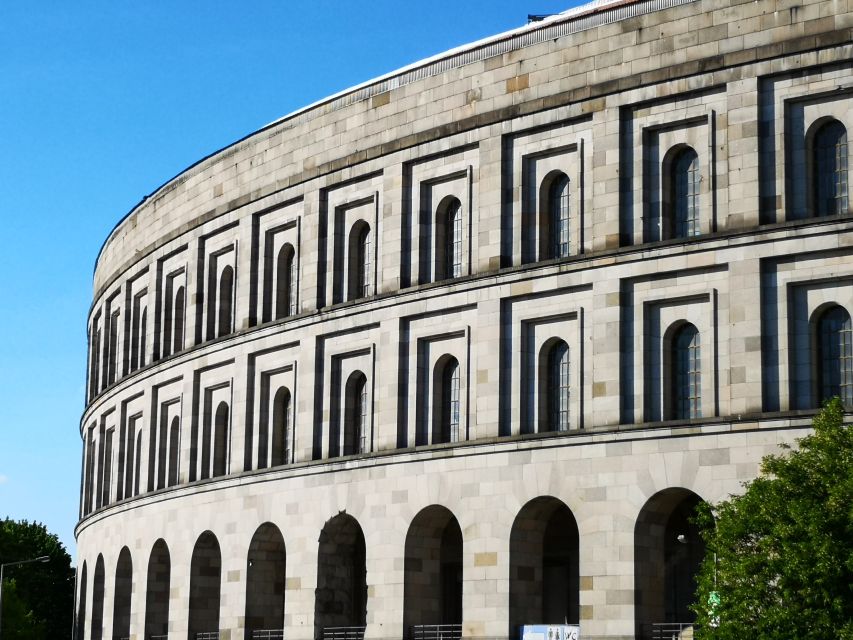
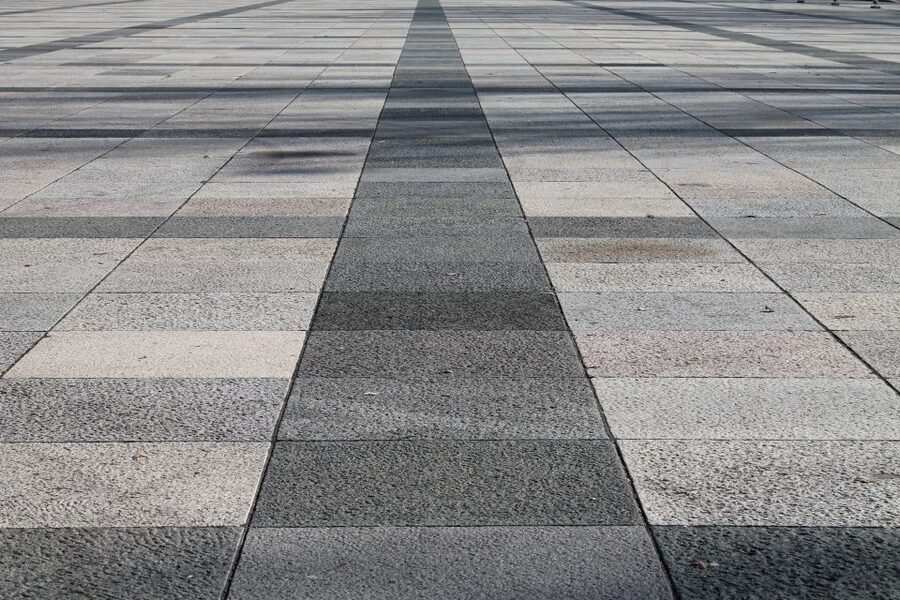
The tour then follows Große Straße, or Great Road, for about 20 minutes. This enormous route was designed for military parades and formal formations.
The road’s scale is the lesson. It was not planned around the needs of pedestrians, cyclists, or normal city traffic. It was made to frame organized movement and to give the German army a grand setting for display.
Walking along it, you can think about the relationship between physical space and political messaging. A parade route turns people into a visual pattern. From a position of authority, that pattern can appear orderly and powerful. From ground level, you become aware of how much space the individual is expected to surrender.
I find this stop helpful because it moves the discussion beyond speeches and leaders. The regime’s message was also built into roads, sightlines, distances, and crowd control. The tour lets you examine those ideas while standing in the actual place, rather than treating them as abstract textbook material.
There is a practical point here too: you are outdoors and walking across a very large area. Comfortable footwear is not optional for most people. The tour is only three hours, but the grounds are spread out enough that flimsy shoes could make the final stop less enjoyable.
Zeppelin Field and the strongest image of the tour
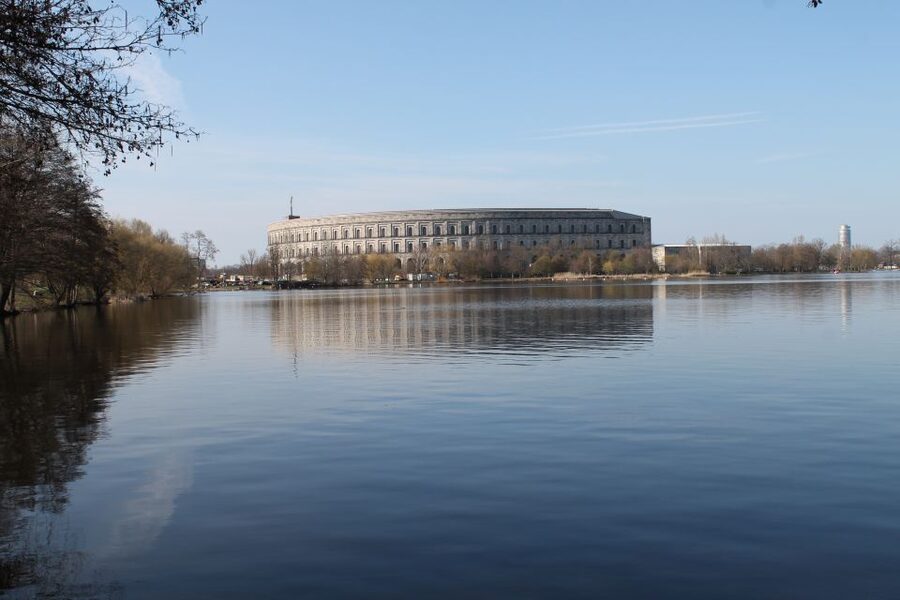
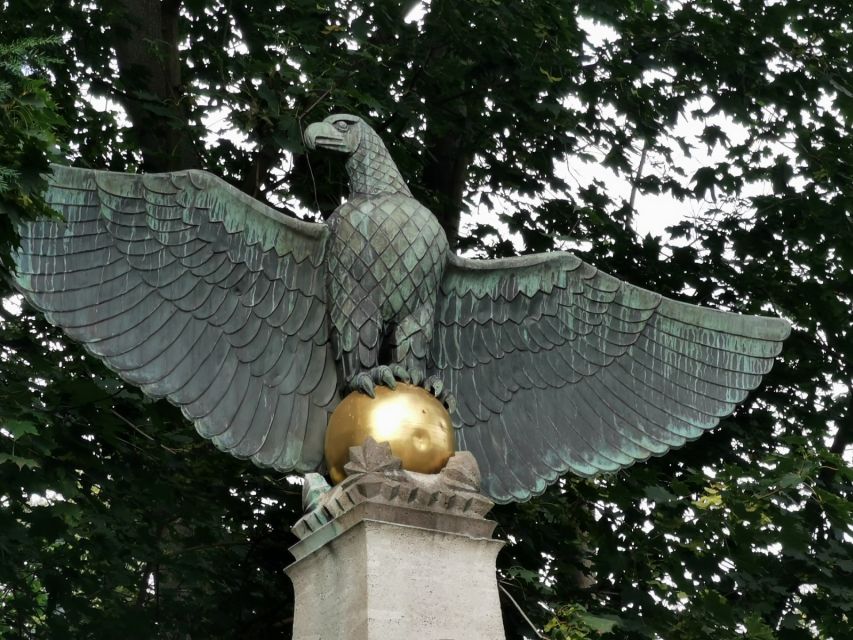
The final main stop is Zeppelin Field, where you spend about 20 minutes. This is the place many people picture when they think of Nuremberg’s Nazi rally grounds, and it carries enormous symbolic weight.
You walk among the field and its surviving structures while your guide explains how the area was used. The setting was designed for mass gatherings, military ceremonies, and carefully controlled images of unity.
The most useful part of this stop is the contrast between the original purpose and the site’s present condition. The architecture aimed to project an unshakable political future. Today, the place is encountered as a historical site, one that forces you to consider how quickly political power can collapse while its buildings remain.
The field can also leave you with questions that a quick visit cannot answer. What should a city do with buildings tied to dictatorship? How should the past be explained without turning it into a spectacle? A strong guide does not erase those questions, but gives you the facts needed to think about them.
Federico receives especially strong praise for making this kind of history engaging without reducing it to a list of dates. His style appears to include detailed explanations, questions from the group, and a back-and-forth format. That matters at Zeppelin Field, where the site itself can be visually striking but historically difficult to read without help.
The return ride and the three-hour pace
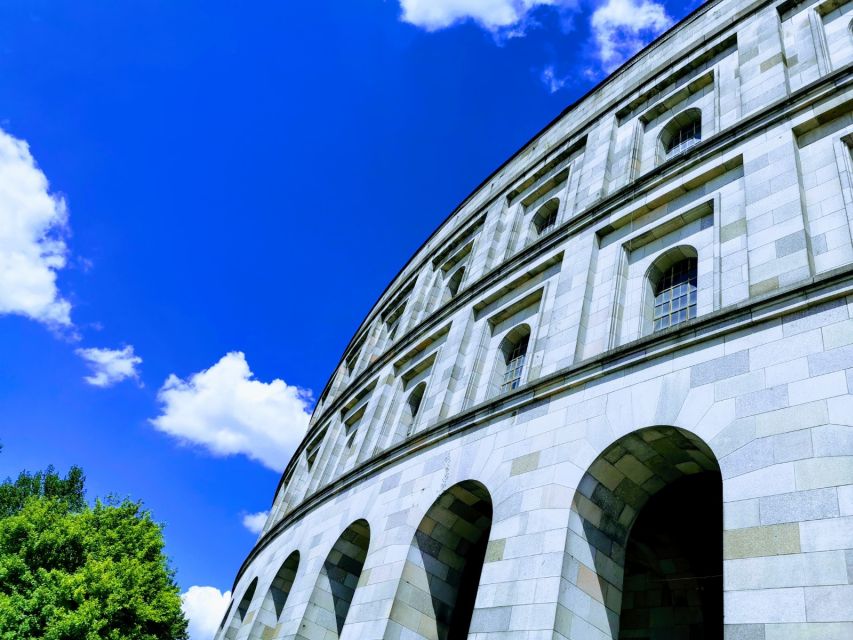
After Zeppelin Field, you return by bus to the central area, with the ride taking about 20 minutes. The schedule gives the tour a clear beginning and end, which is helpful if you have other plans in Nuremberg.
The pace is fairly focused. You are not lingering for hours at one location, and the outdoor stops are compact. That makes the experience manageable for a visitor with limited time, but it also means you should not expect every question about the Nazi Party, the war, or postwar Nuremberg to receive a full lecture.
I see this as a guided orientation to the rally grounds rather than a complete study course. You receive the structure, key locations, and historical links. You can then decide if you want to return to the Documentation Center or explore more of Nuremberg’s difficult twentieth-century past on your own.
The outdoor format also makes weather important. The tour runs rain or shine. Bring a coat, rain protection, and comfortable shoes when the forecast looks uncertain. The supplied information confirms wheelchair accessibility, but the route includes buses and walking across a large historic site, so you may want to clarify any specific mobility needs before booking.
How $20 compares with the experience
At $20 per person, this tour offers strong value for a three-hour guided visit. You are paying less for transportation than for interpretation, and that is the right way to judge it.
The grounds are free to see from the outside, but the historical meaning is not self-explanatory. Without a guide, you may recognize Zeppelin Field or Congress Hall but miss why the spaces were designed as they were, how the ceremonies worked, and how the Nazi Party used Nuremberg for political theater.
The price does not include a public transport ticket or admission to the Documentation Center. Those extra costs are modest considerations, but they should be part of your planning. If you want only an independent walk, you can save the tour price. If you want Spanish explanations from a specialist, $20 is a reasonable fee.
The value improves if you are studying twentieth-century European history, visiting Nuremberg for the first time, or prefer asking questions rather than reading plaques. The value is lower if you dislike guided groups, want a private pace, or expect a long indoor museum visit included in the ticket.
Who will appreciate this Spanish-language visit
I would recommend this tour most strongly to Spanish-speaking readers who want a clear account of the Nazi Party’s rise and the role of Nuremberg in its public image. Federico’s ability to explain details and respond to questions is repeatedly highlighted, and that personal exchange can make a difficult subject easier to follow.
It also suits visitors who have only half a day for the rally grounds. The bus connection, fixed route, and focused stops remove much of the guesswork. You can see the main areas without spending your entire day working out how they connect.
History students and serious museumgoers may want to add time at the Documentation Center. Since its entrance is separate, plan it as an extra part of your visit rather than assuming it is built into the tour.
Families should consider the subject and the walking time. The tour is educational, but it deals with dictatorship, military ceremony, propaganda, and Nazi political power. It is best for people ready to discuss difficult history in a respectful setting.
If you prefer architecture, the tour also works well. Congress Hall and the parade route show how buildings and public spaces can be used to shape behavior and political feeling. The history gives the design its meaning.
What to bring and how to prepare
Bring a valid public transport ticket, since it is not included. Arrive at the Church of Our Lady in Hauptmarkt and look for the red and white umbrella.
Wear shoes you can use comfortably for several outdoor stops. The exact walking surface and weather can vary, but the site is large enough that footwear will affect your comfort.
Set aside three hours, including the two bus journeys. Check the available starting time when you book, since departure times can vary.
Most important, come ready to listen. The subject is not simply a collection of dramatic buildings. The guide’s explanations connect those buildings to political organization, public ceremonies, military display, and the Nazi Party’s rise to power.
Should you book the Zeppelin Field tour?
Book it if you want the former Nazi Party Rally Grounds explained in Spanish and you value a guide who can answer questions instead of handing you a list of dates. Federico’s clear storytelling and command of the subject are the strongest reasons to choose it.
The $20 price is attractive, especially with four major areas included and transportation arranged as part of the route. Just remember that your public transport ticket and the Documentation Center entrance cost extra.
Skip it if you want a private visit, a long museum session, or a completely self-guided walk. For most Spanish-speaking visitors seeking context, however, this is a practical, serious, and well-priced way to understand one of Nuremberg’s most important historic sites.
FAQ
Where does the tour begin?
It begins in front of the Church of Our Lady at Hauptmarkt in Nuremberg.
How do I find the guide?
The guide will be holding a red and white umbrella at the meeting point.
What language is the tour conducted in?
The live tour guide speaks Spanish.
How long does the tour last?
The tour lasts about three hours, including the bus rides to and from the Nazi Party Rally Grounds.
Is public transportation included?
No. You need to bring or purchase your own public transport ticket.
Is admission to the Documentation Center included?
No. Entrance to the Documentation Center is not included in the tour price.
Is the tour wheelchair accessible?
Yes. The activity is listed as wheelchair accessible.
What should I bring?
Bring comfortable shoes and a public transport ticket. The tour takes place rain or shine, so weather-appropriate clothing is also sensible.
Just added around Nuremberg
- Private Guided Walking Tour of Bayreuth With A Professional Guide★ 5.0 · 3 reviews
- Get to know Nuremberg. Highlights in the old town★ 5.0 · 4 reviews
- Nuremberg Culinary Walking Tour★ 4.0 · 4 reviews
- PRIVATE – Nuremberg Combo Tour WWII + Old Town★ 5.0 · 4 reviews
- Private transfer from Nuremberg to Munich with 2h for sightseeing★ 5.0 · 4 reviews
- Nuremberg: World War 2 History Tour with Beer Tasting★ 5.0 · 4 reviews
- Discover Nuremberg’s Christmas Market Magic with a Local★ 5.0 · 5 reviews
- Airport Transfer in or to Nuremberg★ 4.5 · 5 reviews
Nuremberg Tours, compared.

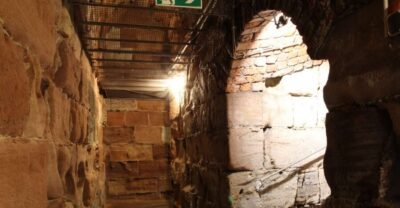
Tunnels and Secret Passages in the City Wall Tour
Read our review →
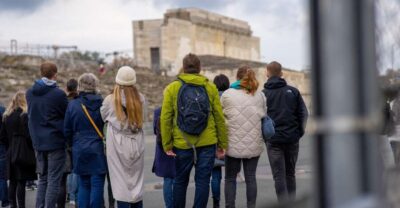
Walking Tour of Former Nazi Party Rally Grounds
Read our review →
Browse the lists this tour appears in