Reviewed · TICKETS
THE WALL: asisi Panorama Berlin Ticket
History feels close here. The asisi Panorama turns 1980s Kreuzberg into a huge, detailed scene where ordinary life unfolded beside one of Europe’s most feared borders. I like the four-meter viewing platform, which lets you look across the artwork from above, and I like the personal photos and stories that give the display a human scale. The main drawback is that this is an artist’s reconstruction, not a preserved section of the original Berlin Wall or a guided historical tour.
I also appreciate the way the exhibition shows both sides of the divide. You see West Berlin’s alternative SO 36 district, East Berlin just across the Wall, the Death Strip, and the border structures between them. If you want dates, political detail, and a guide explaining every German reference, you may need to pair this with another Berlin Wall site.
In This Review
- Key points to know before you go
- Entering the asisi Panorama at Friedrichstraße 205
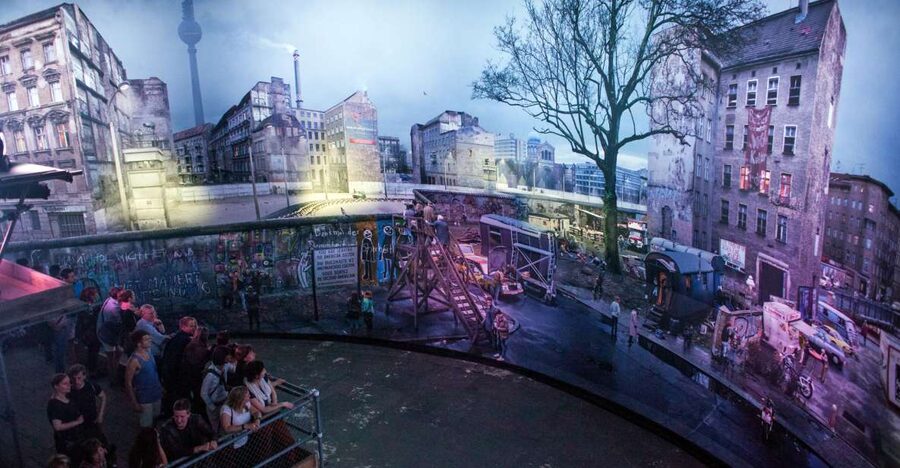
- A fictitious autumn day in 1980s Kreuzberg
- Looking over the Wall from four meters up
- The Death Strip and the cost of ordinary life
- Personal photos and private stories
- The film about Yadegar Asisi
- How long should you allow?
- Is the $16 ticket good value?
- Who will get the most from this visit?
- Booking, flexibility, and practical notes
- Should you book the asisi Panorama Berlin?
- FAQ
- Where is the asisi Panorama Berlin located?
- How much does admission cost?
- How long is the ticket valid?
- What does the ticket include?
- Is a guided tour included?
- Can I cancel my booking?
- Can I reserve now and pay later?
- Are pets allowed?
Key points to know before you go
- A fictitious autumn day in the 1980s: The Panorama places you in Kreuzberg during a carefully created moment, with daily life continuing under the Wall’s shadow.
- The four-meter platform changes the view: From above, you can take in the full scene and notice details that are easy to miss at ground level.
- SO 36 gives the display a human focus: West Berlin appears not as a museum label, but as a lived-in neighborhood separated from East Berlin by only a short distance.
- The Death Strip is part of the picture: The artwork does not show only colorful street life. It also presents the grim border facilities and the fear built into the city.
- The visit has three rooms: Allow time for the main Panorama, the personal photographs and information, and the film about artist Yadegar Asisi.
- It works well as a short Berlin stop: The ticket is valid for one day, costs about $16 per person, and includes a free information folder.
Entering the asisi Panorama at Friedrichstraße 205
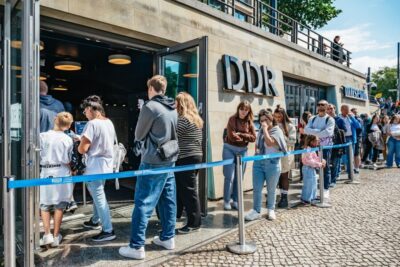
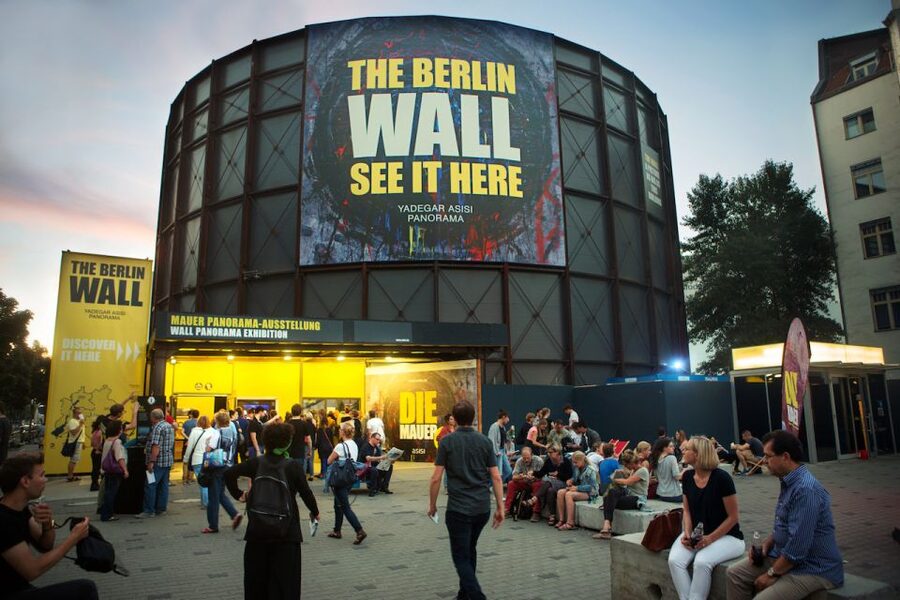
The asisi Panorama Berlin is at Friedrichstraße 205, 10117 Berlin. Your ticket gives you access for one day, and you can skip the ticket line, which is useful if you have planned several central Berlin sights around the same visit.
This is not presented as a long walking tour. You enter the exhibition, move through its rooms, and spend your time looking closely rather than following a fixed guide. That makes it easy to fit into a busy day, though the amount of time you need depends on how closely you study the scene.
The display is best approached with a little background. The Berlin Wall divided the city from 1961 until 1989, separating East Berlin from West Berlin. At this site, the focus is less on a long political timeline and more on what it felt like to live beside the barrier.
That choice matters. A wall is easy to understand as a concrete structure on a map. It is harder to grasp as part of someone’s daily view from a window, street, courtyard, or neighborhood. The Panorama tries to make that distance feel immediate.
A few more tours and experiences worth a look
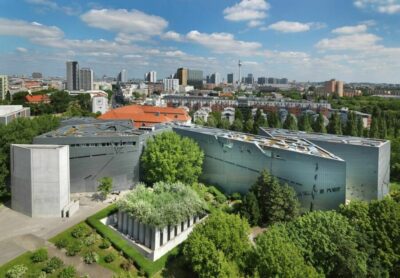
- Berlin: Jewish Museum Berlin Entrance Ticket
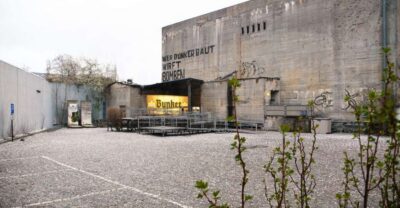
★ 4.5 · 8,393 reviews - Berlin: Berlin Story Bunker Entry Ticket
★ 4.6 · 6,759 reviews - Berlin: Illuseum Berlin Entrance Ticket
★ 4.1 · 3,970 reviews
A fictitious autumn day in 1980s Kreuzberg
The central artwork places you in Kreuzberg on an autumn day in the 1980s. This is a fictional scene, but it is built to suggest the ordinary world that grew around an extraordinary border.
You see the alternative life of SO 36 in West Berlin. The district appears close to East Berlin, yet the Wall creates a hard separation between the two. That contrast is one of the display’s strongest ideas: the border was physically near, but politically and personally enormous.
I like this focus on normal life. Instead of showing only famous escape attempts or official speeches, the scene asks you to look at the people who had to live with the Wall every day. The value is in the small details, private moments, and fragments of neighborhood life.
The autumn setting also gives the artwork a particular mood. It is not a sunny celebration of Berlin. The season, the built environment, and the presence of the Wall create a quieter and more uneasy feeling.
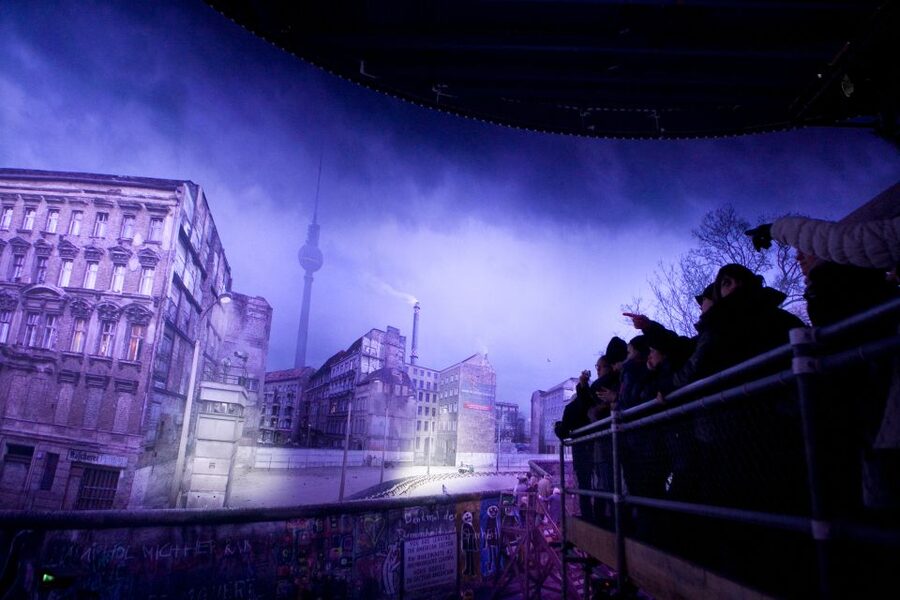
Look from the floor first, then climb to the four-meter visitor’s platform. From ground level, you can pick out individual details. From above, the whole scene comes together, including the relationship between the West Berlin neighborhood, the border zone, and East Berlin beyond it.
Looking over the Wall from four meters up
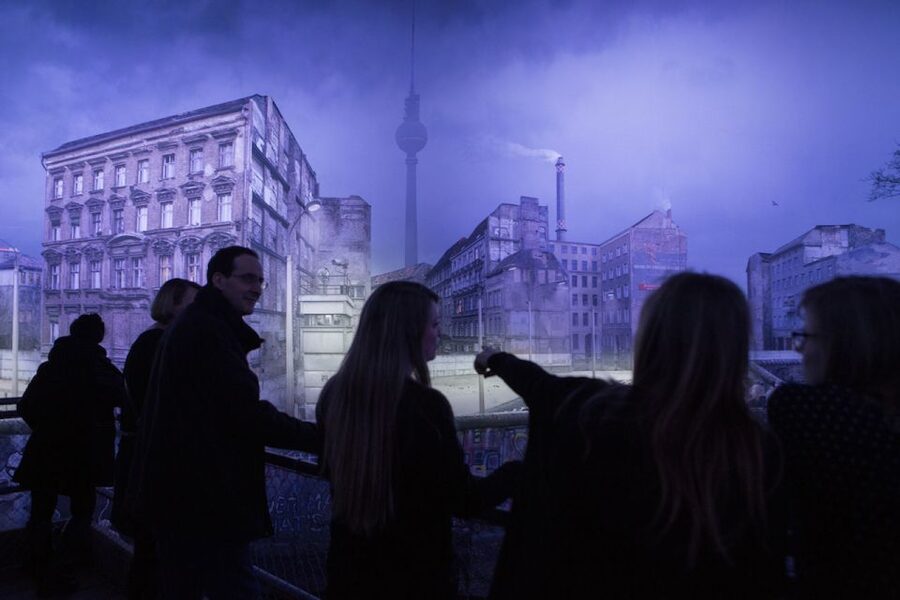
The platform is the key viewing point. It gives you a broad angle across the Panorama and helps show how the Wall controlled the view and movement of the city.
From above, daily life can look almost calm. That is part of the point. The artwork presents a world where people shop, live, gather, and carry on while the border facilities remain nearby. The normal and the frightening occupy the same scene.
The display also makes the Wall’s physical presence easier to grasp. You can see the barrier, the Death Strip, and the border structures as part of one system. This is more useful than seeing a single remaining wall fragment without context.
The Panorama is unusually large for an artwork that you view indoors. One visitor described being surprised by its size, and that is important to know before you arrive. This is not a small painting with a few labels. The scale is what lets you feel as if you are looking out over a real section of the divided city.
Still, scale alone does not explain everything. Details and historical references may not be obvious if you know little about Berlin’s Wall era. I would read the free key folder and use any translation options available for English speakers. The folder adds context without forcing you into a guided tour.
The Death Strip and the cost of ordinary life
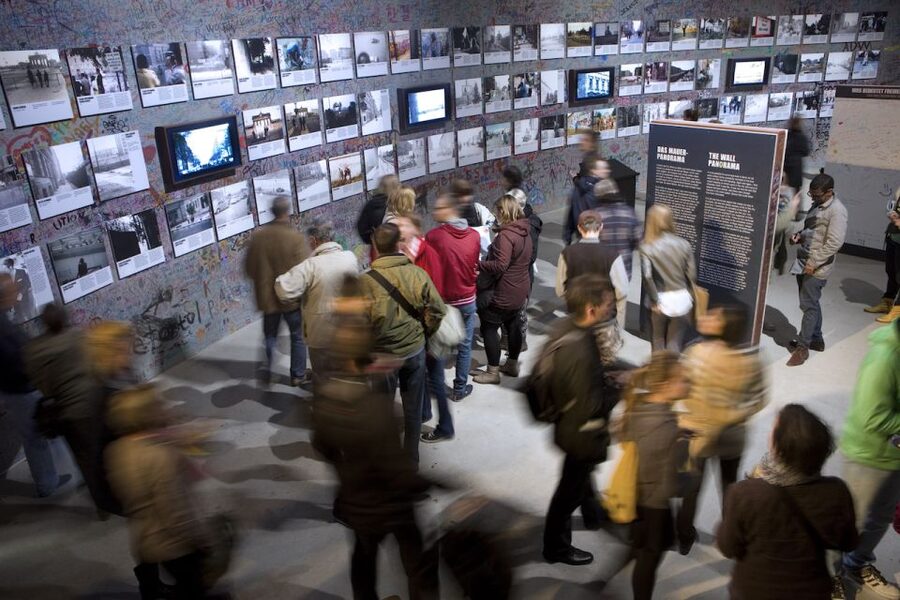
The most serious part of the display is the border zone. You see the so-called Death Strip and the facilities designed to control movement between East and West Berlin.
The name itself signals the danger. This was not simply a wall separating two neighborhoods. It was a guarded border, and its presence shaped how people moved, worked, met, and thought about the city.
The Panorama is effective because it does not isolate that danger from daily life. You can look toward the border and then back toward the neighborhood. The closeness makes the setting feel more disturbing than a separate display about military structures might.
I would not describe the scene as light entertainment. The presentation can be moving, particularly if you have already visited places such as Checkpoint Charlie. One useful pairing is to see the Panorama after a morning at Checkpoint Charlie, then continue your walk to a surviving section of the original Wall nearby.
A practical tip from the exhibition route: after leaving, walk straight down the road to the traffic lights, cross the road, and look for the remaining Wall section. That gives you a useful comparison. The asisi work offers a broad artistic view of life beside the Wall, while the surviving fragment shows the real material that once divided the city.
Something different for another day:
- Berlin: Reichstag, Dome and Government District Guided Tour
★ 4.7 · 18,288 reviews - Berlin: 1-Hour City Tour by Boat with Guaranteed Seating
★ 4.3 · 16,993 reviews - Berlin: Boat Tour Along the River Spree
★ 4.4 · 11,252 reviews - Discover Berlin Half-Day Walking Tour
★ 5.0 · 9,624 reviews
Personal photos and private stories
The display is not only about the giant artwork. Personal photographs and extra information add a smaller, more intimate layer.
I like this part because it keeps the exhibition from becoming only a visual spectacle. The Wall affected families, neighbors, workers, and people whose names never appeared in major political accounts. Private images help connect the large scene to individual lives.
The information is especially useful if you have only a few days in Berlin. You can get an introduction to the period without committing half a day to a large museum. The material has English captions, which makes it easier for English-speaking visitors to follow.
The three-room layout also gives the visit a clear rhythm. The main Panorama provides the strongest visual impact. The personal material gives you time to consider what you have seen. The final film explains how the artwork was developed.
Do not rush out when you think you have finished the main display. The film at the exit covers artist Yadegar Asisi’s early ideas and the creation of the Panorama. It is worth including because it explains how an imagined historical scene became such a large piece of art.
The film about Yadegar Asisi
The documentary adds a different point of view. Instead of explaining only the Berlin Wall, it follows Asisi’s process from his first ideas to the completed Panorama.
That is helpful because the exhibition is an artistic interpretation. The film makes the method clearer and helps you judge the display on its own terms. You are not looking at original 1980s footage or walking through a preserved border station. You are looking at a constructed scene designed to make a period understandable through space, detail, and mood.
I would treat the film as part of the visit, not an optional extra. One visitor specifically advised watching it at the exit, and that is sound advice. Without it, you may leave with a strong visual impression but less understanding of how the scene was made.
This is also where the absence of a guide matters most. A guide could explain German terms, neighborhood references, and the political setting as you move through the rooms. The film and information folder help, but they do not replace personal explanation.
How long should you allow?
The ticket is valid for one day, but no exact visit length is stated. The exhibition has three rooms, and the time you need depends on whether you simply view the Panorama or stop to study the photographs, read the captions, and watch the documentary.
I would avoid squeezing it into a ten-minute gap. The four-meter platform rewards patient viewing, and the personal material deserves more than a quick glance. At the same time, this is a manageable stop for a central Berlin itinerary rather than a full-day commitment.
The skip-the-line entry makes the timing easier. You can book a starting time after checking availability, then use the rest of your day around it. The ticket includes the Panorama and a free key folder with extra information.
Pets are not allowed. Groups of 10 or more can ask onsite about a group rate, which may make the $16 per-person price more attractive for school, family, or organized groups.
Is the $16 ticket good value?
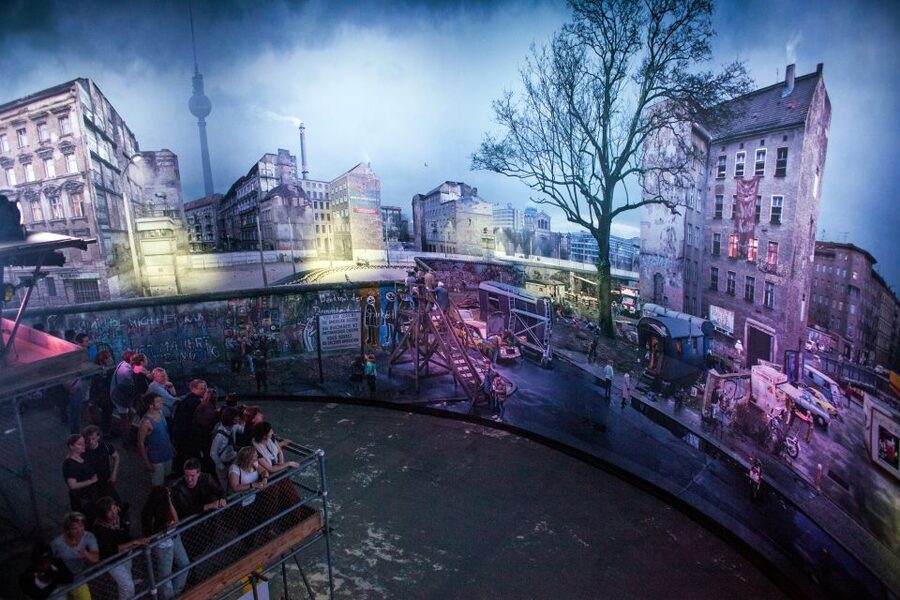
At about $16 per person, I consider the Panorama good value if you want a focused introduction to life beside the Berlin Wall.
You are paying for more than a large image. The ticket includes the central artwork, the platform view, the personal photos and information, and the documentary about Asisi’s work. For a visitor with limited time, that combination gives you visual context and a human angle in one stop.
The value is strongest for three types of people:
- You know little about the Berlin Wall and want an accessible starting point.
- You have studied the subject but want to see how it affected daily life.
- You prefer visual art and personal stories to a conventional museum display.
The value is weaker if you want a detailed political timeline, original artifacts, or a live guide. The exhibition can point you toward those subjects, but it is not designed to answer every question about the Wall.
There is also a small shop, though the selection of merchandise may not satisfy visitors hoping for a large range of souvenirs. That is a minor issue, since the main value is inside the exhibition.
Who will get the most from this visit?
Families and older children may find the huge scene easier to understand than a wall of written dates. The visual setting shows the basic idea quickly, though adults should provide extra context about the Cold War and the danger of the border.
First-time visitors to Berlin can use it as an introduction before visiting Checkpoint Charlie or a surviving Wall section. It gives those later stops more meaning because you have already seen how the barrier sat inside a neighborhood.
People who have visited before may still find something new in the details. The artwork rewards a second look from both the platform and the ground floor. A repeat visit can work because the experience depends on what you notice, not only on a single dramatic object.
I would be more cautious about recommending it to someone who wants a fully guided tour. There is no guided tour included, and one visitor specifically wished for more help with the German aspects. Translation options and the information folder help English speakers, but independent reading is part of the visit.
Booking, flexibility, and practical notes
You can cancel up to 24 hours before the visit for a full refund. The reserve-now, pay-later option also lets you hold a place without paying immediately, which is useful while you are still arranging your Berlin plans.
The ticket is valid for one day, and starting times depend on availability. Check the available time before building your schedule around it.
The experience provider is asisi Panorama Berlin. The meeting point is the exhibition itself at Friedrichstraße 205, 10117 Berlin. A free key folder is included, but a guided tour is not.
If you are visiting with 10 or more people, ask onsite about the group rate. That option is not listed as an advance booking inclusion, so do not assume it will be applied automatically.
Should you book the asisi Panorama Berlin?
I would book it if you want a visually strong, fairly short way to understand what it meant to live beside the Berlin Wall. The most praised elements are clear: the artwork feels lifelike, the scale surprises people, the personal photos add emotion, and the platform reveals details from a useful height.
Book it especially if you have limited time, are new to Berlin’s Wall story, or plan to combine it with Checkpoint Charlie and a surviving Wall section. Give yourself enough time for all three rooms and watch the film at the exit.
Skip it if your main goal is a guided political history lesson or original Wall architecture. In that case, use the Panorama as a supplement rather than your only Wall-related visit. At $16, it earns its place for most first-time visitors because it makes the Wall’s presence feel personal, local, and close.
FAQ
Where is the asisi Panorama Berlin located?
It is located at Friedrichstraße 205, 10117 Berlin, Germany.
How much does admission cost?
The listed price is $16 per person.
How long is the ticket valid?
The ticket is valid for one day.
What does the ticket include?
It includes admission to the asisi Panorama Berlin and a free key folder with extra information.
Is a guided tour included?
No. A guided tour is not included.
Can I cancel my booking?
Yes. You can cancel up to 24 hours in advance for a full refund.
Can I reserve now and pay later?
Yes. The reserve-now, pay-later option allows you to book without paying immediately.
Are pets allowed?
No. Pets are not allowed inside the experience.
Just added around Berlin
- Berlin: Private Guided Tour of the Main Sights★ 5.0 · 13 reviews
- Private Highlights of Berlin Bike Tour★ 5.0 · 13 reviews
- Modern Berlin Private Walking Tour: Diverse, Vibrant and Exciting German Capital★ 5.0 · 13 reviews
- Tour in Berlin from Warnemünde and Rostock Cruise Port★ 4.1 · 13 reviews
- Berlin: Stasi Museum Private Guided Tour with Entry Ticket★ 4.8 · 13 reviews
- Private Food Tour Experience with a born and bred Berliner★ 5.0 · 14 reviews
- Berlin: Rheinsberg Palace Entrance Ticket★ 4.8 · 14 reviews
- Berlin in one day – day tour with an expert guide★ 5.0 · 14 reviews
Tickets, compared.
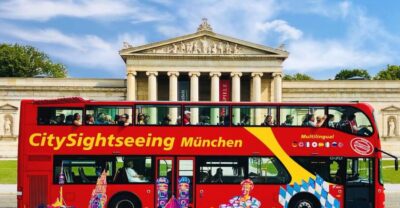
Munich Hop-On Hop-Off Tour: 1-Day or 2-Day Ticket
Read our review →