Reviewed · TICKETS
Berlin: Berlin Story Bunker Entry Ticket
Berlin’s darkest rooms demand your full attention. The Berlin Story Bunker turns a real Second World War bunker near Anhalter Bahnhof into a serious, absorbing account of Berlin from Imperial times through the Nazi dictatorship and the fall of the Berlin Wall. I like the chronological layout, which gives you a clear path through a complicated past, and the audio guide, available in 11 languages. The main caution is simple: this is a large amount of material, not a quick museum stop.
I also like that the exhibition does not soften the crimes of National Socialism. Photographs and films can be graphic, and the subject is emotionally heavy. The bunker setting adds weight, though some people may find the enclosed rooms warm or slightly claustrophobic. Bring patience, comfortable shoes, and enough time to think about what you are seeing.
In This Review
- Key things to know before entering
- Finding the Berlin Story Bunker near Anhalter Bahnhof
- Starting with more than 800 years of Berlin
- Following Hitler’s rise and the Nazi dictatorship
- Using the audio guide without rushing
- Seeing the Führerbunker replica
- Moving from war to the Berlin Wall
- How long should you allow?
- Comfort, crowds, and practical limits
- Is the $21 price good value?
- Who should visit the Berlin Story Bunker?
- Should you book this museum?
- FAQ
- Where is the Berlin Story Bunker?
- How long is the Berlin Story Bunker ticket valid?
- What is included with admission?
- Which audio guide languages are available?
- Can I take photographs inside?
- What time is the last entrance?
- Is the museum suitable for people with mobility impairments?
Key things to know before entering
- Plan at least two hours: Three to four hours is more realistic if you read the panels and listen to the audio guide carefully.
- The exhibition follows a timeline: You move from Berlin’s early development and Imperial period to Hitler’s rise, the Second World War, and the Berlin Wall.
- A full-scale bunker replica waits below: The lower level includes a model of Hitler’s Führerbunker, one of the most memorable parts of the visit.
- Photography is forbidden inside: Cameras and video recording are not allowed, partly because of the sensitive images and subject matter.
- The audio guide supports self-guided visits: Choose German, English, Spanish, French, Italian, Danish, Dutch, Russian, Hebrew, Portuguese, or Ukrainian.
- Expect stairs and standing: The site is not suitable for people with mobility impairments, and the three-floor exhibition can be physically tiring.
Finding the Berlin Story Bunker near Anhalter Bahnhof
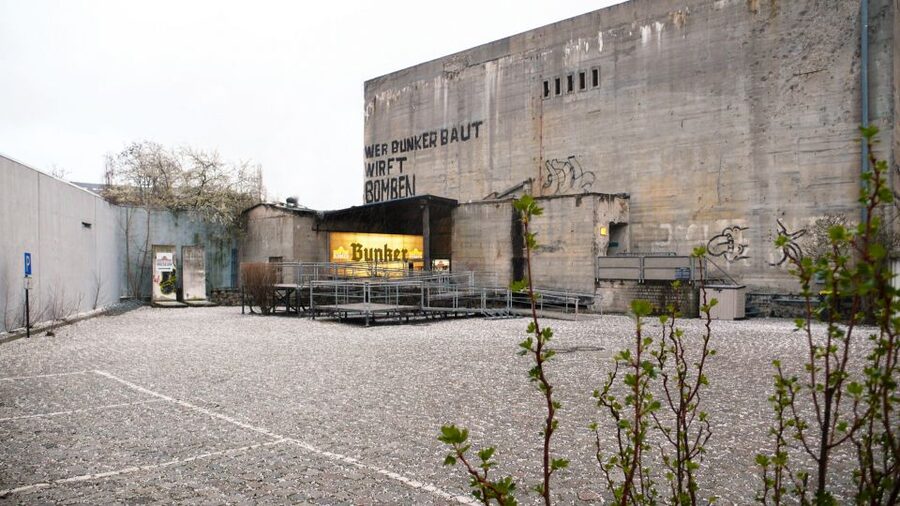
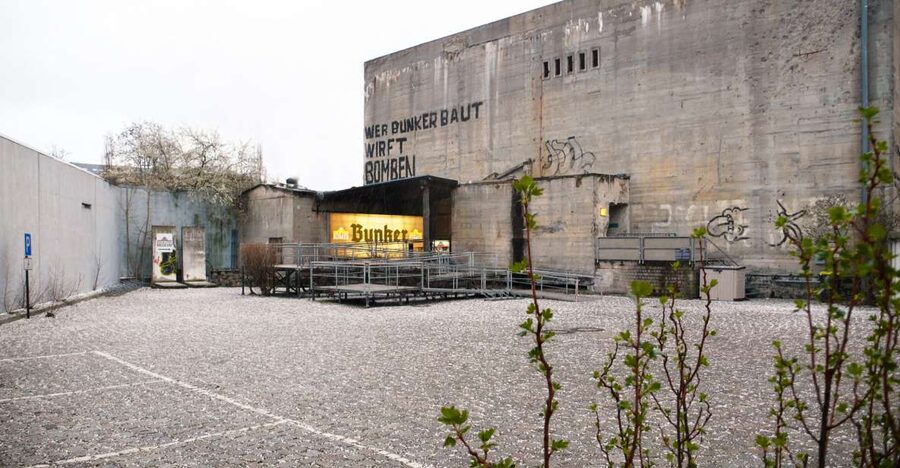
The entrance is at the Berlin Story Bunker ticket office, Schöneberger Str. 23a, 10963 Berlin. It is close to Anhalter Bahnhof and Potsdamer Platz, so the location fits easily into a day focused on central Berlin’s twentieth-century past.
You enter a real wartime bunker, not a newly built museum designed to look old. That difference matters. The thick walls, limited natural light, and plain underground rooms create a sober setting before you have even read the first panel.
The ticket is listed at about $21 per person and is valid for one day. That price is fair if you give the museum several hours. One visitor recalled paying about €12, so it is sensible to check the current rate when booking, since prices can change.
You can reserve and pay later, and cancellation is available up to 24 hours before the visit for a full refund. Last admission is at 5:30 PM, so do not arrive late in the afternoon expecting to cover everything before closing.
A few more tours and experiences worth a look
- Berlin: Jewish Museum Berlin Entrance Ticket
★ 4.5 · 8,393 reviews - Berlin: Illuseum Berlin Entrance Ticket
★ 4.1 · 3,970 reviews - Berlin: Madame Tussauds Admission Ticket
★ 4.6 · 3,941 reviews
Starting with more than 800 years of Berlin
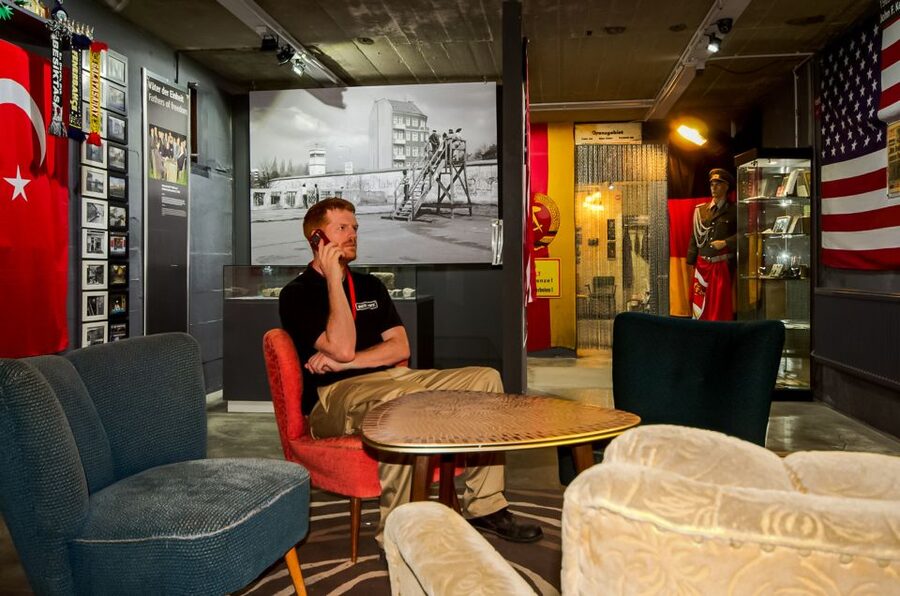
The exhibition does not begin with Hitler. It first places Berlin in a longer story, covering more than 800 years through installations, photographs, films, and written displays.
That opening section helps you understand Berlin as a political center before National Socialism. The later material becomes easier to follow because you have already seen the city’s growth and its changing role in Germany.
The displays are arranged across roughly 50 stations. Each station adds another piece to the story, often through a combination of large visual displays, photographs, short film sequences, and explanatory text.
This approach suits you if you want context instead of a narrow account of wartime events. It can also feel slow if you came only to see the bunker replica. You will need to decide how deeply you want to read, since there is far more material than most people can absorb in a short visit.
Following Hitler’s rise and the Nazi dictatorship
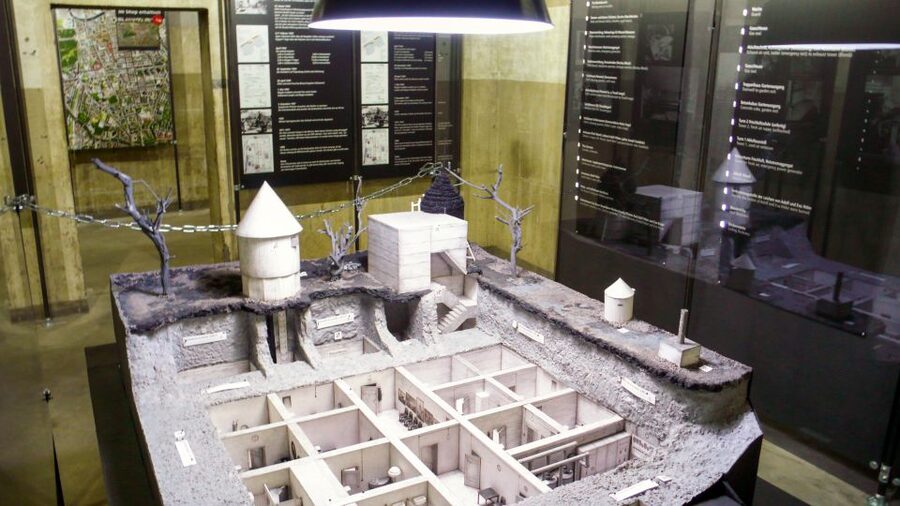
The central part of the museum follows Hitler from his early life through his political rise, dictatorship, and death. The timeline makes the progression easy to follow, even if you already know the broad outline of the period.
The value here is the connection between personal biography and political power. You are not simply given dates and military events. The exhibition shows how Berlin became the center of Nazi power and how the regime’s ideas led to war, persecution, and mass murder.
The subject is presented without trying to make it comfortable. Expect unfiltered photographs, propaganda material, newspapers, posters, and film clips. Some images are graphic. I would not treat this as a casual family attraction, although one parent found the material understandable for an 11-year-old who already appreciated history.
The museum’s direct approach is one of its strongest qualities. You are asked to face fascism, racism, dictatorship, and the consequences of political obedience. The result can feel unsettling, but that discomfort is part of the point.
Using the audio guide without rushing
Your entrance includes an audio guide, and it is available in 11 languages: German, English, Spanish, French, Italian, Danish, Dutch, Russian, Hebrew, Portuguese, and Ukrainian.
The device gives useful background as you move between sections. English speakers found it easy to use, and the audio adds a spoken overview to the dense information on the walls. It is especially helpful if you do not want to read every panel in German and English.
Do not let the audio set your pace. The temptation is to press a number, listen, and move on. That works for a quick visit, but you may miss details in the photographs, captions, and documents.
A practical tip: one visitor had trouble entering a number such as 5 because the device jumped to 105. Using the next-section function was easier. If the controls feel awkward at first, ask the staff for help rather than wasting time at every station.
You can also treat the audio as a guide rather than a command. Listen to the main explanation, then pause to read and look around. The most rewarding visits seem to take three or four hours, while people determined to read nearly everything have spent four to six hours.
Something different for another day:
- Berlin: Reichstag, Dome and Government District Guided Tour
★ 4.7 · 18,288 reviews - Berlin: 1-Hour City Tour by Boat with Guaranteed Seating
★ 4.3 · 16,993 reviews - Berlin: Boat Tour Along the River Spree
★ 4.4 · 11,252 reviews - Discover Berlin Half-Day Walking Tour
★ 5.0 · 9,624 reviews
Seeing the Führerbunker replica
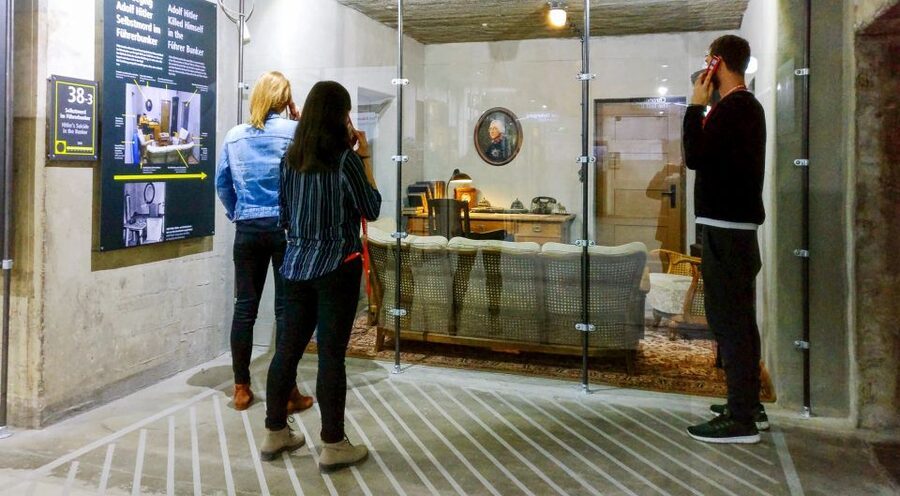
The lower floor contains a full-scale replication of Hitler’s Führerbunker, along with a model of the bunker as it was understood at the end of the war.
This is the most distinctive physical feature of the experience. Much of Berlin’s original Nazi architecture was destroyed, altered, or removed, so the replica gives you a concrete sense of the underground setting associated with the final days of the regime.
Keep your expectations in check. This is not a theme-park reconstruction or an interactive attraction. One visitor expected a more elaborate bunker experience and instead found a museum with three floors of information. The replica is important, but it is part of a documentary exhibition, not the entire visit.
The lower level can also feel more enclosed than the upper displays. Some people may find the bunker atmosphere claustrophobic, while others appreciate the seriousness it brings to the subject. Fans help with air movement, and several visitors found the rooms larger and less oppressive than expected.
Moving from war to the Berlin Wall
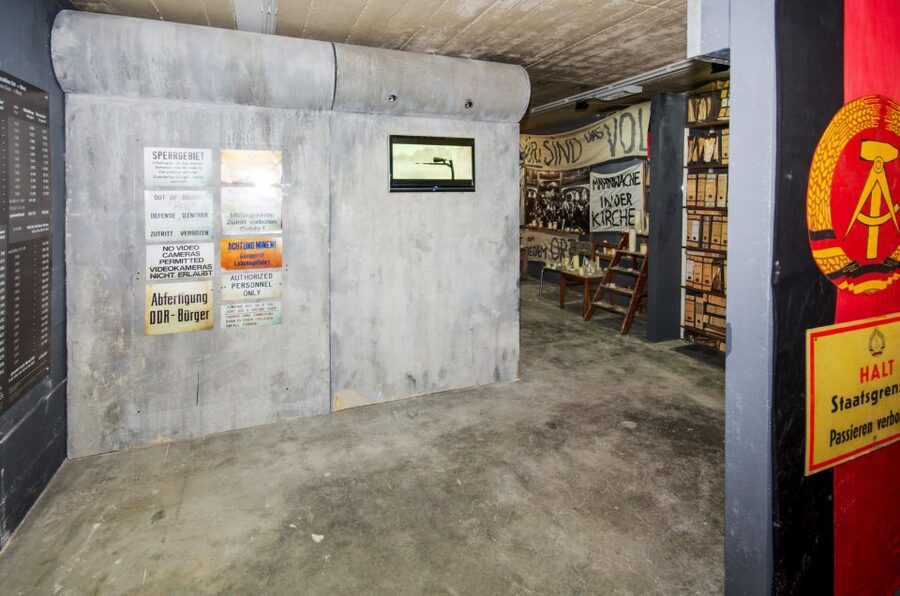
The story continues beyond 1945. The audio guide and displays carry you through Berlin’s postwar division and toward the fall of the Berlin Wall.
This wider time span gives the visit a useful ending. You see how the Nazi period shaped the city, how war changed Berlin, and how the divided city eventually returned to a new political role.
A particularly memorable possibility is meeting museum founder Wieland Giebel, who has spoken about his own experience of the Berlin Wall. That kind of personal connection can add a human layer to a display otherwise filled with documents and historical evidence. It is not something you should count on during every visit, but it has happened.
The final sections prevent the museum from becoming only a Hitler biography. They bring the story back to Berlin itself, the city you are walking through outside the bunker.
How long should you allow?
If you only want a quick sense of the place, allow two hours. That gives you time to follow the main route, listen to selected audio sections, and see the bunker replica without reading every word.
For a proper visit, allow three to four hours. This is the sweet spot for most people who want to understand the timeline and stop at the key photographs, films, and documents.
Six hours may sound excessive, but it is possible if you read everything. One visitor returned the next day after running out of time, while another planned only one or two hours and ended up staying three and a half.
The museum is open for a one-day visit rather than a timed tour in the usual sense, so you can set your own pace during the available hours. Arrive early if you are a serious history reader. Last entry is 5:30 PM, and rushing through the final sections would weaken the whole experience.
Comfort, crowds, and practical limits
The bunker is indoors and can be warm. Comfortable shoes are essential because you will walk and stand for a long time, and there are stairs between the three floors.
Chairs are available in places, which helps if you need to pause while reading. Still, the physical demands are real. The experience is not suitable for people with mobility impairments.
Crowds vary. Midweek visits can be quiet, leaving enough room to read without feeling cramped. A quieter room also suits the subject, since the displays require concentration rather than constant movement.
You cannot take photographs or record video inside. That may disappoint you if you like collecting visual reminders, but it is a reasonable rule given the graphic content and the need to keep the museum focused. Follow the museum rules and leave your camera in your bag.
There is a cafe and toilets on site, according to visitor information. Bring water, especially if you plan to stay for several hours. Snacks may also help, though you should take breaks rather than trying to force your way through every panel at once.
Is the $21 price good value?
At $21, I think the ticket offers good value for anyone who gives the exhibition enough time. You receive entry to a large museum, an audio guide, access to the bunker setting, and a long historical sequence rather than a single short display.
The value is strongest for people interested in the Second World War, Hitler, Berlin’s political history, or the rise of National Socialism. You could easily spend most of a day here, so the cost per hour is reasonable.
The calculation changes if you want a light, visual attraction. There are many panels and a great deal of reading. The number of physical artefacts is not the main selling point, and the bunker replica may be smaller than you expect if you have imagined a fully reconstructed underground complex.
I would also compare the price with your overall museum plans. If you already intend to spend the day at several paid attractions, this one deserves time rather than a rushed slot between other stops.
Who should visit the Berlin Story Bunker?
You should consider this museum if you want:
- A detailed account of Berlin under National Socialism
- A chronological explanation of Hitler’s rise and fall
- A serious presentation of war, fascism, racism, and genocide
- A self-guided visit that lets you pause or move on
- An audio guide in one of 11 listed languages
- A museum experience that takes place inside a real wartime bunker
It suits independent visitors who prefer controlling their own pace. It also works for families with older children who are ready for difficult material and a lot of reading.
It is less suitable if you dislike enclosed spaces, have difficulty with stairs, want to take photographs, or only have 30 minutes available. The museum rewards attention. It does not reward rushing.
Some visitors may prefer a guided tour for a subject this complex. The standard experience includes an audio guide rather than a guaranteed live guide. If you happen to meet Sergio, one guide praised for explaining the subject simply while preserving its historical detail, you may receive an especially personal introduction, but that should not be treated as part of every ticket.
Should you book this museum?
Book it if Berlin’s wartime history is a major reason for your trip, or if you want a serious account of how Hitler and the Nazi regime changed the city. Give yourself at least three hours, wear comfortable shoes, and expect photographs that may be hard to view.
Skip it if you want a short attraction with lots of hands-on exhibits. The Berlin Story Bunker is text-heavy, intense, and sometimes physically tiring. But for a careful look at Berlin’s political past, the bunker setting, clear timeline, and strong audio guide make this one of the better-value history visits near Potsdamer Platz.
FAQ
Where is the Berlin Story Bunker?
The ticket office is at Schöneberger Str. 23a, 10963 Berlin, near Anhalter Bahnhof and Potsdamer Platz.
How long is the Berlin Story Bunker ticket valid?
The ticket is valid for one day. Check the available starting times when booking.
What is included with admission?
Admission includes the entrance fee and an audio guide.
Which audio guide languages are available?
The audio guide is available in Spanish, English, French, German, Italian, Danish, Dutch, Russian, Hebrew, Portuguese, and Ukrainian.
Can I take photographs inside?
No. Cameras, photography, and video recording are not allowed inside the museum.
What time is the last entrance?
Last entrance is at 5:30 PM.
Is the museum suitable for people with mobility impairments?
No. The experience is listed as unsuitable for people with mobility impairments, and the visit includes considerable walking, standing, and stairs.
Just added around Berlin
- Berlin: Private Guided Tour of the Main Sights★ 5.0 · 13 reviews
- Private Highlights of Berlin Bike Tour★ 5.0 · 13 reviews
- Modern Berlin Private Walking Tour: Diverse, Vibrant and Exciting German Capital★ 5.0 · 13 reviews
- Tour in Berlin from Warnemünde and Rostock Cruise Port★ 4.1 · 13 reviews
- Berlin: Stasi Museum Private Guided Tour with Entry Ticket★ 4.8 · 13 reviews
- Private Food Tour Experience with a born and bred Berliner★ 5.0 · 14 reviews
- Berlin: Rheinsberg Palace Entrance Ticket★ 4.8 · 14 reviews
- Berlin in one day – day tour with an expert guide★ 5.0 · 14 reviews
Tickets, compared.

Munich Hop-On Hop-Off Tour: 1-Day or 2-Day Ticket
Read our review →