
Reviewed · MEMORIAL & CONCENTRATION CAMP TOURS
The Memorial Tour: Visit to Sachsenhausen Concentration Camp (licensed guide)
Some places ask you to remember. Sachsenhausen Concentration Camp Memorial, reached from Berlin in about five hours, gives you a guided and carefully structured way to face one of Europe’s darkest chapters. The licensed English-speaking guide leads a small group of no more than 15 people through original camp structures, exhibitions, and memorial spaces.
I like the small-group format, which gives you room to ask questions and keeps the visit personal. I also like that guides such as Paul, Stephen, and Aaron have been praised for clear, sensitive explanations, especially during the train ride and the long walk around the site. The main drawback is practical: the $41.12 price does not include the ABC public transport ticket, bus fare, food, or drinks.
In This Review
- Key points to know before you book
- Why Sachsenhausen deserves a half-day from Berlin
- The journey from Brandenburg Gate to Oranienburg
- Tower A and the first view of the camp
- The infirmary buildings and the pathology area
- Station Z and the former camp kitchen
- The SS and Gestapo Prison
- Why the guide makes such a difference
- Walking, weather, and the emotional pace
- Is $41.12 a fair price?
- Who should book this Sachsenhausen tour?
- Should you book it?
- FAQ
- Where does the Sachsenhausen tour begin?
- Where does the tour end?
- How long does the experience last?
- Is admission to Sachsenhausen included?
- Do I need an ABC public transport ticket?
- Is the tour offered in English?
- How large is the group?
- Can I cancel for a full refund?
Key points to know before you book
- Sachsenhausen is about 30 kilometers north of Berlin, near Oranienburg, so this is a half-day outing rather than a quick city attraction.
- The tour covers Tower A, the roll-call area, Station Z, the infirmary buildings, the former camp kitchen, the SS and Gestapo Prison, and a prisoner barrack block.
- The maximum group size is 15 people, a useful limit at a place where context and questions matter.
- You need an ABC transport ticket, costing €4.70 per person if you do not already have a suitable pass. Bus fare is also extra.
- Expect several hours of walking, including the memorial grounds and the route between Oranienburg station and the camp.
- The subject is emotionally difficult, but the guides are praised for explaining it with care, factual detail, and respect.
Why Sachsenhausen deserves a half-day from Berlin
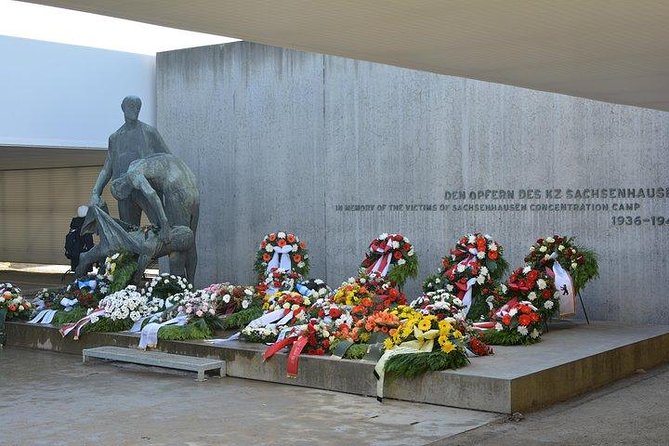
Sachsenhausen was a concentration camp used by the Nazi regime, and the memorial preserves original structures alongside museum displays. It was not built as a dedicated extermination camp, but that should not soften what you will encounter. The site documents imprisonment, forced labor, abuse, executions, disease, and systematic murder.
The value of a guided visit is not simply getting from one building to the next. The grounds can be stark and spread out, and without context, the remaining walls and foundations may be difficult to interpret. A good guide explains how the camp functioned, who controlled it, and what happened in the places you are standing.
The tour begins in central Berlin at 10:00 a.m. outside Hopfingerbräu on Ebertstraße 24, next to the Brandenburg Gate. From there, the group makes its way to Oranienburg, generally using public transport. The journey itself is part of the experience, since guides use the trip to explain the Third Reich and prepare you for the memorial.
Allow around five hours from meeting point to return. The main visit at Sachsenhausen is listed as about three hours, with the remaining time used for transport and walking. That schedule makes this a serious half-day commitment, but it also avoids the rushed feeling of a short stop.
More memorial visits:
- Berlin: Sachsenhausen Concentration Camp Tour in English
★ 5.0 · 5,711 reviews - Berlin: Sachsenhausen Concentration Camp Memorial Tour
★ 4.7 · 3,716 reviews - Sachsenhausen Concentration Camp Bus Tour in English from Berlin
★ 5.0 · 1,962 reviews
The journey from Brandenburg Gate to Oranienburg
Meeting beside the Brandenburg Gate is convenient for most Berlin sightseeing plans. It is a familiar landmark, and the nearby public transport links make it easier to reach than a meeting point in a distant suburb.
The ABC ticket is important. Sachsenhausen is outside Berlin’s central fare area, and the required ticket costs €4.70 per person if you do not already hold a pass that covers the journey. The tour price includes admission to the memorial, but not this transport cost or the bus fare.
A useful detail from the tour experience is that guides can help you buy the correct ticket. Paul was specifically praised for assisting with train tickets before the group left Berlin. That matters if you are not used to Berlin’s fare zones, but you should still arrive with enough time to sort out payment and ticket machines.
The route to Oranienburg has been described as an easy public transport journey, including the RE5 train. From the station, you may take a bus or walk. One account describes a walk of roughly a mile, with about 20 minutes on foot if the bus is missed. You should therefore wear proper walking shoes and avoid scheduling a demanding activity immediately afterward.
The journey also gives the guide time to set the scene. Paul was praised for discussing pre-war Germany and the Nazi regime before the group reached the camp. This is one of the tour’s strongest features: you do not arrive cold, with only a map and a few labels to explain what you are seeing.
Tower A and the first view of the camp
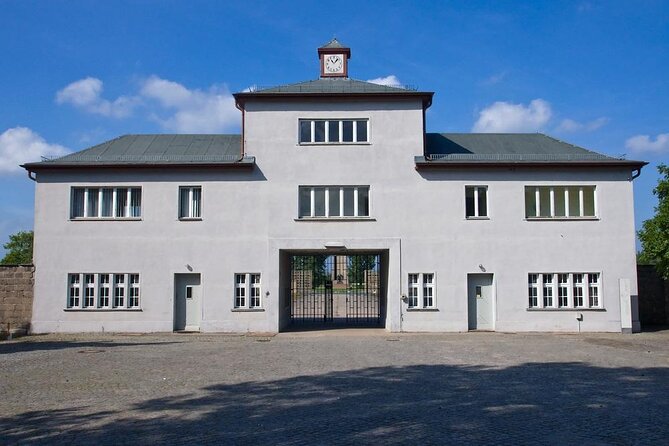
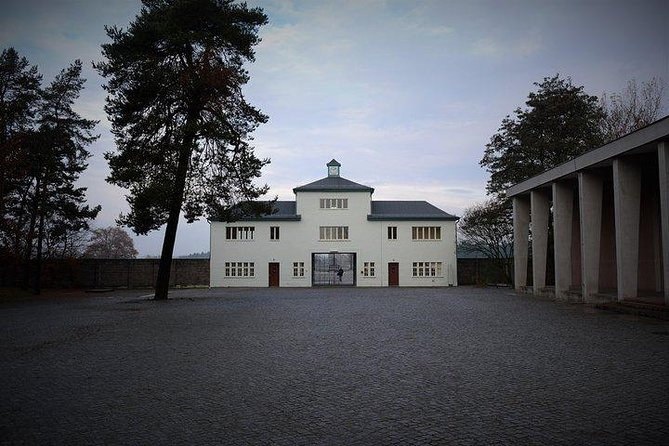
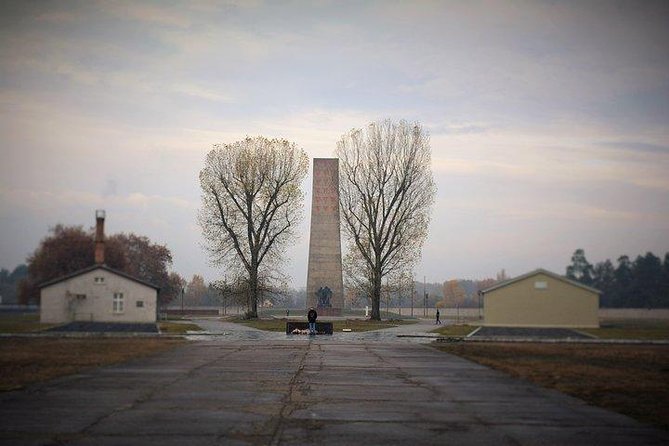
Tower A is the entrance into the main camp compound. It is a fitting starting point because it introduces the controlled, institutional nature of Sachsenhausen. This was not an accidental collection of buildings. It was a planned system designed to monitor, confine, punish, and break people.
Your guide helps explain the role of the entrance and the arrangement beyond it. The physical remains can feel spare, particularly in poor weather, so the spoken explanation carries much of the meaning. You will have time to look around and take photographs, but this is not a photo-focused tour. The site demands attention to what happened there.
The group then reaches the roll-call area. Prisoners were made to stand here for long periods while the SS counted them, sometimes in cold, rain, or snow. This open space is among the most powerful parts of the visit because its scale and emptiness make the routine cruelty easier to picture.
You may find that the guide pauses often to let the group absorb the place. That is useful here. The tour is not simply a stream of dates and names, and the best accounts describe a pace that allows questions, rest, and quiet observation.
The infirmary buildings and the pathology area
The pathology building, infirmary buildings, and mortuary cellar show how the camp dealt with illness, death, and the bodies of prisoners. These locations add a different layer to the visit. They move the focus away from the camp’s broad layout and toward the physical consequences of imprisonment.
The material here can be especially hard to take in. You should expect a sober visit, not a conventional sightseeing stop. Guides have been praised for keeping their explanations factual and sensitive, and for checking that people are comfortable as the tour progresses.
This is one reason the small group helps. With no more than 15 people, it is easier for the guide to notice when the group needs a pause or when someone has a question. Aaron, for example, was praised for answering questions throughout the tour and making sure the group was doing all right during the visit.
That does not make the subject easy. It simply means you are not left alone to interpret difficult rooms and exhibits without support.
A few more tours and experiences worth a look
- Berlin: Reichstag, Dome and Government District Guided Tour
★ 4.7 · 18,288 reviews - Berlin: Government District around the Reichstag Guided Tour
★ 4.7 · 8,447 reviews - Berlin: Hidden Backyards Guided Walking Tour
★ 4.8 · 5,360 reviews - Berlin: 1-Hour Boat Tour with Bilingual Live Guide
★ 4.7 · 3,629 reviews
Station Z and the former camp kitchen
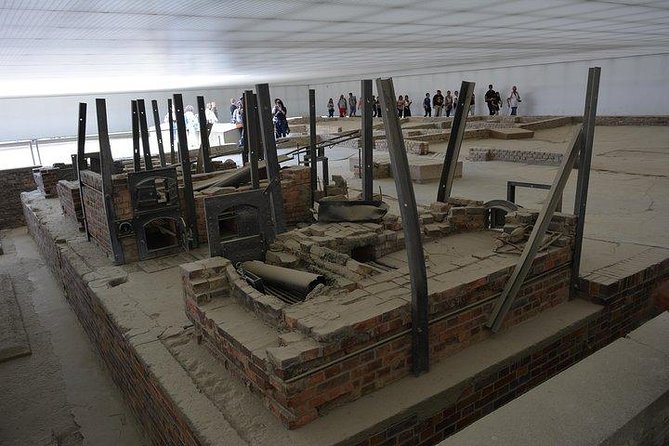
Station Z was the purpose-built execution facility at Sachsenhausen. The name itself can sound detached, but the function of the building was not. The guide explains what took place there and places the facility within the wider system of terror used by the Nazi regime.
This is likely to be one of the most emotionally heavy parts of the tour. It is worth taking your time and listening closely, rather than treating it as one more stop to tick off. The information is difficult, but understanding the purpose of the building is central to understanding how the camp operated.
The former camp kitchen provides another angle. Its exhibition helps explain the daily structure of camp life and the systems used to control prisoners. The setting may seem ordinary compared with Station Z, yet that contrast is useful. Concentration camps operated through routines, paperwork, food control, labor, surveillance, punishment, and violence. The kitchen exhibition helps connect those everyday systems to the larger machinery of imprisonment.
A guide can also help you distinguish between what remains original, what has been reconstructed, and what is presented through museum interpretation. That kind of context is valuable at a memorial where the site itself is incomplete.
The SS and Gestapo Prison
The former SS and Gestapo Prison presents the regime’s use of confinement and punishment inside the camp system. This stop gives you a closer look at how political prisoners and others were isolated and controlled.
The guide’s role is especially important here because the prison is not just another preserved building. It represents a deliberate system of fear. A clear explanation helps you understand the relationship between the camp administration, the SS, the Gestapo, and the prisoners held there.
The tour also visits a former prisoner barrack block. Together, the prison and barrack create a useful contrast. One reflects the machinery of authority and punishment, while the other points to the crowded and degrading conditions imposed on prisoners.
You should not expect every building at Sachsenhausen to be intact or presented in the same way. Some areas are original structures, some are remains, and some are museum displays. That variety can make the visit feel less straightforward, but it also reflects the complicated work of preserving a memorial site.
Why the guide makes such a difference
The strongest part of this experience is the guiding. Paul receives repeated praise for his warmth, preparation, and ability to answer questions. Stephen is described as an excellent guide during a visit made more physically uncomfortable by cold wind and changing weather. Aaron is praised for his passion, detailed answers, and care with the group.
You should not assume that every departure will have the same guide. Still, the overall pattern is clear: the company places strong emphasis on guides who can explain the subject and handle its emotional weight. The commentary covers both the broad political setting and the specific places inside the camp.
A guide also helps with the awkward practical moments. You may need help with transport tickets, directions, walking routes, rest breaks, or finding your way back to the station. The group receives time for bathrooms and rests, and the pace includes opportunities to ask questions while walking.
One small criticism is worth noting. Paul was described as easy to miss because he dressed casually and did not wear a clear uniform or identifying outfit. At the meeting point beside a major Berlin landmark, look carefully for the guide and confirm that you are with the Birchys Berlin Tours group.
There was also one language-related problem in the available feedback: a German-speaking customer said the tour was conducted in English despite booking German. The advertised language for this experience is English, so check the language carefully before paying if that matters to you.
Walking, weather, and the emotional pace
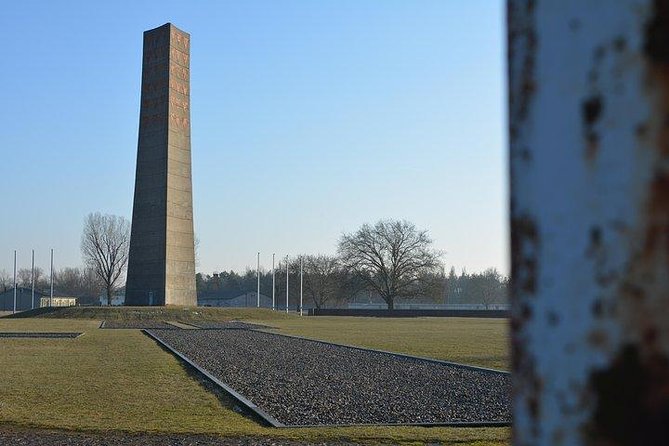
This is not a sit-down museum visit. You will walk through a large memorial site, move between buildings, and possibly walk from Oranienburg station if the bus is not used. Good shoes are essential.
Weather can change the feel of the day. One account describes a shift from cool sunshine to overcast skies and strong cold wind. That kind of exposure can make the visit physically tiring, especially because much of the camp is open. Bring a coat suitable for the forecast, even if Berlin feels mild when you leave the city center.
The emotional pace matters too. A five-hour outing about Nazi persecution is draining. You may appreciate having a calm evening afterward rather than booking another major attraction. The tour includes breaks, but you remain responsible for knowing your own limits.
Most people can take part, and the activity is listed as accessible for people with limited mobility. Animals and pets are allowed. However, the amount of walking and the outdoor nature of the site mean you should ask the operator for specific mobility advice if you have serious access needs.
Is $41.12 a fair price?
At $41.12 per person, the tour is reasonably priced for a guided half-day visit, especially because admission is included and the group is capped at 15 people. You are paying for transport guidance, a licensed guide, structured interpretation, and help making sense of a difficult memorial.
The real cost is slightly higher than the headline price. Add the €4.70 ABC ticket if you do not already have the right travel pass, plus any bus fare and food or drinks. The day is still good value if you want expert explanations and do not want to manage the route and memorial visit alone.
If you are confident using Berlin public transport and prefer to read at your own pace, an independent visit may give you more freedom. You would also need to arrange your own interpretation. At Sachsenhausen, that can make a major difference, since the grounds alone cannot explain every building or event.
The small group adds value. A 15-person maximum is not truly private, but it is far more manageable than a large coach group. You have a better chance of hearing clearly, asking follow-up questions, and staying connected with the guide.
Who should book this Sachsenhausen tour?
I would recommend it to anyone who wants a serious, guided look at Nazi persecution and the concentration camp system. It suits first-time visitors to Sachsenhausen, history-focused visitors, and anyone who prefers a licensed guide to explain the memorial’s structures and exhibits.
It is also a good choice if Berlin public transport feels confusing. The guide helps with the ABC ticket, the route to Oranienburg, and the walk or bus connection to the camp.
You should think twice if you have only a short time in Berlin, dislike long walks, or want a light sightseeing outing. This is not a cheerful excursion, and the subject can bring up strong emotions. It requires attention, patience, and respect.
The tour is available in English, begins at 10:00 a.m., and returns to the starting point at Ebertstraße 24. Confirmation arrives when you book, and free cancellation is available up to 24 hours before the start time. If the minimum group size is not reached, the operator offers another date or experience, or a full refund.
Should you book it?
Book this tour if you want context, careful guiding, and a manageable small group rather than simply walking around the memorial alone. The strongest reason to choose it is the guide service, with Paul, Stephen, and Aaron receiving particular praise for clear explanations and a respectful manner.
Bring good shoes, plan for changing weather, budget for public transport, and leave room in your day for the emotional weight of the visit. If those conditions suit you, this is a worthwhile and well-organized way to visit Sachsenhausen from Berlin.
FAQ
Where does the Sachsenhausen tour begin?
It begins at 10:00 a.m. outside Hopfingerbräu at Ebertstraße 24, 10117 Berlin, next to the Brandenburg Gate.
Where does the tour end?
The activity ends back at the meeting point on Ebertstraße 24 in Berlin.
How long does the experience last?
The total experience lasts approximately five hours. About three hours are spent at the Sachsenhausen memorial.
Is admission to Sachsenhausen included?
Yes. The entry or admission fee is included in the tour price.
Do I need an ABC public transport ticket?
Yes, unless you already have a suitable travel pass. The ABC ticket costs €4.70 per person. Bus fare is not included.
Is the tour offered in English?
Yes. The advertised language is English.
How large is the group?
The group has a maximum of 15 participants.
Can I cancel for a full refund?
Yes, if you cancel at least 24 hours before the experience start time. Cancellations or changes made less than 24 hours before the start are not refunded.
Just added around Berlin
- Berlin: Private Guided Tour of the Main Sights★ 5.0 · 13 reviews
- Private Highlights of Berlin Bike Tour★ 5.0 · 13 reviews
- Modern Berlin Private Walking Tour: Diverse, Vibrant and Exciting German Capital★ 5.0 · 13 reviews
- Tour in Berlin from Warnemünde and Rostock Cruise Port★ 4.1 · 13 reviews
- Berlin: Stasi Museum Private Guided Tour with Entry Ticket★ 4.8 · 13 reviews
- Private Food Tour Experience with a born and bred Berliner★ 5.0 · 14 reviews
- Berlin: Rheinsberg Palace Entrance Ticket★ 4.8 · 14 reviews
- Berlin in one day – day tour with an expert guide★ 5.0 · 14 reviews
Memorial & Concentration Camp Tours, compared.
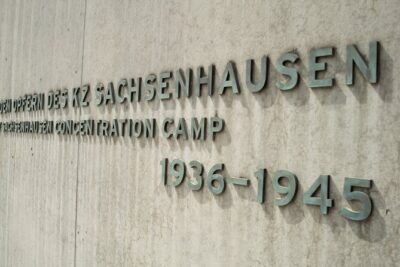
Sachsenhausen Concentration Camp Tour in English
Read our review →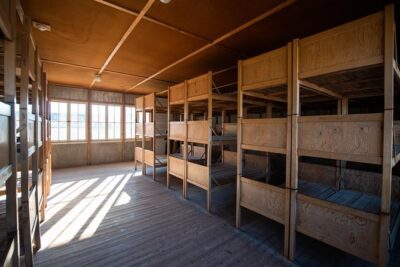
Dachau Concentration Camp Memorial Site Tour from Munich by Train
Read our review →
Sachsenhausen Concentration Camp Memorial Tour
Read our review →
Sachsenhausen Concentration Camp Bus Tour in English from Berlin
Read our review →Sachsenhausen Concentration Camp Tour in English
Read our review →
Sachsenhausen Concentration Camp Memorial Tour (Max. 15 Guests)
Read our review →Browse the lists this tour appears in