
Reviewed · HISTORICAL TOURS
Munich: National Socialism Historical Tour in GERMAN
The past is written into Munich’s streets. This two-hour walking tour follows the city’s role in the rise of National Socialism, using key sites and old photographs to make difficult events easier to place. I like the focused route from Königsplatz to Odeonsplatz, and I like that the guide carries black and white images from the 1920s and 1930s. The main consideration is language: the tour is conducted in German.
You will walk past former Nazi government buildings, the site of the Munich Agreement, the former Gestapo headquarters, and Feldherrnhalle. The tour costs $34 per person, which is fair if you want historical explanation rather than a quick look at monuments, but entrance fees are not included.
In This Review
- Key points to know before booking
- Why Munich matters to this story
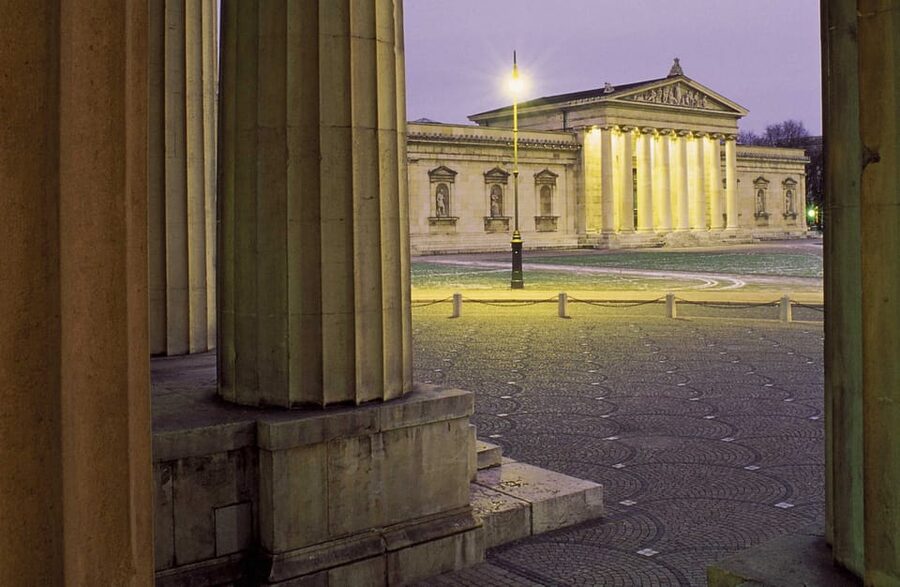
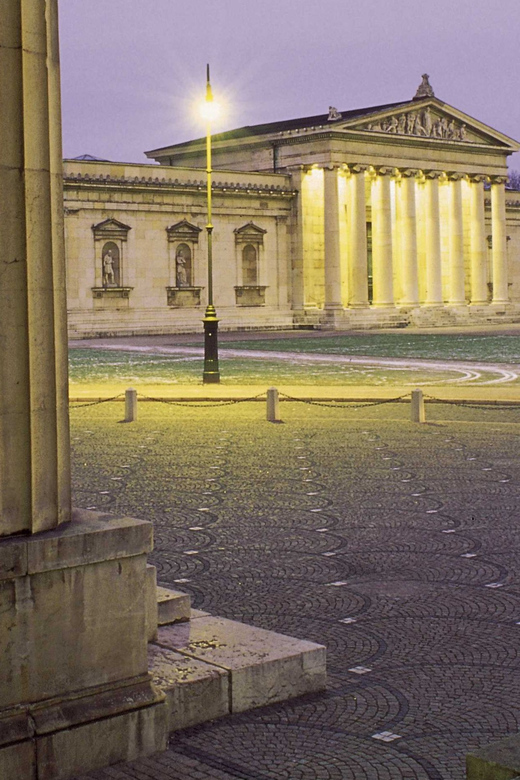
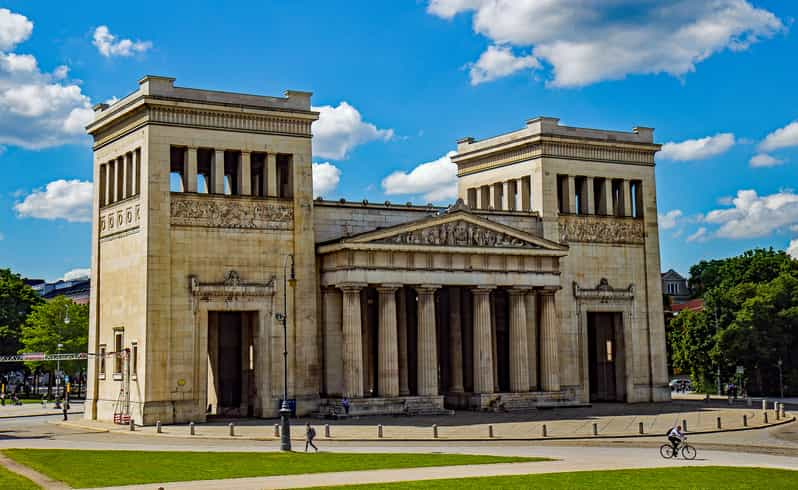
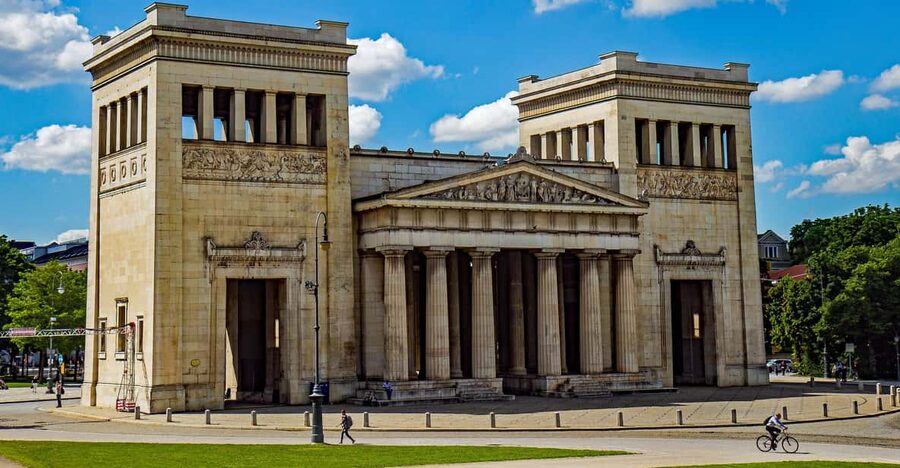
- Starting at Königsplatz and the State Collections
- The Führerbau and the Munich Agreement
- Walking along Briennerstrasse
- Passing the former Gestapo headquarters
- Feldherrnhalle and November 9, 1923
- How the photographs improve the walk
- German language and guide format
- Is $34 a fair price?
- Who should book this historical walk?
- Practical details for a smoother visit
- Should you book it?
- FAQ
- How long is the Munich National Socialism historical tour?
- What language is the tour conducted in?
- Where does the tour meet?
- How can I identify the guide?
- What locations does the walking tour visit?
- Are museum entrance fees included?
- What should I bring, and does the tour run in bad weather?
Key points to know before booking
- The route covers Munich’s former Nazi center: You walk from Königsplatz along Briennerstrasse to Feldherrnhalle at Odeonsplatz.
- November 9, 1923 receives special attention: The guide explains the Beer Hall Putsch and its importance in Hitler’s rise.
- Historic photographs add useful context: Black and white images show how Munich looked during the 1920s and 1930s.
- The tour is in German: A live guide leads the walk, but no other language is listed.
- You can choose private or group format: This gives you a choice between a more personal walk and a likely lower-cost shared outing.
- Plan for two hours outdoors: Wear comfortable shoes, and expect the tour to run in rain or shine.
Why Munich matters to this story
Munich is often introduced through palaces, beer halls, museums, and grand squares. This tour asks you to look at the city differently. It examines Munich as the place where National Socialism began its organized rise during the 1920s and 1930s.
That focus matters because the story is not presented as something that happened far away. It unfolded in familiar public spaces, along important streets, and inside government buildings that still shape the city’s appearance. You see how political power, public ceremony, and propaganda became tied to Munich.
The tone should be serious rather than sensational. A good guide helps you connect a building or square with an event, then explains why that event mattered. The historic photographs are especially useful here. A modern street can look harmless until you see the same place filled with uniforms, flags, crowds, or political gatherings.
This is not a general Munich sightseeing walk. You will not be stopping for food, shopping, or broad architectural commentary. The subject is National Socialism, its local beginnings, and Germany under the Nazi regime. If that is the part of Munich’s past you want to understand, the narrow focus is a strength.
More Historical Tours in Munich
- Munich: Guided Tour of the historic Town Hall on Marienplatz
★ 4.8 · 63 reviews - Munich Craft Beer & Cultural Tour With Snack
★ 5.0 · 46 reviews - Munich History Tour: Private & Personalized with a Local Guide
★ 4.5 · 33 reviews
Starting at Königsplatz and the State Collections
The meeting point is in front of the main entrance of the Staatliche Antikensammlungen at Königsplatz. Look for a guide carrying a large blue bag marked with the white words Weis(s)er Stadtvogel.
That meeting instruction is practical. Königsplatz is a large, formal square, so simply being told to meet at Königsplatz would leave room for confusion. The museum entrance gives you a clear target. Arrive with enough time to locate the building and the guide’s blue bag before the walk begins.
Königsplatz is an appropriate place to begin because its monumental design helps explain how public space can be used for political display. The guide sets the scene here before leading you toward the sites connected to the Nazi movement.
You should expect to spend much of the tour on city streets and open public areas. Bring shoes you can comfortably walk in for two hours. Since the walk operates rain or shine, a light rain jacket or weather protection is sensible, though only comfortable shoes are specifically required.
The Führerbau and the Munich Agreement
From Königsplatz, the route goes to the former Führerbau, known as the Führer’s building. The Munich Agreement was signed here in 1938, making the site important for understanding how Nazi Germany dealt with other European powers before the Second World War.
Today, the Munich Documentation Centre for the History of National Socialism is located in this area. The tour connects the former building and the present-day documentation center with the wider story of Munich’s Nazi past.
Do not assume that the tour price includes entry to the documentation center. Entrance fees are not included, and this experience is described as a guided walking tour. The main value comes from the outdoor route and the guide’s explanation, not from an included museum visit.
This stop is useful because it moves the discussion beyond the party’s beginnings. The tour begins with the rise of National Socialism in Munich, then shows how that movement became part of state power and international politics. You get a sense of how the story changed from local agitation to national and international consequences.
Walking along Briennerstrasse
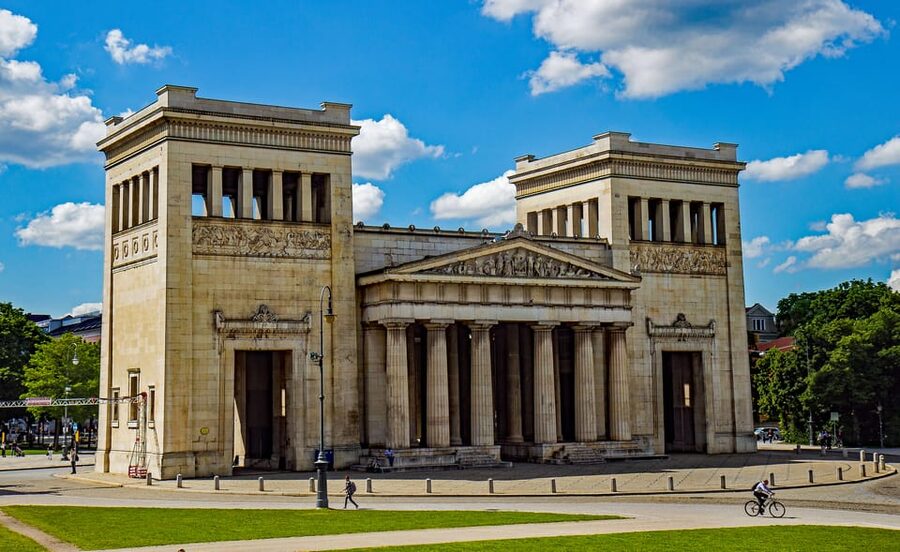
Briennerstrasse links several important places on the route. Here, the guide continues explaining how Munich developed into what the Nazis called the City of the Movement.
The street itself is not presented merely as a place to pass through. It helps connect the sites into one physical route. You are walking through the same central part of Munich where political offices, official buildings, and major demonstrations were concentrated.
This is where the photographs can make the greatest difference. Instead of hearing only names and dates, you can compare the present-day setting with images from the 1920s and 1930s. The contrast helps you understand how the city was used for political theater.
The tour’s use of photographs is also a practical benefit for anyone who does not already know Munich well. Historical events can blur together when they are explained only in a lecture. A photograph gives you something concrete to examine while standing in the location being discussed.
Something different for another day:
- From Munich: Neuschwanstein & Linderhof Castle Full-Day Trip
★ 4.5 · 12,494 reviews - Neuschwanstein & Linderhof Castle-Fairytale Day Tour from Munich
★ 4.5 · 7,275 reviews - Munich: Third Reich & WWII Walking Tour
★ 4.6 · 6,181 reviews - Dachau Concentration Camp Memorial Site Tour from Munich by Train
★ 4.5 · 5,637 reviews
Passing the former Gestapo headquarters
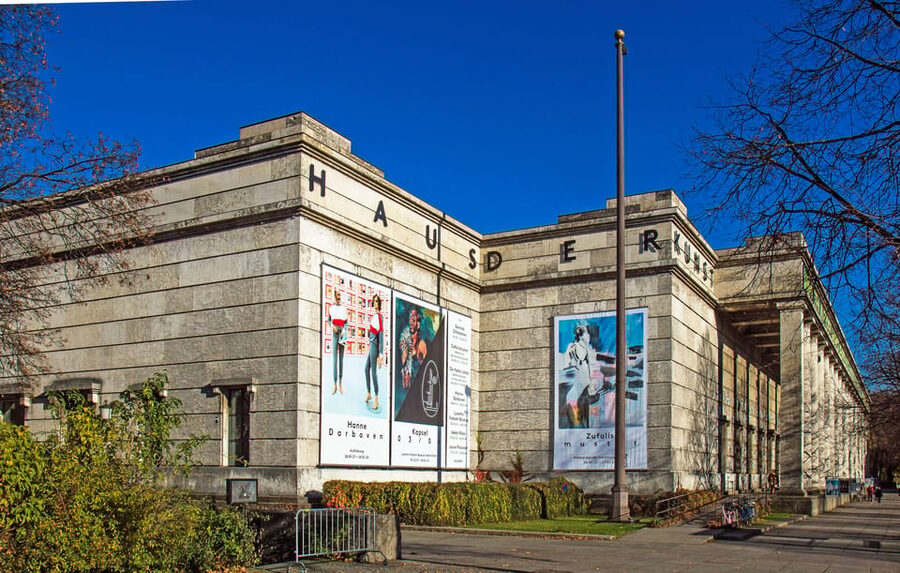
The walk continues past the former Gestapo headquarters. This is one of the heavier stops, since it points toward the machinery of repression used by the Nazi state.
The tour does not treat National Socialism only as a political campaign or a story about prominent leaders. Passing this building allows the guide to address how the regime enforced its power. That broader view is important. It shows the link between propaganda, political organization, intimidation, and state control.
Because this is a walking tour, the guide has to keep the discussion moving while making room for questions and explanation. You should expect a steady pace rather than a long indoor presentation. The two-hour length is enough for a focused introduction, but not enough for every aspect of German history during the Nazi period.
That limit is worth keeping in mind. If you want detailed coverage of persecution, resistance, wartime Germany, or postwar remembrance, you may need a museum visit or a separate tour. This experience concentrates on Munich’s role in the rise of National Socialism and the places tied to it.
Feldherrnhalle and November 9, 1923
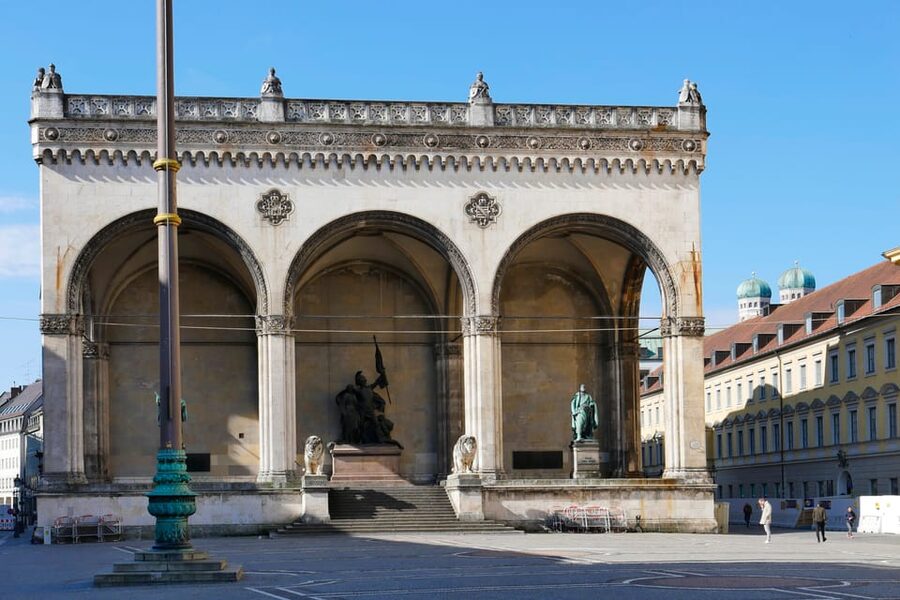
The final major stop is Feldherrnhalle at Odeonsplatz. The guide discusses the Beer Hall Putsch and the events of November 9, 1923, one of the central moments in Hitler’s early political career.
This stop gives the tour a clear historical anchor. You are not just hearing that National Socialism grew in Munich. You are examining a specific event in a specific public place and considering how it affected the movement’s later development.
The guide also explains how the NSDAP rose to power. That subject is larger than one failed putsch or one city, but Munich provides the setting for the early stages. The route lets you see the relationship between political gatherings, memorable locations, and the public presentation of power.
Odeonsplatz is a busy central part of Munich, which can make the subject feel especially immediate. You may see the square as part of an ordinary city day, while the guide explains why it became tied to one of the most important political movements of the twentieth century.
One detail deserves care: the supplied tour information refers to the November 9 event as 1923 in the highlights and as 1933 in the route description. The historically significant Beer Hall Putsch at Feldherrnhalle took place on November 9, 1923. If exact dates matter to you, listen for the guide’s explanation and use the date 1923 as the relevant reference.
How the photographs improve the walk
The guide brings a selection of black and white photographs from Munich in the 1920s and 1930s. This is more than a visual extra. It gives you a way to read the modern city against its earlier political use.
A photograph can show the scale of a rally, the appearance of a building before changes, or the way a public square was arranged for an event. You might also notice details that a spoken explanation alone would leave vague, such as the placement of crowds or the visual language used by the regime.
I consider this one of the best features for first-time visitors. You do not need a strong background in German history to follow the basic story when the guide places images beside the locations. The pictures also give the walk a clear structure, since each one can serve as a starting point for a particular event or topic.
The photographs will not replace a museum collection. They are used by the guide during the walk, so the experience depends on how clearly the guide explains them and how well you can see them in a group. Still, they add substance to a route that might otherwise feel like a series of exterior stops.
German language and guide format
The live tour is offered in German. That is the most important booking decision. You should be comfortable following a sustained historical explanation, including political terms, dates, and references to German institutions.
If you understand German well, the tour offers a direct way to discuss this subject in the language of the place. If your German is limited, the photographs and locations may still help, but you could miss important details. No alternative language is listed.
You can choose between a private tour and a group tour. A private format should be appealing if you want to ask questions, set the pace more easily, or discuss particular subjects in greater detail. A group format may suit you better if you prefer a shared walk and a lower overall cost, though the listed price is $34 per person and the exact difference between formats is not provided.
The experience includes a city guide. Food, drinks, hotel pickup, and hotel drop-off are not included. Since the meeting point is central and the route is on foot, you should arrange your own way to Königsplatz and plan to remain with the group for the full walking portion.
Is $34 a fair price?
At $34 per person, this is a reasonable price for a two-hour, guide-led historical walk, especially if the guide offers clear explanations and makes good use of the photographs.
You are paying for interpretation, not admission to a major attraction. That distinction matters. If you only want to see the buildings from the outside, you can walk through central Munich on your own. The fee becomes worthwhile when you want help understanding why these places matter and how the events connect.
The private or group choice also affects value. A private tour can make sense for a family, school group, or small party with a strong interest in the subject. A group tour may be the better buy if you want a structured introduction without arranging a private guide.
There are no food or drink stops, so plan a café visit before or after the experience. The route lasts two hours, which makes it easy to fit into a day of sightseeing, but the subject is demanding. You may want to avoid placing it between two rushed attractions.
Who should book this historical walk?
I would recommend this tour to you if you want to understand Munich’s role in the rise of National Socialism rather than simply collect photographs of famous squares. It suits history students, serious first-time visitors, and anyone who prefers a guide to explain what happened at the actual locations.
It is also a good choice if you appreciate a compact route. The walk has a clear beginning at Königsplatz, a sequence of connected stops, and a finish at Feldherrnhalle. You receive a focused introduction in two hours instead of a broad tour that touches lightly on everything.
You may want to choose another activity if you need English or another language, want extended museum time, or prefer a tour that discusses Munich’s many periods on equal terms. This is a serious subject tour, not a general city walk with a few Nazi-era comments added on.
The activity is marked wheelchair accessible, but the information also says it is not suitable for people with mobility impairments. That conflict should be clarified with the provider before booking. The route is a walking tour, and it takes place outdoors in all weather.
Practical details for a smoother visit
Meet in front of the main entrance of the Staatliche Antikensammlungen at Königsplatz. Identify the guide by the large blue Weis(s)er Stadtvogel bag.
Wear comfortable shoes. The tour lasts two hours and runs rain or shine, so dress for the forecast and carry suitable weather protection.
Free cancellation is available up to 24 hours before the activity for a full refund. You can also reserve now and pay later, which is useful if your Munich schedule is still changing.
Should you book it?
Book this walk if you want a serious, place-based introduction to Munich’s Nazi past, can follow a tour in German, and value explanation more than included admissions. The route is well focused, the photographs add needed visual context, and the $34 price is fair for two hours with a live city guide.
Skip it if you are looking for a broad Munich overview, an English-language experience, or a museum tour with admission included. For the right audience, this is a useful way to see central Munich with more historical awareness and less guesswork.
FAQ
How long is the Munich National Socialism historical tour?
The tour lasts two hours.
What language is the tour conducted in?
The live guided tour is conducted in German.
Where does the tour meet?
Meet in front of the main entrance of the Staatliche Antikensammlungen at Königsplatz.
How can I identify the guide?
The guide will carry a large blue bag with the white words Weis(s)er Stadtvogel on it.
What locations does the walking tour visit?
The route begins at Königsplatz, continues to the former Führerbau, follows Briennerstrasse, passes the former Gestapo headquarters, and ends at Feldherrnhalle at Odeonsplatz.
Are museum entrance fees included?
No. Entrance fees are not included. Food, drinks, hotel pickup, and hotel drop-off are also excluded.
What should I bring, and does the tour run in bad weather?
Bring comfortable shoes. The activity takes place rain or shine.
Just added around Munich
- Munich WWII and Dachau Concentration Camp Private Tour with Licensed Guide★ 5.0 · 3 reviews
- Munich Photoshoot: A Must-Have Holiday Experience!★ 5.0 · 3 reviews
- München: Braukurs mit Führung und Verkostung★ 4.2 · 4 reviews
- Mozart and German Composers Private Tour in Munich★ 4.8 · 4 reviews
- CITY QUEST Munich: reveal the secrets of this city!★ 4.0 · 4 reviews
- Private audio book city rally in Munich city centre★ 4.0 · 4 reviews
- Culinary Haidhausen – The Food Tour★ 4.3 · 4 reviews
- Private Munich History and Beer Culture Walking Tour★ 5.0 · 4 reviews
Historical Tours, compared.
City History Canal Sightseeing Tour on a Motorboat
Read our review →

Bamberg: Guided Beer History Tour with Optional Tasting
Read our review →Browse the lists this tour appears in