
Reviewed · MEMORIAL & CONCENTRATION CAMP TOURS
From Berlin: Licensed Sachsenhausen Tour with max. 15 people
History feels different behind the gate. This Sachsenhausen tour combines a licensed memorial guide with a small group of no more than 15 people, making a difficult site easier to understand without turning it into a rushed checklist. I especially like the careful use of witness accounts and the shared train journey, which gives the day a clear shape. I also like that €3 from each ticket goes to the memorial site.
The main drawback is the length and emotional weight. You are away for about five and a half hours, with roughly three hours at the memorial and plenty of walking outdoors. There are no cafés or shops at the site, so bring water, a snack, sturdy shoes, and clothing for rain, wind, or mud.
In This Review
- Key points to know before you book
- Why a guided visit matters at Sachsenhausen
- Meeting at Hackescher Markt and taking the train north
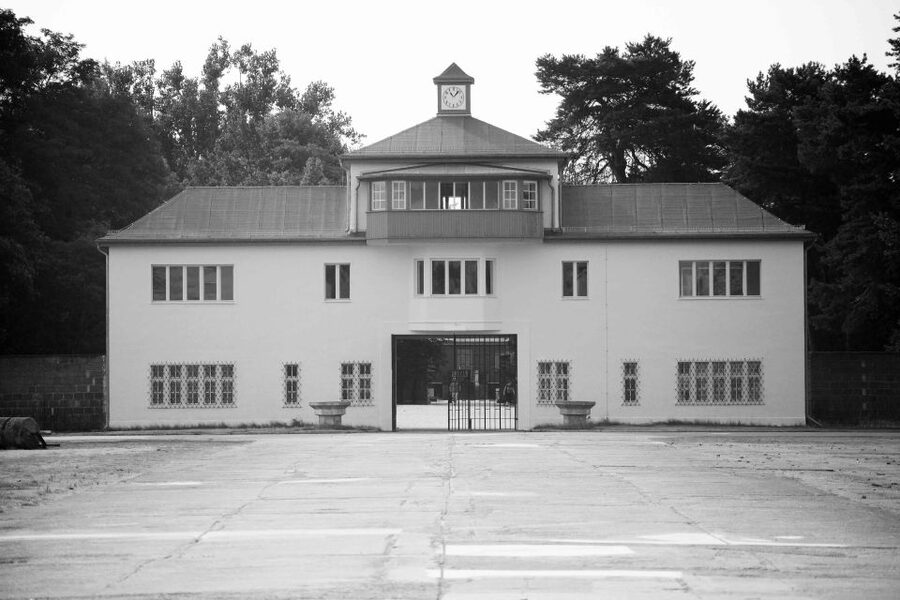
- Tower A and the camp entrance
- Barracks, forced labor, and daily life
- Station Z and the execution center memorial
- The Jewish barracks and other memorial areas
- Resistance, escape, and the 1945 Death March
- Three hours on site: the practical reality
- Returning to Berlin by public transport
- Guide quality and group size
- Is $38 a fair price?
- Who should book this Sachsenhausen tour?
- Should you book it?
- FAQ
- How long does the Sachsenhausen tour take?
- Where does the tour begin?
- How do I get to Sachsenhausen?
- Is public transport included in the price?
- How large is the group?
- Which language is the tour in?
- What areas of Sachsenhausen are included?
- Can I buy food or drinks at the memorial?
- Does the tour operate in bad weather?
Key points to know before you book
- Small groups of up to 15: You can hear the guide, ask questions, and keep up more easily than on a large coach tour.
- Sachsenhausen by public transport: The journey from central Berlin takes about 50 minutes each way and public transport tickets are not included.
- A serious, carefully handled subject: Guides such as Sarah, Ronja, Lewis, Rebecca, and Natalie have been praised for combining clear historical detail with empathy.
- Three hours inside the memorial: The route includes Tower A, Station Z, the Jewish barracks, prison kitchen, infirmary barracks, and the shoe testing track.
- Bring your own food and drink: There is no place at or around the memorial to buy snacks or beverages.
- Good value at $38: The price includes the guide, memorial fee, and a €3 donation, though you must pay separately for the ABC public transport ticket.
Why a guided visit matters at Sachsenhausen
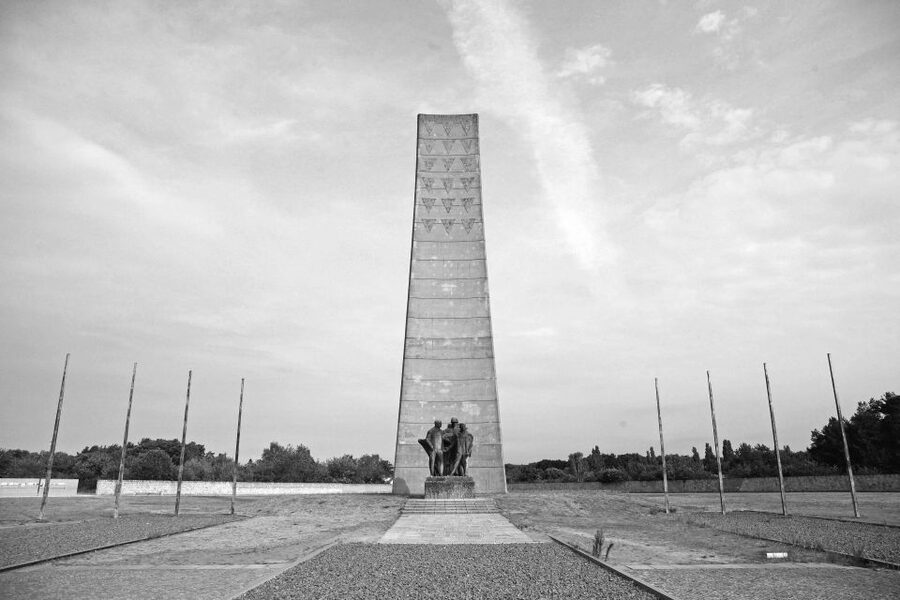
Sachsenhausen is not a simple museum with one building and a neat route through it. It is a large memorial site with open ground, surviving structures, ruins, plaques, and separate exhibitions. Without context, you could easily see the gate, barracks, and watchtowers without grasping how the camp operated or why the site was designed as it was.
The tour begins with the creation of Sachsenhausen in 1936. It was built by the SS, after Dachau, as one of Nazi Germany’s main concentration camps. It was first intended to imprison people seen as opposition to the Nazi regime, but the camp system expanded and changed during the Second World War.
Your guide explains that system while you walk, linking the physical remains to the people held there. The use of witness accounts and current historical research helps keep the visit grounded in individual lives rather than only dates and political terms.
That matters here. The scale of Sachsenhausen can make the place feel abstract. A good guide gives meaning to the spaces, explains the purpose of forced labor, and shows how brutality was built into daily routines. The strongest part of this tour is the chance to stop and ask questions as the history unfolds.
More memorial visits:
- Berlin: Sachsenhausen Concentration Camp Tour in English
★ 5.0 · 5,711 reviews - Berlin: Sachsenhausen Concentration Camp Memorial Tour
★ 4.7 · 3,716 reviews - Sachsenhausen Concentration Camp Bus Tour in English from Berlin
★ 5.0 · 1,962 reviews
Meeting at Hackescher Markt and taking the train north
The group meets outside Starbucks opposite Hackescher Markt S-Bahn station at Neue Promenade 3. This is a central Berlin location, but give yourself enough time to find the exact meeting point and arrive ready to travel.
The journey to Sachsenhausen takes about 50 minutes by public transport. The tour requires an ABC ticket, and the cost is not included. An ABC day pass is recommended, since Oranienburg lies outside Berlin’s central fare zones.
The train ride is part of the practical value of the tour. You do not need to work out the route alone, find the right platform, or guess where to change. Several guides have helped groups through transport problems, including shutdowns and changed train arrangements. One group had to use three different trains, but the guide kept the trip moving.
That does not mean every departure will be perfectly simple. Public transport can change, and you remain responsible for having the right ticket. Still, traveling with a guide takes away much of the stress, especially if you are unfamiliar with Berlin’s zones and regional trains.
After arriving in Oranienburg, expect a walk of about 20 minutes to the memorial. This is not a quick station-to-gate transfer. Wear shoes that can handle a long day on foot and possibly muddy ground after rain.
Tower A and the camp entrance
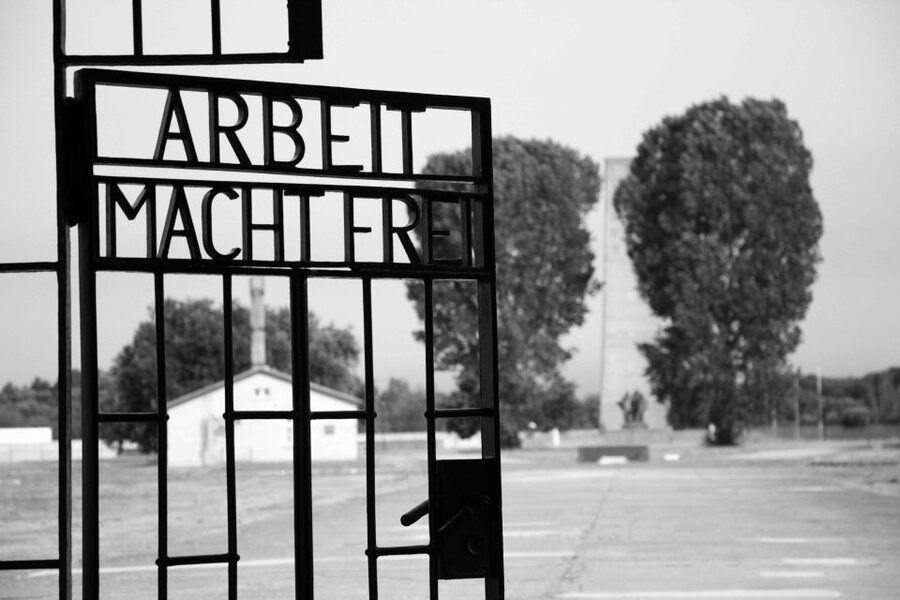
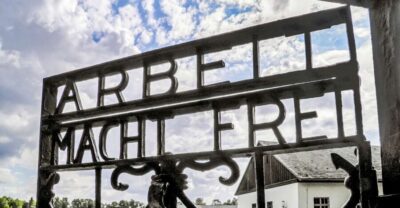
Tower A is one of the first major points on the visit. The gate carries the Nazi slogan Arbeit Macht Frei, a phrase used to disguise imprisonment and forced labor as a supposed path to freedom.
Your guide explains the meaning of the entrance and the way the camp system was presented to the outside world. This is an important start because Sachsenhausen was not random chaos. Its layout, rules, labor demands, punishments, and surveillance were part of an organized system.
The entrance can feel familiar from images of other former camps, but the surrounding site gives it a different force. You are not simply looking at a famous gate. You are beginning a walk through a place created to control, exploit, and dehumanize people.
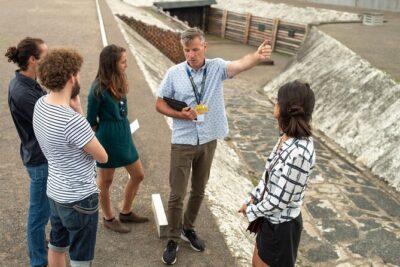
A small group helps here. The guide can gather everyone near the entrance without shouting across a crowd, and you have a better chance to ask about details that might otherwise pass unnoticed.
Barracks, forced labor, and daily life
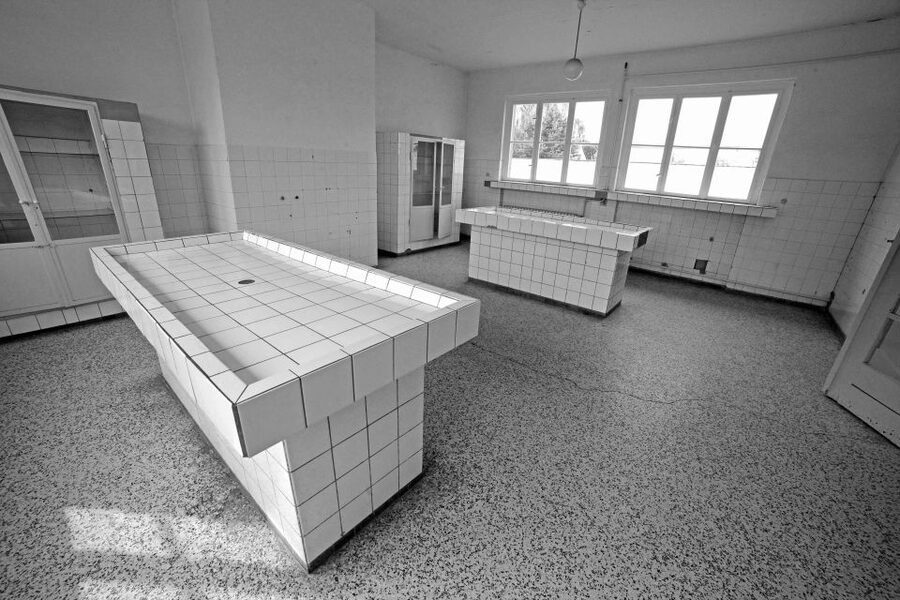
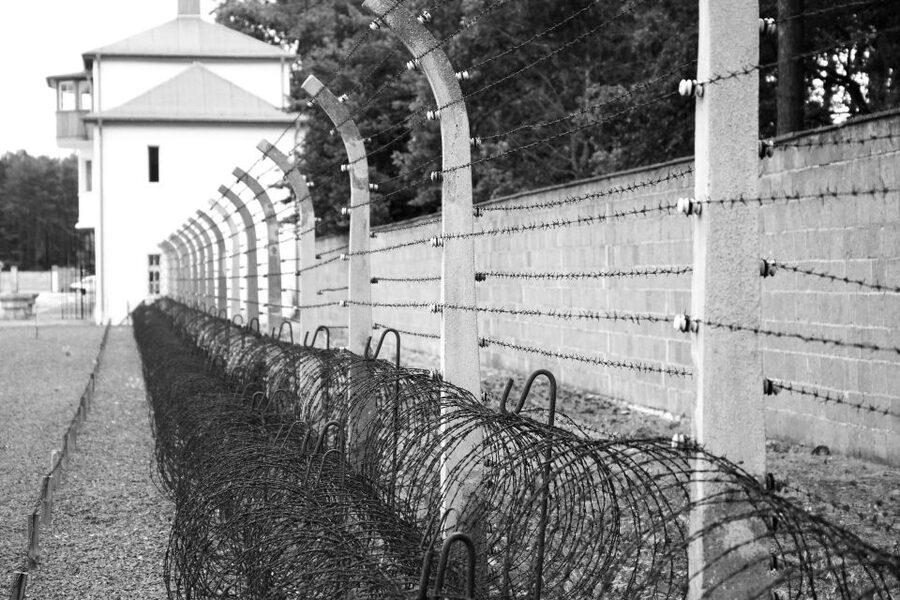
The three-hour guided visit covers the remains of watchtowers, barrack blocks, and other camp areas. Some structures survive, while others are marked by foundations, memorials, or plaques. The open spaces require walking between stops, so the day is physical as well as emotional.
The discussion of daily life focuses on forced labor and the conditions prisoners faced. The guide uses testimony to explain how work, hunger, punishment, illness, and surveillance shaped ordinary hours inside the camp.
You will also hear about different prisoner groups and the way the Nazi authorities categorized those held there. This helps you understand that the camp was not only a place for one population or one political purpose. The history is complex, and a guide can explain those changes without forcing you to piece them together from scattered signs.
The tour also includes stories of resistance and survival. These do not soften the crimes committed at Sachsenhausen, but they show that prisoners were not only passive victims. You hear about the revolt of Jewish prisoners in 1942, as well as the escape tunnel dug by Jimmy James.
Another striking episode concerns the forgery workshop, where Jewish prisoners were forced to counterfeit millions of pounds sterling. It is a grim example of how the camp system used prisoners’ skills for Nazi purposes, while also showing the extraordinary ingenuity required to survive.
Something different for another day:
- Berlin: Reichstag, Dome and Government District Guided Tour
★ 4.7 · 18,288 reviews - Berlin: 1-Hour City Tour by Boat with Guaranteed Seating
★ 4.3 · 16,993 reviews - Berlin: Boat Tour Along the River Spree
★ 4.4 · 11,252 reviews - Discover Berlin Half-Day Walking Tour
★ 5.0 · 9,624 reviews
Station Z and the execution center memorial
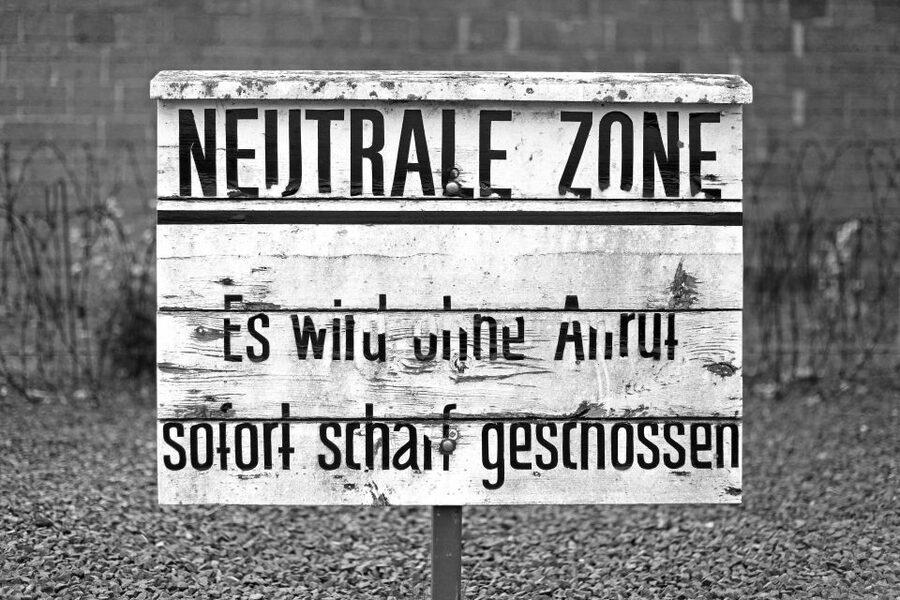
Station Z is the memorial marking the former execution center. The name itself is chilling: the camp began at Tower A and ended at Station Z. The site now asks you to confront the final stage of the machinery of murder.
This section requires quiet attention. The guide provides the historical setting, but you also have room to take in the memorial at your own pace. The subject is emotionally demanding, and the tour does not pretend otherwise.
The guide’s tone matters greatly at this point. The strongest comments about the experience have focused on guides who remained serious without becoming mechanical, and compassionate without oversimplifying the facts. Lewis, Rebecca, Ronja, Natalie, Sarah, and others have been praised for answering hard questions and treating the subject with care.
You should not expect entertainment here. Some guides may use a small, appropriate touch of humor during the long day, but the purpose is education and remembrance. The tone stays respectful.
The Jewish barracks and other memorial areas
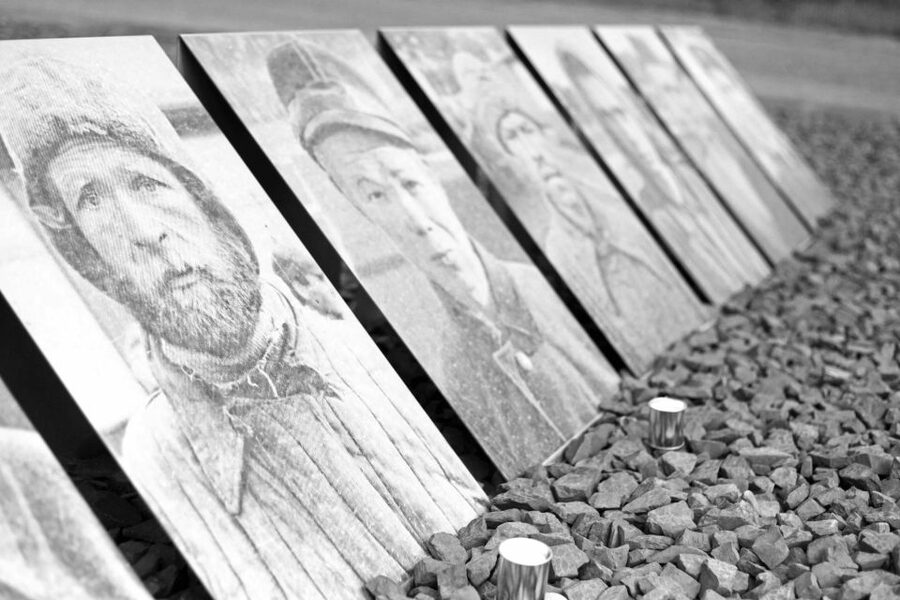
The route includes the Jewish barracks, where you learn more about Jewish prisoners and the particular persecution they faced. This stop fits into the wider story of Nazi racial policy and the shifting use of the camp.
You also visit the prison kitchen and infirmary barracks. These places help explain the camp’s internal structure. They were not ordinary facilities serving a normal community. They were part of a system in which food, medical care, discipline, and prisoners’ bodies were controlled by the authorities.
The shoe testing track offers another disturbing look at forced labor. Prisoners were made to test shoes by walking long distances, often under harsh conditions. Seeing the location makes the labor system more concrete than reading a short description in a textbook.
There are memorial statues, plaques, remains of watchtowers, and exhibition spaces along the way. You may want to read every panel and study every photograph, but the group schedule cannot guarantee unlimited time at each room. One useful expectation to set is that the guide-led story comes first. If you want to examine every display closely, you may need a separate visit.
Resistance, escape, and the 1945 Death March
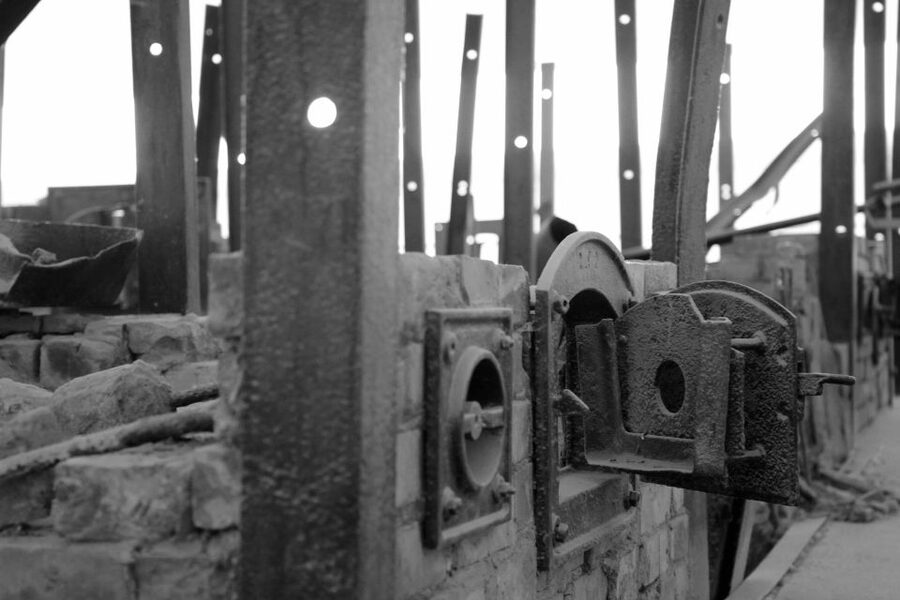
The tour gives welcome space to resistance. The 1942 revolt by Jewish prisoners is one example, while the forgery workshop shows another form of resistance and survival under impossible conditions.
You also hear about escape stories, including the tunnel dug by Jimmy James. These accounts add human detail to a place often described only through statistics. They show planning, courage, cooperation, and the constant danger faced by anyone who tried to resist.
The final part of the historical story concerns the Death March before liberation in 1945. Your guide explains what happened as the camp’s liberation approached and why prisoners were forced away from Sachsenhausen.
This is a fitting, difficult ending to the historical portion of the tour. The visit does not stop at the camp’s construction or the years of imprisonment. It follows the story through the collapse of Nazi Germany and the final suffering inflicted on prisoners before liberation.
Three hours on site: the practical reality
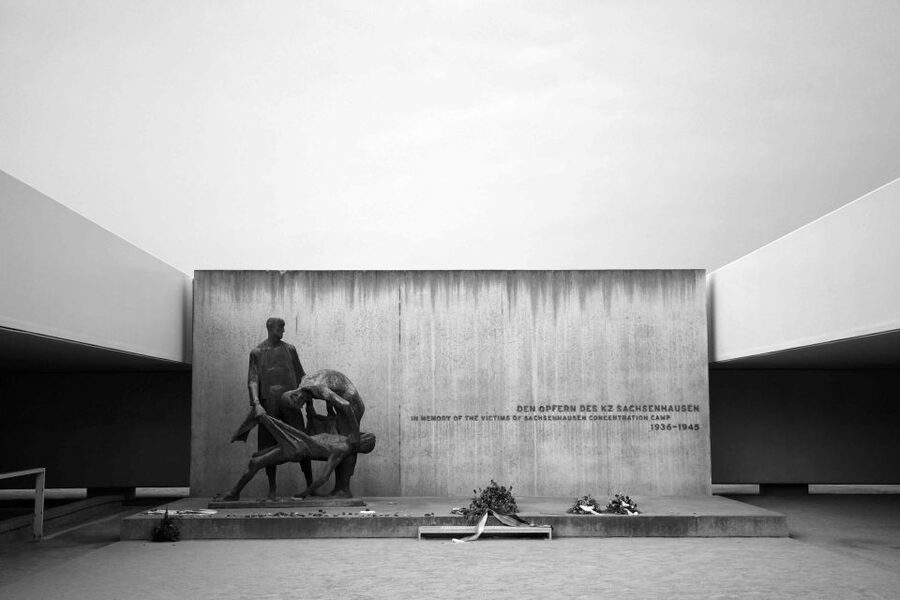
Three hours at Sachsenhausen gives the guide enough time to explain the main areas without making the trip an all-day expedition. It is also long enough for the subject to become tiring. You will be outdoors for much of the visit, and the ground may be muddy after rain.
There is no café or shop in or around the memorial site. Bring a bottle of water and a snack before leaving Berlin. A short food stop may be possible during the day, but you should not count on a proper lunch break. Pack something substantial if you know you need regular meals.
The tour runs in all weather. In summer, that means sun protection and water may matter. In colder months or rain, waterproof clothing is more useful than an umbrella alone, since much of the route is outside. Comfortable shoes are essential, not optional.
This is also not the right outing for anyone hoping for a light half-day activity between museum visits. The subject is heavy, the walking is real, and the total time from meeting point to return is about 330 minutes.
Returning to Berlin by public transport

After the memorial visit, the group walks back to Oranienburg for the return journey. The tour normally arrives at a central Berlin station such as Hauptbahnhof, Friedrichstraße, or Gesundbrunnen.
Guides often help with onward directions, which is useful if you have dinner plans or another appointment. Several guides have also offered Berlin food and transport suggestions during the ride back. Still, allow some flexibility after the stated return time. Train changes or service interruptions can affect the schedule.
The return journey gives you a little space to process the day. Some people may want to talk through what they have seen. Others may prefer quiet. A small group makes both options easier than a packed coach.
Guide quality and group size
The guide is the main reason to choose this outing instead of visiting alone. The company uses guides trained by Original Berlin Walks and officially licensed by the memorial. The strongest guide qualities reported across the experience are clear explanations, empathy, good pacing, and the ability to answer detailed questions.
Sarah has been praised for making the tour feel personal while still explaining the full scale of the camp. Ronja has been noted for her care and strong grasp of political history. Lewis has been praised for balancing seriousness, warmth, and practical help. Rebecca and Natalie have also been singled out for making a heavy day organized and manageable.
Guide assignments can change, so you cannot book a particular person based on these examples. The consistent pattern is more important: the guides are expected to know the site, manage public transport, watch the group, and handle a painful subject with care.
A maximum of 15 people is a real advantage. You can hear explanations, ask questions, and stay close to the guide. It also reduces the waiting that comes with large groups. The tradeoff is that you are following a set route and schedule rather than spending the entire day alone with each exhibit.
Is $38 a fair price?
At $38 per person, this is a strong value for a 5.5 to 6-hour experience. The fee includes the licensed guide, memorial fee, and a €3 donation to the site. You pay separately for public transport, so add the cost of an ABC day pass when planning your budget.
A self-guided visit may cost less in guiding fees, but you would need to plan the route, buy the correct transport ticket, reach the memorial, and interpret a large and difficult site on your own. The guide also adds witness accounts, historical links, and answers to questions that signs cannot provide.
The donation is a worthwhile part of the price. It helps the memorial remain available for individual visitors, schools, and tour groups. That gives your ticket a small practical role in keeping the site open for education and remembrance.
The tour is especially good value if you have never visited a concentration camp memorial before or if you want a clear explanation of how Sachsenhausen fits into Nazi Germany’s wider camp system.
Who should book this Sachsenhausen tour?
I would choose this tour if you want serious historical guidance, prefer a small group, and do not want to manage Berlin’s regional public transport alone. It also suits people who value personal stories, resistance accounts, and careful explanations of the memorial’s different areas.
Students, first-time visitors, and anyone with a strong interest in Second World War history should find plenty to think about. The tour can also help if you have family history connected to the period. One guide even contacted the museum during the journey to look into a participant’s personal family question.
I would think twice if you have limited energy for walking, need a guaranteed lunch break, or want to explore every display at your own pace. This is a structured group visit, not a casual stop between Berlin attractions.
The tour has an overall rating of 4.9 from 380 reviews, and the most praised features are the guides’ care, historical detail, transport help, and steady pacing. Those are exactly the areas that matter most on a visit like this.
Should you book it?
Yes, if you have the time and emotional readiness. The tour makes Sachsenhausen easier to reach and easier to understand, while the small group keeps the experience personal without making it feel private or exclusive.
Bring food, water, proper shoes, and weatherproof clothing. Buy the correct ABC ticket before setting out, and leave room in your day for delays. If you want a thoughtful introduction to Sachsenhausen with a trained guide and a useful historical framework, $38 is a sensible price.
FAQ
How long does the Sachsenhausen tour take?
The full experience lasts about 330 minutes, or roughly 5.5 to 6 hours, including travel between Berlin and the memorial.
Where does the tour begin?
It begins outside Starbucks opposite Hackescher Markt S-Bahn station at Neue Promenade 3 in central Berlin.
How do I get to Sachsenhausen?
The group travels by public transport from Berlin to Oranienburg, followed by a walk of about 20 minutes to the memorial.
Is public transport included in the price?
No. You need to buy your own public transport ticket. An ABC day pass is recommended.
How large is the group?
The group is limited to a maximum of 15 participants.
Which language is the tour in?
The tour is conducted in English with a live guide.
What areas of Sachsenhausen are included?
The visit includes Tower A, the Station Z execution center memorial, Jewish barracks, the shoe testing track, prison kitchen, infirmary barracks, memorials, watchtower remains, and barrack areas.
Can I buy food or drinks at the memorial?
No. There are no shops or cafés in or around the memorial site, so bring your own drinks and a snack.
Does the tour operate in bad weather?
Yes. The tour runs in all weather conditions. The site may be muddy after rain, so wear weather-appropriate clothing and comfortable shoes.
Just added around Berlin
- Berlin: Private Guided Tour of the Main Sights★ 5.0 · 13 reviews
- Private Highlights of Berlin Bike Tour★ 5.0 · 13 reviews
- Modern Berlin Private Walking Tour: Diverse, Vibrant and Exciting German Capital★ 5.0 · 13 reviews
- Tour in Berlin from Warnemünde and Rostock Cruise Port★ 4.1 · 13 reviews
- Berlin: Stasi Museum Private Guided Tour with Entry Ticket★ 4.8 · 13 reviews
- Private Food Tour Experience with a born and bred Berliner★ 5.0 · 14 reviews
- Berlin: Rheinsberg Palace Entrance Ticket★ 4.8 · 14 reviews
- Berlin in one day – day tour with an expert guide★ 5.0 · 14 reviews
Memorial & Concentration Camp Tours, compared.
Sachsenhausen Concentration Camp Tour in English
Read our review →
Dachau Concentration Camp Memorial Site Tour from Munich by Train
Read our review →
Sachsenhausen Concentration Camp Memorial Tour
Read our review →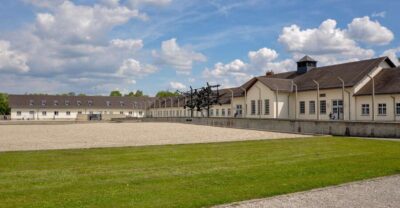
Sachsenhausen Concentration Camp Bus Tour in English from Berlin
Read our review →Sachsenhausen Concentration Camp Tour in English
Read our review →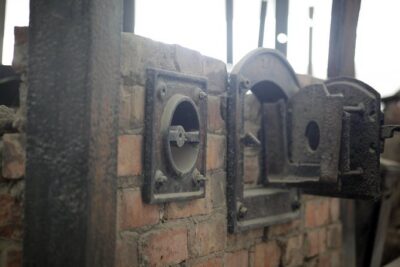
Sachsenhausen Concentration Camp Memorial Tour (Max. 15 Guests)
Read our review →Browse the lists this tour appears in