
Reviewed · CITY TOURS
Day trip through multicultural city landscapes & photo highlights
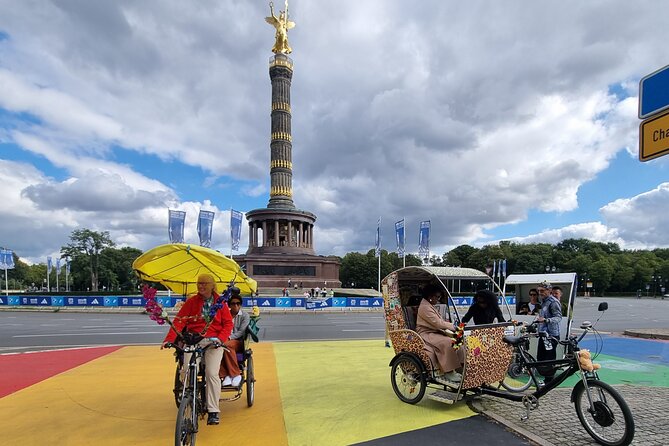
Berlin rewards a fast first look. This private rickshaw tour links major monuments with local streets, parks, former Wall sites, and photo stops in a compact three to six hour ride. I like the easy pace and the chance to cover far more ground than you could on foot.
I also like the flexible route, especially the mix of Brandenburg Gate, Museum Island, Kreuzberg, and Tempelhofer Feld. Guide Leo receives warm praise for taking people through pedestrian lanes and places cars cannot reach. The main drawback is simple: many stops last only one to five minutes, so this is a city orientation and photography tour, not a full visit to Berlin’s museums or memorial interiors.
In This Review
- Key reasons to consider this Berlin ride
- What this private Berlin tour is really like
- Brandenburg Gate and the government quarter
- Tiergarten, Potsdamer Platz, and Nazi history
- The Berlin Wall and central Berlin
- Museum Island, Alexanderplatz, and old Berlin
- East Side Gallery and Kreuzberg street life
- Tempelhofer Feld and Park am Gleisdreieck
- Who will get the most from Leo’s ride
- Price, pickup, and booking advice
- Should you book this Berlin rickshaw tour?
- FAQ
- How much does the Berlin rickshaw tour cost?
- How long does the experience last?
- Is hotel pickup available?
- Is this a private tour?
- What language is the tour offered in?
- Are drinks included?
- Can I cancel for a full refund?
Key reasons to consider this Berlin ride
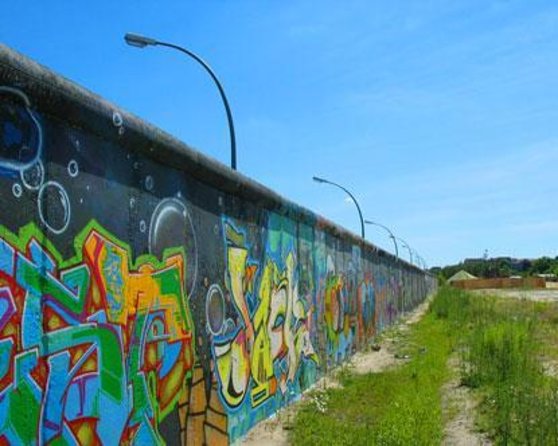
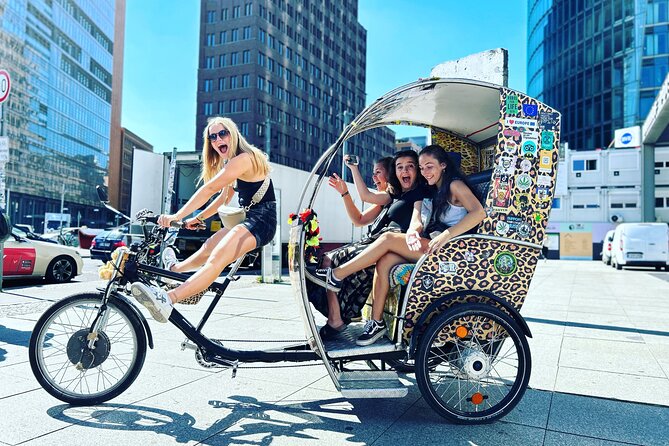
- A private rickshaw keeps the tour personal: Only your group participates, with pickup available from hotels, the central station, and cafes.
- The route crosses several Berlins: You move from Prussian monuments and Nazi-era sites to Cold War landmarks, immigrant districts, parks, and modern redevelopment.
- Leo can reach places cars cannot: Small pedestrian routes, parks, and narrow city passages add variety to the usual sightseeing circuit.
- The photo value is high: Brandenburg Gate, the Reichstag, Gendarmenmarkt, the Berlin Wall, East Side Gallery, and Tempelhofer Feld all give you different subjects.
- You see both central Berlin and Kreuzberg: Bergmannstraße, Oranienstraße, Admiralbrücke, and the former Görlitzer Bahnhof add everyday city life to the grand monuments.
- Drinks and transport are included: Private transport, a guide, photography, music on request, alcoholic drinks, coffee, and tea are part of the package.
What this private Berlin tour is really like
At $140.77 per person, this ride is priced above a basic walking tour or public sightseeing bus. The value comes from private transport, a personal guide, pickup, photography, and a route that covers a very large part of Berlin.
You are paying to save time and energy. Berlin’s sights are spread across a wide area, and moving from the Reichstag to Kreuzberg, then on to Tempelhofer Feld and the East Side Gallery, can take work by train and foot. A rickshaw lets you sit back while Leo handles the movement between districts.
The tradeoff is depth. The listed stops include more than two dozen places, but several receive only one, two, three, or five minutes. Think of the tour as a guided overview with photo opportunities. You will get context and a sense of place, then return later to the sites that deserve a longer visit.
Because this is a private activity, the pace can suit your group better than a fixed coach tour. You can ask for music, enjoy coffee or tea, and have alcoholic drinks included. Weather matters, since poor conditions can lead to a new date or a full refund.
More City Tours in Berlin
- Berlin: 1-Hour City Tour by Boat with Guaranteed Seating
★ 4.3 · 16,993 reviews - Berlin: City Sightseeing Hop-On Hop-Off Bus Tour
★ 4.1 · 4,233 reviews - Potsdam: City and Castles Tour
★ 4.7 · 3,721 reviews
Brandenburg Gate and the government quarter
Brandenburg Gate is a strong place to begin. Built from 1788 to 1791, it was designed by Carl Gotthard Langhans the Elder and modeled in part on the entrance buildings of the Acropolis in Athens. Friedrich Wilhelm II wanted a grand architectural finish for Unter den Linden, and the result became one of Berlin’s clearest symbols.
Admission here is free. Your short visit is enough for photographs and an introduction, but you should not expect a long architectural talk unless you ask questions.
Nearby, the Reichstag connects the city’s grand architecture with some of Germany’s sharpest political turns. Philipp Scheidemann proclaimed the republic from its west portal balcony in 1918. The building later suffered the famous fire of February 1933, and Soviet soldiers raised their flag there in April 1945.
The stop at the Reichstag is listed at five minutes, and admission is not included. That means you will see the exterior rather than tour the plenary hall or glass dome. If the dome matters to you, plan a separate visit.
The German Chancellery gives you a look at modern government architecture. Its central 36-meter administration building uses large glass surfaces, concrete pillars, open arches, and glazed atriums. I find this contrast useful: Berlin’s government quarter is not only about old stone monuments, but also about transparency, geometry, and postwar design.
The nearby Soviet War Memorial in Tiergarten is a brief but weighty stop. Two T-34 tanks flank a bronze Red Army soldier, while pillars carry names of fallen Soviet soldiers. About 2,500 soldiers are buried at the rear. Admission is free, but the short three-minute visit calls for a quiet look rather than a rushed snapshot.
Tiergarten, Potsdamer Platz, and Nazi history
Tiergarten gives the ride a welcome change of mood. This roughly 200-hectare park began as a hunting ground and was later reshaped for public use. Peter Joseph Lenné transformed it into an English-style public park between 1833 and 1838.
The park includes monuments, bridges, the Victory Column, the Federal President’s Office, the House of World Cultures, and the English Garden around a pond. You may not have time to explore these on foot, but passing through helps explain how much open space Berlin holds near its political center.
Potsdamer Platz offers a completely different picture. After the Wall divided Berlin, the area became a major redevelopment zone. Modern towers, cafes, cinemas, shops, and the Daimler City shopping arcade now fill the district. The new quarter covers 6.8 hectares between Potsdamer Platz and Reichpietschufer.
The contrast can feel abrupt, but that is part of Berlin’s appeal. A few minutes can take you from war memorials and divided streets to polished high-rise architecture.
At the Topography of Terror, the subject turns darker. From 1933 to 1945, the site housed key Nazi institutions, including the Secret State Police, the SS leadership, and the Reich Security Main Office. The exhibition area is free, but five minutes is not enough to read it properly.
I would treat this as a marker for a later return. The outdoor displays and documentation deserve time, especially if you want to understand how the Nazi terror system was planned and controlled.
The nearby Gropius Bau is devoted to cultural history, contemporary art, and photography. Admission is not included, and the listed visit is only two minutes. You will see where it is, but you will not meaningfully tour the building or its exhibitions during this ride.
The Berlin Wall and central Berlin
The Wall Memorial stop is extremely brief, at one minute, while Checkpoint Charlie receives two minutes. That is enough to identify the locations and take a picture, not enough to grasp the full story of Berlin’s division.
Checkpoint Charlie was the best-known of the American-controlled crossing points in divided Berlin. It was reserved for foreigners, staff of the West German Permanent Representation in East Germany, and East German officials. Admission is free, but the modern setting can feel busy and commercial, so keep your expectations realistic.
Friedrichstraße continues the Cold War story while adding shopping and city movement. It runs north to south through Berlin, and the stretch between Checkpoint Charlie and Friedrichstraße station developed into a popular shopping mile after the Wall fell.
Gendarmenmarkt is one of the most handsome squares on the route. It began in the late 17th century and passed through several names before receiving its current title in 1799. French Protestant immigrants settled in the area, adding another layer to Berlin’s long mix of cultures.
The square brings together the Deutscher Dom, Französischer Dom, and Konzerthaus. The German Cathedral contains a five-floor exhibition on the development of liberal parliamentary democracy in Germany, but admission is not included. The Konzerthaus, designed in the classicist style by Karl Friedrich Schinkel, grew from a small comedy theater opened in 1776 under Frederick the Great.
Bebelplatz is quieter and more unsettling. On May 10, 1933, the Nazis burned more than 20,000 books there, including works by Erich Kästner, the Mann family, Karl Marx, Else Lasker-Schüler, and many other writers. A memorial beneath the square recalls the crime.
That two-minute stop may be enough to point out the memorial and explain the event. I would return alone if you want to spend time with the site.
A few more tours and experiences worth a look
- Berlin Complete in one day
★ 5.0 · 222 reviews - From Berlin: Sachsenhausen Concentration Camp Day Trip
★ 4.7 · 52 reviews - Private Tour: Potsdam Day Trip from Berlin
★ 4.5 · 43 reviews - Private Day Trip to Potsdam from Berlin by Train
★ 4.5 · 27 reviews
Museum Island, Alexanderplatz, and old Berlin
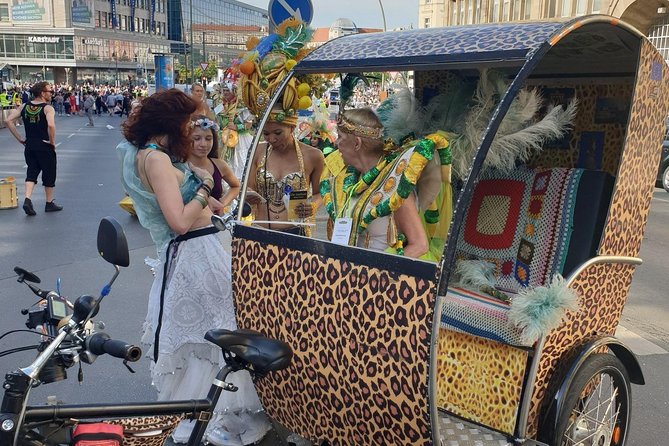
Museum Island is one of Europe’s major museum areas, with five museums formed over roughly a century. UNESCO added it to the World Heritage list in 1999, and restoration has continued since the late 1990s.
The route gives you a quick view, not a museum visit. Tickets are not included, and the five-minute stop cannot replace time inside the collections. Still, the location helps you understand Berlin’s central core, where the Spree, royal architecture, and major museums meet.
The Berliner Dom is easy to spot by its large dome. It served as the Hohenzollern court and cathedral church and was rebuilt between 1894 and 1905 under Emperor Wilhelm II. Admission is not included, and three minutes is enough for an exterior view.
Alexanderplatz, known locally as Alex, is a major square and transport hub. It is one of the city’s most visited places, but its importance is as much practical as visual. You see how Berlin’s central transport network connects with its public squares.
Nikolaiviertel offers a recreation of old Berlin. The quarter was created in its present form for Berlin’s 750th anniversary in 1987, after the original area had been destroyed. It works almost like an open-air museum, with the Nikolaikirche at its center.
The Neptune Fountain, in front of the Red City Hall, adds a playful finish. Neptune holds his trident in a basin, while four female figures represent the Elbe, Rhine, Oder, and Vistula rivers. Since the stop is listed at one minute, expect a quick photo rather than a long explanation.
East Side Gallery and Kreuzberg street life
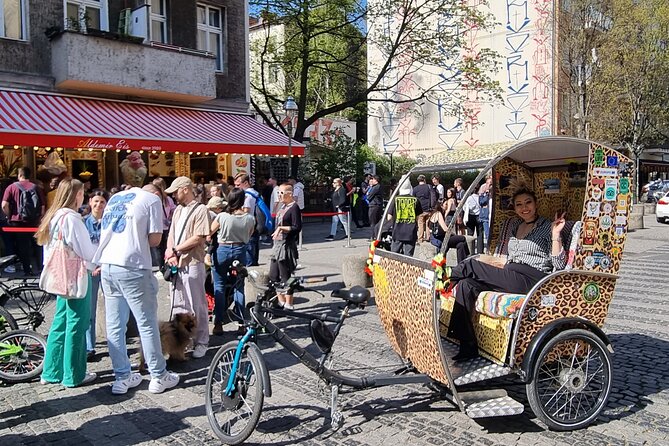
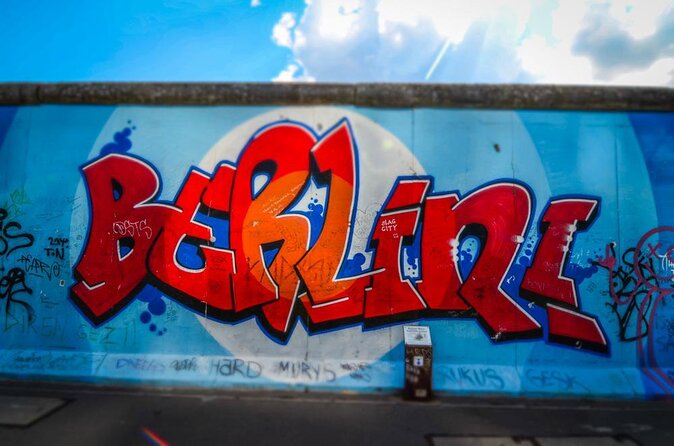
The East Side Gallery is one of the route’s strongest visual stops. It follows 1.3 kilometers of the former Berlin Wall along the Spree and carries more than one hundred original murals.
The supplied route lists it without a numbered stop duration, so timing may depend on your pickup point, traffic, and group interests. Ask Leo how much time you will have if the Wall paintings are a priority. A brief ride-by shows the scale, but walking a section gives the art and the Wall’s remaining structure more meaning.
Kreuzberg changes the tone again. Bergmannstraße and its side streets offer old buildings, small shops, restaurants, and a multicultural local scene. The area is less tied to the club culture of SO 36, yet it remains lively and varied.
Oranienstraße is more energetic, especially at night. About one hundred small shops, bars, and restaurants bring international character to the street, along with the well-known SO 36 venue. A four-minute stop lets you identify the area, but you will need a separate evening if you want to eat or listen to music here.
Admiralbrücke is a popular summer meeting point beside the Landwehr Canal. Its cobblestones and old gas lamps create a relaxed setting where people gather, talk, drink, make music, and watch the sunset. Local noise concerns have led to the bridge being cleared at 10 p.m., so do not treat it as a late-night hangout.
The Landwehr Canal itself runs through several Berlin districts, including Kreuzberg, Neukölln, Tiergarten, and Charlottenburg. Built between 1845 and 1850 under plans connected with Peter Joseph Lenné, it carried building materials during Berlin’s industrial growth.
Görlitzer Bahnhof adds an important piece of Kreuzberg’s past. The former station opened in 1866 after the area was filled, railed, and developed for passenger and freight service. Today, Görlitzer Park covers much of the old station site, with lawns, sports fields, playgrounds, and a children’s farm.
Tempelhofer Feld and Park am Gleisdreieck
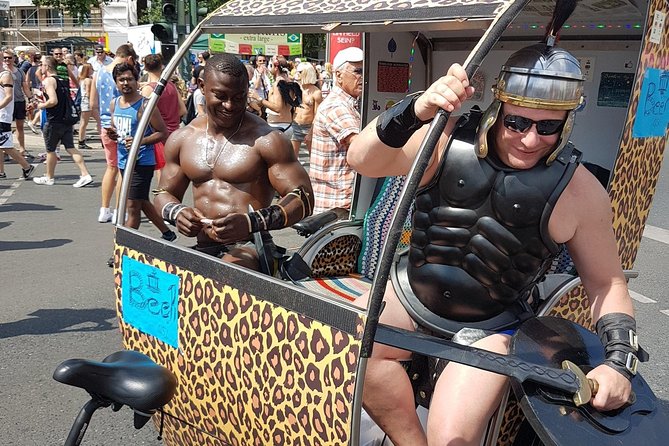
Tempelhofer Feld may be the most surprising open space on the route. The former airport, with its huge terminal and more than 300 hectares of airfield, opened to the public after flight operations ended. Today it is a broad public area shaped by citizen involvement and a 2014 referendum.
The size is the point. Instead of monuments packed close together, you get open sky and long views across a former airport field. Five minutes gives you a taste, but the site is worth returning to if you enjoy walking, cycling, or simply seeing how Berlin reuses former industrial and transport spaces.
Park am Gleisdreieck continues that idea. A railway area near the Gleisdreieck junction lay unused after World War II, allowing plants and wildlife to develop. Local citizens pushed to preserve the space, and it became a park with an urban feel.
Together, Tempelhofer Feld and Gleisdreieck show a Berlin that is not defined only by palaces, museums, and political buildings. You also see citizens shaping public space and protecting open areas in a dense city.
Who will get the most from Leo’s ride
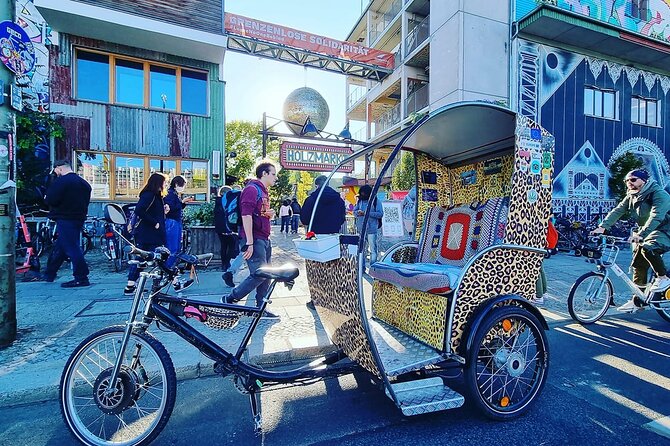
I would recommend this tour most strongly if you have limited time in Berlin, dislike long walks, or want a private overview before choosing where to return. It also suits photographers, couples, families, and anyone who prefers a flexible ride to a large group bus.
Leo’s greatest strength appears to be access. He can take you through parks and small pedestrian routes that cars cannot use, while still connecting major sights. That makes the experience feel less like a checklist and more like a moving introduction to Berlin’s different districts.
You should choose another format if your main goal is entering museums, touring the Reichstag dome, studying the Topography of Terror, or walking the full East Side Gallery. The short stops are built for orientation, not extended interpretation.
The private format also matters for people who want to ask questions as they go. Music is available on request, and coffee, tea, and alcoholic beverages are included. Those extras will not matter to everyone, but they add comfort to a sightseeing ride.
Price, pickup, and booking advice
The $140.77 per-person cost makes the most sense for a small private group that values time and door-to-door convenience. For one person, it is a substantial price. For several people sharing a private vehicle and guide, it can be easier to justify than arranging several taxis and public transport connections.
Pickup is offered from hotels, the central station, and cafes. The tour returns to the meeting point, which keeps the day simple. Confirmation arrives when you book, and service animals are allowed. Most people can participate, and the activity is near public transportation.
The duration is approximately three to six hours, so clarify the expected length when arranging your day. The broad range likely reflects route and timing flexibility, but you should not assume every listed place receives a full stop.
Free cancellation is available if you cancel at least 24 hours before the start time. Changes made inside that window are not accepted, and poor weather can lead to a different date or a full refund.
Should you book this Berlin rickshaw tour?
Book it if you want maximum coverage with minimum walking, especially at the start of a Berlin visit. The route gives you the Gate, Reichstag, Wall, central squares, museums, Kreuzberg streets, canals, former railway land, and Tempelhof in one private outing.
I would book with a clear plan: use the ride to mark your priorities, then return to two or three places for proper visits. If you expect long museum entries or detailed memorial tours, the short stop times will disappoint.
For a first look at Berlin, Leo’s personal guiding style, small-route access, and broad coverage make this a useful and enjoyable choice. Just remember that the rickshaw is your moving base, not a replacement for exploring the city on foot.
FAQ
How much does the Berlin rickshaw tour cost?
The tour costs $140.77 per person.
How long does the experience last?
The approximate duration is three to six hours.
Is hotel pickup available?
Yes. Pickup is offered from hotels, the central station, and cafes.
Is this a private tour?
Yes. Only your group participates.
What language is the tour offered in?
The tour is offered in English.
Are drinks included?
Yes. Alcoholic beverages, coffee, and tea are included. Music is available on request.
Can I cancel for a full refund?
Yes, if you cancel at least 24 hours before the experience starts. If poor weather causes cancellation, you will be offered another date or a full refund.
Just added around Berlin
- Kreuzberg Private Walking Tour: Immigrants, Artists & Hipsters★ 5.0 · 3 reviews
- Private Photo Tour in Kreuzberg★ 5.0 · 3 reviews
- Individual city tour Berlin for max. 8 persons★ 5.0 · 3 reviews
- Berlin’s Jewish Heritage: Private Tour of the Vibrant Jewish District★ 5.0 · 3 reviews
- Berlin & The Third Reich Private Guided Tour★ 5.0 · 3 reviews
- Private Analogue Photography Experience in Berlin★ 5.0 · 3 reviews
- Spy Mission in Berlin: Self-Guided Espionage Puzzle Quest★ 5.0 · 3 reviews
- Berlin Christmas Markets Walking Tour with Local Guide★ 5.0 · 3 reviews
City Tours, compared.
1-Hour City Tour by Boat with Guaranteed Seating
Read our review →
City History Canal Sightseeing Tour on a Motorboat
Read our review →
Browse the lists this tour appears in