Reviewed · GUIDED
Berlin Self-Drive Trabi Tour with Guide
Berlin is more fun from behind a tiny steering wheel. This guided Trabi tour lets you drive a classic East German car through the city in a colorful convoy, turning familiar sights into a noisy, smoky, highly memorable outing. I love the hands-on history and the way the cars attract smiles and photos wherever they go. I also like the route, which links major landmarks with parts of Berlin you might not reach on foot.
The catch is simple: the Trabi is not an easy modern hatchback. Its manual gearbox, clutch, engine noise, vibration, and limited comfort can test a nervous driver. Arrive early, bring patience, and expect a quirky experience rather than a polished sightseeing ride.
In This Review
- Berlin landmarks, seen from a little East German car
- What makes the Trabant special
- Starting at TrabiWorld on Zimmerstraße
- Potsdamer Platz and the central city
- Brandenburg Gate and Unter den Linden
- Cathedral Island, Rotes Rathaus, and the TV Tower
- Oberbaum Bridge and the East Side Gallery
- Checkpoint Charlie and the return route
- How hard is the Trabi to drive?
- A loud, social, and slightly impractical sightseeing ride
- Is $95.58 good value?
- Who should book this Berlin drive?
- Should you book the Trabi tour?
- FAQ
- Where does the Trabi tour start?
- What time does the tour start?
- How long does the tour last?
- Do I drive the Trabant myself?
- Do I need a driving license?
- How many people can ride in one Trabi?
- Can children join the tour?
Berlin landmarks, seen from a little East German car
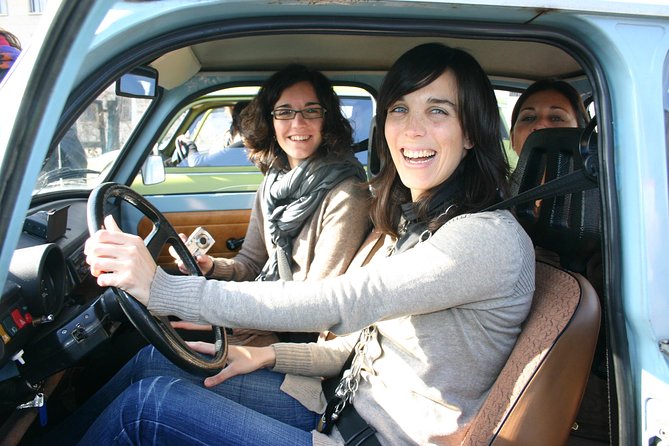
- You drive the Trabi yourself: Each driver gets a Trabant with a standard gearbox, so this is a real driving experience, not a ride in a museum piece.
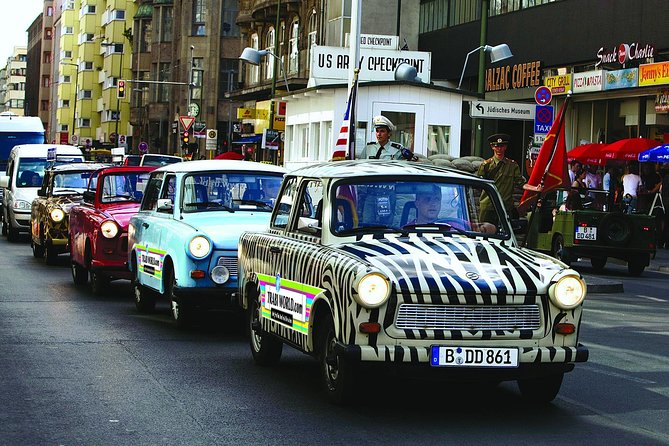
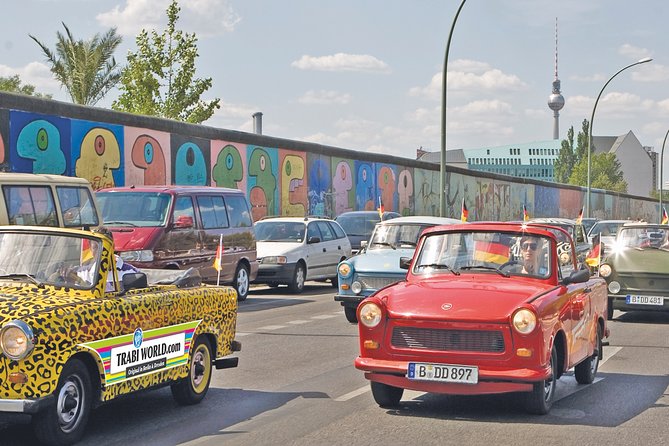
- The convoy becomes part of the show: Pedestrians often photograph the colorful line of Trabis as it rolls through Berlin.
- The route covers major sights: You pass Potsdamer Platz, the Brandenburg Gate, Unter den Linden, Berlin Cathedral, Rotes Rathaus, the TV Tower, East Side Gallery, Oberbaum Bridge, and Checkpoint Charlie.
- The guide leads from the front: Commentary comes through a radio system, with the guide stopping to keep the group together.
- The cars require confidence: You need a driving license for a non-automatic car, and the transmission takes some getting used to.
- The tour is small and time-efficient: The maximum group size is 12 people, and the listed duration is about 1 hour 15 minutes.
What makes the Trabant special
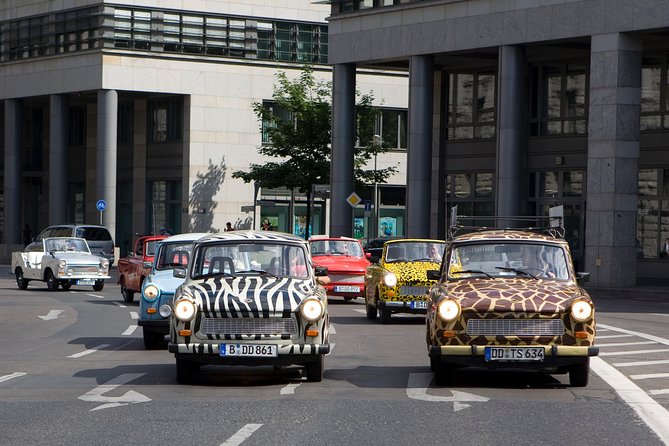
The Trabant, usually shortened to Trabi, is one of the clearest symbols of former East Germany. It was small, basic, slow, and produced for decades with very few changes. For many East Germans, owning one meant waiting years for a car, repairing it yourself, and treating it as a practical part of family life.
That background gives this tour more weight than a novelty car ride. You are not simply driving an old vehicle for laughs. You are handling an object tied to daily life behind the Iron Curtain and to the political changes that reshaped Berlin.
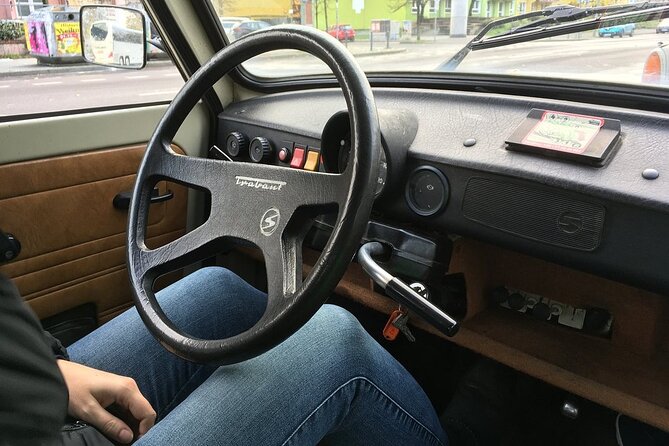
The car itself supplies much of the entertainment. You get the light steering, the fiddly gear changes, the vibration, the noise, and the unmistakable smell of an old two-stroke engine. One particularly enthusiastic driver compared the sensation to a lawn mower crossed with a garden shed. That is a fair warning and a good description.
The Trabi is also slow-moving, which helps the experience. You are not racing between sights. You have time to look around, follow the guide, and enjoy the odd sight of Berlin traffic making room for a convoy of brightly colored relics.
A few more tours and experiences worth a look
- Berlin: Reichstag, Dome and Government District Guided Tour
★ 4.7 · 18,288 reviews - Berlin: Government District around the Reichstag Guided Tour
★ 4.7 · 8,447 reviews - Berlin: Hidden Backyards Guided Walking Tour
★ 4.8 · 5,360 reviews
Starting at TrabiWorld on Zimmerstraße
The meeting point is TrabiWorld Berlin at Zimmerstraße 97-100, 10117 Berlin. It is close to public transportation and within walking distance of several central sights, including Checkpoint Charlie, so you can easily combine the tour with other plans.
Arrive at least 15 minutes early. This matters. One participant who arrived at the official start time found that Berlin timing effectively meant arriving earlier, and the late start created unnecessary stress. The staff managed to get the person into a car, but you should not count on that.
The welcome and briefing take about 10 minutes. You receive an explanation of the car, the controls, and the route. Automatic transmission is available only after prior consultation, so do not assume you can request one on the spot.
The first moments behind the wheel can be awkward. The clutch and gearbox feel different from those in a modern manual car, and the engine sounds as if it is working much harder than it really is. Several people found the cars easier to drive than expected, while others struggled to change gears successfully.
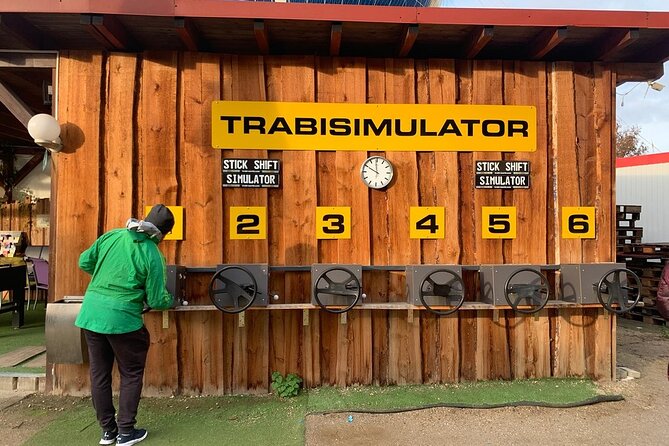
If you have driven a stick shift before, you will have a clear advantage. If you are rusty, use the available simulator to get familiar with the controls before setting off. The guide is there to help, but this is still a live city drive, not a closed practice course.
Potsdamer Platz and the central city
Once the convoy sets out, you begin with Berlin’s central streets and important public spaces. Potsdamer Platz is a useful introduction because it shows how sharply Berlin can change from one block to the next.
The area was divided by the Berlin Wall and later rebuilt as a modern business and entertainment district. From a Trabi, the contrast is especially amusing. You are driving a basic East German car through a part of the city filled with bold modern architecture and busy urban traffic.
The guide gives commentary through a radio system. You can listen, but you cannot talk back through the system. The Trabis are loud, so the commentary may be difficult to catch at times, especially if you are concentrating on the clutch, traffic, and the car ahead.
That is one reason to treat the tour as a city orientation rather than a full history lecture. You will hear useful facts and stories, but you may miss some of them while changing gears. If you want detailed explanations of every monument, plan a separate walking tour.
Brandenburg Gate and Unter den Linden

The route continues toward the Brandenburg Gate, Berlin’s famous neoclassical monument. Built in the late 18th century, it has served as a royal entrance, a political symbol, and one of the city’s best-known images.
Seeing it from the driver’s seat gives you a quick sense of its place in the city. You are not stopping for a long visit, so use this part of the tour to get your bearings and note where you want to return on foot.
Unter den Linden, the grand boulevard leading through central Berlin, adds a more ceremonial stretch to the drive. The broad avenue connects many of Berlin’s major sights, and the slow pace of the convoy lets you look up and around without the rush of a normal car journey.
This is also where the Trabi feels most theatrical. You are driving a piece of East German design along one of Berlin’s grandest streets, while people on the pavement point cameras at the convoy. The cars often become a moving attraction themselves.
Something different for another day:
- Berlin: 1-Hour City Tour by Boat with Guaranteed Seating
★ 4.3 · 16,993 reviews - Berlin: Boat Tour Along the River Spree
★ 4.4 · 11,252 reviews - Discover Berlin Half-Day Walking Tour
★ 5.0 · 9,624 reviews - Berlin: Hop-on Hop-off Bus Tour with Live Commentary
★ 4.3 · 8,579 reviews
Cathedral Island, Rotes Rathaus, and the TV Tower
The drive takes in Berlin Cathedral, one of the city’s most prominent church buildings. The cathedral is part of the Museum Island area, making this a good place to continue exploring after the tour if you have time.
The tour does not provide an extended stop inside the cathedral, so think of it as a passing view and orientation point. You will see where the building sits in relation to central Berlin, then can return later for a closer look.
Next comes Rotes Rathaus, the Red Town Hall dating from 1870. Its red-brick exterior gives it a different character from the stone monuments along Unter den Linden. The building sits near Alexanderplatz and the Berlin TV Tower, two strong markers for finding your way around the former East Berlin center.
The TV Tower is especially useful as a visual reference. You may not stop beneath it, but seeing it from the convoy helps connect the central route in your mind. The Trabi’s modest speed also lets you take in the city at a more relaxed pace than you would from a standard sightseeing bus.
Oberbaum Bridge and the East Side Gallery
Oberbaum Bridge is one of Berlin’s most recognizable bridges, crossing the River Spree with its distinctive brick towers and double-deck structure. It links districts on either side of the river and makes a memorable passage for the convoy.
The route then reaches East Side Gallery, the open-air gallery painted on a 1,316-meter remnant of the Berlin Wall. The murals cover a long stretch of preserved wall and turn a former barrier into a public art site.
The listed visit here is brief, about five minutes. That is enough to pause and take in the setting, but not enough to study many murals at length. If the wall art is high on your list, return separately when you can walk at your own pace.
This stop also helps explain why the Trabi carries such strong emotional meaning. The car is linked to East Germany, while the wall represents the division that shaped the city. Driving the two together creates a direct connection between ordinary life and major political change.
Checkpoint Charlie and the return route
Checkpoint Charlie, the former border crossing, is close to the starting point and an easy place to visit before or after the drive. It is one of Berlin’s most famous Cold War sites, though the surrounding area is now heavily commercial.
The tour gives you a useful first look at the location rather than a long stop with time for every display. That works well if you are using the Trabi ride to map out central Berlin. You can return afterward and spend more time reading the signs and seeing the nearby museums.
The group finishes back at TrabiWorld. The guide keeps the convoy together by pulling over when needed, which is important because the cars do not all move at exactly the same pace. The person driving at the back may find the route more demanding than the driver directly behind the guide.
There is a phone number to call if you become separated, but the best protection is to stay alert and follow the car ahead. The guide’s calm manner is a major part of the experience. Thomas received repeated praise for staying patient, giving clear instructions, and keeping the group safe. Matthias, Axel, and George were also singled out for friendly guiding and strong commentary.
How hard is the Trabi to drive?
The answer depends on your experience with manual cars. If you drive a stick shift regularly, the Trabi may feel strange but manageable. If you have never used a clutch, this is probably not the place to learn from scratch.
The gearbox can be fiddly, and the car’s age shows in its controls. You need to work with the vehicle rather than expect it to respond instantly. The engine noise and vibration can make the first few minutes feel more dramatic than they really are.
The guide provides an orientation before departure and can give instructions during the drive. Still, you must remain responsible for your car, your passengers, and the road. Every driver needs proof of a license for a non-automatic car.
Each vehicle holds up to four people, with a maximum combined weight of 770 pounds, or 350 kilograms. Children up to age 17 can join free when accompanied by at least one adult, but the minimum age for driving is 18. If you need a child seat, you must provide it yourself.
The accident co-payment is EUR 850. That is an important financial condition, especially for anyone who feels unsure about manual driving. Read the terms carefully before booking and choose a driver who is comfortable with the controls.
A loud, social, and slightly impractical sightseeing ride
The convoy format creates a friendly group feeling. You are not isolated in a private rental car. You are part of a line of Trabis, following the guide and sharing the public reaction as you pass.
The cars attract attention from pedestrians of all ages. People take photographs, smile, and sometimes treat the convoy as a parade. That public response adds a playful layer to the drive and makes the experience feel different from a standard city tour.
The same features can also be tiring. The engine is loud, the ride vibrates, and the radio commentary can crackle. You may find it hard to focus on the guide while managing the car, especially if you are in a rear vehicle or driving in unfamiliar traffic.
For that reason, I would not choose this as your only introduction to Berlin. A walking tour gives you more time at each landmark and makes it easier to absorb historical detail. The Trabi ride works best as a fun overview, a break from walking, or a special activity for people who enjoy cars and unusual city experiences.
The listed duration is about 1 hour 15 minutes, which is a good length for this kind of outing. It gives you enough time to see a broad slice of central Berlin without turning the car’s noise and cramped feel into an all-day commitment.
Is $95.58 good value?
At $95.58 per person, this costs more than a basic bus ride or self-guided walk. You are paying for the car, the staff, the briefing, the guide, and the unusual chance to drive an East German classic through Berlin.
I think the price is reasonable if you value the experience itself. You are not simply buying transport between landmarks. You are handling a historic car, joining a convoy, and becoming part of the street scene. That is a stronger deal for a car enthusiast, a couple seeking a memorable activity, or someone who has already seen Berlin’s main sights.
The value is weaker if your main goal is detailed sightseeing. The tour moves continuously, the stops are short, and the radio can be hard to hear over the engine. You will still see a good number of landmarks, but you should not expect long visits or museum-style interpretation.
Food, drinks, and hotel transfers are not included. The tour begins and ends at Zimmerstraße, so you need to make your own way there and back. The group is limited to 12 people, which keeps the convoy manageable.
The experience has a 4.7 rating from 410 reviews, with 94 percent recommending it. That matches the main pattern: very strong praise for the fun, the cars, the guides, and the unusual route, with the main complaints focused on late arrival, difficult gear changes, engine noise, and the challenge of hearing commentary.
Who should book this Berlin drive?
I would recommend it most strongly to confident manual drivers, car fans, repeat visitors, and anyone who wants a story to tell after returning home. It also suits families with older children riding as passengers, since the rear seats add to the novelty and younger passengers can enjoy the spectacle without driving.
First-time visitors can enjoy it too, especially if they want a quick look at many parts of Berlin. Just plan a walking visit to the Brandenburg Gate, East Side Gallery, Checkpoint Charlie, or the cathedral if you want proper time at those sites.
I would hesitate to recommend it to a nervous driver, someone who has never used a clutch, or anyone seeking a quiet and detailed history tour. The tour is safe when you follow instructions, but the car requires attention and a little good humor.
Book only when your schedule is firm. The experience is non-refundable and cannot be changed after booking. Since departures are offered at set times and this one begins at 11:30 am, leave enough time to reach Zimmerstraße early.
Should you book the Trabi tour?
Book it if you want Berlin with noise, smoke, vibration, and a grin. The landmarks are familiar, but the Trabi changes the mood completely. You are not just looking at former East Berlin from a distance. You are driving an object that helps explain it.
Skip it if you want maximum time at each sight or if manual driving makes you anxious. For the right person, though, this is one of Berlin’s most memorable short activities: part history lesson, part convoy adventure, and part mechanical comedy.
FAQ
Where does the Trabi tour start?
The tour starts at TrabiWorld Berlin, Zimmerstraße 97-100, 10117 Berlin, Germany. It is near public transportation and within walking distance of local sights.
What time does the tour start?
The provided start time is 11:30 am. Morning and afternoon departures are available as tour options, depending on the selected departure.
How long does the tour last?
The tour lasts approximately 1 hour and 15 minutes. The welcome and driving briefing take about 10 minutes.
Do I drive the Trabant myself?
Yes. The experience includes driving your own Trabant with a standard gearbox. An automatic gearbox is available only after prior consultation.
Do I need a driving license?
Yes. Every driver must show evidence of a license for a non-automatic car.
How many people can ride in one Trabi?
Each vehicle can hold a maximum of four people. The maximum weight per vehicle is 770 pounds, or 350 kilograms.
Can children join the tour?
Children up to age 17 can join free when accompanied by at least one adult. The minimum age to drive is 18, and any required child seat must be supplied by the customer.
Just added around Berlin
- Berlin: Private Guided Tour of the Main Sights★ 5.0 · 13 reviews
- Private Highlights of Berlin Bike Tour★ 5.0 · 13 reviews
- Tour in Berlin from Warnemünde and Rostock Cruise Port★ 4.1 · 13 reviews
- Modern Berlin Private Walking Tour: Diverse, Vibrant and Exciting German Capital★ 5.0 · 13 reviews
- Berlin: Stasi Museum Private Guided Tour with Entry Ticket★ 4.8 · 13 reviews
- Private Food Tour Experience with a born and bred Berliner★ 5.0 · 14 reviews
- Berlin: Rheinsberg Palace Entrance Ticket★ 4.8 · 14 reviews
- Berlin in one day – day tour with an expert guide★ 5.0 · 14 reviews
Guided, compared.
Reichstag, Dome and Government District Guided Tour
Read our review →

Government District around the Reichstag Guided Tour
Read our review →