
Reviewed · MEMORIAL & CONCENTRATION CAMP TOURS
Berlin: Sachsenhausen Concentration Camp Bus Tour in English
History here demands attention. This four-hour trip pairs an English-speaking guide with easy bus transport from central Berlin to Sachsenhausen, making a difficult site simpler to reach. I especially like the useful commentary during the ride and the guides’ calm, respectful handling of painful material. The main drawback is time: two hours inside the memorial can feel short for such a large and serious place.
The $49 price includes transport, entry, a camp map, a professional licensed guide, and a €3 donation to the memorial. I also like the small-group and private options, though the standard tour does not include hotel pickup. Guide quality can vary by departure, but names praised for clear, thoughtful work include Ariel, Paul, Jamie, Nickolai, Lewis, Martin, Rebecca, and Joseph.
In This Review
- Key points to know before booking
- Why Sachsenhausen belongs on a Berlin itinerary
- Meeting at Friedrichstraße and riding to Oranienburg
- Entering through Tower A and the camp gate
- Barracks, infirmaries, and prisoner life
- Crematoria, gas chamber area, and execution trench
- The commandant’s house and the machinery behind the camp
- What the two-hour guided visit does well
- Is $49 good value?
- Practical advice for a respectful visit
- Who should choose this Sachsenhausen tour?
- Should you book it?
- FAQ
- Where does the tour start?
- How do I find the guide?
- How long does the complete experience last?
- Is transportation included?
- Is hotel pickup included?
- What languages are available?
- What does the price include?
- What should I bring?
- Can I cancel the booking?
- Does the tour return to Berlin?
Key points to know before booking
- The bus saves time and energy: You avoid the longer local-transport journey and walk from Oranienburg station to the memorial entrance.
- Two hours at Sachsenhausen is focused but brisk: You cover the principal areas, yet you may want more time for quiet reflection.
- Guide commentary begins on the road: The ride through Berlin and Oranienburg helps explain the camp’s place in the Nazi system.
- The site includes difficult areas: You see the barracks, crematoria, gas chamber area, execution trench, infirmaries, isolation cells, and punishment spaces.
- Meeting point is easy to identify: Find the guide outside Friedrichstraße station, near the Tränenpalast, with a yellow umbrella.
- The experience is highly rated: A 4.9 rating from 709 reviews reflects especially strong praise for guide quality and respectful presentation.
Why Sachsenhausen belongs on a Berlin itinerary
Berlin has no shortage of museums and memorials connected to the Nazi period. Sachsenhausen adds something different: you leave the city and enter the physical setting of the camp system itself.
The memorial is in Brandenburg, near Oranienburg. The trip helps you understand how a concentration camp operated not as an isolated prison, but as part of a wider network of forced labor, punishment, administration, and murder.
Sachsenhausen was the first concentration camp designed and built from the ground up according to a strategic plan for control and expansion. Its layout reflects that purpose. The camp was meant to be efficient, organized, and easy for its authorities to supervise. That cold administrative design is part of what makes the visit so disturbing.
Your guide also places the camp in the wider setting of German life at the time. The tour asks difficult questions about what people living nearby knew, what they could see, and how the camp affected the surrounding town. You are not simply shown a set of buildings. You are given a way to understand the system that created them.
This is not a light sightseeing stop. You should expect a quiet, serious visit, with stories of imprisonment, disease, punishment, medical experimentation, and death. That tone is appropriate, and the strongest guides handle it without theatricality.
More memorial visits:
- Berlin: Sachsenhausen Concentration Camp Tour in English
★ 5.0 · 5,711 reviews - Berlin: Sachsenhausen Concentration Camp Memorial Tour
★ 4.7 · 3,716 reviews - Sachsenhausen Concentration Camp Bus Tour in English from Berlin
★ 5.0 · 1,962 reviews
Meeting at Friedrichstraße and riding to Oranienburg
The usual meeting point is outside Friedrichstraße train station, on the square between the station and the Tränenpalast, also called the Palace of Tears. The address is Reichstagufer 17, 10117 Berlin.
Look for a guide wearing a blue lanyard and yellow name tag, holding a yellow umbrella. That detail matters in a busy central area, especially if several tour groups are gathering nearby. Arrive with enough time to locate the group without rushing.
The ride to Sachsenhausen takes about 50 minutes. The air-conditioned bus is one of the strongest practical reasons to choose this tour instead of arranging the trip yourself. You avoid managing connections and reduce the amount of walking before the memorial visit begins.
The guide uses the journey for historical explanation. This is valuable because it gives you a framework before you reach the site. Instead of arriving cold and trying to understand the camp map on your own, you hear about Berlin, Oranienburg, the Nazi camp system, and the camp’s place in that structure.
You also drive through Oranienburg and see the town where inmates would have worked. That link between the camp and the surrounding community is important. It shows that the camp was part of an inhabited area, not a remote place entirely cut off from ordinary German life.
The bus is air-conditioned and private to the tour operation, with a driver included. The exact group size depends on the option you choose. Small-group and private departures are available, while the standard product may place you with a larger group.
Entering through Tower A and the camp gate
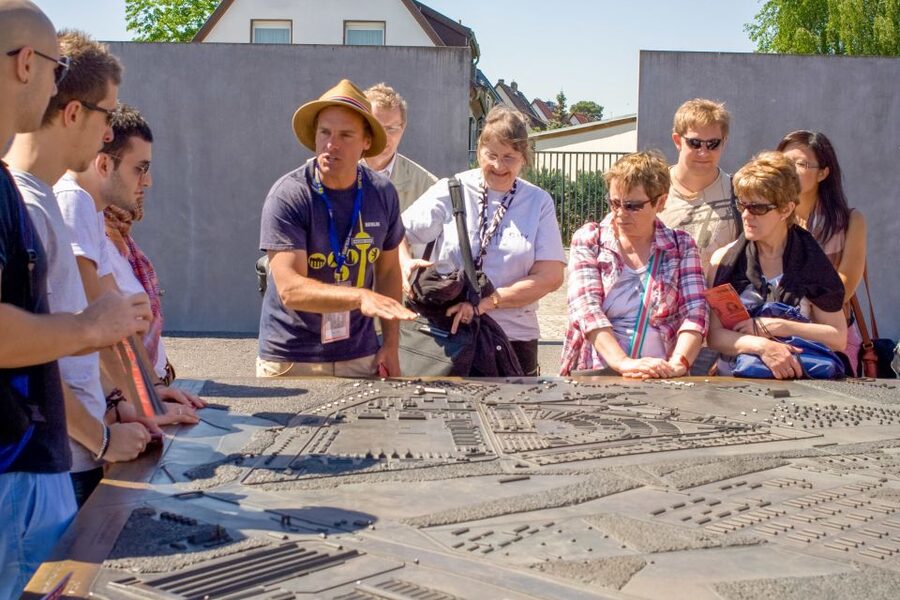
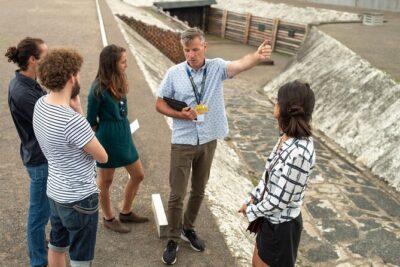
At Sachsenhausen, the guided portion lasts about two hours. Your guide leads you through the memorial using a map of the former camp, helping you understand the layout and the purpose of each area.
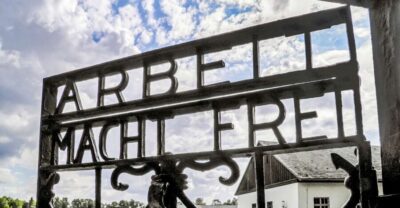
Tower A is the well-known entrance point. The words Arbeit Macht Frei remain above the gate. Seeing the entrance in person gives the phrase a grim force that a photograph cannot quite convey. The gate was designed to control movement and make authority visible from the first step inside.
The tour then moves into the camp interior and the surviving or reconstructed areas connected with prisoner life. You learn about daily routines, harsh conditions, and the brutal treatment prisoners received.
The camp’s structure tells its own story. Spaces for surveillance, punishment, isolation, administration, and forced labor were arranged to create control. Your guide’s explanation helps you read the site as a functioning institution rather than a collection of ruins.
This is where a strong guide makes a major difference. The best guides praised for this tour, including Ariel, Jamie, Nickolai, Lewis, and Paul, are described as clear, patient, and sensitive. They also answer questions rather than rushing through a prepared script.
Barracks, infirmaries, and prisoner life
The barracks show the human side of the camp’s system. Here, the subject becomes less about Nazi administration and more about the people forced to live under it.
You hear about daily routines, deprivation, and the treatment of prisoners. The experience is especially powerful because the buildings and spaces make the scale of control easier to grasp. You are not just reading dates on a museum label. You are standing where prisoners slept, suffered, and were punished.
The infirmary barracks are among the most difficult stops. Medical experimentation took place there during the war. Your guide explains the role of the infirmaries and the crimes committed in those spaces.
The tour also covers punishment cells and isolation areas. These locations help explain how discipline worked inside the camp. Punishment was not separate from the camp’s operation. It was one of the tools used to enforce obedience and terror.
The material can be emotionally heavy, so give yourself permission to listen quietly. You do not need to photograph everything simply because you brought a camera. The memorial is a place for attention and remembrance, not a checklist of sights.
Something different for another day:
- Berlin: Reichstag, Dome and Government District Guided Tour
★ 4.7 · 18,288 reviews - Berlin: 1-Hour City Tour by Boat with Guaranteed Seating
★ 4.3 · 16,993 reviews - Berlin: Boat Tour Along the River Spree
★ 4.4 · 11,252 reviews - Discover Berlin Half-Day Walking Tour
★ 5.0 · 9,624 reviews
Crematoria, gas chamber area, and execution trench
The tour includes the crematoria, the gas chamber area, and the execution trench. These are among the most solemn parts of the visit.
The crematoria area shows the machinery used to dispose of the dead and conceal the scale of killing. The gas chamber area points to the deliberate use of murder within the camp system. The execution trench brings the violence into stark physical focus.
Your guide provides the historical setting for each place. That context is essential, since many of these areas are now fragmentary or partly preserved. Without explanation, you might see walls, foundations, and open ground. With explanation, you understand what happened there and how the spaces fitted into the camp’s operation.
The supplied information identifies 35,000 people as having been murdered or died of disease at Sachsenhausen. That figure is hard to absorb, and the tour does not reduce the camp to a number. The stories and explanations help connect the statistics with individual human suffering.
Expect this section to move slowly in your mind, even if the schedule keeps the group moving. Two hours is enough to visit the major areas, but it does not allow unlimited time at each one. If you prefer a long, solitary visit with extended museum reading, a guided half-day visit may feel compressed.
The commandant’s house and the machinery behind the camp
The commandant’s house offers a chilling change of viewpoint. Much of the tour focuses on the prisoners, but this stop directs your attention toward the people who organized and ran the camp.
That contrast matters. The camp’s brutality depended on more than guards at the gate. It relied on administration, orders, buildings, routines, and people who made the system function. The guide explains the role of Heinrich Himmler and the model of the modern concentration camp that Sachsenhausen represented.
This is one of the most useful parts of the tour for understanding how mass persecution can become organized. The camp was designed for control and expansion, with a structure that turned cruelty into routine.
A good guide keeps the emphasis on evidence and human consequences. The strongest presentations avoid sensational language and help you think about responsibility, obedience, and the choices made by officials and ordinary people.
What the two-hour guided visit does well
The tour’s format is efficient. You arrive by bus, receive historical context, walk through the main camp areas with a guide, and return to Berlin without needing to plan the route yourself.
The two-hour visit covers a lot:
- Tower A and the camp entrance
- Prisoner barracks
- Infirmary barracks
- Commandant’s house
- Isolation and punishment cells
- Crematoria
- Gas chamber area
- Execution trench
- The wider structure of the camp
The guide also explains how Sachsenhausen fitted into the larger Nazi camp network. That wider view keeps the visit from becoming a series of disconnected tragedies.
Several guides receive especially warm praise for their presentation. Joseph used the bus ride to explain city sights and later offered practical suggestions for the rest of a Berlin visit. Lewis was praised for combining a friendly manner with serious subject knowledge. Nickolai was noted for his thoughtful, sensitive delivery, while Jamie continued the historical explanation during the bus transfers.
The return ride takes about 50 minutes. It gives you a little space to process the visit, though the end of the formal tour does not mean you will immediately feel finished with the subject.
Is $49 good value?
At $49 per person, this tour offers solid value for a four-hour outing. The price includes the bus, driver, guide, memorial entry, camp map, and a €3 donation to Sachsenhausen Memorial.
The key saving is convenience. You do not have to work out the route from Berlin, manage the journey to Oranienburg, or find the memorial entrance on your own. The bus also saves energy for the walking and listening that matter once you arrive.
You are paying for interpretation as much as transport. A self-guided visit may cost less, but you would need to supply your own historical structure. At Sachsenhausen, that structure is important. The site is large, serious, and not always self-explanatory.
The price makes the most sense for a first visit, a short Berlin stay, or anyone who wants a guide to handle the logistics. Private and small-group choices may suit you if you want more room for questions, but the cost and availability depend on the selected option.
The main value limit is time. You get about two hours on site within a four-hour total. That is enough for the principal locations, but you may wish you had longer to read, pause, or explore independently.
Practical advice for a respectful visit
Wear comfortable walking shoes. The visit takes place outdoors and involves walking between memorial areas, so weather-appropriate clothing is essential.
Bring a light snack and drink. The supplied instructions specifically recommend both. The tour lasts four hours, and there is no promise of a meal stop.
You may bring a camera, but think carefully about when and how you use it. The site calls for restraint. Photos should never replace attention to the history being explained.
Alcohol and drugs are not allowed. English and Spanish tours are offered, and your booking option determines the language and group format.
Standard departures meet at Friedrichstraße rather than collecting you from your hotel. Hotel pickup is available only with private options. At the end, the activity returns to the meeting point, with the listed drop-off location at Reichstagufer 17.
Cancellation is flexible: you can cancel up to 24 hours in advance for a full refund. Reserve now and pay later is also available, which helps if your Berlin schedule is still changing.
Who should choose this Sachsenhausen tour?
I would recommend it to first-time visitors who want serious historical context without spending a full day arranging transport. It also suits anyone with limited time in Berlin, since the four-hour format covers the major areas and returns you to the city.
It is a good choice if you prefer learning through a guide. The repeated praise for Ariel, Paul, Jamie, Nickolai, Lewis, Martin, Rebecca, and others suggests that guide presentation is a major strength of the experience.
Families and groups should make their own judgment based on age and temperament. The subject includes murder, disease, medical experimentation, punishment, and severe prisoner suffering. The material is not softened, and that is appropriate to the place.
You may prefer a different format if you want to spend several hours reading every exhibit or moving through the memorial at your own pace. The guided route is structured, and the two-hour site visit keeps the group on schedule.
Should you book it?
Book this tour if you want a practical bus connection, a serious English-language guide, and a clear introduction to Sachsenhausen in half a day. The $49 cost is reasonable because it combines transport, entry, the memorial donation, and historical explanation.
Go in prepared for a sobering experience, not a casual day trip. The strongest guides, including Ariel, Jamie, Nickolai, Lewis, and Paul, make the history clear while treating the victims and the site with care.
I would choose the small-group or private option if available and if asking questions matters to you. Otherwise, the standard tour remains a useful, well-organized way to reach Sachsenhausen, especially when your Berlin schedule is tight.
FAQ
Where does the tour start?
The usual meeting point is outside Friedrichstraße train station, on the square between the station and the Tränenpalast, or Palace of Tears, at Reichstagufer 17, 10117 Berlin.
How do I find the guide?
Look for a guide wearing a blue lanyard and yellow name tag, holding a yellow umbrella.
How long does the complete experience last?
The total duration is about four hours. The bus journey takes roughly 50 minutes each way, and the guided visit at Sachsenhausen lasts about two hours.
Is transportation included?
Yes. Transportation is provided by a private air-conditioned vehicle, with a driver included.
Is hotel pickup included?
Hotel pickup and drop-off are not included in the standard tour. Pickup is available for private options only.
What languages are available?
The live guided tour is available in English and Spanish.
What does the price include?
The $49 price includes the professional licensed guide, transport, driver, Sachsenhausen Memorial entry, a €3 donation per person to the memorial, and a map of the former camp.
What should I bring?
Bring comfortable walking shoes, weather-appropriate clothing, a light snack, a drink, and a camera if you wish.
Can I cancel the booking?
Yes. You can cancel up to 24 hours in advance for a full refund.
Does the tour return to Berlin?
Yes. The bus returns to Berlin, and the activity ends back at the meeting point, with Reichstagufer 17 listed as a drop-off location.
Just added around Berlin
- Berlin: Private Guided Tour of the Main Sights★ 5.0 · 13 reviews
- Private Highlights of Berlin Bike Tour★ 5.0 · 13 reviews
- Modern Berlin Private Walking Tour: Diverse, Vibrant and Exciting German Capital★ 5.0 · 13 reviews
- Tour in Berlin from Warnemünde and Rostock Cruise Port★ 4.1 · 13 reviews
- Berlin: Stasi Museum Private Guided Tour with Entry Ticket★ 4.8 · 13 reviews
- Private Food Tour Experience with a born and bred Berliner★ 5.0 · 14 reviews
- Berlin: Rheinsberg Palace Entrance Ticket★ 4.8 · 14 reviews
- Berlin in one day – day tour with an expert guide★ 5.0 · 14 reviews
Memorial & Concentration Camp Tours, compared.
Sachsenhausen Concentration Camp Tour in English
Read our review →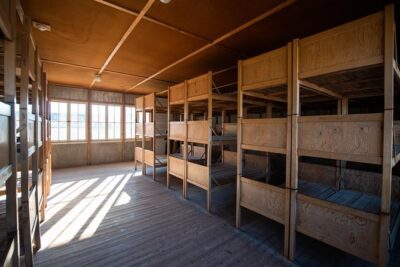
Dachau Concentration Camp Memorial Site Tour from Munich by Train
Read our review →
Sachsenhausen Concentration Camp Memorial Tour
Read our review →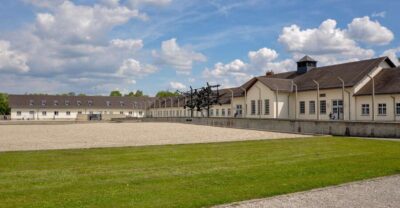
Sachsenhausen Concentration Camp Bus Tour in English from Berlin
Read our review →Sachsenhausen Concentration Camp Tour in English
Read our review →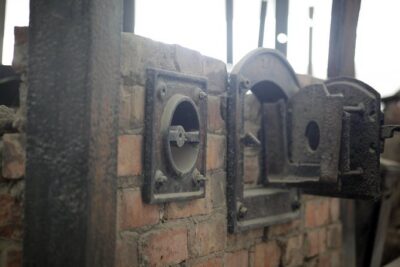
Sachsenhausen Concentration Camp Memorial Tour (Max. 15 Guests)
Read our review →Browse the lists this tour appears in