Reviewed · GUIDED
Berlin: 4-Hour Guided Highlights Tour in Spanish
Berlin’s story unfolds on foot. This four-hour Spanish-language tour links Berlin’s oldest quarter, Museum Island, the Wall era, and the Brandenburg Gate in one well-planned route. I like its clear historical arc and its modest $29 price, which makes it a useful first look at a very complicated city.
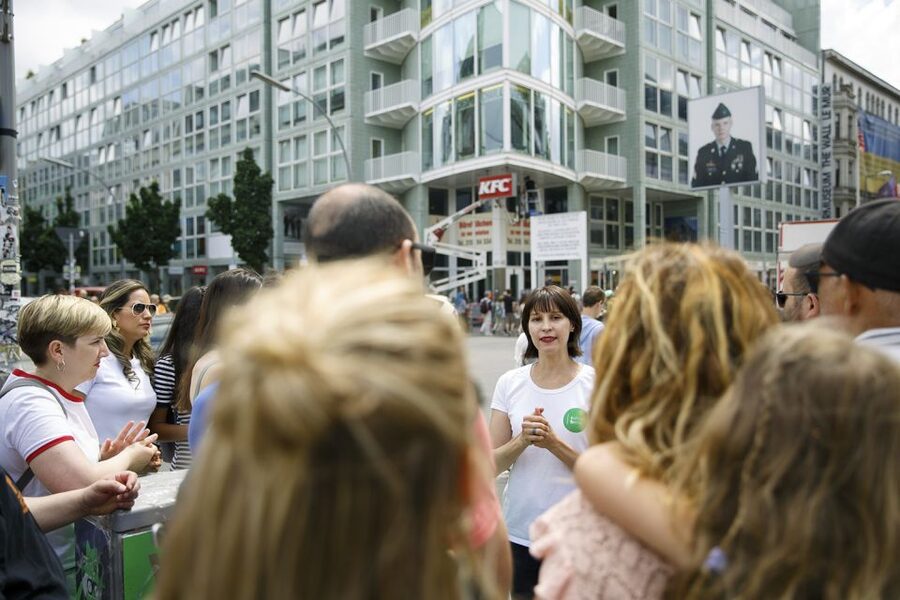
I also like the human side of the guiding. Evelyn has been praised for patience and clarity, while Celia encouraged discussion about Berlin’s divided past. The main consideration is simple: four hours is a brisk stretch of walking, and the tour runs rain or shine, so good shoes and weather-ready clothing matter.
In This Review
- Key details that shape the experience
- Why this four-hour Berlin walk works well
- Starting beside the TV Tower at Alexanderplatz
- San Nicolas Quarter and the city’s early beginnings
- Museum Island and the Berliner Dom
- Unter den Linden and the royal city
- Gendarmenmarkt and the planned pause
- Nazi Berlin at the Gestapo Headquarters remains
- The Memorial to the Murdered Jews of Europe
- Berlin’s Wall, divided neighborhoods, and escape stories
- Potsdamer Platz and the modern city
- Ending at the Brandenburg Gate
- Spanish guiding and the human touch
- Price, pace, and who gets the best value
- What to bring and how to prepare
- Should you book this Spanish Berlin tour?
- FAQ
- What language is the tour offered in?
- Where does the tour meet?
- What time does the tour begin?
- How long does the walking tour last?
- Is the tour wheelchair accessible?
- Can I cancel or pay later?
Key details that shape the experience
- The route begins at Alexanderplatz, beside the TV Tower, then moves through old Berlin and the city’s grand central sights.
- Spanish is the only tour language, making this a strong choice for Spanish-speaking visitors who want more than a guidebook summary.
- Berlin’s divided past gets real attention, including daily life in East and West Berlin and dangerous attempts to cross the Wall.
- The tour includes Museum Island, Gendarmenmarkt, Potsdamer Platz, and Brandenburg Gate, with several stops for explanation and photographs.
- A roughly 30-minute break is included, giving you time for coffee, a restroom stop, and a rest.
- The $29 price offers good value if you want a broad introduction rather than museum entry or a highly specialized history walk.
Why this four-hour Berlin walk works well
Berlin can feel scattered at first. Its sights are spread across several districts, and its history has been repeatedly rebuilt, erased, and revealed. This tour helps you connect the pieces without asking you to plan a route through the city yourself.
The guide begins with Berlin’s origins, then moves into its royal era, Nazi rule, postwar division, and modern redevelopment. That order matters. You see how the city changed instead of receiving a pile of disconnected dates.
The route also gives you a useful first-day orientation. You finish at the Brandenburg Gate, close to many of Berlin’s central sights, with a better sense of where the historic core lies. I would consider it especially useful at the start of a Berlin stay, before you return on your own to the places that deserve more time.
This is a walking tour, not a museum tour. You will see important buildings and memorials from outside, hear their stories, and get suggestions for further exploration. If you want long indoor visits at the Pergamon Museum, the Jewish Museum, or other collections, you will need separate plans.
A few more tours and experiences worth a look
- Berlin: Reichstag, Dome and Government District Guided Tour
★ 4.7 · 18,288 reviews - Berlin: Government District around the Reichstag Guided Tour
★ 4.7 · 8,447 reviews - Berlin: Hidden Backyards Guided Walking Tour
★ 4.8 · 5,360 reviews
Starting beside the TV Tower at Alexanderplatz
The meeting point is beside the only entrance to the Fernsehturm, Berlin’s famous TV Tower, at Alexanderplatz. Look for a green flag marked tours en español, between the tower and Alexanderplatz train station, near Espresso House.
That detail is worth saving on your phone. Alexanderplatz is a large, active transport hub, and the TV Tower has more than one nearby approach. Arriving a little early gives you time to locate the flag without beginning the tour in a mild panic.
The tour starts every day at 10:00 in front of the TV Tower. Since the walk runs in all weather, check the forecast and dress for several hours outside. Comfortable clothing is listed as the main recommendation, but I would treat comfortable shoes as essential.
Alexanderplatz itself offers a sharp introduction to modern Berlin. It was shaped heavily during the East German period, and its broad open design feels different from the older streets you soon reach. Beginning here gives the guide a natural way to explain how Berlin was divided into competing political and architectural worlds.
San Nicolas Quarter and the city’s early beginnings
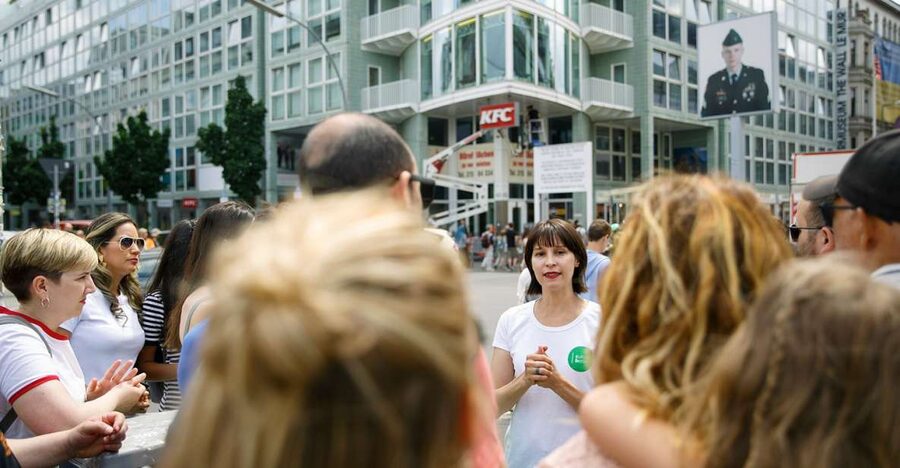
From Alexanderplatz, the route heads toward the San Nicolas neighborhood, or Nikolaiviertel. This area is tied to Berlin’s early development and gives you a more traditional setting after the open spaces of Alexanderplatz.
The contrast is useful. Berlin is not an old city center preserved in one perfect piece. It has reconstructions, surviving fragments, modern buildings, and streets shaped by war and political change. In San Nicolas, the guide can place Berlin’s beginnings before the tour moves into the grand avenues of the Prussian and imperial city.
Do not expect a long stop in every neighborhood. The purpose here is orientation and storytelling. You will hear how Berlin began before moving on to the locations that show its later power.
Museum Island and the Berliner Dom
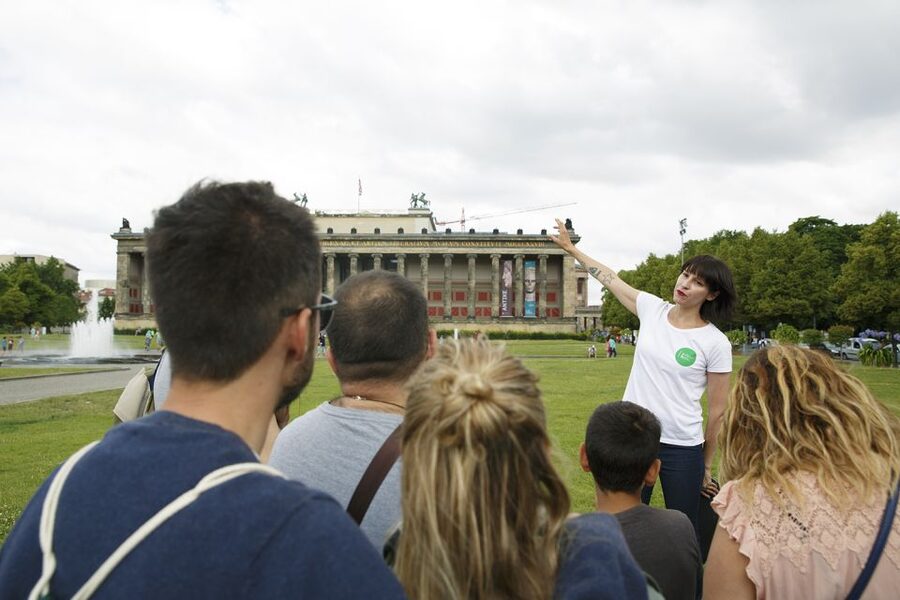
Next comes Museum Island, a UNESCO World Heritage Site in the middle of Berlin. The area brings together several major museums and the striking Berliner Dom, whose large dome is one of the most recognizable sights along the Spree.
The tour focuses on seeing the area and explaining its importance rather than taking you inside the museums. That is both a strength and a limit. You get a useful overview and a good chance to decide which museum deserves your own afternoon, but you will not receive an interior museum visit as part of the $29 booking.
The Berliner Dom is an easy place to appreciate even during a short stop. Its scale helps explain the ambitions of Berlin’s rulers and the importance given to religion, ceremony, and royal power. Have your camera ready, but listen closely too. The guide’s broader story about Berlin’s changing identity is more useful than a quick architectural label.
Museum Island can also be busy, and the walking pace may vary with the group. Olalla Castro specifically appreciated Evelyn’s patience with slower walkers, which is encouraging if your group includes older relatives or anyone who needs a little more time.
Something different for another day:
- Berlin: 1-Hour City Tour by Boat with Guaranteed Seating
★ 4.3 · 16,993 reviews - Berlin: Boat Tour Along the River Spree
★ 4.4 · 11,252 reviews - Discover Berlin Half-Day Walking Tour
★ 5.0 · 9,624 reviews - Berlin: Hop-on Hop-off Bus Tour with Live Commentary
★ 4.3 · 8,579 reviews
Unter den Linden and the royal city
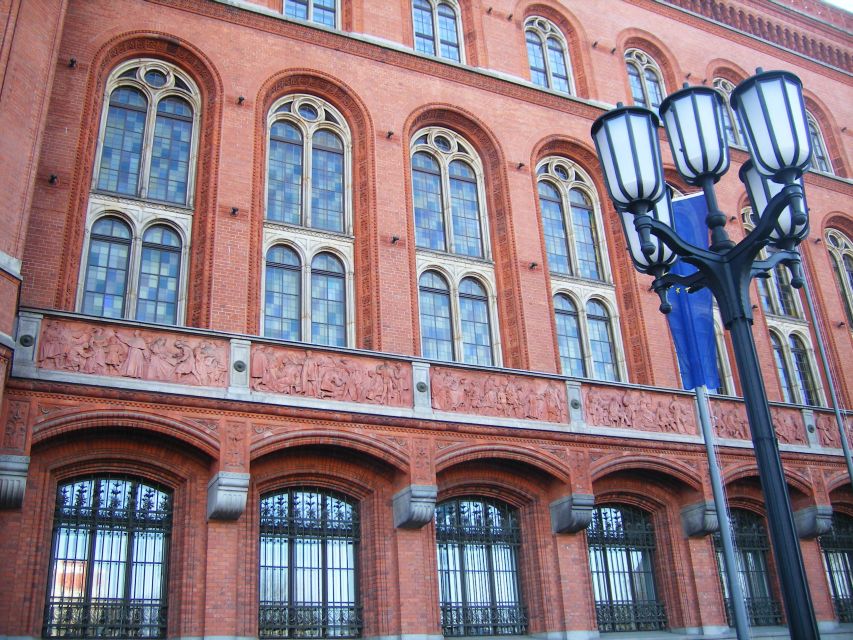
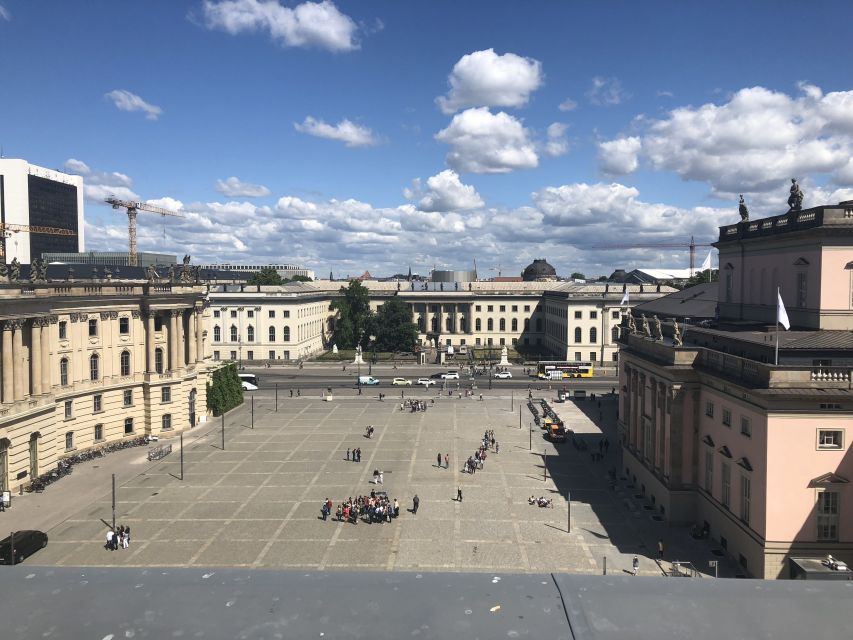
The route continues along Unter den Linden, Berlin’s grand ceremonial avenue. You pass Humboldt University, the Royal Library, and the State Opera while walking through the city’s former center of royal and intellectual power.
This portion is good for understanding how Berlin wanted to present itself. The buildings are not isolated attractions. Together, they show a capital built around education, monarchy, culture, and state authority.
The avenue also lets the tour shift from Berlin’s origins to its role as a European capital. Your guide can connect the university, library, opera, and royal institutions to the city’s political ambitions. I like this kind of stop because the buildings make more sense when you know what they were meant to communicate.
The drawback is that central Berlin has a lot to absorb in a short distance. You may hear several names and dates in succession. Take a quick photo of the places that interest you, but do not worry about remembering every detail. The value is in seeing how the city’s institutions fit together.
Gendarmenmarkt and the planned pause
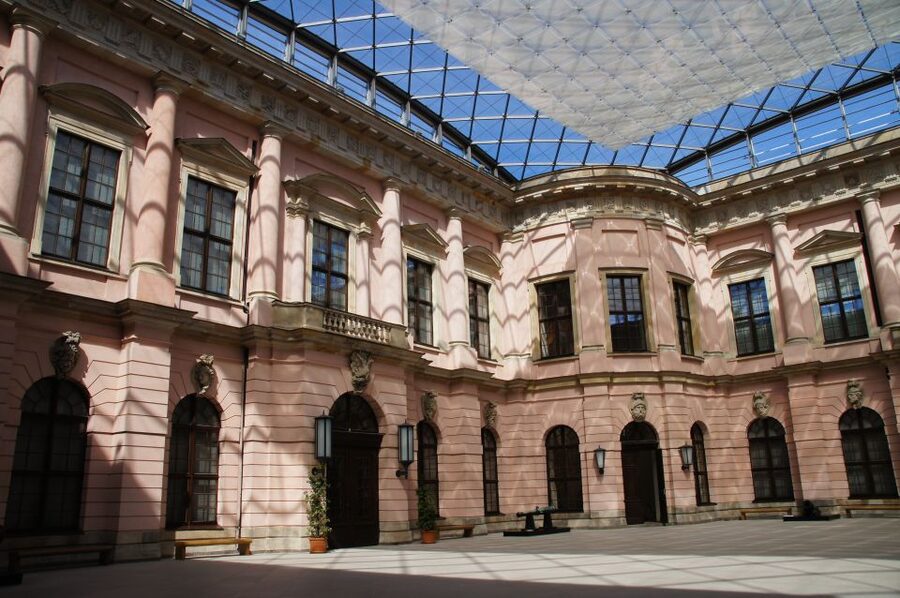
Gendarmenmarkt is one of Berlin’s most handsome squares and a natural place to pause for photographs. The square’s formal layout gives you a moment of visual relief after the long avenue and dense historical explanations.
A photo stop here is practical. You can take in the surrounding architecture while the guide explains why this space matters, rather than rushing past it in search of the next major sight.
One useful feature is the break of about half an hour mentioned by Constantino. It gives you time to have coffee, use the restroom, and rest your feet. That pause is important because a four-hour walking tour can otherwise become a test of endurance, especially in cold weather.
The exact rhythm may depend on the group and the guide, but you should expect the tour to continue after the pause. This is not a leisurely day spent around one square. It is a broad city introduction with a practical breathing space.
Nazi Berlin at the Gestapo Headquarters remains
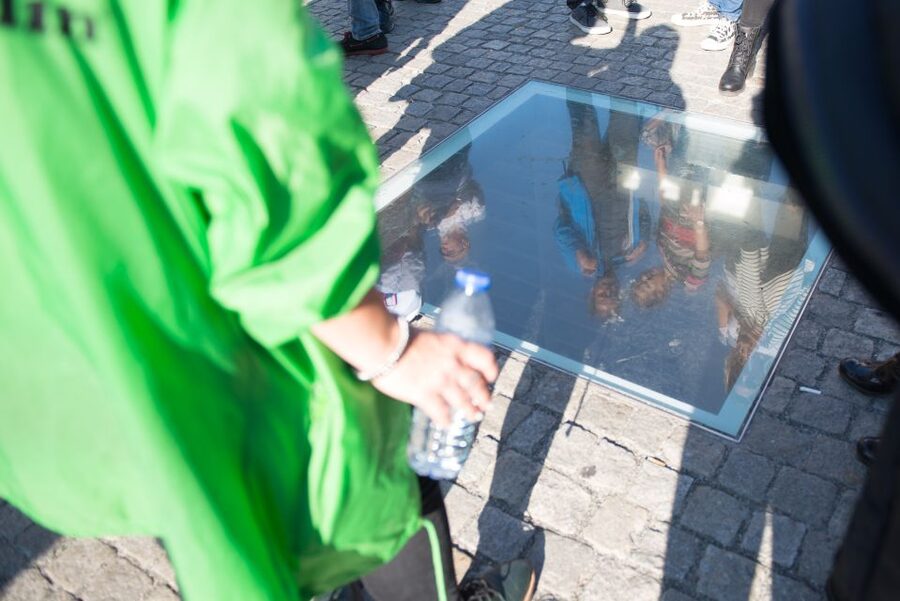
The historical tone becomes darker as the tour addresses Hitler’s rise to power and the remains of the Gestapo Headquarters. This is not a light sightseeing walk, and the route asks you to confront how ordinary civic spaces became linked to dictatorship, terror, and state violence.
Seeing remains rather than a complete building can be instructive. Fragments force you to consider what has been destroyed, what has been preserved, and how Berlin chooses to explain its past. The guide’s role matters here because a bare ruin needs context.
You should expect serious subject matter and a direct account of Nazi rule. That may be emotionally difficult, but avoiding these sites would give you a false picture of Berlin. The tour treats the city as a place where beauty and painful memory exist side by side.
The Memorial to the Murdered Jews of Europe
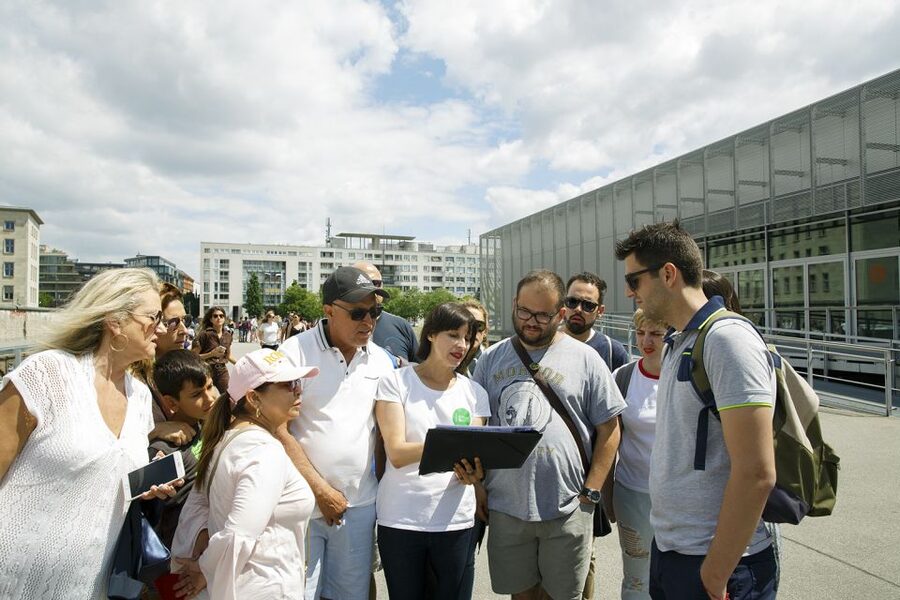
The next major stop is the Memorial to the Murdered Jews of Europe. Its field of concrete slabs creates a powerful public space for remembering the Holocaust.
The tour can give you historical grounding before you walk among the memorial’s blocks. That preparation helps you see it as more than an unusual arrangement of concrete. It is a place for remembrance, uncertainty, and personal reflection.
I would not expect the same experience as visiting a museum with extensive documents and displays. The memorial is primarily a public site, and the tour’s purpose is to explain its meaning within Berlin’s central district. You may want to return later if you need more time alone.
This is one reason the four-hour format works best as an introduction. You encounter several major sites, but you are not asked to pretend that each one can be fully understood in twenty minutes. The guide points you toward the questions, and you can choose where to spend longer afterward.
Berlin’s Wall, divided neighborhoods, and escape stories
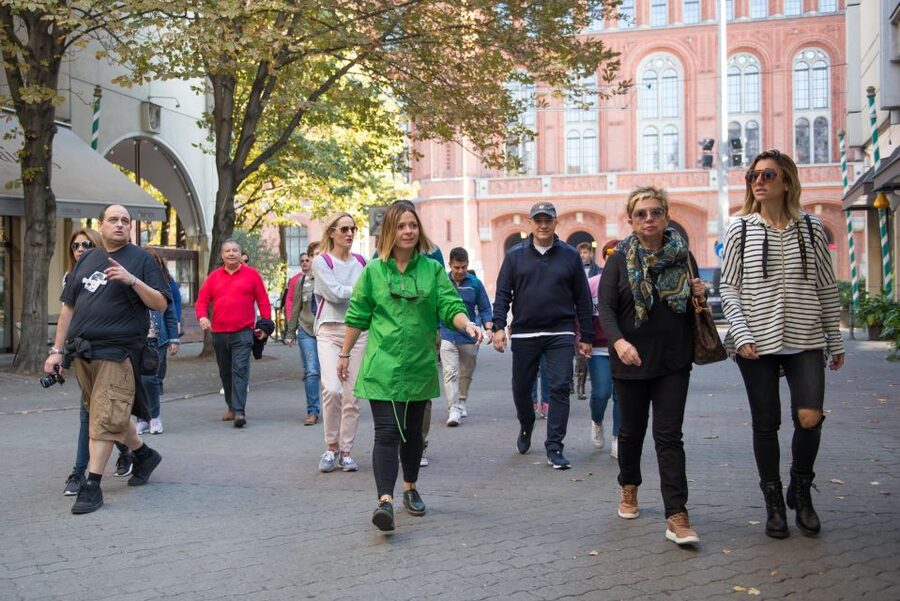
The tour then turns to the Berlin Wall: why it was built, how it divided the city, why it fell, and what daily life felt like on both sides.
This section is likely the heart of the experience. Berlin’s division was not only a line on a map. It affected families, jobs, transport, friendships, shopping, education, and the basic decisions of daily life. A Spanish-speaking guide can explain these changes in a conversational way, which is particularly helpful for visitors who did not grow up with the Cold War as part of their own school history.
You will also hear stories of East Germans who risked their lives trying to reach West Berlin. These personal accounts make the Wall easier to understand than political dates alone. They show the fear, hope, and difficult choices behind the famous photographs.
The best part of this subject is the attention to ordinary people. The tour does not treat the Wall only as a monument or a dramatic photo backdrop. It explains how people lived with it every day, and why its fall became such a powerful event.
Celia has been praised for making room for debate and reflection while keeping the history approachable. That sounds like the right style for Berlin. The city’s past cannot be reduced to heroes, villains, and a few famous dates. You should expect questions about politics, freedom, responsibility, and memory.
Potsdamer Platz and the modern city
Potsdamer Platz provides a sharp change of mood. Once associated with the divided city and the empty zone near the Wall, it is now known for modern architecture and large-scale redevelopment.
The contrast helps you see how quickly Berlin changed after reunification. Older parts of the city preserve layers of monarchy, war, dictatorship, and division, while Potsdamer Platz presents a modern commercial center.
This stop is less about one historic building and more about the city’s ability to rebuild. It also offers a visual reset after the heavier memorials and Nazi-era sites.
Still, modern Potsdamer Platz may not be your favorite stop if you came mainly for old Berlin. I think it earns its place because the tour is about the whole city, not only picturesque streets. Berlin’s present is part of its story too.
Ending at the Brandenburg Gate
The tour finishes at the Brandenburg Gate, Berlin’s best-known symbol. Ending here gives the route a satisfying shape, from the city’s early beginnings to its modern reunified identity.
The gate has served different political meanings over time, and its location makes it a fitting final stop after the sections on empire, dictatorship, division, and reunification. It is also a useful place to continue exploring on your own.
I like ending rather than beginning here. If you start at the gate, you may see an impressive monument without understanding its setting. After four hours on the route, you arrive with a fuller sense of why it matters.
Do not assume the final stop means you have seen every major Berlin sight. You have gained a strong central overview, but places such as the Reichstag interior, Checkpoint Charlie, and Berlin’s museums may require separate visits. The tour gives you a map in your head, not a complete substitute for further sightseeing.
Spanish guiding and the human touch
The tour is offered only in Spanish, and that language choice is central to its value. You can follow complicated political history without constantly translating terms in your head, and you can ask questions in a language that feels natural.
The guide quality appears to be one of the strongest parts of the experience. Evelyn has been praised for clear explanations, professionalism, patience, and practical recommendations. One family group with little prior knowledge of Berlin found that she made the city accessible, while even someone who had once lived in Berlin learned something new.
Other named guides include Celia and Constantino. Celia brought a critical and human approach to the city’s history. Constantino was praised for his energy and for including the useful coffee and restroom break.
That range matters because a walking tour depends heavily on the person leading it. A good guide keeps the route moving while giving enough context to make each stop meaningful. You should still understand that the exact personality and emphasis may vary by guide and by group.
Price, pace, and who gets the best value
At $29 per person, this is a strong-value way to spend four hours in central Berlin. You are paying for a live Spanish-speaking guide and a carefully connected route through many of the city’s main sights. No museum admission is included, so the price stays focused on explanation and orientation.
The value is highest if you are visiting Berlin for the first time, have limited days, or want to understand the city before choosing which places to revisit. It is also well suited to families, couples, and groups who prefer walking and conversation to a bus window.
The pace may be less suitable if you want long stops, extensive photography, or time inside every building. Four hours, even with a break, means moving from place to place. If anyone in your group walks slowly, tell yourself that the point is not to rush through Berlin, and note that patience with slower walkers has been praised.
A private group is available, and hotel lobby pickup can be selected. Those options may suit families or groups that want more control, but the provided details do not specify the extra cost or exact pickup arrangements. Check those terms before booking.
The tour is wheelchair accessible, which widens its usefulness, though central city routes can still feel tiring over four hours. If accessibility is important for your group, confirm the exact route and meeting arrangements when you reserve.
Free cancellation up to 24 hours before the start and the reserve now, pay later option make planning easier. These are practical safeguards, especially when Berlin weather is uncertain, but the main reason to book should be the Spanish guiding and broad historical route.
What to bring and how to prepare
Wear comfortable clothes and shoes. The tour runs every day, begins at 10:00, and continues rain or shine.
Bring weather protection, particularly in winter. Camila completed the walk in cold and snow and still found it rewarding, but that experience also shows why preparation matters. You might enjoy the history less if you are focused on cold hands or wet feet.
Save the meeting point details before you leave: the green Spanish tours flag beside the TV Tower, between the tower and Alexanderplatz station, near Espresso House. Alexanderplatz is easy to reach, but a clear landmark makes the start less stressful.
I would also keep a little flexibility after the tour. You may want to return to the Memorial to the Murdered Jews of Europe, explore Museum Island, or spend more time around the Brandenburg Gate. Practical recommendations from the guide can help shape the rest of your day.
Should you book this Spanish Berlin tour?
Book it if you want a clear, human introduction to Berlin and prefer to learn in Spanish. The route covers an impressive range, from San Nicolas and Museum Island to the Nazi period, the Holocaust memorial, the Wall, Potsdamer Platz, and Brandenburg Gate.
It is especially useful for first-time visitors, families with different levels of historical knowledge, and anyone who wants the city explained rather than simply photographed. The $29 cost is fair for four hours of guiding, and the included break makes the long walk more manageable.
Skip it if you need extensive museum time, a slow photography tour, or a specialized focus on one period. Otherwise, this is a practical first step into Berlin, with enough history to give every later visit more meaning.
FAQ
What language is the tour offered in?
The tour is offered only in Spanish, with a live Spanish-speaking guide.
Where does the tour meet?
Meet beside the only entrance to the TV Tower at Alexanderplatz, between the Fernsehturm and Alexanderplatz train station, near Espresso House. Look for a green flag marked tours en español.
What time does the tour begin?
Tours run every day and begin at 10:00 in front of the TV Tower.
How long does the walking tour last?
The tour lasts four hours. A break of about 30 minutes is included for coffee, a restroom visit, and rest.
Is the tour wheelchair accessible?
Yes, the activity is listed as wheelchair accessible.
Can I cancel or pay later?
You can cancel up to 24 hours in advance for a full refund. The reserve now, pay later option lets you book without paying immediately.
Just added around Berlin
- Berlin: Private Guided Tour of the Main Sights★ 5.0 · 13 reviews
- Private Highlights of Berlin Bike Tour★ 5.0 · 13 reviews
- Modern Berlin Private Walking Tour: Diverse, Vibrant and Exciting German Capital★ 5.0 · 13 reviews
- Tour in Berlin from Warnemünde and Rostock Cruise Port★ 4.1 · 13 reviews
- Berlin: Stasi Museum Private Guided Tour with Entry Ticket★ 4.8 · 13 reviews
- Private Food Tour Experience with a born and bred Berliner★ 5.0 · 14 reviews
- Berlin: Rheinsberg Palace Entrance Ticket★ 4.8 · 14 reviews
- Berlin in one day – day tour with an expert guide★ 5.0 · 14 reviews
Guided, compared.
Reichstag, Dome and Government District Guided Tour
Read our review →
Government District around the Reichstag Guided Tour
Read our review →