Reviewed · BERLIN TOURS
Small Group Tour: “Wild Kreuzberg”
Kreuzberg rewards curious walkers. This three-hour tour takes you from Kottbusser Tor through markets, cafés, old squats, art spaces, and Görlitzer Park, showing you the district’s rough-edged character rather than only its postcard sights. I like the small group size, capped at 12, and the way the route links daily life with Berlin’s alternative culture. I also like the price: at $24, you get a focused local walk for less than many larger city tours.
The main consideration is language. The guide speaks German, so you need enough German to follow stories and questions. The operator also requires a minimum number of participants, and one cancellation account describes confusion over language, availability, and low enrollment. Confirm your booking details before setting aside your afternoon.
In This Review
- Key points at a glance
- Why Kreuzberg makes a good three-hour walk
- Starting beneath the U1 at Kottbusser Tor
- From old apartment blocks to Oranienstraße
- A coffee pause in the Oranienhöfe
- Heinrich-Platz and the art squat at Bethanien
- The unusual stop at Fontane-Apotheke
- Görlitzer Park and a vanished railway station
- The Oberbaumbrücke finish between East and West
- What $24 gets you
- Weather, timing, and practical planning
- Who should book Wild Kreuzberg
- Should you book this Kreuzberg walk?
- FAQ
- Where does the Wild Kreuzberg tour begin?
- Where does the tour end?
- How long is the tour?
- What language does the guide speak?
- What should I bring?
- Can I cancel for a full refund?
Key points at a glance
- Kottbusser Tor sets the tone: Turkish markets, Arabic restaurants, cafés, bars, and the U1 tracks all meet in one noisy, layered square.
- Oranienstraße carries Kreuzberg’s alternative spirit: You pass the Home for the Blind, the Museum of Objects, comic shops, boutiques, restaurants, and bars.
- Bethanien and the Rauchhaus show squatter history: These former institutional buildings became important places in Berlin’s art and protest culture.
- Görlitzer Park has a railway past: The park occupies the former site of a train station, adding another chapter to Kreuzberg’s changing identity.
- The walk ends at the Oberbaumbrücke: This famous bridge gives the route a symbolic finish between former East and West Berlin.
- Ferenz is specifically praised for personal guiding: If he leads your tour, expect a more individual account of Kreuzberg’s less polished details.
Why Kreuzberg makes a good three-hour walk
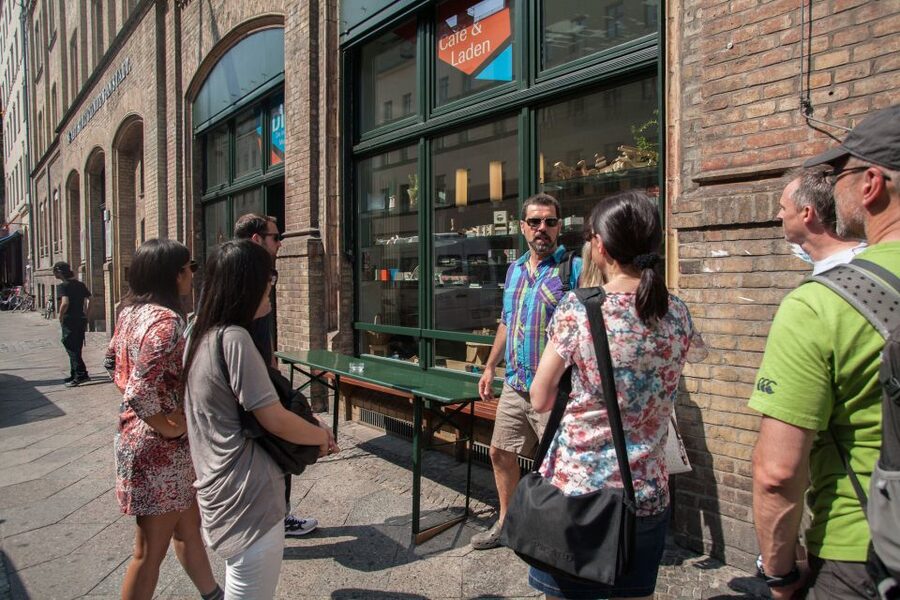
Kreuzberg is not a district you understand by ticking off monuments. Its appeal comes from contrasts packed tightly together: Turkish food beside chic coffee shops, old tenements beside concrete high-rises, art projects beside ordinary apartment blocks, and old squatter spaces beside places now shaped by nightlife and commerce.
That makes a walking tour useful. You can move through the district on your own, but it is easy to miss the connections between the buildings and streets. This route gives you a clear thread, beginning at Kottbusser Tor and moving through the former SO36 postal district toward Mariannenplatz, Bethanien, and the Oberbaumbrücke.
I especially like the route’s balance. You are not spending three hours inside museums, but you are not simply being shown bars and trendy cafés either. The stops point toward Kreuzberg’s social history, alternative politics, migration, art, and changing public spaces.
The group size matters here. With two to 12 participants, the walk should feel more conversational than a large bus tour. The published information gives slightly different minimums, listing two people in one place and three in another, so check the current requirement when booking. If the minimum is not reached, the operator can cancel on short notice.
Other Berlin trips people book alongside this one:
- Berlin: Reichstag, Dome and Government District Guided Tour
★ 4.7 · 18,288 reviews - Berlin: 1-Hour City Tour by Boat with Guaranteed Seating
★ 4.3 · 16,993 reviews - Berlin: Boat Tour Along the River Spree
★ 4.4 · 11,252 reviews
Starting beneath the U1 at Kottbusser Tor
The tour begins at 137 Skalitzer Straße, in front of the Gold Exchange and beside REWE. The easiest arrival point is Kottbusser Tor station, served by the U1 and U8. Use the Skalitzer Straße exit and look for a guide carrying the operator’s sign.
Kottbusser Tor is a fitting start because it shows Kreuzberg in concentrated form. The square is split by the raised U1 tracks, and the railway structure is more than a transport link. It creates a hard, urban frame for the streets below, where Turkish market stalls, Arabic restaurants, small bistros, cafés, alternative bars, and clubs operate side by side.
I would arrive a few minutes early so you can take in the setting before the explanation begins. This is a place where the ordinary and the theatrical meet. People are heading to work, shopping, eating, meeting friends, and beginning their nights out, often within a few steps of one another.
The stop also helps you understand why Kreuzberg has such a strong public identity. It is not presented as a neat historic quarter. It is a working neighborhood with a long connection to migration, protest, nightlife, and street-level culture. Bring an open mind, since the tour’s appeal lies in the district’s untidy mix.
From old apartment blocks to Oranienstraße
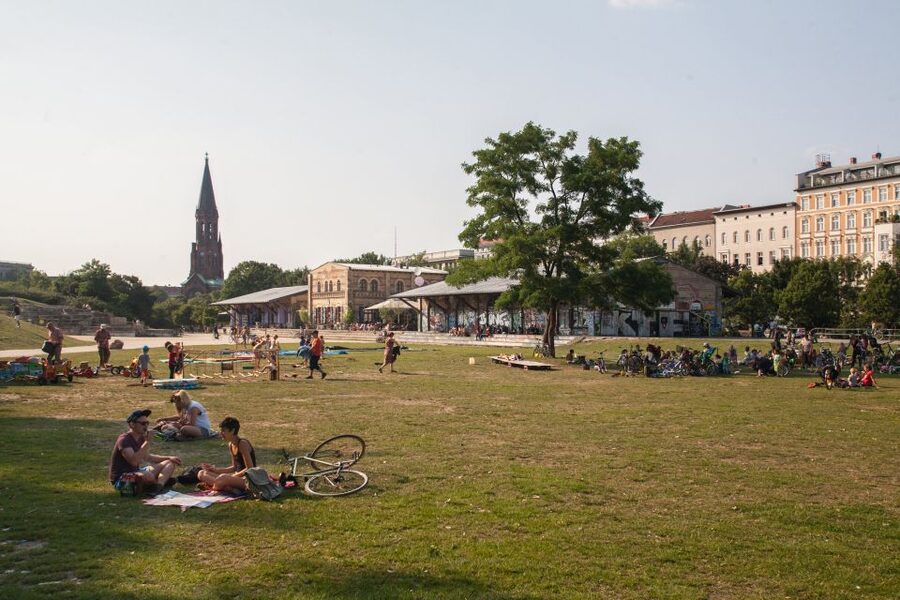
After Kottbusser Tor, the walk passes imposing buildings from the early twentieth century and the Sozialpalast. The architecture gives you a change of pace from the station square. Instead of looking only at grand façades, you get a sense of the large residential blocks that helped shape everyday Kreuzberg.
The route then reaches Oranienstraße, the center of the old SO36 postal district. The name SO36 remains tied to Kreuzberg’s punk and alternative identity. Today, you find restaurants, bars, independent shops, and cafés along the street, but the tour also points toward the district’s less commercial traces.
This is one of the strongest parts of the walk for me. Oranienstraße is not treated as a row of fashionable addresses. It becomes a way to discuss how a neighborhood changes while holding onto pieces of its earlier character. Some places associated with alternative culture survive, while others have been absorbed into the normal rhythms of dining, shopping, and nightlife.
You pass the Berlin Home for the Blind, which gives the walk a useful reminder that Kreuzberg is more than its club reputation. The tour also includes the Museum of Objects, devoted to the history of mass production. That stop broadens the subject beyond local politics. It connects the everyday things around you with the larger story of how manufactured objects shaped modern life.
The Museum of Objects may appeal most if you enjoy unusual small museums and social history. If your main goal is famous art, it may feel less essential. Still, it fits the tour well because Kreuzberg is presented through ordinary places and ideas, not only through major institutions.
A coffee pause in the Oranienhöfe
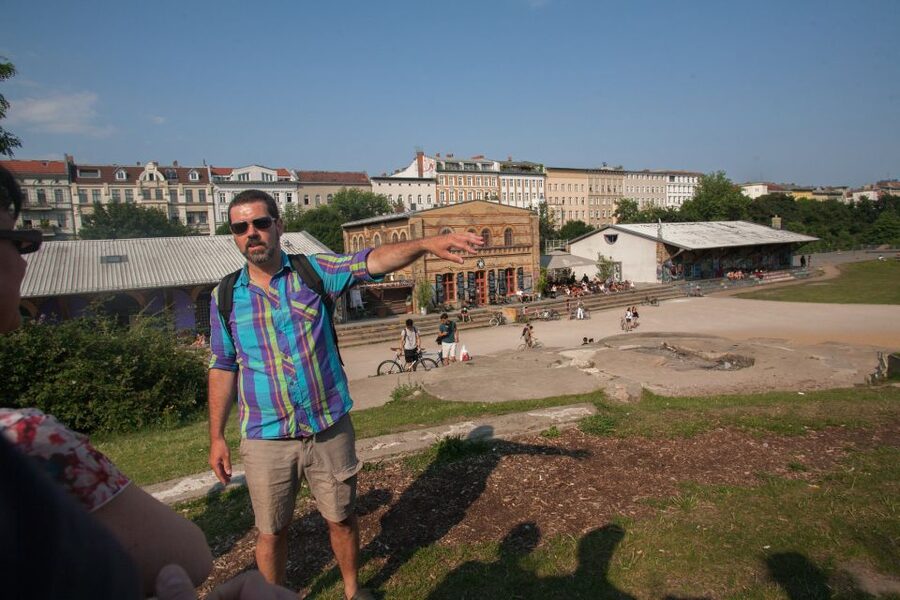
The route includes time to relax over coffee in the Oranienhöfe. This pause matters on a three-hour walk. Kreuzberg is best understood at street level, and sitting down briefly gives you time to absorb the guide’s points instead of racing from one address to the next.
Food and drinks are not included, so plan to pay for your own coffee. The stop is also a good chance to ask questions, especially if the guide is able to tailor the walk to the group.
One highly praised guide is Ferenz, who is described as offering an individual and very interesting tour filled with details about Kreuzberg. If he leads your outing, use the coffee break to ask about the district’s former squat scene, the buildings you have passed, or changes along Oranienstraße.
The coffee stop is not a major attraction in itself. Its value is practical and social. You get a breather, a chance to look around, and a more natural setting for conversation. Wear comfortable shoes, since the walk continues through several streets and public spaces afterward.
Something different for another day:
- Discover Berlin Half-Day Walking Tour
★ 5.0 · 9,624 reviews - Berlin: Hop-on Hop-off Bus Tour with Live Commentary
★ 4.3 · 8,579 reviews - Berlin: Government District around the Reichstag Guided Tour
★ 4.7 · 8,447 reviews - Berlin: Reichstag, Plenary Chamber, Cupola & Government Tour
★ 4.6 · 8,422 reviews
Heinrich-Platz and the art squat at Bethanien
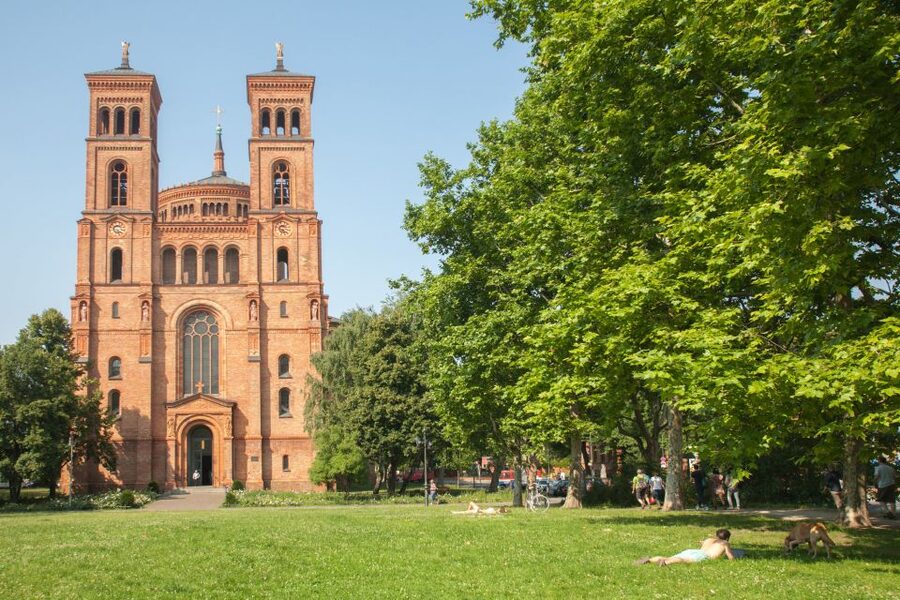
From Oranienstraße, the tour continues via Heinrich-Platz to Mariannenplatz. This part of the route shifts from commercial streets to a broad public square and the former hospital known as Bethanien.
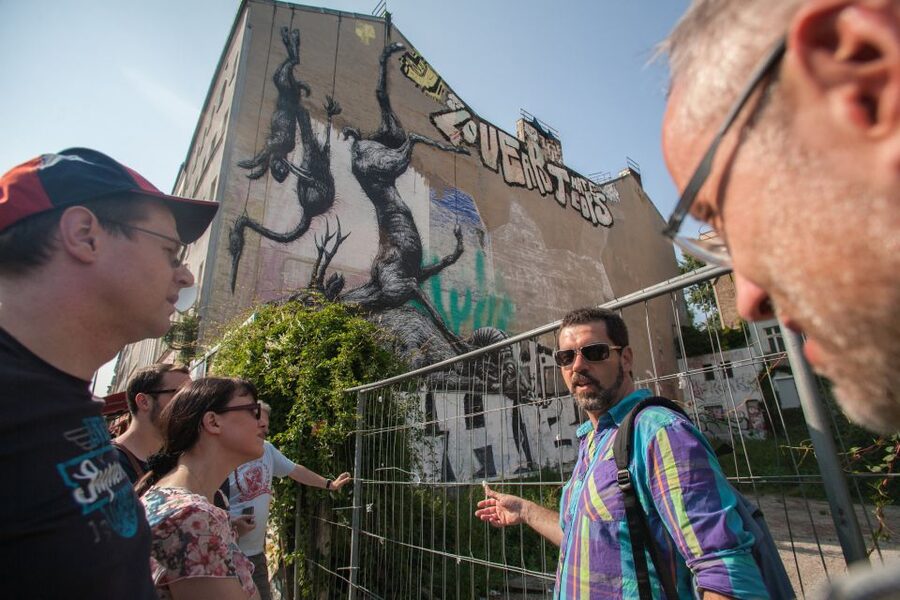
Bethanien is one of the tour’s most meaningful stops. The building became an art squat, linking the physical site to Berlin’s squatter history and the city’s long-running argument over who gets to use urban space. You do not simply see an old hospital. You see a building whose purpose changed as local residents and artists claimed a role in shaping the neighborhood.
Next door, the Rauchhaus offers more traces of the squatter way of life. The tour uses these places to explain what remains of Kreuzberg’s famous squatter scene. That wording is important. You are not being promised a preserved, untouched counterculture district. Instead, you see surviving signs and spaces within a neighborhood that has changed.
This stop will suit you if you care about urban politics, alternative housing, community action, or contemporary art. It may be less satisfying if you expect a formal museum visit with extensive indoor exhibits. The experience is mainly a guided walk through places and their stories.
Mariannenplatz also gives you room to notice the scale of the area. After the tight streets around Kottbusser Tor and Oranienstraße, the open square makes the district’s buildings and public spaces easier to read. The contrast is useful: Kreuzberg’s identity was formed in apartments, streets, courtyards, institutions, and gathering places, not in one landmark alone.
The unusual stop at Fontane-Apotheke
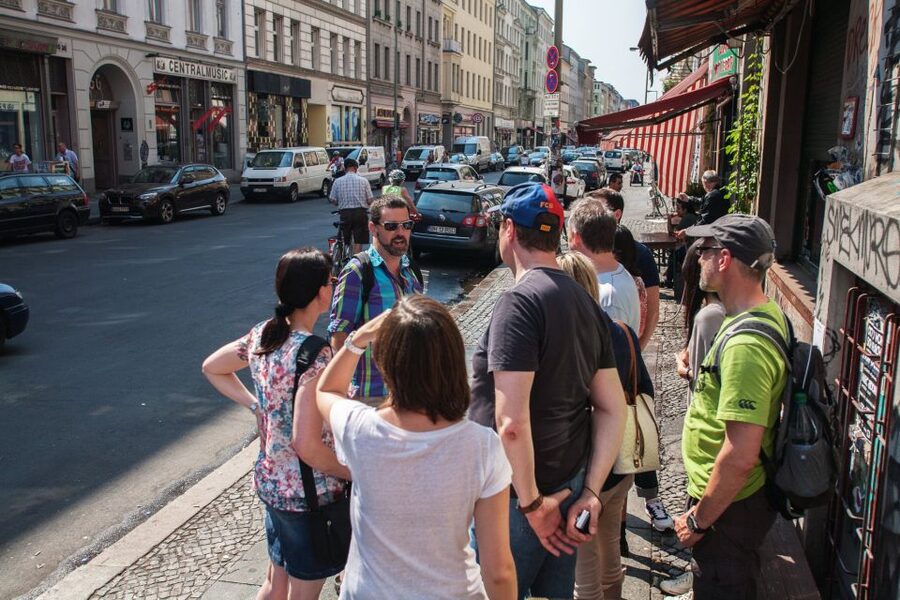
The itinerary includes the well-known Fontane-Apotheke. The supplied details do not explain exactly what you will see inside or why the pharmacy is notable, so you should think of it as a distinctive neighborhood stop rather than a guaranteed museum-style visit.
That uncertainty is not necessarily a weakness. This tour is built around Kreuzberg’s small details, and a pharmacy can tell you more about local character than another generic photo stop. Ask the guide what makes Fontane-Apotheke important when you arrive.
The stop also illustrates the tour’s limits. Some sights are best understood through the guide’s explanation, not through a large display or a famous façade. If you prefer attractions with clear signage and a long list of exhibits, this walk may feel informal. If you enjoy finding meaning in everyday places, it should be more rewarding.
Görlitzer Park and a vanished railway station
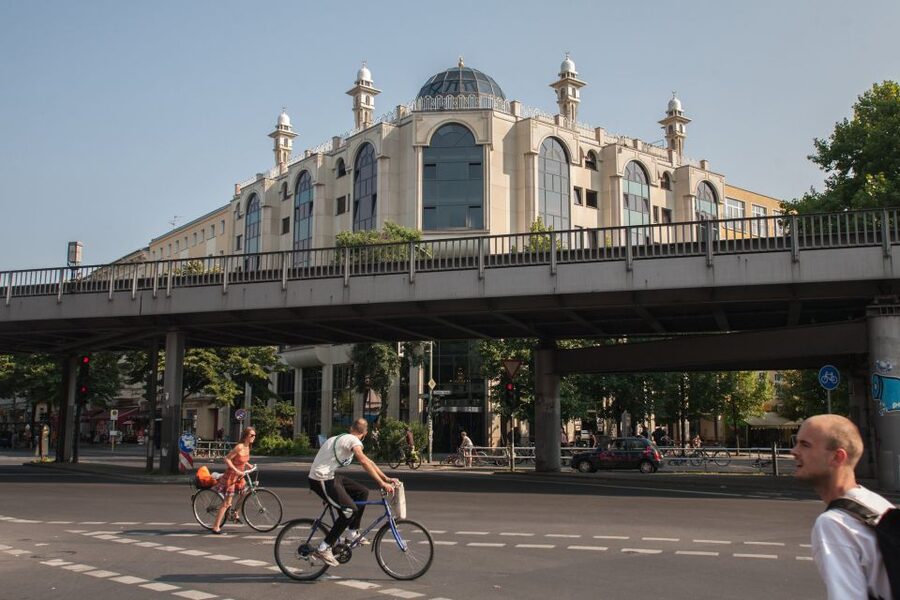
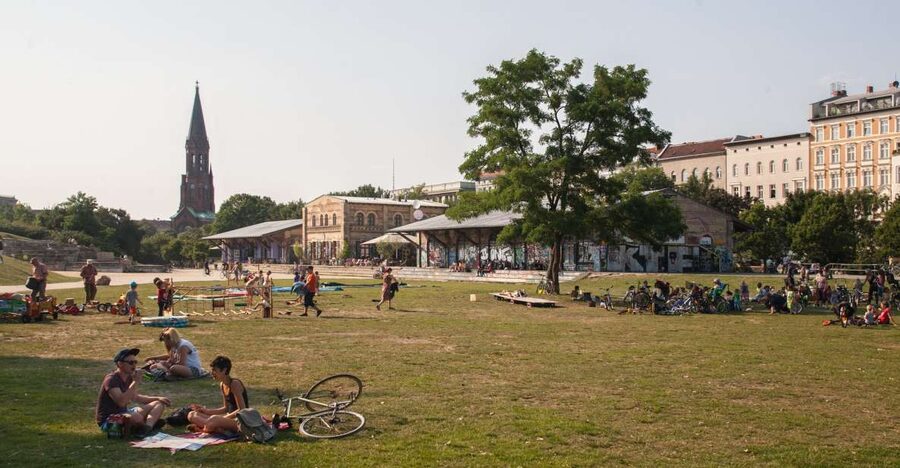
The walk continues through Görlitzer Park, a green public area created on the former site of a train station. That railway past gives the park a useful layer of context. What looks like open urban space was once part of Berlin’s transport system.
I like this kind of stop because it shows how cities reuse land. Kreuzberg’s story is not only about old buildings that survived. It is also about infrastructure that disappeared and left behind a new public purpose.
You should expect an urban park, not a manicured palace garden. The attraction is the change in use and the way the guide connects the park to Kreuzberg’s wider development. As with any public space, conditions can vary, and the tour description does not promise a particular event, view, or activity there.
The route’s progression also works well here. You have moved from transport infrastructure at Kottbusser Tor, through residential streets and alternative institutions, and into a former railway site. Each location adds another piece to the district’s story.
The Oberbaumbrücke finish between East and West
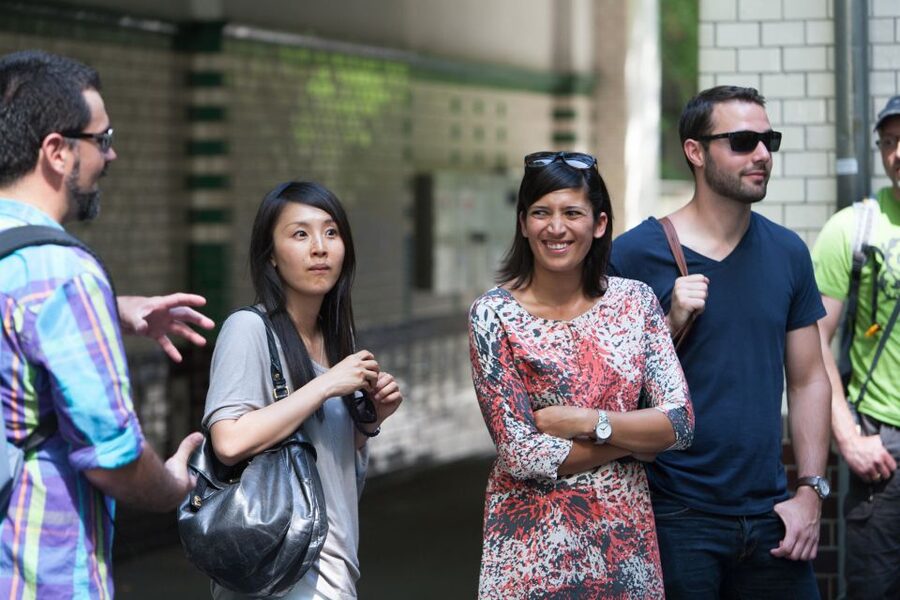
The tour eventually reaches the Oberbaumbrücke, the bridge that symbolically links former East and West Berlin. The bridge provides a strong closing point because it takes the conversation beyond Kreuzberg itself and toward Berlin’s divided past.
The tour ends back at the original meeting point, but the route description highlights the bridge as an important destination along the way. Confirm the exact return route with the guide at the start, since the walk may use the bridge as a turning point rather than finish there.
The Oberbaumbrücke is also a useful reminder that Berlin’s neighborhood identities were shaped by political borders. Kreuzberg’s alternative culture developed within a particular West Berlin setting, and the bridge points toward the former East Berlin district across the Spree.
Do not expect a long bridge tour or a dedicated history lecture on the entire Cold War. This is a Kreuzberg walk, and the bridge functions as a final symbol and geographic reference. It gives the route a sense of direction and helps you place the neighborhood within Berlin as a whole.
What $24 gets you
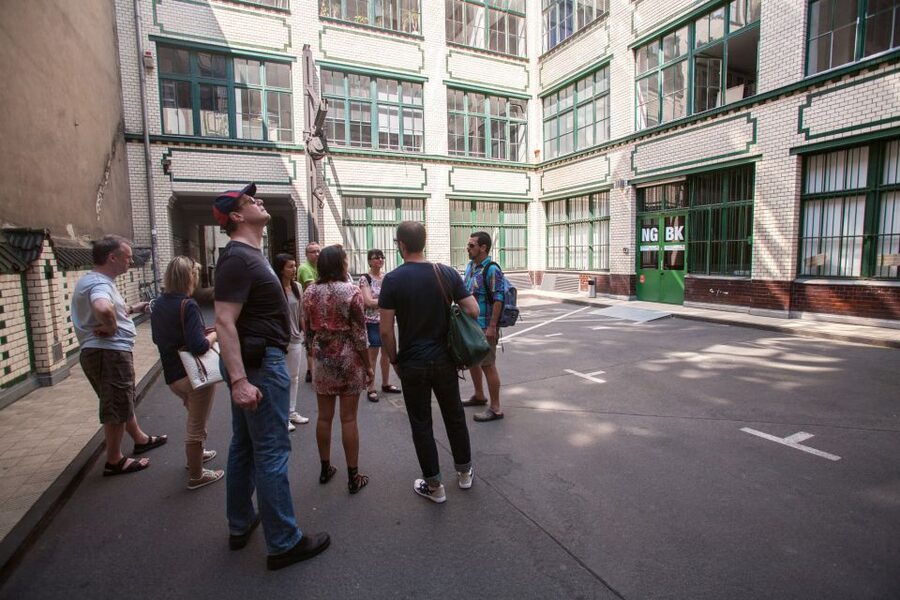
At $24 per person, this is a good value if you want context rather than a long list of major attractions. The price covers a three-hour city walk with a live German-speaking guide and a small group limited to 12 people. A rain poncho is provided when needed, and no food or drink is included.
The value rests mainly in the guide. Kreuzberg’s streets are free to explore, but the connections between Kottbusser Tor, SO36, Bethanien, the Rauchhaus, Görlitzer Park, and the Oberbaumbrücke are not always obvious. A good guide turns separate places into a coherent story.
The walk is particularly worthwhile if Ferenz is leading it. His guiding is praised for being personal and for bringing out interesting, unusual details about Kreuzberg. You cannot guarantee a specific guide unless the booking allows it, but it is useful to know that the experience can depend heavily on who leads the group.
The price is less compelling if you speak little or no German. The tour is listed as German only, and there is no promise of written translation or an alternative-language guide. In that case, you may get more from a self-guided walk or an English-language tour, even if it costs more.
Weather, timing, and practical planning
The tour runs in all weather. A rain poncho is distributed on wet days, but you should still wear comfortable shoes and dress for three hours outdoors. The route includes streets, public squares, a park, and several neighborhood stops, so good footwear matters more than city style.
Starting times vary, and you need to check availability for the date you want. The meeting point is easy to reach by U1 or U8, but Kottbusser Tor can be busy, so leave enough time to find the Skalitzer Straße exit.
Cancellation rules are worth reading carefully. Individual cancellation is allowed up to 24 hours in advance for a full refund, while groups of three or more must cancel three days before the scheduled tour. The operator may cancel if too few people book, and one poor account describes shifting explanations involving language, lack of response, sold-out status, and low participation.
I would save the confirmation email, check the listed language, and verify the tour is still running shortly before departure. That small bit of planning is especially sensible if you are building a tight Berlin schedule around this walk.
Who should book Wild Kreuzberg
I would recommend this tour to you if you want to see Kreuzberg beyond nightlife. It suits visitors interested in migration, alternative culture, urban change, art spaces, squats, public housing, and the way ordinary streets carry political meaning.
It is also a good fit if you prefer small groups and a guide-led route over a large sightseeing circuit. The 12-person maximum should make it easier to hear the guide and ask questions.
You may want to skip it if you need an English-language tour, dislike walking in poor weather, or want major museums and famous monuments. The route is informal and local. Its best moments come from context and observation, not from grand interiors or headline attractions.
Should you book this Kreuzberg walk?
Book it if you have three hours, can follow German, and want a street-level look at one of Berlin’s most changing districts. The low price, small group, varied route, and personal style associated with guide Ferenz make it a strong value for the right audience.
Before paying, check the current language, minimum group requirement, meeting details, and operating status. If those conditions work for you, Wild Kreuzberg offers a useful introduction to the district’s markets, clubs, art spaces, squatter history, and railway past without sanding away its rough edges.
FAQ
Where does the Wild Kreuzberg tour begin?
Meet at 137 Skalitzer Straße, in front of the Gold Exchange and next to REWE. The nearest station is Kottbusser Tor, served by the U1 and U8. Use the Skalitzer Straße exit.
Where does the tour end?
The activity ends back at the meeting point.
How long is the tour?
The walking tour lasts three hours. Starting times vary, so check availability for your preferred date.
What language does the guide speak?
The live tour guide speaks German. No other tour language is listed.
What should I bring?
Bring comfortable shoes. The tour runs in all weather, and a rain poncho is provided on rainy days.
Can I cancel for a full refund?
You can cancel up to 24 hours in advance for a full refund. Groups of three or more must cancel three days before the scheduled tour. A minimum number of participants is required, and the operator may cancel if that number is not reached.
Just added around Berlin
- Berlin: Private Guided Tour of the Main Sights★ 5.0 · 13 reviews
- Private Highlights of Berlin Bike Tour★ 5.0 · 13 reviews
- Modern Berlin Private Walking Tour: Diverse, Vibrant and Exciting German Capital★ 5.0 · 13 reviews
- Tour in Berlin from Warnemünde and Rostock Cruise Port★ 4.1 · 13 reviews
- Berlin: Stasi Museum Private Guided Tour with Entry Ticket★ 4.8 · 13 reviews
- Private Food Tour Experience with a born and bred Berliner★ 5.0 · 14 reviews
- Berlin: Rheinsberg Palace Entrance Ticket★ 4.8 · 14 reviews
- Berlin in one day – day tour with an expert guide★ 5.0 · 14 reviews
Berlin Tours, compared.
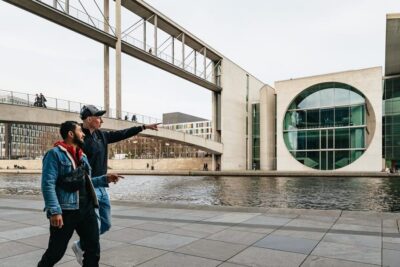
Reichstag, Dome and Government District Guided Tour
Read our review →
1-Hour City Tour by Boat with Guaranteed Seating
Read our review →
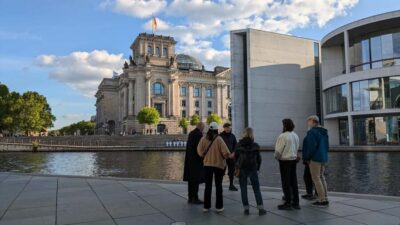
Government District around the Reichstag Guided Tour
Read our review →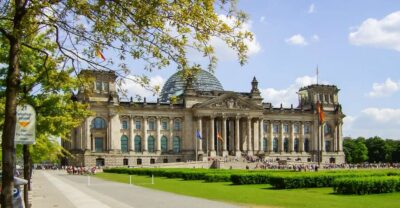
Reichstag, Plenary Chamber, Cupola & Government Tour
Read our review →