Reviewed · BERLIN TOURS
Rickshaw Tours Berlin – Groups of up to 16 people with several rickshaws
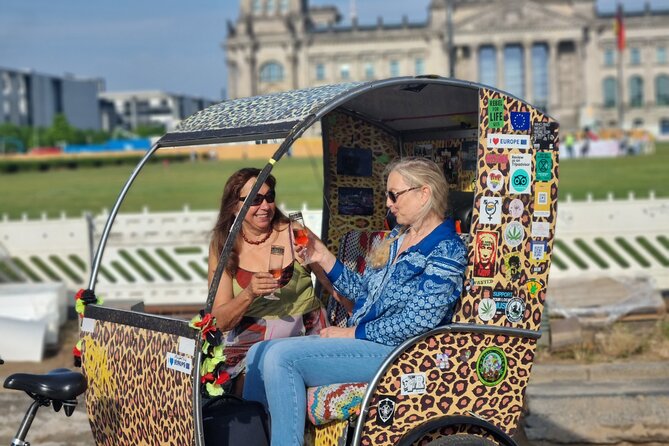
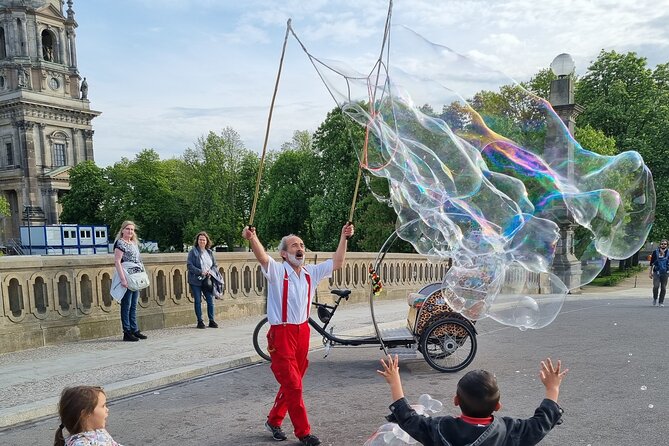
Berlin makes history easy to reach. I like the small-scale ride, which brings you close to the Brandenburg Gate, Berlin Wall sites, Museum Island, and grand central squares without the effort of a long walking tour. I also like the flexibility: your group travels privately, music is available on request, and guides such as Leo and Hugo have earned praise for lively stories and good photo stops. The main concern is reliability, since several bookings were affected by no-shows or cancellations.
A rickshaw is especially useful when you have only a few hours, limited walking stamina, or a group that wants to stay together. Still, this is not a formal museum tour, and the quality depends heavily on the driver. Some guides offer sharp historical context, while others provide a lighter ride with less explanation. Confirm the pickup carefully, and keep your phone available on the day.
In This Review
- Key points at a glance
- What a Berlin rickshaw tour feels like
- Starting at the Brandenburg Gate
- Reichstag and the modern seat of power
- Soviet memorial and the Tiergarten ride
- Potsdamer Platz and the Topography of Terror
- Gropius Bau and the Berlin Wall Memorial
- Checkpoint Charlie and Friedrichstrasse
- Gendarmenmarkt’s grand trio
- Bebelplatz and the memory of book burning
- Museum Island, Berlin Cathedral, and Lustgarten
- Finishing at Alexanderplatz
- The guides can make or break the ride
- Weather, reliability, and practical planning
- Who should book this ride?
- Should you book Rickshaw Tours Berlin?
- FAQ
- Where does the rickshaw tour start?
- Where does the tour end?
- Is hotel pickup available?
- What does pickup cost beyond two kilometers?
- How long does the tour last?
- How many people can join?
- Is this a private tour?
- Is admission to the attractions included?
- What happens if bad weather cancels the tour?
Key points at a glance
- Berlin’s main sights in one private ride: Cover the central landmarks from the Brandenburg Gate and Reichstag to Checkpoint Charlie, Gendarmenmarkt, Museum Island, and Alexanderplatz.
- Good for groups up to 16: Several rickshaws can be used together, though larger parties may be split between drivers.
- A strong choice for tired legs: The ride offers an easier alternative to a long walking tour, including for people recovering from injuries or dealing with mobility limits.
- Guides make the difference: Leo, Hugo, and Ufuk Ayik receive especially warm praise for humor, history, patience, and personal service.
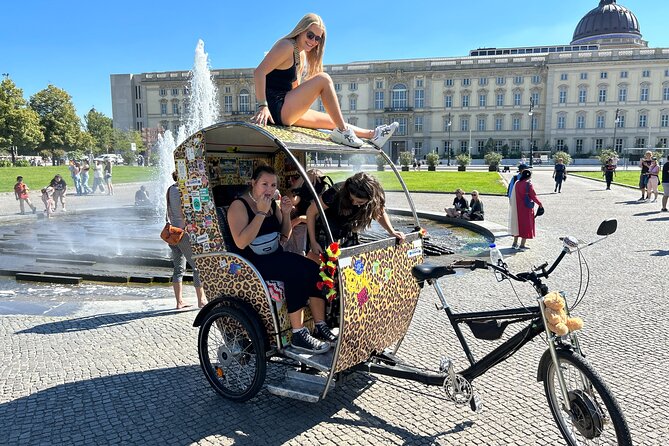
- Photo-friendly sightseeing: A photographer is included, and guides may stop to let you take pictures.
- Plan around the weak spot: There are repeated complaints about missed pickups and poor communication, so this tour needs a little more checking than most.
What a Berlin rickshaw tour feels like
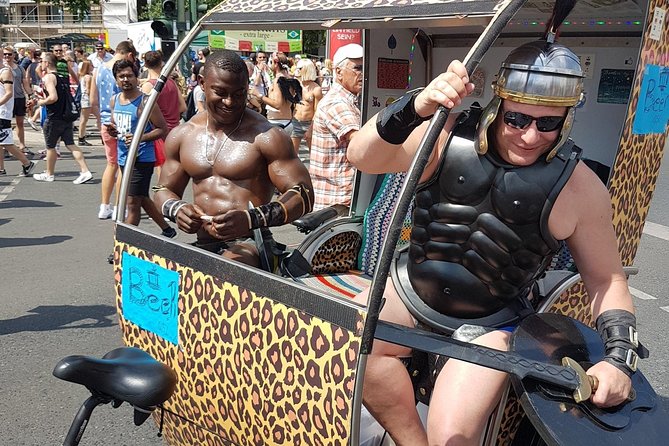
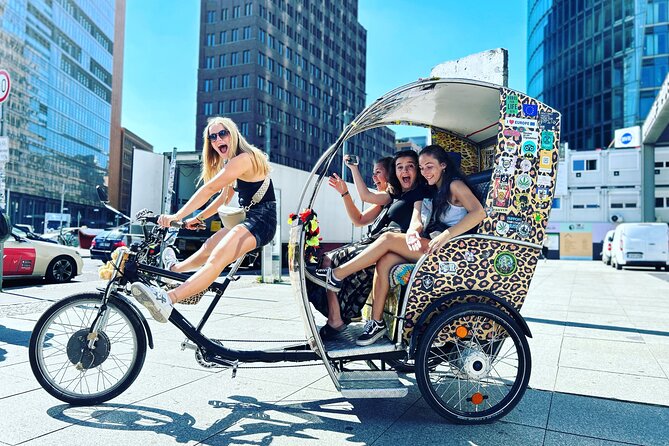
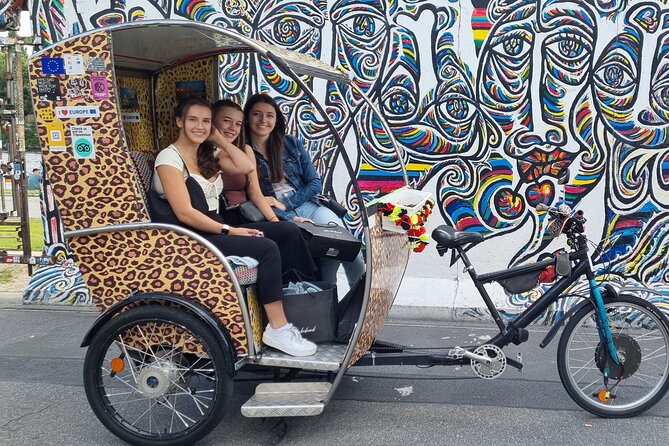
This is sightseeing by open-sided pedal vehicle, with your driver handling the route while you sit back and watch the city pass at street level. It is more personal than a large coach and less tiring than covering central Berlin on foot.
The experience is private, so only your group participates. Groups can include up to 16 people using several rickshaws. That works well for families, friends, and small company outings, but it also means the quality of the ride can vary if different drivers have different levels of English or historical knowledge.
The advertised duration ranges from one to four hours. That is a wide span, and it matters. A one-hour ride can give you a quick introduction to major sights. A longer booking allows more stops, better photo opportunities, and time for your guide to explain Berlin’s twentieth-century story instead of simply pointing at buildings.
At about $53.10 per person, the value depends on your group size and time available. For a couple, it costs more than public transport, but you get private transportation, a guide, WiFi on board, music on request, and a photographer. For a group sharing several rickshaws, the price can make sense because you see a broad section of central Berlin without arranging taxis or coordinating public transport.
Other Berlin trips people book alongside this one:
- Berlin: Reichstag, Dome and Government District Guided Tour
★ 4.7 · 18,288 reviews - Berlin: 1-Hour City Tour by Boat with Guaranteed Seating
★ 4.3 · 16,993 reviews - Berlin: Boat Tour Along the River Spree
★ 4.4 · 11,252 reviews
Starting at the Brandenburg Gate
The ride begins at the Brandenburg Gate, one of Berlin’s essential first stops. Built from 1788 to 1791 under Friedrich Wilhelm II, it was designed by Carl Gotthard Langhans and modeled in part on the entrance structures of the Athens Acropolis.
The gate was intended to give Unter den Linden a grand architectural ending. Today, it also works as a useful meeting point because it places you right in the middle of Berlin’s political and historical center.
You may only pause briefly here, but the setting rewards a quick look upward at the classical columns and the chariot sculpture above. If you want photographs without rushing, ask for a little extra time when booking a longer ride.
Reichstag and the modern seat of power
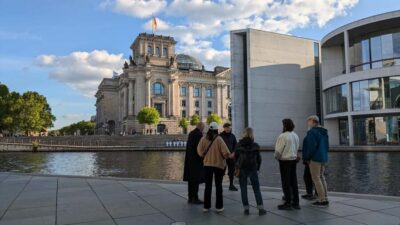
The Reichstag building carries several key moments in German history. In 1918, Philipp Scheidemann proclaimed the German Republic from a balcony on the west side. In 1933, the building was badly damaged in the Reichstag fire, and in 1945 a Soviet flag raised on the structure became a powerful image of Nazi Germany’s defeat.
The stop is listed at around five minutes, with admission not included. That means you should think of it as an exterior visit rather than a dome tour. If entering the Reichstag is important to you, make separate arrangements and do not assume the rickshaw booking provides access.
Nearby, the German Chancellery offers a very different architectural view. Its broad glass surfaces, tall concrete pillars, large arches, and glazed courtyards create a building that feels both official and surprisingly open. The short stop gives you time to see the form from outside, but not to visit the working government offices.
Soviet memorial and the Tiergarten ride
The Soviet War Memorial in the Tiergarten is marked by two T-34 tanks and a bronze Red Army soldier. Pillars carry the names of fallen Soviet soldiers, and roughly 2,500 soldiers are buried toward the rear of the site.
This is a brief stop, but it adds weight to the route. It is not simply another monument for a quick photograph. Your guide can connect it to the final battles of Berlin and the city’s postwar division.
The ride then passes through the Tiergarten, Berlin’s large central park. Its story reaches back to the late seventeenth century, when the former hunting ground was reshaped as a public pleasure park. Peter Joseph Lenné later redesigned much of it as an English-style park between 1833 and 1838.
I like this part because the rickshaw can move through green space without making you walk from one distant monument to another. The park includes bridges, memorials, the Victory Column, the Federal President’s Office, the House of World Cultures, and an English Garden around a pond. The exact time spent here will depend on your chosen duration.
Something different for another day:
- Discover Berlin Half-Day Walking Tour
★ 5.0 · 9,624 reviews - Berlin: Hop-on Hop-off Bus Tour with Live Commentary
★ 4.3 · 8,579 reviews - Berlin: Government District around the Reichstag Guided Tour
★ 4.7 · 8,447 reviews - Berlin: Reichstag, Plenary Chamber, Cupola & Government Tour
★ 4.6 · 8,422 reviews
Potsdamer Platz and the Topography of Terror
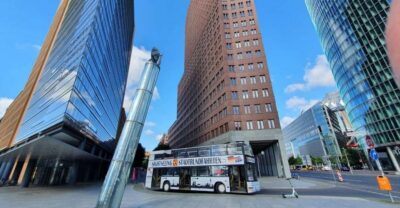
Potsdamer Platz shows Berlin’s newer face. It was rebuilt as a planned district with high-rise buildings, cinemas, cafés, shops, and a large shopping arcade on the former divided-city frontier.
The stop is short, about two minutes, so treat it as a quick look at the modern city rather than a full architectural visit. If your guide offers a choice between a photograph here and more time at a historical site, I would usually choose according to your interests. Potsdamer Platz is visually striking, but the Topography of Terror carries more historical force.
The Topography of Terror occupies the former site of major Nazi institutions, including the Secret State Police Office, the SS leadership, and the Reich Security Main Office. This was a center for planning and directing Nazi crimes from 1933 to 1945.
The rickshaw stop lasts about five minutes and admission is free. That is enough to orient yourself, see the site, and decide if you want to return later for a longer visit. I would not expect a short vehicle stop to replace time inside the exhibition.
Gropius Bau and the Berlin Wall Memorial
The Martin-Gropius-Bau houses exhibitions in cultural history, contemporary art, and photography. The stop is brief and outside access is not included, so it functions mainly as an architectural or neighborhood marker unless you return on your own.
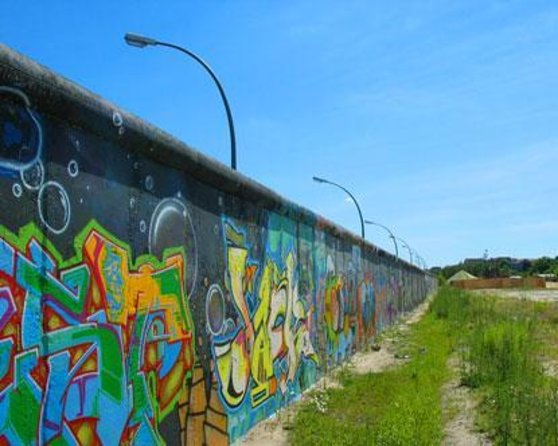
The Berlin Wall Memorial on Bernauer Straße is more substantial. This street once divided Wedding in the West from Mitte in the East, and it became known for desperate escape attempts. People even jumped from apartment windows to reach the western side before the buildings were sealed or altered.
The memorial was formally opened in 1998, more than three decades after construction of the Wall began. A one-minute stop is barely enough for an introduction, so ask your guide to point out the key section and consider returning independently if the Wall’s story matters to you.
This is one reason the tour’s time range matters so much. The route contains enough material for a full afternoon, but the shorter version can only provide snapshots.
Checkpoint Charlie and Friedrichstrasse
Checkpoint Charlie was the best-known American-controlled crossing point in divided Berlin. It was used by foreigners, employees of the West German mission in East Germany, and East German officials. The crossing was one of three major points associated with the American presence, alongside the routes at Helmstedt-Marienborn and Dreilinden-Drewitz.
The stop is free and lasts about two minutes. You will see the famous name and the modern surroundings, but do not expect a preserved border crossing in its original form. The site is useful for understanding the symbolism of divided Berlin, while the surrounding commercial area can feel more staged than other historical locations.
Friedrichstrasse runs north to south through the city. After reunification, the section between Checkpoint Charlie and Friedrichstrasse station developed into a major shopping street. The rickshaw gives you a quick connection between the border site and central Berlin without making you navigate the busy streets yourself.
Gendarmenmarkt’s grand trio

Gendarmenmarkt is one of Berlin’s most handsome squares. Its origins reach back to the late seventeenth century, when French Protestant immigrants settled in the area. The square passed through several names before becoming Gendarmenmarkt in 1799, linked to the former Gens d’armes regiment stationed there.
Allow around five minutes here. The setting brings together the German Cathedral, French Cathedral, and Konzerthaus, creating one of the clearest examples of Berlin’s formal eighteenth and nineteenth-century design.
The German Cathedral contains a permanent exhibition on the development of liberal parliamentary democracy in Germany. Entry is not included, and a two-minute stop will only give you an exterior view unless you arrange a separate visit.
The Konzerthaus is a major work by Karl Friedrich Schinkel. It began as a small comedy theater in 1776 and was renamed the Royal National Theater in 1787. Even if you do not go inside, the building helps explain why Gendarmenmarkt feels more like a carefully planned European square than an ordinary city intersection.
Bebelplatz and the memory of book burning
Bebelplatz sits in Berlin’s museum center and recalls a darker event. On May 10, 1933, Nazi students and supporters burned more than 20,000 books there, targeting works they labeled hostile to German ideas.
The list included writers such as Erich Kästner, Thomas and Heinrich Mann, Magnus Hirschfeld, Lion Feuchtwanger, Karl Marx, and Else Lasker-Schüler. Heinrich Heine’s work was also targeted, making his warning about book burning and the destruction of people feel painfully close to the site.
The stop lasts about two minutes and is free. Look for the memorial set into the square, then ask your guide to explain what happened. This is a small place with a large subject, and a good guide can make the brief pause meaningful.
Museum Island, Berlin Cathedral, and Lustgarten
Museum Island lies between the Spree and the Kupfergraben. Its collection of buildings began with the Altes Museum, completed in 1830 from plans by Schinkel. Today the island houses major archaeological and nineteenth-century art collections.
The rickshaw stop lasts around five minutes, but museum admission is not included. I would use the ride to learn how the buildings fit together, then return later if you want to visit the museums properly. Trying to combine museum interiors with a short city ride would leave both experiences rushed.
Berlin Cathedral dominates the area with its large dome and ornate exterior. Admission is not included, and the stop is listed at only one minute, so plan on an exterior look. A separate visit allows you to see the interior and climb toward the dome for views over the Spree, Lustgarten, and Museum Island.
Lustgarten sits between the cathedral, Altes Museum, and the former city palace site. Its double rows of linden trees, red granite bowl, lawns, and central fountain make it a pleasant place to pause. The stop is free and very short, but the rickshaw gives you a good sense of how these major buildings frame the open space.
Finishing at Alexanderplatz
Alexanderplatz brings the ride into eastern central Berlin. Known as the Alex, it has been a busy public square since the 1920s, through the East German period and into the present day.
The television tower, World Clock, Friendship Fountain, shops, and transport links all gather here. The listed stop is only one minute, so this is another orientation point rather than a full visit.
The route ends back at the Brandenburg Gate. That is convenient if you have onward plans nearby, though it means you should not expect a hotel drop-off unless your pickup falls within the stated two-kilometer radius. Pickup is offered within two kilometers of the gate. Beyond that, an additional charge of 10 euros per kilometer applies.
The guides can make or break the ride
The strongest part of this experience is the human element. Leo is repeatedly praised for humor, music, energy, and stories that connect well with both adults and teenagers. He has also helped people with injuries see Berlin when a walking tour was no longer practical.
Hugo receives similar praise for explaining Berlin’s past, taking photographs, and adjusting the ride to suit the group. One particularly positive account describes him getting soaked during heavy rain so the passengers could stay dry. Ufuk Ayik is also singled out for being accommodating in harsh weather.
That praise comes with an important warning: several drivers are working under the same booking. One group using two rickshaws found one guide much stronger than the other. Another group enjoyed the ride but felt the historical explanations were thin.
Music can add fun, especially with a guide like Leo, but it can also get in the way. One passenger repeatedly asked for the volume to be lowered because it became hard to hear the commentary. Tell your driver early if you prefer history over a soundtrack.
There is also one report of rough driving and a collision with a van. That does not define every ride, but it is fair to ask for careful driving, especially when moving through city traffic.
Weather, reliability, and practical planning
The cancellation policy allows a full refund if you cancel at least 24 hours before the start time. Changes or cancellations inside 24 hours are not refunded, except when the operator cancels because of poor weather.
Weather has caused genuine problems, including battery trouble in cold conditions. Several cancellations were explained as safety decisions after electric bikes reportedly stopped working. Other missed rides were linked to illness, lost phones or laptops, and communication failures.
The number of no-show complaints is too large to ignore. Some people waited in the cold or rain, contacted the company repeatedly, and received no answer. In several cases, the booking platform handled the refund process.
Because the tour is often booked about 34 days ahead, do not leave your most important Berlin sightseeing plans dependent on it. Book it early if you want the option, but keep a backup plan for seeing the Brandenburg Gate, Reichstag, Museum Island, and Checkpoint Charlie by public transport or on foot.
On the day, confirm the meeting point, keep your phone charged, and arrive at the Brandenburg Gate with time to spare. If you are being picked up, check that your address falls within the included two-kilometer zone.
Who should book this ride?
I would recommend it most strongly to families, older visitors, small groups, and anyone who wants to cover a lot of central Berlin without a long walk. It can also work well for people with temporary injuries, as several riders used it as a practical replacement for a walking tour.
It is a good first look at Berlin, especially on a longer booking. You will see how Nazi history, Cold War sites, Prussian architecture, government buildings, museums, and modern redevelopment sit close together.
I would be more cautious if your main goal is detailed historical teaching. The route contains excellent material, but the explanation depends on your driver. Ask for a history-focused guide when possible, and make clear that you want commentary rather than constant music.
Should you book Rickshaw Tours Berlin?
Book it if you value convenience, personality, and broad coverage over long museum visits. A good driver can turn the ride into a funny, moving introduction to Berlin, with Leo and Hugo especially appealing for their warmth and storytelling.
The price is reasonable for a private ride with a guide, photographer, WiFi, and flexible group arrangements, but the repeated no-show complaints are a serious drawback. I would book only if the operator confirms clearly and you have enough time to recover if plans change.
For a short stay, this can be an efficient way to get your bearings. For a history-focused visit, treat it as a city overview, then return to the Topography of Terror, Berlin Wall Memorial, Reichstag, or Museum Island for more time on foot.
FAQ
Where does the rickshaw tour start?
The tour starts at the Brandenburg Gate in Berlin, at 10117 Berlin, Germany.
Where does the tour end?
The activity ends back at the Brandenburg Gate meeting point.
Is hotel pickup available?
Yes. Pickup is included within two kilometers of the Brandenburg Gate.
What does pickup cost beyond two kilometers?
Pickup farther than two kilometers costs an additional 10 euros per kilometer.
How long does the tour last?
The tour can last approximately one to four hours, depending on the option booked.
How many people can join?
Groups of up to 16 people can participate using several rickshaws.
Is this a private tour?
Yes. Only your group participates in the activity.
Is admission to the attractions included?
No. Admission tickets are not included for sites such as the Reichstag, German Cathedral, Gropius Bau, Berlin Wall Memorial, Konzerthaus, Museum Island, and Berlin Cathedral. Some stops, including the Soviet War Memorial, Topography of Terror, Checkpoint Charlie, Gendarmenmarkt, Bebelplatz, and Lustgarten, are listed as free.
What happens if bad weather cancels the tour?
If the tour is canceled because of poor weather, you will be offered another date or a full refund.
Just added around Berlin
- Berlin: Private Guided Tour of the Main Sights★ 5.0 · 13 reviews
- Private Highlights of Berlin Bike Tour★ 5.0 · 13 reviews
- Modern Berlin Private Walking Tour: Diverse, Vibrant and Exciting German Capital★ 5.0 · 13 reviews
- Tour in Berlin from Warnemünde and Rostock Cruise Port★ 4.1 · 13 reviews
- Berlin: Stasi Museum Private Guided Tour with Entry Ticket★ 4.8 · 13 reviews
- Private Food Tour Experience with a born and bred Berliner★ 5.0 · 14 reviews
- Berlin: Rheinsberg Palace Entrance Ticket★ 4.8 · 14 reviews
- Berlin in one day – day tour with an expert guide★ 5.0 · 14 reviews
Berlin Tours, compared.
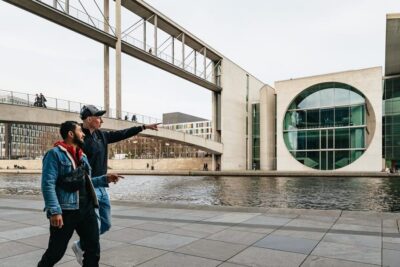
Reichstag, Dome and Government District Guided Tour
Read our review →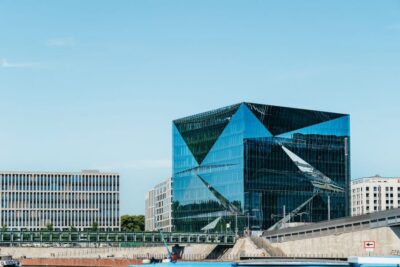
1-Hour City Tour by Boat with Guaranteed Seating
Read our review →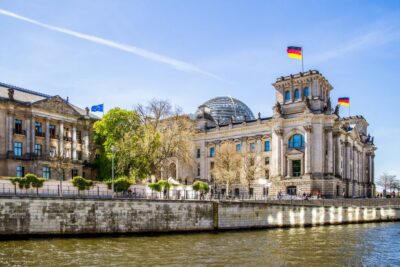
Government District around the Reichstag Guided Tour
Read our review →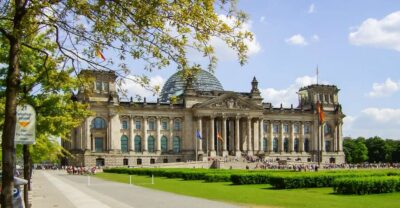
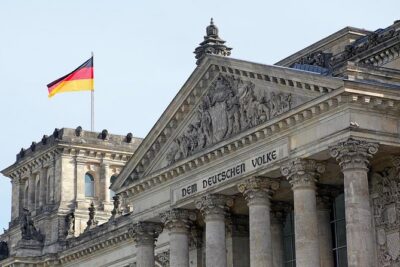
Reichstag, Plenary Chamber, Cupola & Government Tour
Read our review →