Reviewed · BERLIN TOURS
Path of Resistance: Berlin’s Hidden Holocaust Stories
Berlin remembers in plain sight. This 2.5-hour walking tour links Jewish memorials, former deportation sites, and acts of resistance that are easy to miss on your own. I like its focus on ordinary people who opposed Nazi rule, and I like the use of historical maps and then-and-now photographs to make vanished places easier to understand.
The small-group format, priced at $56 per person, should suit anyone who wants more conversation than a large city tour allows. The main consideration is emotional: this is a serious look at persecution, deportation, and genocide, not a light sightseeing stroll. You will also want comfortable shoes, since the route covers many stops on foot.
In This Review
- Key points to know before you book
- What makes this Berlin walking tour different
- Beginning at the former Imperial Post Office
- New Synagogue and the Jewish school
- Grosse Hamburger Strasse and the marks of removal
- Otto Weidt’s workshop, a rare personal story
- The Rosenstraße protest and the Block of Women
- Museum Island and Neue Wache
- Bebelplatz and the 1933 book burning
- Trains to Life, Trains to Death
- What the $56 price includes
- Practical advice for a respectful visit
- Who should book this tour?
- Should you book Path of Resistance?
- FAQ
- How long does the Path of Resistance tour last?
- What language is the tour conducted in?
- Where does the tour start?
- Where does the tour finish?
- Is public transport needed during the tour?
- Is the tour wheelchair accessible?
- What should I bring?
Key points to know before you book
- Otto Weidt’s workshop reveals how one Berlin employer protected blind and deaf Jewish workers from Nazi persecution.
- The Rosenstraße protest shows how German women publicly demanded the release of their Jewish husbands.
- Bebelplatz book burning memorial connects Nazi censorship with the wider attack on free thought.
- Small groups and expert guides allow time for questions, personal stories, and discussion.
- The route covers major and lesser-known memorials between the former Imperial Post Office and central Berlin.
- Bring rain protection or sun cover, since the tour runs in all weather and takes place outdoors for much of its length.
What makes this Berlin walking tour different
Berlin has no shortage of Nazi-era sites, but many tours focus on government buildings, war ruins, and the machinery of dictatorship. This walk takes a more personal route. You move through Berlin’s old Jewish quarter and hear about families, workers, students, women, and rescuers who faced impossible choices.
That focus matters. The Nazi system was built not only through famous leaders and military orders, but also through laws, propaganda, forced removals, silence, and cooperation. The guide helps you connect those large forces to individual lives.
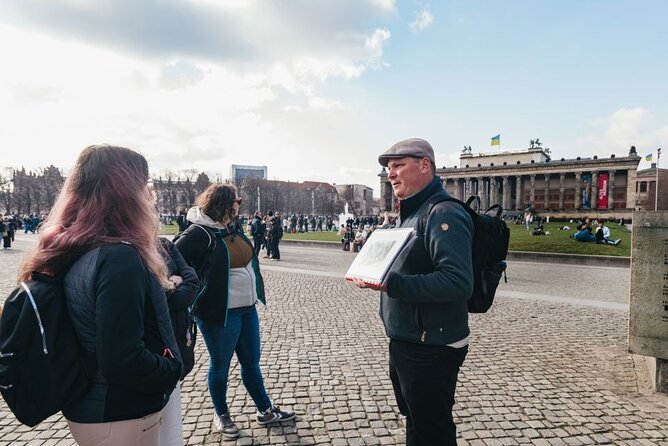
The tour is led in English by a local historian with a World War II specialty. The guides named in the feedback, Tom and Hannah, earned particular praise for their clear explanations, patience, and personal commitment to the subject. One strength of the experience is its willingness to pause for questions rather than race from plaque to plaque.
You should expect a thoughtful walking discussion, not a theatrical performance. The stories are moving, but the tone is professional and respectful. If you prefer a quick overview of Berlin’s main sights, this may feel too focused. If you want context and human stories, it offers much more than a standard orientation walk.
Other Berlin trips people book alongside this one:
- Berlin: Reichstag, Dome and Government District Guided Tour
★ 4.7 · 18,288 reviews - Berlin: 1-Hour City Tour by Boat with Guaranteed Seating
★ 4.3 · 16,993 reviews - Berlin: Boat Tour Along the River Spree
★ 4.4 · 11,252 reviews
Beginning at the former Imperial Post Office
The tour starts at the former Imperial Post Office. Arrive 10 minutes early and look for the guide at the main entrance with a blue umbrella.
This is a useful starting point because it puts you near the old Jewish quarter and within easy reach of several memorials. You do not need public transport during the walk, which keeps the route simple. Still, Berlin’s streets can be hard on feet after a full day of sightseeing, so wear shoes with real support.
The company describes the group as small, with one place listing a maximum of 10 people and another stating up to 15. That difference is worth confirming when you book. Either size is far more manageable than a large coach group, especially at memorials where you need to hear quiet explanations.
New Synagogue and the Jewish school
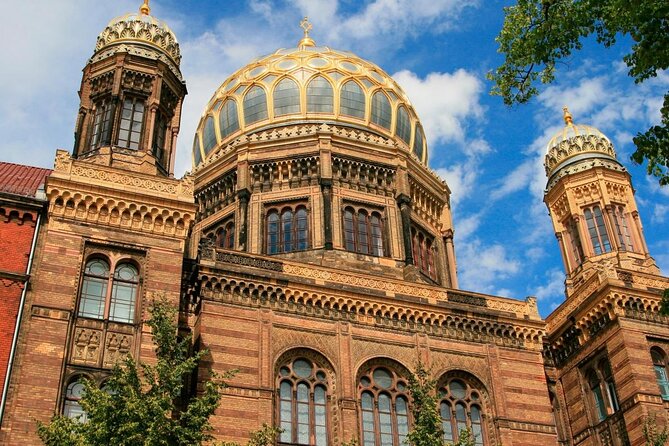
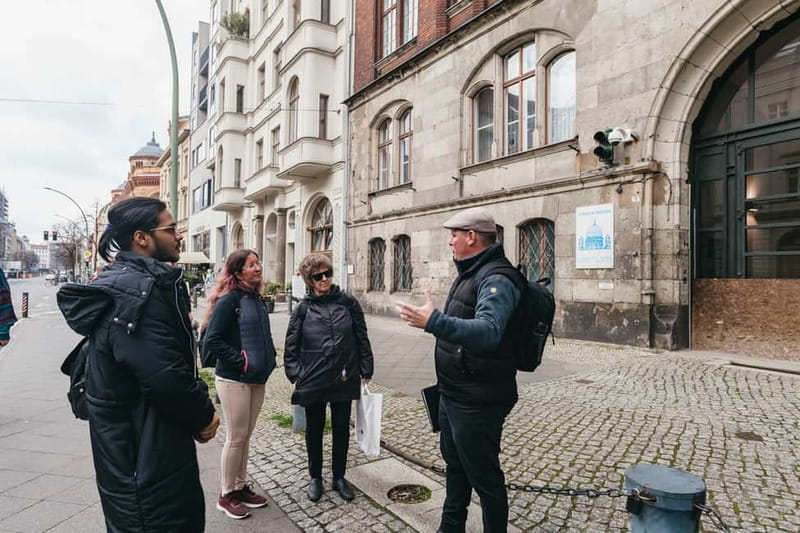
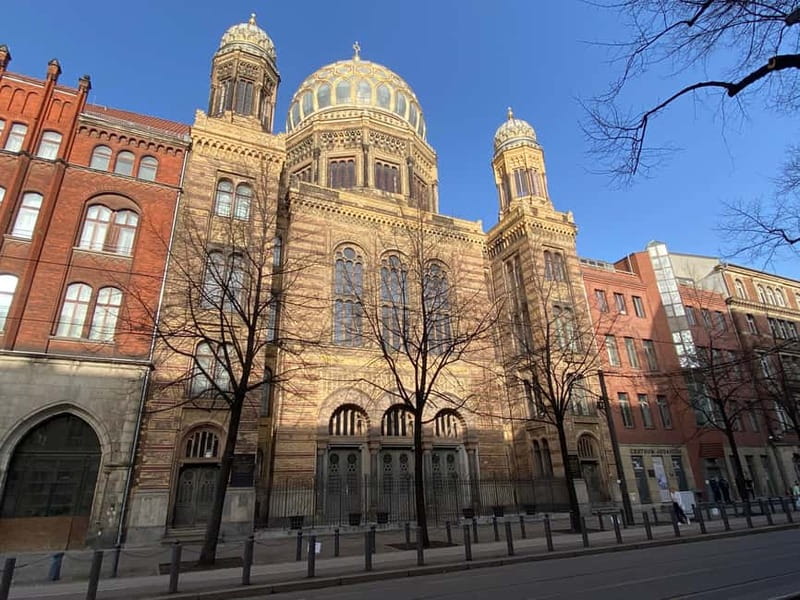
The first major stop is the New Synagogue Berlin, also known as the Jewish Centre. You spend about 15 minutes here with a guided explanation and time to look around.
The building helps frame the Jewish presence in Berlin before the Nazi period. Its place in the former Jewish quarter makes it an effective opening stop, since the walk quickly moves from community life to persecution and resistance. You are not simply hearing about Jewish Berlin as a vanished chapter. You are seeing reminders that it was an active part of the city.
The next stop is the Jüdisches Gymnasium Moses Mendelssohn, with about 10 minutes for a visit and explanation. A school is a useful place to discuss how Nazi racial ideas affected young people, education, and Jewish families. The tour also explains the Nazi belief in Aryan superiority and the way the regime classified people into supposed racial sub-groups.
That context is important. The genocide did not begin with mass killing. It developed through hateful ideas, official categories, restrictions, and the removal of rights. At this point, the tour helps you see how prejudice became government policy.
Grosse Hamburger Strasse and the marks of removal
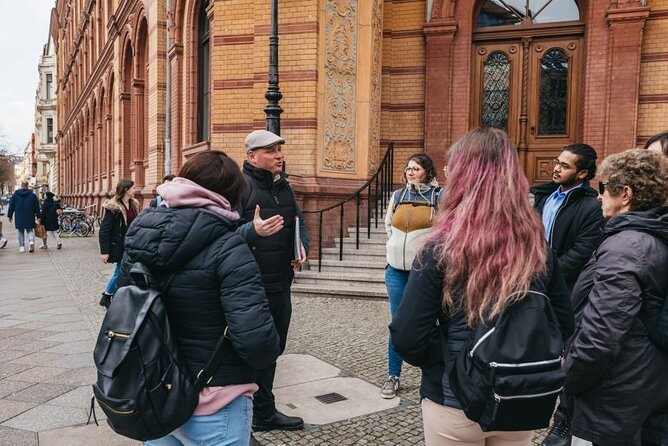
The Grosse Hamburger Strasse Cemetery receives about 15 minutes. This part of the walk brings you closer to the older Jewish quarter and its memorial spaces.
Expect a quieter stop. The value here is not spectacle. It is the chance to consider how a place of community and burial was caught up in the Nazi campaign against Jewish life. The guide uses stories and visual material to make the area readable, since the modern city does not always reveal what happened on each street.
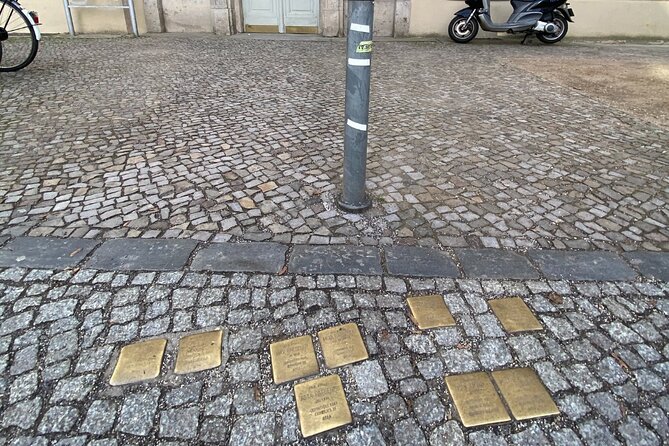
You also encounter Stolpersteine memorials during the route. These small brass plaques are set into pavements in front of former homes. They name people who were deported or killed, returning a name and an address to a city that might otherwise reduce them to a number.
I find these memorials especially effective because they interrupt an ordinary walk. You may be looking at a doorway, a shopfront, or a quiet pavement when the past suddenly becomes personal. The guide’s role is important here. Without explanation, a small plaque is easy to miss. With context, it becomes a direct link between one person and one home.
Something different for another day:
- Discover Berlin Half-Day Walking Tour
★ 5.0 · 9,624 reviews - Berlin: Hop-on Hop-off Bus Tour with Live Commentary
★ 4.3 · 8,579 reviews - Berlin: Government District around the Reichstag Guided Tour
★ 4.7 · 8,447 reviews - Berlin: Reichstag, Plenary Chamber, Cupola & Government Tour
★ 4.6 · 8,422 reviews
Otto Weidt’s workshop, a rare personal story
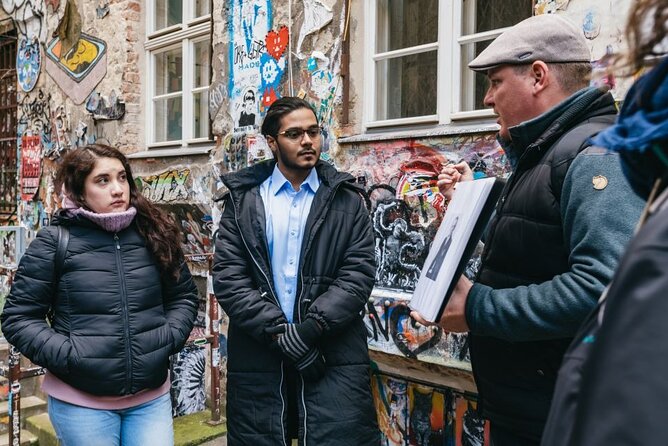
The Otto Weidt Workshop for the Blind is one of the strongest stops on the route, with about 15 minutes set aside for a guided visit.
Otto Weidt ran a workshop that employed blind and deaf Jewish workers. He used his position to protect them from persecution, a story that gives the tour a clear example of resistance carried out through practical, daily decisions. This is not resistance in the form of armies or dramatic speeches. It is resistance through shelter, work, deception, and personal risk.
The workshop also helps you understand why the tour keeps returning to ordinary people. A famous figure can make history easy to remember, but Weidt’s story asks harder questions. What could one person do? What risks were they willing to take? What did courage look like when every action could bring punishment?
The site is modest rather than grand. That is part of its force. You are not entering a monumental hall built to celebrate a hero. You are visiting a workplace connected to people trying to survive. The brief time here means you should not expect a full museum visit, but the stop gives the guide a strong setting for the story.
The Rosenstraße protest and the Block of Women
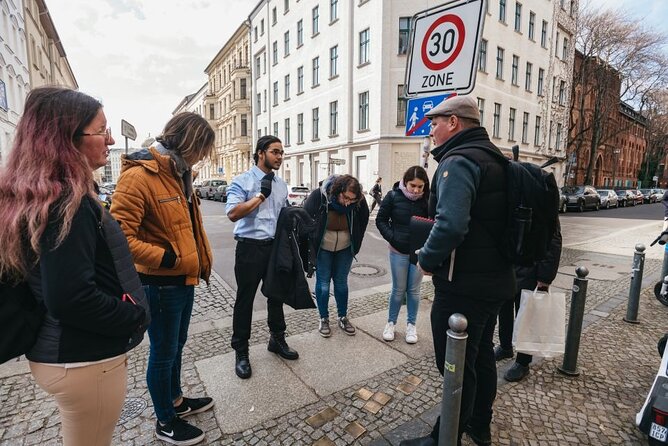
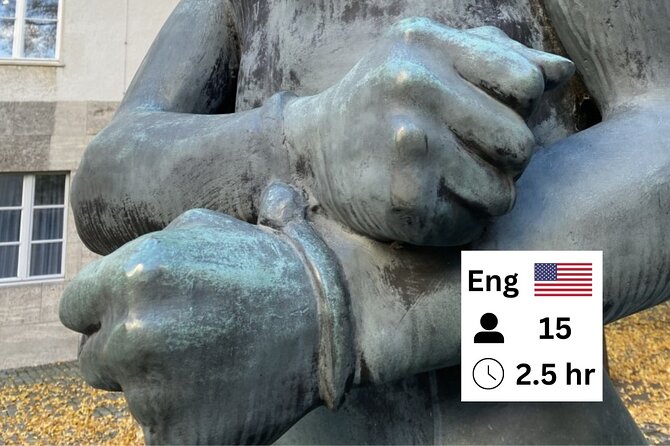
At the Block of Women, the tour tells the story of the Rosenstraße Protest. German women gathered to demand the release of their Jewish husbands, who had been arrested and held by the Nazi authorities.
This is one of the most striking examples of public protest included in the walk. It shows that resistance could be collective, visible, and rooted in family ties. The women did not fit the simple picture many people carry of resistance under Nazism. They were not underground fighters or foreign rescuers. They were people who used public pressure to challenge the state.
The stop is valuable because it also complicates the question of who resisted and who did not. The tour does not present German society as uniformly brave or uniformly passive. Instead, it asks you to consider why some people acted, why others stayed silent, and how fear, prejudice, loyalty, and self-preservation shaped behavior.
You should give this section your full attention. Fifteen minutes goes quickly, and the importance of the story lies in the detail. Hannah’s style, according to the supplied feedback, is especially passionate and engaging, while Tom is praised for handling sensitive subjects with care and clarity.
Museum Island and Neue Wache
The route then reaches Museum Island for about 20 minutes. This is the longest stop, giving the guide time to connect the immediate Jewish quarter with the wider story of Berlin.
Museum Island is one of the city’s most famous areas, but this tour uses it for historical interpretation rather than museum browsing. You are not given a long block of free time to visit collections. Instead, the guide uses the surrounding spaces to discuss power, memory, and the way Berlin presents its past.
Neue Wache follows, with about 15 minutes. This memorial is dedicated to victims of war and dictatorship. It broadens the tour beyond Jewish persecution while keeping the focus on the human cost of state violence.
For some people, this change in focus may feel less direct than the stops in the Jewish quarter. I see it as useful context. The tour is examining how different memorials present suffering and responsibility, and how public memory works in a city shaped by war, dictatorship, division, and reunification.
Bebelplatz and the 1933 book burning
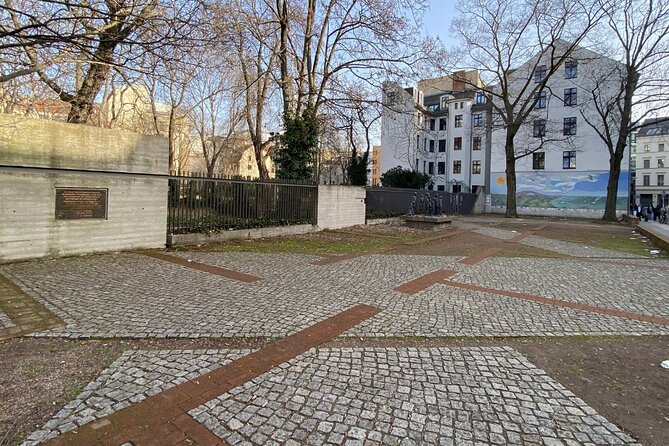
At the Memorial to the May 10, 1933 Nazi Book Burning, you spend about 10 minutes. The memorial sits at Bebelplatz, where Nazi supporters burned books by Jewish, left-wing, pacifist, and other writers.
The site marks an attack on intellectual freedom before the Holocaust reached its later stages. Books were chosen because ideas were being treated as enemies. The regime sought control over schools, universities, journalism, literature, and public debate.
This is a good stop for understanding how propaganda and censorship helped prepare the ground for wider persecution. You can connect the book burning to the tour’s earlier discussion of racial ideology. The Nazis did not only target people. They also attacked the ideas, evidence, and voices that challenged their version of Germany.
The visit is fairly brief, so the guide’s explanation makes the difference. A quick photograph here will not tell you much. The meaning comes from learning what happened on May 10, 1933, and why the event signaled a broader campaign against free thought.
Trains to Life, Trains to Death
The final major memorial is Trains to Life, Trains to Death, with about 10 minutes for a guided visit. Its subject is the fate of Jewish children, including the rescue effort associated with Nicholas Winton, sometimes called the British Schindler.
This story introduces a different form of rescue. Children were helped to escape, but their safety often came with separation from parents and uncertainty about what awaited them. The guide places Winton’s work within the larger story of children caught between rescue and loss.
The memorial works well near the end because it brings the tour back to individual lives. After hearing about laws, deportations, protests, and mass persecution, you finish with children and families. It is a painful reminder that rescue could save a life without undoing the damage already caused.
The published route ends at Berlin Friedrichstraße station, while the meeting information also says the activity ends back at the meeting point. Since those details do not match, confirm the final endpoint before you set plans for lunch, a train, or another timed visit.
What the $56 price includes
At $56 per person, this is not the cheapest way to walk through central Berlin. The price is easier to justify if you value a specialist guide, small numbers, and access to places you might pass without noticing.
You also receive entry to museums and memorials, historical maps, then-and-now photographs, interactive discussion, and recommendations for further exploration. Those extras matter because the route depends on context. Without a guide, you might see the New Synagogue, Stolpersteine, Bebelplatz, or the Rosenstraße memorial but miss the connections between them.
The strongest value comes from the guide’s ability to answer questions. The feedback specifically praises the guides for being professional, patient, and able to handle difficult subjects. That is more useful than a memorized speech, especially if you want to ask how resistance worked or why more people did not act.
The main limit is time. Eleven stops in 2.5 hours means several visits last only 10 or 15 minutes. You get a carefully chosen introduction, not a full museum day. If you want to read every panel or spend a long time at each memorial, plan a separate return visit.
Practical advice for a respectful visit
Wear comfortable shoes and carry water. The tour runs in all weather, so bring an umbrella, rain protection, or sun cover depending on the forecast.
The tone is serious throughout. I would avoid scheduling it directly before a rushed dinner or a busy evening event. Give yourself a little space afterward to think about what you have heard.
The tour is wheelchair accessible, and it is conducted in English with a live guide. Food and drinks are not included. Public transport tickets are not needed during the walking route, though you may need transport to reach the starting point or continue from the endpoint.
Free cancellation is available up to 24 hours before the activity for a full refund, and you can reserve now and pay later. Those terms are useful if your Berlin plans are still changing.
Who should book this tour?
I recommend it most strongly to first-time Berlin visitors who want a focused introduction to Jewish Berlin and Nazi-era resistance. It also suits history students, educators, and anyone who prefers personal stories to broad military history.
You do not need specialist background. The guide explains the Nazi racial system, the process of persecution, and the different forms of resistance in a way that welcomes questions.
I would be more cautious if you want a relaxed sightseeing walk. The subject is painful, and the pace is built around listening rather than entertainment. Families should also consider the age and sensitivity of children, since the tour discusses deportation, genocide, and the destruction of Jewish communities.
Should you book Path of Resistance?
Book it if you want Berlin’s Holocaust history explained through specific people and places. The workshop of Otto Weidt, the Rosenstraße protest, the Stolpersteine, and the book burning memorial give the walk a strong human focus.
At $56, the experience earns its price through specialist guiding and a small group rather than through the number of sights alone. Just remember that several stops are short, confirm the group size and final endpoint, and arrive ready for a serious afternoon. For a thoughtful introduction to resistance and remembrance in central Berlin, this is a worthwhile choice.
FAQ
How long does the Path of Resistance tour last?
The walking tour lasts 2.5 hours. Starting times vary, so check availability when booking.
What language is the tour conducted in?
The live tour guide conducts the experience in English.
Where does the tour start?
The tour starts at the former Imperial Post Office. Arrive 10 minutes early and look for the guide at the main entrance holding a blue umbrella.
Where does the tour finish?
The route information gives Berlin Friedrichstraße station as the finish. The meeting information also says the activity ends back at the meeting point, so confirm the endpoint before booking other plans.
Is public transport needed during the tour?
No public transport ticket is required during the walking tour.
Is the tour wheelchair accessible?
Yes, the activity is described as wheelchair accessible.
What should I bring?
Bring comfortable shoes, water, and an umbrella or other weather protection. The tour operates in all weather conditions.
Just added around Berlin
- Berlin: Private Guided Tour of the Main Sights★ 5.0 · 13 reviews
- Private Highlights of Berlin Bike Tour★ 5.0 · 13 reviews
- Modern Berlin Private Walking Tour: Diverse, Vibrant and Exciting German Capital★ 5.0 · 13 reviews
- Tour in Berlin from Warnemünde and Rostock Cruise Port★ 4.1 · 13 reviews
- Berlin: Stasi Museum Private Guided Tour with Entry Ticket★ 4.8 · 13 reviews
- Private Food Tour Experience with a born and bred Berliner★ 5.0 · 14 reviews
- Berlin: Rheinsberg Palace Entrance Ticket★ 4.8 · 14 reviews
- Berlin in one day – day tour with an expert guide★ 5.0 · 14 reviews
Berlin Tours, compared.
Reichstag, Dome and Government District Guided Tour
Read our review →
1-Hour City Tour by Boat with Guaranteed Seating
Read our review →

Government District around the Reichstag Guided Tour
Read our review →
Reichstag, Plenary Chamber, Cupola & Government Tour
Read our review →