
Reviewed · OLD TOWN WALKS
Nuremberg 2-Hour Old Town Highlights Walking Tour in English
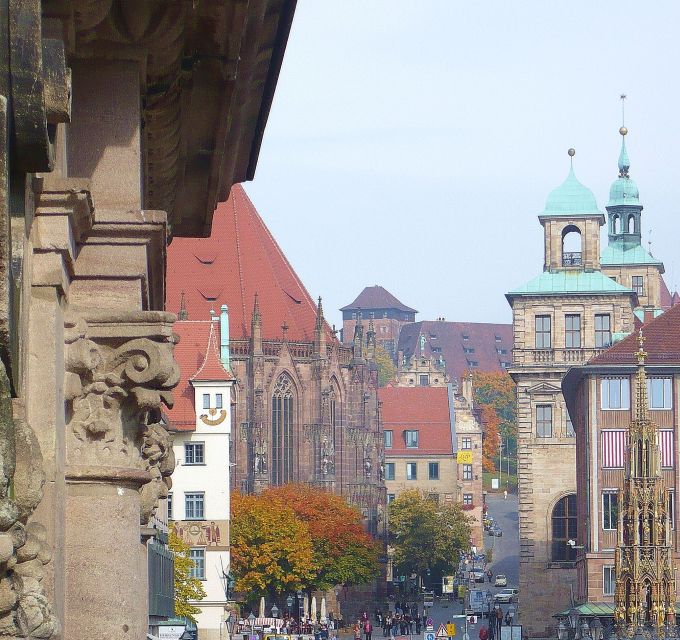
Nuremberg reveals its story block by block. This two-hour English walking tour links medieval walls, Renaissance landmarks, castle courtyards, and the city’s difficult 20th-century past, all at a sensible $21 per person.
I like the easy meeting point at the main train station and the useful local advice on sausages, beer, and modern dining. I also like the guide-led use of historical pictures, which can make vanished scenes easier to understand. The main drawback is pace: two hours covers a lot, and the tour is not suitable for people with mobility impairments.
In This Review
- Key points to know before you book
- Why two hours works well in Nuremberg
- Meeting your guide outside the main station
- Handwerkerhof and the medieval walls
- St. Lorenz Church and the River Pegnitz
- Hauptmarkt, the Beautiful Fountain, and Old City Hall
- St. Sebaldus Church and Albrecht Dürer’s quarter
- Imperial Castle courtyards and the city above
- Nuremberg’s Nazi-era sites and the difficult chapter
- Food advice that helps after the walk
- Guide quality, humor, and the tone of the walk
- Price, timing, and who gets the best value
- Should you book the Nuremberg walking tour?
- FAQ
- Where does the tour meet?
- Where does the tour finish?
- How long does the walking tour last?
- Is the tour conducted in English?
- What landmarks are included?
- Does the tour run in bad weather?
- Is the tour suitable for people with mobility impairments?
- What is the cancellation policy?
Key points to know before you book
- Start at Nuremberg Hauptbahnhof: Meet in front of the large central arched entrance, where your guide holds a red and white Nuremberg Tours in English sign.
- See the old town’s essential sights: The route includes Handwerkerhof, Hauptmarkt, Old City Hall, the Imperial Castle courtyards, and Albrecht Dürer’s House.
- Expect history from several eras: The walk moves from medieval city walls and churches to Nazi Party sites such as Congress Hall, Zeppelin Field, and Luitpold Arena.
- Get practical food advice: Your guide can point you toward Nuremberg grilled sausages, amber lager, and more modern food choices.
- Plan for all weather: The tour runs rain or shine, so sensible shoes and weather protection matter.
- Value is strongest for first-time visitors: At $21, the tour is an affordable way to get your bearings before exploring Nuremberg on your own.
Why two hours works well in Nuremberg
Nuremberg is a good city for a short walking tour because much of the old town is pedestrian-only. You are not constantly stopping for traffic, buses, or long transfers. The experience can keep moving from one historic setting to the next.
That compact format is useful if you have only one day in town, are visiting on a day trip, or want an introduction before choosing which museums and churches deserve more time. I would treat this as an orientation walk rather than a complete examination of every landmark.
The route begins at the main train station and ends at Hauptmarkt, the central marketplace. That arrangement makes practical sense. You start at a major transport hub and finish near restaurants, shops, seasonal events, and the city’s best-known square.
The tradeoff is clear. A two-hour tour cannot give every stop equal attention. You will hear the main story and see the key settings, but you may want to return later to the Imperial Castle, Albrecht Dürer’s House, or the churches.
More Old Town Walks in Nuremberg
- Nuremberg: Old Town Guided Walking Tour
★ 4.6 · 2,416 reviews - Nuremberg Old Town and Nazi Party Rally Grounds Walking Tour in English
★ 4.5 · 504 reviews - Nuremberg Old Town and Nazi Rally Grounds Walking Tour
★ 4.7 · 377 reviews
Meeting your guide outside the main station
Find the large center arched entrance of Nuremberg Central Station, known locally as Hauptbahnhof. The guide will hold a red and white sign reading Nuremberg Tours in English, so arrive a few minutes early rather than rushing out of the station at the last moment.
This is a particularly convenient meeting point if you arrive by train. It also removes one common problem with city walks: trying to locate a small street corner in an unfamiliar center.
The tour is led in English by a live English-speaking guide. The quality of the guide matters greatly on a history walk, and the strongest feedback points to clear explanations, humor, and a willingness to answer questions.
One guide praised by name is Hannes. His approach was described as factual, humorous, and considerate in bad weather, including looking for shelter when there was a lot to explain. Another guide was praised for adding quirky facts alongside the main story. Those details suggest that the best moments may come not from simply naming buildings, but from the extra context supplied at each stop.
Handwerkerhof and the medieval walls
The first major stop is Handwerkerhof Nuremberg, often translated as Craftsmen’s Court. Its position near the old city walls gives you an immediate sense of Nuremberg’s historic character.
The city walls are more than a backdrop for photographs. They help you understand the old town as a protected medieval center. Walking beneath their shadow gives the opening part of the tour a strong visual anchor before you move into streets lined with historic buildings.
Handwerkerhof also provides a colorful introduction to traditional crafts and local style. The setting is compact, so your guide can explain how the court fits into the larger old town without asking you to walk far between points.
I like this opening because it gets you into the character of Nuremberg quickly. The possible weakness is that a busy group can make a small area feel crowded, especially during a market period or popular travel season. Stay close enough to hear the guide and leave room for people moving through the court.
St. Lorenz Church and the River Pegnitz
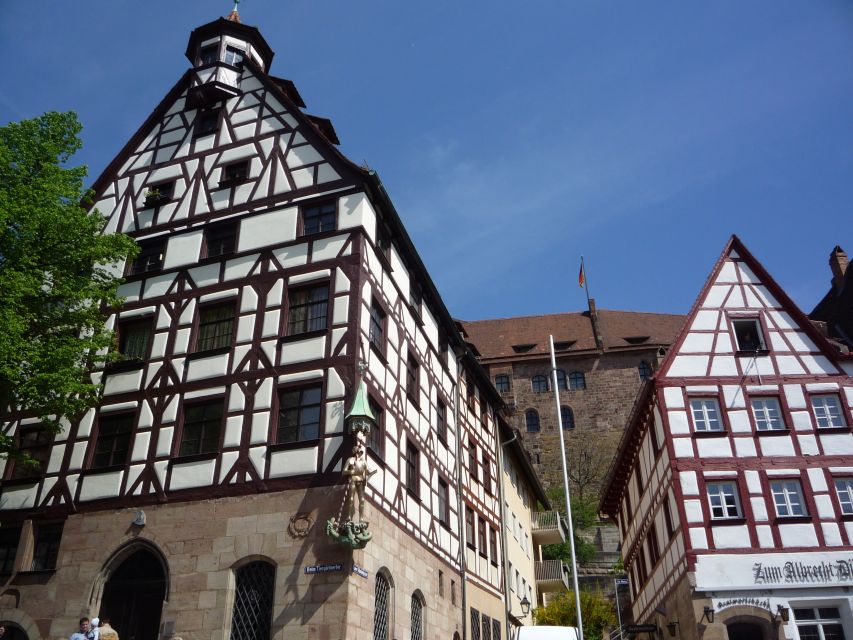
The route passes St. Lorenz Church, one of the major landmarks in the old town. Even when the schedule allows only a brief exterior look, its scale and position help show how important Nuremberg was during the medieval and Renaissance periods.
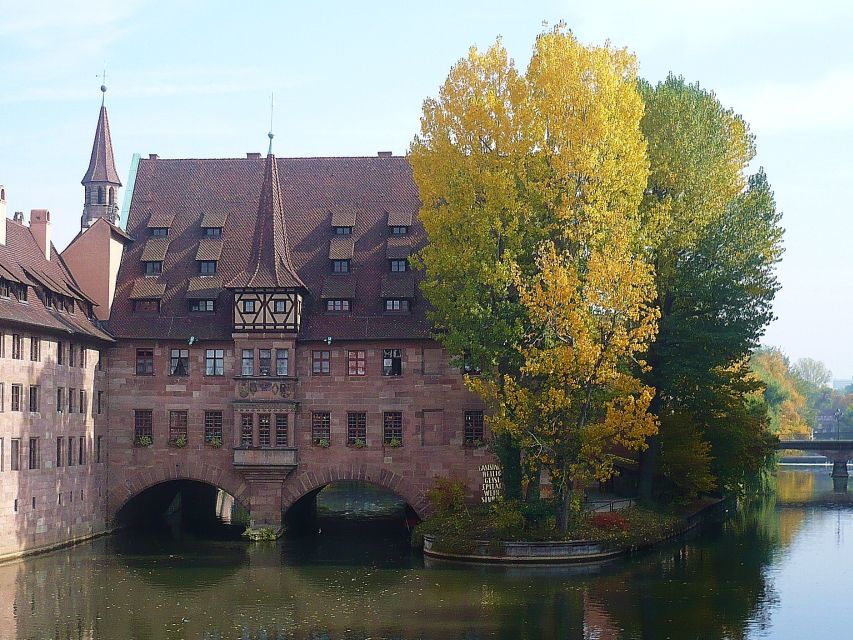
The tour also follows the River Pegnitz. This gives the walk a welcome change of scene. Instead of seeing one monument after another, you get a sense of how water, bridges, churches, and commercial streets shaped the city.
The guide connects Nuremberg’s past to the Holy Roman Empire and the German Renaissance. Those subjects can sound broad in a textbook, but they become easier to follow when tied to the buildings around you.
Do not expect an extended church visit based on the stated route. St. Lorenz is listed as a pass-by stop, not a full interior visit. If entering the church is important to you, ask the guide about timing or plan to return after the tour.
More Walking Tours in Nuremberg
- Bamberg: Guided Walking Tour
★ 4.6 · 3,202 reviews - Nuremberg: Walking Tour of Former Nazi Party Rally Grounds
★ 4.7 · 1,665 reviews - Bamberg: City Highlights Walking Tour
★ 4.6 · 679 reviews - Bayreuth: German City Walking Tour (Tourist Info)
★ 4.7 · 202 reviews
Hauptmarkt, the Beautiful Fountain, and Old City Hall
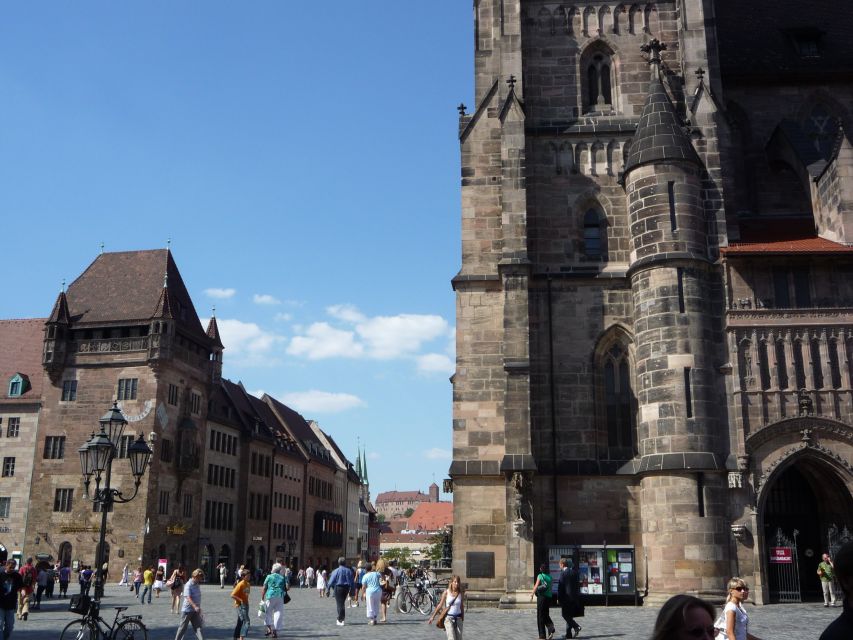
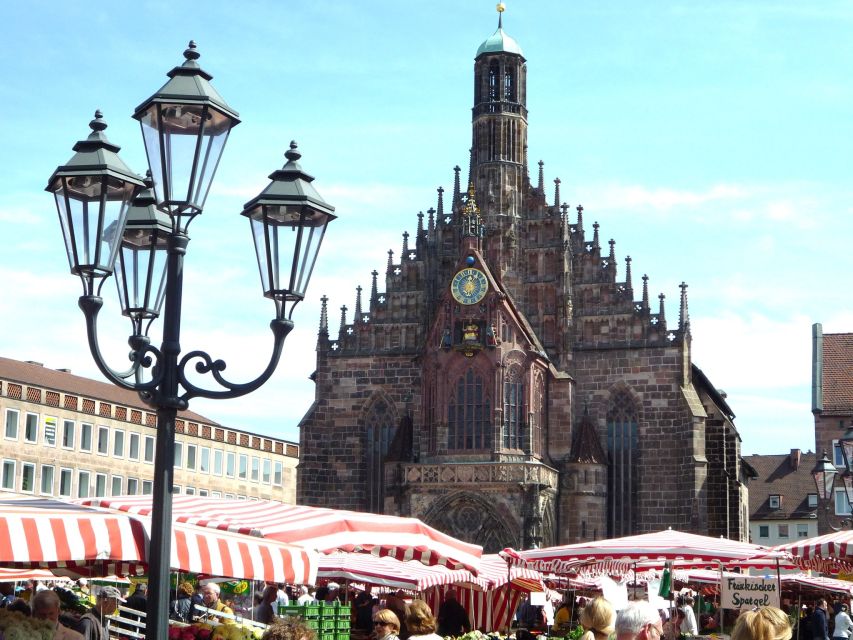
Hauptmarkt is one of the tour’s most useful stops. This is the marketplace where Nuremberg’s famous Christkindlesmarkt takes place in December. At other times of year, seasonal markets and festivals may fill the square, so the atmosphere changes with the calendar.
The Beautiful Fountain is the square’s most eye-catching feature. It gives the guide a natural place to discuss the marketplace and the city’s public life while you take photographs.
The Christmas market is seasonal, not a year-round attraction. If you visit outside December, you will still see the square and may find another market or festival, but you should not expect the Christmas stalls.
Old City Hall adds another layer to the stop. Together, the marketplace and city hall show the civic side of Nuremberg, while the churches and castle tell the story of religion and power.
This is also where the tour finishes. That makes Hauptmarkt a useful place to pause after the walk. You can ask the guide to repeat a restaurant suggestion, continue sightseeing, or simply take time with the square before moving on.
St. Sebaldus Church and Albrecht Dürer’s quarter
St. Sebaldus Church is another pass-by landmark. Like St. Lorenz, it helps establish the importance of Nuremberg’s religious and civic center, even though the tour does not promise a detailed interior visit.
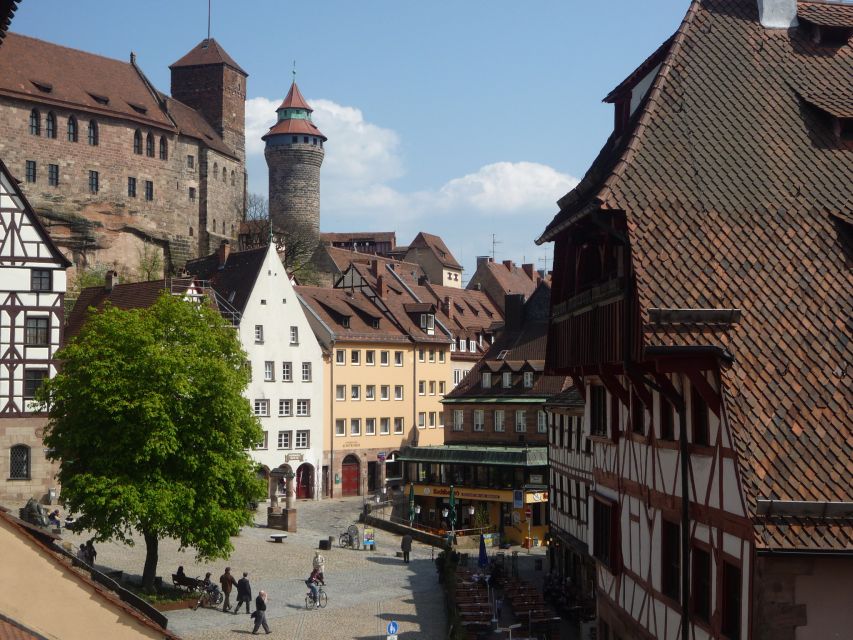
The walk then reaches Albrecht-Dürer-Platz and Albrecht Dürer’s House. Dürer is one of the clearest links between Nuremberg and the German Renaissance, so this part gives the earlier discussion a personal focus.
Albrecht Dürer’s House is listed as a guided stop, unlike the two churches that are passed by. That means you should expect more explanation here, although the stated inclusion is not a promise of an extended museum visit.
I like this section because it moves history away from abstract dates and toward a named artist and a real home. You get a better sense of how Nuremberg’s artistic reputation fits into the streets of the old town.
If you have a strong interest in Dürer, make a note of the house and consider returning later. The two-hour format is designed to introduce the site, not replace a dedicated museum visit.
Imperial Castle courtyards and the city above
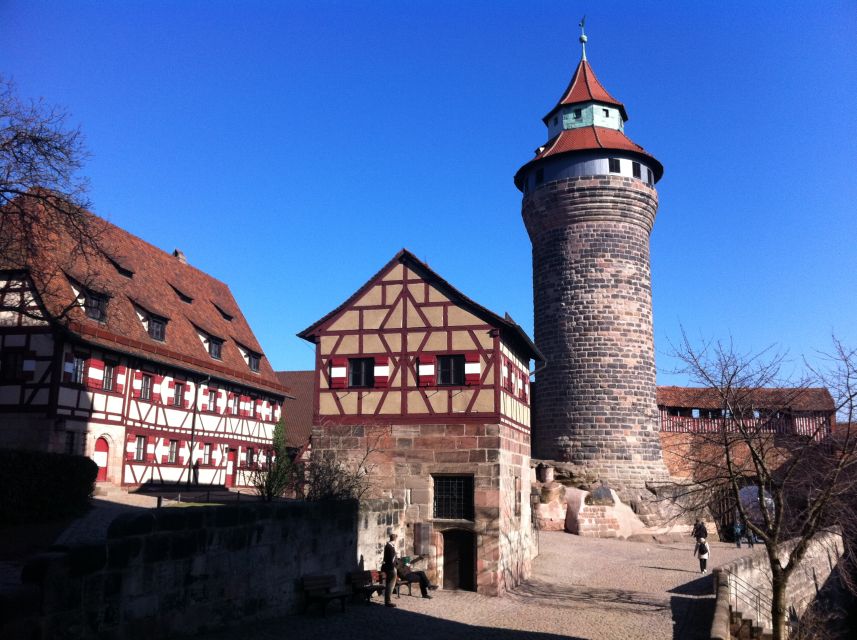
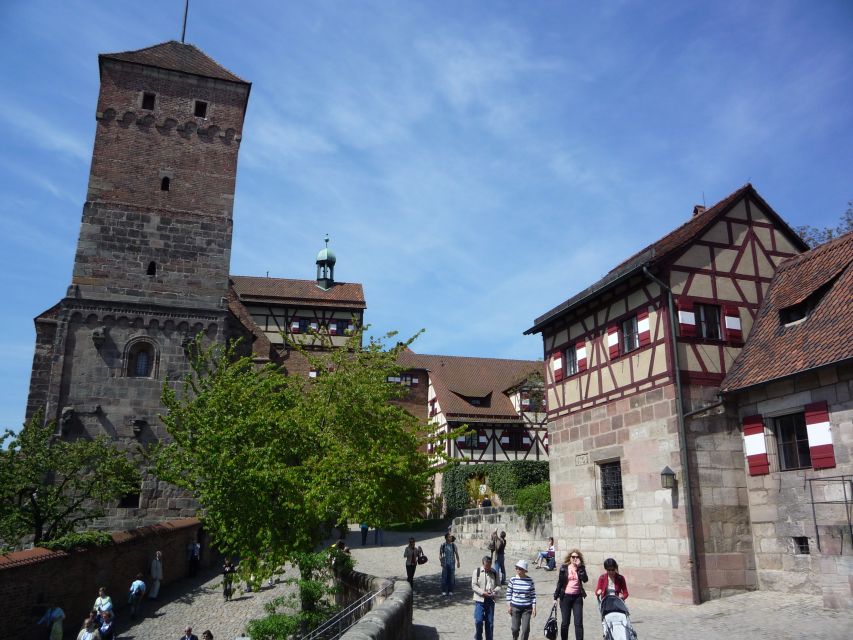
The Imperial Castle is one of the most important stops on the route. The tour includes its courtyards, giving you a chance to see the setting connected with Nuremberg’s role in the Holy Roman Empire.
Courtyards are a smart choice for a short walking tour. They provide a substantial sense of the castle complex without requiring the group to spend the whole afternoon inside exhibits. Your guide can explain the castle’s political importance while you see the spaces where that authority was presented.
The climb or approach to the castle may feel like the most demanding part of the walk, especially in poor weather or if you are not used to walking on historic surfaces. The activity is specifically not suitable for people with mobility impairments, so take that warning seriously.
For other visitors, the castle section helps tie the whole route together. The walls show defense, the marketplace shows commerce, the churches show faith, and the castle shows power. That is a useful framework for remembering Nuremberg after the tour ends.
Nuremberg’s Nazi-era sites and the difficult chapter
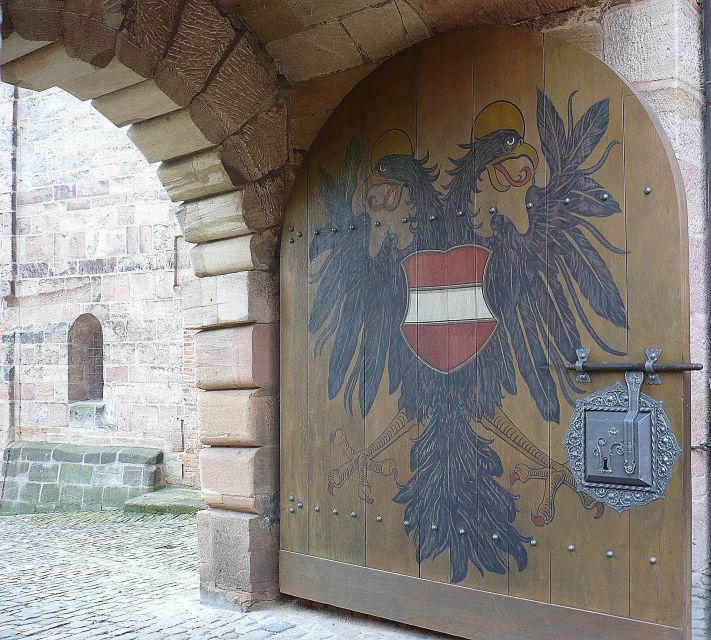
The tour also includes the Congress Hall of the Nazi Party, Zeppelin Field, and Luitpold Arena among its highlighted historical sights. These places are essential to understanding Nuremberg beyond its medieval center.
Their inclusion gives the experience a wider scope than a standard old-town stroll. You are not shown only picturesque walls and half-timbered buildings. The tour also acknowledges the city’s role in the Nazi period and the weight carried by these large political gathering grounds.
The supplied route lists the old town stops in detail, while the broader highlights also name these Nazi-era locations. Because the tour lasts only two hours, I would ask the guide at the start how these sites fit into the walk and how much time is devoted to them.
That question is useful, not critical. Historical sites of this scale can require more time than a short central walking route allows. If this chapter is your main reason for coming to Nuremberg, you may need a separate visit or a longer dedicated experience.
Still, having the subject introduced during an old-town tour is valuable. It keeps the city’s story honest and prevents the medieval center from becoming a pretty but incomplete picture.
Food advice that helps after the walk
A good city guide should tell you more than dates and architectural labels. This experience includes practical advice about where to find Nuremberg grilled sausages and amber lager, along with suggestions for more modern food if traditional dishes are not your preference.
That is one of the tour’s strongest everyday benefits. You finish at Hauptmarkt with a better idea of what to eat and where to continue your afternoon.
Nuremberg’s famous sausages are a natural local choice, but you do not have to make the meal traditional. The guide can point you toward alternatives, which is helpful for families, vegetarians, or anyone who has already had enough regional food.
I would keep a small note on your phone during the tour. Restaurant suggestions are easy to forget once you are looking at a castle courtyard or taking pictures of the fountain.
Guide quality, humor, and the tone of the walk
The experience is designed to entertain as well as inform. That balance can make a big difference during two hours of historical explanation.
The strongest comments praise guides for clear answers, quirky facts, and an entertaining approach. Historical pictures are also used, giving you a visual way to compare the present city with earlier scenes.
There is one useful caution about tone. One participant felt that a guide used too much profanity and crude sexual material. That may not reflect every guide or every departure, but it is worth keeping in mind if you prefer a strictly formal presentation or are touring with young children.
I value humor when it helps people remember a place. I would simply expect the style to vary by guide. If a polished, restrained tone matters to you, ask a question at the meeting point and listen to the guide’s manner before the group gets far into the old town.
Price, timing, and who gets the best value
At $21 per person, this is a reasonable price for a live two-hour English tour in a major historic city. You are paying for a local guide, a planned route, historical interpretation, and practical help with the rest of your visit.
The value is especially good if you are visiting Nuremberg for the first time. A guide can help you understand how the walls, churches, market, castle, Dürer sites, and Nazi-era locations relate to one another. That context can save you time later.
The value is lower if you already know Nuremberg well or want long interior visits. You are buying orientation and explanation, not an all-day museum program.
The tour runs at scheduled starting times, so check availability when booking. You can reserve now and pay later, and cancellation is free up to 24 hours before the start. Those policies are useful if your train plans or weather forecast remain uncertain.
The walk takes place rain or shine. Wear comfortable shoes, bring weather protection, and allow enough time to remain outdoors for the full two hours.
Should you book the Nuremberg walking tour?
I would book this tour if you want a well-priced first look at Nuremberg, especially after arriving by train. It suits visitors who enjoy history with a bit of humor, want clear background on the main sights, and appreciate advice about food and the rest of the city.
I would be more cautious if mobility is limited, if you dislike walking in poor weather, or if your main goal is a slow interior visit to churches and museums. The short format also means you should clarify how the Nazi-era sites are covered.
For most first-time visitors, the tour earns its place early in a Nuremberg stay. It gives you the city’s big themes, points you toward the places worth revisiting, and leaves you at Hauptmarkt with the afternoon still ahead.
FAQ
Where does the tour meet?
Meet in front of the large center arched entrance to Nuremberg Central Station, or Hauptbahnhof. The guide will hold a red and white Nuremberg Tours in English sign.
Where does the tour finish?
The tour finishes at Hauptmarkt, at 90403 Nürnberg, Germany.
How long does the walking tour last?
The tour lasts two hours.
Is the tour conducted in English?
Yes. It includes a live English-speaking guide.
What landmarks are included?
The experience includes Handwerkerhof, Hauptmarkt, Old City Hall, the Imperial Castle courtyards, Albrecht Dürer’s House, and views or discussion of major historic locations including the city walls, Beautiful Fountain, churches, and Nazi-era sites.
Does the tour run in bad weather?
Yes. The tour takes place rain or shine, so bring suitable clothing and footwear.
Is the tour suitable for people with mobility impairments?
No. The experience is not suitable for people with mobility impairments.
What is the cancellation policy?
You can cancel up to 24 hours in advance for a full refund. You can also reserve now and pay later to keep your plans flexible.
Just added around Nuremberg
- Bayreuth: Private Guided Walking Tour★ 5.0 · 15 reviews
- Nuremberg: St. Johannis Friedhof &Hesperidengärten IN GERMAN★ 4.4 · 15 reviews
- Nuremberg: Medieval Time Travel for Kids★ 4.9 · 15 reviews
- PRIVATE Nuremberg WW2 and Old Town Day Tour (Product code: 87669P16)★ 4.5 · 15 reviews
- Bayreuth City Walking Tour★ 4.6 · 16 reviews
- Nuremberg: Medieval Ages Tour in Spanish★ 4.5 · 16 reviews
- PLAYMOBIL®-FunPark Entrance Ticket★ 4.5 · 17 reviews
- Nuremberg: Private guided tour of the Old Town in German★ 4.9 · 17 reviews
Old Town Walks, compared.


Old Town & Viktualienmarkt City Walk in German
Read our review →
The Night Watchman Old Town Walking Tour in German
Read our review →
Browse the lists this tour appears in