Reviewed · MUNICH TOURS
Munich’s 500 Years of Architecture Guided Tour
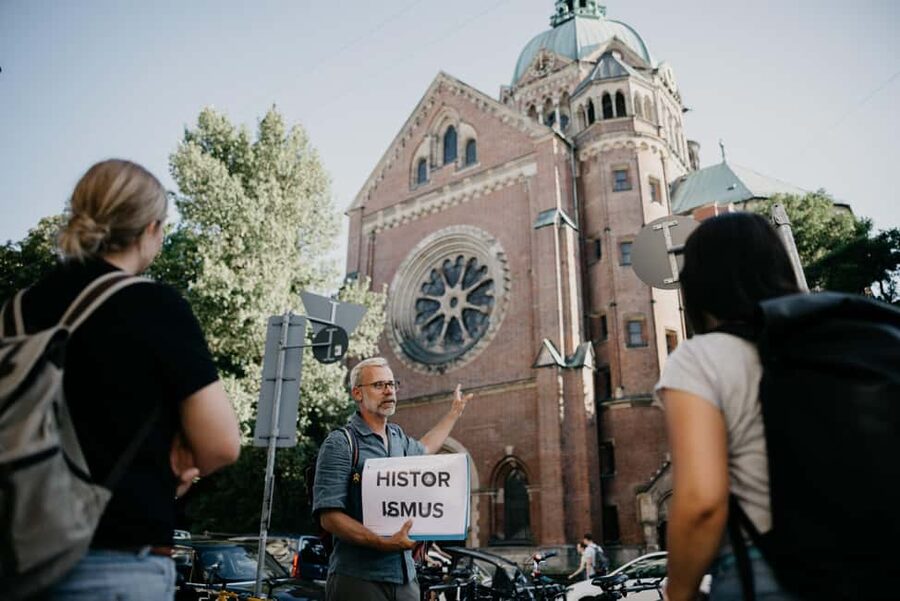
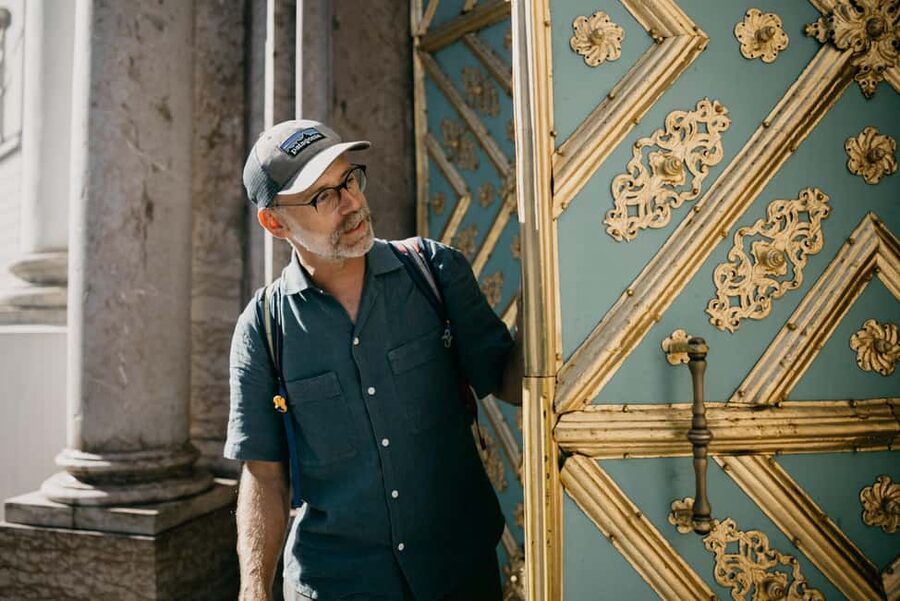
Munich’s buildings tell the city’s story. This two-hour walk with Philipp moves from the late-15th-century Frauenkirche through Renaissance, Baroque, Neoclassical, Historicist, Art Nouveau, and modern design, with royal tales and odd local legends along the way. I like the chronological route, which gives the city a clear shape, and the change of mood from Old Town churches to the quiet Isar River. The main drawback is pace: fitting 500 years, several interiors, a tram ride, and a museum into two hours leaves little time for lingering.
I also like that this is not just a parade of grand façades. You may enter up to three important buildings, visit Christmas markets, and hear stories about Munich’s darker chapters as well as its royal past. The tour has earned five-star ratings from eight published reviews, with special praise for Philipp’s friendly manner and the way he makes the subject memorable.
The route is best for people who enjoy architecture but do not want a dry lecture. You need comfortable shoes and warm clothing, especially in winter. It is not suitable for wheelchair users or people with mobility impairments, and the exact finish deserves a quick check because the route information names the Sudetendeutsches Museum while the meeting details describe a return to the starting point.
In This Review
- Six details that make this Munich tour different
- Why the chronological route works so well
- Frauenkirche: Munich’s Gothic opening chapter
- St. Michael’s Church and the Renaissance turn
- Trinity Church and Theatine Church: Baroque Munich
- Opera House and Maximilianstraße: royal display in stone
- Leaving the Old Town for St. Lukas and the Isar
- Müllersche Volksbad and Art Nouveau character
- Christmas markets and the seasonal side of the route
- Alte Utting, street art, and a modern finish
- Is $36 a fair price for two hours?
- Who will enjoy this tour most?
- What to bring and how to prepare
- FAQ
- Where does the tour start?
- How long does the tour last?
- Which languages are available?
- Does the tour include food, drinks, or transport?
- Is the tour accessible for wheelchair users?
- Can I cancel the booking?
- Should you book Munich’s 500 Years of Architecture Tour?
Six details that make this Munich tour different
- Five architectural periods in two hours: Follow Munich from Gothic forms to modern art instead of studying one district in isolation.
- Frauenkirche at the starting point: Begin outside one of Munich’s defining churches and enter the city’s late medieval story.
- A world-record Renaissance church: St. Michael’s Church gives the tour a strong second chapter after the Gothic opening.
- Old Town to the Isar River: A tram ride breaks up the historic center and brings you to calmer riverside sights.
- Alte Utting and modern Munich: The tour includes the much-discussed former ship setting, street art, and an unusual modern building.
- Philipp’s personal guiding style: The guide is praised for being personable, friendly, and entertaining, not simply for reciting dates.
Why the chronological route works so well
Many city walks bounce from one famous building to another. This one has a clear order. You begin in the late 15th century, move through the Renaissance and Baroque periods, pass into Neoclassicism and Historicism, and finish with Jugendstil, street art, and modern museum design.
That order matters because Munich’s center can otherwise feel like a collection of handsome but unrelated façades. Here, each architectural shift becomes part of a larger story. Gothic buildings point upward and feel tied to the medieval church. Renaissance design brings a more measured classical style. Baroque adds ceremony and theatrical detail. Later styles reflect changing ideas about monarchy, civic life, comfort, and modern art.
Philipp also adds royal stories, legends, and some less cheerful chapters of Munich’s past. That mix should suit you if you want more than dates and construction names. The strongest praise for the tour focuses on this personal approach. Philipp is described as friendly and present, and one review singles out the way he makes the journey both meaningful and fun.
Still, two hours is tight. You will get a broad architectural outline rather than a full study of each building. If you want long interior visits or detailed technical discussion, you may find the pace brisk.
A few more tours and experiences worth a look
- Munich 3-Hour Guided Bike Tour
★ 4.5 · 1,731 reviews - Munich’s Beer Halls and Breweries: 3-Hour Guided Tour
★ 4.6 · 928 reviews - Guided Dachau Concentration Camp Memorial Site Tour with Train from Munich
★ 5.0 · 920 reviews
Frauenkirche: Munich’s Gothic opening chapter
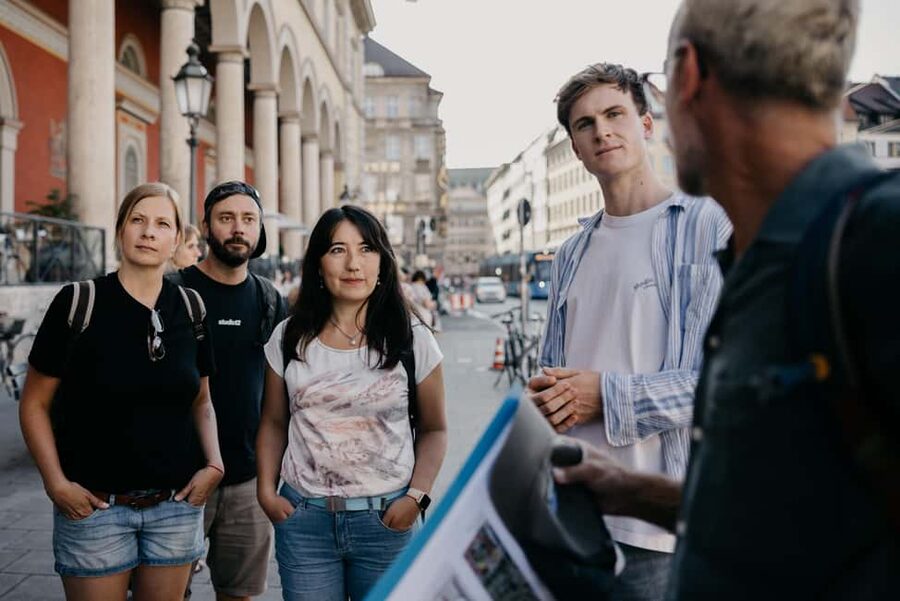
Meet Philipp outside the main entrance of Frauenkirche at Frauenplatz 1. His yellow winter hat, yellow backpack, and large blue presentation folder make him easy to spot, which is useful in a busy square.
The Frauenkirche is the natural starting point. Its late-15th-century construction places you at the end of Munich’s Gothic period, before the city turns toward Renaissance ideas. The church is one of the city’s most recognizable landmarks, and beginning here gives the tour a strong sense of place right away.
You should expect the guide to explain the Gothic period through the church and its stories rather than treat it as a purely visual stop. The tour description promises legends and tales from the era, so listen for the human details behind the stonework. The point is not only to admire the twin towers, but to see the cathedral as a marker of Munich’s religious and civic power.
The starting area is easy to reach. Marienplatz station, served by the S-Bahn and U3 and U6 subway lines, is about a five-minute walk away. From Munich’s Hauptbahnhof, the walk takes about 15 minutes. Arrive ready to walk rather than expecting a sit-down introduction.
St. Michael’s Church and the Renaissance turn
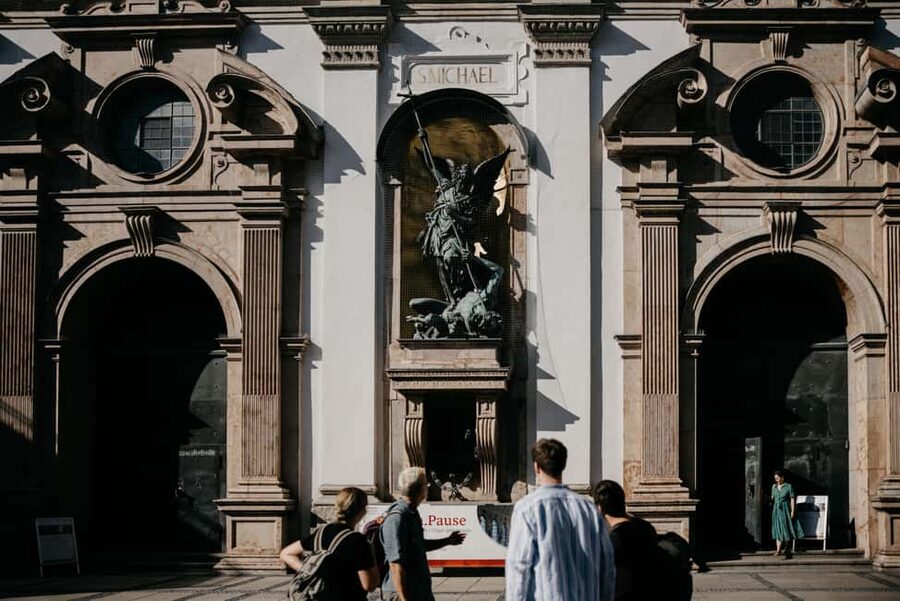
The next major stop is St. Michael’s Church, a useful contrast with Frauenkirche. The tour presents it as a world-record-holding Renaissance masterpiece, giving the building extra weight in the story of Munich’s changing style.
The value here is comparison. After the vertical Gothic character of the cathedral, Renaissance design brings a different visual language, shaped by classical ideas and a renewed interest in balance. Seeing the two churches in sequence helps you notice the change instead of hearing about it as an abstract art-history label.
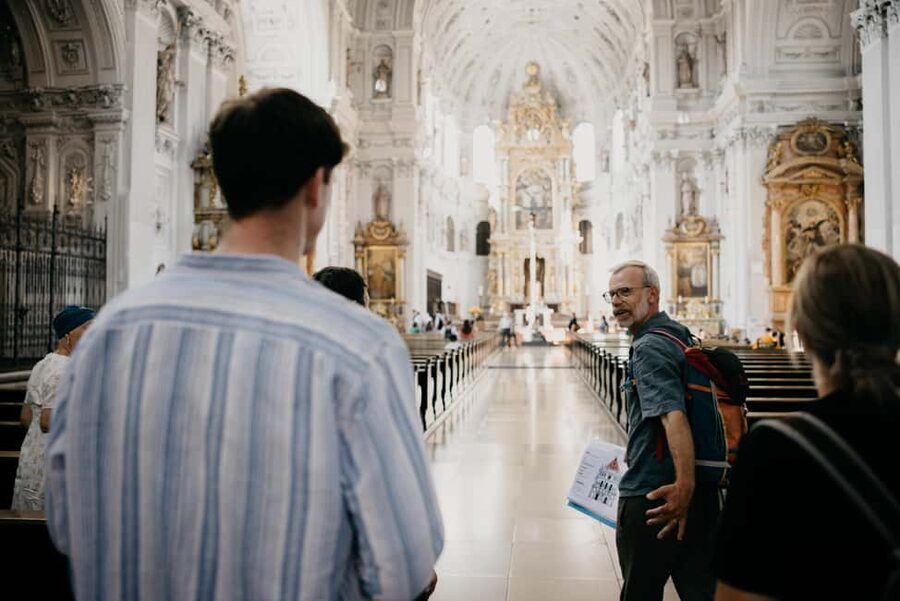
St. Michael’s is also one of the places where an interior visit may be possible. The tour includes the chance to enter up to three impressive buildings, although the exact buildings entered can depend on conditions and timing. If interior access matters to you, ask Philipp at the start how much time is planned inside.
This stop should appeal to first-time Munich visitors because it connects a major sight with a clear lesson. You are not merely checking another church off a list. You are watching the city shift from one period to another.
Trinity Church and Theatine Church: Baroque Munich
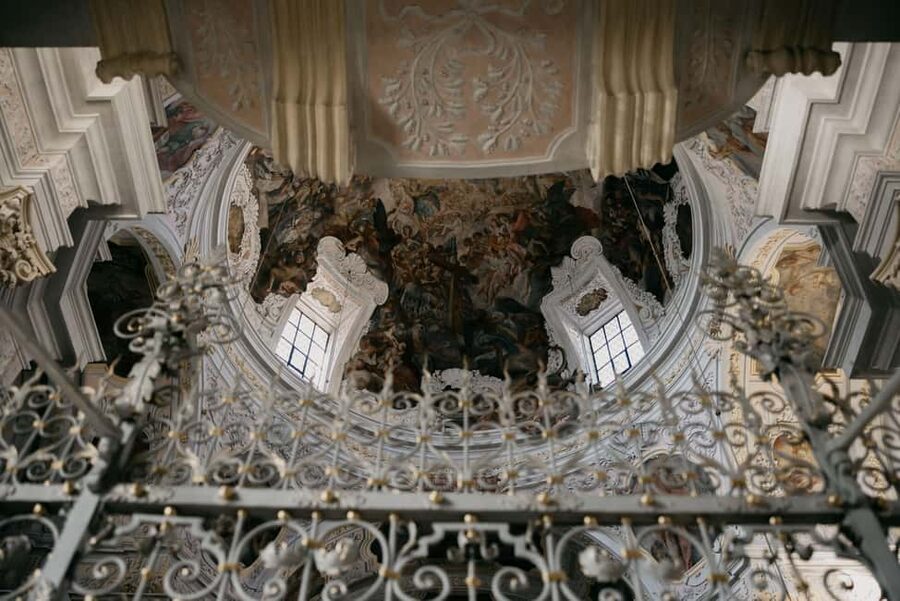
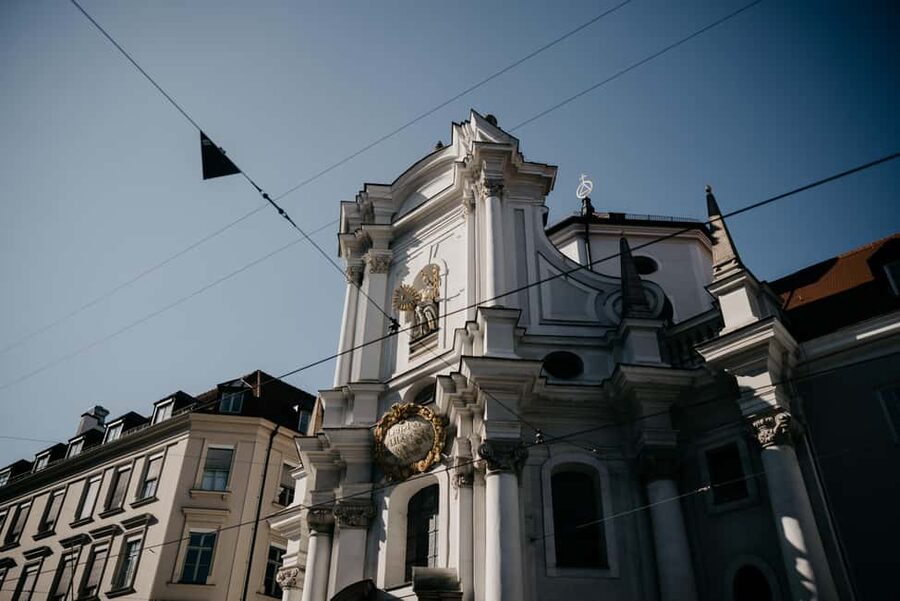
Trinity Church and Theatine Church carry the story into Baroque Munich. These stops add ceremony and ornament after the Gothic and Renaissance chapters.
The Baroque period often used scale, movement, and decoration to create an emotional response. In practical terms, you can expect a more theatrical mood than at the opening stops. Philipp’s stories about royal life and local legends should give these buildings a human frame, especially if you enjoy hearing how rulers and institutions shaped the city.
The itinerary includes visits to both churches, but a two-hour tour cannot guarantee a long, quiet look at every interior. Church access can also vary in real life, so treat the buildings as both architectural stops and story points rather than assuming extended sightseeing time.
These churches are valuable for showing that Munich was not built in one style. The Old Town is a layered place. Medieval, Renaissance, and Baroque ideas sit close together, and a good guide helps you read those layers without turning the walk into a vocabulary test.
Something different for another day:
- From Munich: Neuschwanstein & Linderhof Castle Full-Day Trip
★ 4.5 · 12,494 reviews - Neuschwanstein & Linderhof Castle-Fairytale Day Tour from Munich
★ 4.5 · 7,275 reviews - Munich: Third Reich & WWII Walking Tour
★ 4.6 · 6,181 reviews - Dachau Concentration Camp Memorial Site Tour from Munich by Train
★ 4.5 · 5,637 reviews
Opera House and Maximilianstraße: royal display in stone
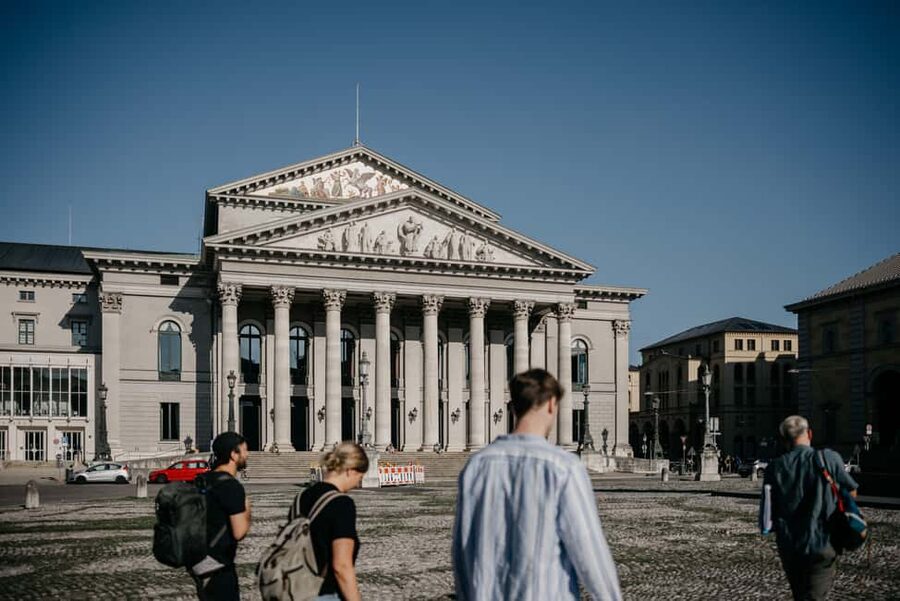
The Bavarian State Opera and Maximilianstraße bring the tour into grander civic and royal territory. Here, architecture becomes public theater. Large institutions and ceremonial streets tell you how Munich presented itself as a capital.
Maximilianstraße is covered as a guided stop rather than simply a quick photo break. Expect attention to the street’s architecture, royal connections, and the Historicist style that looked back to earlier forms while creating a powerful 19th-century city image.
The Bavarian State Opera adds another layer. It represents the cultural ambitions of the Bavarian court and the importance of performance, ceremony, and public prestige. Even if you are not an opera fan, the building fits the tour’s larger question: what does a city choose to make impressive, and who is meant to see it?
This portion may be especially useful for you if you have already seen Munich’s central churches and want a broader view of the city. It shifts the focus from religious buildings to royal and civic identity.
Leaving the Old Town for St. Lukas and the Isar
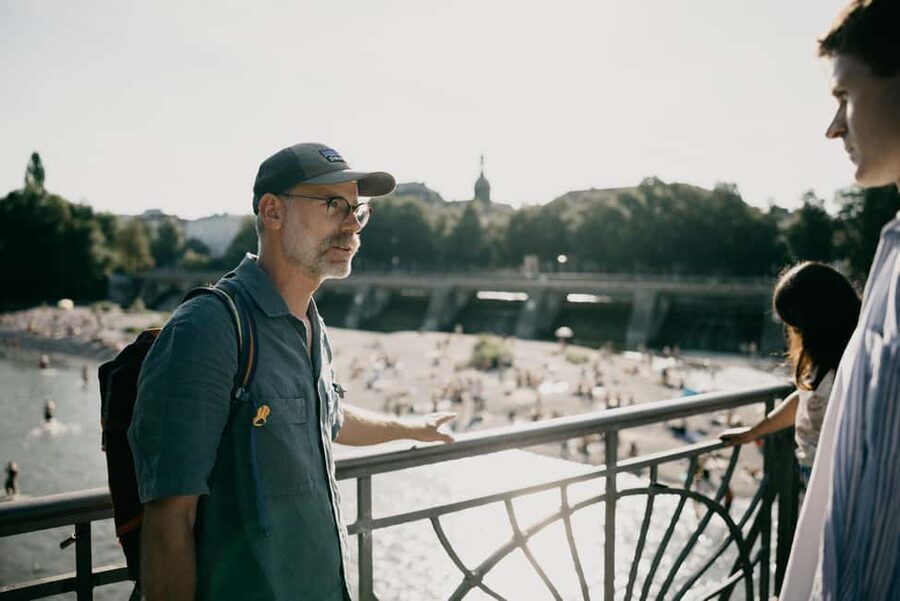
One of the tour’s best changes of pace comes when the route leaves the Old Town for the Isar River. The walk includes a tram ride, although transport to and from the meeting point is not included in the price, so clarify whether you need to arrange or pay for the tram portion separately.
St. Lukas is one of the riverside stops. The move to the Isar gives the tour breathing room after several major historic buildings. Instead of looking only at central squares and formal avenues, you get a different side of Munich, with calmer river surroundings and a less crowded setting.
The tour promises two more world records and surprising stories in this part of the route. The supplied details do not identify each record, so you should ask Philipp for the exact facts if that is a major reason for booking. What is clear is that the riverside section is not filler. It is designed to show how the city’s story continues outside the classic Old Town circuit.
This section also gives the tour a local feel. You are still studying architecture, but the setting changes from royal display to everyday city space and river life.
Müllersche Volksbad and Art Nouveau character
Müllersche Volksbad introduces another useful shift. The building is linked to Jugendstil, or German Art Nouveau, a style known for flowing lines, decorative detail, and a break from strict historical imitation.
You may find this one of the most enjoyable stops if you like design that feels playful rather than solemn. The tour does not treat Munich as a museum frozen in the past. It shows how architects and civic planners experimented with new forms, public facilities, and urban character.
The building also helps explain why architecture is more than church domes and palace fronts. A public bath can reveal ideas about hygiene, social life, civic improvement, and design. The tour’s two-hour limit means you will not receive a full architectural course, but the stop adds welcome range.
Wear shoes that can handle a long walking route, and dress warmly. The tour is offered with winter conditions in mind, and part of the appeal comes from moving between outdoor streets, riverside areas, and interiors.
Christmas markets and the seasonal side of the route
The experience includes multiple Christmas markets, including a distinctive medieval Christmas market in a memorable setting. This is a major seasonal bonus, but it also creates a practical question: the market portion makes the most sense when the markets are operating.
In winter, the markets add atmosphere and help connect the architecture to present-day Munich. You may see the Old Town not only as a historic district but also as a place where people gather, shop, eat, and celebrate. Food and drinks are not included, so budget separately if you want to stop for market treats.
The markets can also make the tour feel more crowded and slower. That is not necessarily a problem, but it reinforces the need for warm clothing and patience. If your priority is close architectural study, ask how the seasonal market route affects the timing.
A camera is worth bringing. The experience includes churches, royal streets, riverside locations, street art, and modern design, giving you a much wider set of photographs than a standard Old Town walk.
Alte Utting, street art, and a modern finish
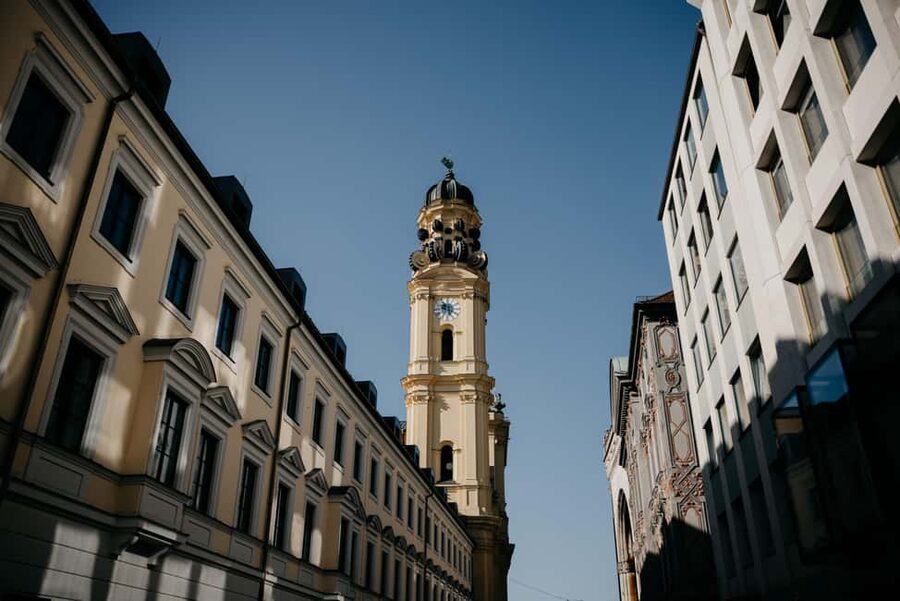
The tour’s final stretch moves into playful modern Munich. It includes the iconic Alte Utting, a much-publicized setting praised by The New York Times, along with street art and a modern museum.
This is an unexpected ending after centuries of churches and royal avenues. Alte Utting helps connect Munich’s architectural story to newer creative uses of urban space. Street art adds color and directness, while the museum provides a final look at contemporary design and culture.
A review of the route particularly praised this combination of Art Nouveau, graffiti, and the unusual modern building at the end. That combination is one reason this tour feels different from a standard Munich history walk. You are not left with the idea that the city’s best architecture ended in the 19th century.
The final stop is the Sudetendeutsches Museum. It is listed as the finish point in the route, while the meeting information says the activity ends back at the meeting point. Because those details do not match, confirm the exact ending before you book, especially if you have a train, dinner reservation, or another timed activity afterward.
Is $36 a fair price for two hours?
At $36 per person, this is not the cheapest way to see Munich’s center, but the price can be fair if you want a guide-led interpretation rather than a self-guided list of buildings.
You are paying for a carefully ordered route, live commentary in English or German, several major churches and civic buildings, the Isar section, and the chance to enter up to three impressive buildings. The tram connection and the wide geographic reach also give the tour more variety than a compact Old Town walk.
The value is strongest for you if you are curious about architecture but do not want to spend hours reading guidebooks. Philipp’s friendly style is repeatedly praised, and that matters on a subject that can become dry in less capable hands.
The value is weaker if you want to move slowly, sit inside each church, or focus on shopping and food. Food and drinks are not included, and transport to and from the meeting point is also your responsibility. A private group is available if you want a more personal format, but the supplied price is listed per person and does not explain the private-group supplement.
Free cancellation up to 24 hours before the tour and reserve-now, pay-later booking add flexibility. Those terms are useful if your Munich schedule depends on weather or changing plans.
Who will enjoy this tour most?
I would choose this experience if you:
- Want a quick but serious introduction to Munich’s architecture.
- Like stories about monarchs, legends, and unusual local details.
- Prefer a route that includes both famous landmarks and less expected areas.
- Enjoy mixing historic buildings with street art and modern design.
- Are visiting during the Christmas market season.
- Can walk comfortably for two hours and manage outdoor winter conditions.
You may want another option if you use a wheelchair, have a mobility impairment, or need a slow, highly accessible route. The tour is specifically not suitable for wheelchair users or people with mobility impairments.
It is also less suitable if you dislike changing locations. The move from the Old Town to the Isar is a strength for some people and a complication for others. You should also confirm the final stop and tram arrangements before setting out.
What to bring and how to prepare
Wear comfortable walking shoes. The route includes Old Town streets, a riverside area, and movement between several stops, so hard-soled fashion shoes may make the afternoon less pleasant.
Bring warm clothing in winter. The markets, street sections, and Isar portion place you outdoors, and the tour specifically advises dressing for cold weather. A camera is useful, but keep it secondary to listening because the value of this tour comes from the connections Philipp makes between places.
Meet outside Frauenkirche’s main entrance at Frauenplatz 1. Look for the yellow winter hat, yellow backpack, and large blue presentation folder. Marienplatz is the easiest public transport stop, about five minutes away on foot.
The tour is offered in English and German. Participation is at your own risk, and smoking is not allowed during the activity.
FAQ
Where does the tour start?
It starts outside the main entrance of Frauenkirche at Frauenplatz 1 in Munich. Philipp can be identified by a yellow winter hat, yellow backpack, and large blue presentation folder.
How long does the tour last?
The tour lasts two hours. Starting times vary, so check availability when booking.
Which languages are available?
The live tour is available in English and German.
Does the tour include food, drinks, or transport?
Food and drinks are not included. Transportation to and from the meeting point is also not included.
Is the tour accessible for wheelchair users?
No. The activity is listed as unsuitable for wheelchair users and people with mobility impairments.
Can I cancel the booking?
Yes. You can cancel up to 24 hours in advance for a full refund. Reserve-now, pay-later booking is also available.
Should you book Munich’s 500 Years of Architecture Tour?
Book it if you want Munich explained as a changing city, not just a set of postcard sights. The progression from Frauenkirche and St. Michael’s to Baroque churches, Maximilianstraße, the Isar, Art Nouveau, Alte Utting, street art, and the Sudetendeutsches Museum gives you an unusually broad view in only two hours.
I especially like the contrast between the grand Old Town and the quieter riverside section, along with Philipp’s warm, entertaining way of guiding. The five-star ratings and repeated praise for his friendly, memorable approach support that impression.
Go in knowing the route is ambitious. You will walk, change settings, possibly use a tram, and see some buildings from the inside without having unlimited time at any one stop. For a winter visit, architecture fans, first-time Munich visitors, and anyone who enjoys stories with their sightseeing, $36 is a sensible price. Just confirm the ending point and transport details before booking.
Just added around Munich
- Munich WWII and Dachau Concentration Camp Private Tour with Licensed Guide★ 5.0 · 3 reviews
- Munich Photoshoot: A Must-Have Holiday Experience!★ 5.0 · 3 reviews
- München: Braukurs mit Führung und Verkostung★ 4.2 · 4 reviews
- Mozart and German Composers Private Tour in Munich★ 4.8 · 4 reviews
- CITY QUEST Munich: reveal the secrets of this city!★ 4.0 · 4 reviews
- Private audio book city rally in Munich city centre★ 4.0 · 4 reviews
- Culinary Haidhausen – The Food Tour★ 4.3 · 4 reviews
- Private Munich History and Beer Culture Walking Tour★ 5.0 · 4 reviews
Munich Tours, compared.

Neuschwanstein & Linderhof Castle-Fairytale Day Tour from Munich
Read our review →
Dachau Concentration Camp Memorial Site Tour from Munich by Train
Read our review →

Munich Hop-On Hop-Off Tour: 1-Day or 2-Day Ticket
Read our review →