
Reviewed · FOOD & DRINK
Munich: Food Tour Beer- 3 small beers & “Brotzeit” in GERMAN
Munich’s beer story is older than Oktoberfest. This 150-minute walking tour connects the famous Hofbräuhaus with medieval brewing customs, the Beer and Oktoberfest Museum, and a final Bavarian meal at Weisses Bräuhaus. I like the mix of sightseeing and tasting, especially the three small beers from different breweries. I also like that the tour includes museum admission instead of stopping at beer halls alone.
The main catch is that this is partly a city history walk, not a nonstop food crawl. You will spend time walking through Munich’s old town and listening to stories, and the guide speaks German only. There is also some confusion in the published inclusions about which beer, pretzels, and final meal are included, so I would confirm those details before paying the $87 price.
In This Review
- Key points to know before booking
- Starting at the Mariensäule in Marienplatz
- Hofbräuhaus beyond the famous beer hall
- Old-town lanes and Munich’s brewing past
- Beer tasting in the Beer and Oktoberfest Museum
- Weisses Bräuhaus and the Bavarian Brotzeit
- What the $87 price is really buying
- German language and guide style
- The main drawback: food tour or city tour?
- Who should book this Munich experience?
- Should you book the Hofbräuhaus and beer museum tour?
- FAQ
- Where does the Munich beer tour begin?
- How can I identify the guide?
- How long does the tour last?
- What language is the tour conducted in?
- How many beers are included in the tasting?
- Are pretzels included?
- Is the museum entrance included?
- Is a Bavarian meal included?
- What should I bring to the tour?
Key points to know before booking
- Three small beers are served: The tasting includes three 0.1-liter beers, giving you variety without turning the afternoon into a drinking contest.
- The Hofbräuhaus gets a guided look: You hear about its origins and see corners you could easily miss by walking in alone.
- The museum adds real context: The Beer and Oktoberfest Museum covers medieval brewing, Bavarian beer law, early Oktoberfest, and Carl von Linde’s cooling machine.
- The final stop is Weisses Bräuhaus: You receive a Bavarian Brotzeit and a drink, then stay to enjoy the meal after the guide leaves.
- German is the only tour language: This matters because the value rests heavily on spoken stories and humor.
- Meet at Marienplatz: Look for the guide by the Mariensäule and a large blue bag marked Weis(s)er Stadtvogel.
Starting at the Mariensäule in Marienplatz
The tour begins in the middle of Munich, at the Mariensäule, the tall column in Marienplatz. This is a sensible meeting point because it is easy to find in the old town, but the square can be crowded. Arrive with a few extra minutes and look for the guide carrying a large blue Weis(s)er Stadtvogel bag.
The guide wears traditional Bavarian clothing, either a Dirndl or Janker with Lederhosen. That gives you an easy visual cue in a busy square. The tour is offered as either a shared group experience or a private tour, so the feel may differ depending on the option you choose and the size of the group.
The first drink is a small beer called a Schnitt. It is meant to set the mood before the walking portion begins. This is a nice Bavarian touch, though the supplied information is not fully consistent about whether the Schnitt is included in the headline price. I would ask for a clear list of included drinks when booking.
You should wear comfortable shoes and clothing. The tour takes place in all weather, and large bags or luggage are not allowed. That is practical advice for any old-town walk, especially one that includes narrow lanes and historic buildings.
More Food Tours in Munich
- Bavarian Beer and Food Evening Tour in Munich
★ 4.5 · 1,575 reviews - Classic Mike’s Bike Tour daily @ 11.30 incl Beer Garden & Surfers
★ 5.0 · 1,246 reviews - Munich: Viktualienmarkt Food Tour
★ 4.5 · 1,127 reviews
Hofbräuhaus beyond the famous beer hall
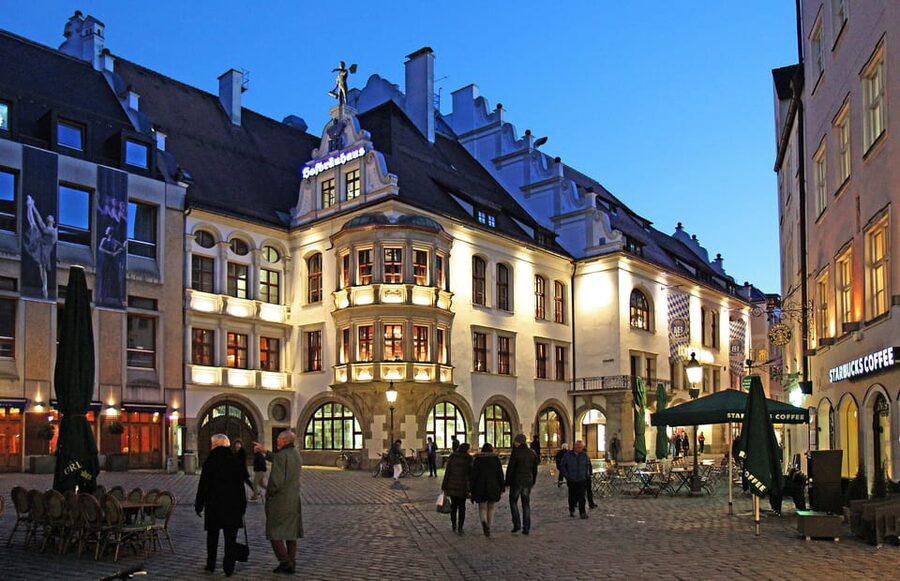
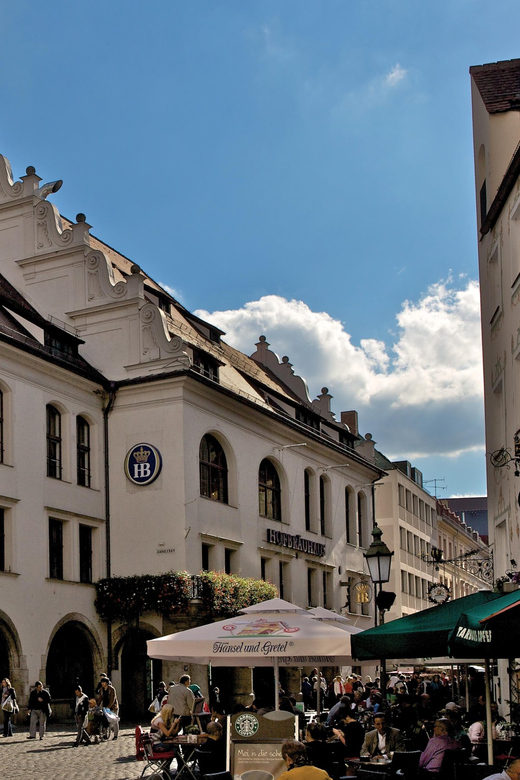
The Hofbräuhaus is the first major stop, and it gives the tour its best-known address. Founded by Duke William V of Wittelsbach, the beer hall is tied to the former Bavarian court and to Munich’s long relationship with brewing.
You can enter the Hofbräuhaus on your own, of course. The point of going with a guide is to hear the stories connected to the building and to notice its less obvious corners. The tour promises secret nooks and details that are easy to miss if you simply find a table, order a beer, and admire the painted ceilings.
This is also where the tour begins to explain the difference between a famous beer institution and the larger story of Bavarian beer. Munich’s beer culture did not appear fully formed for modern tourists. It grew from court brewing, guild traditions, local drinking customs, and rules about how beer should be made.
The Hofbräuhaus can be loud and busy, so do not expect a quiet museum-style visit. Its appeal is the setting and the stories, not a long seated tasting. If your main goal is to spend two hours drinking in one hall, this tour may feel too active. If you want a guide to put the place into context, it is a stronger choice.
Old-town lanes and Munich’s brewing past
Between the Hofbräuhaus and the museum, the group passes former brewing houses and historic spots tucked into Munich’s crooked old-town lanes. This portion explains why the tour is not simply a food stop sequence.
The walking creates a link between the buildings. You are not only being taken from one beer to the next. You are shown how brewing belonged to the fabric of the city, with former breweries and old commercial spaces still part of the route.
That format works best if you enjoy learning while you walk. The guide tells stories about how beer was invented, how it arrived in Munich, and how local customs developed. The exact amount of walking is not specified, so comfortable footwear is essential.
Past guides have been praised for making the history lively and funny. Eva is noted for leading an informative and humorous tour about Munich and beer. Hans Jürgen Beumer also received strong praise for bringing the subject across with enthusiasm and warmth. Since the language is German, the guide’s style matters a great deal. German speakers are likely to get much more from this section than those who know only a few German phrases.
Beer tasting in the Beer and Oktoberfest Museum
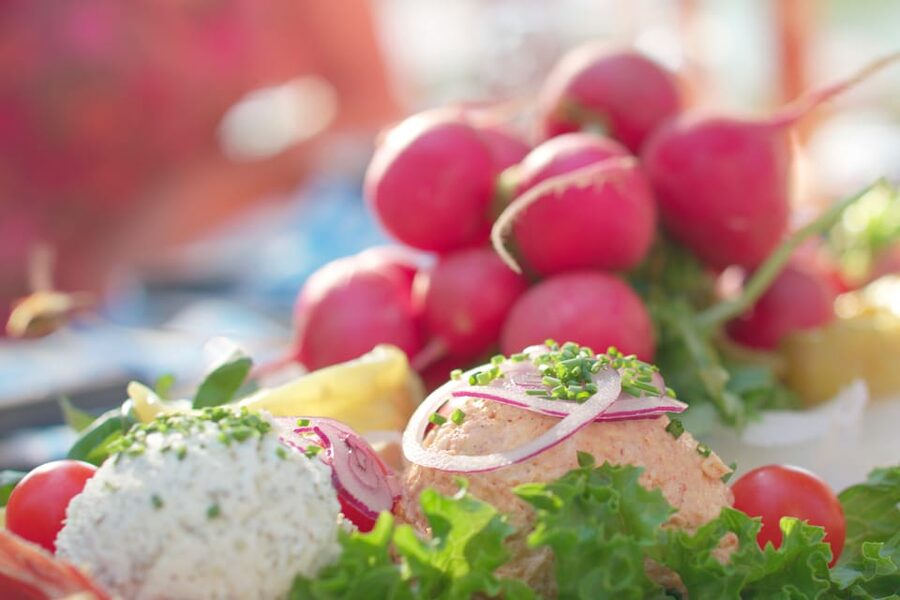
The first proper tasting takes place at the Beer and Oktoberfest Museum. Here, you receive three different small beers, each measuring 0.1 liters, along with pretzels. The portions let you compare several styles and breweries without committing to a full glass of each.
For a beer enthusiast, the small pours are useful. You can pay attention to differences rather than simply drinking for quantity. For someone who rarely drinks beer, the format is also manageable. The tasting is more about learning local traditions than getting full from beer.
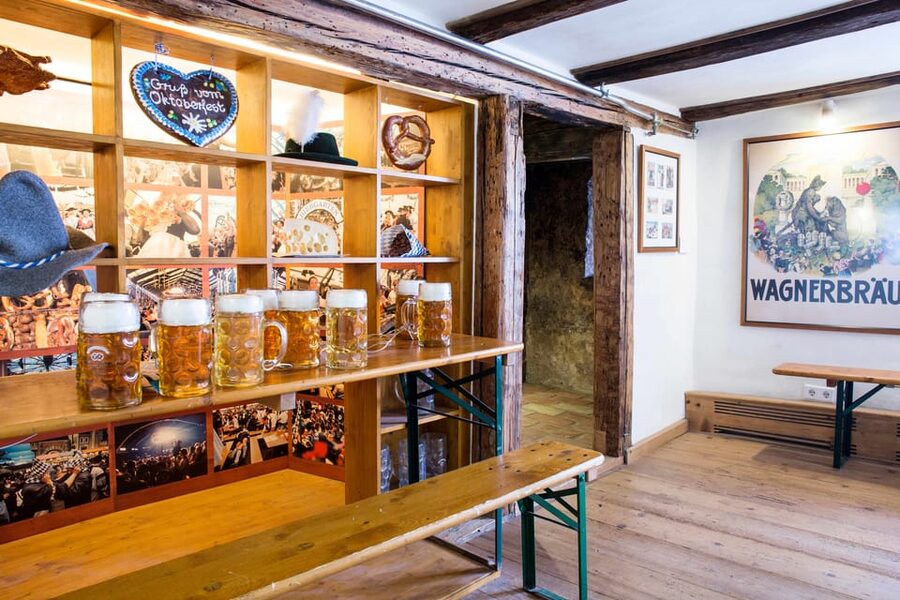
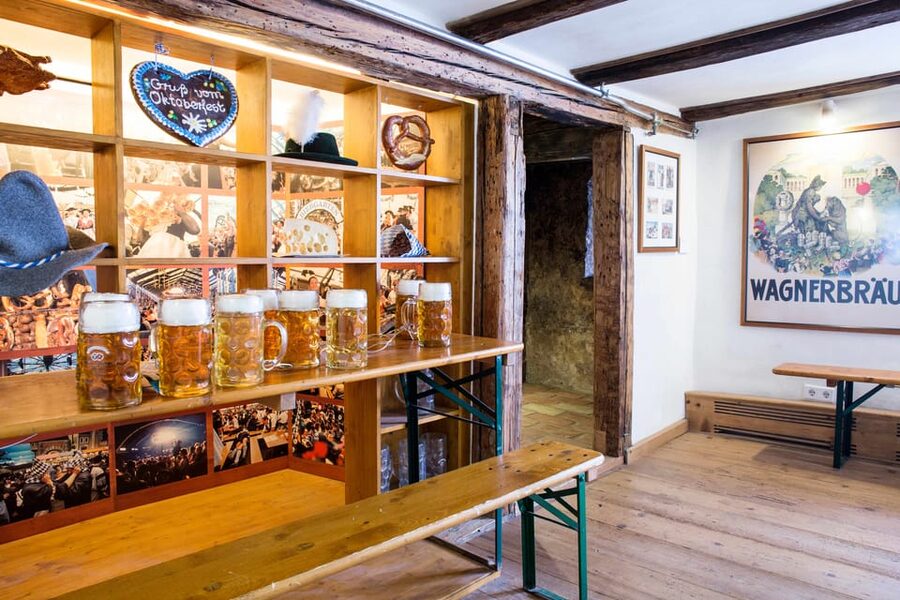
The museum occupies a beautiful old building with rough brick walls and a strong historic atmosphere. The setting adds something that a modern tasting room would not. You are drinking in a place designed to connect Munich’s beer customs with the city’s built past.
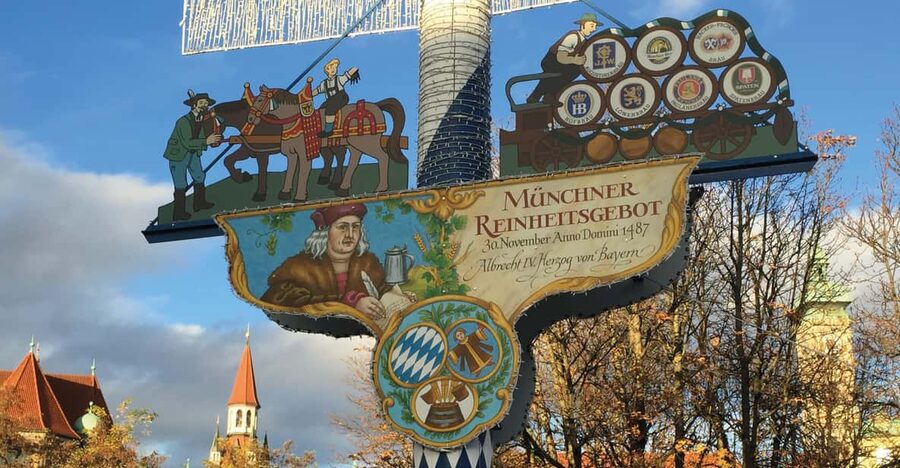
The museum’s subject matter gives the tour its most useful educational stop. You learn how people brewed in the Middle Ages and why Bavarian dukes passed a purity law. The law is commonly associated with rules about beer ingredients, but the guide’s explanation is important because historical rules often had practical, political, and economic reasons behind them.
Upstairs, the museum holds a collection of beer-related objects. Two details are especially interesting: a model of Carl von Linde’s machine, which helped modernize beer cooling, and a picture of the first Oktoberfest in 1810.
The cooling machine matters because reliable refrigeration changed how beer could be made, stored, and served. The 1810 image offers a useful reminder that Oktoberfest began as a specific historical celebration, not as the giant international beer event it became later.
This stop is the strongest reason to choose the tour over a simple pub crawl. You get a clearer idea of how technology and custom shaped Bavarian beer, not just where to order it.
A few more tours and experiences worth a look
- Munich: Beer and Food Tour with Dinner & Oktoberfest Museum
★ 4.7 · 1,086 reviews - Munich’s Beer Halls and Breweries: 3-Hour Guided Tour
★ 4.6 · 928 reviews - Munich: Bike Tour with Beer Garden Break
★ 4.9 · 391 reviews - Beer & Beyond: Munich Beer Tour
★ 5.0 · 291 reviews
Weisses Bräuhaus and the Bavarian Brotzeit
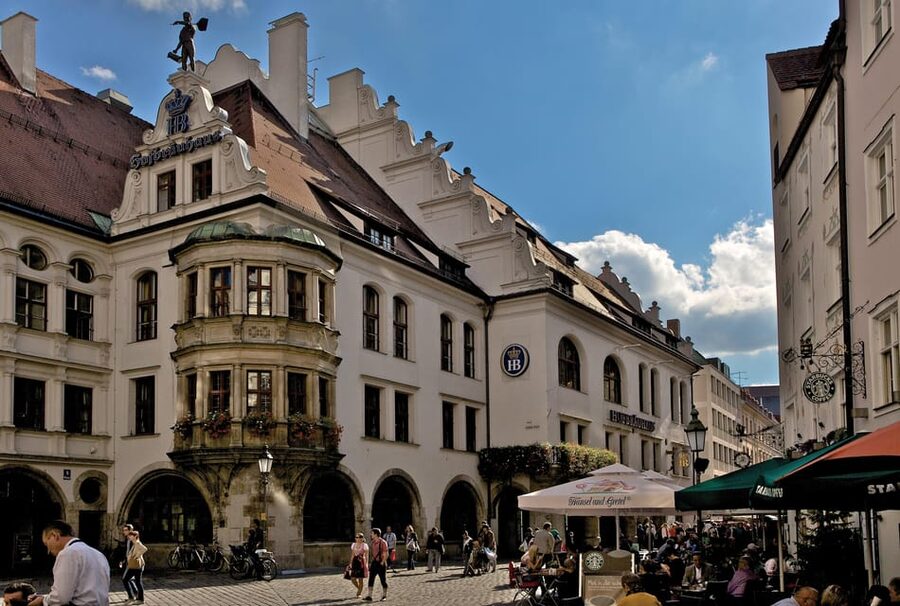
After the museum, you cross the street to the Weisses Bräuhaus, another historic beer location. Here the tour shifts from instruction to eating.
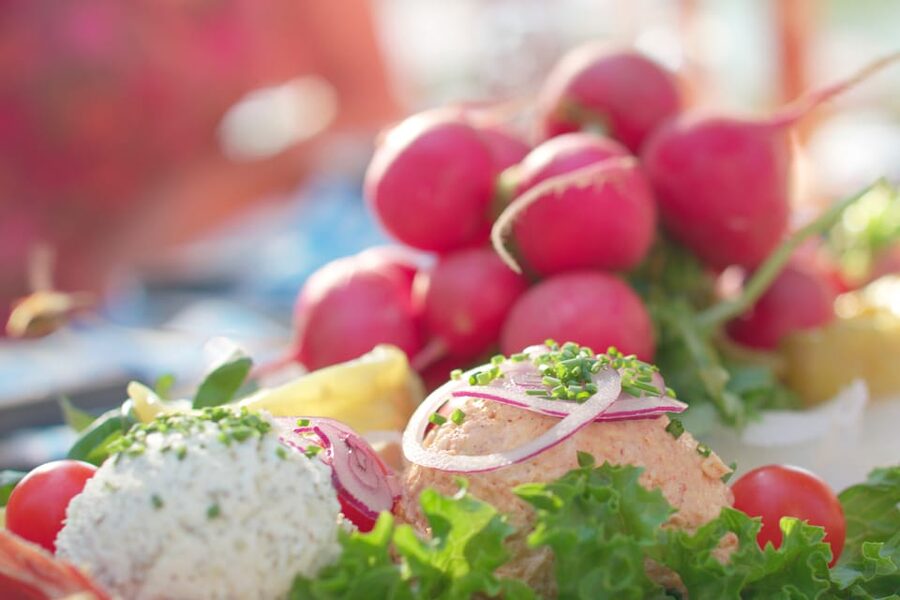
The final meal is a Bavarian Brotzeit, a casual light dinner built around bread and traditional accompaniments. A drink is included in the stated experience details. The meal is served after the tasting and museum visit, so you are not trying to make sense of old brewing machinery on an empty stomach.
There is an important difference between this meal and the earlier tasting. The museum stop offers three small beers and pretzels for comparison. The Weisses Bräuhaus stop is a proper seated food break, with enough time to enjoy the Bavarian meal at your own pace.
The guide says goodbye once the food arrives, and you can remain at the restaurant as long as you wish. This is convenient if you want a relaxed end rather than another timed stop. It also means the final part is not fully guided. If you expect the guide to explain every dish or remain at the table, you may find the handoff abrupt.
The published details list the Bavarian Brotzeit with a drink among the included features, while another section says the Brotzeit with a drink is not included. The same contradiction appears around the beer tasting with pretzels and the Schnitt. Treat this as a booking point, not a minor technicality. At $87 per person, you deserve to know exactly what food and drink are covered.
What the $87 price is really buying
At $87 per person, this is not the cheapest way to have a beer in Munich. You are paying for a German-speaking guide, a structured old-town walk, access to the Hofbräuhaus, museum entry, three small beers, pretzels, and a Bavarian meal, assuming the listed inclusions are confirmed.
The value is strongest for someone who wants context with the food and drink. A self-guided visit to the Hofbräuhaus and museum could cost less in direct spending, but you would need to plan the route, understand what you are seeing, and arrange the tastings and meal yourself.
The price is less convincing if you mainly want a long beer session. Three pours of 0.1 liters equal only 0.3 liters in total, before counting the Schnitt and final drink. This is a tasting tour, not a high-volume drinking tour.
The meal also affects the value. A Bavarian Brotzeit can be a satisfying part of an afternoon, but the exact food is not specified in the supplied details. Ask what is served and whether the drink is included. A private tour may offer better value for a family or small group that wants direct attention, while a shared group should suit people who prefer a lower-cost social format, if that option is priced differently at booking.
German language and guide style
This tour is conducted in German. That is not a minor footnote. The experience depends on stories, explanations, and humor, especially during the walking sections and museum visit.
If you speak German comfortably, the tour can offer a more local feel than a standard English-language sightseeing circuit. The guide’s clothing and the use of Bavarian food and beer customs add to that sense of place.
The available feedback points to humor as a major strength. Eva is praised for guiding the group with skill and wit, while Hans Jürgen Beumer is praised for presenting the information with plenty of heart. Other comments describe the tour as interesting and humorous, with one German-language assessment calling the walk a fine tour with plenty of information about beer and tastings from different breweries.
Do not book this tour expecting a silent, formal lecture. The strongest guide reports suggest a lively presentation. That is helpful for a subject that could otherwise become a list of dates, laws, and brewery names.
The main drawback: food tour or city tour?
One German-language assessment rated the experience poorly because it felt more like a city tour than a food and beer tour. That criticism is fair enough to consider.
The route includes several historic locations, a museum, and walking through old-town lanes. The tasting portions are small, and the final meal comes near the end. You are learning about Munich and beer more often than you are eating.
I see this as a matter of expectations rather than a simple flaw. The tour suits you if you want a guided introduction to Munich’s beer culture, with food built into the route. It may disappoint you if you picture a food crawl with many generous samples and little sightseeing.
The 150-minute duration is enough to give the subject shape without taking your entire day. Still, the tour has a fixed rhythm. You cannot linger long at every historic spot, and the museum visit is part of the schedule rather than a free-form exploration.
Who should book this Munich experience?
I would recommend this tour to German-speaking adults who want a first look at Munich’s beer traditions without spending an entire evening in a beer hall. It is also a good fit if you enjoy museum stops, old-town walks, and a final meal in a traditional setting.
It should work well for visitors who want an organized afternoon. You do not need to build your own route between Marienplatz, the Hofbräuhaus, the museum, and Weisses Bräuhaus. The guide handles the sequence and adds stories along the way.
Beer fans may appreciate the chance to compare three small beers from different breweries. History-minded visitors will value the museum’s material on medieval brewing, Bavarian purity rules, refrigeration, and the first Oktoberfest.
I would hesitate to recommend it to anyone who does not understand German. I would also steer serious food hunters toward a tour that promises more substantial tastings throughout the walk. Families should check the age and drinking arrangements before booking, since the supplied details do not specify them.
The tour runs rain or shine. That makes comfortable clothing and shoes more than a suggestion. Leave large bags and luggage elsewhere, since they are not allowed on the experience.
Should you book the Hofbräuhaus and beer museum tour?
Book it if you want German-language beer history with a real Bavarian meal at the end. The Hofbräuhaus, the Beer and Oktoberfest Museum, three small beers, pretzels, and Weisses Bräuhaus create a well-shaped introduction to Munich’s drinking culture.
Skip it if your idea of a food tour means constant sampling, large portions, or an English-speaking guide. Before booking, confirm the disputed inclusions for the Schnitt, tasting beers, pretzels, Brotzeit, and final drink. With that point settled, the $87 price can be reasonable for a guided route that combines sightseeing, museum admission, tasting, and dinner.
FAQ
Where does the Munich beer tour begin?
Meet the guide at the Mariensäule, the large column in Marienplatz.
How can I identify the guide?
Look for a guide carrying a large blue bag with the white words Weis(s)er Stadtvogel.
How long does the tour last?
The tour lasts 150 minutes.
What language is the tour conducted in?
The live tour guide speaks German, and German is the listed tour language.
How many beers are included in the tasting?
The tasting includes three small beers, each measuring 0.1 liters.
Are pretzels included?
The experience details list pretzels with the beer tasting, but another section says beer tasting with pretzels is not included. Confirm this point when booking.
Is the museum entrance included?
Yes, the museum entrance fee is listed as included.
Is a Bavarian meal included?
A Bavarian light dinner or Brotzeit with a drink is listed among the inclusions, but another section says the Brotzeit with a drink is not included. Ask the provider to confirm the current arrangement.
What should I bring to the tour?
Wear comfortable shoes and comfortable clothing. Do not bring luggage or large bags. The tour takes place rain or shine.
Just added around Munich
- Munich: Private or Group Third Reich and WWII Walking Tour★ 4.9 · 13 reviews
- From Munich: Neuschwanstein Castle and Linderhof Private Tour★ 5.0 · 13 reviews
- Private Transfer from Munich to Salzburg with 2 hours for sightseeing★ 4.5 · 13 reviews
- Munich: Historical Walking Tour on the Rise of Hitler★ 5.0 · 13 reviews
- Private Scenic Transfer from Munich to Prague with 4h of Sightseeing★ 5.0 · 13 reviews
- From Munich: VIP day trip to Salzburg★ 5.0 · 14 reviews
- National Socialism WWII with licensed guide – private tour★ 5.0 · 14 reviews
- Munich: Walking Tour Old Town 3D VR Tour in GERMAN★ 4.3 · 14 reviews
Food & Drink, compared.

St. Pauli Highlights Guided Tour with Beer for 18+
Read our review →
Elbphilharmonie Plaza and HafenCity Food Tour
Read our review →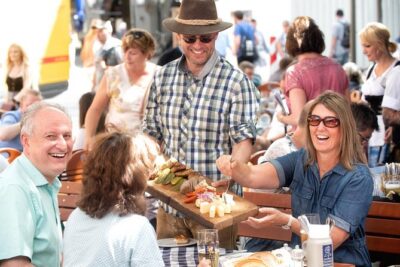
Bavarian Beer and Food Evening Tour in Munich
Read our review →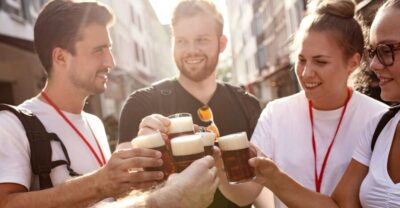
Classic Mike’s Bike Tour daily @ 11.30 incl Beer Garden & Surfers
Read our review →
Berlin Center Food Tour with 8+ Authentic Local Tastings
Read our review →
Browse the lists this tour appears in